
10 Most Underrated Eichler Neighborhoods in Silicon Valley
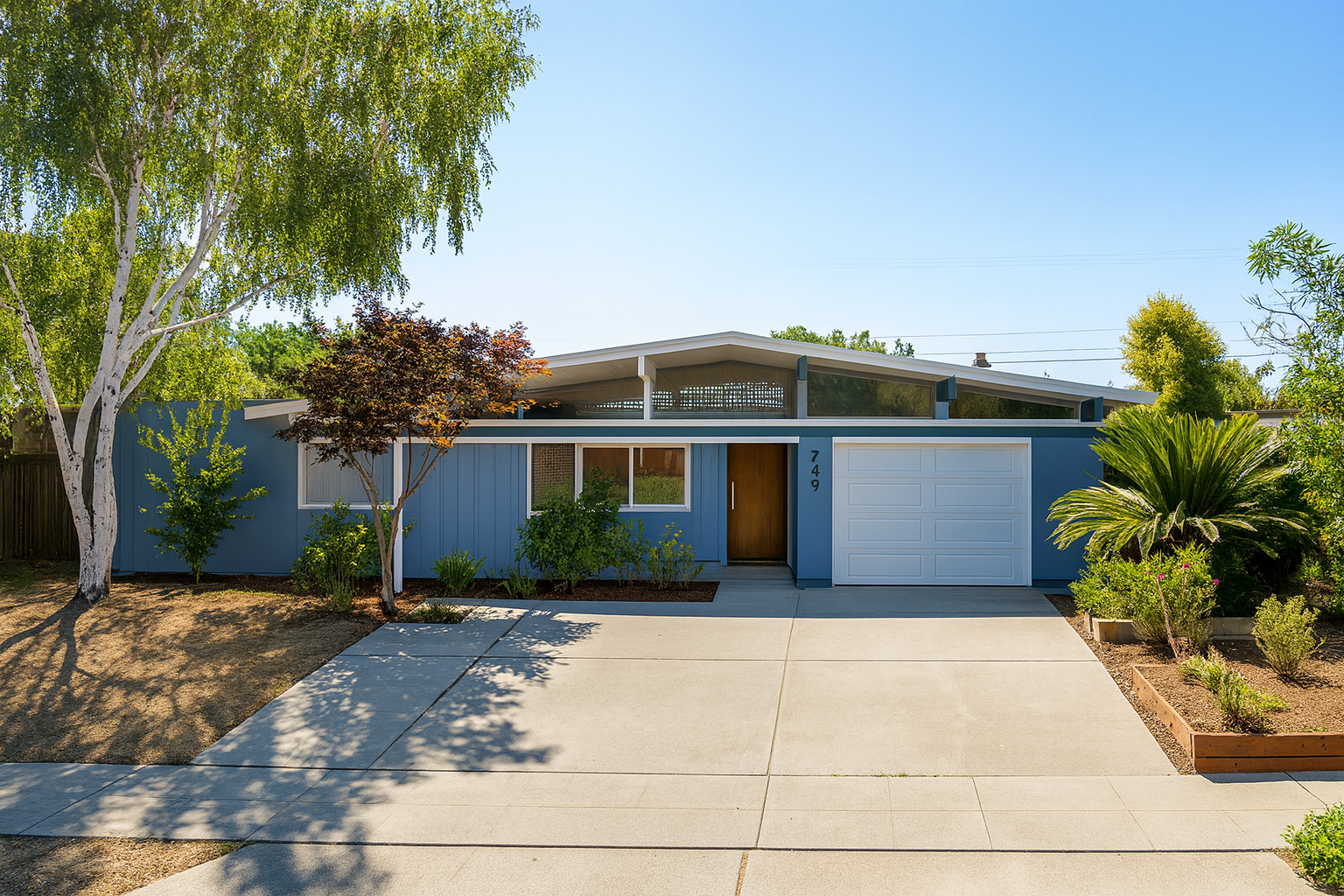
Mid-century modern enthusiasts relocating to Silicon Valley often flock to well-known Eichler enclaves like Midtown Palo Alto or the Highlands in San Mateo. However, beyond those headline communities lies a treasure trove of underrated Eichler neighborhoods that offer iconic design, strong amenities, and savvy investment potential. In this report, we rank the top 10 under-the-radar Eichler neighborhoods across Silicon Valley, using a four-part formula that weighs walkability, model variety, renovation stability, and school district demand. Each of these areas boasts authentic Eichler (and Eichler-style) homes with distinctive character – minus the sky-high price tags and competition of the usual hotspots.
What Makes an Eichler Neighborhood “Underrated”? These communities have all the mid-century modern charm – post-and-beam architecture, atriums, walls of glass – without the constant buzz. Many are “little known even among fans” boyengateam.com, tucked in suburban pockets or overshadowed by their famous counterparts. Yet they excel in quality of life factors: some feature highly walkable streets near parks and shops; others contain a diverse range of Eichler models (from cozy starter homes to expansive atrium designs); many enjoy a culture of preservation, where original Eichler aesthetics are lovingly maintained; and importantly, several sit in top-rated school districts, making them magnets for families and long-term appreciation. Below you’ll find a summary comparison of these four factors across our ten picks, followed by in-depth profiles of each neighborhood with insights on nearby amenities, architectural highlights, and market appeal.
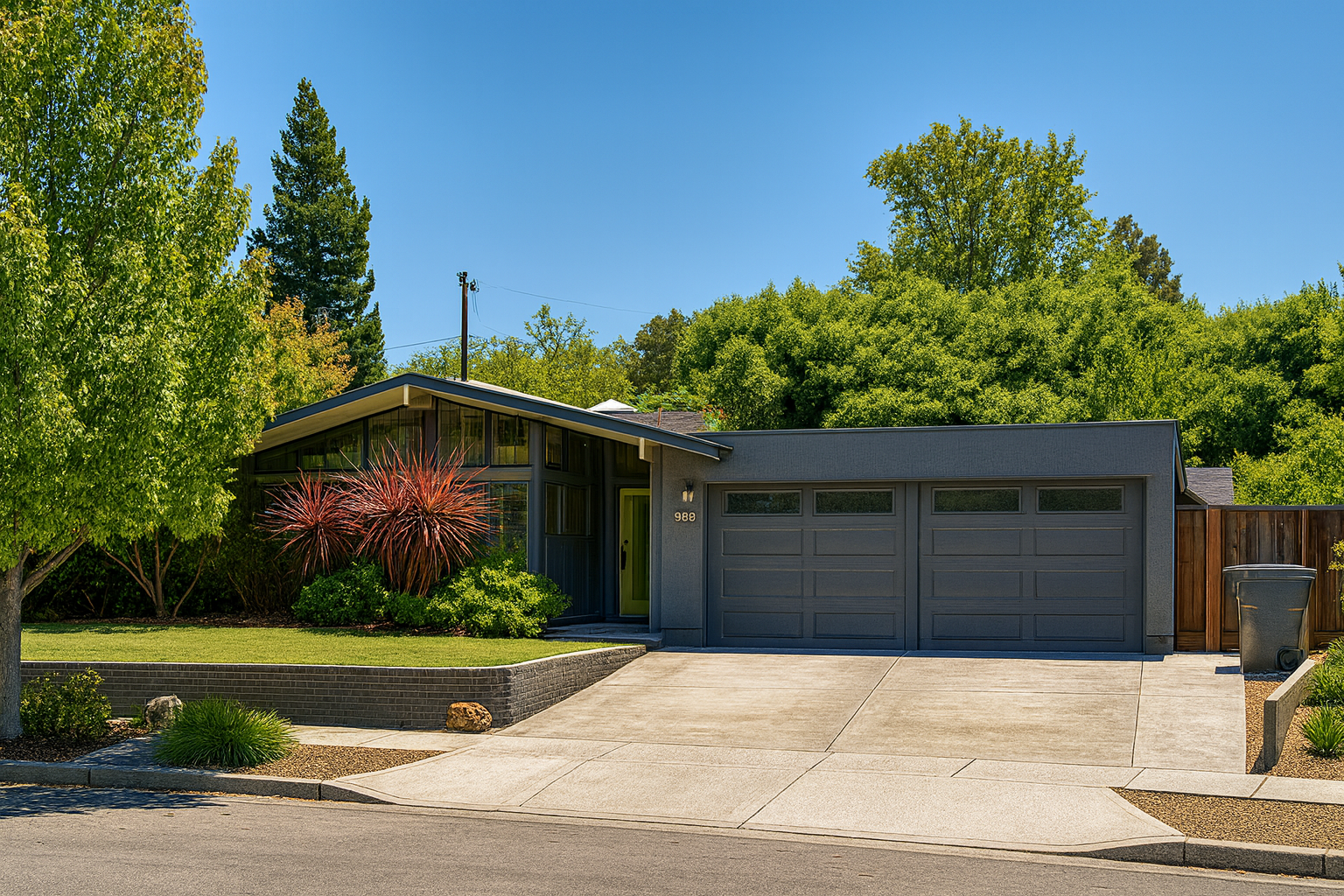
Summary Comparison: Top 10 Underrated Eichler Neighborhoods
To help you scan the field, the table below summarizes how each neighborhood ranks on walkability, model variety, renovation stability, and school district demand. (Ratings are relative among these ten – “High” means a standout strength in that category, “Medium” is average or mixed, and “Low” indicates a weaker point.)
1. Fairgrove (Cupertino)
Walkability: Medium
Model Variety: Medium
Renovation Stability: High
School Demand: High
2. Fallen Leaf Park (Los Altos)
Walkability: Medium
Model Variety: High
Renovation Stability: High
School Demand: High
3. Oakdell Park & Stanford Gardens (Menlo Park)
Walkability: High
Model Variety: High
Renovation Stability: Medium
School Demand: High
4. Via Sereno (Monte Sereno)
Walkability: Low
Model Variety: High
Renovation Stability: High
School Demand: High
5. Rancho Verde (Sunnyvale)
Walkability: Medium
Model Variety: Medium
Renovation Stability: High
School Demand: High
6. Saratoga Eichlers (De Havilland Drive)
Walkability: Low
Model Variety: Medium
Renovation Stability: Medium
School Demand: High
7. Ladera (Portola Valley)
Walkability: Medium
Model Variety: Medium
Renovation Stability: Medium
School Demand: High
8. Monta Loma (Mountain View)
Walkability: High
Model Variety: Medium
Renovation Stability: Medium
School Demand: Medium
9. Fairglen (San Jose – Willow Glen)
Walkability: High
Model Variety: Medium
Renovation Stability: High
School Demand: Low
10. Redwood City Eichler Enclaves (Atherwood, etc.)
Walkability: Medium
Model Variety: Medium
Renovation Stability: Medium
School Demand: Low
Now, let’s dive into each neighborhood and discover what makes it a hidden gem for mid-century modern home buyers.
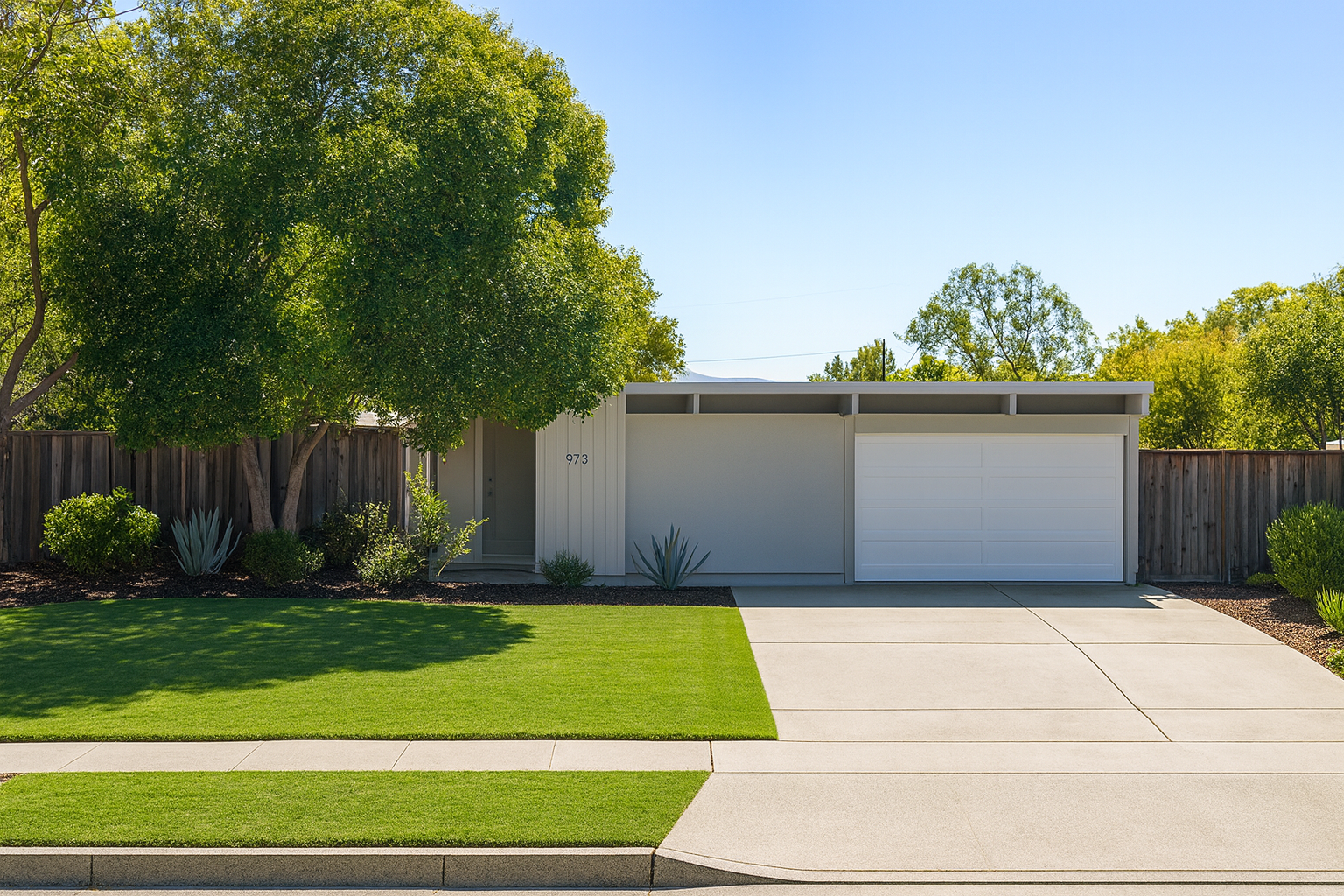
1. Fairgrove (Cupertino) – Prime Schools and Preserved Style
Why It’s Underrated: Fairgrove is Cupertino’s crown jewel of Eichler homes – roughly 225 Eichlers tucked into a quiet pocket near Miller Avenue and Bollinger Road. Despite its central Silicon Valley location (minutes from Apple’s campus and Cupertino’s new Main Street district), Fairgrove remains less famous than Palo Alto’s Eichlers. That relative anonymity means “more house for the money” in a top-notch school district, a combination relocation buyers crave.
Walkability: The neighborhood is comfortably residential – you can stroll leafy streets to a local park or elementary school – though major shopping and dining (like Cupertino Main Street or Vallco Town Center) are a short drive away. Being bordered by two city parks and a few blocks from everyday retail, Fairgrove scores mid-range on walkability.
Model Variety: Developed in 1960–61, Fairgrove showcases both courtyard and atrium-model Eichlers in various floor plans. Many homes are single-story 4-bedroom designs around 1,300–1,800 sq ft – modest by today’s standards, yet brimming with architectural character. While not the largest Eichler models, the mix of early Eichler layouts (no atriums in the first phase, then atriums introduced in the second phase) adds some variety.
Renovation Stability: This is where Fairgrove truly shines. Cupertino was one of the first cities to adopt official Eichler design guidelines to preserve neighborhood character. Homeowners here have largely respected the mid-century aesthetic – you’ll find original post-and-beam profiles, unpainted wood ceilings, and thoughtfully updated kitchens that honor Eichler’s vision. It’s common to see original facades intact, with any additions kept low-profile behind the house. The result is a cohesive, time-capsule feel on each street (and a city that actively encourages keeping it that way).
School District Demand: Top-tier. Fairgrove feeds into Cupertino’s highly sought schools (likely Sedgwick or Eisenhower Elementary, Hyde Middle, and Cupertino or Lynbrook High School – all high-performing, high-demand public schools). This reputation for academic excellence consistently propels housing demand. Families move here specifically for the schools, giving Fairgrove an edge in long-term value.
Neighborhood Highlights: Beyond schools, Fairgrove benefits from Cupertino’s superb city services and parks. It’s a short hop to Rancho San Antonio Preserve for weekend hikes, and only a few miles to Apple Park (with its visitor center and green spaces). Tech employees love that they can own an authentic Eichler and bike to work. Meanwhile, the Eichler community spirit is evident – neighbors swap renovation tips and keep an eye on each other’s mid-century homes. All these factors make Fairgrove a sleeper hit for those seeking California Modernism with strong upside. It’s no wonder these homes are “highly coveted due to their prime location, yet are some of the more affordable homes in Cupertino” compared to pricier Palo Alto or Los Altos.

2. Fallen Leaf Park (Los Altos) – Prestigious Mid-Century Oasis
Why It’s Underrated: Tucked in a serene corner of Los Altos, the Fallen Leaf Park Eichler tract offers an unbeatable blend of prestige and mid-century soul. Los Altos isn’t often the first city people mention for Eichlers (Palo Alto usually steals that thunder), yet this neighborhood contains some of the largest and most luxurious Eichler homes in Silicon Valley eichlerhomesforsale.com. With its wide, tree-lined streets and oversized lots, Fallen Leaf Park flies under the radar – except among Eichler aficionados who know it as a coveted enclave.
Walkability: This area is pleasantly suburban and quiet. Residents can walk or bike to nearby Shoup Park or the Rancho Shopping Center, a mid-sized retail plaza with a grocery store, cafe, and other conveniences eichlerhomesforsale.com. Downtown Los Altos, with its charming boutiques and eateries, is a short drive or weekend bike ride away. While not fully walkable in an urban sense, the neighborhood’s internal streets are great for evening strolls, and schools are close enough for older kids to walk or bike. Overall, walkability is moderate – sufficient local amenities without the urban hustle.
Model Variety: Eichler homes here were built in the mid-1960s and include several custom and semi-custom models by architect Claude Oakland eichlerhomesforsale.com. These are expansive atrium models, often 4–5 bedrooms, with some designs pushing 2,400+ sq ft – truly generous for Eichler construction. In fact, Fallen Leaf Park Eichlers are known for their unique floor plans and larger footprints, representing Eichler’s high-end evolution. Variety is high: you’ll encounter everything from iconic Double A-frame facades to one-of-a-kind layouts tailored to these roomy parcels. For Eichler buyers seeking space and uniqueness, this neighborhood delivers.
Renovation Stability: Excellent. Many properties have been tastefully modernized but maintain their mid-century integrity. It helps that these homes are on the upper end of the market – buyers at this price point tend to appreciate the architecture. You won’t see teardowns replaced by McMansions; instead, you’ll find period-sensitive remodels like updated kitchens that blend with original mahogany walls, or expansions that stay true to Eichler’s intent. The neighborhood’s status (and occasionally historic interest) encourages preservation. Homes here have “architectural integrity” and command top dollar when they hit the market eichlerhomesforsale.com, in part because original character remains intact.
School District Demand: Very High. Fallen Leaf Park lies within the exceptional Los Altos School District (with local Oak Avenue Elementary and Blach Intermediate eichlerhomesforsale.com) and the Mountain View–Los Altos High School District (typically Mountain View High for this area). Los Altos schools are perennially top-ranked, and demand from families is correspondingly strong. This area draws buyers who want mid-century style without sacrificing education quality. High scores and college-ready reputations ensure robust demand and bolster property values over time.
Neighborhood Highlights: Living here means enjoying a peaceful, upscale atmosphere with mid-century charm. Mature oaks and pines shade the streets, giving a feeling of established tranquility. Tucked within the neighborhood is the private Fallen Leaf Park (for which the tract is named), offering open green space. You’re also close to Rancho San Antonio Reserve and Foothills Park for nature outings. Architecturally, these Eichlers often feature walls of glass opening to expansive backyards – perfect for the indoor-outdoor California lifestyle. In short, Fallen Leaf Park is a “prestigious Eichler tract” eichlerhomesforsale.com that remains comparatively unsung – an ideal pick for those seeking a large Eichler home with both character and an A+ location.

3. Oakdell Park & Stanford Gardens (Menlo Park) – Hidden Luxury in the Heart of Silicon Valley
Why It’s Underrated: Menlo Park sits at Silicon Valley’s heart, yet its Eichler homes are “virtually unknown, even to experienced Eichler watchers” boyengateam.com. Scattered in small clusters like Oakdell Park and Stanford Gardens, Menlo Park’s ~50 Eichlers span from some of Joseph Eichler’s earliest builds to some of his most deluxe. This contrast – and the fact that many are tucked down private lanes or behind foliage – means Menlo’s Eichler neighborhoods don’t get the spotlight they deserve. For buyers, that’s an opportunity: these homes offer prestige, prime location, and architectural pedigree without the buzz (or bidding wars) of better-known Eichler tracts.
Walkability: Excellent. Oakdell Park, for example, is located about a mile west of El Camino Real in a coveted part of Menlo Park boyengateam.com. This places it within strolling distance of cafes, shops, and top-rated schools in the area. The streets themselves are quiet cul-de-sacs with minimal traffic, so neighbors often walk dogs or jog in the evenings. From Stanford Gardens (near Lemon and Evergreen Streets) it’s a short walk to local markets and the Seminary Oaks Park. In general, Menlo Park is a very walkable, bikeable town; these Eichler enclaves benefit from being close to both neighborhood retail and expansive city parks.
Model Variety: Surprisingly broad. Menlo Park’s Eichlers include everything from compact 3-bedroom starter models of the early 1950s to “large, luxurious Eichler homes” of the mid-1950s that span 2,200–2,800 sq ft boyengateam.com. In Oakdell Park, Eichler built 14 custom homes designed by Anshen & Allen and A. Quincy Jones, each on quarter-acre lots boyengateam.com – these are trophy Eichlers with unique floor plans (one even has a basement, extremely rare for Eichlers). Over in Stanford Gardens, you’ll find some of Eichler’s first modest homes (around 1,100 sq ft) that exude mid-century charm. Taken together, Menlo Park offers a microcosm of Eichler’s evolution: multiple architects, sizes, and layouts. Variety is high, especially considering the small number of houses – no two feel exactly alike.
Renovation Stability: Medium. This is the one area of concern. Menlo Park’s land values are sky-high, which means these Eichlers have faced pressure from remodels and even teardowns. In fact, “teardowns and unsympathetic remodels have destroyed many” of the originals here boyengateam.com. The good news: a number of longtime owners and incoming enthusiasts have preserved or meticulously updated their homes, keeping Eichler’s design intact boyengateam.com. For example, Oakdell Park still retains most of its 14 Eichlers in beautiful condition – they present as mid-century modern jewels behind mature landscaping. However, a buyer in Menlo Park should be aware that a few Eichlers have been expanded beyond recognition or replaced with new construction. The neighborhoods still largely read as Eichler enclaves, but the risk of future teardown attempts exists. On balance, enough homes remain “carefully located on the lots to provide proper exposure and privacy” boyengateam.com that the Eichler character endures, and community interest in preservation is growing.
School District Demand: Very High. Depending on the exact location, Menlo Park Eichler clusters fall into either the Menlo Park City School District or the Las Lomitas School District – both of which are among the top-performing districts in California. For example, Oakdell Park is near Oak Knoll Elementary and Hillview Middle, while Stanford Gardens (Lemon St area) is near Encinal Elementary and Hillview. High school is typically the renowned Menlo-Atherton High, which offers strong academics and diverse programs. These public schools are a huge draw; families pay a premium to live in Menlo Park for this reason. The “sky-high prices for real estate” in Menlo Park boyengateam.com aren’t just for show – they’re backed by genuine demand for the excellent schools and community. For Eichler buyers, that means investing in Menlo Park offers not only architectural delight but rock-solid school district credentials.
Neighborhood Highlights: Menlo Park’s Eichler pockets benefit from an unbeatable central location. Stanford University and downtown Palo Alto are just minutes away, and Facebook’s headquarters and other tech hubs are nearby as well. Yet within these neighborhoods, you’ll find a peaceful ambiance – Oakdell Park, for instance, has no through traffic and ample space for gardens or pools on its large lots boyengateam.com. Community-wise, Menlo Park is known for its family-friendly vibe, with block parties and active neighborhood associations. In Stanford Gardens, you’re around the corner from Nealon Park and the bustling Menlo Park Farmers’ Market on weekends. These Eichler enclaves truly offer “luxury and convenience” in a “fine Menlo Park residential location” boyengateam.com – all while flying under the radar, making them a smart buy for those in the know.

4. Via Sereno (Monte Sereno) – Exclusive Cul-de-Sac of Eichler Excellence
Why It’s Underrated: Tucked away in the tiny, affluent city of Monte Sereno (adjacent to Los Gatos), Via Sereno is home to a boutique collection of just 16 Eichler homes – and many Silicon Valley buyers don’t even realize it exists. This horseshoe-shaped cul-de-sac, known historically as “Sereno Foothills,” was Eichler’s only venture in Monte Sereno, built around 1969–1971. With expansive designs and a secluded feel, Via Sereno’s Eichlers offer luxury mid-century living on par with Los Altos or Palo Alto, yet they remain largely off the public radar due to the street’s low profile and Monte Sereno’s general exclusivity (the city has no commercial center to draw outsiders).
Walkability: Low. Monte Sereno is a semi-rural residential enclave – there are no sidewalks or streetlights on Via Sereno, lending a peaceful, country ambiance. While this makes for great privacy and starry night skies, it’s not ideal for walking to shops or restaurants. The upside: the neighborhood backs up to Daves Avenue School’s fields, so kids can cut through to the school playground easily. And a long stroll (or short bike ride) will get you into downtown Los Gatos (about 2 miles away) where top-notch dining and shopping await. In essence, Via Sereno residents trade walkability for tranquility – you’ll be driving to do errands, but you come home to an extremely quiet retreat.
Model Variety: High (for a small tract). All 16 homes were designed by Eichler’s team (Claude Oakland) in the late 60s and are “gallery” models around 2,000 sq ft with 4 bedrooms on averageboyenga.com. These late-era Eichlers include notable features like Double A-frame rooflines, atriums, and integrated garages. While the homes are of similar vintage and size, there are multiple floor plans – some L-shaped, some with central atriums – and even a custom expanded example (one home was enlarged to ~4,700 sq ft). The consistency of style (all are one-story post-and-beam masterpieces) combined with slight variations in layout gives Via Sereno a harmonious yet not cookie-cutter feel. Each home enjoys a generous lot (~8,000–10,000 sq ft) often with a pool, so there’s space for individual landscaping and flair.
Renovation Stability: High. Monte Sereno has strict design guidelines and maintenance expectations for this tractboyenga.com. Perhaps because of the small number of homes and the high property values, owners here have shown great pride in upkeep. Many original elements (globe lights, Philippine mahogany walls, floor-to-ceiling glass) are still in place. When updates occur, they are high-end and Eichler-appropriate: think sleek modern kitchens that complement the open beam ceilings, or upgrades like double-pane glass that don’t disrupt the facade. In fact, several Via Sereno homes have been featured in design tours for exemplary Eichler remodels. The community ethos leans toward preservation of the Eichler aesthetic – likely one reason these homes “still retain much of [their] looks” decades later. You won’t find any unfortunate second-story additions here; the neighborhood’s character is very stable.
School District Demand: High. Via Sereno is served by the outstanding Los Gatos School District. Most addresses attend Daves Avenue Elementary (literally behind the tract), Fisher Middle School, and Los Gatos High School, all of which have sterling reputations. (A few homes on the fringe might fall into Campbell Union schools and Westmont High, but many are Los Gatos High-bound eichlerhomesforsale.com.) Los Gatos High in particular is one of the South Bay’s top high schools, making this location extremely desirable for families. The combination of large mid-century homes and excellent schools is rare – and it ensures strong demand for Via Sereno properties when they (infrequently) hit the market.
Neighborhood Highlights: Living on Via Sereno offers a unique blend of luxury and nature. The street’s name “Sereno” (meaning serene) is apt – expect deer wandering by and breathtaking views of the Santa Cruz Mountains from your living room. Monte Sereno has no commercial zoning, but you’re a five-minute drive from downtown Los Gatos, with its farmers market, boutique shops, and cafés. Cultural perks like the Los Gatos Art Museum and lively annual events (e.g. Music in the Park) are close, yet Monte Sereno residents enjoy lower city taxes and a quieter environment than in town. For Eichler lovers, Via Sereno is a case of quality over quantity – a tiny neighborhood with enormous appeal, offering “exclusive pocket Eichlers built on expansive lots with mountain views” eichlerhomesforsale.com and a lifestyle that feels like a retreat amid the Silicon Valley bustle.

5. Rancho Verde (Sunnyvale) – Mid-Century Gem with Community Spirit
Why It’s Underrated: Sunnyvale boasts over 1,100 Eichler homes across at least 16 tracts, yet most people couldn’t name a single Eichler neighborhood there offhand. Among these, Rancho Verde stands out as a “lesser-known gem” offering some of the best-preserved Eichlers in the city eichlerhomesforsale.com. Tucked in central-west Sunnyvale (roughly around S. Mary Ave, between Fremont Ave and Remington Drive), Rancho Verde is often overshadowed by bigger Eichler concentrations in Palo Alto or the San Mateo Highlands – but it matches them in charm and even surpasses in value-for-money.
Walkability: Medium. Rancho Verde’s streets are classic suburbia: quiet, wide, and dotted with mature trees. Within a short walk you have Serra Park, a large city park with playgrounds and tennis courts eichlerhomesforsale.com – great for families and weekend recreation. A bit further are Las Palmas Park and the Sunnyvale Community Center (in neighboring tracts), which are accessible by bike. For shopping, residents typically drive 5 minutes to the nearest grocery or to downtown Sunnyvale’s Murphy Avenue scene. However, the neighborhood is self-contained enough that you’ll often see neighbors walking dogs or kids biking around after school. The presence of nearby parks and a community swim club (the Fairbrae Swim Club is just next door in the Fairbrae tract) means there’s a healthy amount of foot traffic connecting these amenities. In short, you can’t run all errands on foot, but daily life here encourages outdoor activity and neighborly interaction.
Model Variety: Medium. Built around 1960–1962, Rancho Verde consists of roughly 180 Eichler homes (including the small Rancho Verde Addition). Many are 4-bedroom, 2-bath models typical of Eichler’s late-50s design, some with atriums and some with courtyard layouts. What adds variety is that this tract introduced Eichler’s “Gallery” model designs – an evolution in Eichler architecture led by Claude Oakland. Thus, alongside the familiar flat or low-pitch roof Eichlers, you’ll spot a few with taller central gallery spaces or cross-gable roofs. All homes are single-story, and exteriors are fairly cohesive (lots of unpainted siding, original brick fireplaces, etc.). There’s enough mix of floor plans to avoid monotony, yet the homes are uniformly mid-century modern in vibe. In addition, Rancho Verde homes sit on larger lots (many around 7,000+ sq ft), so some owners have customized their backyards with patios, gardens, and pools – each property has its own outdoor personality.
Renovation Stability: High. Rancho Verde has been “well preserved” by its residents, thanks in part to original owners like the Ward family (who moved in in 1962 and became champions of keeping the Eichler aesthetic alive) boyengateam.com. Walk down these streets and you’ll see immaculate Eichler facades: globe lamps on carports, clerestory windows intact, and post-and-beam carports still open (not enclosed into garages as often happens elsewhere). When renovations occur, they’re done with “great sensitivity to MCM style” eichlerhomesforsale.com – for instance, updated kitchens might retain the iconic open room concept and even restore period-appropriate materials. There’s a palpable pride of ownership; many homes look as fresh as they did 60 years ago, or better. Neighbors also reportedly communicate about remodels to ensure no one diverges too far from the Eichler spirit. As a result, architectural integrity remains very high here, making it a safe bet for Eichler lovers worried about a modern monstrosity popping up next door.
School District Demand: High. Rancho Verde is served by Sunnyvale School District for K-8 (primarily Cumberland Elementary and Sunnyvale Middle) and the Fremont Union High School District (Homestead High School) eichlerhomesforsale.com. This combination is attractive: Cumberland Elementary is one of Sunnyvale’s top-rated elementaries, and Homestead High (which straddles Sunnyvale/Cupertino) is a well-regarded high school that benefits from a mix of Cupertino and Sunnyvale students. While not as famous as Lynbrook or Gunn, Homestead consistently posts strong test scores and sends many grads to top universities. The presence of these solid public schools – plus nearby private options if desired – means families actively seek homes here. Sunnyvale’s schools have been on the rise, adding to demand. Importantly, this neighborhood lies just east of the Cupertino School District boundary, so it’s relatively more affordable than Cupertino, yet for many buyers the Sunnyvale schools plus Eichler charm make a compelling package. In recent years, Eichlers in Rancho Verde have been selling in the $2.0–$3.3M range, with climbing demand boyengarealestateteam.com as mid-century modern appeal grows.
Neighborhood Highlights: Rancho Verde exudes a wholesome 1960s neighborhood feel. The Fairbrae Swim & Tennis Club is adjacent, and many Rancho Verde families join to socialize and cool off in the summer. The community often holds an annual Eichler open house or neighborhood block party, strengthening bonds. Being in Sunnyvale, the neighborhood is also conveniently central to jobs – Apple’s Spaceship campus is a short drive, as are LinkedIn and Google campuses a bit further, making this area popular with tech professionals who want a short commute and a stylish home. Notably, Eichler’s vision of “modern living near parks and good schools – with prices several notches lower than Palo Alto” holds true here. Rancho Verde offers exactly that: livable modernism at (relative) value, in a community that truly “feels like home.”

6. Saratoga Eichlers (De Havilland Drive) – Large Lots and Top-Tier Schools
Why It’s Underrated: When people think of Saratoga, they picture sprawling ranches and luxury estates – few realize there’s a pocket of Eichler homes hidden just off Cox Avenue. Along De Havilland Drive and adjacent streets, about 35 Eichlers were built in the late 1950s, bringing mid-century modern flair into the heart of Saratoga’s “Golden Triangle” neighborhood. This tract is little-publicized, yet it offers something special: bigger Eichler models on generous lots with Saratoga’s award-winning schools. For buyers eyeing mid-century design, this area can be an ideal blend of architectural character and blue-ribbon location.
Walkability: Low to Medium. Saratoga is a very car-oriented suburb. In the De Havilland area, you can walk safely along the residential streets and reach a few local parks (there’s a creekside trail nearby and Kevin Moran Park is not far). Redwood Middle School is within walking distance for many homes, which is great for families. However, for shopping or dining, most residents drive ~5 minutes to Quito Village (a small shopping corner) or ~10 minutes to downtown Saratoga’s quaint restaurant row. The neighborhood itself is peaceful and not very walkable to commercial amenities, but kids biking to school or neighbors chatting on evening walks are common sights. One downside: proximity to Highway 85 means that some blocks hear a bit of freeway noise, which can detract from the walking experience on those particular streets. Overall, it’s a quiet area but you’ll likely be using a car for errands.
Model Variety: Medium. These Saratoga Eichlers were built as an upscale tract, so homes are larger than typical Eichlers of the era (many around 1,800–2,000 sq ft, 4 bedrooms). Floor plans include spacious atrium models and courtyard layouts. While the number of homes is small (~35), there appears to be a handful of different designs – some with the iconic atrium entry, others with a U-shaped plan around a patio. The lots here are sizable (many over 10,000 sq ft), which means even identical models can feel different depending on orientation and landscape. Variety is somewhat limited by the tract’s size, but compared to other Eichler communities, these homes stand out for having more expansive layouts and customization. Notably, a few owners have modified homes significantly (including one that unfortunately **“added on or remodeled such that the Eichler style was lost”. So, variety exists in both original design and in how owners have treated their homes – from pristinely original to heavily altered.
Renovation Stability: Medium. The Saratoga Eichler tract has a mixed track record. On one hand, many residents cherish their Eichlers and have kept them in good shape – you’ll find original mid-century roofs and facades intact. On the other hand, as noted, one or two homes have seen remodels not in keeping with Eichler aesthetics. Additionally, some properties showed wear (perhaps due to previous drought landscaping cuts, etc.) and might need TLC. The good news is that there’s an increasing appreciation for these homes; recent sales have seen buyers restoring Eichler features. Still, without an HOA or design review in place, renovation consistency relies on owners’ goodwill. The area is affluent, so the likelihood of complete teardowns might be lower (owners can afford to expand tastefully rather than replace). But it’s fair to say the Eichler integrity is moderate here – not a time-capsule neighborhood, yet still plenty of authentic architecture left to enjoy and preserve.
School District Demand: Very High. This is Saratoga, after all. The neighborhood feeds into Saratoga’s top-ranked schools: the local elementary (Saratoga or Argonaut), Redwood Middle School, and Saratoga High School – all are among California’s elite public schools. Many families move to Saratoga specifically for these schools, driving property values up. In this Eichler enclave, you get the same school benefits as multi-million-dollar estates nearby, which is a huge plus for investment and resale. There’s also a strong community around the schools; expect kids walking to middle school and parents active in the PTA. Even if an Eichler home here might require some fixing up, the school district alone sustains high demand. It’s worth noting Mary Pope-Handy’s observation: had these Eichlers been just a mile over in a lower-ranked school area, they’d sell for much less – but being in Saratoga’s district, they “certainly sell for much, much more”. This speaks to how deeply school demand underpins this neighborhood’s value.
Neighborhood Highlights: Life in this pocket of Saratoga offers a best-of-both-worlds scenario. You enjoy the Mid-century modern ambiance at home – open-air atriums, floor-to-ceiling windows often backing to creekside greenery – and step outside into one of Silicon Valley’s most prestigious communities. Neighbors are a mix of long-timers (some original Eichler owners still around) and younger tech families who have discovered the area. On weekends, you’re minutes from Saratoga Village for brunch or coffee, or a short drive from Hakone Gardens and Villa Montalvo for cultural outings eichlerhomesforsale.com. The nature setting is another highlight: many of these homes back up to Saratoga Creek, providing a peaceful, green backdrop (just beware of minor flood zones in some spots). The only caveat might be the aforementioned freeway noise at the far end of the tract – but many find that a minor trade-off for the convenience of quick freeway access. All told, Saratoga’s Eichler enclave is a rare find – a place where you can savor Eichler’s indoor-outdoor living while your kids attend some of the best schools in the state, and that combination secures its long-term appeal.
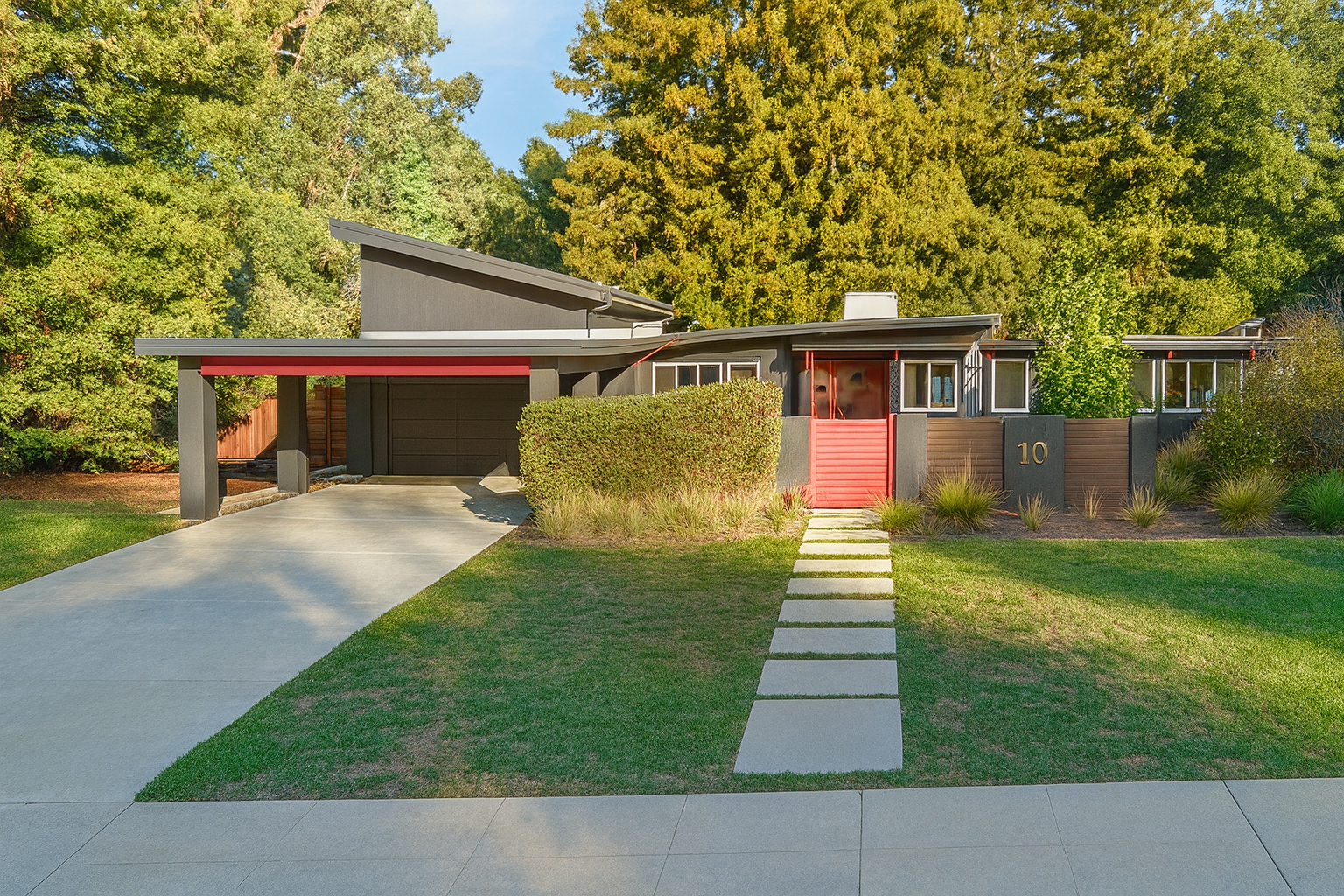
7. Ladera (Portola Valley) – Secluded Mid-Century Community with Top Schools
Why It’s Underrated: Ladera, an unincorporated community adjacent to Portola Valley, is a mid-century modern haven that many relocating buyers overlook. While not all of Ladera’s homes are Eichlers, it does contain a small tract of 25 Eichler homes (built in 1951) nestled among other ranch-style contemporaries. This neighborhood offers a retreat-like atmosphere – hills and trees, a strong community vibe – combined with easy access to Stanford University and I-280. And crucially, it shares the elite Las Lomitas school district with neighboring Atherton and West Menlo, making it a stealth contender for families seeking great schools and character homes without the Palo Alto pricetag.
Walkability: Medium. For a semi-rural area, Ladera is surprisingly walkable. The community was designed as a master plan in the 1950s with its own small Ladera Shopping Center at Alpine Road, where you’ll find a market, deli, fitness studio, and bakery. Many Ladera residents walk or bike to this hub via pleasant residential streets. There are also walking trails and greenbelts woven through the neighborhood, reflecting its origins as a cooperative development. A short stroll from the Eichler tract takes you to the Ladera Recreation Center, which has a pool, playground, and tennis courts for local families. Kids can even walk to school bus stops or to nearby Corte Madera Park. While you will drive to reach bigger stores or downtown Menlo Park/Palo Alto (10-15 minutes away), within Ladera you have the basics at your feet and a safe, closed-in network of streets perfect for evening walks, jogging, or kids biking around. For its suburban nature, Ladera scores well on internal walkability and recreation.
Model Variety: Medium. The Eichlers in Ladera were among Joe Eichler’s early projects. Only 25 were built (in “Unit 2” of Ladera’s development) and they reportedly consist of three floor plans designed by Jones & Emmonsboyenga.com. These are typically modest single-story homes – around 3 bedrooms, 2 baths, roughly ~1,300 sq ft on average – similar in size to contemporaneous Eichlers in Palo Alto’s Green Gables. So within the Eichler subset, variety isn’t huge (small sample, a few repeated plans). However, looking at Ladera as a whole, there’s variety in mid-century architecture: Eichler homes intermingle with larger custom modernist homes and Atkins-designed Brown & Kaufman homes. This gives the neighborhood visual interest – an Eichler might sit across from a distinct butterfly-roof ranch. So if you love mid-century in general, Ladera offers a broader palette. And importantly, many Eichlers here occupy hillside lots or cul-de-sacs that add uniqueness – some have views or interesting site orientations, unlike flat grid Eichler tracts elsewhere eichlerhomesforsale.com.
Renovation Stability: Medium. Ladera’s ethos is communal and down-to-earth; homes don’t turn over as rapidly, and teardowns have been less rampant than in nearby Atherton. Many Eichlers in Ladera remain, though given their age (70+ years), most have seen updates. Some have been expanded – perhaps a master suite added or a garage enclosed – yet the community still “often features site-specific innovations” that respect the original style. There isn’t an official historical overlay, but residents value the mid-century look. A number of Eichlers have been tastefully remodeled (updating kitchens, installing foam roofs, etc.) while keeping the post-and-beam charm intact. A few others might show their age or have divergent remodels, but overall the neighborhood still reads mid-century. One sign of stability: Eichler Network has highlighted Ladera’s Eichlers, including a historically preserved one on La Mesa Drive, indicating that preservation is on people’s minds. We’d categorize renovation stability as decent – not flawless, but given only 25 Eichlers were ever there, the fact most still exist and look like Eichlers is a positive.
School District Demand: High. Ladera falls in the Las Lomitas Elementary School District (Las Lomitas K-3 and La Entrada 4-8), which is exceptional – these schools perennially rank at the top of state metrics. High school is Menlo-Atherton High, which, while a larger public high school, has strong programs (especially its advanced placement and honors tracks) and a rising reputation in Silicon Valley. The combination of Las Lomitas and M-A is a huge draw; families who can’t touch Atherton’s $5M+ entry prices find Ladera a more accessible way to get into these schools. As evidence of demand: homes here, even smaller ones, attract multiple offers largely because of the schools. Moreover, the tight-knit nature of the community means the schools benefit from involved parents and a close partnership with the Ladera residents. In short, academically, Ladera ticks the highest box – you’re in a “Tier 1” district feeding into a well-regarded high school, a golden ticket for many buyers.
Neighborhood Highlights: Ladera offers a lifestyle that’s hard to replicate: it’s peaceful and verdant, with many oak-studded lots and a backdrop of the coastal foothills, yet it’s just a couple of minutes from Stanford University and the tech corridor along Sand Hill Road. The Ladera Recreation District is a focal point – residents gather at the community pool in summer, kids join the Ladera Dolphins swim team, and there are BBQs and holiday events that make it easy to know your neighbors. This 1950s cooperative spirit still permeates; there’s even a community newsletter and an online forum for residents (Ladera was originally developed as a cooperative housing experiment). For Eichler enthusiasts, Ladera offers the chance to own a genuine early Eichler with the bonus of a country-club-like community. And when you crave city amenities, the boutiques of Stanford Shopping Center or the restaurants of downtown Menlo Park are a 10-minute drive. Ultimately, Ladera is “a harmonious blend” of open space, sleek mid-century homes, and fluid indoor-outdoor living eichlerhomesforsale.com – truly an underrated refuge for those in the know.
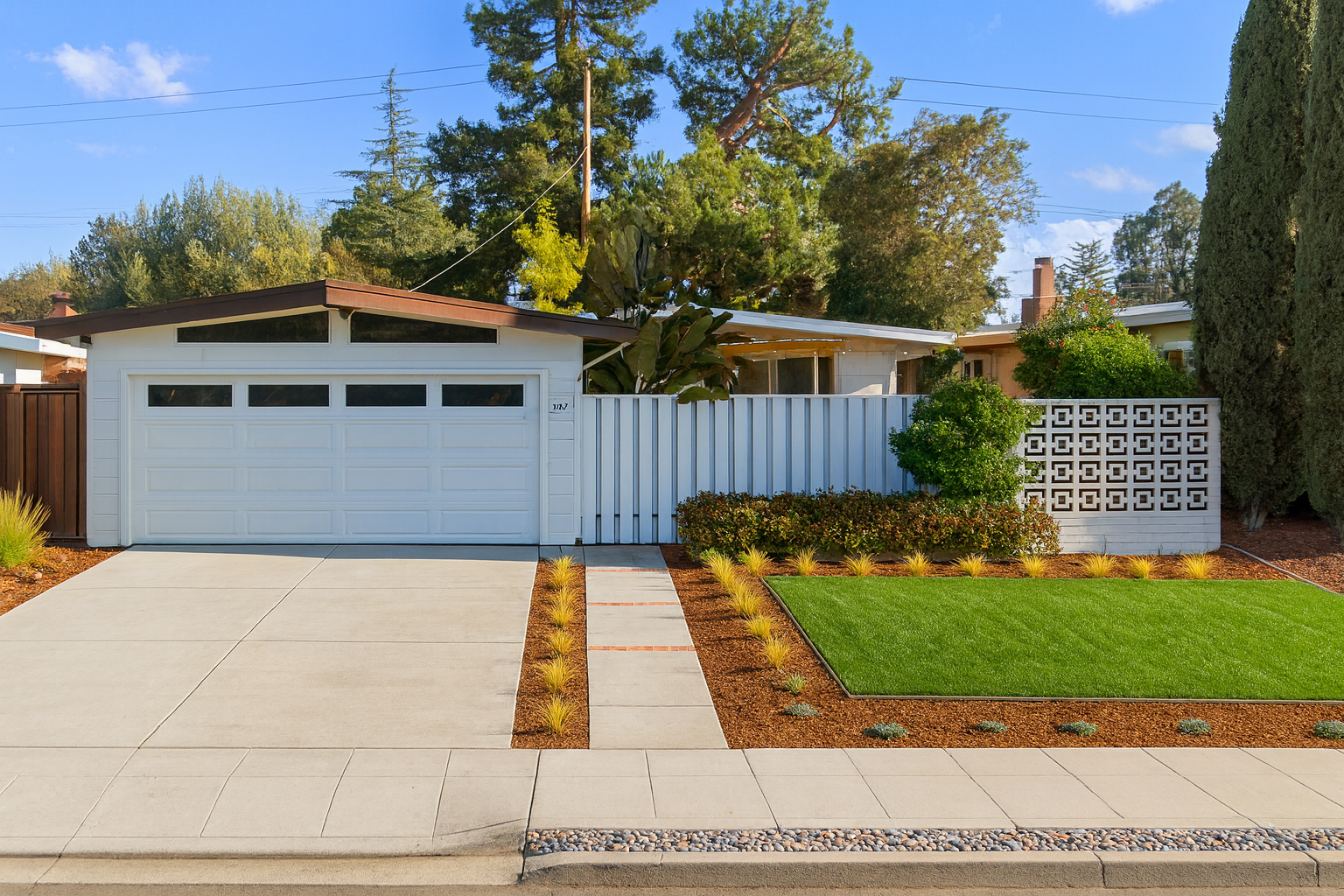
8. Monta Loma (Mountain View) – Retro Modern Charm in a Tech Hub
A tastefully updated Eichler backyard in Mountain View’s Monta Loma neighborhood, where mid-century modern homes and Silicon Valley convenience meet. eichlerhomesforsale.com
Why It’s Underrated: Monta Loma is a beloved mid-century modern neighborhood in Mountain View that, somewhat ironically, isn’t 100% Eichler – but it includes a large Eichler-built tract (the “Fairview” tract with 200 Eichler homes) plus dozens of similar modern ranches by rival builder Mackay. This blended heritage makes Monta Loma a MCM gem often overshadowed by Palo Alto’s famous Eichlers or Mountain View’s tonier neighborhoods. Yet Monta Loma offers huge appeal for young tech buyers: relatively affordable mid-century homes, a friendly vibe, walk/bike accessibility to major employers, and access to quality schools (including Los Altos High School). It’s the kind of place where neighbors sport Monta Loma logo caps and hold block parties – a true community, not just a collection of houses.
Walkability: High. Monta Loma scores very well on walkability for a suburban tract. Its location near Rengstorff Avenue and Middlefield Road means residents can stroll to the Monta Loma shopping center (with a grocery store, coffee shop, etc.) and to Monta Loma Park & Elementary School, which sit at the heart of the neighborhood. Sidewalks and bike lanes abound, and there’s a genuine culture of walking – neighbors chat on evening dog walks, families walk kids to school. Additionally, the neighborhood is just a mile or so from the revamped San Antonio Center (with Safeway, Whole Foods, restaurants, and a Target), which many can bike to easily. For recreation, the Stevens Creek Trail access isn’t far, and several smaller parks dot the vicinity. Impressively, you can even bike to Google’s main campus or to downtown Mountain View from Monta Loma, making it a popular choice for those wanting to minimize car use. The combination of parks, schools, and retail within a short radius gives Monta Loma one of the better walkability profiles among Eichler areas.
Model Variety: Medium. Thanks to multiple builders, Monta Loma showcases an array of mid-century designs. Eichler’s Fairview tract (circa 1954) contributed around 200 homes of roughly 1,116 sq ft, mostly 3-bed/2-bath with signature Eichler features. These tend to be compact, efficient Eichlers with flat or low-gable roofs and open-beam ceilings – a few different floor plans repeating. Then there are Mackay homes (slightly later 1950s) with similar modernist touches; some of those are a bit larger or have distinct rooflines. So within Monta Loma, you’ll find flat-roofed Eichlers, A-frame variations, and other contemporary ranches – all low-slung and mid-century in feel. The neighborhood isn’t cookie-cutter; for example, some houses have brick accents, others have board-and-batten; some have carports, others garages. Many owners have personalized their homes over the years, but interestingly, remodels often aim to preserve the retro roots of the house eichlerhomesforsale.com. It’s common to see original exterior Eichler colors, restored clerestory windows, or period-appropriate fencing. In summary, Monta Loma offers variety in the types of mid-century homes, yet an overall cohesive aesthetic that proudly whispers “1950s California”.
Renovation Stability: Medium. Monta Loma has seen a wave of tech professional homeowners who value the mid-century style and have invested in sensitive upgrades. Many homes are “remodeled while preserving their architectural roots” eichlerhomesforsale.com – think polished concrete or hardwood floors where vinyl once was, updated electrical and heating hidden carefully so as not to disturb ceilings, etc. On the flip side, a few smaller Eichlers have been expanded in ways that change their look (e.g. adding a front room or second story). But the community has an active neighborhood association and online forum that tends to gently discourage out-of-character alterations. There have been no mass teardowns; most homes retain their original footprint. One challenge is that these mid-century homes are now 65+ years old, so maintenance is a continuous need (roofs, radiant heat fixes, etc.). Some properties in less attentive hands have needed rehab, but those often get snapped up by an eager buyer who then polishes the gem. The general trend is improving – with each change of ownership, many Monta Loma homes are actually getting closer to their mid-century glory, not further. So while not every house is pristine, the neighborhood trajectory favors preservation and tasteful modernization.
School District Demand: Medium. Monta Loma sits in an interesting tri-district spot. Elementary is Monta Loma Elementary (Mountain View Whisman School District) – a diverse, community-oriented school that has benefited from local tech funds but isn’t in the very top echelon of test scores. For middle, it’s Crittenden Middle, which is improving steadily. However, for high school, Monta Loma is zoned to Los Altos High School (part of the MVLA district), which is one of the top high schools in the region. Los Altos High carries a strong reputation (on par with Mountain View’s other high school, if not slightly above). This combination is generally positive: families appreciate the excellent high school, and the elementary/middle are considered solid and on the upswing. Still, Mountain View’s K-8 district doesn’t have the cachet of Palo Alto or Los Altos districts. We categorize demand as medium – definitely not a deterrent (many young families happily invest here), and likely to strengthen as the local schools continue to improve with community support. The proof of demand is in recent home sales: Monta Loma Eichlers now approach $2M, up considerably in the past decade, indicating buyers are confident in the area’s overall trajectory.
Neighborhood Highlights: Monta Loma oozes mid-century nostalgia with a modern twist. It has a thriving neighborhood association that organizes events like fall festivals, community yard sales, and holiday decoration contests. There’s even a historical walking tour available that points out significant homes (e.g. the childhood home of Apple’s Steve Jobs is in Monta Loma’s orbit!). Residents today include a mix of original owners from the 1950s and 60s, and younger Google/Meta/Apple employees who value the retro vibe. The location is a commuter’s dream – you can be on Hwy 101 or 85 in minutes, or hop on Caltrain at San Antonio station just down the road. Also, Shoreline Amphitheatre and Park are nearby for outdoor concerts and kite-flying by the bay. Monta Loma’s identity as “Mountain View’s mid-century modern gem” eichlerhomesforsale.com is well-earned; it’s a neighborhood where you can live the Eichler lifestyle (indoor-outdoor living, friendly cul-de-sacs, a sense of optimism in the design) right in the thick of Silicon Valley’s tech landscape. That contrast – Atomic Age charm meets Google era convenience – makes Monta Loma exceptionally cool and indeed underrated.
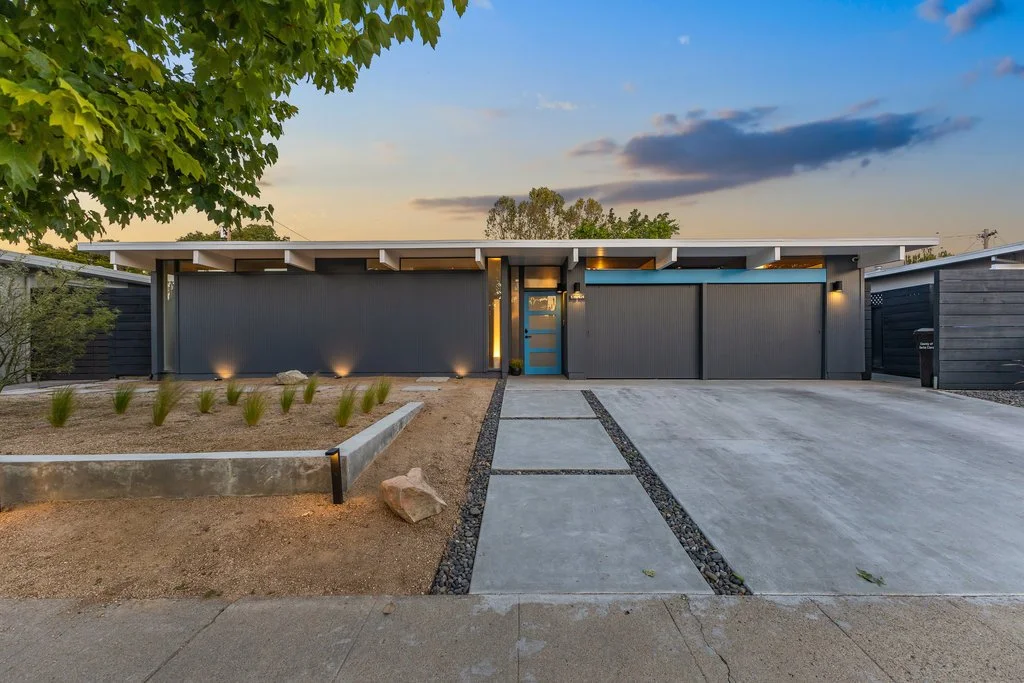
9. Fairglen (San Jose – Willow Glen) – Retro Flair in a Charming Community
Why It’s Underrated: Fairglen (sometimes called Willow Glen Eichlers) is a picturesque Eichler tract in San Jose’s desirable Willow Glen area. With about 140 Eichler homes built in the mid-1950s, Fairglen represents the largest concentration of Eichlers in San Jose eichlerhomesforsale.com. Willow Glen is known for its small-town-in-the-city feel, with tree-lined streets and vintage downtown, but Eichler homes aren’t the first thing people associate with it – making Fairglen a delightful surprise for mid-century lovers. It’s undervalued in the sense that you get classic Eichler design plus that coveted Willow Glen ambiance, usually at prices far lower than Palo Alto. In other words, Fairglen is a chance to own a piece of Eichler history in a warm, family-friendly community that many relocating buyers might overlook initially.
Walkability: High (Neighborhood), Medium (Amenities). Fairglen’s Eichler streets (with names like Fairglen Drive, Booksin Avenue, and Ellen Avenue) are quintessential Willow Glen – quiet, wide, and shaded by mature sycamores and oaks. Neighbors wave hello, kids play in front yards; it’s very stroll-friendly. In terms of reaching amenities, the neighborhood is about a mile from Downtown Willow Glen (Lincoln Avenue), a charming stretch of cafés, boutiques, and restaurants eichlerhomesforsale.com. Many residents do walk or bike that distance to enjoy weekend farmers’ markets or an evening out, though it’s just as easy to drive 5 minutes. Parks are nearby too: the expansive Willow Glen Community Center and Bramhall Park are within walking/biking range. The lovely San Jose Rose Garden is a short drive. Additionally, Fairglen residents can walk to local schools and to St. Christopher’s Catholic School/Church, which often serves as a community gathering point. So, within the tract and immediate area, walkability is great; for major errands, it’s a quick hop in the car to big box stores or San Jose’s downtown (which is about 3 miles away). Overall, Fairglen offers a very walkable neighborhood lifestyle, with the perks of an urban village (Willow Glen) close by.
Model Variety: Medium. Fairglen was built in several phases during the mid-50s, so it features a few different Eichler models. Most are 3–4 bedroom, 2 bath designs around 1,500–1,700 sq ft, with either an atrium or courtyard entry. Common architectural elements include low-pitch gable roofs with open beams, Philippine mahogany wall paneling inside, and radiant-heated floors. There are both flat-roof and peaked-roof variations in the tract, providing a nice mix of silhouettes. While floor plans may repeat, the orientation on lots and personalization (paint colors, landscaping) make each home feel a bit unique. Fairglen doesn’t have the huge atrium models of later Eichlers, but it does boast some rarer early designs – for instance, a few homes have the original brick fireplace divider in the living room (an Eichler signature of that era). The variety is sufficient to be interesting yet cohesive enough that the neighborhood feels uniform in style. Notably, Eichler built another small tract nearby on Booksin and Curtner (sometimes called Fairglen Addition or Booksin Eichlers), which adds a handful more Eichlers in the immediate vicinity. In summary, Fairglen delivers classic mid-50s Eichler variety: you won’t find custom gallery models here, but you will get the archetypal Eichler ranch in a few beloved flavors.
Renovation Stability: High. Fairglen enjoys a strong pride of ownership. Many homes are still in the hands of families who have been there for decades, and new buyers in recent years have tended to be Eichler enthusiasts who restore rather than remodel away the character. It helps that Willow Glen in general prizes historic character (lots of vintage Spanish and Craftsman homes in the area) – that ethos extends to its mid-century pocket too. Driving through, you see well-maintained Eichler exteriors: original vertical siding, carports left open, period-appropriate colors. Some houses have undergone interior renovations (updated kitchens, dual-pane windows, etc.), but from the street, the mid-century look prevails. There’s even an informal Eichler network among homeowners who swap contractor tips for things like repairing radiant heat or sourcing globe lights. All this has kept Fairglen’s aesthetic remarkably intact. Cases of unfortunate remodels (like second-story additions) are extremely rare here. Additionally, because these homes are on the more affordable end of Eichlers, buyers are often couples/families who specifically want an Eichler – meaning they are motivated to **“avoid over-renovated homes that lose Eichler authenticity”* eichlerhomesforsale.com. The result: Fairglen feels like a mid-century time capsule grafted into a classic San Jose neighborhood. Its architectural integrity is arguably second only to Palo Alto’s historic Eichler tracts, making it a safe haven for Eichler purists.
School District Demand: Low to Medium. This is one aspect where Fairglen isn’t top-tier. The neighborhood is in San Jose Unified School District – the local public schools (e.g., Booksin Elementary, Willow Glen Middle, and Willow Glen High) are decent but not at the level of Cupertino or Palo Alto schools eichlerhomesforsale.com. Booksin Elementary is actually well-regarded within San Jose (a strong community school), but Willow Glen High’s academic rankings are average. That said, many families in Willow Glen still covet these schools for their community and sports, even if test scores aren’t sky-high. Additionally, St. Christopher School (a private K-8) is right in the neighborhood and very popular, and Bellarmine College Prep and Presentation High (private high schools) are a short drive away. So, families in Fairglen often have a mix of public and private education paths. The relative softness of the public school scores means home prices here are significantly lower than in similarly charming Eichler areas with top schools (e.g., Fairglen Eichlers might be $1.6M–$2.5M eichlerhomesforsale.com, whereas a comparable Eichler in Palo Alto would be $3M+). For some buyers, this trade-off is acceptable, especially if they don’t have school-age kids or plan on private schools. In the long run, Willow Glen’s improving trajectory and overall desirability could boost the appeal further. But for now, we rank school demand as the weakest of the four factors for Fairglen.
Neighborhood Highlights: Fairglen merges mid-century cool with classic Willow Glen charm. Residents get to enjoy the boutique downtown Willow Glen – with its holiday tree-lighting, Wine Walks, and weekly farmers’ market – fostering a small-town feel in the big city eichlerhomesforsale.com. The Eichler homes themselves sit under a canopy of mature trees (rare for Eichler tracts, which often have fewer street trees), enhancing curb appeal. Many front yards feature era-appropriate landscaping like succulents and globe lanterns, nodding to the 1950s origins. Socially, the neighborhood is very active: there’s a yearly Eichler block party, and during the holidays many streets participate in festive light displays (a Willow Glen tradition). For commuters, downtown San Jose, Diridon Station (for Caltrain), and major freeways (87, 280) are conveniently close, yet Fairglen feels tucked away from the hustle. Local eateries, from old-school Italian restaurants to trendy brunch spots, are just around the corner on Lincoln Ave. In essence, Fairglen offers “pride of ownership” in a community that “blends Eichler architecture with classic San Jose charm” eichlerhomesforsale.com. It’s an ideal landing spot for buyers who want a true neighborhood vibe with their mid-century modern home – and it remains one of the best-value Eichler enclaves in Silicon Valley.

10. Redwood City Eichler Enclaves (Atherwood, Sequoia Meadow, Fair Oaks) – Mid-Century Finds in a Booming City
Why It’s Underrated: When thinking Eichler, Redwood City doesn’t leap to mind – yet this vibrant Peninsula city harbors a few small Eichler tracts that are gems for the savvy buyer. In the early 1950s, Eichler built roughly 125 homes across three Redwood City neighborhoods: Atherwood (the largest tract, built 1950), Sequoia Meadow (1954), and an area often called Fair Oaks/Fairwood (1953) eichlerhomesforsale.com. These enclaves are part of Redwood City’s greater Woodside Plaza and Redwood Oaks neighborhoods. They fly under the radar because they’re not huge tracts, but that’s exactly what makes them underrated: you can snag an authentic Eichler here with all the architectural allure, often at a lower price than bigger Eichler markets, all while enjoying Redwood City’s emerging urban scene and famously sunny microclimate.
Walkability: Medium. The Eichler pockets in Redwood City are nestled in residential areas, but fortunately near convenient amenities. For instance, the Atherwood and Fair Oaks Eichlers are close to Woodside Plaza, a shopping center with grocery, pharmacy, restaurants, and cafes – easily bikeable or even walkable from many of the Eichler streets. Likewise, there are several parks in proximity (Maddux Park, Stulsaft Park’s open space a bit further). You might not walk to downtown (which is about 2 miles away), but Redwood City’s increasingly lively downtown (theatre, music, dining) is a quick drive or bike ride. Within the neighborhoods, the streets are quiet and safe for walking the dog or kids playing. There’s a strong sense of community – neighbors often know each other and organize block gatherings. Additionally, local schools and the Red Morton Community Center are within a short distance, adding to everyday convenience. Redwood City’s motto is “Climate Best by Government Test,” meaning people are out and about year-round. So while it’s not an urban level of walkability, you can accomplish a lot on foot or by short bike, giving these Eichler enclaves a comfortable suburban walk-score.
Model Variety: Medium. Being early Eichler developments, the Redwood City tracts primarily feature 3-bedroom, 1-bath or 2-bath models, around 1,100–1,300 sq ft eichlerhomesforsale.com. These are classic early Eichlers: simple low-slung profiles, open beam ceilings, and integrated courtyards (though not atriums, which came later). Within each tract, the models are fairly similar (Eichler was still refining his offerings then), but across the three areas there are slight differences in design vintage. For example, Atherwood (1950) homes are some of Eichler’s earliest work – compact and minimalist, truly mid-century modern pioneer homes eichlerhomesforsale.com. By 1954’s Sequoia Meadow, Eichler had introduced a couple of larger floor plans (~1,340 sq ft) with perhaps an extra half-bath or expanded living area eichlerhomesforsale.com. So if you tour all the enclaves, you’ll spot a gradual evolution in style and size. All have the signature Eichler touches of that era: floor-to-ceiling glass in living areas, exposed beams, and paneled walls. Some homes sit on standard lots, others on slightly larger corner lots, offering variety in lot size and orientation. While you won’t find double A-frame masterpieces here, the unifying mid-century aesthetic gives the neighborhoods a charming, cohesive identity – a nostalgic snapshot of Eichler’s early contribution to Redwood City’s postwar growth.
Renovation Stability: Medium. These Redwood City Eichlers are now 70+ years old, and their journey has been mixed. On one hand, many have been modestly updated through the decades but not significantly altered – you’ll still find original exterior elevations intact, and quite a few still boast original features (some even retain working radiant heat or Philippine mahogany interior walls). On the other hand, a number of these homes have been expanded or remodeled, given that original square footage was small. Some owners added bedrooms or family room extensions; a few replaced carports with garages or applied styles not in tune with Eichler’s look. There hasn’t been a concerted preservation movement here like in Palo Alto, so changes have been on a case-by-case basis. However, the tide is turning: as mid-century modern gains popularity, new buyers in Redwood City are restoring Eichler exteriors (removing colonial trims that might have been added in the ‘80s, for example) and showcasing their authentic design. The city itself has no specific Eichler design ordinance, but it does celebrate its architectural history in general. We consider stability moderate – there’s a mix of well-preserved specimens and a few that have lost their Eichler character. The good news: enough originals remain that the neighborhoods “offer a glimpse into a pivotal moment in architectural history” eichlerhomesforsale.com, and with continued appreciation, renovation quality should only improve.
School District Demand: Low to Medium. Redwood City’s Eichler areas are served by the Redwood City School District (for elementary/middle) and the Sequoia Union High School District. Historically, Redwood City’s public schools have been mid-tier, not as highly ranked as those in Los Altos or Menlo Park. For example, these homes are typically zoned to schools like Henry Ford or Roosevelt Elementary and to Sequoia High School or Woodside High (depending on exact location). These schools are solid and have some bright spots (Sequoia High offers the International Baccalaureate program, for instance), but they don’t drive real estate demand in the way Palo Alto’s or Cupertino’s schools do. As a result, Eichlers here have often been priced more affordably, attracting buyers willing to do private school or without kids. It’s worth noting Redwood City has a number of charter and private schools that families utilize, and the community is very involved in improving local schools. But strictly speaking, school reputation is not a big draw for these neighborhoods. The flip side: this is part of what makes these Eichlers “underrated” – you aren’t competing with the frenzy of top-school hunters, yet you’re buying in a city on the rise (which could mean upside if schools continue to improve). In sum, schools are the softest factor here, but many are betting that Redwood City’s growth will elevate everything, schools included, in the coming years.
Neighborhood Highlights: Redwood City’s Eichler enclaves combine mid-century living with a city that’s reinventing itself. Only a few minutes away, downtown Redwood City has transformed into an entertainment hub, with a multiplex cinema, courthouse square hosting concerts, and a bevy of new restaurants and brewpubs. Yet back on Eichler streets like Northumberland, Abbot, or Connecticut Drive, it’s peaceful and nostalgic. You’ll see neighbors chatting in original Eichler carports and kids shooting hoops in mid-century driveways. The climate is superb – warmer and less foggy than neighborhoods up north – meaning Eichler features like glass walls and courtyards can be enjoyed to the fullest. Also, Redwood City’s location is central for commuters: halfway between San Francisco and San Jose, with a Caltrain stop downtown for car-free travel. Nearby attractions include the San Mateo County History Museum, which nods to Redwood City’s rich history (fun for weekend exploration), and the expansive Stulsaft Park, offering hiking trails just up the hillside. One particularly charming aspect: since these Eichler tracts are small, neighbors tend to form tight bonds. Original Eichler owners still share stories of moving in back in 1953, while newer residents bond over restoration tips. It’s a micro-community vibe within the larger city. And importantly for investors, Redwood City is experiencing a tech and biotech influx (with companies like Oracle, Box, and Kaiser expanding locally) eichlerhomesforsale.com, which bodes well for housing demand. Snagging an Eichler in Redwood City now could mean enjoying both the “timeless mid-century modern aesthetic” and the growth benefits of a city hitting its stride eichlerhomesforsale.com. That future potential, wrapped in 1950s charm, makes these enclaves a fitting cap to our top 10 list of underrated Eichler neighborhoods.
Conclusion: Silicon Valley’s landscape of Eichler neighborhoods is far more diverse than most realize. From Cupertino’s well-kept secret in Fairgrove to the historic pockets in Redwood City, each of these underrated neighborhoods offers relocation buyers a unique chance to own a mid-century modern home with character, community, and upside potential. By looking beyond the usual suspects (sorry, Palo Alto and San Mateo Highlands!), you can find architectural pedigree and quality of life in equal measure – often at a relative bargain. Whether your priority is walking the kids to a great school, admiring the mountain view from your A-frame atrium, or biking to work
…Whether your priority is walking the kids to a great school, admiring the mountain view from your A-frame atrium, or biking to work from a quiet vintage enclave, Silicon Valley’s underrated Eichler neighborhoods have you covered. By considering these hidden gems, relocation buyers can uncover mid-century modern living that truly offers the best of both worlds – iconic architectural character and Silicon Valley convenience – with plenty of room for future growth in value. Embrace the indoor-outdoor lifestyle and strong community spirit these neighborhoods offer, and you just might find that your Eichler dream home awaits in an unexpected corner of the Valley.
The Boyenga Team at Compass—led by top-producing agents Eric and Janelle Boyenga—has long been recognized as Silicon Valley’s premier Eichler and mid-century modern real estate experts. As founding Compass partners with deep local roots, Eric and Janelle combine architectural knowledge, data-driven strategy, and next-gen marketing to help clients buy and sell iconic modern homes with confidence. Their unparalleled understanding of Eichler neighborhoods across the Peninsula and South Bay allows buyers to uncover hidden value and helps sellers maximize exposure to the thriving mid-century market. Whether navigating renovations, pricing, architecture, schools, or neighborhood micro-trends, the Boyenga Team brings a level of experience and advocacy that consistently elevates outcomes for their clients.