
Eichler Buying Process
PROPERTY NERDS® / THE BOYENGA TEAM
Buying an Eichler is a decision about architecture, daily life and the condition of a particular home. The atrium may be memorable. The floor plan, roof, heating system, records and ownership budget need just as much attention. Our Eichler buying process brings those decisions together, from your first neighborhood shortlist through closing and your first months of ownership.
Eric and Janelle Boyenga bring an Eichler specialist’s perspective to the search: understand the design, investigate the property, compare the evidence and decide with a clear view of the tradeoffs. This guide explains what to consider, what to ask and where qualified inspectors, lenders and other professionals fit into the process.
Plan my Eichler purchase → · Explore the Neighborhood Atlas
01 / DEFINE
Build your Eichler buying brief
Begin with the way you want the home to work. An architectural preference becomes useful when it translates into a search criterion. A courtyard may provide outdoor living space, but you still need to consider privacy, drainage, access and how the rooms connect around it.
Daily use: bedrooms, work areas, storage, parking, accessibility needs and the relationship between shared and quiet spaces.
Architectural priorities: an atrium or courtyard, exposed beams, original paneling, roof profile, glass walls and indoor-outdoor connections. Not every Eichler has every feature.
Condition tolerance: move-in readiness, willingness to coordinate work and the amount of uncertainty you can responsibly accept.
Timing and flexibility: your current housing, financing milestones, move date and ability to accommodate possession arrangements.
Create three lists: essential, preferred and flexible. Revisit them after touring several homes. A beautiful feature should earn its place in the brief by serving your life.
Decision checkpoint: Can you describe the right home without relying only on a city name, bedroom count or photograph?
02 / PLAN
Understand the full ownership budget
Discuss financing early with your lender, including the documentation required, loan options, cash to close and any property conditions that could affect approval. A preapproval helps define the search but does not guarantee final loan approval or the suitability of a particular property.
Separate the purchase budget from the ownership budget. Include down payment, estimated closing costs, taxes, insurance, any association expenses, moving costs and a reserve for maintenance. Ask the lender about the payment under the actual proposed loan terms rather than relying on a listing-site estimate.
For an Eichler, create a separate line for property-specific work. A roof evaluation, heating recommendation or electrical upgrade may change how much room you want in the budget. Obtain written estimates for defined scopes; a general allowance is not a contractor’s bid. Distinguish necessary work from improvements you can phase over time.
Representation: Review the buyer-broker agreement, scope of services, duration, compensation and potential payment responsibilities before proceeding. Compensation is negotiable. Ask how any seller contribution would affect your obligations. California’s Department of Real Estate explains the buyer-representation requirements.
Decision checkpoint: Is the home still comfortable to own after the purchase costs and the work you reasonably expect?
03 / EXPLORE
Compare Eichler neighborhoods and individual sites
Use the Eichler Neighborhood Atlas to organize the search across Silicon Valley and the Bay Area. Then move from the neighborhood overview to the address. Homes in the same tract can differ in orientation, lot shape, street exposure, alterations and maintenance history.
Visit at different times to understand light, traffic, surrounding activity and your own travel patterns.
Consider the actual relationship between glazing, neighboring homes, outdoor areas and privacy.
Review available hazard information and investigate property-specific insurance availability early.
Verify school assignments directly with the district for the address; a neighborhood name or website boundary is not an enrollment guarantee.
Ask whether an association, recorded restriction, design guideline or historic designation applies to the property and the changes you contemplate.
We compare homes around your priorities and objective property characteristics. Neighborhood discovery should help you understand places, architecture and practical tradeoffs.
Decision checkpoint: Does this particular location work on an ordinary weekday as well as during a weekend showing?
04 / SEARCH
Build a search that recognizes an Eichler
Combine current listing searches with neighborhood knowledge and a review of the actual property. Marketing labels are not proof of architect, builder, floor-plan model or original condition. Verify attribution where it matters to your decision.
Set useful search boundaries, then review new opportunities against the buying brief. Keep a short comparison log so a dramatic photograph does not outweigh the less visible facts. Record the address, layout fit, condition questions, available records, asking price and next action.
Some opportunities may be shared through agents before appearing on consumer portals, where permitted. Access depends on the seller’s instructions and applicable MLS rules; no private inventory or advance access is guaranteed. We help you understand the information available and the limits of that exposure.
Decision checkpoint: Are you comparing real alternatives using the same criteria, or reacting to each new listing in isolation?
05 / TOUR
Read the architecture while you walk the home
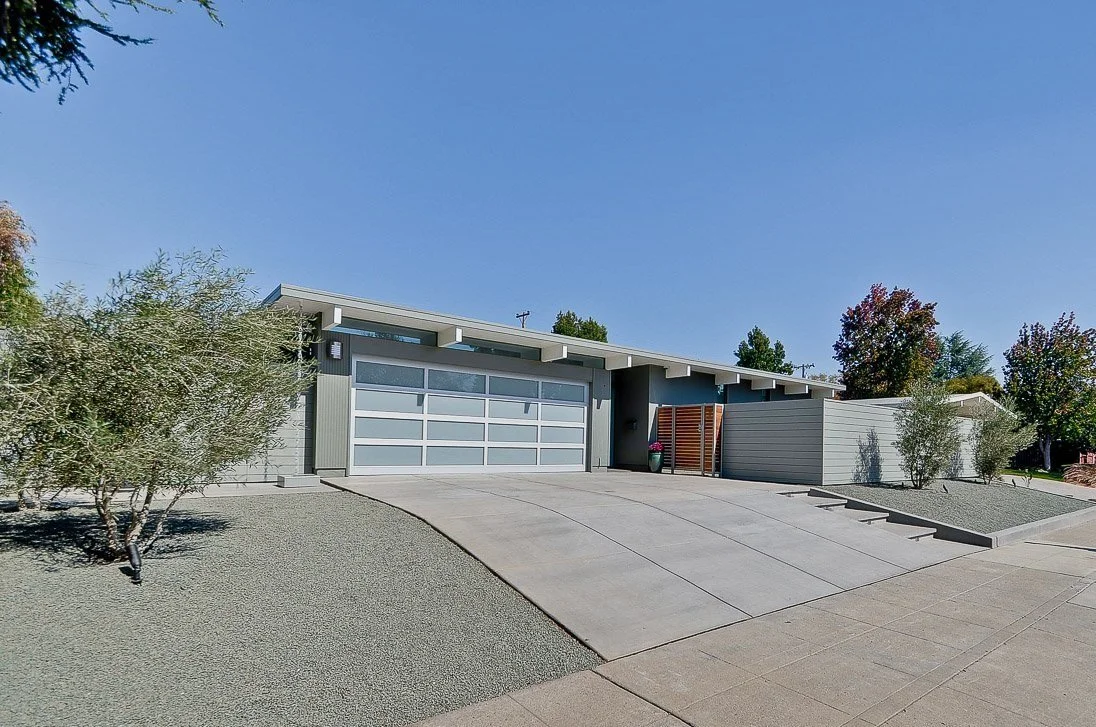
Start with the arrival sequence and walk the home as you would use it. Look through the windows from seated positions. Test the relationship between kitchen, dining, living and outdoor areas. Think about furniture scale, circulation, storage and the routes between bedrooms and bathrooms.
Observe which details appear original, which have changed and which need documentation. An enclosed atrium, converted garage, added room or altered wall can change the experience and raise questions about permits, structure, ventilation or counted living area. Do not infer approval from a finished appearance.
Light and comfort: orientation, shading, ventilation and how the spaces may behave at different times of day.
Privacy and use: views through glazing, garden access, room separation and realistic furniture placement.
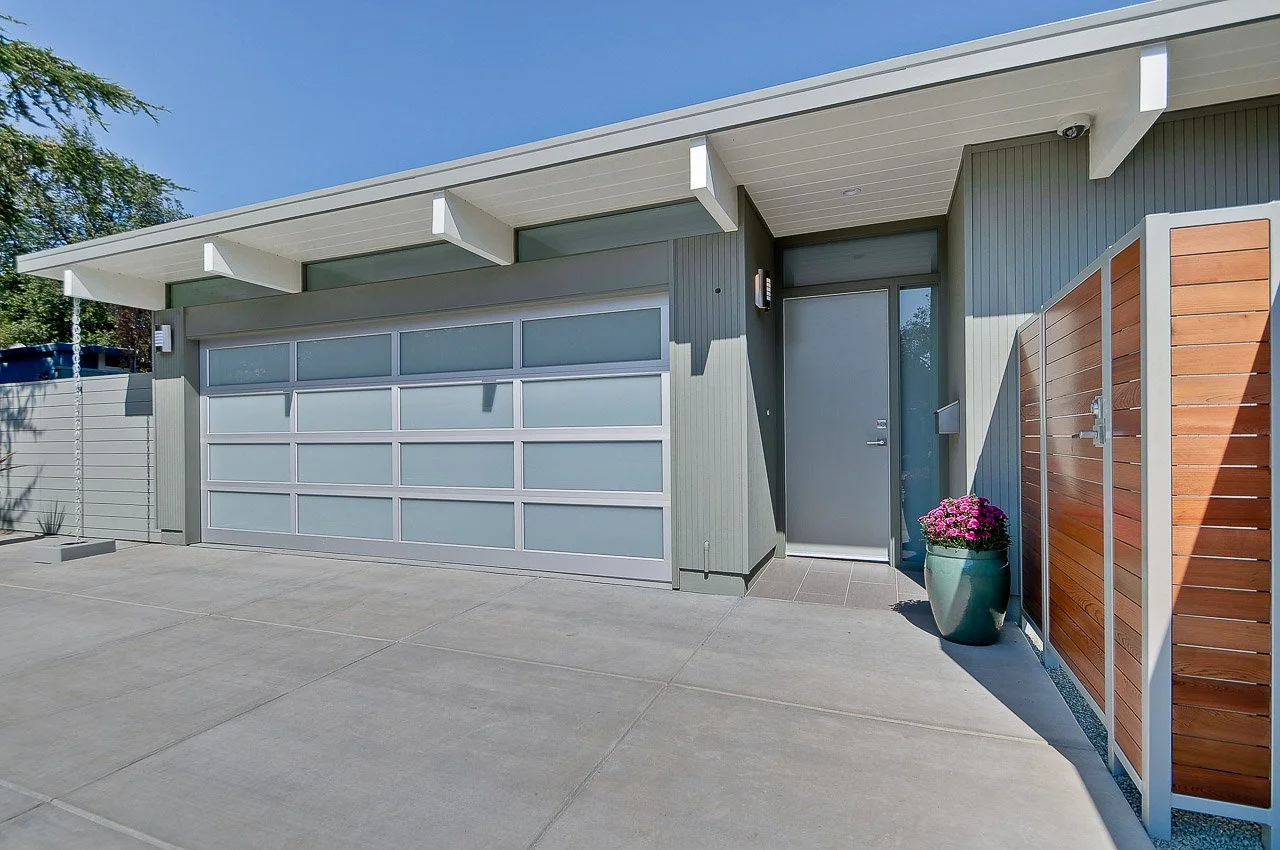
Architectural continuity: beams, ceiling lines, paneling, siding, window proportions and transitions between original and newer work.
Questions to investigate: stains, cracks, uneven surfaces, sticking doors, roof patches or unfamiliar system modifications. Observations prompt professional evaluation; they do not diagnose a defect.
Decision checkpoint: Can you explain both what you love and what still needs an answer?
06 / INVESTIGATE
Eichler due diligence: look beyond the surface
A general home inspection provides an important starting point. Use its findings, the disclosures and the property’s history to decide which additional evaluations are appropriate. Confirm scope, access and timing with each professional. A listing description, service invoice or inspection report does not eliminate every unknown.
Roof, drainage and water management
Identify the roof assembly, installation history, repairs, available warranties and drainage arrangement. Have a qualified roofing professional assess condition and recommended work when warranted. Look at penetrations, transitions, skylights, gutters and the relationship between roof drainage and site drainage. Review stains and prior leak disclosures together rather than treating a newly finished ceiling as evidence of a sound roof.
Radiant heat and replacement systems
Determine what heats the home today, whether original in-slab components remain in use and what records exist. Ask a qualified radiant-heating professional which evaluation is suitable for this system, including whether testing is appropriate. Understand the boiler, controls, zones, prior repairs and any abandoned portions. If alternative heating or cooling was installed, investigate permits, equipment condition, distribution and the effect on the architecture.
Slab, structure and site conditions
Ask the inspector to explain observed cracking, movement, moisture or unusual conditions and whether an engineer or other specialist should evaluate them. A visible crack alone does not establish its cause or significance. Review grading, downspout discharge, exterior drainage and tree relationships as part of the larger picture.
Glass, frames and indoor-outdoor connections
Review operation, condition, seals, signs of water entry and the documentation for replacements. Ask appropriate professionals about safety glazing, installation and improvement options where relevant. Balance comfort, performance and maintenance with the proportions and sightlines that define the home.
Electrical, plumbing, sewer and pest concerns
Review the inspection findings and available records for the panel, circuits, plumbing materials, water heater and visible modifications. Decide whether a licensed electrician, plumber, sewer specialist or pest inspector is needed. If you want an EV charger, heat pump, induction cooking or solar, investigate feasibility rather than assuming the existing infrastructure supports the project.
Older materials and proposed renovation
Before disturbing older finishes or materials, ask qualified professionals whether lead or asbestos evaluation is appropriate. Age or appearance alone does not establish what a material contains. The EPA advises leaving suspected asbestos-containing materials undisturbed and using trained professionals when evaluation or work is needed.
Decision checkpoint: For each significant finding, identify its meaning, the next qualified professional, the estimated scope and what remains uncertain. Read our Eichler home inspection guide for further questions.
07 / VERIFY
Read the disclosures, records and renovation constraints
Organize the available seller disclosures, inspection reports, repair invoices, permit records, preliminary title report and association documents, if applicable. Compare them with the home you toured. Ask for clarification when dates, descriptions, measurements or visible alterations do not align.
Confirm the source of reported square footage and the treatment of additions or conversions. Review title exceptions and recorded restrictions with the appropriate professionals. Investigate hazard disclosures and discuss insurance coverage, exclusions, deductibles and costs with an insurance professional before the relevant decision deadlines.
Renovation plans deserve their own feasibility review. A local design guideline, zoning rule, easement, association restriction or historic designation can affect a proposed project. Requirements vary by address. For example, Palo Alto’s Eichler design guidelines provide preservation guidance; they should not be treated as the rulebook for every Eichler community.
Decision checkpoint: If your decision depends on enclosing an atrium, adding space or changing the roofline, obtain the relevant feasibility information before assuming the project is available to you.
08 / OFFER
Build an offer around evidence and acceptable risk
Compare relevant sales and current competition, accounting for location, layout, lot, condition, alterations and the limits of the available data. Price per square foot is one reference, not a complete valuation method. An original home, a thoughtfully restored home and a extensively altered home may require different comparisons.
Discuss price alongside deposit, financing, appraisal, inspection and other contingencies, closing timing, included items and possession. Ask what each term means, which deadlines require action and what could happen if circumstances change. A competitive offer should reflect your financial capacity and the risks you understand.
Review available disclosures before offering when practical, and identify the investigations that remain. Do not treat a seller-provided report as equivalent to your own complete investigation. Removing or waiving protections can have material consequences; evaluate the actual documents and circumstances with your agent and other advisers.
Decision checkpoint: What information supports this offer, what is still unknown and what is your comfortable stopping point?
09 / ESCROW
Turn contract milestones into a clear action plan
After acceptance, organize the agreed deadlines and responsibilities. Coordinate the deposit, lender requests, appraisal, inspections, insurance, title review and any negotiated work. The contract controls the timeline; there is no single escrow schedule that fits every purchase.
Bring findings together before making contingency decisions. For each material issue, review the report, seek clarification, obtain appropriate estimates and discuss the available contractual options. Keep requests and agreements documented. A verbal assurance is not a substitute for an agreed written term.
For financed purchases, compare the final loan terms and closing costs with earlier estimates. The CFPB’s Closing Disclosure guide explains the document and the generally required three-business-day review period before closing. Your lender should explain which rules apply to your loan.
Verify wire instructions through a known, independently confirmed contact at the escrow or title company. Do not rely on a changed instruction arriving only by email. Arrange utilities and moving logistics around the actual possession terms.
Decision checkpoint: Are the significant questions answered, the written obligations understood and the required approvals complete?
10 / OWN
Close with a plan for your first 90 days
Use the final walkthrough to review the property against the contract, agreed repairs and included items. It is not a substitute for an inspection. Raise discrepancies promptly and confirm the process for recording, funds, keys and possession with the transaction team.
Collect manuals, service contacts, transferable warranty information, available plans and maintenance records. Learn the controls and shutoffs from appropriate professionals. Keep the inspection findings and estimates in an organized property file.
First month: address agreed immediate priorities, establish insurance and service records, and learn how the home operates.
Next two months: create a maintenance calendar based on actual equipment and professional recommendations; evaluate drainage, roof care and heating service needs.
Before major changes: live with the light, circulation and outdoor connections where practical. Revisit the preservation and improvement plan with qualified designers and contractors.
Our role continues with useful introductions and Eichler resources. Specialists evaluate their own scopes, and the right long-term plan should respect both the home’s architecture and the way you want to live.
Questions Eichler buyers ask
Is an original Eichler better than a remodeled one?
Neither label answers the question. Evaluate condition, architectural quality, documentation, practicality and your priorities. Original materials can be meaningful, and thoughtful improvements can be useful. Assess the actual work and what ownership would require.
Does every Eichler have an atrium or working radiant heat?
No. Features vary by model and tract, and systems may have changed. Verify the layout and operating systems in the individual home.
Should I avoid a home with an older roof or heating system?
Age is a reason to investigate, not a complete diagnosis. Get a qualified assessment, understand available options and consider scope, timing and cost in your decision.
Can I modernize an Eichler without losing its character?
Start with the features that give the home its identity, then define the functional improvements you need. Investigate permits and restrictions and compare design options before committing to irreversible changes.
How long does buying an Eichler take?
The search depends on inventory and your criteria. After acceptance, the agreement, financing and investigation needs shape the schedule. We build the plan around your actual milestones rather than promising a universal timeline.
Bring your questions. We’ll build the buying plan.
Tell Eric and Janelle Boyenga where you want to search, which Eichler features matter and how much preparation or renovation you are comfortable taking on.
Schedule my Eichler buying consultation →
Eichlers@Boyenga.com · 408.373.1660
Or use the inquiry form below to share your buying brief.
Take the Property Nerds showing notebook.
Download the fillable Eichler Showing Notebook
Use the three-page worksheet to compare light, privacy, layout, records and follow-up questions. Print it for a visit or save your notes in a compatible PDF reader.