
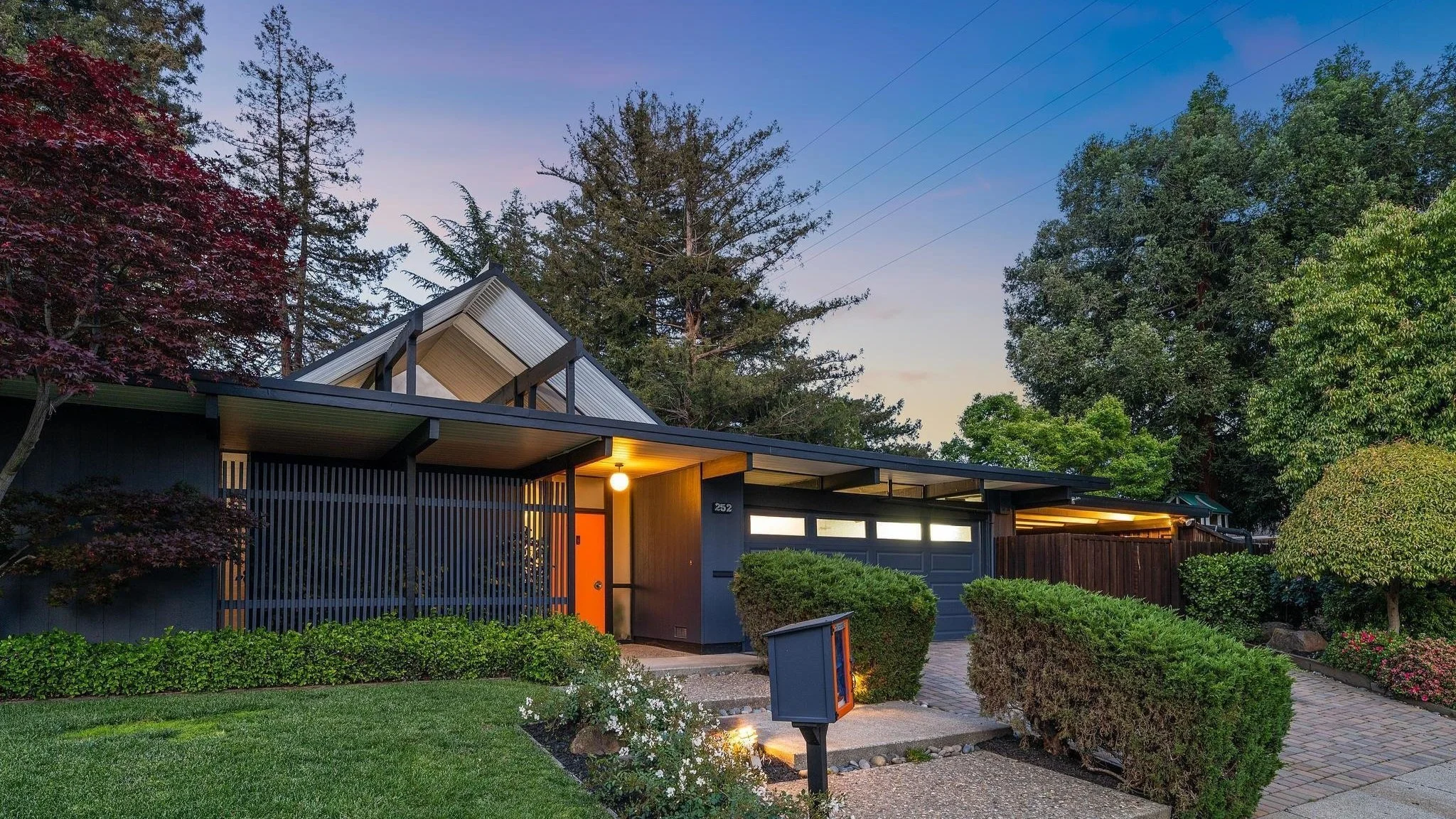

Property Nerds® / Eichler value explained
What Is My Eichler Worth?
Start with the right comparisons. Then account for the details that make it yours.
Your address is the starting point. Your tract, floor plan, site, condition and architectural character give the number context. A useful valuation discussion should explain the evidence, identify what still needs verification and connect the findings to your plans.
A property-specific conversation with the Boyenga Team. This is not an instant automated estimate or a formal appraisal.
01 / The property behind the price
Six questions for an Eichler value review.
Which homes truly compete with yours?
Begin with relevant local sales, then look beyond the city label. Review the street setting, lot configuration, privacy, orientation and access to outdoor space. A nearby sale can be a weak comparison if the property experience is materially different.
How does the space actually work?
Compare room arrangement, usable living area, circulation and indoor-outdoor connections. An atrium, enclosed courtyard, addition or reconfigured kitchen needs a closer look. Verify measurements and available permits rather than treating every area as equivalent living space.
What has been preserved or changed?
Document original paneling, ceilings, exposed structure, glazing and cabinetry, together with their condition. Review how alterations relate to the house. Neither “all original” nor “fully remodeled” is a sufficient valuation conclusion by itself.
What does the evidence tell us?
Gather roof, heating, drainage and other maintenance records. Identify known concerns and unresolved questions for appropriate professionals. A new finish does not establish the condition of the systems behind it.
When did the comparable find its buyer?
Record the contract and closing dates when available. Consider what has changed since that sale, including the choices available to buyers. Revisit the analysis if your selling date changes rather than carrying an old range forward indefinitely.
What will buyers understand at a showing?
Assess whether the rooms communicate their purpose and whether the photography reflects the property accurately. Discuss pricing and preparation together, while keeping staging costs separate from any unproven increase in value.
02 / Read the evidence
A comp is a comparison—not just a nearby sale.
Ask why each property belongs in the analysis. Fannie Mae’s appraisal guidance identifies characteristics such as site, size, style and condition when selecting comparable sales. That is useful background for understanding why proximity alone is insufficient. Read the comparable-sales guidance.
| Evidence | What to examine | What not to assume |
|---|---|---|
| Closed sales | Sale and contract dates, property condition, similarities and meaningful differences. | That the highest sale is automatically the best comparable. |
| Active listings | The alternatives currently competing for a buyer's attention. | That asking prices establish completed-sale value. |
| Pending sales | Which properties attracted an agreement and when; available verified information. | That an unpublished contract price is known or that the sale will close on those terms. |
| Property records | Available plans, measurements, permits and documented work. | That every record is complete or that an unverified addition should be counted as permitted space. |
| Marketing history | Price changes, time on market and changes in condition or presentation. | That a single metric explains why a property sold or did not sell. |
Why price per square foot is only a cross-check
Dividing a sale price by reported living area produces a convenient comparison, but it does not isolate the value of the structure from the lot, location or condition. Two similarly sized homes can differ substantially in layout, setting and improvements. Verify the area figure and compare the underlying properties before using the ratio to support a conclusion.
Ask for a range with reasons
A useful pricing conversation explains the strongest comparisons, important differences and remaining uncertainty. Ask what supports the range, what would move the analysis and when it should be refreshed. A proposed listing price is a marketing decision; a predicted sale result remains uncertain.
03 / Make the next decision better
Review value before committing to improvements.
Bring three alternatives to the conversation: sell in current condition, complete targeted preparation, or evaluate a larger project. Each option has a different cost, schedule and execution risk. Ask for the reasoning behind a proposed project rather than assuming renovation spending translates dollar for dollar into a sale price.
Current-condition strategy
Understand the home as it stands, including known condition concerns and questions that need evaluation. Discuss accurate presentation, appropriate comparisons and the likely preparation needed for photography and access.
Targeted-preparation strategy
Prioritize agreed repairs, cleaning, landscape maintenance and staging where useful. Request written estimates and a clear work sequence. Review the Property Nerds staging guide before making cosmetic changes to original materials.
Compare the whole plan
Put proposed work costs, carrying expenses, timing and selling costs alongside any supported sale-price scenarios. Keep estimates labeled and assumptions visible. The sale price and the amount you retain are different figures; request a separate estimated net sheet appropriate to your transaction.
For neighborhood context, explore the Eichler Neighborhood Atlas. Neighborhood descriptions help frame the discussion; they do not substitute for property-specific sales evidence.
04 / Start with what you know
Bring the address. Add the house story.
You do not need a perfect file before requesting a review. Share what you know, identify uncertainty and gather supporting records for the follow-up conversation.
- Property basics: address, known layout, available measurements and current photos.
- Changes over time: additions, atrium alterations, kitchen work and other modifications, with available plans and permits.
- Maintenance: roof, heating and other service dates, invoices and known concerns.
- Architectural details: preserved materials, original features and documented restoration work.
- Your plans: timing, moving constraints, preparation preferences and the questions you want answered.
Keep completed work separate from proposed projects. If a date, permit status or dimension is uncertain, say so. The review should help identify follow-up questions rather than encourage guesses.
05 / Questions worth asking
Eichler home-value FAQs.
Why does an online estimate differ from a local review?
An automated valuation model uses available data and mathematical comparisons. The CFPB explains that valuation methods can produce different results. Details about current condition, layout changes or architectural features may need additional verification in a property-specific discussion. See the CFPB explanation of valuation methods.
Is a CMA the same as an appraisal?
No. A comparative market analysis supports a real-estate pricing discussion. An appraisal is a separate valuation process. If you need a report for a lending, estate, legal or tax purpose, confirm the required professional and report with the relevant adviser or institution.
Are original Eichlers worth more than remodeled Eichlers?
There is no universal answer. Review the quality and condition of what remains, the suitability of any changes and the evidence from relevant sales. Avoid assigning a fixed premium to either description without support.
What if there are few recent Eichler sales in my tract?
Discuss how the comparison area or time period should be expanded and why. Less similar or older properties require careful explanation. Limited evidence should be acknowledged rather than hidden behind an overly precise number.
Should I remodel before requesting a valuation?
Start the conversation before committing to work. Comparing current-condition and preparation options can help clarify the purpose, scope and timing of a project. A renovation is not automatically necessary to begin a selling discussion.
Can I request a review before I am ready to sell?
Yes. Tell the Boyenga Team whether you are gathering information, considering improvements or planning a move. An analysis reflects a point in time and may need an update when your plans become definite.
Property Nerds® / Boyenga Team
Your Eichler deserves a closer look.
Request a no-obligation comparative market analysis with Eric and Janelle Boyenga. Share your address and the details you want us to understand using the existing request form above.