Property Nerds® / Boyenga Team / Eichler valuation
Your Eichler deserves
a closer look.
What is my Eichler worth? Start with the home you actually own: its location, architectural character, condition, documented changes and the properties buyers would compare with it today. A useful valuation conversation connects those facts to your timing and selling options.
Request my Eichler review ↓See what we evaluate ↓Explore preparation choices ↓A more useful starting point
From a number to a reasoned pricing conversation.
A price estimate is most useful when you understand what supports it, what remains uncertain and what might change it. We invite you to request a property-specific discussion with Eric and Janelle Boyenga, beginning with your address, the home’s present condition and your goals.
Describe the actual home.
Share original features, significant alterations, maintenance history and records. Tell us what you know and what still needs verification. Photos and a walkthrough can help explain details that a database does not capture.
Compare relevant evidence.
Discuss recent sales and current competition, with attention to similarities and differences. A nearby home is not automatically a strong comparable, and an asking price is not a closed sale.
Connect value with strategy.
Consider preparation, presentation, timing and the questions a buyer is likely to raise. Discuss a supported range and the assumptions behind it before choosing a list-price strategy.
This page does not generate an automated value. A real estate agent’s market analysis is not a formal appraisal, a guaranteed sale price or a promise of proceeds.
The Property Nerds valuation lens
Six layers worth investigating.
01 / Location & site
Look at the actual parcel, street setting, access, outdoor space, privacy and nearby competing homes. Citywide averages cannot explain every lot or micro-location. Confirm parcel and property records rather than relying on a neighborhood label alone.
02 / Plan & daily use
Consider circulation, bedroom placement, storage, work areas and indoor–outdoor connections. Compare the documented area with the present layout. An enclosed atrium, converted garage or addition requires its own records review.
03 / Architectural character
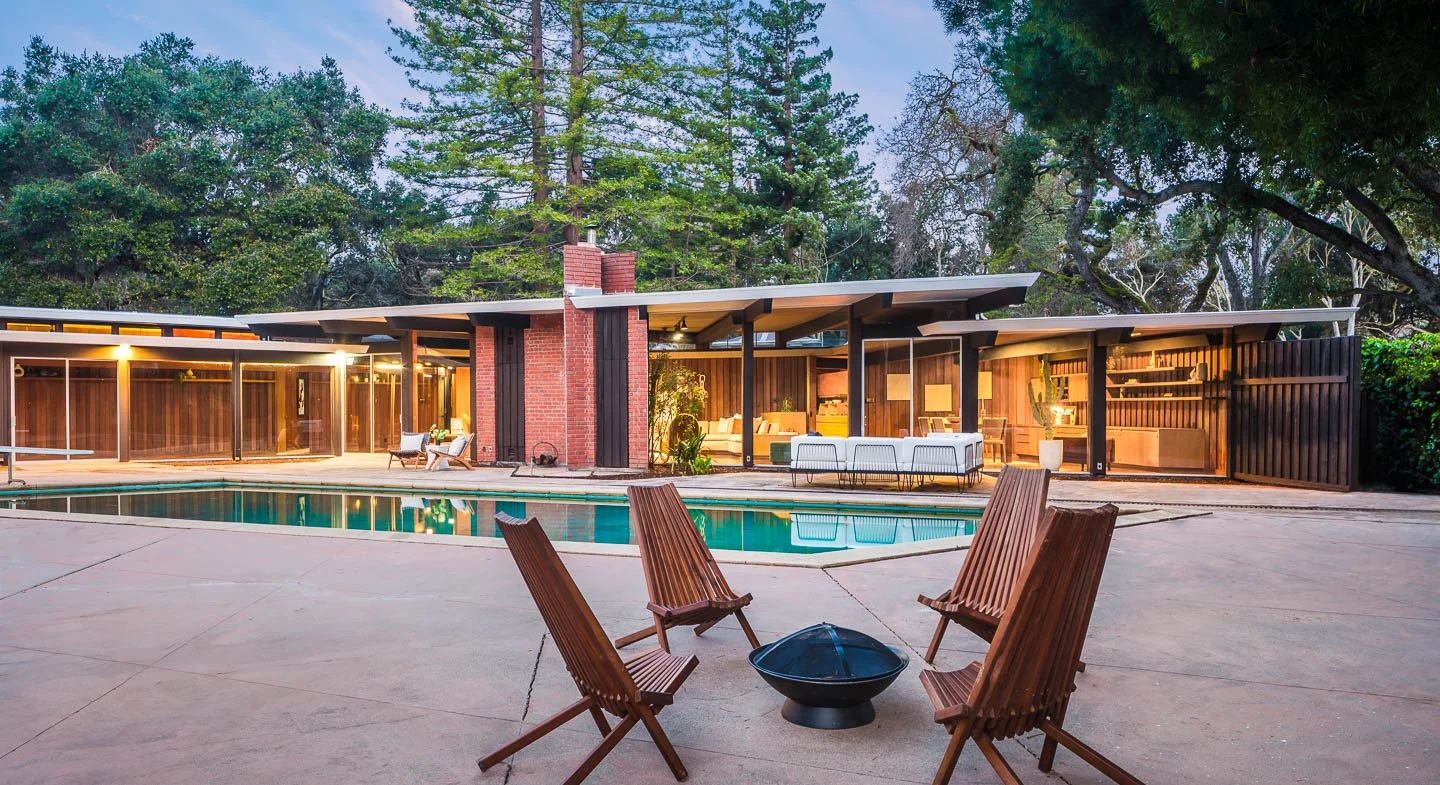
Identify the builder and plan where evidence is available. Study rooflines, posts and beams, glass, paneling and garden relationships. “Original” and “updated” describe a starting point; neither establishes a fixed premium.
04 / Condition & systems
Gather roof, heating, cooling, electrical, plumbing and drainage records. Maintenance, replacement and unresolved questions affect how buyers evaluate a home. Qualified inspections address condition; appearance alone does not.
05 / Changes & documentation
Review what changed, when, by whom and which permits or completion records exist. Separate design quality from verified scope. A beautifully photographed improvement can still leave questions about work behind the walls.
06 / Market & presentation
Compare available alternatives and recent buyer behavior using current evidence. Photography, staging, access and clear information help buyers understand the property. Marketing supports exposure and presentation; it cannot guarantee a price.
Comparable does not mean identical
Ask why a sale belongs in the analysis.
Start with the competitive choices a buyer would realistically consider. Relevant comparisons may require balancing location, sale date, site, size, layout, condition and architectural character. When the closest sale differs materially, explain the difference rather than hiding it inside an average.
Read the evidence in layers.
- Closed sales: completed transactions, interpreted with their timing, condition and available terms.
- Pending homes: evidence that a buyer and seller reached an agreement; the eventual closed price may not yet be known.
- Active listings: today’s competition and seller expectations, not proof that those prices will be achieved.
- Withdrawn or expired listings: a reason to investigate pricing, exposure, condition and circumstances before drawing conclusions.
Price per square foot is a lens, not the answer.
A ratio can help organize a comparison, but it can conceal lot differences, condition, floor-plan utility and how area was measured or reported. Do not multiply a neighborhood average by your square footage and treat the result as a property-specific valuation.
Ask which facts are verified, which adjustments require judgment and how sensitive the conclusion is to missing information.
For background, Fannie Mae’s comparable-sales guidance discusses characteristics such as site, area, style and condition. It is appraisal guidance for mortgage lending, not a claim that this agent consultation is an appraisal.
Interactive preparation planner
Choose a path to discuss.
Select the approach closest to your situation. These prompts help frame a conversation; they do not calculate value, recommend a spending amount or promise a return.
Current-condition conversation
Start with the known condition, available records and unresolved questions. Discuss how buyers may account for work, the information needed before pricing and a presentation plan that accurately shows the property. Selling in current condition does not remove the need to discuss disclosures and transaction requirements with your professionals.
Separate repairs from presentation.
A repair addresses a condition or performance issue. Staging helps communicate scale, circulation and how rooms can be used. Cosmetic work may improve presentation but does not establish the condition of underlying systems. Give each proposed item a clear purpose.
Explore mid-century staging →Put cost, time and uncertainty on the same page.
Before authorizing a project, discuss its scope, written estimates, possible approvals, timing and disruption. Ask what happens if the project uncovers additional work. The right selling plan depends on your goals and capacity, not a universal renovation checklist.
Explore preparation and phased marketing →Prepare for a better conversation
Your owner evidence checklist.
You do not need a perfect archive to start. Mark what you can locate and identify missing items. This checklist stays on this page and resets when you leave or refresh; it does not upload documents or submit a valuation request.
0 of 7 preparation items checked
Write an improvement timeline.
For each significant change, list the approximate date, scope, contractor or designer, and records available. Distinguish completed work from proposed work. If you are unsure whether something was permitted, say so and identify where to investigate.
A useful example: “Roof replaced in the year shown on this invoice; warranty attached; later leak repair records requested.” That is more informative than “newer roof.”
Keep sensitive financial, identity and estate documents out of the initial public form. Ask the team how to share documents appropriately when needed.
What the numbers mean
Different values answer different questions.
Online estimate
An automated model uses available data to produce an estimate. It may miss recent work, condition or unusual architectural details. Treat the number as something to investigate, particularly if its underlying property facts are inaccurate.
Market analysis
An agent’s comparative review helps support a pricing and marketing discussion. Ask for relevant evidence, assumptions and remaining questions. The conclusion can change when new property information or market evidence becomes available.
Formal appraisal
An appraisal serves a defined purpose with its own scope and effective date. If you need an appraisal for financing or another purpose, discuss the appropriate professional and requirements with the party requesting it.
The Consumer Financial Protection Bureau explains why valuations can differ, including distinctions between appraisals and automated models.
Questions Eichler owners ask
Good pricing starts with better questions.
Does an original Eichler always sell for more?
No automatic premium should be assumed. Original details, current condition, functional layout, restoration quality and the preferences of actual buyers all need context. Compare relevant transactions and the specific property rather than applying a fixed percentage to the word “original.”
Should I renovate before requesting a valuation?
Start the conversation before committing to major spending. Discuss the property as it stands, the questions that need investigation and possible preparation approaches. A project’s cost is not a guaranteed increase in resale value.
Can you value a home from photos alone?
Photos can start a discussion, but they cannot establish everything about condition, layout, area or work quality. Ask what additional information or access would be needed for a more informed review and which assumptions remain preliminary.
Why might an online estimate differ from your analysis?
The available facts, comparison set and timing may differ. Review the reported property characteristics, the sales considered and what the estimate cannot see. A difference is a reason to examine evidence, not automatically proof that either number is right.
Will the review tell me what I will net?
A potential sale price and net proceeds are different. Selling expenses, any loan payoff and other property-specific obligations require a separate estimate. Tax questions should be addressed with your tax professional; do not infer take-home proceeds from a valuation range.
What should I put in the request form?
Include the property address, your contact details, the reason for the review, general timing and a short description of condition and changes. Note what records you have. Eric and Janelle can follow up to clarify the next steps.
Eric & Janelle Boyenga / Property Nerds®
Let’s understand your Eichler.
Then talk strategy.
Start with your address and the story of your home. Use the request form below to ask for a personal review, or email the team to discuss your goals.
Request my Eichler review ↓Email Eichlers@Boyenga.com