PROPERTY NERDS® / SILICON VALLEY FIRST. CALIFORNIA WIDE.
Eichler Neighborhood Atlas.
Start your Eichler search in Silicon Valley: San Jose, Sunnyvale, Palo Alto and Mountain View. Compare the home, the plan and the places you use every day, then explore the wider Bay Area and California when your search takes you farther.
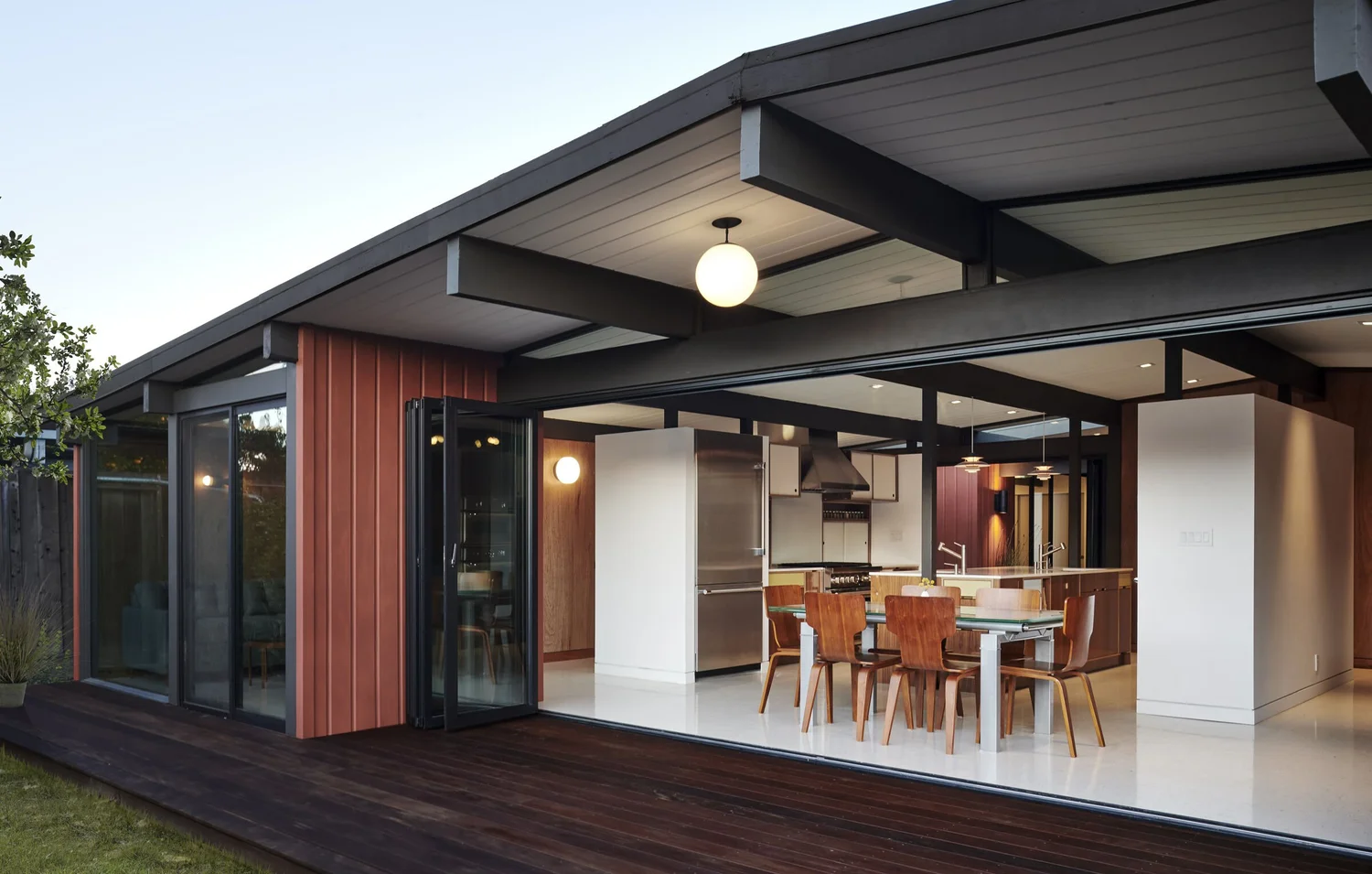
INDOORS, OUTDOORS, AND THE LIFE IN BETWEEN. / SITE PHOTO ARCHIVE
OUR PRIMARY FOCUS / SILICON VALLEY
Four starting points. Your own way to live.
Begin with San Jose, Sunnyvale, Palo Alto and Mountain View. These city guides help organize a search; they do not replace tract boundaries or property-level research. Choose two cities to investigate, then bring the same questions to each home. A memorable atrium deserves attention—and so do the room arrangement, maintenance records and routes that shape an ordinary week.
01 / SAN JOSE
Start with the tract.
Open the San Jose guide and narrow the city-wide search to the neighborhood and individual address. Keep a separate record for each candidate: layout, outdoor connection, documented changes and questions for the next visit. The city name is a starting point, not a guarantee of architectural provenance.
Use the Sunnyvale guide to create a focused touring list. At each home, trace the path from parking to kitchen, the route to outdoor seating and the separation between work and rest. Record what the current layout actually supports before relying on the possibility of a future renovation.
Begin with the Palo Alto guide, then compare the actual house with the records available for it. Note where light enters, how storage works and which rooms can close for privacy. Keep your own travel observations separate from a map estimate, and verify address-specific requirements before making project assumptions.
Open the Mountain View guide and distinguish the neighborhood label from evidence about the builder and plan. Compare original documents, current conditions and alteration records where available. Ask the same ownership questions at every showing so an attractive finish does not obscure an unresolved system or maintenance question.
Browse city and community guides across eight regions: the Bay Area, Sacramento, Los Angeles and Orange County. Filter the directory, open a guide, or select up to three places to build your own comparison worksheet. Guide areas are starting points for research, not surveyed tract boundaries.
SOUTH BAY
South Bay Eichler neighborhoods
Start with San Jose, Sunnyvale, Palo Alto, Mountain View, Los Altos and Cupertino, then explore Santa Clara and Saratoga. City guides organize the search; tract guides and property records help you evaluate a particular home.
South Bay
San Jose
Begin with the city guide, then investigate Fairglen, Fairhaven and Roseglen. Compare the individual home’s plan, renovation record and outdoor space alongside its location.
Use Sunnyvale as your starting point for a closer look at Fairbrae and Fairwood. Bring a consistent showing checklist so the house and its condition remain part of the comparison.
Explore the city guide and Greenmeadow resources. Look beyond a neighborhood name to understand the specific tract, floor plan and changes made to the home.
Start with the Mountain View guide and its Monta Loma coverage. Confirm the builder of each property: mid-century architecture alone does not establish that a home is an Eichler.
Start with the Los Altos guide and build an address-based shortlist. At each showing, note the relationship between the lot, glass walls and usable outdoor space, then check the documentation behind any changes.
Open the Cupertino guide before narrowing your search. Compare the current floor plan with your daily routines, and record which features are documented as original or altered.
Use the Santa Clara guide to orient your search. Confirm the builder and development for each candidate, then compare its architecture, condition and ownership requirements.
Begin with the Saratoga guide. Keep the location search separate from property due diligence: record the address, plan, visible changes and documents still needed for each home.
Explore San Mateo, Menlo Park, Redwood City, Portola Valley, Burlingame and Atherton. Use each guide to refine your research, then compare a property’s location, architectural identity and documented condition.
Peninsula
San Mateo
Explore the San Mateo guide, then narrow your research to the community and property. Keep individual landmark homes distinct from the broader neighborhood search.
Explore Menlo Park and identify the exact community behind each listing. Compare your regular routes and on-site observations, then examine the property’s layout and alteration history.
Begin with the Portola Valley guide and an individual address. Include site conditions, outdoor use and available property records in your research brief.
Explore the Burlingame guide, then check the specific location and property documentation. Record your observations about arrival, light and privacy during a visit.
Open the Atherton guide and distinguish individual architectural homes from a broader neighborhood search. Establish the property’s design history and current condition through supporting records.
Explore Castro Valley, Walnut Creek, Concord and Oakland through their individual guides. Compare real addresses and routes, then examine the plan, outdoor connection and renovation history of each candidate.
East Bay
Castro Valley
Explore the Castro Valley guide. Compare how a candidate sits on its site, the connection between indoor and outdoor rooms, and the information available about past work.
Use the Walnut Creek guide to begin your neighborhood research. Build a shortlist around actual addresses, then compare plans and documented condition consistently.
Start with Concord’s city guide and refine the search to a named community. Confirm the boundaries used by any listing search before interpreting its results.
Open the Oakland guide and research the particular community. Visit the address when practical and record access, site observations and questions for qualified property specialists.
Browse Terra Linda, Lucas Valley, Marinwood, Mill Valley and San Anselmo. Move from the community guide to address-specific research on site conditions, alterations and applicable local requirements.
Marin
Terra Linda North
Explore the Terra Linda North guide as a distinct starting point. Compare the actual address, house plan and records with candidates elsewhere in Terra Linda.
Open the Terra Linda South guide and build your own property shortlist. Keep neighborhood observations separate from the condition and documented changes of an individual home.
Explore the Upper Lucas Valley guide. Research the setting and any property-specific requirements, then evaluate how the plan and outdoor areas fit your needs.
Use the Marinwood / Lower Lucas Valley guide to orient your research. Check the location behind each listing and note which neighborhood name or boundary the search uses.
Start with the Mill Valley guide, then confirm the specific address and builder. Review available property records before drawing conclusions from architectural appearance alone.
Explore the San Anselmo guide. Record the location, site and plan of each candidate, alongside the documents and specialist questions that remain open.
Explore Diamond Heights, Russian Hill, Cathedral Hill and Visitacion Valley. Confirm the building and ownership type for each property; an urban Eichler search can require a different checklist from a detached-home search.
San Francisco
Diamond Heights
Open the Diamond Heights guide and confirm the property’s building and ownership type. Adapt your comparison checklist to the actual home and its applicable documents.
Explore the Russian Hill guide directly. Identify the particular building, ownership structure and architectural history before comparing listings or recent sales.
Begin with the Cathedral Hill guide and the specific building. Where shared ownership applies, include the relevant association documents and responsibilities in your review.
Explore the Visitacion Valley guide. Verify the property’s design history, present layout and ownership details, then compare the location with your other San Francisco candidates.
South Land Park Hills is the starting point for Sacramento Eichler research. The City’s adopted district plan documents this distinct development; use its maps to connect the neighborhood name with a specific property. The broader South Land Park area includes homes by other builders, so a mid-century appearance alone is not confirmation of an Eichler.
Begin with the Sacramento Eichlers guide, then compare the City’s district map with the property address. Study the roofline, glazing, circulation and relationship to the garden as a whole. For a purchase, request the available plans, alteration history and installed-system records; do not assume that a street name or listing description establishes the home’s provenance. For a project, bring the actual scope to City planning staff early and ask which district guidance applies.
For Los Angeles County, focus on Balboa Highlands in Granada Hills, within the City of Los Angeles. It is geographically separate from the Orange County tracts below. Los Angeles City Planning identifies it as an Eichler development built in 1962–1964 and provides the historic district map and preservation plan.
Granada Hills · Los Angeles
Balboa Highlands
The atrium is a useful place to begin reading these homes: notice how arrival, rooms and glazing connect to the outdoor space. Balboa Highlands is a Historic Preservation Overlay Zone, so property research should include the official district documents as well as the house itself. Compare original design evidence with current conditions, ask about documented alterations and evaluate your actual daily routes from the individual address. Use the City’s preservation page to locate maps and the current review process before planning exterior work.
The City of Orange contains three distinct Eichler tracts: Fairhaven, Fairmeadow and Fairhills. The City identifies all three as local historic districts and provides survey maps and Orange Eichler Design Standards. Keep the tract name and city together in your notes: the same neighborhood names can appear elsewhere in California.
Fairhaven is the 1960 tract in the City’s Eichler history. Start with its own survey map, then compare the actual house with available plan and permit records. Study the continuity of rooflines, glass divisions and the transition between interior rooms and outdoor space. A refreshed kitchen is only one part of the picture: keep system condition, documented alterations and the preservation context in the same research file. This is Orange County’s Fairhaven, distinct from similarly named Bay Area neighborhoods.
Fairmeadow dates to 1962 in the City’s tract history. Use the official survey map to identify the district rather than treating a broad city or ZIP-code listing search as a tract boundary. During a visit, compare privacy through glass, usable outdoor rooms, bedroom circulation and storage. Ask which changes are documented and which questions remain unresolved. For renovation planning, describe the need you want to solve before choosing a treatment, then discuss the proposed exterior work with City planning staff.
Fairhills is the 1964 tract in the City’s Eichler history. Research it as its own neighborhood rather than combining every Orange Eichler into one comparison. Evaluate the lot, orientation, indoor-outdoor connections and installed systems at the specific home. A useful shortlist records both the architectural qualities you want to retain and the condition questions that need professional review. Consult the district map and design standards before assuming a proposed addition, replacement or exterior alteration is straightforward.
No matching guides. Try another place name or choose “All regions.”
FROM NEIGHBORHOOD TO HOME
Put your search on the map.
Choose the region you want to understand, then explore available homes. A city search and a named Eichler tract may cover different areas; review the property address and the search criteria together.
Available Eichler homes
Listing coverage: the connected Eichler report below is focused on the Bay Area. Adding Sacramento, Los Angeles and Orange County guides does not expand the MLS feed. For these regions, ask us to confirm available search coverage and the right next step. No regional inventory is implied by these guide cards.
Use the existing home search to explore listings and property details. Ask the Boyenga Team to help refine architectural matches and neighborhoods.
A past sale can provide context, but a useful comparison also considers the property, condition and timing. Request a focused review for the home or neighborhood you have in mind.
Featured sold houses may include other architectural styles and are not a complete neighborhood sales history. Ask us for comparable Eichler sales for your specific home.
Tell us about your Eichler search.
Share your neighborhoods, timing and questions with the Boyenga Team.
THE PROPERTY NERDS APPROACH
A neighborhood is the beginning. The details make the decision.
A useful Eichler search connects place, architecture and property evidence. Bring the same questions to every showing so that memorable design does not crowd out practical research.
Read the plan.
Notice arrival, circulation, bedroom placement, light and the connection to outdoor rooms. Compare the current layout with available original plans and permit records.
Track what is known about the roof, heating, glazing, drainage and alterations. Use disclosures, inspections and qualified specialists to evaluate the actual property.
Check the exact address, local requirements and the routes that matter to you. Verify school assignments with the district and keep your own observations from visits.
Where can I explore Eichler neighborhoods in California?
This atlas organizes the site’s guides into South Bay, Peninsula, East Bay, Marin, San Francisco, Sacramento, Los Angeles and Orange County. Start with a region, open a city or community guide, and then narrow your research to a tract and individual address. The directory includes both city-level guides and neighborhood-level guides; these are not interchangeable boundaries.
How do I confirm that a property is an Eichler?
Use the listing as a starting point, then review available building records, original plans, permit history and other property documentation. A post-and-beam structure, glass walls or an atrium can inform your research, but architectural resemblance by itself does not confirm the developer or architect.
What should I compare between Eichler neighborhoods?
Compare the locations you actually use, the street and lot setting, available home layouts, documented alterations and the upkeep each property may require. Visit at different times when practical. Keep observations about the neighborhood separate from findings about the individual home.
Do neighborhood guide boundaries match listing-search boundaries?
Not necessarily. A city, ZIP code, named tract and custom listing-search area can describe different geographies. Check the search criteria and individual address before assuming that every result is inside the neighborhood you intended.
Does this atlas show every Eichler currently for sale?
Live results depend on the connected listing service, participating MLS coverage and the search criteria. An architectural keyword may omit a relevant property or include an unrelated one. Ask the Boyenga Team to help review matches and refine the search.
Can I see recently sold Eichlers?
Sold-property display depends on the listing provider, the account’s available features and the applicable MLS rules. A selection of the team’s past sales is different from a complete neighborhood sales history. Request a property-specific comparison when evaluating price.
How should I research schools and local requirements?
Verify school assignments directly with the relevant district using the exact property address. Check municipal planning and building resources for applicable rules, and review the property’s permits and disclosures. City names and neighborhood labels are not a substitute for address-level verification.
Can the Boyenga Team help me narrow my search?
Yes. Share the locations you are considering, your timing, your priorities for the home and your questions about ownership. Eric and Janelle Boyenga can help turn a broad neighborhood search into a focused property brief.
PROPERTY NERDS® / BOYENGA TEAM
Find your kind of Eichler.
Bring us your shortlist, your questions and the details that matter to you. We’ll help you connect the neighborhood search with your next move.