
Fairwood Eichler Tract AKA Lyons Street Eichler Homes in Redwood City
Historical Background of Fairwood
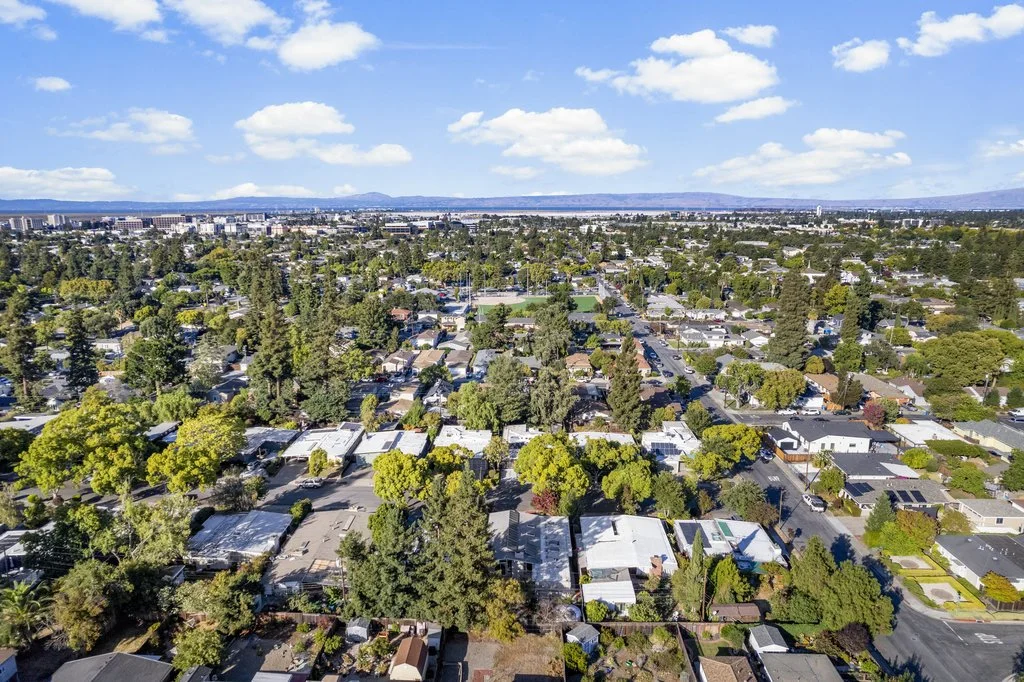
Redwood City was one of Joseph Eichler’s early forays into mid-century modern tract development outside Santa Clara Countyeichlerhomesforsale.com. Eichler’s first project here was the Atherwood subdivision in 1950 (near Atherton), followed by two more enclaves in the early 1950s: Fairwood and Sequoia Meadoweichlerhomesforsale.com. The Fairwood tract – a single-block development on Lyons Street adjacent to Red Morton Park – was built in 1953 and originally marketed under the name “Fairwood”eichlerhomesforsale.com. It comprises 28 single-story Eichler homes arrayed back-to-back along one quiet block with no cross streetseichlerhomesforsale.com. Joseph Eichler was the developer, and the homes were designed by Eichler’s talented architects (notably the firms Anshen + Allen and later Jones & Emmons, who shaped Eichler’s early-’50s designs)eichlerhomesforsale.com. In fact, Fairwood’s construction came just before Eichler introduced atriums in 1957, so these belong to the pre-atrium era of Eichler homeseichlerhomesforsale.com. Together with Atherwood and Sequoia Meadow, the Fairwood tract helped bring Eichler’s modernist vision to Redwood City – about 160 Eichler homes were ultimately built citywide in that erawalkingredwoodcity.com. Today locals simply refer to this tract by its location as the Lyons Street Eichlers, though the “Fairwood” name appears on original recordseichlerhomesforsale.com.

Architectural Significance and Design Elements
Eichler homes on Lyons Street embody the mid-century modern aesthetic through their distinctive form and materials. These modest post-and-beam houses feature flat or low-pitched rooflines, open-plan layouts, and walls of glass that blur the line between indoors and outdoorseichlerhomesforsale.com. They were built as 3-bedroom, 2-bath residences averaging roughly 1,300–1,380 sq ft, tailored for middle-class families of the 1950seichlerhomesforsale.comeichlernetwork.com. Notably, because they were built in 1953, they precede Eichler’s atrium concept – instead of an open central courtyard, the homes achieve an airy feel with expansive windows and sliding glass doors opening to the yard. Even details of the era are evident: these houses use steel-framed sliding glass doors (aluminum sliders weren’t yet available in ’53) and some models incorporate projecting concrete block screen walls on the front exterior – a unique Eichler flourish meant to cast decorative shadows on the facadeeichlernetwork.com. Interiors originally boasted Philippine mahogany paneling, exposed beam ceilings, and concrete slab floors with radiant heat, all hallmarks of Eichler designeichlerhomesforsale.com. From the street, the homes present a clean, unadorned face – modest height, uncluttered facades, and either a two-car carport or garage fronting each loteichlernetwork.comeichlerhomesforsale.com. This simplicity of form, honest use of materials like wood, glass, and concrete, and the integration of house and landscape speak to Eichler’s “indoor-outdoor” philosophy, wherein each home feels connected to its environment and community.
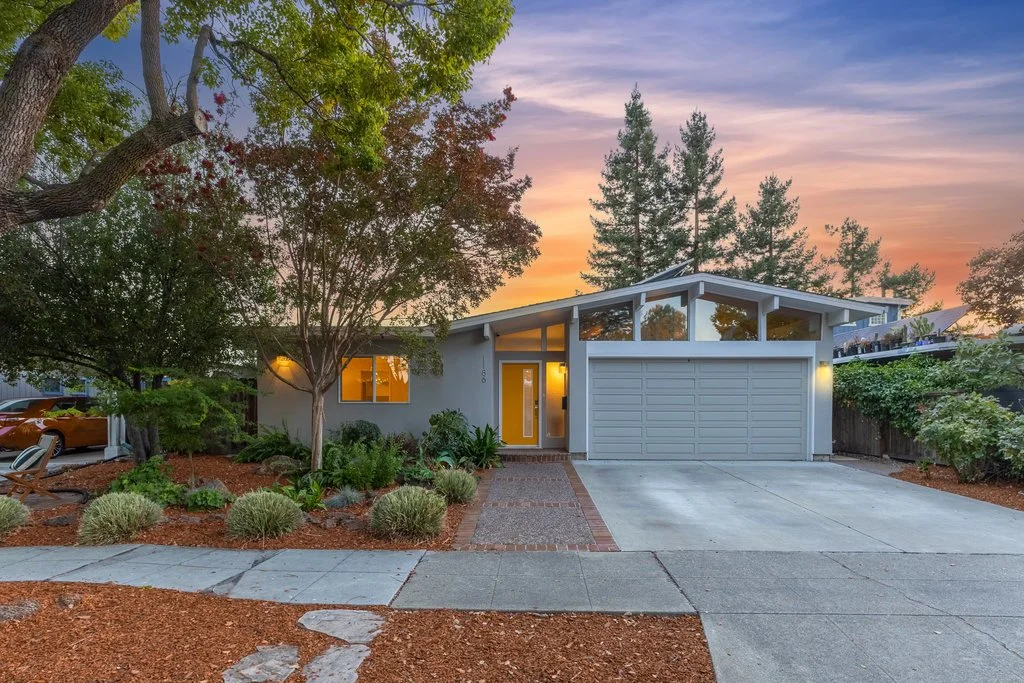
A classic Eichler home on Lyons Street, Redwood City. It showcases the neighborhood’s hallmark mid-century design: a low-slung roof and decorative concrete block wall on the exterior – an uncommon Eichler feature used here to cast patterned shadowseichlernetwork.com. Built in 1953, the one-story Fairwood tract homes typically span ~1,300 sq. ft. with open-beam ceilings, 3 bedrooms, 2 baths, and an attached two-car carport or garageeichlernetwork.com. Floor-to-ceiling glass fills the interiors with natural light and opens onto private patios and gardens, exemplifying Joseph Eichler’s indoor-outdoor ethos of “bringing the outside in”eichlerhomesforsale.com. The design integrity of Lyons Street’s houses remains high – nearly all still have their original mid-century profiles, globe entry lights, and simple paneled front doors, making the tract feel like a 1950s time capsuleeichlerhomesforsale.com.
Current & Historical Market Trends
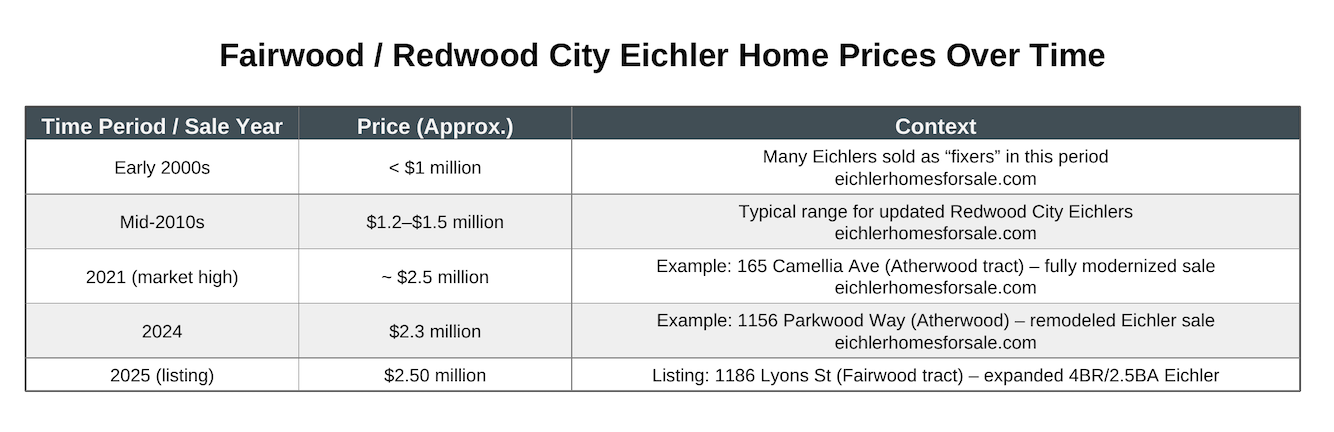
Home values in the Lyons Street Eichler tract (and Redwood City’s Eichler market generally) have risen dramatically as appreciation for mid-century modern design has grown. In the early 2000s, these Redwood City Eichlers were often considered retro fixer-uppers and could be found for well under $1 million. By the mid-2010s, with Silicon Valley prosperity and broader awareness of Eichler homes, updated examples were selling in roughly the $1.2–$1.5 million range. Fast-forward to the 2020s: sale prices have broken the $2 million barrier, even for this relatively modest tract. For instance, fully remodeled Eichlers in Redwood City’s other enclaves have fetched $2.3–2.5 million in recent yearseichlerhomesforsale.com. On Lyons Street itself, homeowners tend to hold their properties tightly – listings are rare, but when a house does hit the market it typically sparks multiple offers from eager Eichler enthusiasts. One longtime resident noted that when they purchased their home, 15 other bidders competed for the same Lyons Street Eichlereichlerhomesforsale.com. This intense demand, combined with the tract’s limited supply, has made Fairwood/Lyons Street Eichlers a hot commodity in the local real estate sceneeichlerhomesforsale.com. Even homes in original condition often attract bidding wars, as buyers either value the authenticity or see the potential to restore and modernize while remaining in this coveted neighborhoodeichlerhomesforsale.com.
To illustrate the market trajectory, below is a summary of Fairwood/Redwood City Eichler home prices over time:
Appreciation: Overall, the value appreciation for Lyons Street Eichlers has been robust – more than doubling in the past 10–15 years. What once could be bought near $800k–$900k in the early 2000s might now command well over $2 million if tastefully updated. The upward trajectory has been driven by a confluence of factors: the tech-driven wealth in the Bay Area, a finite supply of Eichler homes, and a surging appreciation for authentic mid-century architecture. Real estate experts note that Redwood City’s Eichlers attract both “purists” (who prize original features and will pay a premium for well-preserved examples) and “pragmatists” (who are willing to invest heavily in expansions or rebuilds, knowing the end product can fetch top dollar in this location)eichlerhomesforsale.com. Another contributor is Redwood City’s lack of strict Eichler historic ordinances – while this means there’s no official barrier to drastic alterations, it also allows buyers the freedom to enlarge or rebuild, which some see as adding value potentialeichlerhomesforsale.com. In practice, however, most Lyons Street owners have been conscientious stewards; tear-downs or out-of-character remodels are exceedingly rare, preserving the tract’s mid-century charm that savvy buyers continue to coveteichlerhomesforsale.com.

Community Vibe and Lifestyle on “Dream Street”
One of the most remarkable aspects of the Fairwood/Lyons Street tract is its strong sense of community. Neighbors often describe the block as a close-knit “family” of Eichler lovers, where friendships form easily over shared appreciation of the homes. Unlike many modern subdivisions where residents barely know each other, Lyons Street maintains an old-fashioned neighborly culture. Longtime homeowners and newer arrivals mingle at street gatherings, and there are beloved traditions: for example, an annual Halloween block party draws not only Lyons Street families but also friends from surrounding areaseichlernetwork.com. One resident, Dave Walter, is affectionately nicknamed the “mayor of the street” for helping organize events and welcome newcomerseichlernetwork.com. His wife Christine Bahr similarly fosters community spirit – the couple has hosted holiday festivities and encouraged neighbors to socialize, earning Lyons Street a reputation as a fun and inclusive place to liveeichlernetwork.com.
Day to day, the lifestyle on Lyons Street is described as friendly and laid-back. Many residents stop to chat under the canopy of trees or swap home improvement tips in their driveways. “People look out for each other,” says one long-term homeowner, noting that a common love for their Eichler houses unites the block across age and backgroundeichlernetwork.com. Indeed, the demographic mix spans original owners from the 1950s/60s (some homes stayed in one family for decades) to younger tech industry families who have moved in more recentlyeichlernetwork.com. This blend gives the street a multigenerational character – you might find retirees who bought their Eichler new in the ’50s living next door to young professionals with toddlers, all bonding over the joys and quirks of mid-century modern homeownership. Residents frequently exchange stories and even share resources (one neighbor might lend out vintage Eichler plans or recommend a contractor familiar with post-and-beam construction). The overall vibe is “community-centric living” – an embodiment of Joe Eichler’s intent that his developments be more than houses, but true neighborhoodseichlerhomesforsale.com.
Neighbors gather under Lyons Street’s lush canopy of camphor trees. The mature street trees arch over the road, creating a shaded tunnel that defines the tract’s atmosphere and even influences home values. Many who discover Lyons Street are instantly charmed by this “cathedral” of greenery, which complements the low-profile homeseichlernetwork.com. In fact, some current residents recall that it was the tranquil, tree-lined beauty of the street that first caught their eye. Mary and Roger Bowie, for example, stumbled upon Lyons Street during a bike ride years ago and were awestruck by its quiet harmony. “We went, ‘Oh my gosh – could you imagine if we ever got to buy a house on this street!’” Mary said of that momenteichlernetwork.com. When an Eichler home there finally hit the market, the Bowies leapt at the chance – it was, in Mary’s words, “our dream street!”eichlernetwork.com. That sentiment is widely shared: neighbors genuinely love their street and often socialize outdoors, whether it’s children playing on the mid-block island, or adults enjoying the indoor-outdoor flow of their homes on a sunny weekend. The tract’s location adds to the lifestyle appeal as well – Lyons Street is steps from Red Morton Park, a large community park with sports fields, playgrounds, and a new recreation center, providing convenient outdoor recreation for familieseichlerhomesforsale.com patch.com. Meanwhile, shops and cafés at Woodside Plaza are a short bike ride away, and downtown Redwood City’s restaurants, theaters, and Caltrain station are just a few minutes’ drive – giving residents a balance of suburban serenity and urban accesseichlerhomesforsale.com. Not to mention, Redwood City’s famously pleasant climate (“Climate Best by Government Test,” as the town motto goes) means neighbors can enjoy block cookouts or open-house tours of each other’s remodels nearly year-roundeichlerhomesforsale.com. Overall, the Lyons Street Eichlers offer a friendly, nostalgic, and highly livable environment – it’s the kind of street where neighbors wave hello, pride in homeownership is contagious, and the mid-century mystique is kept alive through a strong community bond.
Notable Remodels and Standout Properties on Lyons Street
One striking aspect of Lyons Street is how original most of the homes appear from the curb – a true testament to owners’ care. Only a couple of houses have been significantly altered over the decades, making those the standouts by exception. Notably, one Eichler gained a second story addition – a rare modification in this tract – setting it apart as the only two-level home on the blockeichlernetwork.com. Even that addition was designed to be sympathetic to the Eichler aesthetic, keeping a low profile behind the roofline so as not to overwhelm the streetscape. Another home was extensively rebuilt around 2000, reportedly after a fire, giving the owners an opportunity to expand while staying true to Eichler’s styleeichlernetwork.com. This house (located at 1186 Lyons Street) was enlarged from the original ~1,290 sq ft floor plan to about 1,800 sq ft, adding a fourth bedroom and a half-bath to meet modern needseichlerhomesforsale.com. Despite nearly doubling in size, the remodel was done with great respect for mid-century design – it retained classic elements like the open post-and-beam structure, vaulted tongue-and-groove ceilings, and walls of glass that Eichler homes are known foreichlerhomesforsale.com. According to the listing agent’s description, the new great room and expanded spaces “display the original Eichler style” and the home still “honors Joseph Eichler’s vision” even with all the upgradeseichlerhomesforsale.com patch.com. This property, with its seamless blend of old and new, has been highlighted in real estate circles as an ideal modernized Eichler – essentially a case study in how to update a 1950s home for the 21st century without losing its soul.
Aside from those two examples (the second-story house and the rebuilt one), almost all other Lyons Street houses remain single-story and architecturally intact on the exterioreichlernetwork.com. That in itself is noteworthy: it’s common in other Eichler neighborhoods to see many remodeled facades or even complete tear-down replacements, but on “Dream Street” the owners have collectively preserved the original look. Some homes have undergone interior renovations – e.g. updated kitchens, modern appliances, new roofs or windows – yet they’ve kept the trademark Eichler features. For instance, it’s not unusual to step into a Lyons Street Eichler and find the original Philippine mahogany wall panels still glowing in the living room, or the iconic globe pendant lights in the entry that date back to the 1950seichlerhomesforsale.com. A few homes have added skylights or atrium-like atria (in remodels) to bring in more light, but these changes are subtle and consistent with the mid-century style. The most admired properties on the street tend to fall into two categories: either beautifully restored originals (with period-authentic paint schemes and vintage details intact) or thoughtfully expanded models like 1186 Lyons that accommodate contemporary living while preserving Eichler’s design DNA. Both types contribute to the tract’s appeal. In fact, architectural tour groups and Eichler aficionados have often singled out Lyons Street’s homes – whether original or remodeled – as exemplary. The street has been featured in CA-Modern magazine and the Eichler Network precisely because it showcases how a mid-century neighborhood can evolve gracefully. Each house tells a story: one is filled with mid-century art by a resident sculptor, another boasts a backyard studio “yurt” added as a creative spacepatch.com, yet from the front each still looks like an Eichler. This balance of preservation and innovation is part of what makes Lyons Street special.
Comparisons to Nearby Eichler Neighborhoods (Atherwood & Sequoia Meadow)
Redwood City’s three Eichler tracts – Atherwood, Fairwood (Lyons Street), and Sequoia Meadow – were all built in the early 1950s and share Eichler’s modernist pedigree, yet each has its own character. Here’s how Fairwood/Lyons Street stacks up against its sister neighborhoods:
Atherwood (built 1950): Located a bit south of Lyons Street (near Woodside Road), Atherwood was Joseph Eichler’s first Redwood City development and is larger in scale. It comprises roughly 60–100 Eichler homes (sources vary; about 64 were in the original plan) laid out in a network of gently curving streets like Parkwood and Atherwood Wayeichlernetwork.com. Architecturally, Atherwood gained fame for featuring experimental “butterfly” rooflines on about 10 of its houses – making it the first tract in California to showcase those dramatic V-shaped roofs on multiple homeseichlerhomesforsale.com. This bold design move earned Atherwood national acclaim: in 1950 Architectural Forum magazine honored Atherwood as a “Subdivision of the Year,” one of only four developments (and the only one outside Palo Alto) to receive that awardeichlerhomesforsale.com. Most Atherwood models, however, have similar traits to Lyons Street Eichlers – single-story, 3-bed/1-2 bath layouts with open beams and floor-to-ceiling glass. The tract’s layout (a loop and a couple of dead-end courts) creates a pocket neighborhood feel, not unlike Lyons Street’s one-block intimacy, although Atherwood does allow limited through-traffic. In terms of setting, Atherwood also has mature trees now and a slightly larger lot size on average (some around 7,000 sq. ft.), but overall it offers a comparable suburban vibe. One key difference is that Atherwood’s homes were designed by Anshen & Allen, Eichler’s early architect partnerswalkingredwoodcity.com, whereas by the time Fairwood was built in 1953 Eichler was transitioning to working with Jones & Emmons. This means Atherwood represents the earliest Eichler style – modest and innovative for its time – while Fairwood/Lyons shows Eichler’s evolution a few years later (slightly bigger plans, no atriums yet, but refined). Both neighborhoods are in the same general area of Redwood City (often collectively referred to as the Woodside Plaza or Redwood Oaks district) and both benefit from proximity to parks and shops. Yet Lyons Street’s claim to fame is its near-pristine preservation and singular street layout, whereas Atherwood’s claim to fame is its pioneering roof designs and larger size. Enthusiasts often cruise through Atherwood to spot the rare butterfly-roofed Eichlers, then drive over to Lyons Street to soak in the intact 1950s atmosphere – each tract offers a different slice of Eichler history.
Sequoia Meadow (built 1954): The Sequoia Meadow Eichlers lie just north of Atherwood, in the Redwood Oaks area near Northumberland Avenue and Cypress Streeteichlerhomesforsale.com. This was Eichler’s final Redwood City tract, a small cluster of homes built about a year after Lyons Street. In contrast to Fairwood’s single linear block, Sequoia Meadow is arranged around a cul-de-sac (Northumberland Ct.), giving it a tucked-away, cozy ambienceeichlerhomesforsale.com. The development is modest in scale – it includes only a couple dozen homes – and the lots at the cul-de-sac fan out in pie shapes, which meant some backyards are a bit larger (one home at the end of the court was noted for an extra-large lot)eichlerhomesforsale.com. Home sizes in Sequoia Meadow are slightly smaller on average than Lyons Street: most are around 1,110 sq. ft. (3-bed/2-bath) with a few up to ~1,400 sq. ft.eichlerhomesforsale.com. By 1954, Eichler’s architects (indeed Jones & Emmons were lead designers by then) had incorporated some refinements into these models – for instance, slightly expanded glass window walls and more built-in storage – reflecting lessons learned from earlier tractseichlerhomesforsale.com. Like Lyons Street, Sequoia Meadow’s homes were built before the atrium concept, so they are traditional in layout but still embrace the indoor-outdoor connection. Culturally, Sequoia Meadow has always been quiet and tightly-knit due to its single-entry, cul-de-sac layout; neighbors there often know each other well, analogous to the camaraderie on Lyons (though Lyons may be more actively organized in events)eichlerhomesforsale.comeichlerhomesforsale.com. Because Sequoia Meadow is small and somewhat hidden, it’s lesser-known except to Eichler aficionados. When comparing Lyons Street vs. Sequoia Meadow, a few distinctions stand out: Lyons has the dramatic tree canopy and almost museum-like consistency of architecture, while Sequoia Meadow, over the years, saw a bit more remodeling (some homes have been altered or even had second-story additions in the broader Redwood Oaks area)eichlerhomesforsale.com. Both share the Eichler DNA of open-beam mid-century design, but Lyons Street’s “stage set” quality – two parallel rows of Eichlers creating a defined space – is unique, whereas Sequoia Meadow’s curved cul-de-sac yields a different feel (more of a small courtyard community). In essence, Fairwood/Lyons is often regarded as the most pristine of Redwood City’s Eichler enclaves, while Atherwood is the most historic/innovative, and Sequoia Meadow the most intimate – each offering a slightly different lens on Eichler’s legacy in the area.
Beyond these Redwood City neighborhoods, one could also compare them to nearby Eichler communities in other cities (like Palo Alto’s Greenmeadow or San Mateo’s Highlands). In doing so, Lyons Street still holds its own: unlike the much larger Eichler tracts elsewhere, Fairwood’s small size has helped it maintain a close community fabric and avoid the widespread reconstructions that can occur in bigger neighborhoods. Its lot sizes (~6,000–7,000 sq. ft. on Lyons) are a happy medium – more generous than the tight 5,000 sq. ft. lots in some Palo Alto Eichlers, yet more neighborly than the sprawling hillside lots (10,000+ sq. ft.) in the San Mateo Highlandseichlerhomesforsale.com. This means Lyons Street homes have space for gardens, additions or pools, but the houses aren’t dwarfed by their yards – preserving the human scale Eichler intendedeichlerhomesforsale.com. In summary, “Dream Street” vs. Atherwood vs. Sequoia Meadow is a comparison of three mid-century gems: all share the Eichler hallmarks of modern design, but Fairwood (Lyons) is distinguished by its one-block layout and lovingly kept original look, Atherwood by its award-winning early designs (including butterflies), and Sequoia Meadow by its charming cul-de-sac setting and last-of-its-kind status. Together, they paint a picture of Eichler’s early evolution and the enduring appeal of these Redwood City mid-century neighborhoodseichlerhomesforsale.com.
“Dream Street” Nickname and Cultural Significance
The Lyons Street Eichlers have earned a special nickname in Eichler lore: “Dream Street.” This moniker was popularized after resident Mary Bowie’s oft-repeated exclamation that Lyons was their “dream street” – a phrase that perfectly captured the allure the block holds for mid-century modern enthusiastseichlernetwork.com. In an Eichler Network profile a few years ago, the author fondly dubbed Lyons Street “the Dream Street for MCM lovers,” underlining how coveted it is among those who appreciate Eichler homeseichlerhomesforsale.com. The name has stuck. It reflects both the aspirational quality of the tract (many people dream of owning an Eichler on this beautiful block) and the almost storybook atmosphere of the street with its canopy of trees and vintage 1953 ambiance. Culturally, Lyons Street has come to symbolize a kind of ideal Eichler community. It’s frequently cited in discussions of Eichler neighborhoods that have “kept the faith” – where original architecture and neighborly spirit are still intact decades latereichlerhomesforsale.com. In fact, taking a drive down Lyons Street today is often likened to stepping back in time. As one writer observed, the homes look “so original… that a drive down the block feels like stepping into 1953”eichlerhomesforsale.com. This preservation of character, combined with the warm social network of residents, gives Lyons Street a legendary status among Eichler tracts.
It’s worth noting that despite its fame, the Fairwood/Lyons tract does not have an official historic designation or any special architectural conservation zoning by the cityeichlerhomesforsale.com. Homeowners here are not legally constrained by design review specific to Eichlers (beyond normal city building codes), which makes the high level of preservation all the more remarkable – it has been a voluntary, collective effort born out of pride and appreciation. The informal “code” on the street is simply that neighbors value the Eichler aesthetic and encourage each other to “keep Eichler Eichler”. This positive peer pressure, plus the fact that many homes stayed in the hands of original families for a long time, has spared Lyons Street the fate of some other areas where drastic remodels eroded the mid-century lookeichlerhomesforsale.com. Instead, Lyons Street stands as a kind of open-air museum of classic Eichler architecture – yet one that is very much lived-in and loved. The tract has been featured on Eichler-specific home tours and is often pointed out as one of the best-preserved Eichler enclaves in the Bay Area.
In summary, the Fairwood tract on Lyons Street has a rich history and an enduring legacy. Developed in 1953 by a visionary builder and his architects, it introduced modernist homes that were ahead of their time. These homes remain architecturally significant, showcasing signature design elements from Eichler’s early period (post-and-beam construction, floor-to-ceiling glass, integration with nature). Over the decades, property values have soared as new generations discover the appeal – yet the community vibe has stayed constant: friendly, creative, and tight-knit, with neighbors who rally around everything from preserving original globe lights to throwing memorable Halloween parties. A few houses have evolved with tasteful expansions, but nearly all retain their 1950s spirit, making the street a rare gem. Whether you call it Fairwood, Lyons Street, or “Dream Street,” this one-block Eichler tract in Redwood City continues to capture the imagination – a place where mid-century modern design and modern Silicon Valley life harmoniously meet, and where the dream of an Eichler lifestyle is very much aliveeichlerhomesforsale.com eichlernetwork.com.