
Material Honesty: The Soul of Eichler Homes (and why we love them!)
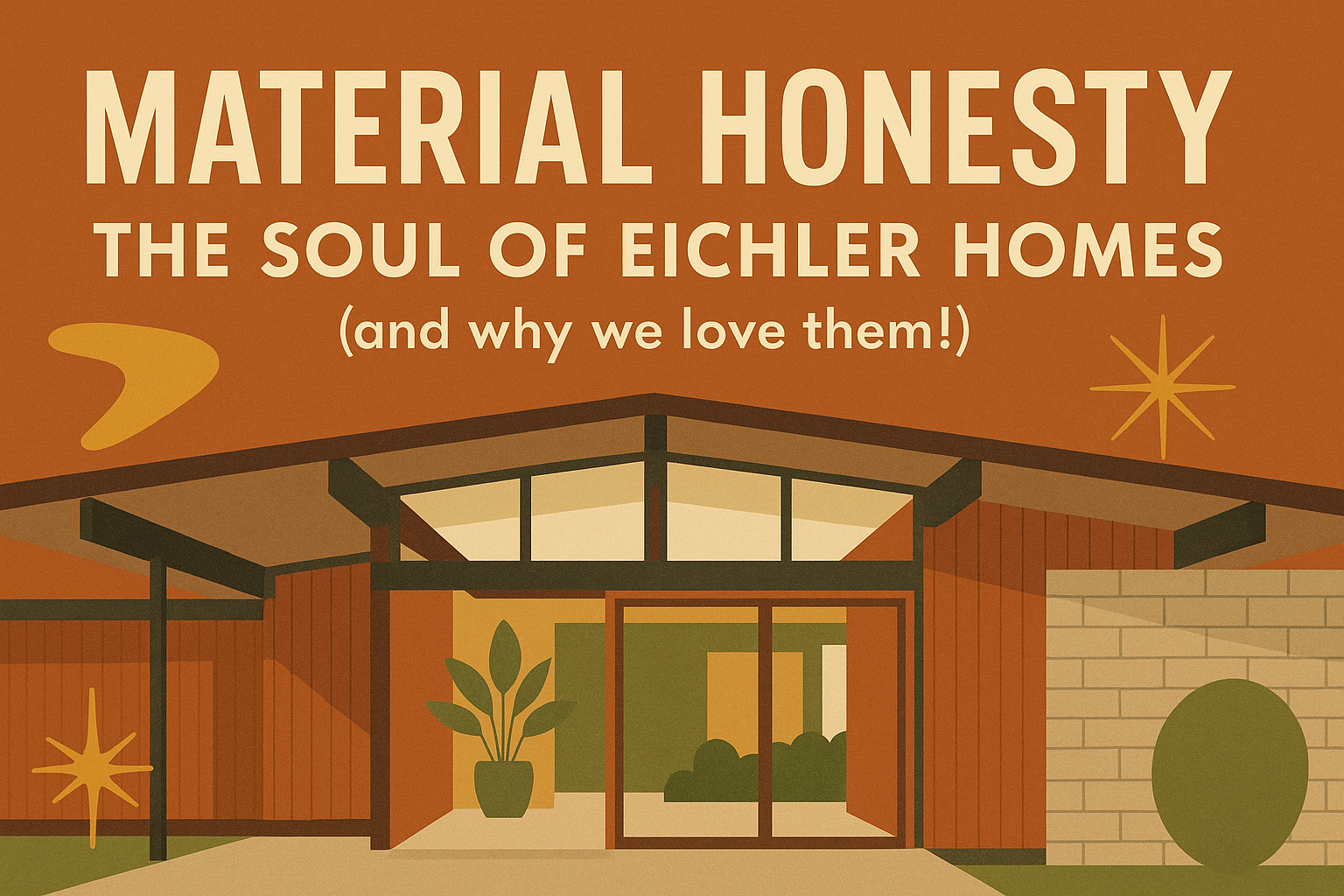
Discovering Authenticity with Silicon Valley's Eichler Experts
Welcome, fellow Property Nerds! Here at the Boyenga Team, we're passionate about what makes Eichler homes so special – and why they continue to captivate buyers across Silicon Valley. Beyond their iconic mid-century modern lines and indoor-outdoor living, there's a deeper, more fundamental quality that speaks to their enduring appeal: their unwavering commitment to "material honesty."
In a world increasingly filled with synthetic materials and digital distractions, Eichler homes offer a grounding sense of authenticity and timeless quality through their reliance on exposed natural materials. As your Eichler Experts in Silicon Valley, Eric and Janelle Boyenga understand that this isn't just about aesthetics; it's about a philosophy that makes these homes feel genuinely connected to nature and their surroundings.
Let's dive into what makes this concept so powerful and why it’s a cornerstone of the Eichler aesthetic.
I. The Enduring Authenticity of Mid-Century Modern Design
Mid-Century Modern (MCM) design, broadly from 1945 to 1970, continues to influence contemporary aesthetics with its clean lines, functional forms, and minimalist sensibilities. Its lasting appeal points to a core philosophical principle: "Truth to Materials."
"Truth to Materials" (TtM) is a foundational tenet of modern architecture, asserting that any material should be employed where it is most appropriate, and its inherent nature, characteristics, and structural integrity should be openly expressed rather than concealed or embellished. This philosophy positions MCM and, by extension, Eichler homes, as a grounding force, offering a tangible connection to the natural world in a progressively digital and synthetic landscape.
This commitment to material honesty, manifested through the deliberate and exposed use of natural materials like redwood, concrete, and stone, offers a grounding sense of authenticity. This tactile and visual connection to the natural world resonates deeply today and provides a robust framework for contemporary sustainable practices and innovative digital fabrication techniques, ensuring MCM's continued relevance.
II. The Philosophical Bedrock: Truth to Materials in MCM
Modernism, Bauhaus, and Post-WWII Influences
The underpinning of "Truth to Materials" originated from the broader Modernist architectural movement, a reaction against elaborate ornamentation. The Bauhaus school in Germany, founded in 1919, championed material honesty, encouraging experimentation with a material's inherent properties.
After World War II, a housing boom and a drive for efficient design in the U.S. led to a significant influx of European Modernists, many trained in the Bauhaus tradition. Architects like Le Corbusier and Ludwig Mies van der Rohe advocated for honest use of industrial materials like concrete and steel. While American MCM, including Eichlers, often incorporated more organic forms, it remained rooted in these ideals.
Technological advancements post-WWII, such as new steel technologies allowing larger window spans and post-and-beam construction, enabled open floor plans and seemingly glass walls. This blend of philosophy and practical advancement meant MCM's material honesty celebrated new structural capabilities. Exposed materials weren't just aesthetic; they revealed the very "bones" of the building, deepening its authenticity.
Defining "Truth to Materials" and its Rejection of Concealment
At its core, "Truth to Materials" mandates that a material's inherent qualities should never be hidden. This is why you see unpainted concrete (béton brut) in some MCM homes, with the marks from timber formwork celebrated as part of its story. Similarly, timber's natural grain was left unpolished or minimally treated. This principle extends to a material's structural and functional purpose, dictating its use where most appropriate.
It's important to note that "material honesty" in MCM wasn't exclusively about natural materials. It also embraced new industrial materials like fiberglass, bent plywood, aluminum, and plastic laminates, particularly in furniture. The consistency was in the integrity of expression – whether wood or fiberglass, the material was presented without disguise, celebrating its inherent properties and manufacturing processes. This expands authenticity beyond naturalness to encompass a broader integrity of expression, where the material is true to its own nature.
MCM's Alignment with Functionalism and Minimalist Aesthetics
MCM design is characterized by clean, simple lines, organic shapes, and a strong emphasis on functionality, often eschewing decorative embellishments. This minimalist aesthetic, epitomized by Mies van der Rohe's "Less is More," stems directly from "Form Follows Function." The honest use of materials was deeply intertwined with this functional emphasis. Each element served a clear purpose, contributing to an uncluttered and efficient aesthetic.
By prioritizing the fundamental qualities of materials and their inherent function, MCM inherently imbued its designs with a timeless quality, avoiding the pitfalls of excessive decoration that often dates other design movements. This functional honesty is a critical component of its lasting value, something Eric and Janelle Boyenga highlight when discussing the enduring appeal of Eichler homes.
III. A Sensory Palette: Common MCM Materials and Their Qualities
A hallmark of MCM design, seen prominently in Eichlers, is the intentional use of materials in their natural state, with minimal processing, specifically to highlight their innate beauty. This creates warmth, texture, and a direct connection with the natural world, often blurring the lines between interior and exterior spaces. Beyond visuals, MCM design engages other senses—touch, sound, and even scent—enriching the user experience and grounding deeper atmospheres within the built environment.
Detailed Material Exploration in Eichler Homes:
Redwood: Visual Richness, Tactile Warmth, and Enduring Qualities
Redwood is a superstar in MCM architecture, especially in Eichlers, celebrated for its rich russet to amber hues and majestic texture. Its intricate grain tells a story of time, and its versatility adapts to diverse design needs. Beyond visual appeal, redwood is incredibly durable, naturally resistant to decay, pests, and fire due to its tannins. It also maintains dimensional stability, resisting warping. Perhaps most captivating is its ability to age gracefully, acquiring a unique beauty. Its natural properties contribute to a subtle, earthy scent, enhancing its organic, multi-sensory appeal. Joseph Eichler, influenced by Frank Lloyd Wright, often utilized redwood to seamlessly integrate homes with their natural landscapes.
Exposed Concrete: Raw Beauty, Robust Texture, and Versatility
Exposed concrete, or béton brut, is a visible component of many MCM buildings, celebrated for its minimalist, raw beauty. Its surface can range from smooth to textured, often preserving the marks left by timber formwork as an intentional design feature. Tactilely, it offers cool solidity. Structurally, it's exceptionally robust, resisting weathering and impacts, making it suitable for both interior and exterior applications. It's also low-maintenance and acts as an excellent thermal and acoustic insulator. Its versatility allows for significant architectural design freedom, harmonizing particularly well with natural woods, stone, and glass.
Natural Stone: Inherent Authenticity, Unique Patterns, and Timeless Permanence
Natural stones like granite, marble, limestone, slate, and sandstone are highly valued in MCM and Eichler design for their timeless beauty. Each type of stone offers unique texture, color, and veining, contributing to a distinctive aesthetic. These materials bring weight, profound texture, and natural variation – no two pieces are identical. This inherent individuality contributes to stone's timeless appeal, offering qualities no man-made product can truly replicate. Designed for longevity, natural stone offers exceptional durability. A unique quality is its capacity to develop a "patina" over time, telling a story and reflecting the life of the home. The selection of natural stone in MCM was not purely aesthetic; it was rooted in the materials' inherent performance characteristics, reinforcing "form follows function."
Unpainted Wood (Teak, Walnut, Oak, Rosewood, Mahogany): Celebrating Grain, Texture, and Aromatic Profiles
Unpainted wood, often minimally finished, was a cornerstone of MCM design, particularly for furniture and interior paneling within Eichler homes. Hardwoods like teak, walnut, oak, and rosewood plywood were favored for their quality, durability, and density. Designers deliberately showcased their natural grain patterns and textures.
Beyond visuals and touch, many of these woods possess unique aromatic profiles that further enhance the sensory experience of MCM spaces:
Rosewood gets its name from the fragrant smell released when cut, a scent that can persist for years.
Walnut emits a warm, nutty, and rich aroma, subtly signaling quality.
Cherry offers a subtle yet sweet scent, particularly when freshly milled.
Sapele provides a smooth and slightly spicy scent.
Cedar is well-known for its clean, spicy scent, also acting as a natural insect repellent, aligning with natural material performance.
MCM's reliance on exposed natural materials and their inherent sensory qualities offers a powerful counter-narrative to the increasing artificiality of the modern world. The tactile warmth of wood, the cool solidity of stone, the raw honesty of concrete, and the subtle aromas create an immediate, visceral connection to nature and reality. This provides the "grounding sense of authenticity" that makes Eichler homes so appealing today

IV. The Narrative of Time: Valuing Patina in MCM
Understanding Patina as a Mark of Authenticity and History
Patina refers to the subtle changes on a material's surface from prolonged use and the passage of time. It's more than wear; it's a visual and tactile record, revealing "what materials were used, how it was used and experienced, and how that use has changed and transformed it." For wood, it's often a darkening and softening of appearance, with wear patterns where human contact has been frequent. On stone, it can be a subtle sheen or deepening of color.
The appreciation of patina in MCM directly results from its commitment to material honesty. By not masking materials, designers implicitly invited time to become an active participant in the aesthetic. This deepens authenticity, as the object's history becomes inscribed on its surface, making its journey through time an integral part of its identity.
How Age and Use Enhance the Character and Value of MCM Pieces
Patina is highly valued because it "brings life to an object" and imbues each piece with a unique personality, distinguishing it even from identical models. It adds "another dimension of beauty and character," transforming a functional item into a piece with a rich, lived history. For collectors and enthusiasts, genuine patina indicates authenticity and age, evidence of a piece's journey.
In a consumer culture often driven by planned obsolescence, valuing patina stands in stark contrast. It suggests that age and use add value. Patina transforms a functional object into a historical artifact, a tangible link to the past. This narrative quality elevates MCM pieces beyond mere furniture or architecture; they become investments not just monetarily, but in cultural and historical significance. The quest for authenticity in MCM, championed by Property Nerds like Eric and Janelle Boyenga, is a quest for enduring value, rejecting the disposable nature of modern production.
Distinguishing Genuine Patina from Damage and the Philosophy of Responsible Preservation
While patina is crucial for valuing MCM, distinguishing it from actual damage or inappropriate alterations is vital. Significant alterations or over-restoration can diminish a piece's historical integrity and value.
Responsible preservation advocates a "less invasive" approach to maintenance. This means, for instance, oiling wood to restore vibrancy without stripping the original finish, or carefully cleaning metal without removing its natural oxidation. This approach aims to amplify existing patina, allowing it to continue its story, rather than attempting to return a piece to "like-new" condition that erases its history. It requires nuanced understanding and makes preservation an art form that honors the object's past while ensuring longevity.
V. Next-Generation Integration: Sustaining Authenticity and Embracing Innovation
Sustainable Sourcing for MCM Restoration
The increasing global demand for sustainable materials aligns seamlessly with MCM's emphasis on natural materials and its philosophy of integrating structures with nature. MCM's "Truth to Materials" is intrinsically tied to sustainable practices by encouraging the use of less processed forms, reducing environmental impact. The contemporary imperative for sustainability is a profound reaffirmation of MCM's foundational principles. It inherently promotes sustainability by valuing longevity, natural resources, and minimal processing, making it a highly relevant and forward-thinking design philosophy for the 21st century.
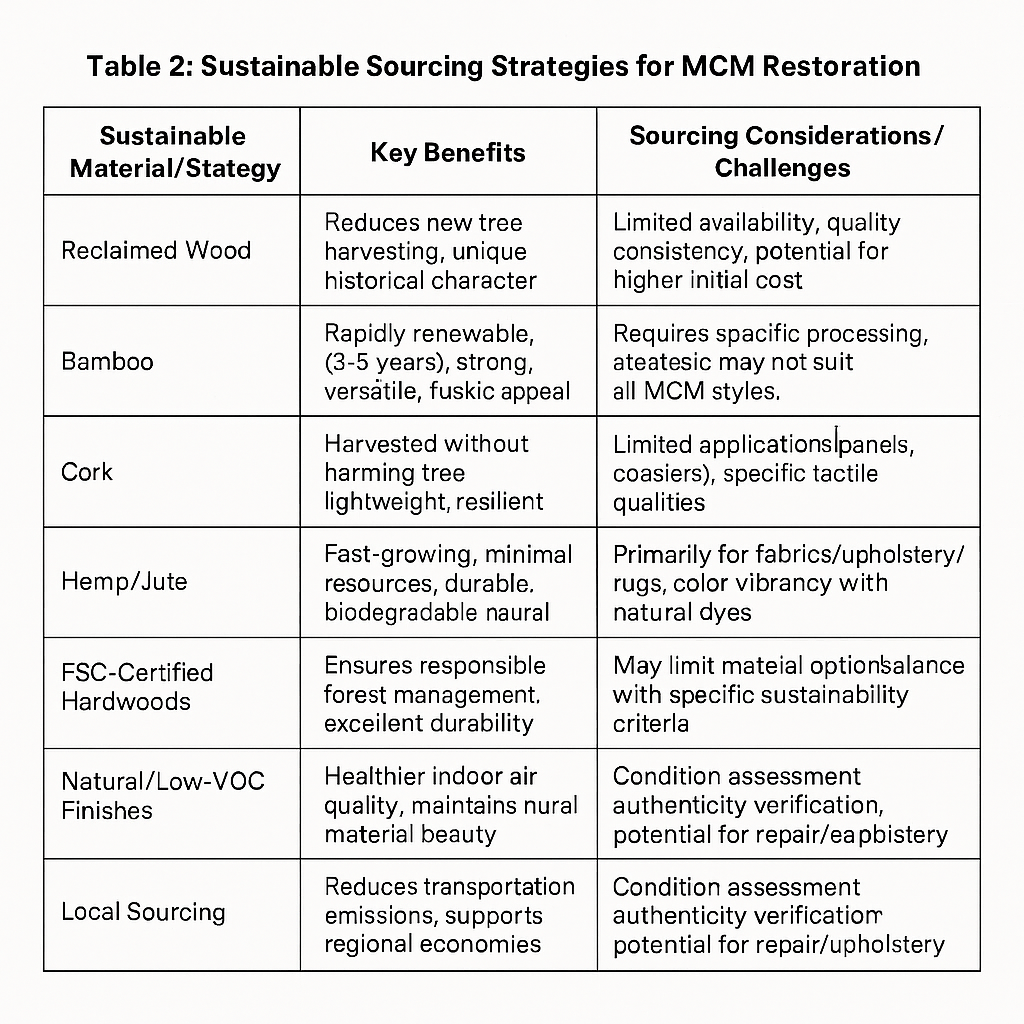
Restoration projects can benefit from exploring reclaimed, recycled, and rapidly renewable materials:
Reclaimed Wood: Utilizing wood salvaged from old structures not only offers unique character but also reduces new tree harvesting, minimizing deforestation.
Rapidly Renewable Resources: Materials like bamboo (maturing in 3-5 years) offer strength for furniture and flooring. Cork, harvested from tree bark without harming the tree, is lightweight and resilient. Jute and hemp are durable, biodegradable options for rugs and upholstery.
Sustainable Fabrics & Fillings: Organic cotton, linen, wool, and recycled polyester are eco-conscious choices for upholstery. Natural latex foam and recycled fibers provide sustainable cushion fillings.
Natural Finishes: Low or zero Volatile Organic Compounds (VOC) finishes (water-based or natural oils like tung oil) protect wood while maintaining beauty and promoting healthier indoor air quality. Natural dyes for fabrics reduce toxic waste.
Certifications like those from the Forest Stewardship Council (FSC) ensure responsible forest management. Prioritizing local sourcing reduces transportation emissions and supports regional economies. While challenges exist (limited availability, cost, certifications), they drive innovation, pushing for new materials and procurement solutions. Lifecycle cost analysis can demonstrate long-term financial benefits.
Sustainable Sourcing Strategies for MCM Restoration
Digital Fabrication: Honest Replicas and Complementary Elements
Digital fabrication, including CNC milling and 3D printing, allows for direct transfer of computer designs into physical components. These techniques can create "honest" replicas of MCM pieces, precisely reproducing complex geometries that were once challenging. For furniture replicas, this means exact dimensions, accurate materials, and replication of original manufacturing processes. An "honest" replica prioritizes using correct materials (e.g., rosewood veneer for an Eames Lounge Chair) and faithfully replicates craftsmanship, even highlighting the digital process as a new form of "honesty."
Beyond replication, digital fabrication is evolving to address variation in natural materials. "Digital metallurgy" leverages tools like 3D scanning and parametric analysis to optimize the use of irregular material pieces, like unmilled timber or concrete waste. This deepens material honesty by allowing the material's unique geometry to directly inform the design, minimizing waste.
Digital fabrication can also create new, complementary elements that harmonize with MCM's material palette. CNC milling can produce intricate patterns in eco-friendly materials or flexible wood designs. Digital tools can produce jigs or prototypes to facilitate working with traditional materials, enhancing efficiency in restoration while maintaining design integrity. While replicas offer accessibility, quality varies, so accuracy in dimensions, material selection, and faithful replication are paramount for an "honest" reproduction.
This "Next-Generation Integration" positions MCM as a dynamic, living design philosophy capable of adapting to contemporary challenges. By embracing sustainable sourcing and innovative digital fabrication techniques that respect material honesty, MCM is not confined to being a historical movement. Instead, it suggests a future where authenticity is achieved through intelligent, responsible application of modern technology and sustainable practices, ensuring MCM's continued relevance.
VI. Conclusion: Material Honesty as a Timeless Quest
Mid-Century Modern design's enduring legacy, particularly in iconic Eichler homes, is inextricably linked to its foundational commitment to "Truth to Materials." By celebrating the inherent qualities of exposed natural elements like redwood, concrete, and stone, MCM established a profound sense of authenticity and timeless quality. This approach fostered deep tactile, visual, and even aromatic connections to the natural world, offering a grounding presence in an increasingly synthetic and digitally mediated environment. The deliberate choice to reveal, rather than conceal, the true nature of materials allowed the passage of time to become an active participant in the aesthetic, with patina transforming objects into unique historical narratives.
These core principles, forged in the post-war era's blend of philosophical modernism and technological innovation, provide a robust framework for contemporary imperatives. The current drive for sustainability finds natural alignment with MCM's inherent values of longevity, responsible material use, and integration with nature. Advancements in digital fabrication, far from promoting artificiality, can enhance material honesty by working with natural material variations, minimizing waste, and celebrating unique forms, thereby fostering a new dimension of authenticity.
In an age saturated with synthetic materials and digital abstraction, the appreciation for MCM's material honesty offers a vital lesson. It reminds us that true authenticity in design emanates from respecting the inherent qualities of materials, allowing them to age gracefully, and engaging the full spectrum of human sensory experience. This timeless quest for authenticity, rooted in the truth of materials, remains as relevant and compelling today as it was in the mid-20th century, fostering a deeper, more meaningful connection to our built environment and the natural world.
For more insights into Eichler homes and the Silicon Valley real estate market, reach out to Eric and Janelle Boyenga – your dedicated Eichler Experts and true Property Nerds! We're here to help you find your piece of authentic modernism.