
Modernist Mailboxes, House Numbers & Entry Details for Mid-Century Curb Appeal
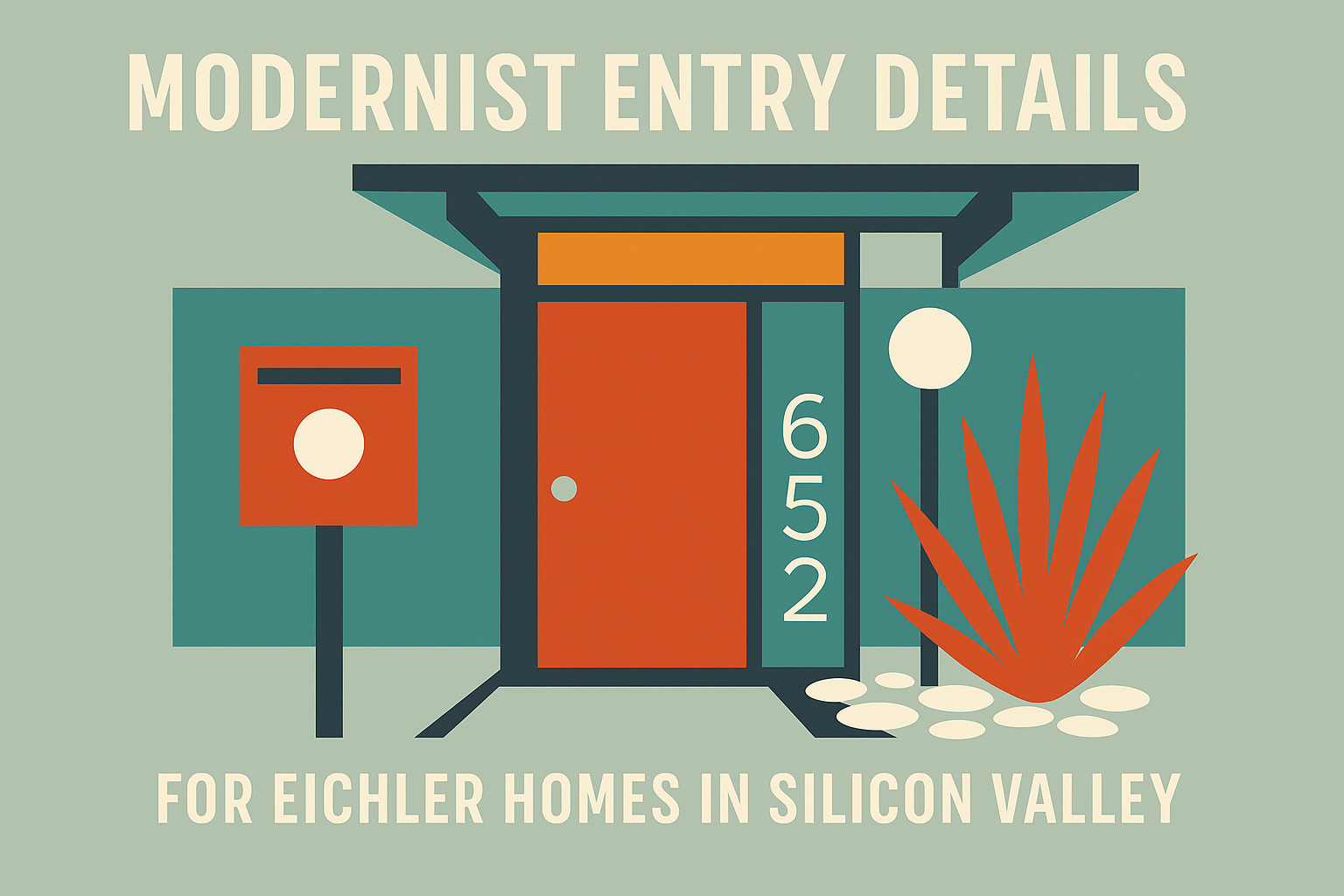
Modernist Entry Details for Eichler Homes in Silicon Valley
Mid-century modern homes like Eichlers have a distinctive style – clean lines, indoor-outdoor harmony, and bold simplicity. Enhancing curb appeal for these homes means choosing exterior accessories that respect those principles while adding personality. This guide will walk you through design principles and specific recommendations for mailboxes, house numbers, door hardware, lighting, and other entry details that match the design language of Silicon Valley Eichlers and other MCM homes. We’ll also highlight trusted sources (both online and local Bay Area) and give tips on materials, durability, and creative accents like planters and vibrant front door colors.
Design Principles for Eichler-Appropriate Accessories
When selecting exterior accessories for an Eichler or mid-century modern home, keep a “less is more” mindset. Mid-century design favors minimalist forms and functionality linkedin.com. Avoid overly ornate or fussy details – instead, opt for simple geometric shapes (e.g. rectangles, circles, atomic-era angles) that complement the home’s architecture rather than compete with it. For example, a plain slab or post mailbox with clean edges will suit an Eichler better than a Victorian-style mailbox.
Maintain a cohesive look: Try to coordinate the finish and style of your accessories so they appear as a unified design element. If you choose satin chrome for your house numbers to mimic Eichler originals, use that finish for door hardware or light fixtures too. This consistency helps the details blend with the home’s modernist character. Also consider the scale and placement – Eichler homes are single-story with horizontal lines, so house numbers often look best in a horizontal layout or on a modest panel, and accessories shouldn’t be so large that they overwhelm the facade. Let the house’s architecture remain the star, using these accents to subtly enhance it.
Embrace mid-century colors and materials: Eichler exteriors typically had neutral base colors (earthy browns, grays) with pops of vibrant accent hues on doors or trim retrorenovation.com blog.modboxusa.com. In choosing accessories, you can echo those original accent colors – e.g. an orange mailbox flag or turquoise house numbers – to instantly evoke the mid-century vibe. Many modern products even use authentic Eichler paint colors for nostalgia. For instance, the Modbox company offers mailboxes painted in original Eichler accent tones like pumpkin orange and teal dwell.com. Materials should feel true to the era: wood, metal, and glass were common in mid-century design. Think teak or cedar accents, brushed aluminum or brass hardware, and opaque glass globes for lighting. By using period-appropriate colors and materials, your new additions will feel “at home” on a 1950s/60s facade rather than looking like tacked-on afterthoughts.
Modernist Mailboxes: Wall-Mounted and Post-Mounted
A stylish mailbox is an easy upgrade that can dress up the front of a mid-century home. Look for mailboxes with crisp lines, retro silhouettes, and colors or materials that tie in with your home’s palette. Whether you need a wall-mounted mailbox by the entry or a post-mounted box at the curb, there are plenty of modernist designs available today. Here are some top picks for Eichler-appropriate mailboxes:
Deus Modern “Waldo” Mailbox (Post-Mount) – A sleek, USA-made mailbox with a boxy profile and laser-cut address numbers on both sides eichlerhomesforsale.com. The Waldo mailbox has a hidden magnetic latch and a matching back panel, giving it a flush high-end look. Its double-layer steel construction is USPS-approved and powder-coated for durability eichlerhomesforsale.com. The standard Waldo holds 4–6 letters, while the larger Waldo XL adds capacity for more mail eichlerhomesforsale.com. Powder-coat color options let you coordinate the mailbox with your door or trim – you can even match Eichler accent paint. (Available directly from Deus Modern in Nashville; they offer custom colors and the ability to add your house number cutouts.)
“Modern Mailbox” by Modern-Mailbox.com (Wall-Mount) – A super-popular modernist mailbox design that comes in three retro color schemes: Monochrome, Two-Tone, or Tri-Tone eichlerhomesforsale.com. You can stick to a neutral combo (white, black, and anodized aluminum) or go bold with mid-century accent hues like Eichler’s famed “Robin Egg” blue eichlerhomesforsale.com. This mailbox is steel-clad and generously sized for magazines and small packages dwell.com. It features a simple drop-down door. Thanks to its versatile boxy form, some homeowners even repaint these to match their house trim or front door for a cohesive look eichlerhomesforsale.com. (Shop via Modern-Mailbox.com or resellers; it’s a favorite in MCM neighborhoods.)
Modbox USA Two-Tone Mailbox (Post-Mount) – An eye-catching 1950s-inspired curbside mailbox that mounts on a angled, flared post for true atomic-era flair eichlerhomesforsale.com. Modbox uses original Eichler accent color pairs – for example, a soft buttercream yellow box with a copper door – to emphasize its clean lines eichlerhomesforsale.com. You can choose any two-tone combo from the Eichler palette, and the flag and door pull come in anodized aluminum, giving a vintage touch eichlerhomesforsale.com. This mailbox’s silhouette (a curved base and cantilevered box) is straight out of mid-century suburbia, and it’s built in the USA with sturdy steel. An optional mounting plate allows installation on an existing post if you have one eichlerhomesforsale.com. (You can buy Modbox mailboxes via their site or through retailers like Rejuvenation. In fact, Rejuvenation’s own mid-century post mailbox is based on the Modbox, using Eichler colors in its design rejuvenation.com.)
“X Press” Wall-Mounted Mailbox (DecorPro) – A modern wall-mount mailbox from Canadian company DecorPro that offers a sleek rectangle shape with a couple of unique features eichlerhomesforsale.com. It has a built-in mail slot and a clear acrylic viewing window so you can see if there’s mail inside. The design is minimalist – a steel box with a hinged top flap – and it comes in bold mid-century colors like bright red, or in neutral black/white eichlerhomesforsale.com. As Atomic Ranch magazine notes, choosing red gives a striking pop against a neutral Eichler wall, while black or white offers a more subtle look eichlerhomesforsale.com. Wall-mounting a mailbox like this can be great for Eichlers with a small front yard or atrium entrance, since you can integrate it into the home’s front wall or a gate post without needing a separate post in the landscape.
Wood & Metal “Modernist” Mailboxes (Handcrafted) – For a warmer, organic touch, consider a mailbox that combines metal with wood detailing. Many Eichler owners love touches of natural wood (to echo exposed beams or siding). On Etsy you can find mid-century style mailboxes made with a horizontal wood slat face framed by metal. One example is a handcrafted mailbox with a cedar front panel and metal box, which would pair perfectly with a horizontal redwood fence or slat screen eichlerhomesforsale.com. You can often choose the wood stain and metal color to complement your house (e.g. walnut wood with matte black sides). Another artisan, CeCeWorks out of California, offers wall-mounted boxes in walnut or redwood with stainless steel interiors eichlerhomesforsale.com. These are sealed with epoxy for weather protection, and some can be laser-etched with your address or name eichlerhomesforsale.com – a nice custom touch. Picture a rich redwood mailbox with a charcoal gray metal shell and your street number engraved on the front; it adds instant mid-century warmth against an Eichler’s crisp facade. (Search Etsy for “mid-century modern mailbox” to find options like these, including the CeCeWorks shop eichlerhomesforsale.com.)
Installation Tips: Mount wall mailboxes at a convenient height (about 4 feet from the ground) near the front door or entry gate. Make sure the style you choose meets USPS guidelines – most of the above designs are USPS-approved for residential use. For post boxes, if replacing an old one, you might reuse the existing post or consider a new post in a mid-century style: e.g. a simple black metal pole or angled mount painted to match your house trim. Always use rust-proof screws and consider adding a dab of caulk where screws penetrate wood beams or siding to prevent moisture. Little details like aligning a wall-mounted mailbox with your door hardware or light fixture can also make the arrangement look intentional and elegant.
This wall-mounted mailbox with an integrated planter shows how form and function merge in modern design. A built-in succulent planter adds organic charm to the entryway while keeping the look uncluttered. Mid-century homes often blur indoor and outdoor spaces, so incorporating greenery right on the mailbox is a playful nod to that ethos. Such designs offer practical mail storage along with a mini garden, softening the geometric lines with a touch of nature.
Mid-Century House Numbers: Fonts, Sizes & Materials
Upgrading your house numbers can make a big impact on curb appeal. Eichler and other MCM homes originally used simple, high-visibility numbers that were stylish yet understated. The key is to pick a font and material that feel period-appropriate, and to size and place the numbers for easy reading from the street (after all, function matters too eichlernetwork.com). Here are some tips and options for modernist house numbers:
Choose a mid-century font: The three most popular fonts for MCM house numbers are Neutraface (Neutra), Microgramma (or Eurostile – a bold sans-serif with a techy look), and a classic “sans-serif” font that emulates what Eichler used pinterest.com. Neutraface was inspired by architect Richard Neutra’s work and has that sleek, architecturally clean vibe; Microgramma is the blocky 1960s font seen in sci-fi and military design (great for a slightly retro-futuristic look). Many companies offer numbers in these fonts. For example, Modern House Numbers (an Arizona-based specialist) sells digits in styles named “Palm Springs,” “SoCal,” “Mission” etc., which correspond to mid-century-esque fonts. These are available in various heights (4″ up to 15″) in aluminum, and you can choose finishes like brushed, black, white, brass, etc atomic-ranch.com. Using a font like Neutraface immediately roots your address in mid-century style – in fact Heath Ceramics partnered with House Industries to produce ceramic tile numbers in Neutra and Eames fonts for a truly authentic option design-milk.com.
Size and layout: Mid-century homes often had fairly large numbers, sometimes 6–9 inches tall, mounted in a horizontal row near the front door or on a carport beam. Eichler’s original numbers were reportedly ~9″ tall wood cutouts in a sans-serif font, frequently painted a high-contrast color (like black or bright orange) eichlernetwork.com. Today, a size of 5–8 inches is a good sweet spot: big enough to read from the street, but not obnoxiously large. If your house has a feature wall or chimney near the street, mounting numbers there can be effective. Alternatively, for an Eichler with an entry atrium, you might put numbers on the front gate or fence leading in. Some modern designs even integrate numbers onto the mailbox (as seen with the Waldo mailbox above, or through stick-on decals). Ensure the numbers are logically placed and well-lit at night (consider adding a small downlight or choosing reflective or backlit numbers for visibility).
Material and finish: Metal is the go-to material for mid-century house numbers. Brushed aluminum is very popular – it resists rust and gives a sleek look that complements Eichler anodized window frames and door hardware. Solid brass is another classic choice (many mid-century homes had brass hardware). CB2, for instance, offers the “Aurele” solid brass numbers designed by a Swiss graphic designer, in 4″ or 6″ sizes, finished in matte black or brushed brass cb2.com. Those give a high-end modern feel (and were actually used on a Dwell-featured Eichler renovation in Woodside dwell.com). Stainless steel is excellent for coastal Bay Area climates – you can find marine-grade stainless numbers that won’t corrode even in salty air. For a budget-friendly route, look at powder-coated aluminum or steel numbers, which come in fun colors (you can get mid-century styles in orange, teal, etc., from various Etsy sellers or manufacturers). Acrylic/plastic is also used by some makers (Etsy is full of laser-cut acrylic Eichler-style numbers in custom fonts and colors). Acrylic won’t rust and can be glossy and bold, though it may fade over many years of UV exposure; high-quality outdoor-grade acrylic will last well. One niche option: EichlerNumbers.com (founded by an Eichler homeowner) made replicas of original Eichler numbers in solid-surface Corian for durability eichlernetwork.com – a clever idea since Corian is weatherproof; you might still find these or similar products via Eichler specialist forums.
Favorite sources for numbers: For guaranteed mid-century style, Modern House Numbers (modernhousenumbers.com) is highly regarded – they offer digits in multiple MCM fonts and have easy install templates atomic-ranch.com. Rejuvenation sells a line of mid-century inspired house numbers as well, typically in matte black or brass, with crisp sans-serif forms. CB2 as mentioned has the Aurele line (sleek sans-serif brass) which is both modern and period-appropriate. Heath Ceramics in SF has those Neutra/Eames ceramic tile numbers (if you can find them – they were a special collection design-milk.com). And don’t overlook Etsy: search “mid-century house numbers” or “Eichler house numbers” to find custom makers. For example, Atomic Avocado Designs (on Etsy) makes a “Wright” address sign inspired by Frank Lloyd Wright aesthetics atomic-ranch.com, and others make acrylic Eichler-style number panels in horizontal or vertical layouts etsy.com. House of Antique Hardware sells a retro-styled “Davenport” house number that Atomic Ranch highlighted, which has a mid-century flavor as well atomic-ranch.com. Any of these sources can deliver numbers that significantly upgrade the authenticity of your curb appeal.
Installation Tips: Mount your numbers securely using the hardware provided (many modern house numbers use stand-off posts that make the numbers appear to float off the wall slightly – a very sleek look). Use a level to align them straight unless you are intentionally going for an offset look (there’s a Reddit discussion noting some Eichler originals were offset vertically on purpose reddit.com, but generally a clean line is best for readability). If drilling into mid-century materials like original grooved siding or masonry, use appropriate anchors. You might want to place the numbers near a light fixture so they’re illuminated at night, or consider purchasing an illuminated number plaque (there are MCM-style options like the RadiantLight LED address marker atomic-ranch.com that backlights your numbers for a cool night-time effect). Lastly, think about backdrop: mounting dark numbers on a light-colored panel (or vice versa) will make them pop. Some Eichler owners mount numbers on a separate panel piece (e.g. a strip of wood or metal) then attach that to the house – creating a little “address plaque” that can be painted an accent color for contrast.
Mid-Century Door Hardware and Entry Fixtures
Don’t neglect the front door hardware – the door knob/handle, escutcheon plate, doorbell, etc., are all part of an entry’s character. Eichler homes originally had distinctive door hardware: a large satin-chrome escutcheon (backplate) with either a globe-shaped knob or a cone-shaped knob. Reproductions of these Eichler door kits are available today. For instance, Eichler specialist Jon Jarrett offers kits based on modern Schlage/Kwikset innards but with authentic trim – you can choose globe, cone, “orbit,” or other mid-century knob shapes, all in satin chrome to match the originals eichlernetwork.com. These kits include a front and rear plate and all mechanisms, making it easy to swap out a standard lock with a period-correct look. Jarrett’s kits and similar Eichler escutcheon sets run a few hundred dollars and can often include a deadbolt in a matching style eichlernetwork.com. If authenticity is your top priority, this is the way to go – your Eichler will look like it still has its 1960s door set, but with a brand-new lock.
For a readily available solution, you can also use off-the-shelf mid-century style locksets. Schlage’s “Century” collection (despite the name) includes a modern rectangular handleset that’s simple and works with mid-century homessuburbanpop.com. Schlage’s classic “Orbit” knob (a plain round doorknob) in satin chrome is actually very similar to the old Eichler globe knob – pair it with a separate deadbolt and you have a clean, functional look. Emtek is another brand to check out; they produce mid-century inspired door hardware in finishes like satin brass, oil-rubbed bronze, and brushed nickel. Emtek’s Modern Brass knobs or low-profile lever sets can add a subtle mid-century touch (one Emtek design, the “Astro” or “Zurich” for example, has a sleek circular plate that could fit a modern Eichler nicely). Emtek even offers mix-and-match options where you can choose a brass backplate with a walnut wood knob, etc., which might appeal to those wanting a 60s Scandinavian vibe.
For door handlesets, a full escutcheon handleset (with integrated handle and lock) can look a bit traditional for an Eichler, but there are a few that are streamlined enough. Look for ones with simple straight pulls and minimal ornamentation. Some homeowners opt for a modern lever handle instead of a knob – levers were less common in mid-century America (knobs dominated), but a plain linear lever in satin chrome can still feel period-appropriate (and is very user-friendly). If you have a wood stain front door, a brushed stainless or satin chrome lever will blend in nicely; if your door is painted a bright color, a matte black or brass handle can pop.
Doorbells and chimes: A fun detail to consider is the doorbell. Eichler originals often had a simple recessed button or a Nutone chime box inside with long chime bars. You can find retro-style doorbell buttons – for instance, Rejuvenation makes a “Patterson” round doorbell button and even an “Atomic Age” door chime that has a starburst pattern grill rejuvenation.com. These little touches can delight mid-century enthusiasts. Mount a new satin chrome or brass doorbell button in place of any generic plastic one – it’s an easy swap. And if your home has an older door chime, you could replace the cover with a vintage one (try searching architectural salvage or eBay for mid-century door chimes; many have cool designs).
Entry lighting: Proper lighting not only adds curb appeal but also makes the home safer and more inviting. For a mid-century home, the go-to fixtures are globe lights and cone lights. Eichler homes famously used globe pendant lights (“ball lights”) both indoors and outdoors eichlerhomesforsale.com. A large white opal glass globe on a down-rod or flush to the ceiling by the entry instantly says “mid-century.” You can hang a globe pendant in a covered porch or atrium (just ensure it’s rated for damp locations outdoors). West Elm’s milk-glass globe pendants are a popular choice, as are Schoolhouse Electric’s offerings – they have a line of outdoor-rated globe fixtures and sconces eichlerhomesforsale.com. For instance, a 10″ opal glass wall sconce with a brass base can mirror the Eichler interior globe lights but outside eichlerhomesforsale.com.
Another quintessential fixture is the dual-cone sconce (sometimes called a “bullet” or “up-down” light). This is basically two cones attached base-to-base, one pointing upward and one downward. Such fixtures, often in black or aluminum, were common on mid-century exteriors and provide a nice wash of light up and down your wall. A company called Stardust sells a classic double cone sconce that’s UL-listed for outdoor use and explicitly marketed for mid-century homeseichlerhomesforsale.com – it comes in black or natural aluminum. Mount a pair of these flanking your door or garage and you’ll have instant atomic-age cred. Even a single cone or cylinder can work well too – look for cylinder up/down lights in bronze or matte black; these are modern but echo the mid-century aesthetic (Rejuvenation’s “Carson” outdoor sconce in oil-rubbed bronze, with its simple tube shape and subtle glass, is one example that fits MCM style eichlerhomesforsale.com).
For ceiling lights in an entry or carport, flush-mount drums or saucers in white or brushed metal are appropriate. Rejuvenation’s “Oslo” flush-mount (a white porcelain drum) was noted as echoing Eichler minimalism eichlerhomesforsale.com. And of course, the iconic Nelson bubble lamps (those white saucer or ball pendants made of taut polymer over a wire frame) are an upscale mid-century option – if you have a covered porch, a Nelson pendant could be stunning (though pricey). Many companies make Nelson-inspired fixtures now.
Lighting tips: Aim for a warm-white LED bulb in these fixtures to simulate the glow of vintage incandescent bulbs. Many mid-century fixtures look best with soft diffused light (hence the opaque glass globes). If you choose an exposed-bulb style, consider filament-look LED bulbs for a period feel. Also, position lights to highlight the house numbers or pathway. For example, a down-light above your numbers not only showcases them at night but also casts that cool retro light-and-shadow effect on your mid-century breeze block or siding. Keep the finishes consistent: if your door hardware is satin chrome, perhaps pick a sconce with a satin nickel finish; if you have a lot of black accents, black fixtures will tie in nicely eichlerhomesforsale.com. Mid-century outdoor lighting should balance style with durability – many modern reproductions integrate LED technology for efficiency but retain classic shapes eichlerhomesforsale.com. The good news is brands like Schoolhouse, Rejuvenation, YLighting, and even Home Depot’s mid-century line offer plenty to choose from. Stick to those simple forms (globe, cylinder, cone, or geometric) and you can’t go wrong.
Material & Durability Tips for the Bay Area Climate
Silicon Valley’s climate is relatively mild (no snow, moderate rain), but you should still choose materials and finishes that will stand up to weather and time. Here are some material selection tips to ensure your curb appeal investments last, especially in the Bay Area:
Aluminum: A fantastic choice for mailboxes, light fixtures, and numbers. Aluminum won’t rust, so it’s ideal for damp environments or near-coastal homes. Many modern mailboxes (like the Modbox and Modern Mailbox) use powder-coated aluminum or steel with aluminum components eichlerhomesforsale.com. If you choose bare aluminum house numbers, they might oxidize slowly (dulling a bit), but they won’t streak rust on your paint. You can periodically apply a metal polish to keep them bright if desired. Always verify if the product is cast aluminum or sheet aluminum – both are fine, though cast might pit over decades.
Stainless Steel: Look for 304 or 316 grade stainless, especially for coastal areas. Stainless steel offers a sleek look (often used in modernist designs) and is highly corrosion-resistant. For example, the Radius Letterman mailbox mentioned in a Dwell roundup comes in stainless steel dwell.com – an excellent option for longevity. Stainless house numbers or door hardware will similarly resist rust (note: cheaper “stainless” screws can still rust – when mounting outdoor items, consider upgrading to true stainless or brass screws). In the Bay Area, salt air can travel a few miles inland, so if you’re on the Peninsula or near the Bay, stainless is a safe bet for anything metal. Just occasionally wipe or hose it down to avoid any buildup of grime that could cause tea-staining.
Brass and Bronze: These bring warmth and are historically appropriate (think of classic mid-century brass light fixtures). In the Bay Area’s air, brass will gradually patina to a darker color and possibly verdigris (green) if it’s unlacquered. Some people love that patina; others prefer the shiny look. For minimal maintenance, choose brass that’s lacquered or powder-coated (like CB2’s matte black-coated brass numbers cb2.com). Solid bronze or brass light fixtures (like some from Rejuvenation or high-end makers) will be very durable – they won’t corrode through, just surface age. If you want to preserve the finish, you can periodically clean and wax them (car wax or a product like Flitz works on brass). In sheltered areas, brass will hold up fine; in direct ocean spray, it will tarnish faster. Generally, expect brass to darken – which can actually look great on a mid-century home – and decide if that suits your aesthetic.
Powder-Coated Steel: Many mid-century reproduction pieces are powder-coated steel (mailboxes, address plaques, light fixtures). Powder coating is a strong baked-on finish that resists chipping and UV fading much better than ordinary paint. For example, the Deus Modern Waldo mailbox uses powder-coat finishes that are built to last and can match Eichler colors eichlerhomesforsale.com. In the Bay Area, powder-coated steel should last many years without issues. Just check for any nicks in the coating; if steel is exposed, it can start to rust. If you ever see a chip, touch it up with a dab of exterior metal paint to seal it. Colors like orange, aqua, or yellow are often done in powder coat for mid-mod products, so you get that fun hue with durability. A note on painted wood: if you have original Eichler wood siding or screens that you paint accent colors (like an orange front door or an address panel), use a top-quality exterior paint and primer. The climate’s sun can fade bright paints over the years, so finishes like satin or semi-gloss will be easier to clean and more colorfast.
Wood (and wood-composite): Some accessories incorporate wood (e.g. the cedar mailbox or a teak light accent). Western red cedar, teak, mahogany, and redwood are all rot-resistant choices – fitting since Eichlers often used redwood siding. If your accessory is made of wood, ensure it’s sealed. Teak can be left to gray naturally (which is low maintenance and fits a weathered modern look). Cedar or redwood can be oiled or sealed with a clear spar urethane to maintain color. In the Bay Area, we don’t have extreme dry rot issues, but keep wood off direct soil contact and try to have some overhang protection if possible. For instance, a walnut door knob will need periodic oiling to keep it from drying out.
Plastics and composites: Acrylic house numbers or PVC-based light fixtures will handle moisture fine, but UV can yellow or embrittle some plastics. Look for UV-resistant labels. Corian (solid surface) as used in Eichler replica numbers eichlernetwork.com is extremely durable outdoors (it’s basically stone/plastic mix). If you go with an acrylic mailbox or address plaque, just know after a decade it might lose a bit of luster – but the upside is no rust at all.
In summary, opt for metals that don’t rust (aluminum, stainless) or have protective coatings. If you love a steel product, make sure it’s powder-coated and check that all welds and edges are well coated too. Given the Bay Area’s foggy mornings and occasional winter rains, even galvanized steel can eventually rust, so powder coating is king for steel items. Also consider the hardware (screws/bolts) included with products – if they’re not stainless or brass, swap them out. It’s a cheap upgrade to avoid rust streaks. Taking these precautions will ensure your mid-century accents look as good in 10+ years as they do on day one.
Planters, Address Panels & Other Entry Accents
To truly elevate curb appeal, think beyond the basics and integrate some creative accents that complement your mailbox and numbers. Eichlers were all about integrating nature and structure, so adding greenery or custom architectural details can reinforce that mid-century ambiance.
Modern planters: A classic bullet planter or a sculptural planter by the front door can echo mid-century style and add a welcoming touch of life. Bullet planters are those iconic bowl-shaped planters on tripod legs, popularized in the 1950s – they come in various colors (white, orange, aqua) and sizes. Placing a bullet planter with succulents or sansevieria by your entry can tie in your color scheme (for example, a turquoise planter matching your house numbers). Companies like Hip Haven reproduce bullet planters faithfully hiphaven.com, and even retailers like DWR carry them dwr.com. Ceramic pots in simple cylinder or bowl forms also work well; consider era-appropriate glazes like matte white, olive green, or burnt orange. In the Bay Area, you can find vintage planters at shops like Heath Ceramics (they sometimes have cool tile planters or pottery). Also, Flora Grubb Gardens in San Francisco and SummerWinds Nursery in the South Bay often stock mid-century-flavored planters and succulents. Integrating plants softens the hard lines of modern architecture – for example, flank your front walk with low, rectangular planters that complement the geometry of the house, or place a tall cylinder pot near the door to provide a vertical counterpoint to horizontal elements. Even a built-in planter box can be an opportunity: some Eichler entries have a cut-out or brick planter – make it a feature with fresh landscaping and perhaps incorporate your address into it (like painting the number on the planter box or adding a small plaque to it).
Custom address panels and screens: Mid-century design often used screen walls and decorative panels. You can adapt that idea into an address display. One idea is a freestanding address panel at the front of your property – for instance, a slim post or panel with your number vertically cut out or applied. Some homeowners install laser-cut metal panels with mid-century patterns (like breeze block or starburst motifs) and include the house number within that panel. A Frank Lloyd Wright-inspired cut metal address sign (like Atomic Avocado’s Usonian-style address plaque) creates an architectural statement atomic-ranch.com. Mounting a panel like that on a gate or near the door adds dimensionality. Breeze blocks (those decorative concrete blocks) are another Eichler-era element; if you have a stack of breeze blocks as a screen, consider painting your house number on one of them in a contrasting color – it looks era-authentic and artistic. Alternatively, a wood slat screen next to the door (perhaps echoing Eichler fences) could have the numbers mounted on it in metal. The idea is to integrate the numbers into an architectural element so it doesn’t feel like a separate sign, but rather part of the facade.
Another trend is combining functions: for example, a planter box that has address numbers on it, or a mailbox that includes a planter (as shown above with the Mod Mettle “You’ve Got Mail” design). These hybrid solutions are very mid-century in spirit – they blend beauty with utility. If you’re handy, you could build a custom wood planter, paint it a house accent color, and attach metal numbers to the front of it – voila, a modern address planter. Just ensure the numbers are still visible against the plants (maybe use tall succulents or horsetail reeds that won’t cover the digits).
Bold front door colors: The front door is often the focal point of an Eichler exterior, and painting it a period-correct color can dramatically boost curb appeal. Eichler himself often used playful colors for doors – a pop of optimism on an otherwise neutral facade. Some classic mid-century front door colors that pair beautifully with Eichler architecture include: Pumpkin Orange, Sunburst Yellow, Aqua/Turquoise, Chartreuse Green, or Poppy Red. For instance, a bright orange door is practically an Eichler trademark – many owners channel the original “Paprika” or “Pumpkin” orange hues from Eichler’s palette【24†source】. Atria Real Estate’s design blog suggests “Pumpkin Cream” (a vivid orange), “Galápagos Turquoise” (an aqua tone), and “Sunflower” yellow as favorite bold choices inspired by the original Eichler colors. These colors complement the warm woods and cool concretes of mid-century homes. A turquoise door against deep gray siding, or a yellow door on a brown Eichler wall, creates a cheerful focal point. Even a fiery red door (like Benjamin Moore’s “Hot Tamale”) can work great as a contrast to the home’s clean lines.
If you prefer a more subdued look, mid-century palettes also include earthy and muted tones. Consider a retro teal or olive green, a steel blue-gray, or even black or white for the door if the rest of your scheme is vibrant. Atria’s blog mentions Buckland Blue (a dusty blue), Desert Green, Terrazzo Brown, or even a classic white as elegant choices that still nod to the period. For example, a door in a soft teal-green can tie in with surrounding landscape while still standing out just enough.
Whichever color you choose, carry that hue or a complementary accent into one or two other elements for cohesion – maybe the planter or mailbox flag is the same color as the door, or you add a throw pillow on a bench in that color visible through the window. This kind of subtle repetition creates an intentional color story. And remember Eichler’s own advice via Atria: think of the whole palette of the home, inside and out. If you paint the door yellow, perhaps echo that with some yellow decor in your atrium or living room that’s visible from outside, so the color becomes part of the environment. Most importantly, have fun with it – these bright colors were meant to celebrate a break from the drab tones of earlier decades, so channel that mid-century optimism! Test a few sample swatches (many paint companies offer historical mid-century palettes now) and see what makes your Eichler smile.
Trusted Sources & Retailers for Mid-Century Accessories
To find these modernist accessories, it helps to know where to shop. Fortunately, many retailers specialize in mid-century modern style. Below is a list of trusted online sources and local Bay Area spots to check out for mailboxes, numbers, hardware, and more:
Rejuvenation – A go-to for mid-century reproduction lighting and hardware. They carry items like the Modbox mailbox (post-mount) rejuvenation.com, atomic-era doorbell chimes rejuvenation.com, and a variety of period-style sconces, pendants, and house numbers. Rejuvenation has a showroom in Berkeley (Fourth Street), so Bay Area residents can see items in person. Quality is high and styles are authentically vintage (but with modern fit and finish).
Modern House Numbers – An online store (modernhousenumbers.com) dedicated to chic house numbers and address plaques in MCM fonts and finishes. They offer complete kits and even matching mailbox decals. This is a top source if you want Neutra or Palm Springs style digits in durable aluminum atomic-ranch.com. They ship to CA easily and have excellent reviews from mid-century homeowners.
CB2 – CB2 (Crate & Barrel’s modern line) has affordable modern accessories. Their Aurele house numbers (designed by Aurèle Sack) are perfect for mid-century homes – sleek, sans-serif, and available in brass or matte black cb2.com. CB2 also sometimes carries mod wall planters, funky door knockers, and outdoor furniture that can complement an Eichler entry. They have stores in SF and Berkeley, or you can order online.
Schoolhouse – Schoolhouse (schoolhouse.com, based in Portland) makes vintage-inspired home goods. They have a locking wall-mount mailbox in a minimalist design dwell.com, mid-century looking outdoor lights, doorbells, and even house numbers in script or block fonts. Their build quality is great and aesthetic leans mid-century modern meets contemporary. While they don’t have a physical store in the Bay, their online service is good.
West Elm – While not exclusively mid-century, West Elm’s style often includes mid-century modern pieces. For example, West Elm offers globe pendants and had a wood+metal mailbox in their catalog dwell.com. They also carry planters that would suit an Eichler (ceramic and metal ones with clean lines). There’s a West Elm in Palo Alto and in SF. It’s a convenient source for things like door mats, planters, and lighting with a modern vibe.
Etsy – The marketplace for artisanal and custom pieces. On Etsy you can find numerous sellers making custom house number plaques, lettered signs, mailboxes, and door escutcheons. Some noteworthy shops: AtomicAvocadoDesigns (for FLW-inspired signs atomic-ranch.com), ModernistMailbox (wood/metal mailboxes), Jack and Jill Market (mid-century style doorbell buttons), and many more. Etsy is especially useful for finding unique address plaques or laser-cut panels with atomic patterns, and you can often request customizations. Plus, some Etsy sellers are Bay Area locals – for instance, a seller in California named CeCeWorks making wood/steel mailboxes eichlerhomesforsale.com. Just read reviews and ensure they use outdoor-grade materials.
House of Antique Hardware – Despite the name, they have a section for Mid-Century Modern reproductions, including door knobs and house numbers (like the Davenport line atomic-ranch.com and others). You can order online; their products are solid brass and nicely made for restorations.
AllModern / Wayfair – These large online retailers have dedicated filters for “mid-century” style. You can often find the exact products mentioned earlier, like the DecorPro X Press mailbox (sometimes sold on AllModern/Wayfair), and various modern light fixtures. Wayfair’s user reviews can help vet the quality. For example, the Aurele numbers from CB2 might also be found on Wayfair under a generic name.
DWR (Design Within Reach) – For high-end authentic designs. They sell the George Nelson bubble lamps, bullet planters dwr.com, and other licensed mid-century pieces. If you’re aiming for truly iconic items (and budget isn’t a big issue), DWR in Palo Alto or SF is worth a look. They even have modern door hardware and furniture that could complement your entry (like a Nelson bench for the porch).
Local Bay Area retailers/fabricators:
Heath Ceramics (San Francisco and Sausalito) – Heath is known for ceramics but also collaborated on house number tiles (Neutra and Eames fonts) design-milk.com. They periodically have house numbers and definitely have beautiful planters and tile modules that can be used in entry design.
Ohmega Salvage (Berkeley) – A great place to find vintage mid-century fixtures. You might score an original globe pendant or a funky 60s door knocker there. Salvage yards are hit-or-miss, but part of the fun for authentic pieces. Urban Ore in Berkeley or Building Resources in SF are similar for hunting vintage exterior lights or decorative ironwork.
Omega Lighting and Hardware (San Francisco) – Not specifically mid-century, but they carry a range of design hardware. Sometimes local hardware stores like Bauerware in SF (as noted on Yelp, it has a variety of styles yelp.com) can surprise you with modern house numbers or retro-inspired fixtures.
Custom metal shops: If you want a custom address panel or sign, local fabricators can help. For instance, Silva Artistic Iron in San Jose or Alloy CNC in Oakland (just examples) could laser-cut a design you provide. Many sign companies in the Bay Area can also do custom house numbers in any font using waterjet cutting. This route is great for getting a truly one-of-a-kind Eichler address plaque – and supporting local craftsmen.
Nurseries and garden stores: For planters and landscaping, check out Flora Grubb (SF), Yamagami’s Nursery (South Bay), or Sunset Nursery (Hayward) – they often stock mid-century style pots, and staff can guide you on drought-tolerant plants that suit that Palm Springs look (think succulents, yuccas, and palms which complement Eichler exteriors).
By sourcing your accessories from these reputable outlets, you’ll ensure you’re getting quality pieces that honor the mid-century aesthetic. Mix and match – perhaps your mailbox comes from a niche maker on Etsy, your numbers from Modern House Numbers, your lights from Rejuvenation, and your plants from a local nursery. In the end, it’s about creating a harmonious look that feels authentic to the era of your home but also showcases your personal style. With the above guidance, your Eichler or mid-century modern home will have an entry that truly pops with curb appeal – delighting visitors and passersby, and perhaps even making your mid-century neighbors a tad envious!
Sources: Mid-century mailbox and house number product details from Dwelldwell.comdwell.com and Atomic Ranch atomic-ranch.com eichlerhomesforsale.com; Eichler-specific design tips from Eichler Network and Boyenga Team Eichler guides eichlerhomesforsale.com; front door color insights from Atria Real Estate’s Eichler design blog; lighting recommendations from EichlerHomesForSale mid-century lighting guide eichlerhomesforsale.com; material durability notes based on manufacturer information and regional climate considerations eichlerhomesforsale.com. All product names and sources are cited to help you find exact items and further information. Enjoy transforming your entryway into a mid-century modern showcase! eichlerhomesforsale.com