
Reinterpreting Eichler in Silicon Valley’s Sustainable Luxury Homes
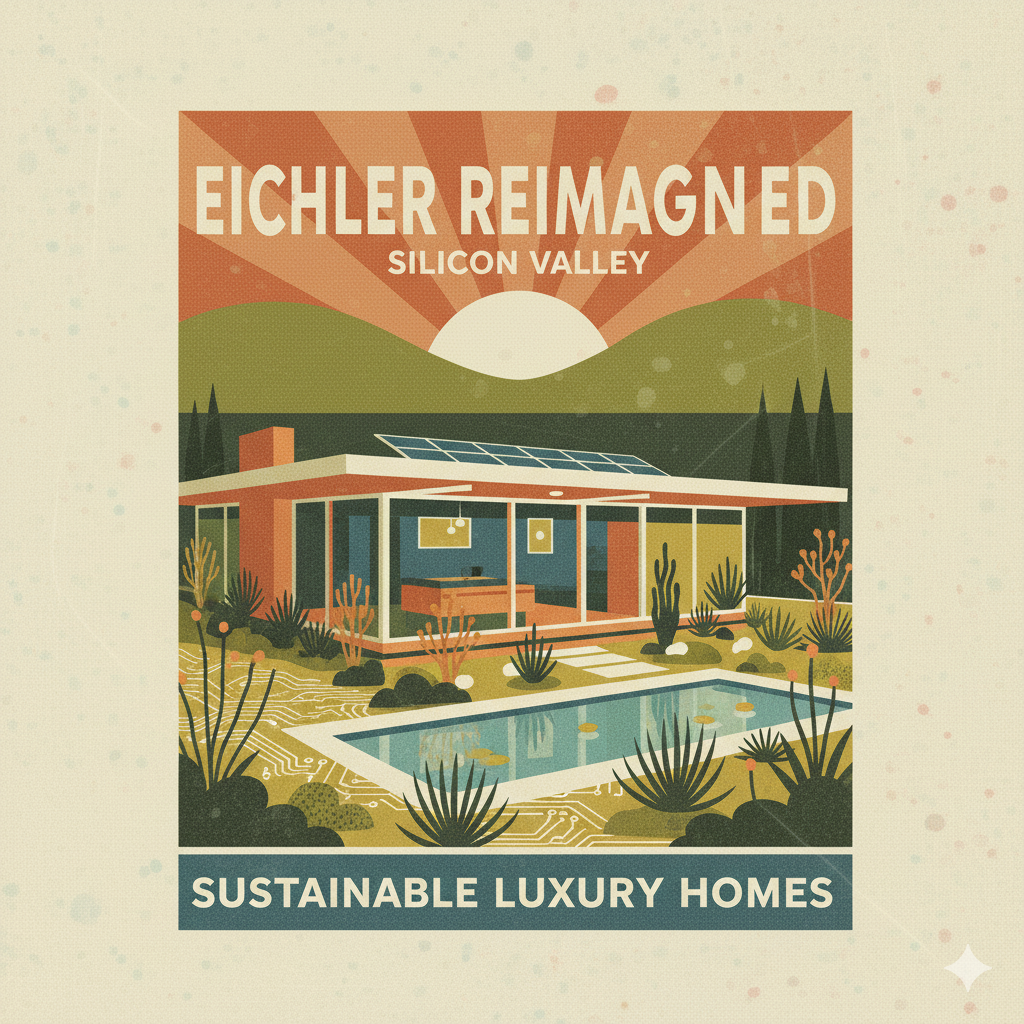
Joseph Eichler’s mid-century modern homes are icons of California living, defined by their indoor-outdoor harmony, clean lines, and human-centered design. Mid-century Eichler developments across Silicon Valley (from Palo Alto to Cupertino) embraced openness to nature and community through features like floor-to-ceiling glass walls, open atriums, post-and-beam structures, and inclusive neighborhood planning eichlerhomesforsale.com. Today, a new generation of Bay Area architects is reinvigorating Eichler’s design principles – melding his “bring the outside in” ethos with 21st-century demands for sustainability, smart technology, and climate resilience. The result is a wave of sustainable luxury homes that honor Eichler’s aesthetic (low-slung profiles, exposed structure, atrium gardens) while modernizing functionality for energy efficiency and modern lifestyles. This report profiles the leading architects, projects, and design trends in Silicon Valley that exemplify this “Eichler 2.0” movement.
Eichler’s Design DNA: Openness, Nature & Community
Eichler homes were revolutionary in creating a seamless indoor-outdoor flow that connected people with nature. His signature elements – open floor plans, extensive glass, central courtyards, and post-and-beam construction – dissolved the barrier between inside and outside. Living spaces opened onto private patios and atriums, so that “indoor living and outdoor splendor work in perfect unison” eichlerhomesforsale.com. This openness was coupled with clean, minimalist lines and honest materials (wood, glass, concrete) reflecting mid-century modern ideals. Eichler neighborhoods were also community-oriented: often featuring cul-de-sacs, greenbelts or communal pools, and Eichler’s own progressive insistence on inclusive, diverse communities (he refused to impose racial or religious restrictions on buyers) eichlerhomesforsale.com. These core values – harmonious nature integration, social optimism, and modern design for everyday living – form the DNA that contemporary architects seek to preserve.
Table 1. Notable Silicon Valley Architects Reinterpreting Eichler Design
Architect / Firm Example Project (Location)Eichler-Inspired Features Sustainability & Tech HighlightsKlopf Architecture (John Klopf) – Bay Area modernist specialists Net-Zero Energy House (Cupertino) archilovers.com Los Altos New Residence (Los Altos) klopfarchitecture.Contemporary Eichler interpretation with open atrium, post-and-beam layout, and indoor-outdoor great room. Low-profile design to blend into the Eichler neighborhood archilovers.com. Net-zero home: 13.4 kW rooftop solar, all-electric heat-pump HVAC, super-insulated SIP/ICF construction. High-performance glazing and no natural gas (except BBQ). GreenPoint-rated sustainable materials (“not food for termites”) . Gustave Carlson Design (Gustave Carlson) – residential architectCustom Eichler Renovation (Palo Alto Hills) design-milk.com. Preserved Eichler’s post-and-beam structure and atrium-centric layout; added a dramatic A-frame roof entry echoing mid-century. Indoor-outdoor continuity via floor-to-ceiling glass and skylights. Energy-efficient update integrated into original design – upgraded thermal envelope, new high-performance glass roof enclosing the atrium for year-round use. Sustainable materials: Shou Sugi Ban (charred wood) siding, cork, and natural stone interiors. Blaine Architects (husband-and-wife team) – Eichler specialists Greenmeadow Eichler Remodel (Silicon Valley) Expanded a 1953 Eichler while maintaining its aesthetic: kept iconic glass walls, exposed beams, and even added a new atrium space. Opened up floor plan for family-friendly flow.Met California Title 24 energy code via retrofits – added thick roof/wall insulation and replaced aging radiant heat system. Installed two large NanaWall folding glass walls with low-E glass, dramatically improving efficiency while enhancing indoor-outdoor living. Joseph Bellomo Architects (Joseph Bellomo) – modern & modular experts“Alester Addition” Eichler Restoration (Palo Alto) Award-winning restoration of a 1960 Eichler: retained post-and-beam construction and open-plan layout. Introduced new clerestory windows and screens to heighten light and indoor-outdoor engagement. Sustainable vernacular: used innovative materials like recyclable polycarbonate screens, high-performance glass, and aluminum panels alongside redwood siding. Upgraded to efficient operable windows for ventilation and modern HVAC while respecting the home’s mid-century bones. Guy Ayers Architect (Guy Ayers) – custom home designerEichler Expansion (Los Altos) onekindesign.com Enlarged a 1970s Eichler for a modern family: kept floor-to-ceiling glazing all around, expanded atrium and kitchen for indoor-outdoor flow. Preserved original finishes where possible to maintain Eichler charm.Modern comforts added under the skin – all new dual-pane low-E windows, new hydronic radiant floors, and updated insulation. Outdoor areas redesigned with drought-tolerant landscaping and a solar-heated pool, blending luxury with efficiency (per project details).
Indoor-Outdoor Harmony in 21st-Century Homes
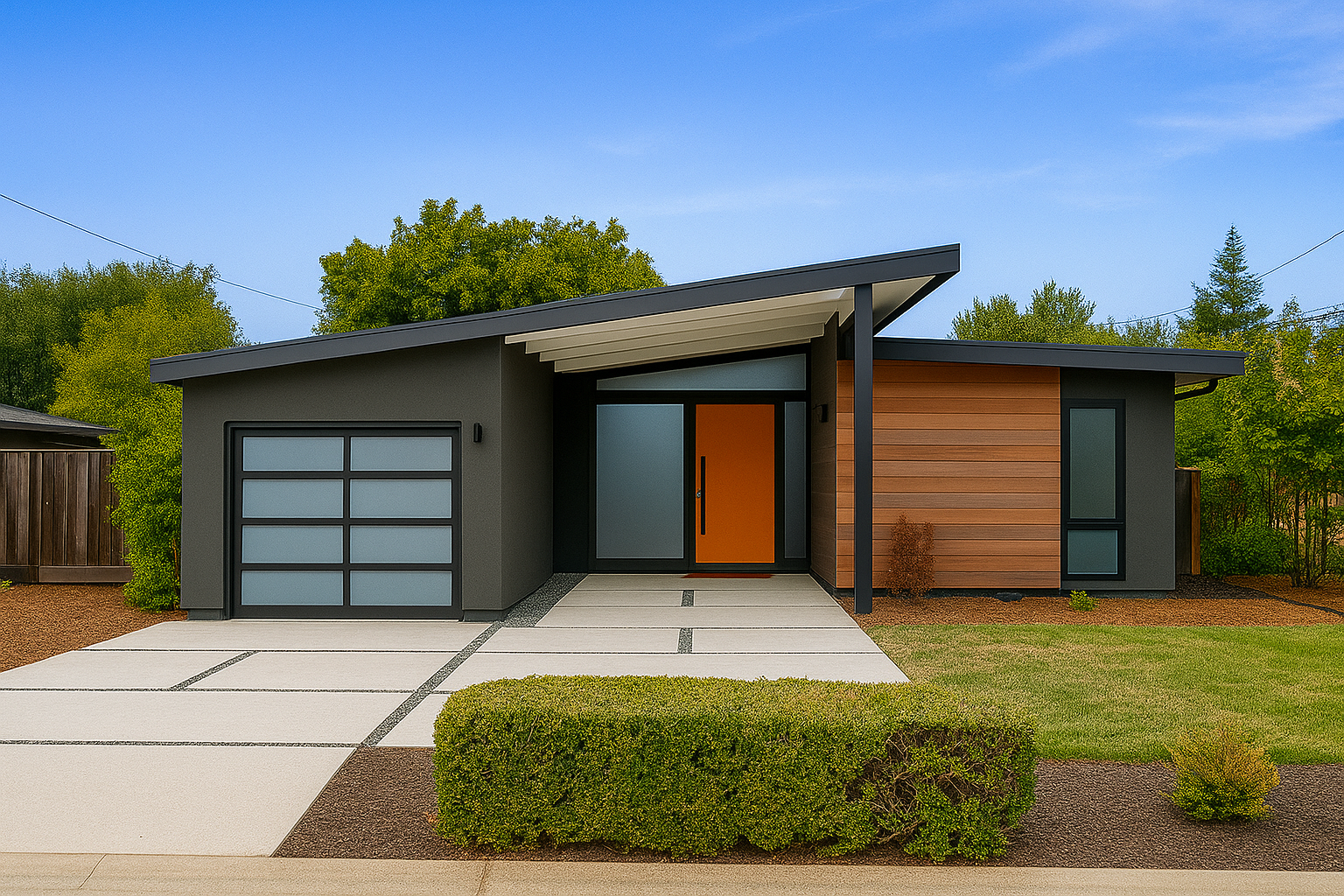
Bringing nature in remains the core theme of Eichler-inspired design. Contemporary architects in Silicon Valley amplify the indoor-outdoor harmony using modern building systems. Floor-to-ceiling glass walls and sliders are now often replaced or augmented with high-performance glazing that far outperforms Eichler’s original single-pane glass. For example, folding glass wall systems like NanaWall allow entire facades to open up, merging living rooms with gardens – all while using low-E, double-pane glass to maintain comfort and efficiency. In one Palo Alto Eichler remodel, two NanaWall installations (one 18-foot-wide at the rear and a smaller one at the front atrium) “enhance the original theme” of indoor/outdoor living by literally opening the house to the landscape, something Eichler himself only hinted at with small sliders.
Modern glass technology makes these expanses feasible without huge energy penalties. Architects employ insulated, low-emissivity glass (often double or even triple-pane) and thermally broken frames to achieve what Eichler could not: floor-to-ceiling glass that meets strict energy codes. As a case in point, Blaine Architects modeled their entire Eichler renovation’s fenestration around efficient NanaWall systems, using a high-performance Solarban 60 coating so that the big glass walls actually improved the home’s overall energy compliance. Likewise, architects often retrofit original fixed glass with custom double-pane units or “heat mirror” insulating glass, which adds a suspended film between panes for better thermal performance. The owners of one Belmont Eichler-inspired home were able to eliminate the need for any air conditioning after such upgrades – the combination of deep roof overhangs, new insulation, and heat-mirror glass kept the home naturally cool, exceeding California’s energy requirements by nearly 40%.
Atriums and courtyards – hallmark Eichler features – also get reimagined for today’s climate. Many architects preserve the central atrium concept as a delightful outdoor-in-the-middle, often still open to the sky; others have updated it to be more usable year-round. For instance, in the Palo Alto hills Eichler renovation, Gustave Carlson enclosed the atrium with a retractable glass roof, turning it into a light-filled indoor garden that can be enjoyed in any weather. The walls are lined in cedar to maintain an outdoor feel despite the added roof, retaining that daily “dose of sky and sun” Eichler intended. In new constructions inspired by Eichlers, we also see flexible atrium designs – some with operable skylights or even entirely glassed-in courtyard rooms – balancing the original concept of an open-air heart of the home with the needs of climate control and security.
Finally, natural materials and landscaping reinforce the connection to nature. Architects are using extensive drought-tolerant gardens, indoor planter boxes, and continuity of flooring to blur lines between inside and outside. In one Los Altos Eichler remodel, light stone floor tiles flow from the interior out to the patio, creating a unified surface that visually extends the living space outdoors. Large overhangs and breeze-block screens (a retro touch) provide shade and filtered light, much as Eichler’s designs did, but often with a modern twist of pattern or scale. These strategies ensure that even as homes grow more high-tech, they remain rooted in nature, delivering on Eichler’s promise of “a warm, light-filled environment” that opens to the outdoors at every turn.
Community Context and Site-Sensitive Design
Eichler’s vision extended beyond individual houses to the planning of neighborhoods, emphasizing human scale and community interaction. Contemporary architects honor this by designing homes that are context-sensitive and neighborhood-friendly, even as they introduce modern scale and luxury. For example, when Klopf Architecture designed a new 3,000 sq ft Eichler-inspired residence in Cupertino, they had to balance the owners’ desire for a larger home with the one-story profile of the surrounding Eichler tract. Their solution was ingenious: a partially submerged lower level that doubles the square footage without adding height, combined with a light-filled interior atrium and sloping roof to keep the street view low and unobtrusive. This kept the “single-story neighborhood happy” while still achieving the spacious, open home the clients wanted. The sloped roof design not only hides solar panels (more on that later) but also respects the Eichler aesthetic of simple horizontal rooflines from the curb.
In established Eichler neighborhoods like Palo Alto’s Greenmeadow or Los Altos’s Eichler enclaves, architects working on remodels face Eichler Design Guidelines that encourage preserving mid-century character. Thus, even luxury upgrades are done with restraint on exteriors: street-facing facades remain modest, with vertical wood or grooved cladding and courtyard fences that maintain privacy without presenting a McMansion to the street. Many homeowners and architects opt to recycle and repurpose original materials during renovations (for instance, restoring mahogany wall panels or exposed beam ceilings) to maintain continuity with neighboring homes. This sensitivity keeps the community-oriented spirit alive – new designs do not turn inward or tower over their neighbors, but rather complement the existing rhythm of the street.
Eichler’s egalitarian ethos – “modern homes for the masses” – is harder to fulfill in today’s era of astronomical Silicon Valley land values. However, some architects and developers are exploring creative ways to inject community and affordability into projects. Ideas include small clusters of Eichler-inspired homes designed as net-zero micro-communities, where shared solar infrastructure or communal green spaces bring neighbors together (a modern echo of Eichler’s community pools). While high-end custom homes are the focus of this report, it’s worth noting that Eichler’s social principles still inspire discussions on inclusive design. Even at the luxury end, being a good neighbor is a key principle: site plans often orient windows, landscaping, and driveways in a way that fosters friendly interaction (like front patios or semi-public atriums visible to the street) while respecting privacy. In essence, the new Eichler-inspired homes strive to “convey the optimism” and community warmth that Eichler neighborhoods are cherished for archeyes.com, proving that luxury and neighborliness aren’t mutually exclusive.

Mid-Century Aesthetics, Modern Materials
One of the most remarkable aspects of these 21st-century designs is how faithfully they preserve Eichler’s mid-century aesthetic while using modern construction methods and materials. Post-and-beam architecture, for example, is not only retained but often structurally improved. Instead of old-growth redwood beams, architects now use engineered lumber (glulam) or even cross-laminated timber (CLT) for long-span roofs that still achieve that floating planar roof look Eichlers are known for eichlerhomesforsale.com. These engineered woods are stronger and more sustainable, and can be pre-fabricated for precision. In some projects, steel beams are used in key locations to allow even more expansive glass walls or open corners – something Eichler’s architects often did in custom models. Crucially, though, these supports are left exposed and celebrated inside the home, just as in original Eichlers. Visitors to a renovated Eichler in Palo Alto Hills can still look up and see exposed tongue-and-groove wood ceilings and beams, freshly refinished, giving the home its warm mid-century vibe even after a top-to-bottom modernization design-milk.com.
Architects also echo original Eichler elements like clerestory windows, atrium layouts, and module-based layouts. In Klopf’s Los Altos New Residence (a ground-up design), the house features a large central gabled volume for the great room with clerestories that wash the space in daylight klopfarchitecture.com. Adjacent is a glass-lined atrium that functions much like an Eichler atrium, except with a removable cover for inclement weather. The floor plan smartly segments into wings (living, playing, sleeping) not unlike the distinct zones of some Eichler models, proving how Eichler’s planning concepts adapt to contemporary living (for instance, a playroom that opens to a front courtyard for indoor-outdoor play, but can be closed off with pocket doors when needed\).
Material choices marry mid-century appearance with modern performance. Where Eichlers might have had mahogany plywood walls or redwood siding, today’s reinterpretations use sustainable doppelgängers: bamboo veneer or FSC-certified mahogany for interior paneling, and durable fiber-cement or heat-treated wood siding on exteriors that mimic the groove pattern of Eichler siding but last longer and resist fire. A striking example is the Shou Sugi Ban Accoya wood used by Gustave Carlson on his Eichler renovation – this charred wood has a rich texture and dark hue, providing a modernist contrast, yet it’s low-maintenance and fire-resistant design-milk.com. Similarly, many new Eichler-inspired homes feature cool roof membranes or standing-seam metal roofs that still appear flat or gently pitched as Eichler roofs did, but perform far better in terms of insulation and reflectivity (some even double as solar collectors).
Inside, finishes keep a clean, timeless look with natural materials: polished concrete or terrazzo floors (which provide thermal mass akin to Eichler’s original concrete slabs), wood cabinetry with simple slab fronts, and period-appropriate touches like globe pendants or brick fireplaces (often original in remodels, lovingly restored). The key is that nothing overly ornamental is added – the design stays true to the “minimal and honest” mid-century vibe. As Joseph Bellomo’s team noted in their award-winning Palo Alto project, their goal was a “new architectural language” that follows “the principle of post and beam… and engages with the surroundings”, using a palette of redwood, aluminum, steel, polycarbonate, and high-performance glass to create a house that is “as beautiful as the original but with some added twist” midcenturyhome.com. That twist often comes in the form of creative façades or screen elements – for instance, Bellomo added polycarbonate sliding screens to an Eichler carport, giving a dynamic play of light and an ultra-modern look, but it’s a move Eichler’s architects might well have tried had the material been available in 1960. The end result is homes that look and feel like Eichlers at a glance – low-slung profiles, big eaves, vertical siding, indoor-outdoor rooms – yet upon closer inspection are thoroughly modern in construction, materials, and detailing.
Sustainable luxury with Eichler cues: A new Silicon Valley estate (designed by Louie Leu) showcases mid-century modern forms – a low-pitched gable roof, broad eaves, and an atrium-like glass entry – executed with 21st-century materials. The exterior blends stone cladding and high-performance glass, while a standing-seam metal roof supports concealed solar panels. The design achieves near net-zero energy thanks to integrated photovoltaics and solar hot water, all without compromising the home’s clean, modernist lines idesignarch.com.*

Net-Zero, All-Electric, and Passive Design Innovations
Perhaps the most profound updates to Eichler’s principles come in the realm of energy and sustainability. If Eichler homes were ahead of their time in the 1950s (with features like radiant floor heating and insulation that was novel then), today’s interpretations leapfrog into the future with net-zero energy designs, all-electric systems, and passive house techniques.
Net-Zero Homes: A modern Eichler-inspired home is often a net-zero energy building, meaning it produces as much energy as it consumes. In sunny Silicon Valley, this is typically achieved with solar photovoltaic panels seamlessly integrated into the design. Many architects now treat solar panels as a given – for example, Klopf’s Cupertino home includes a 13.4 kW PV array on its gently sloping roof, sized to cover all the home’s energy needs archilovers.com. Because Eichler roofs are flat or low-pitched, they are perfect for solar. Some projects use building-integrated solar, such as solar shingles or even a glass canopy over an atrium that doubles as a solar array eichlerhomesforsale.com. Importantly, these panels are arranged with aesthetics in mind, so they don’t disrupt the roofline. Net-zero strategy also extends community-wide in concept: one Eichler revival proposal imagines an entire microgrid neighborhood where each home’s solar and battery storage are linked, leveling out energy use across the community eichlerhomesforsale.com – a very Eichler-like communal approach to sustainability.
All-Electric and High-Efficiency Systems: In mid-century California, Eichlers had gas-fired furnaces for radiant heat; today, natural gas is being phased out in many cities. Silicon Valley architects are designing all-electric homes that rely on ultra-efficient electric heat pumps for heating, cooling, and hot water. Heat pump HVAC systems provide both heating and air conditioning with a fraction of the energy of old furnaces, and without combustion. In retrofits, original radiant floors are sometimes retained but now heated via electric heat-pump water heaters or solar-thermal systems eichlerhomesforsale.com. The Cupertino net-zero Eichler by Klopf, for instance, replaced a gas furnace with heat pumps and eliminated gas entirely (except a backyard BBQ grill) archilovers.com. Induction cooktops take the place of gas ranges in the kitchen, aligning with the “electric homes” push for cleaner indoor air and easier integration with solar power.
These homes are also smart about energy use. Builders incorporate high levels of insulation – often far beyond code – into walls and roofs, something Eichler homes lacked. Double-stud walls or Structural Insulated Panels (SIPs) can achieve extremely high R-values while still allowing the interior post-and-beam structure to show (by using inset insulation or hybrid systems) eichlerhomesforsale.com. Roof insulation in Eichler remodels is dramatically improved; one project added new foam insulation above the tongue-and-groove ceiling, hidden by a membrane roof, thereby cutting heat loss while preserving the interior wood decking look. Airtightness is another focus: modern Eichler-inspired builds include improved air barriers and high-performance windows and doors that seal tightly. The Blaine Architects’ remodel employed the California Title 24 performance method, trading off the huge improvements from new windows and insulation against other aspects, to meet energy goals despite large expanses of glass nanawall.com. The result of these upgrades is a house that might look like a mid-century pavilion but behaves like a thermal flask, keeping cool in summers and warm in winters with minimal mechanical input.
In fact, several updated Eichler homes report no need for conventional AC at all – instead they rely on passive cooling and the efficient envelope. Deep eaves (a classic Eichler trait) continue to provide shade, but are now optimized via simulations to block high summer sun while admitting lower winter sun. Some architects size and orient windows according to passive solar principles, so the homes naturally regulate temperature eichlerhomesforsale.com. Thermal mass, such as concrete or tile floors, is utilized to even out daily temperature swings eichlerhomesforsale.com. Operable skylights or high clerestory windows create stack ventilation to exhaust hot air. These passive design strategies were hinted at in Eichler’s original homes and are now being deliberately fine-tuned. Notably, cross-ventilation was inherent in Eichler’s open plans; modern designs retain that openness and often add whole-house fans or hidden trickle vents to enhance ventilation without sacrificing the clean lines.
Advanced Glass and Glazing: We discussed the efficiency of glass walls, but it’s worth noting how glazing technology contributes to passive comfort. Many updated designs use spectrally selective low-E coatings that let visible light in but block infrared heat, so homes are filled with daylight without overheating. Some architects are experimenting with electrochromic glass or automated shading in the larger windows – for instance, windows that tint on demand or blinds hidden in ceiling pockets that descend when the sun is strong. These high-tech glass solutions ensure that the “walls of glass” Eichler loved can be enjoyed in the 100°F heat of a Palo Alto summer and the 40°F chill of winter morning without discomfort eichlerhomesforsale.com.
Finally, on-site energy storage and management is becoming common. Luxury sustainable homes often include a battery system (like Tesla Powerwall or equivalent) to store solar energy, enabling the house to run off-grid at night or provide backup power. They are also pre-wired for electric vehicle charging in the carport or garage – a fitting update, considering Eichler’s carports showcased cars as part of California living. In a nod to Eichler’s forward-thinking, some architects even imagine offering “turnkey net-zero smart homes” with all these systems integrated – a selling point Eichler surely would have embraced eichlerhomesforsale.com.
Smart Homes and Climate Resilience
Beyond energy efficiency, smart technology and resilience features are being woven into these homes in subtle ways. While mid-century modern design prizes simplicity, today’s luxury homeowners expect tech convenience. The challenge (as architects note) is to integrate tech invisibly, so it doesn’t clutter the aesthetic eichlerhomesforsale.com. Many Eichler-inspired homes now come with centralized smart home systems that control lighting, climate, security, and window shades, all through an app or voice command. However, devices like sensors and speakers are carefully concealed – e.g. motion sensors tucked into beam recesses, or smart thermostats disguised by custom minimalist covers – to keep the clean look. The payoff is significant: motorized shades can automatically drop to prevent overheating when afternoon sun hits those glass walls, or windows can close themselves at the first sign of rain eichlerhomesforsale.com. Smart thermostats “learn” the owners’ routines and coordinate with the solar production, pre-cooling the house during the day using solar power so that by evening, hardly any grid energy is needed eichlerhomesforsale.com. All this aligns with Eichler’s ethic of comfort through innovation – the technology serves to enhance the easy California lifestyle, not complicate it.
Climate resilience is an increasingly important aspect in California, and architects are upgrading Eichler designs to meet these challenges. In wildfire-prone areas (like parts of the foothills around Los Altos Hills or Palo Alto’s hill district), fire-resistant construction is critical. Eichler homes with their wood siding and big glass can be vulnerable, so new versions incorporate features like ember-resistant vents, non-combustible siding (fiber cement or stucco) or treated wood, and in some cases sprinkler systems integrated discreetly into the eaves eichlerhomesforsale.com. One Eichler remodel swapped old redwood siding for a similar-looking cementitious siding that won’t burn eichlerhomesforsale.com. Roofs are redone with Class A fire-rated materials. Even the landscaping is planned with defensible space principles (shrubs and trees are placed strategically, and fire-resistant plants are used near the house).
For earthquakes – always a Silicon Valley concern – the post-and-beam structure actually performs well, but modern engineers still retrofit older Eichlers with better connections and shear walls. New builds take advantage of steel moment frames around large glass openings to ensure seismic strength without adding walls. These reinforcements are hidden in the sleek lines of the house, maintaining that open feel yet making the structure far more robust than its mid-century predecessors.
In flood zones or areas with rising water tables (some Eichler communities were built on bay fill areas), architects have designed subtle elevation changes: raising the slab slightly or using berms and landscaping to direct water away, all while keeping the home visually grounded. For example, a Palo Alto Eichler in a flood zone was carefully modified by Bellomo Architects to stay within FEMA guidelines – they elevated certain areas and redesigned the carport to avoid flood risk, without making the house look “on stilts”midcenturyhome.com.
Lastly, healthy indoor environments are part of the luxury sustainability package. Builders use low-VOC finishes and often integrate advanced ventilation systems (like energy-recovery ventilators, ERVs) that ensure a continuous supply of fresh filtered air without losing heat. This marries well with the airtight construction: even when the house is closed up for efficiency, the air inside stays fresh and clean – a modern improvement over some stuffy, uninsulated Eichlers of the past.
All these enhancements mean that the 21st-century Eichler-inspired home is not just a design statement, but a resilient haven ready for the future. It is as if Joseph Eichler’s ethos has been upgraded: from simply “bringing the outside in” to now also “bringing the best of innovation in” – while keeping the outside (nature, community) ever-present in daily life.
Legacy of Eichler in a Green, Luxe Era
Silicon Valley’s contemporary architects and homeowners are demonstrating that Eichler’s timeless principles can thrive in the modern age. By prioritizing openness, community, and elegant simplicity – and fusing those ideals with cutting-edge green technology – they are creating homes that are both luxurious and sustainable, nostalgic and innovative. Key design trends like net-zero energy performance, all-electric living, passive cooling/heating, and advanced glazing are enabling these homes to meet 21st-century needs without sacrificing the “California modern” aesthetic that Eichler popularized eichlerhomesforsale.com. Projects across Palo Alto, Los Altos, Cupertino and beyond showcase features such as solar-powered roofs, battery-backed power, insulated floor-to-ceiling glass, and climate-conscious materials – all wrapped in the familiar horizontality, post-and-beam rhythm, and indoor-outdoor blur that instantly evoke mid-century modernism.
In essence, the Bay Area’s sustainable luxury homes are channeling Eichler’s spirit: they enhance quality of life through design. As Gustave Carlson aptly put it, an Eichler (old or new) “captures the word optimism in built form”, conveying the promise that modern design can indeed improve how we live archeyes.com. Today’s optimistically reimagined Eichlers are not mass-produced tract homes for the middle class, but they carry forward the heart of Eichler’s mission – connecting people to nature and community with good design – now augmented by the pressing mandate for sustainability. The result is a new legacy of homes that inspire us with the comfortable, open, and green lifestyle they offer, proving that Joseph Eichler’s ideas are not relics of the 1950s, but a foundation for housing innovation well into the 21st century.
Sources: Contemporary project case studies, architecture and real estate publications, and Eichler-focused resources have been referenced to provide specific examples and details. Key sources include EichlerHomesForSale (Boyenga Team) blog analyses of modern Eichler design trends eichlerhomesforsale.com, architecture features from Dwell, Design Milk, and ArchEyes highlighting renovations by Gustave Carlson and others design-milk.com archeyes.com, as well as project profiles by firms like Klopf Architecture and Bellomo Architects documenting their sustainable Eichler-inspired designs archilovers.com midcenturyhome.com. These sources underline how Silicon Valley architects are blending Eichler’s mid-century modern DNA with cutting-edge sustainable design to meet contemporary needs.