
Selling Mid-Century Modern Homes: Emphasizing Architecture Over Updates
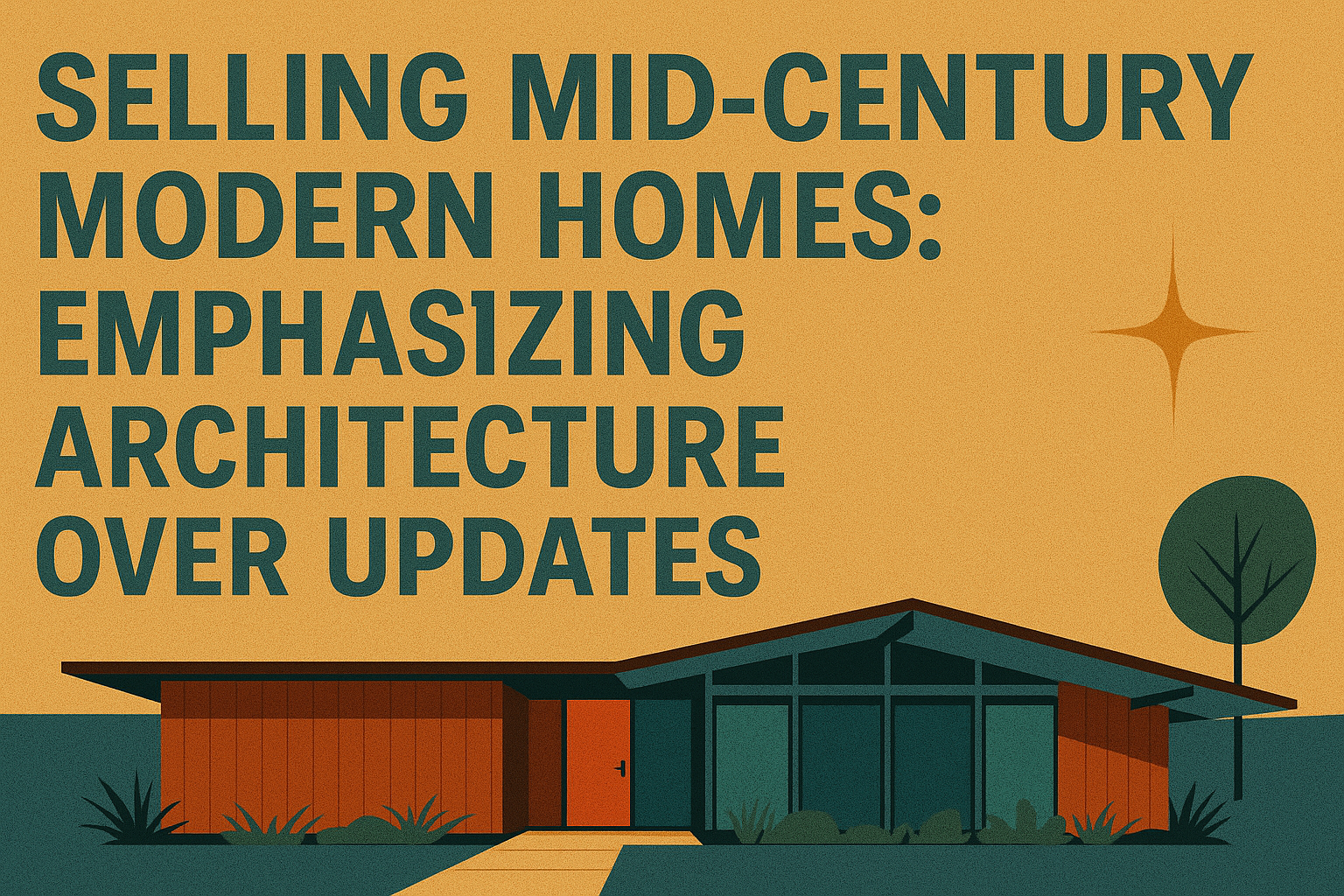
Selling a Mid-Century Modern (MCM) home is a unique endeavor that goes beyond touting new appliances or cosmetic renovations. Unlike sellers of traditional tract or spec-built houses—who often focus on upgraded kitchens or fresh paint—successful MCM sellers highlight the overall architectural concept and design integrity of the home. Why? Because buyers of architectural homes (especially mid-century properties) are often buying with their hearts. They seek an emotional connection to a space’s design, light, and flow, rather than just a checklist of features eichlerhomesforsale.com. In essence, selling a mid-century modern home means selling a piece of art and lifestyle, not just a piece of real estate. This report delves into the psychology of these design-savvy buyers, what aspects of MCM architecture resonate with them, and best practices for marketing such homes – including storytelling, staging, and positioning in high-end markets like Silicon Valley.
The Architectural Homebuyer Mindset
Emotion Over Analytics: Buyers drawn to architectural and mid-century homes tend to shop with emotion. They aren’t simply comparing price per square foot or counting bathrooms; instead, they are looking for a home that feels right and inspires them. Walking into the right mid-century home can elicit visions of a desired lifestyle – “I can picture morning coffee by that glass wall,” or “The light in this great room feels so uplifting”. A well-marketed MCM home will tap into these feelings. In fact, real estate experts note that when a mid-century home is marketed with authentic modernist appeal, it “creates an emotional connection with buyers” which can lead to higher offers and faster sales eichlerhomesforsale.com. These buyers often fall in love with the design story of a home, not just its amenities.
Spatial Logic, Light, and Flow: Architectural homebuyers are highly attuned to a property’s spatial logic and layout. Many mid-century enthusiasts quickly assess whether the floor plan flows and whether the indoor-outdoor connection makes sense for modern living. They crave open, airy spaces that align with mid-century principles of flow and functionality. All square footage isn’t equal – a well-designed 2,000 sq ft MCM home with an open great room and walls of glass can feel more expansive and livable than a larger traditional home with chopped-up rooms. These buyers prize natural light and visual connections to the outdoors, often more than surface-level upgrades. As one architecture firm explains, mid-century design is about “maximizing the use of open space, and blurring the lines between the interior and the garden” redfin.com ourmidland.com. Thus, features like clerestory windows, floor-to-ceiling glass, and atriums that flood the home with light are pure gold to the MCM buyer.
Design Authenticity vs. Newness: Perhaps the biggest difference in mindset comes down to authenticity. A buyer of a traditional home might be impressed by a brand-new kitchen with the latest trendy cabinets and fixtures. By contrast, the mid-century modern buyer often values original character and thoughtful design over generic “newness.” To these buyers, an untouched brick fireplace or original teak paneling can be more appealing than a cheaply remodeled one eichlerhomesforsale.com. They can spot a “remuddled” mid-century house a mile away – and it’s a turn-off eichlerhomesforsale.com. In other words, replacing a home’s unique 1950s features with Home Depot specials may actually lower its appeal to the target audience. Savvy MCM enthusiasts are “often looking for preserved features or sensitive upgrades, not a blank slate to gut” eichlerhomesforsale.com. They’d rather restore an original globe pendant or copper fireplace hood than see it replaced with something generic. This psychology is almost the inverse of the typical buyer: mid-century fans are willing to do updates themselves if it means keeping the integrity of the design, whereas a normal buyer might pay a premium for a turnkey remodel.
Lifestyle and Pride of Ownership: Buying a mid-century modern home is frequently as much a lifestyle choice as a housing choice. Owners of these homes tend to see themselves as stewards of a piece of architectural history. There’s a certain pride and cachet in saying “I live in an Eichler” or “This is a Cliff May ranch,” much like owning a classic vintage car. A Compass Realty blog puts it succinctly: “Owning a mid-century modern home is more than owning a house—it’s a lifestyle statement. These homes are art.”. Because of this, the emotional bond is strong: the right buyers will cherish a home’s story, its architect or pedigree, and even the patina that comes with age. On the flip side, the wrong buyers (those who really wanted a new build but stumbled into an MCM open house) will be put off by exactly those same things. That’s why marketing needs to filter for the lovers of design and not aim for the masses. In the words of one appraiser, mid-century homes “have somewhat of a cult following” – a passionate sub-group of buyers who actively prefer a “vintage/retro” feel in a house sacramentoappraisalblog.com. Those are your target buyers. Trying to appeal to everyone will dilute your message and could result in fewer offers eichlerhomesforsale.com.
What Mid-Century Modern Buyers Value Most
Mid-century modern architecture has distinctive features that speak to design-minded buyers. When selling an MCM home, it’s critical to identify and celebrate these elements. Here are the aspects that resonate most with mid-century enthusiasts:
Clean Lines and Open Plans: Mid-century homes embrace simplicity and open flow. They were designed with a “form follows function” ethos, resulting in sleek, uncluttered lines and open layouts that create a calming sense of spaciousness. Buyers love the airy, informal feel of an open-plan living/kitchen area or an L-shaped layout that encourages movement and interaction. Many new homes today borrow this concept of the “great room” directly from mid-century design redfin.com. Emphasize how your home’s floor plan fosters easy living and social connection. For example, point out the sightlines from the kitchen to the living area, or how the dining space flows into the patio – all features that modern buyers value for both family living and entertaining redfin.com.
Indoor-Outdoor Connection: One hallmark of mid-century modern design is the seamless connection between indoors and outdoors. Large windows, sliding glass doors, and even entire walls of glass were used to integrate the house with nature. For today’s buyers who crave sunlight and outdoor living, this is a huge draw. Your marketing should play up any features like expansive glass walls, clerestory windows, skylights, atriums, or wraparound decks that blur indoor and outdoor spaces. If the home has a central courtyard or a well-designed garden, make sure it’s highlighted as an extension of the living space. In mid-century homes, “bringing the outside in” isn’t just a cliché – it’s literally built into the architecture. Many buyers will feel an emotional response to a home that, for example, lets them see greenery from every room, or offers cool vintage indoor-outdoor features (like a pass-through kitchen window to the patio bar). Showcasing this inside-outside flow signals to architectural buyers that the home delivers the timeless mid-century lifestyle they’re after.
Natural Light and Transparency: Related to the above, mid-century homes are usually bathed in natural light. Design elements like floor-to-ceiling glass and open beam ceilings were meant to create airy, light-filled spaces. Buyers who love mid-century modern often cite light as a key attraction – the play of sunlight and shadow through a post-and-beam structure can feel almost spiritual. Photographers call the best time to shoot these homes the “golden hour” for a reason. Make sure to time showings and photos to capture the quality of light. If the home has original clerestory windows (small high windows near the roofline) or transom windows, explain their purpose: they invite extra light and views of the sky while maintaining privacy. Similarly, if there are expansive glass gables or a sunlit atrium, these are selling points that differentiate the home from any generic new build. Light is an emotional driver – people naturally respond to bright, uplifting spaces, and mid-century design delivers that in spades.
Signature Architectural Features: Mid-century modern homes often include iconic design features that set them apart from traditional houses. For example, post-and-beam construction (exposed beams and ceilings) is a classic element that buyers love for its aesthetic and its engineering elegance. A well-informed buyer will appreciate seeing those beams and knowing they’re integral to the structure (meaning fewer load-bearing walls, and thus more open space). Other features might include flat or gently sloping rooflines, wide eaves, carports, breeze block screens, or courtyard entrances. If your home was designed by a notable architect or developer (e.g., Joseph Eichler homes in California, or an architect like Richard Neutra, etc.), name-dropping the architect or builder is crucial eichlerhomesforsale.com. Even if not famous, simply identifying it as a “mid-century modern designed in 1958 by [Name]” or a “true MCM ranch by [builder]” signals authenticity. It’s wise to educate buyers on unique features: describe the tongue-and-groove ceiling, the original terrazzo flooring, or the way the fireplace is a mid-century centerpiece. These are the details that excite MCM enthusiasts. As one article advised sellers, “The best agents market mid-century homes by educating buyers on the unique features… describing the indoor-outdoor flow, vintage globe lights, or era-authentic materials in a positive light.” eichlerhomesforsale.com. In short, celebrate everything that makes the home an “architectural treasure” rather than a generic house.
Materials and Craftsmanship: Mid-century modern design favored natural and honest materials – wood, stone, brick, glass, metal – often left exposed to speak for themselves. These materials lend a warmth and timelessness that buyers respond to. Many mid-century homes have redwood or mahogany paneling, vaulted wood ceilings, concrete slab floors, or original built-in cabinetry. Highlight these! An original feature in good condition is a selling point, not a drawback. Enthusiasts will marvel at a 60-year-old wall of Philippine mahogany or an intact vintage Eichler kitchen cabinet. On the other hand, be upfront if some materials need TLC; true fans often prefer restoring an original feature over seeing it replaced. For example, an Eichler specialist recounts how painting over original wood paneling in gray or white to “modernize” is a huge mistake that makes mid-mod fans “cringe”eichlerhomesforsale.com. Likewise, covering iconic elements (like an untouched brick fireplace or concrete floors) with trendy finishes is counterproductive eichlerhomesforsale.com. It’s far better to preserve and repair original materials where possible. By doing so, you’re leveraging the very authenticity that these buyers value. Original = authenticity = desirability, in the mid-century equation.
Historical and Design Significance: Many architectural homebuyers are effectively amateur historians of design. If your mid-century home has an interesting backstory, or is part of a noteworthy development (say, a tract of Eichler homes or a neighborhood of 1950s modernist homes), make that a part of the value proposition. A house with a story creates an emotional hook. Even a small anecdote like “the home was featured in a 1962 issue of House Beautiful” or “designed by a student of Frank Lloyd Wright” can elevate the perceived value. These tidbits reinforce that the home is a piece of design history. Recent sales have shown that buyers will pay a premium for provenance. For example, the personal residence of famed developer Joseph Eichler in Atherton, CA was listed at $6.3M and generated “plenty of interest,” according to the listing agent, precisely because of its architectural pedigree and the unique design elements (open floor plan, triangular motifs, etc.) that came with it ourmidland.com. Whenever possible, tie your home to the broader mid-century modern narrative – it gives buyers the sense that they’re becoming part of that story.
Strategic Marketing for the Mid-Century Buyer
Marketing an architectural property requires a different strategy than a cookie-cutter home. Here are best practices for reaching the right audience and showcasing the home’s design in the best light:
1. Craft a Compelling Story in the Listing
The listing description should read almost like a mini-architectural review or lifestyle advertisement, not a generic MLS blurb. This is your chance to engage buyers’ imaginations and emotions. Rather than a sterile list of stats (“3 bed/2 bath, updated kitchen”), paint a picture of what it’s like to live there. For example: “Wake up to sunrise filtering through the clerestory windows of this 1958 post-and-beam gem. Evenings flow effortlessly from indoor dinner parties to outdoor cocktails on the patio, thanks to the home’s iconic indoor-outdoor design.” Use descriptive language to highlight the design inspiration, materials, and any famous names involved archeyes.com. If an architect or mid-century designer is linked to the home, mention them upfront (e.g. “a classic Cliff May design” or “an authentic Joseph Eichler home”) eichlerhomesforsale.com. This immediately signals to enthusiasts that this is the real deal.
Also, explicitly call out the distinctive architectural features in a positive light: “open-beam ceilings,” “floor-to-ceiling glass walls overlooking a Zen garden,” “original terrazzo floors,” etc. One expert warns that if you don’t celebrate these, and instead harp on things like “remodel potential” or merely call it a “1960s house,” you risk alienating the target buyers eichlerhomesforsale.com. Avoid language that suggests the home needs to be modernized or gutted – even if it’s not perfect. Remember, mid-century aficionados want the vintage character. Phrases like “blank canvas” or “bring your contractor” are red flags in these listings eichlerhomesforsale.com. Instead, emphasize how well-preserved the home is, or how any improvements have been done in keeping with the original style. The goal is a description that honors the home’s design pedigree and helps the reader visualize themselves living in this architectural work of art archeyes.com.
2. High-Quality Photography (and Videography)
Professional photography is non-negotiable when selling an architectural home. The nuances of space, light, and design elements must be captured expertly to do justice to the home eichlerhomesforsale.com. Hire a photographer who has experience with architecture or real estate – ideally someone who knows how to use wide-angle lenses for room dynamics and detail shots for materials. Emphasize shots that show the open layout and the indoor-outdoor connections (for instance, a photo looking through the living room out to the backyard through a glass wall). Also include vignettes of special features: that cool mid-century front door, the patterned breeze block by the carport, the vintage pendant lights, etc. These detail photos can evoke the emotional response you want – they’re the type of images that get shared on design blogs or Instagram, attracting exactly the audience you seek.
Consider using twilight photography to highlight the transparency of the home (interiors glowing through glass walls at dusk), which often gives a magical mid-century vibe. If budget allows, drone shots or video tours can be fantastic for context – especially in scenic areas (imagine a sweeping drone shot pulling up from an MCM home to show a panorama of the surrounding hills or city lights). Many top agents create video tours that are almost mini-films, narrating the home’s story or using music and visuals to stir emotion. A virtual tour or 3D walkthrough can also help remote buyers feel the space. Given that architectural buyers might be willing to come from afar (design aficionados will cross state lines for the right house), having immersive online media is key archeyes.com. The bottom line: mediocre visuals will undersell an extraordinary design, so invest in the best marketing collateral you can eichlerhomesforsale.com.
3. Staging that Lets Architecture Shine
Staging a mid-century modern home is a delicate art. The goal is to compliment, not compete with, the home’s design. As one staging expert put it, the mid-century modern aesthetic’s clean lines and minimalism “will help make the house’s best features stand out by complementing (rather than competing with) the space”. In practice, this means furnishing with appropriate style and restraint. Avoid overly bulky or period-inappropriate furniture that could distract from the architecture. Instead, use pieces with low profiles and clean lines – think along the lines of iconic mid-century furnishings (e.g. an Eames lounge chair, a Nelson bench, a platform sofa) or contemporary pieces that have a minimalist design. Pops of color and geometric patterns (pillows, rugs, artwork) can echo mid-century style without overwhelming. Importantly, keep the rooms uncluttered; negative space is your friend, as it was in the original design ethos redfin.com. Let that expansive living room feel expansive by not over-stuffing it.
Staging should also highlight key architectural elements. If there’s a dramatic two-sided fireplace, ensure seating is arranged to draw attention to it. If there’s a wall of glass looking onto a garden, do not hide it behind heavy drapes – in fact, many stagers will remove curtains entirely or use sheer panels to maximize light eichlerhomesforsale.com. One misstep is mixing styles that clash: for example, farmhouse chic decor in a mid-century house is a big no-no eichlerhomesforsale.com. An experienced MCM stager will cringe at the idea of putting a rustic barn door or shiplap wall in an Eichler – and so will the buyers eichlerhomesforsale.com. On the contrary, period-appropriate accents (even just a few) can really make a difference. A strategically placed starburst clock, some teak wood accents, or an atomic-age style light fixture can subtly telegraph that this home embraces its mid-century roots. Some realtors who specialize in these homes even keep a cache of mid-century decor for staging; for instance, an East Bay agent in California who owns an Eichler will lend his own MCM furniture to stage clients’ homes in the proper style eichlerhomesforsale.com. This level of authenticity in staging creates an immediate resonance with buyers when they walk in. They’ll feel like they’ve stepped back into the 1950s/60s era – but in a fresh, stylish way – which helps them emotionally invest in preserving the home’s character. As the Boyenga Team (mid-century specialists in Silicon Valley) note, thoughtful staging lets a home’s authentic 1950s–60s character shine, whereas staging with incongruous styles only detracts from the clean lines and indoor-outdoor vibe eichlerhomesforsale.com.
4. Preserve and Highlight Original Features
Before listing, evaluate if any original features can be cleaned up or restored rather than replaced. Original cabinetry, lighting, hardware, and architectural materials are very attractive to mid-mod buyers when in decent condition. For example, polishing up original terrazzo floors or repairing the vintage globe pendant lights in the entry can pay dividends in charm. If the home still has original wood paneling, consider oiling or refinishing it to bring back its luster rather than painting over it eichlerhomesforsale.com. Removing carpet to expose concrete slab or hardwood (if those were original finishes) is often worthwhile. By showing that you’ve respected the home’s history, you signal to buyers that this house is an intact gem, not a flip. As a case in point, one Eichler homeowner recounts that their realtor suggested painting the mahogany walls white for broad appeal – the suggestion was met with horror by mid-century aficionados, one of whom quipped the agent “doesn’t deserve the commission… if they can’t understand its value”eichlerhomesforsale.com. The lesson: don’t erase mid-century character for a “quick refresh.” Instead, celebrate it. Whether it’s an original baked enamel oven front, a built-in record cabinet, or even quirky vintage bathroom tiles, there will likely be a buyer who finds those irresistible. In your marketing, explicitly mention these preserved elements (e.g. “features original breezeblock room divider” or “restored original Eichler sliding cabinet doors”), because they are differentiators in a crowded market of remodels. Original details tell a story and lend authenticity that cannot be faked or easily recreated.
If updates are necessary (for functionality or safety), try to do them in a period-sensitive way. For instance, if you must update a mid-century kitchen, opting for flat-front slab cabinets in keeping with mid-century style is wiser than trendy Shaker cabinets eichlerhomesforsale.com. If replacing light fixtures, consider mid-century reproductions or modern lighting with a minimalist look rather than something ornate eichlerhomesforsale.com. These choices reassure buyers that the home’s integrity has been maintained. In the listing, you can even mention “recent updates were done with respect to the home’s original style,” which is music to an architectural buyer’s ears. Remember, a mid-century home in near-original form is increasingly rare – that rarity is part of the value proposition.
5. Targeted Outreach and Channels
Reaching the right audience is crucial. A beautifully written description and stunning photos won’t do much good if the people seeing them don’t appreciate mid-century design. Traditional marketing (MLS listing, yard sign, general open house) is still necessary, but you should supplement with channels that cater to design enthusiasts. Consider some of these strategies:
Architecture & Design Platforms: Advertise or feature the listing on websites and social media groups that celebrate mid-century and architectural homes. Websites like Dwell, Curbed, Atomic Ranch, or local modernist groups’ pages can generate buzz. Even the article you’re reading now (on ArchEyes or similar) indicates that specialized outlets exist for unique properties archeyes.com. Some agents submit press releases or pitches to architecture magazines or blogs to see if they’ll do a piece on a notable listing archeyes.com. A well-timed feature in a design blog can massively increase interest among the target buyer pool.
Social Media & Digital Campaigns: Leverage Instagram, Pinterest, and Facebook with a campaign that highlights the home’s most eye-catching design features. Use hashtags like #midcenturymodern, #Eichler, #modernarchitecture, or local tags (#SiliconValleyRealEstate, #PalmSpringsModern, etc.) to reach enthusiasts archeyes.com. On Instagram especially, mid-century homes get a lot of love – a striking photo of your living room’s A-frame ceiling or indoor atrium could go viral in the #midmod community. Some sellers create a short property video to share on these platforms, focusing on the lifestyle (e.g. a slow pan of the indoor-outdoor entertaining space with cool jazz music, to evoke a Mad Men-esque vibe). The idea is to get design-oriented eyes on the listing, not just generic home shoppers.
Mid-Century Enthusiast Networks: Work with an agent who has connections in the mid-century modern community. In many areas, there are enthusiast groups (both formal and informal). For example, in California the Eichler homeowner community is very active – there are message boards, Facebook groups, and email lists where people literally trade tips on upcoming listings. A knowledgeable agent might host a special open house event inviting members of local architecture organizations, or even partner with a local modern furniture store to stage an event at the home. In some cases, houses are sold off-market via whispers to known collectors or enthusiasts eichlerhomesforsale.com. In Silicon Valley, it’s noted that “many of the best Eichlers sell off-market… through insider networks and quiet whisper campaigns” eichlerhomesforsale.com. This happens because agents with mid-century expertise know exactly who might want that style of home and can reach out directly. As a seller, you want to tap into that network if possible. It might mean the difference between a tepid response on the open market versus a bidding war among MCM fans.
Storytelling and Provenance: In your marketing materials (brochures, dedicated property website, etc.), include a section on the home’s “story.” Have a timeline or a short narrative about when it was built, who built it, any interesting past owners or renovations, and what makes it special architecturally. If you have blueprints, old photos, or architectural documentation, make those available at showings. This transparency and passion for the home’s history can really impress buyers archeyes.com. One tactic is to create a lookbook or slideshow for open houses, showing vintage images or design sketches – it helps visitors appreciate that this is an important home. By treating the home like the collectible it is, you encourage buyers to see it that way too, potentially increasing its perceived value.
Examples of Successful Mid-Century Sales
Real-world results underscore that emphasizing architecture over superficial updates is the winning strategy for mid-century modern homes. Here are a few anecdotes and examples:
Eichler Home Over Asking in Days: A recent sale in California involved an Eichler home (a mid-century tract home known for its modernist style) that was carefully marketed to accentuate its original features. The result? Multiple offers well above the asking price, and a closing in just 7 days at $2.385 million. The listing agent attributed this success to targeting the sale toward design-focused buyers and preserving the home’s mid-century appeal. In another case, an Eichler in Silicon Valley reportedly received 8 offers and sold for over $500,000 above list price within a week – again, driven by competition among mid-century enthusiasts who “will pay the premium if [homes] are in original or well-renovated condition”reddit.com. These examples show that when the right buyers are in love with a home, they will act quickly and aggressively.
The Gibson House – Preserved Time Capsule: In High Point, North Carolina, an iconic 1955 mid-century home known as the Gibson House hit the market in 2020. Rather than remodeling it to mimic new construction, the sellers and agent celebrated its retro charm – including features like a great room with bi-fold glass doors opening to the outdoors, original landscaping plans, and even its historic significance as the home of a local ice cream magnate. The marketing described it as “modern all the way” and highlighted that it “started out modern, but it’s become timeless.” The strategy paid off: the home was snapped up in just a few weeks, selling for $26,000 above the asking price (closing at $801,000) piedmonthistorichomes.com. Buyers clearly recognized the value of its authenticity. This sale illustrates that even in markets not traditionally known for mid-century modern, there is a strong appetite for well-preserved architectural homes. The key was the listing’s focus on the home’s design story and unique features – not on some generic “updates.”
Joseph Eichler’s Personal Residence: A high-profile example in the Bay Area involved the personal residence of developer Joseph Eichler, a mid-century modern pioneer. When this Atherton, CA property was listed in 2024 for $6.38 million, the agents leaned heavily on its architectural pedigree (designed by Anshen & Allen, disciples of Frank Lloyd Wright) and its Usonian-style design ideals ourmidland.com. The home’s open floor plan, triangular roof forms, and seamless integration with its wooded lot were front and center in the marketing, with beautiful photos in Dwell and local press coverage. According to the listing agent, the property “received plenty of interest” immediately ourmidland.com, despite its sky-high price tag, because it was effectively positioned as a once-in-a-lifetime chance to own an architectural masterpiece. It eventually sold for about $5.5 million (reflecting market conditions, but still a strong number for the area) paloaltoonline.com. The takeaway is that in luxury markets, architectural homes can command top dollar when marketed as collectibles or works of art. Affluent buyers in places like Silicon Valley are willing to invest big in significant design – but they have to hear the story and understand the value, which is why the marketing approach was crucial.
Multiple Offers from the Niche Pool: Agents who specialize in mid-century homes often recount stories of homes lingering unsold with a mainstream agent, only to be relisted with a new strategy and then selling with multiple offers. A common scenario: a mid-century home is initially staged and marketed like any suburban home (new gray paint, generic furniture, MLS description that ignores its style). It fails to excite buyers. Then a mid-century savvy agent comes in, re-stages with vintage-style decor, uses buzzwords like “post-and-beam” and “indoor-outdoor flow” in the description, and blasts the listing to all the local design networks. Suddenly the right buyers emerge and the home sells. As one expert blog quipped, mis-marketing an Eichler as a generic ranch is a recipe for a price reduction, whereas marketing it with “authentic mid-mod appeal” can generate an emotional response that translates into a premium price eichlerhomesforsale.com. This is essentially the thesis of our whole discussion: sell it as the unique architectural creation it is, not as just another house.
Best Practices in High-End Markets (Silicon Valley and Beyond)
High-end markets like Silicon Valley, Los Angeles, or Palm Springs have entire neighborhoods of coveted mid-century modern homes – and often, a well-established clientele seeking them. In these areas, positioning a mid-century listing involves even more finesse, because the bar is high and the knowledgeable buyer pool is watching closely. Here are some best practices gleaned from top agents in these regions:
Leverage Specialist Agents: If possible, work with an agent or team known for expertise in architectural properties. In Silicon Valley, for instance, there are agents who only sell Eichlers and mid-century modern homes. The Boyenga Team (Compass) is one such example – they built their reputation by specializing in Eichlers and proudly advertise their “persistent and aggressive Eichler marketing” and the “best Mid-Century Modern web exposure in Silicon Valley.”eichlerhomesforsale.com. What that means is they have the existing network of mid-century fans, a deep understanding of the homes’ features, and tailored marketing channels at their disposal. They know these homes “aren’t sold through generic tactics”eichlerhomesforsale.com. In high-end markets, the savvy buyers often already know who these specialist agents are (perhaps they’re on their mailing lists or follow their Instagram). By listing with such an agent, you tap into a ready-made audience of qualified enthusiasts. Similar specialists exist in Southern California (for example, in Palm Springs, which is a mid-century mecca, many agents brand themselves around modern and historic homes). In luxury brackets, buyers are even more discerning, so having an agent who “speaks the language” of architecture can instill confidence in them and in you.
Curated Marketing Experiences: Simply putting a luxury mid-century on the MLS isn’t enough. Consider exclusive previews or themed open house events. In Silicon Valley, some agents host neighbor previews where they invite owners of other Eichlers or modern homes to an evening wine-and-cheese event at the listing – this can create buzz in the tight-knit community of mid-mod lovers. Others might organize an open house that feels like a mid-century cocktail party, complete with era-appropriate music and vintage cars parked out front, to transport attendees into the lifestyle. These touches create a memorable experience and often get the property talked about. High-end buyers appreciate exclusivity, so even offering private, appointment-only tours with a guided explanation of the home’s design (almost like an art gallery tour) can be effective.
Utilize Off-Market and Whisper Networks: As noted earlier, a significant number of mid-century transactions in hot markets happen off-market eichlerhomesforsale.com. If you and your agent are open to it, exploring a “Private Exclusive” listing or quiet marketing first could yield a strong sale without ever going public. Top agents maintain lists of known buyers – some might be clients who missed out on another mid-century, or even notable individuals (tech execs, architects, etc.) who have instructed agents to ping them if something special comes along. By reaching out discreetly to these parties, you might secure an excellent offer. The benefit in a high-end scenario is control: off-market deals can avoid the property sitting visible on the market and “getting stale” if the niche buyers take some time to materialize. It also creates a sense of urgency and rarity – if a buyer hears about a mid-century listing through privileged channels, they know it’s a rare opportunity. In one example, a highly sought mid-century home in Silicon Valley never hit MLS; it traded hands via a Compass Private Exclusive network at a premium price, satisfying both seller and buyer who wanted a streamlined deal eichlerhomesforsale.com. Of course, if the off-market route doesn’t fetch what you want, you can then go full force on the public market with the strategies we discussed earlier, armed with the knowledge of initial feedback.
Educate on Modern Conveniences Tactfully: Luxury buyers will still care about practicalities – like the quality of the roof, the HVAC system, or whether the home has been seismic-retrofitted (in California) or has a pool (in Palm Springs). The key is to address these in a way that doesn’t detract from the architectural focus. For instance, if you’ve updated the home’s systems (plumbing, electrical) or added discreet solar panels or high-efficiency glass, mention these upgrades as enhancements that support the mid-century lifestyle (comfort and sustainability) without altering the look. High-end buyers often want the mid-century style with 21st-century comfort. Show that the home can offer both – e.g. “radiant floor heating updated in 2018, preserving the original Eichler in-floor system which provides cozy, invisible heat” or “new foam roof applied in 2022, improving energy efficiency while maintaining the home’s clean roofline.” This assures buyers they won’t be inheriting a money pit, even as they buy an older home. In Silicon Valley especially, many mid-century homes have been smartly upgraded behind the scenes (tankless water heaters, mini-split AC units cleverly integrated, etc.). Make a features sheet that lists these modern conveniences separately from the main ad copy, so the romance of the main listing write-up remains intact, but the info is available for those who need it.
Price it Right (and Don’t Overlook Appraisal): Pricing an architectural home can be tricky in any market, more so in high-end areas. The comparables (comps) might be few and far between. It’s wise to consult both a local market expert and perhaps even an appraiser familiar with unique homes. You want to capture the premium value of the architecture (people do pay more for style and pedigree chicagomag.com) without overshooting what the pool will bear. In some cases, a slightly lower list price strategy can incite a bidding war among the niche buyers, driving it up organically. But overprice and you might scare off those who, while passionate, are also astute about value. Also, ensure any prospective buyer’s appraiser understands the value of the home’s design (provide a packet of information to justify the price with architectural comps if possible). There have been instances where an uninformed appraiser undervalued a mid-century gem by comparing it to ordinary ranch houses – something you want to avoid through proactive education and by choosing the right buyer (cash buyers or those putting substantial down payments have more flexibility).
Conclusion
Selling a Mid-Century Modern home is ultimately about selling a story and an experience, not just four walls and a roof. The people who are drawn to these homes are guided by the heart – they imagine the joy of living within that design, the pride of owning a piece of architectural history, and the comfort of a space that aligns with their aesthetic values. As a seller (or the agent of one), your job is to amplify the elements that spark that joy. By showcasing spatial flow, light, authenticity, and design pedigree, you resonate with buyers on a deeper level than granite countertops ever could. The priorities of these buyers differ markedly from the mainstream: they’ll forgive an outdated appliance or two, but they won’t forgive disrespecting the home’s style.
From tailoring your marketing language, to staging with Eames-era flair, to connecting through niche channels – every step should reinforce what makes the home special. The results, when done right, speak for themselves: passionate buyers, smoother sales, and often higher sale prices. Remember, you’re not just selling a house; you’re selling a piece of architectural history and a coveted lifestyle. Treat the process with that reverence, and you’ll attract the perfect new steward for your mid-century marvel paulkaplanhomes.com.
Sources:
Boyenga Team, “Realtor Red Flags: How to Spot Poor Eichler Marketing,” EichlerHomesForSale.com (Compass) – insights on staging, descriptions, and preserving character for MCM homes eichlerhomesforsale.com.
ArchEyes, “How to Sell a House with a Unique Architectural Style,” June 2, 2024 – on highlighting architectural features, targeting design-savvy buyers, and emotional marketing archeyes.com.
Paul Kaplan Group (Palm Springs), “Selling Your Palm Springs Mid-Century Modern Marvel: Tips for Highlighting Unique Features,” Apr 21, 2023 – advice on indoor/outdoor flow, original details, staging, photography, and telling the home’s historypaulkaplanhomes.com.
Redfin Blog, “The Mid-Century Modern House Style: An Icon of Function and Simplicity,” Aug 19, 2022 – defining features of MCM homes (open floor plans, walls of glass, clean lines, nature integration) and design tips redfin.comredfin.com.
Sacramento Appraisal Blog, “The line between retro and outdated in real estate,” Sept 4, 2012 – notes that some buyers prefer vintage character in MCM homes, which have a “cult following” of enthusiasts sacramentoappraisalblog.com.
Eichler Network (Palo Alto Online), “Joseph Eichler’s personal home sells for $5.5M in Atherton,” May 2024 – news on the sale of Eichler’s own mid-century home, illustrating strong demand due to design pedigree ourmidland.com.
Midland Daily News (realtor.com feed), “Eichler’s Personal Residence Listed for $6.3M,” Mar 30, 2024 – quoting listing agent on mid-century design elements (open plan, glass walls, indoor-outdoor living) and enduring popularity of Eichler homes’ “fantastic and timeless features.” ourmidland.com.
Great Colorado Homes Blog, “How Do Emotion and Logic Influence Which House We Buy?” – discusses how emotional buyers envision life in the home, valuing layout and feel (context for emotional shopping behavior) greatcoloradohomes.com.
Betty Most Real Estate, “Why do buyers love mid-century modern?” Dec 11, 2019 – mid-mod design’s appeal (clean lines, organic forms, natural light) and staging tips to use the style to highlight a home bettymostrealestate.com.
EichlerHomesForSale.com (Compass), “Off-Market Eichler Deals and Hidden Inventory Strategy,” 2023 – explains that in Silicon Valley many mid-century homes sell via insider networks and “whisper campaigns” to design-forward buyers eichlerhomesforsale.com.
Chicago Magazine, “Ask Rodkin: Is Buying a Mid-Century House a Bad Investment?” Apr 9, 2013 – notes mid-century homes can be slightly harder to sell than standard styles but attract passionate buyers and do sell; mentions sales of well-marketed mid-century homes in Illinois chicagomag.com.
Trystcraft Blog, “Staging a Mid-Century Modern Home,” Feb 2018 – advice on using era-appropriate furniture, keeping decor minimal, and highlighting architectural focal points in staging (supports points made above).