
The Eichler X-100: A Prototype of the Future, Now Offered as a Once-in-a-Generation Featured Listing
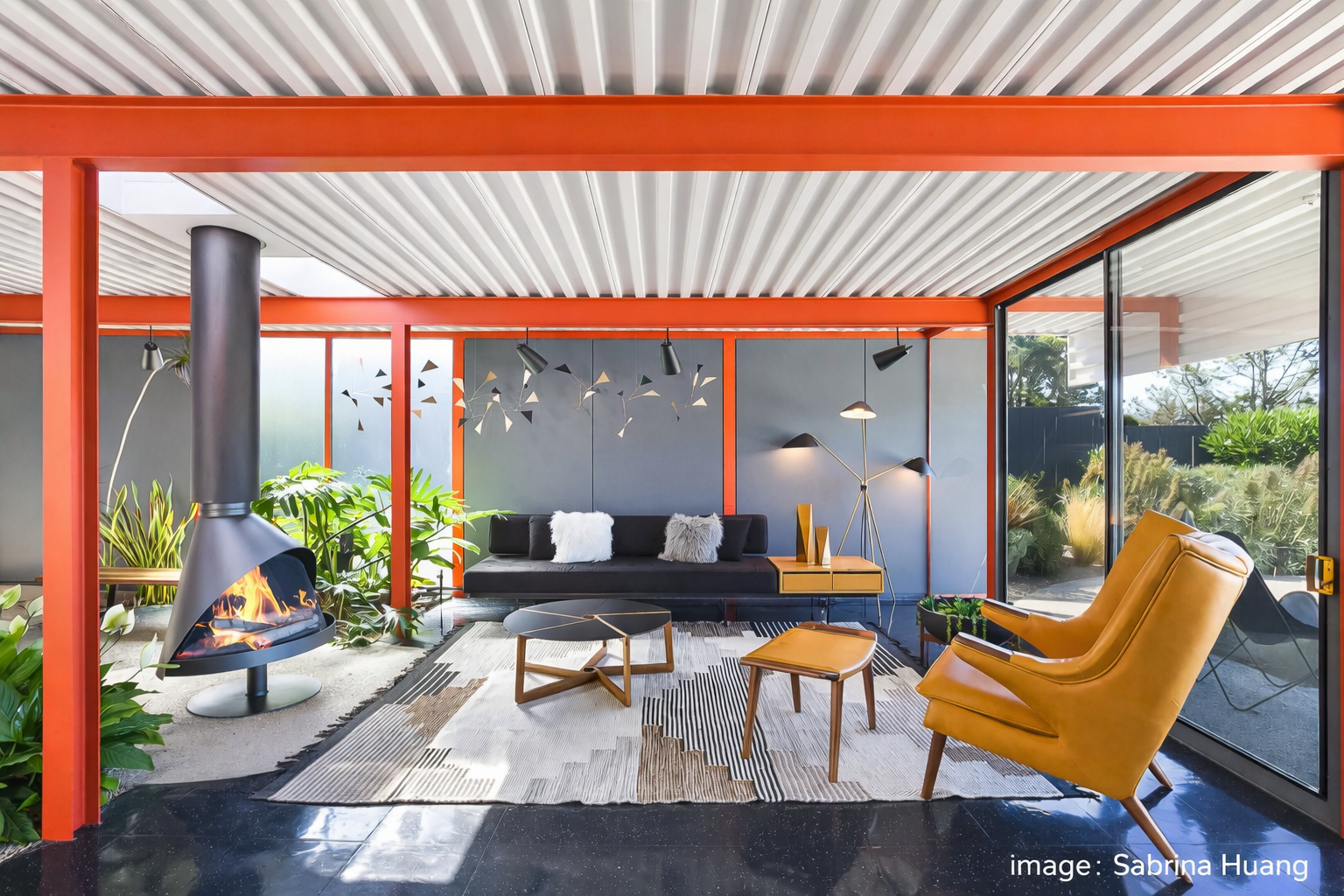
There are homes that define a neighborhood.
There are homes that define a market cycle.
And then—very rarely—there are homes that define an entire era of architectural thinking.
The Eichler X-100 is one of those homes.
Now presented as a featured offering, this is not simply a mid-century modern residence coming to market—it is the most ambitious experiment ever undertaken by Joseph Eichler, and one of the most important residential prototypes of the 20th century. For those who understand architecture not just as shelter, but as a living idea, the X-100 represents something far more profound: a vision of the future, built in 1956—and still ahead of its time today.
A House Designed to Ask a Question
In 1955, at the height of postwar optimism, developer Joseph Eichler posed a bold challenge:
What if the American home could be completely reimagined—structurally, technologically, and experientially?
The answer became the Eichler X-100.
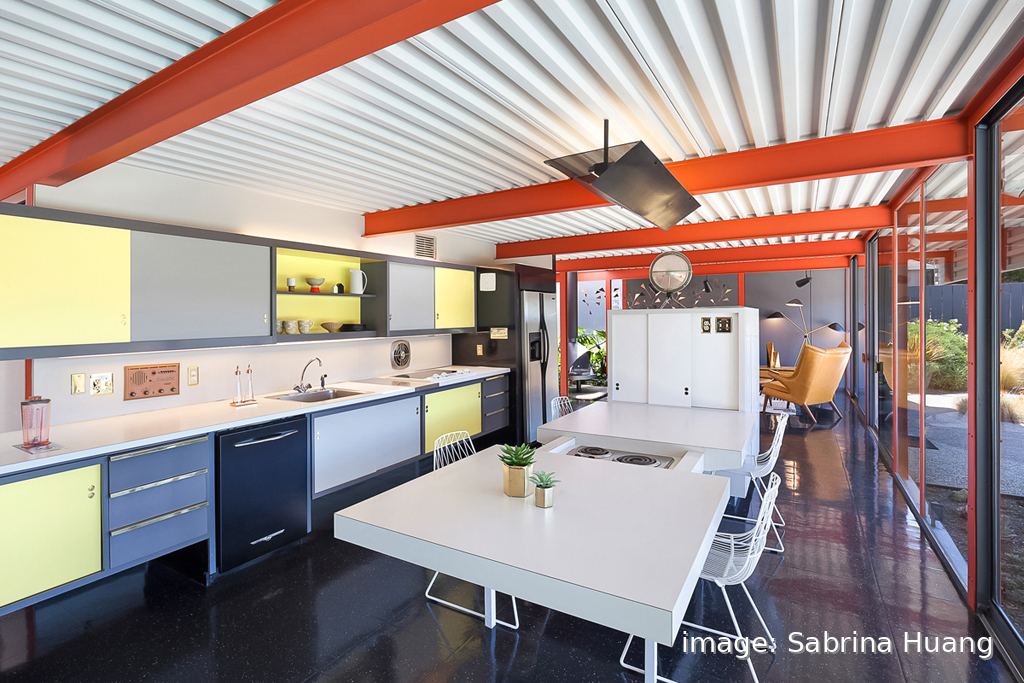
Designed by the renowned partnership of A. Quincy Jones and Frederick Emmons, the X-100 was not conceived as a typical residence. It was a research laboratory, a full-scale prototype intended to test new methods of construction, new materials, and new ways of living.
Where traditional homes relied on wood framing and compartmentalized layouts, the X-100 introduced something radically different:
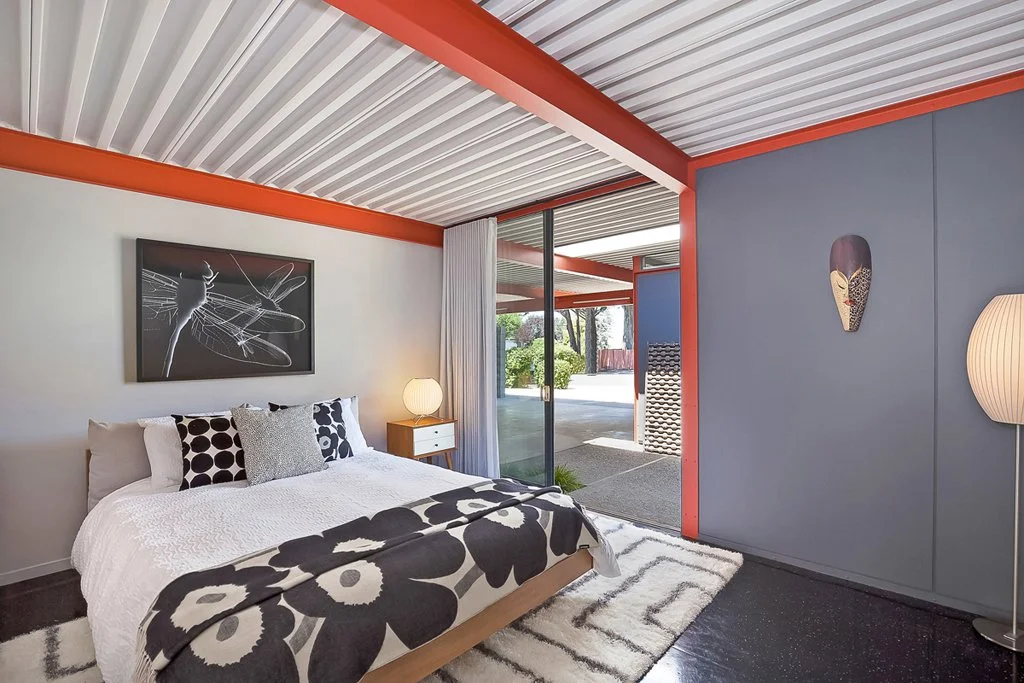
A steel-frame structural system, anchored by exposed I-beams
No interior load-bearing walls, allowing total spatial flexibility
A seamless integration of industrial materials and residential design
A plan centered on light, openness, and flow
This was not just a departure from convention—it was a redefinition of what a home could be.
Architecture Without Boundaries
To step into the Eichler X-100 is to experience space in a way that still feels remarkably modern—arguably more aligned with today’s design sensibilities than many homes built decades later.
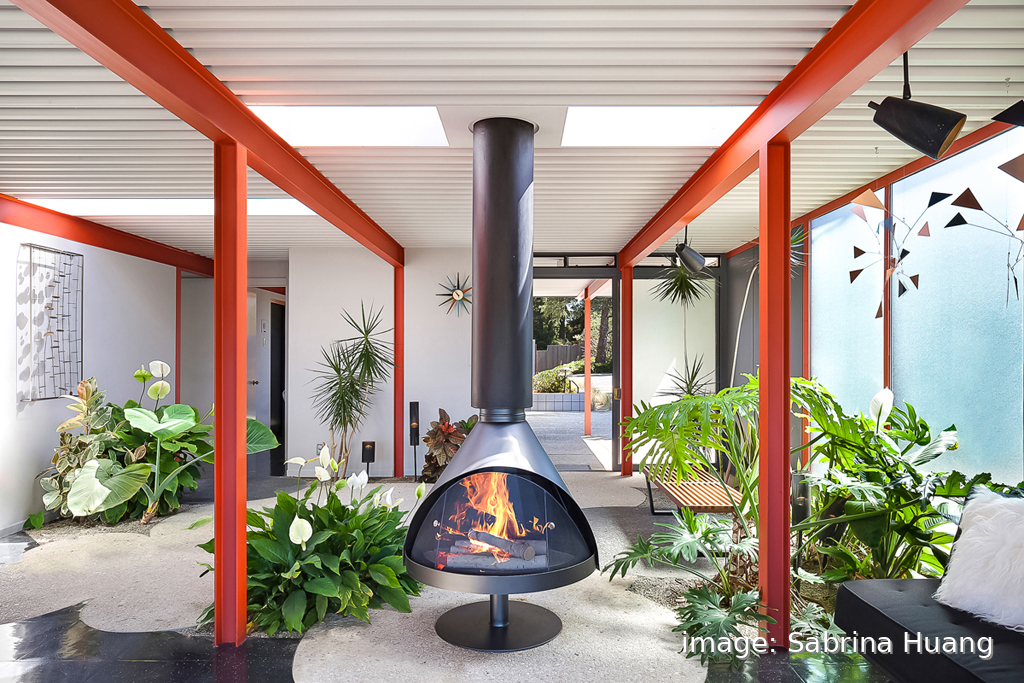
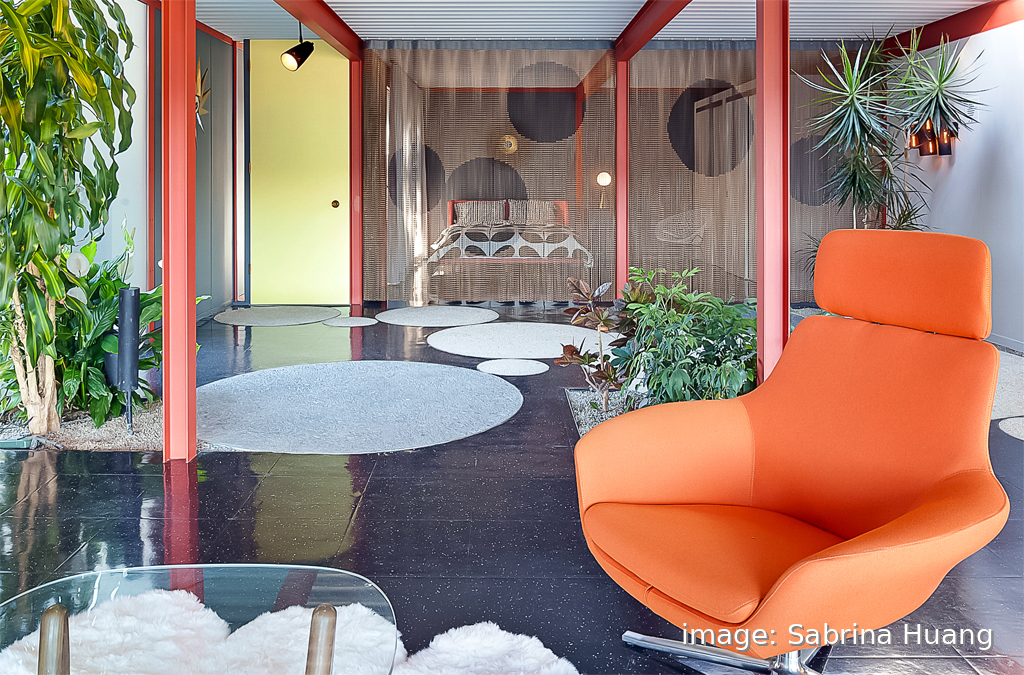
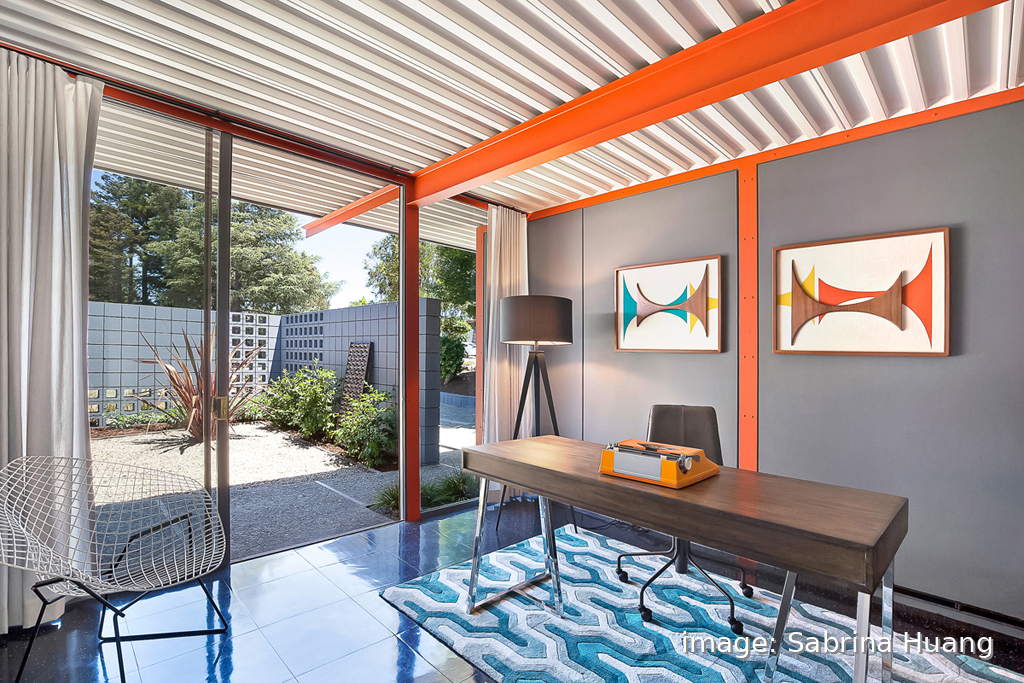
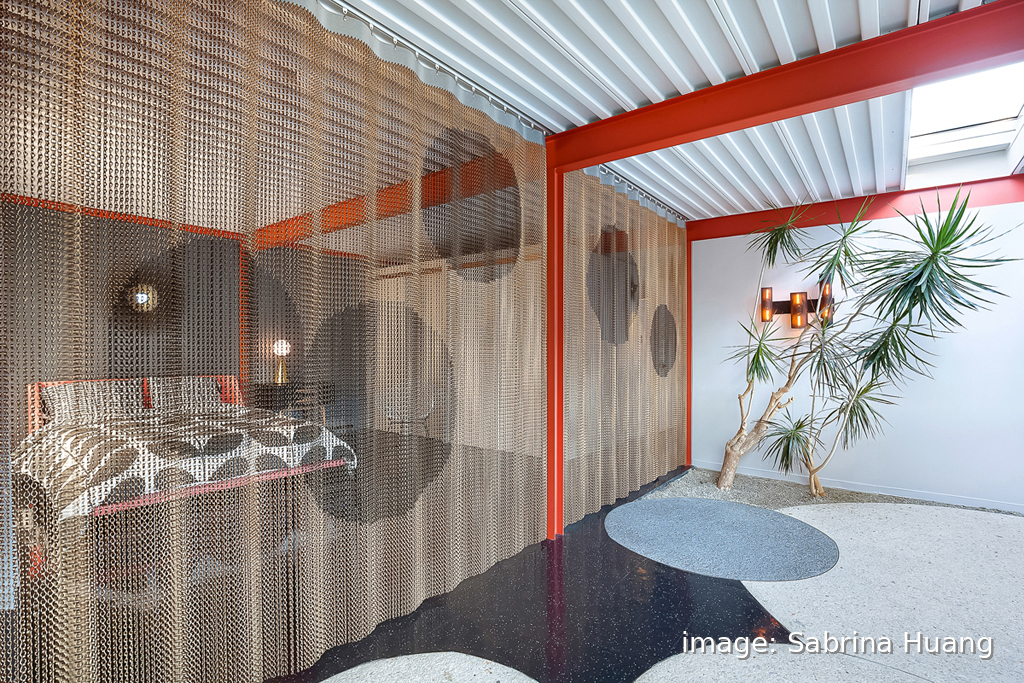
The home unfolds through a carefully orchestrated sequence of spaces anchored by two private atriums, each acting as a quiet, internal landscape. These are not decorative courtyards—they are spatial anchors, dissolving the line between interior and exterior.
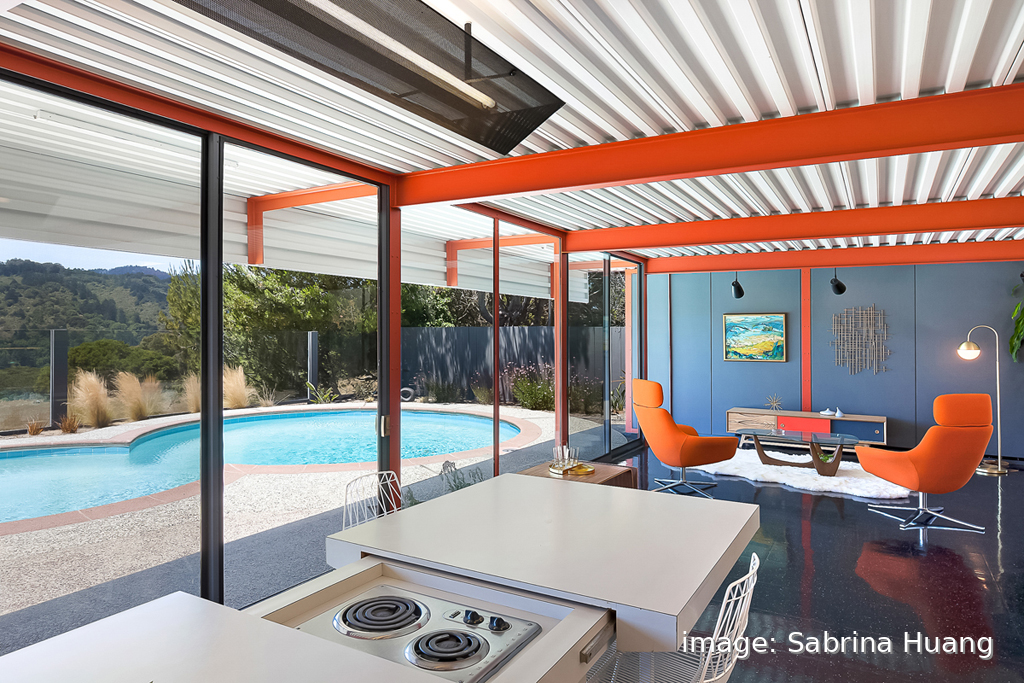
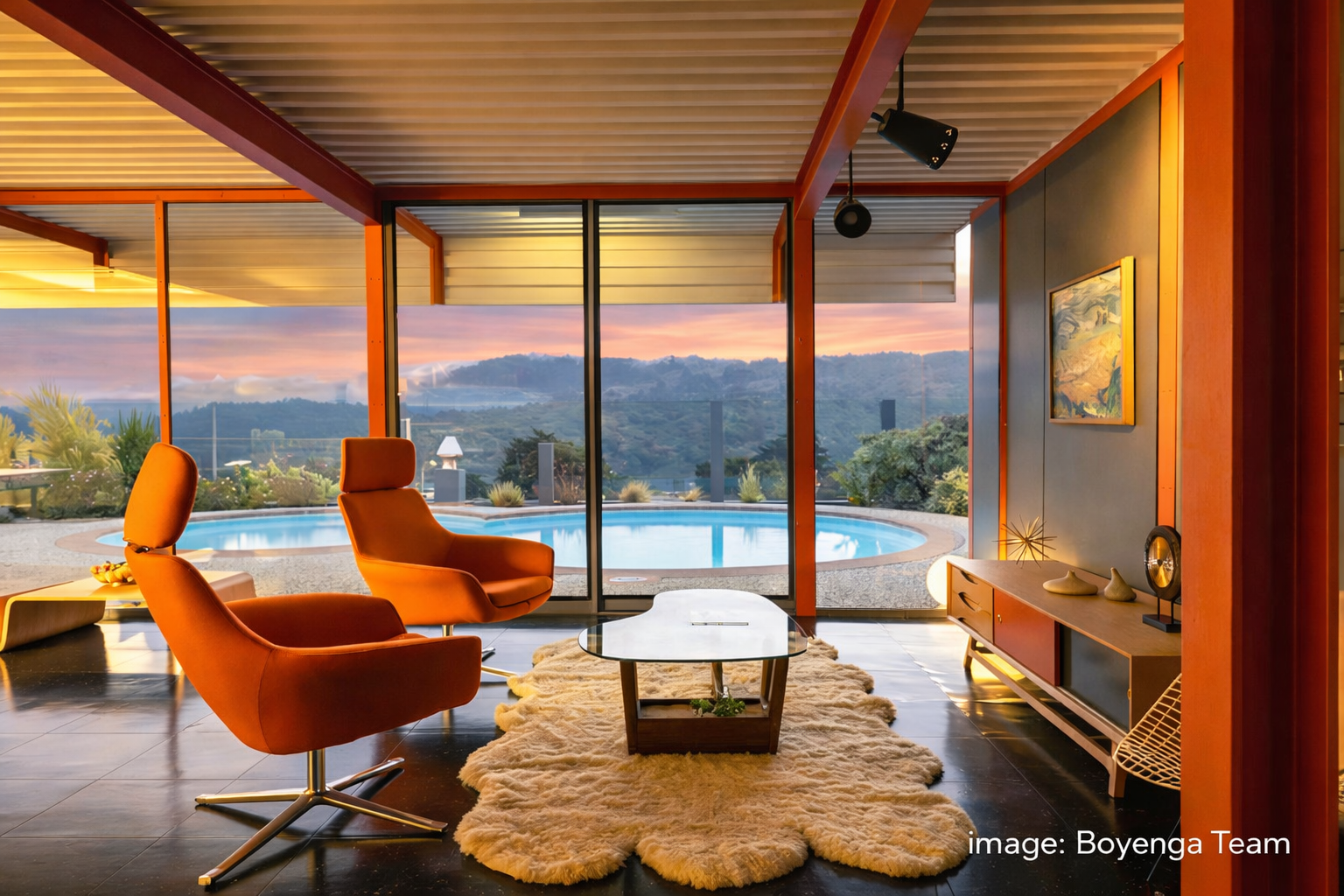
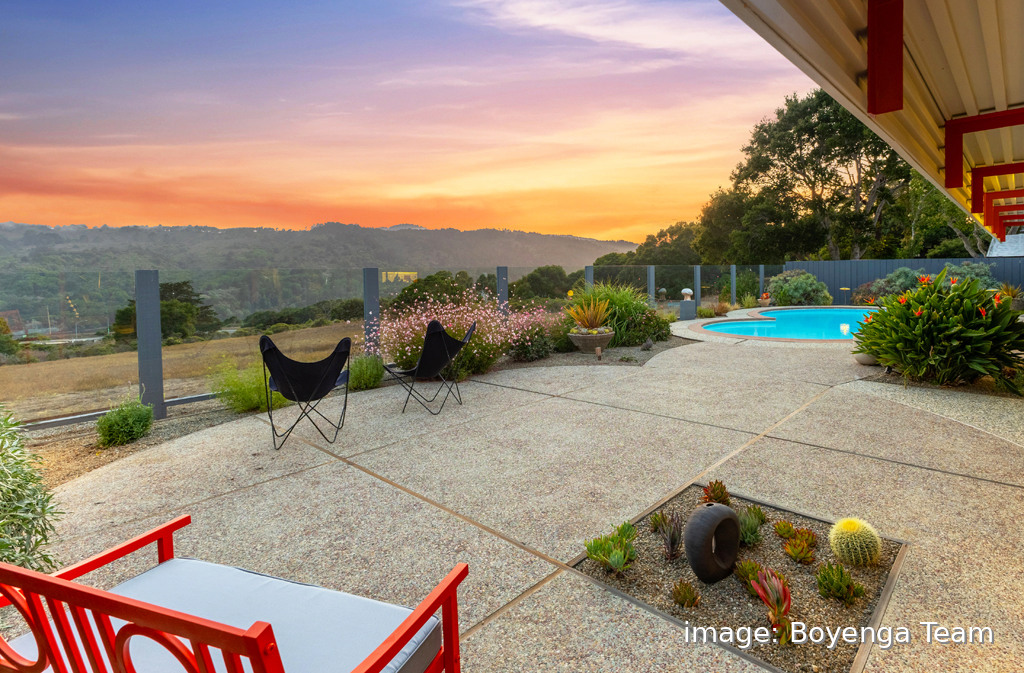
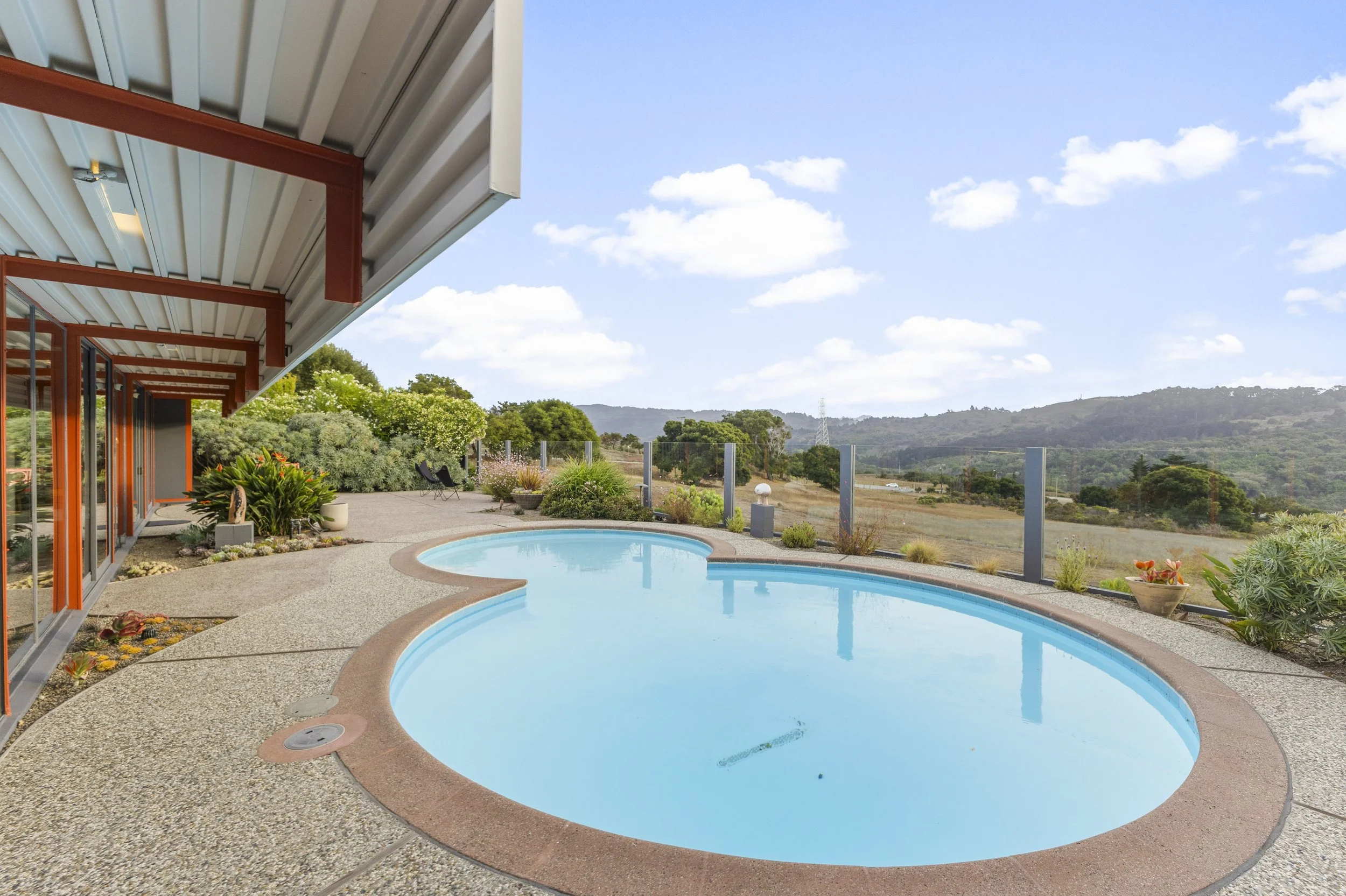
Above, 32 feet of continuous skylights draw daylight deep into the home, shifting throughout the day and animating every surface. Walls of glass extend outward, framing nature as part of the architecture itself.
The absence of load-bearing walls creates a sense of effortless openness, where living, dining, and gathering spaces flow together without interruption. The structure—expressed honestly through steel—becomes part of the visual language.
This is architecture that doesn’t impose—it liberates.
A Cultural Moment: The 1956 Debut
When the Eichler X-100 opened to the public in 1956 in the San Mateo Highlands, it was more than a home—it was an event.
Tens of thousands of visitors toured the property within weeks. Media outlets across the country covered it extensively. It appeared in newspapers, magazines, television segments, and even film newsreels.
Why such attention?
Because the X-100 captured something larger than itself. It embodied the emerging “California Modern” lifestyle:
Open-plan living
Indoor-outdoor connection
Technological optimism
A belief that design could improve everyday life
For many, it was their first glimpse into a future that felt radically new—and entirely possible.
A Singular Place in the Eichler Legacy
Joe Eichler would go on to build over 11,000 homes across California, shaping entire neighborhoods and redefining suburban design.
But the X-100 stands apart.
It is:
The only true steel-frame prototype of its kind within the Eichler portfolio
The most experimental and concept-driven residence Eichler ever commissioned
A bridge between custom architectural exploration and large-scale housing innovation
While other Eichler homes brought modernism to the masses, the X-100 represents the moment where Eichler pushed beyond practicality into pure architectural exploration.
It is, in many ways, the intellectual and design apex of the Eichler movement.
Preservation as a Philosophy
Homes like the X-100 require more than ownership—they require stewardship.
For the past 23 years, the property has been carefully preserved by Marty Arbunich of the Eichler Network, one of the most respected advocates for Eichler homes and mid-century modern preservation.
Under this long-term care, the home has retained its architectural integrity while continuing to function as a living, breathing residence—something that is increasingly rare for properties of this significance.
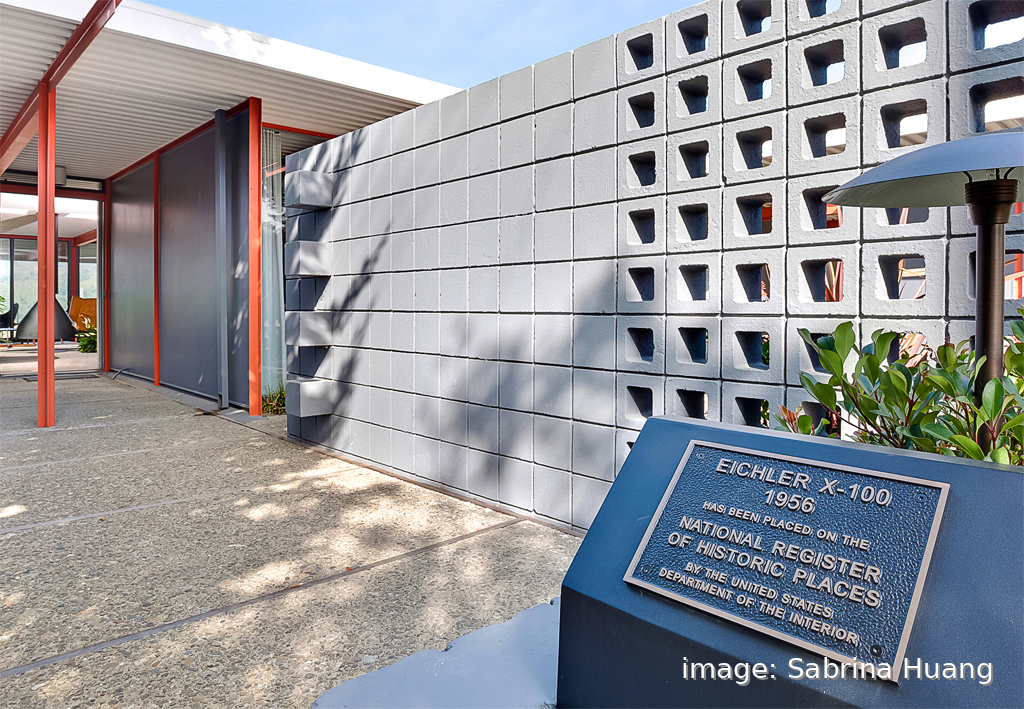
Today, the Eichler X-100 is recognized as both a private home and a historic landmark listed on the National Register of Historic Places—a designation that underscores its importance not just locally, but nationally.
A Featured Listing Unlike Any Other
The offering of the Eichler X-100 represents a moment that simply does not come around often—if ever.
This is not a comp-driven sale.
It is not a typical buyer pool.
This is a collector-grade architectural offering, positioned at the intersection of:
Design history
Cultural significance
Rarity
Provenance
The Boyenga Team at Compass, widely recognized as Silicon Valley’s leading Eichler and mid-century modern specialists, has been entrusted with representing this extraordinary property.
With a deep understanding of:
Architectural value and narrative
Design-driven buyer psychology
Preservation-minded positioning
Global exposure for unique assets
the Boyenga Team approaches the X-100 not as a standard listing—but as a curated offering to a highly specific, highly discerning audience.
The Ideal Buyer: A Steward of Design
The next owner of the Eichler X-100 will not simply be purchasing a home.
They will be stepping into a legacy.
This property calls for someone who:
Recognizes the importance of architectural authenticity
Values preservation alongside thoughtful evolution
Sees real estate not just as an asset—but as a cultural contribution
Because the X-100 is not just a place to live—it is a place to carry forward an idea.
Closing: The Future, Revisited
Nearly 70 years after its debut, the Eichler X-100 still poses the same question it did in 1956:
What should the future of housing look like?
In a world now rediscovering the value of openness, light, sustainability, and connection to nature, the answer feels more relevant than ever.
And now, for the first time in decades, that future is available again.
Private Inquiries & Showings
For qualified buyers seeking a truly one-of-a-kind architectural acquisition, private inquiries and showings are now available.
Connect with the Boyenga Team at Compass—Silicon Valley’s Eichler experts and trusted advisors in architecturally significant real estate—to learn more about this extraordinary opportunity.
The Eichler X-100 isn’t just for sale.
It’s waiting for its next visionary.
There are homes that define a neighborhood.
There are homes that define a market cycle.
And then—very rarely—there are homes that define an entire era of architectural thinking.
The Eichler X-100 is one of those homes.
Now presented as a featured offering, this is not simply a mid-century modern residence coming to market—it is the most ambitious experiment ever undertaken by Joseph Eichler, and one of the most important residential prototypes of the 20th century. For those who understand architecture not just as shelter, but as a living idea, the X-100 represents something far more profound: a vision of the future, built in 1956—and still ahead of its time today.
A House Designed to Ask a Question
In 1955, at the height of postwar optimism, developer Joseph Eichler posed a bold challenge:
What if the American home could be completely reimagined—structurally, technologically, and experientially?
The answer became the Eichler X-100.
Designed by the renowned partnership of A. Quincy Jones and Frederick Emmons, the X-100 was not conceived as a typical residence. It was a research laboratory, a full-scale prototype intended to test new methods of construction, new materials, and new ways of living.
Where traditional homes relied on wood framing and compartmentalized layouts, the X-100 introduced something radically different:
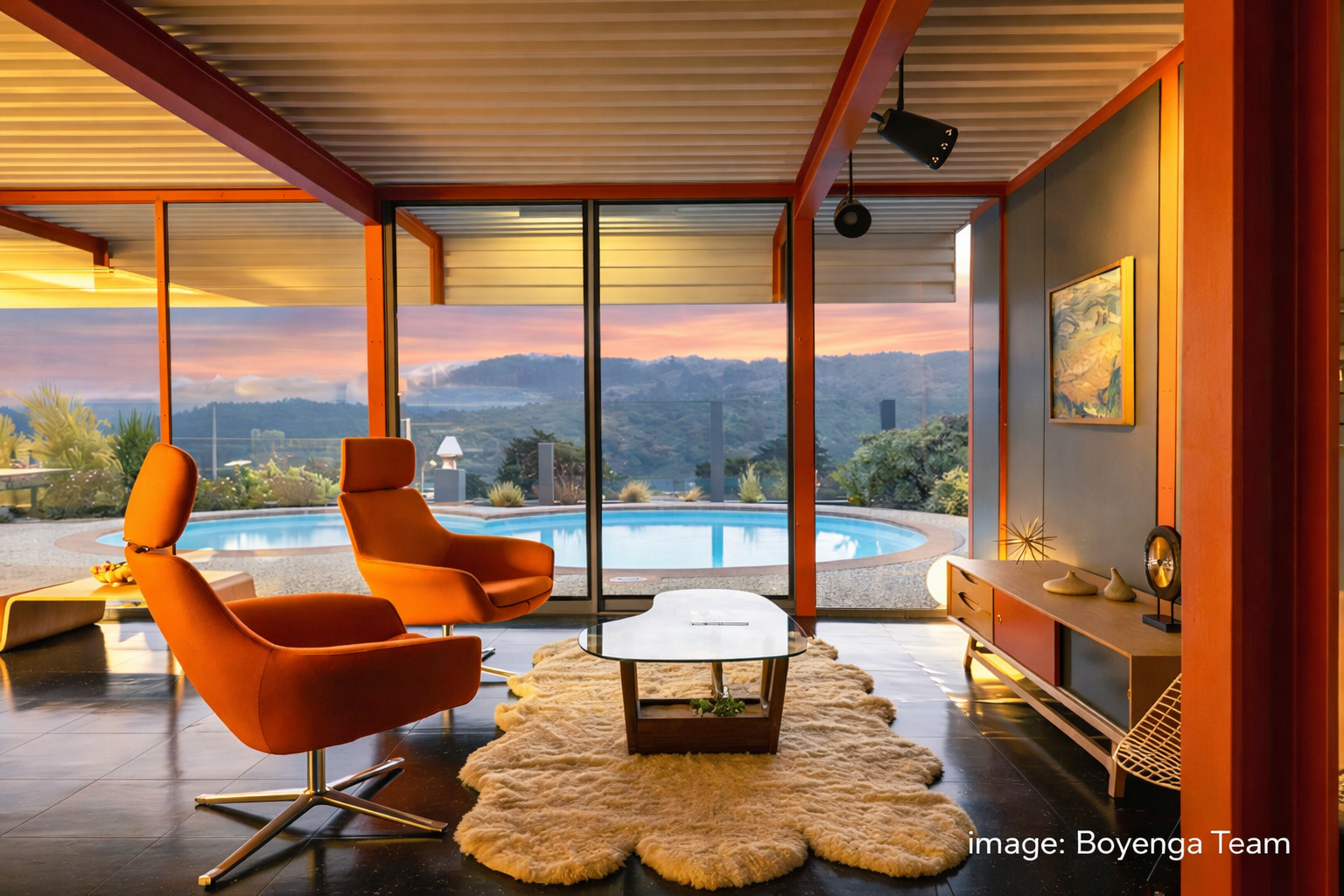
A steel-frame structural system, anchored by exposed I-beams
No interior load-bearing walls, allowing total spatial flexibility
A seamless integration of industrial materials and residential design
A plan centered on light, openness, and flow
This was not just a departure from convention—it was a redefinition of what a home could be.
Architecture Without Boundaries
To step into the Eichler X-100 is to experience space in a way that still feels remarkably modern—arguably more aligned with today’s design sensibilities than many homes built decades later.
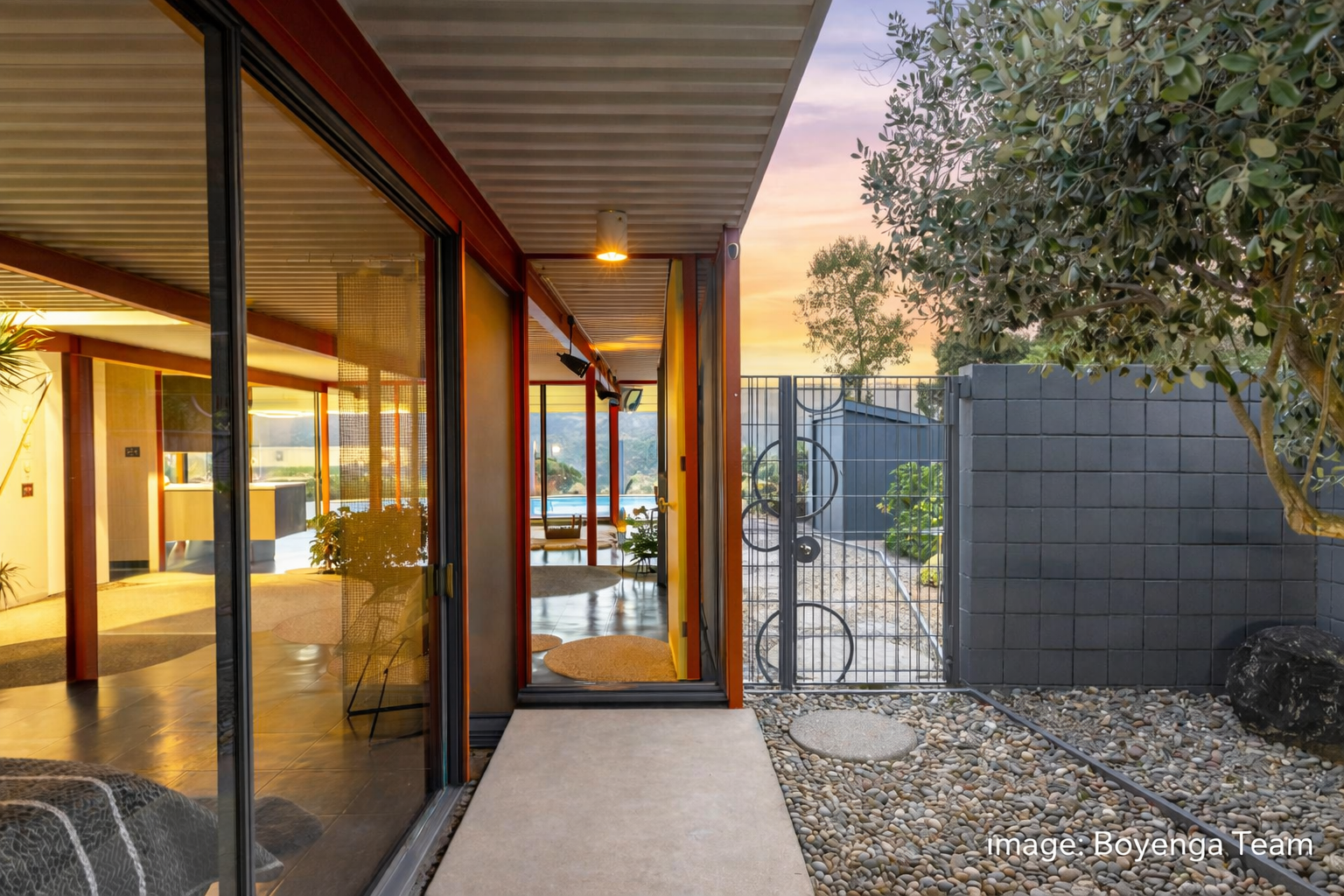
The home unfolds through a carefully orchestrated sequence of spaces anchored by two private atriums, each acting as a quiet, internal landscape. These are not decorative courtyards—they are spatial anchors, dissolving the line between interior and exterior.
Above, 32 feet of continuous skylights draw daylight deep into the home, shifting throughout the day and animating every surface. Walls of glass extend outward, framing nature as part of the architecture itself.
The absence of load-bearing walls creates a sense of effortless openness, where living, dining, and gathering spaces flow together without interruption. The structure—expressed honestly through steel—becomes part of the visual language.
This is architecture that doesn’t impose—it liberates.
A Cultural Moment: The 1956 Debut
When the Eichler X-100 opened to the public in 1956 in the San Mateo Highlands, it was more than a home—it was an event.
Tens of thousands of visitors toured the property within weeks. Media outlets across the country covered it extensively. It appeared in newspapers, magazines, television segments, and even film newsreels.
Why such attention?
Because the X-100 captured something larger than itself. It embodied the emerging “California Modern” lifestyle:
Open-plan living
Indoor-outdoor connection
Technological optimism
A belief that design could improve everyday life
For many, it was their first glimpse into a future that felt radically new—and entirely possible.
A Singular Place in the Eichler Legacy
Joseph Eichler would go on to build over 11,000 homes across California, shaping entire neighborhoods and redefining suburban design.
But the X-100 stands apart.
It is:
The only true steel-frame prototype of its kind within the Eichler portfolio
The most experimental and concept-driven residence Eichler ever commissioned
A bridge between custom architectural exploration and large-scale housing innovation
While other Eichler homes brought modernism to the masses, the X-100 represents the moment where Eichler pushed beyond practicality into pure architectural exploration.
It is, in many ways, the intellectual and design apex of the Eichler movement.
Preservation as a Philosophy
Homes like the X-100 require more than ownership—they require stewardship.
For the past 23 years, the property has been carefully preserved by Marty Arbunich of the Eichler Network, one of the most respected advocates for Eichler homes and mid-century modern preservation.
Under this long-term care, the home has retained its architectural integrity while continuing to function as a living, breathing residence—something that is increasingly rare for properties of this significance.
Today, the Eichler X-100 is recognized as both a private home and a historic landmark listed on the National Register of Historic Places—a designation that underscores its importance not just locally, but nationally.
A Featured Listing Unlike Any Other
The offering of the Eichler X-100 represents a moment that simply does not come around often—if ever.
This is not a comp-driven sale.
It is not a typical buyer pool.
This is a collector-grade architectural offering, positioned at the intersection of:
Design history
Cultural significance
Rarity
Provenance
The Boyenga Team at Compass, widely recognized as Silicon Valley’s leading Eichler and mid-century modern specialists, has been entrusted with representing this extraordinary property.
With a deep understanding of:
Architectural value and narrative
Design-driven buyer psychology
Preservation-minded positioning
Global exposure for unique assets
the Boyenga Team approaches the X-100 not as a standard listing—but as a curated offering to a highly specific, highly discerning audience.
The Ideal Buyer: A Steward of Design
The next owner of the Eichler X-100 will not simply be purchasing a home.
They will be stepping into a legacy.
This property calls for someone who:
Recognizes the importance of architectural authenticity
Values preservation alongside thoughtful evolution
Sees real estate not just as an asset—but as a cultural contribution
Because the X-100 is not just a place to live—it is a place to carry forward an idea.
Closing: The Future, Revisited
Nearly 70 years after its debut, the Eichler X-100 still poses the same question it did in 1956:
What should the future of housing look like?
In a world now rediscovering the value of openness, light, sustainability, and connection to nature, the answer feels more relevant than ever.
And now, for the first time in decades, that future is available again.
Private Inquiries & Showings
For qualified buyers seeking a truly one-of-a-kind architectural acquisition, private inquiries and showings are now available.
Connect with the Boyenga Team at Compass—Silicon Valley’s Eichler experts and trusted advisors in architecturally significant real estate—to learn more about this extraordinary opportunity.
The Eichler X-100 isn’t just for sale.
It’s waiting for its next visionary.
Want to be the Eichler X-100’s next owner? Connect here.
To check out the X-100’s new marketing brochure, Click here.
Want to know everything that’s amazing about the Eichler X-100? Go here.
Private Showings & Inquiries
The Eichler X-100 is being offered to qualified buyers seeking a truly rare architectural acquisition.
For private showings, additional details, or a confidential conversation, connect directly with the Boyenga Team at Compass—your trusted Eichler specialists in Silicon Valley.
This is more than a listing. It’s a legacy opportunity.