
Eichler Interiors, Then and Now: Styling a Mid-Century Home for the Modern Buyer
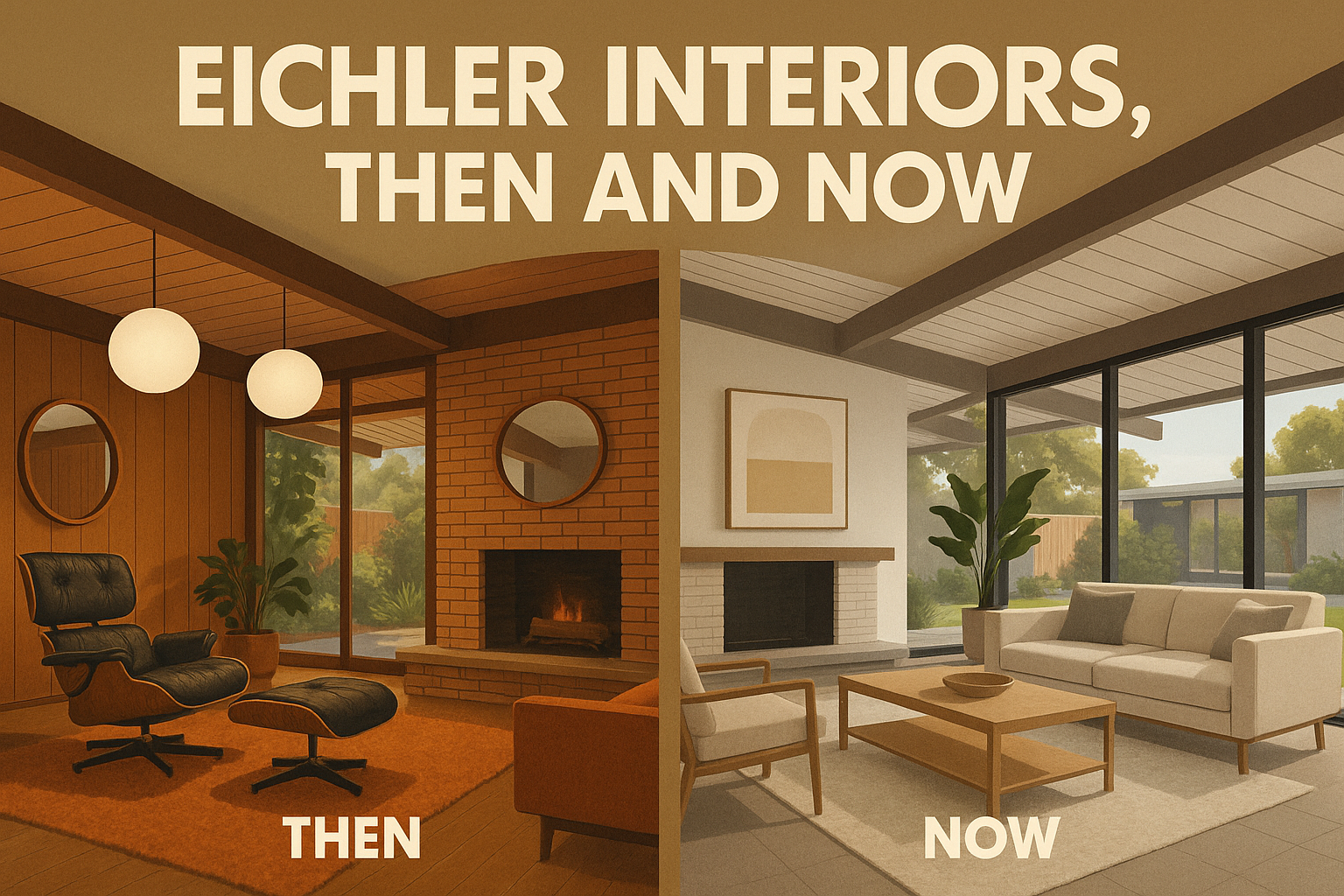
Eichler homes hold a special place in mid-century modern design – their clean lines, open layouts, and indoor-outdoor harmony were revolutionary in the 1950s and ’6 eichlerhomesforsale.com5】. Fast-forward to today, and these architectural gems are coveted by modern buyers. But styling an Eichler home for 2025 means balancing the “then” (original Eichler interior philosophy) with the “now” (contemporary tastes and comforts). In this visual guide, we’ll explore how to honor Eichler’s iconic mid-century features while staging and updating the interiors for today’s market. From post-and-beam ceilings and warm wood paneling to low-profile modern furniture and LED globe lights, we’ll cover room-by-room tips, common pitfalls, and design inspirations. Whether you’re a proud Eichler owner or an admirer, get ready for a mid-century mood board that bridges past and present – and see how the Boyenga Team at Compass leverages design-sensitive strategies to make Eichler homes shine.
Eichler’s Original Interior Design Philosophy and Materials (Then)
Joseph Eichler’s Vision: Eichler homes were designed to be modern yet welcoming. Eichler and his architects (like Anshen & Allen and Jones & Emmons) emphasized simplicity, integration with nature, and open family living in their design eichlerhomesforsale.com9】. Clusters of Eichlers were built to foster community, and inside each home the walls between living spaces were minimized or eliminated to create a casual, flowing layo eichlerhomesforsale.com8】. They also blurred the line between indoors and outdoors with features like floor-to-ceiling glass walls and central atriums, making the garden or patio feel like an extension of the living to eichlerhomesforsale.com5】. This was radical for the time – a far cry from the small, formal rooms of earlier houses – and it imbued Eichler interiors with an airy, joyful quality that continues to resonate with homeowners.
e】 This artistic illustration highlights signature Eichler features – the low-sloped roofline, expansive glass walls, open-beam ceilings, and a bold pop-of-color front door. These elements, paired with natural materials, defined the Eichler look in the mid-century era. Decades later, they remain a blueprint for indoor-outdoor California modernism.
One of the most distinctive interior features was the extensive use of wood and other natural materials. Many early Eichlers were built with 1/4-inch Philippine mahogany plywood paneling lining the interior walls eichlerhomesforsale.com0】. This honey-colored wood (with its warm reddish-brown tone and visible grain) gave Eichler interiors a cozy yet modern feel eichlerhomesforsale.com0】. Joseph Eichler chose mahogany not because it was cheap, but for its organic warmth and simplicity eichlerhomesforsale.com】. Intact original mahogany panels are now considered a prized feature – they practically scream “I’m an Eichler!” in a way plain drywall never could eichlerhomesforsale.com1). Originally, these panels were finished with a clear coat or light stain to let the natural wood shine. By the early 1960s, some later Eichlers did introduce more drywall, but many Silicon Valley models (like those in Palo Alto’s Greenmeadow tract) still kept all-wood interior eichlerhomesforsale.com.】. Preservation-minded owners today cherish this defining material. Maintaining the panels is key to keeping that mid-century glow: gentle cleaning (no heavy water or paint!) and periodic re-oiling or re-staining if needed. Experts strongly advise against painting over original paneling, as it would hide a core element of Eichler design eichlerhomesforsale.com8】. Eichler realtors often note that the wood walls are “a key mid-century element,” adding value and authenticity to the home eichlerhomesforsale.com7】.
Up above, Eichler ceilings furthered this warm, modern aesthetic. Tongue-and-groove wood decking with exposed beams was left visible in most models (no attic, no dropped ceilings), which means the ceiling itself became an architectural feature. The beams were typically painted a contrasting color (or left natural), and the spaces between (the wood planks) often painted white or left in clear finish. The result is a striking linear pattern overhead and a sense of the home’s structure being part of the decor. Eichlers are known for this post-and-beam construction and exposed structure, which gives even modestly sized rooms a feeling of openness and character eichlerhomesforsale.com4】. Those open-beam ceilings and paneled walls are hallmarks of the Eichler look that instantly transport you to the mid-century eichlerhomesforsale.com4】.
Another trademark touch: the globe pendant lights. In Eichler’s mid-century era, most homes came with simple round pendant lamps (commonly 12-inch opal white globes) hanging in nearly every room eichlerhomesforsale.comeichlerhomesforsale.com7】. Stroll through an Eichler and you’ll likely see these spherical lights in entries, hallways, living and dining rooms, kitchens, and bedrooms – virtually everywhere an overhead light was needed eichlerhomesforsale.com7). The globes provided a bright yet diffuse light that complemented Eichler’s open, airy design eichlerhomesforsale.com7). Using such unfussy fixtures contributed to the “bright, airy ambiance” Eichler homes are known for eichlerhomesforsale.com8). The fixtures are minimal and unadorned, fitting perfectly with the clean lines of the architecture eichlerhomesforsale.com8】. Mid-century designers loved the globe for its universality – a simple geometric shape that never goes out of style eichlerhomesforsale.com5】. Eichler made these lights ubiquitous in his California developments, and they’ve never really fallen out of favor. Today, finding authentic Eichler-style globe pendants is easy (many companies produce replicas, and sometimes vintage originals pop up on eBay eichlerhomesforsale.com6】. Replacing any non-period ceiling lights with round globes is actually one of the quickest “Eichler refresh” moves restorers eichlerhomesforsale.com1】 – it instantly recaptures that mid-century vibe.
Of course, Eichler interiors also embraced then-modern technology in subtle ways. Floors were often concrete slabs (sometimes with integral color or modest tiles) because Eichlers featured hydronic radiant heating in the floors – an innovative system that eliminated the need for radiators or floor vents, thus preserving clean lines eichlerhomesforsale.com7】. This meant no big metal grates or ductwork intruding on the interior design. The feel of a warm floor underfoot on a chilly morning was (and is) a delightful luxury that suited the uncluttered aesthetic. Many Eichler owners today still love their radiant heat (when it’s in working order) as part of the home’s authentic charm.
In summary, original Eichler interiors were all about honest materials and modernist simplicity: natural wood, expansive glass, visible structure, and simple fixtures. The philosophy was to let the architecture and materials speak for themselves. There was little ornamentation; instead, the drama came from the contrast of materials (warm wood vs. cool glass), the play of light and shadow through floor-to-ceiling windows, and the seamless flow from room to room and inside to outside. This design ethos created spaces that felt both of their time and surprisingly timeless – a big reason why Eichler homes still captivate us decades later.
Preserving Integrity: Staging Eichler Interiors for the Modern Buyer (Now)
Styling an Eichler for today’s buyers means embracing its mid-century soul while making the home feel fresh, inviting, and up-to-date. The goal is to accentuate, not hide, the unique features that make an Eichler special eichlerhomesforsale.com4】. Modern Eichler enthusiasts want to see those exposed beams, wood panels, and floor-to-ceiling windows – so a good stager will highlight them at every turn. Start by decluttering and depersonalizing the space. The clean lines of Eichler design shine when not obscured by too much furniture or decor. Remove any heavy drapes or busy window coverings that compete with the home’s architecture. For example, if big glass walls are covered by thick curtains, swap them for simple sheers or leave them bare to let daylight flood in and to showcase the indoor-outdoor view eichlerhomesforsale.com8】. Likewise, avoid placing furniture that blocks the flow of the open plan – you wouldn’t want a tall shelf or bulky sofa backing against an atrium window. In fact, consider floating furniture away from walls in the living areas; positioning a low sofa centrally (instead of against a wall) can accentuate the long, low roofline and the unconstrained sightlines of an Eichler living room eichlerhomesforsale.com9】.
Honor the Original Details: Whenever possible, retain and restore authentic Eichler finishes instead of covering them up or replacing them. If you’re lucky enough to have unpainted original wood paneling or open beam ceilings, show them off with pride. Give them a gentle cleaning and perhaps a coat of restorative oil to revive the wood grain eichlerhomesforsale.com8】. One of the worst mistakes is to paint over the natural wood or brick that was meant to be exposed – mid-century experts caution that painting these original materials can undermine the “design and character” that make the home special eichlerhomesforsale.com8】. Eichler buyers appreciate the authenticity of these surfaces. So, if previous owners have painted the paneling or added incompatible trims, you might not be able to undo that easily, but you can at least avoid introducing any new incongruous elements. The mantra is to preserve original finishes wherever possible; let the wood, brick, and concrete speak. If a finish is beyond saving (say, badly damaged paneling), consider replacing it in-kind (mahogany for mahogany) rather than switching to something like drywall or stone, so the look remains consistent. As the Boyenga Team often advises sellers, it’s about highlighting Eichler hallmarks and not covering them eichlerhomesforsale.com4】.
Also, keep the palette and materials consistent with the home’s mid-century style. If you need to repaint walls, stick to neutral or era-appropriate colors (more on that later in Finishes) rather than trend-of-the-moment colors. If you’re updating flooring, choose materials like cork, VCT, or hardwood in a warm tone rather than ornate travertine or wall-to-wall carpet – this way even new upgrades feel “in character” for the home eichlerhomesforsale.com7】. By making thoughtful choices, you can modernize the home’s look and function while preserving its architectural integrity.
Strategic Staging: Staging an Eichler is all about showcasing its mid-century modern vibe in a way that resonates with buyers. Rather than generic décor, choose furnishings and accents that feel like they belong in a 1950s–60s modern home. Think low-profile furniture with clean lines – for example, a long, rectilinear sofa, a sleek credenza or sideboard, and a glass-topped coffee table. Incorporate a few iconic mid-century design touches: a starburst clock or sculptural wall art, Eames or Cherner chairs, and pendant light fixtures can instantly evoke the era eichlerhomesforsale.com4】. You don’t need to turn the home into a museum, but a curated selection of vintage or quality reproduction pieces will complement the post-and-beam construction and minimalist aesthetics eichlerhomesforsale.com8】. The right staging can significantly boost your sale. Buyers specifically hunting for mid-century homes often have a certain aesthetic in mind, and if your staging delivers it, they may be willing to pay a premium. In fact, experienced agents note that people will pay extra when listing photos “instantly get that cool ‘Rat Pack’ vibe” from a properly staged mid-century home eichlerhomesforsale.com5】. Use color and texture strategically: mid-century style isn’t all beige or gray, so feel free to add pops of color (a teal accent wall or mustard-yellow cushions) that complement Eichler’s color palette eichlerhomesforsale.com9】. Keep the flow between rooms in mind – Eichler layouts are open, so ensure the staging style is consistent across the living, dining, and kitchen areas for a cohesive look. Ultimately, authentic staging should help buyers emotionally connect with the home, envisioning a hip yet comfortable lifestyle in your Eichler. By honoring the home’s original style in your staging, you both preserve its integrity and make it irresistible to today’s mid-century enthusiasts.
Modern Comforts with a Mid-Century Twist: Styling for modern living doesn’t mean pretending it’s 1960. You can integrate contemporary comforts in a design-sensitive way. For instance, if the home office is important to buyers, stage one of the bedrooms as a home office with a sleek modern desk – but perhaps use a mid-century style chair and a teak bookcase so it still fits the vibe. In the living room, you might hide a smart speaker or router inside a vintage-looking cabinet or box, so the tech is there but not obvious. It’s also wise to address any elements that today’s buyers might perceive as “dark” or “old” in a mid-century home: lighting is a big one (discussed later), and also perhaps painting some of the ceilings white if the wood is very dark, to brighten things up without losing the beam look. The trick is to marry mid-century aesthetics with modern expectations. The Boyenga Team often recommends light-touch improvements that boost appeal without compromising authenticity – for example, polishing concrete floors or repainting in Eichler-appropriate color schemes to freshen up surface eichlerhomesforsale.com9】. They’ll avoid suggesting anything like “rip out those panels and put drywall” because that would erase character. Instead, it might be “let’s oil these panels to revive their luster and replace that dated ceiling light with a cool sputnik chandelier.” The result is a space that feels updated yet true to its roots.
In staging, play up the indoor-outdoor living that modern buyers love. Make sure all the blinds are up and curtains open during showings, so views of the yard or atrium are unobstructed eichlerhomesforsale.com8】. If you have an atrium, stage it as usable living space (more on that in the room-by-room section). Put some fresh greenery or potted plants inside to blur indoor and outdoor. Maybe set a breakfast tray on the kitchen peninsula with a couple of mugs and a retro coffee carafe, signaling how one could enjoy a morning coffee while gazing out the glass walls. These subtle cues help buyers feel the lifestyle that Eichler homes afford – casual, connected to nature, and effortlessly modern.
e】 An Eichler living room showcasing timeless mid-century elements: natural mahogany paneled walls, open-beam ceilings, and classic globe pendant lights hanging from the exposed rafters. Low-slung, modernist furniture (like these mustard-yellow chairs and a sleek wood credenza) complements the home’s minimalist lines eichlerhomesforsale.com4】. Staging with a few retro accents – note the geometric art panel and vintage record console – instantly evokes the 1960s vibe, helping today’s buyers emotionally connect with the space eichlerhomesforsale.com5】.
Furniture Styles that Flourish in Eichlers
One of the joys of styling an Eichler is picking furniture that “belongs” in its modernist setting. Eichler homes tend to have lower ceilings and expansive glass, so the best furniture choices are those that sit low, don’t block views, and echo mid-century modern design. As noted, low-profile furniture with clean lines is the go-eichlerhomesforsale.com4】. For seating, consider rectilinear sofas or sectionals on thin legs, or even platform-style couches that hug the floor. These provide plenty of comfort while keeping the space feeling open and horizontal (a key Eichler trait). Chairs and armchairs should be sleek – classics like the Eames lounge chair or Womb chair can serve as stylish focal points. If those are out of budget, many contemporary retailers offer pieces inspired by them that have the same low-slung silhouettes. Avoid oversized, overstuffed couches or anything with a tall back that would stick up into sightlines; in an Eichler, a high-back traditional sofa would look out of place and make the room feel smaller than it is.
Wood and metal finishes on furniture work well when they complement the home’s original materials. Teak, walnut, or rosewood pieces (common in mid-century design) bring warmth and echo the mahogany walls or wood accents of the home. A simple walnut credenza or a set of Danish-modern teak dining chairs can instantly dial up the mid-century vibe. Modular furniture or items with hairpin legs, peg legs, or pedestal bases (like an Eero Saarinen Tulip table) also suit Eichler’s aesthetic of simplicity and airiness. In bedrooms, consider platform beds or headboards with a low, sleek profile. A basic upholstered platform bed or a wood headboard without ornate trim will feel appropriate. Keep dressers and nightstands minimal – think George Nelson thin-edge designs or even flat-front IKEA Malm units (which blend well due to their simplicity).
When arranging furniture, emphasize conversation areas and the connection between spaces. In the living room, for example, a common Eichler layout is to float a sofa facing the fireplace with two chairs opposite it, forming a cozy conversation area that still leaves views to the outdoors. Because Eichlers often have open living/dining areas, use the furniture arrangement to create “zones” without blocking off anything. An area rug under the coffee table can define the seating area, while the space beyond remains open leading to the dining table. Maintain generous pathways to the glass doors and around the room – you want to showcase the flow.
Vendor Suggestions: You don’t need exclusively original vintage pieces (which can be pricey). There are excellent reproduction and contemporary vendors where you can find Eichler-appropriate furniture. Many stagers source from places like Design Within Reach (for licensed reproductions of Eames, Nelson, and Saarinen designs) or more affordable retailers like West Elm and CB2, which offer mid-century modern inspired lines (sofas with tapered legs, kidney-shaped coffee tables, etc.). Online retailers such as Article or Joybird are known for mid-century style sofas and chairs at moderate price points. If you’re looking for authentic vintage on a budget, local consignment shops, Craigslist, and estate sales in mid-century neighborhoods can yield great finds (e.g., a genuine 1960s credenza or coffee table). Even a few key pieces – say, a classic Knoll dining set or an Adrian Pearsall lounge chair – mixed with simpler contemporary items will give the whole house that mid-century cred. The Boyenga Team has a roster of designers, stagers, and vendors who specialize in this iconic style, ensuring that an Eichler’s character is preserved and showcased in a way that resonates with potential buyers eichlerhomesforsale.com1】. Likewise, if you’re DIY staging, consider consulting mid-century design forums or professionals for ideas; sometimes a well-chosen rental piece can elevate your staging immensely.
Accents and Decor: In keeping with Eichler’s minimalist ethos, less is more. Choose a few accent pieces that pop – for instance, a brightly colored ceramic vase on the dining table or a sculptural floor lamp – rather than lots of little knickknacks. Mid-century design often employed organic shapes and bold graphics in decor. A classic example is the starburst clock; hanging one in the living room or kitchen can immediately signal “mid-century mod.” Similarly, textiles like throw pillows or rugs with geometric patterns (think triangles, circles, abstract shapes in moderation) can add interest. Just be careful not to mix too many patterns – one statement pattern against solid colors is usually enough.
Color in Furniture: Eichler interiors often use neutral larger pieces (sofa, bed) with pops of color in smaller pieces. Feel free to use a signature mid-century color or two in your staging: aqua, orange, olive green, mustard yellow – all can work as accents. For example, a pair of teal armchairs or an orange ottoman can become a fun focal point that ties into a 1960s palette. Just ensure the hue complements any existing elements (like the wood tones or an accent wall color). It’s a balancing act: too much color everywhere can feel chaotic, but one or two bold splashes in an otherwise calm setting feel curated and lively.
Overall, furnishing an Eichler is about finding harmony with the architecture. Think of the furniture as cooperating with the home, not competing. Low, clean-lined, warm-toned, and a mix of functional and artful – if your pieces check those boxes, they’re likely a great fit for an Eichler interior.
Lighting: Mid-Century Mood with Modern Tech
Lighting can make or break the atmosphere in an Eichler home. The original builders maximized natural light (via all those glass walls and open atriums), but as the sun sets, having the right interior lighting is crucial to showcase the home’s features and set a welcoming moeichlerhomesforsale.com9】. The trick is to choose fixtures that reflect the mid-century ethos yet leverage today’s technology (for efficiency, brightness, and convenience).
Embrace the Globe (and Its Sputnik Sibling): If your Eichler still has any of the original George Nelson bubble lamps or globe pendants, consider yourself fortunate – and keep them! These fixtures are timeless and instantly telegraph “mid-century modern.” Many Eichlers came with those simple white ball pendants, which cast a gentle, diffuse light and look like glowing orbs floating under the ceiling. They are so iconic that installing a few reproduction globe pendants is one of the easiest ways to recapture the Eichler vibe eichlerhomesforsale.com1】. Modern versions can accommodate LED bulbs (or come as integrated LED fixtures), so you get the retro look with modern efficiency. Hang a medium-size globe pendant in the center of each bedroom or down a hallway for authenticity. In living and dining areas, you can go bigger or more dramatic: for example, a Sputnik chandelier (the starburst fixture with multiple arms and exposed bulbs) over the dining table adds instant mid-century drama and serves as functional aesthetic eichlerhomesforsale.com4】. Many sputnik reproductions now use LED filament bulbs that give off a warm glow. The key is that lighting in Eichlers is not just about function; it’s an opportunity to reinforce the style. Mid-century fixtures are often sculptural – think Nelson bubble lamps, cone pendants, dual-headed wall sconces – which means they double as decor even when off. Choose a statement light or two to anchor major spaces (one in the living/dining, one in the atrium or entry perhaps). As one real estate expert notes, people will forgive other dated aspects of a home if a standout “wow factor” light fixture is in place eichlerhomesforsale.com4】– such is the power of good lighting.
Layered Lighting for Ambiance: Eichler homes were designed to maximize daylight, so at night you want to recreate a cozy version of that. Instead of a single harsh overhead light, aim for multiple light sources at different heights. In the living room, for example, keep a pendant or central fixture for general illumination (on a dimmer), then add floor lamps or table lamps to brighten corners and highlight textures. A floor lamp that uplights the wood ceiling can accentuate the beams beautiful eichlerhomesforsale.com0】. Table lamps with cylindrical or tripod bases can add mid-century flair on a credenza or side table. Use dimmable warm LED bulbs (2700K color) throughout eichlerhomesforsale.com9】; this ensures a consistent, cozy glow that complements the wood tones and doesn’t read as stark blue-white. In the kitchen, you’ll want brighter task lighting: consider a combination of track lighting along beams or surface-mounted spotlights to cover work areas eichlerhomesforsale.com7】. Under-cabinet LED strips are a godsend in Eichler kitchens (since upper cabinets are often limited, any extra light on the counters is welcome eichlerhomesforsale.com7】. If there’s an island or peninsula, hang one or two pendants above it – perhaps small glass globes or cone lights – to tie in with the dining area style and provide focused light.
For bedrooms, ensure each has bedside lighting (table lamps or wall-mounted sconces) in addition to any overhead. A pair of cone-shaped mid-century style sconces above a bed not only looks chic but frees up nightstand space. In hallways, if you have a series of globe lights (as Eichler often did), make sure they all have matching brightness and color (all LEDs or all incandescents, not a mix). If the hallway is long, consider augmenting with a plug-in floor lamp in a corner or a piece of art lit by a picture light to add interest.
Don’t forget exterior and atrium lighting – they contribute hugely to the interior mood at night. Eichler exteriors often had very minimal lights (just a globe or two at the entry/carport). Consider adding soft landscape lighting that washes your exterior walls or lights up plants visible through the glass. For example, a couple of well-placed spotlights on a palm tree or uplighting a textured fence can create a lovely backdrop that you enjoy from inside (and it prevents the windows from becoming black mirrors at night 】. In the atrium, if open to the sky, hang a string of outdoor-rated globe lights or place an outdoor floor lamp (as shown in the staged atrium photo) to make the space inviting after dark. The glow from the atrium will spill into adjacent rooms, enhancing that indoor-outdoor connection even at night.
One pro tip: use smart bulbs or smart switches for flexibility. With smart LED bulbs, you can adjust color temperature (some allow you to go from cool to warm) and dimming easily. You could set up scenes for “Evening” where all lights go warm and dim, versus “Showing” where key lights are bright. This is especially helpful if you have a lot of lamps – a smart plug can let you turn them on/off with one button. But always keep the operation simple for showings (you don’t want a complicated system that an agent can’t figure out).
In essence, aim for a lighting scheme that **enhances Eichler’s architecture and ambiance without overpowering it eichlerhomesforsale.com9】. The house should feel bright and welcoming, but the fixtures themselves should feel like part of the design (or quietly disappear). When in doubt, choose spherical or geometric fixtures that complement the open beams and put everything on dimmers to dial in the mood eichlerhomesforsale.com3】. With thoughtful lighting updates, you’ll not only flatter the home’s features (illuminating that beautiful ceiling, highlighting an accent wall) but also make it buzz with that special mid-century magic in the evenings.
Finishes and Colors: Updating with Eichler-Friendly Materials
When it comes to finishes – flooring, cabinetry, paint, and other surfaces – the mantra is to choose updates that complement Eichler’s mid-century roots. That means favoring simple, honest materials and avoiding anything overly ornate or heavy that would feel out of place. You want new finishes to feel like they belong in the home, even if they weren’t there originally. Here are some tips for key finish elements:
Flooring: Originally, Eichlers often had vinyl tile (some of it asbestos tile back in the day) or cork flooring, all laid over the concrete slab and designed to work with radiant heat destinationeichler.com0】. If those aren’t present or are worse for wear, look at mid-century appropriate flooring options. Popular choices include VCT (vinyl composite tile) in retro patterns or solid colors, cork tile or planks, polished concrete, or even terrazzo (true terrazzo is pricey, but you can get terrazzo-look porcelain). Many Eichler owners opt for engineered hardwood or laminate in a warm wood tone, which is a contemporary update that still gives the organic feel of wood and complements the paneling eichlerhomesforsale.com7】. If you have old wall-to-wall carpet, strongly consider removing it – buyers today typically prefer hard floors, and mid-century purists will be happy to see a smooth floor that suits the eichler home eichlerhomesforsale.com7】. Area rugs can always be added for softness. In wet areas like bathrooms, large-format porcelain tiles in a neutral color or a subtle geometric pattern can be a nod to mid-century (small mosaic tiles were also a thing in the 60s, and some renovators bring those back in hall baths for authenticity). Consistent flooring through the public areas will make the space feel larger and more cohesive – Eichler’s open plans look best when the living, dining, and kitchen share the same floor material. And if you’re concerned about the coldness of a concrete or tile floor, remember you can always layer in rugs. Better to show the clean lines of a continuous floor, and then add a shag rug in the conversation pit for style.
Cabinetry & Built-Ins: Eichler kitchens originally had flat-front wooden cabinets (often stained to match the walls) and some had nifty features like sliding partition cabinets or pass-throughs. If you have original cabinets in decent shape, consider refinishing rather than replacing – maintaining that flat, slab door look is a huge plus for authenticity. Simply sanding and re-staining or painting them a sleek color (white, gray, or a period pastel) with new hardware can make them look chic and current eichlerhomesforsale.com6】. If cabinets are a hodgepodge from past remodels, you might install new ones but choose the slab-door style in wood veneer or high-gloss white for a modern take that still feels mid-century. Hardware should be minimal – think brushed nickel pulls or little round knobs (brass or black can work too, as long as the shape is simple eichlerhomesforsale.com6】. In bathrooms, a floating vanity with a walnut finish or a simple pedestal sink, coupled with hip globe vanity lights, can instantly refresh the space while staying true to the original style eichlerhomesforsale.com7】. Avoid overly elaborate vanity cabinets with panels or corbels – keep it planar and clean.
Also pay attention to any built-in storage or room dividers. Some Eichlers have built-in bookshelves, planters, or cabinets that act as space dividers. These are assets! Don’t rip them out – highlight them. You can refinish a built-in sideboard in the dining room, for instance, with period-correct sliders or new grasscloth fronts to give it new life. If a built-in was removed by a previous owner, you might even stage a piece of furniture in its place to suggest that defined area (like a credenza by the entryway where a built-in planter once stood). The idea is to show off the functionality of the home’s layout (which Eichler carefully planned) by using furnishings or finishes that align with those original intentions.
Countertops & Backsplashes: While Eichler’s era loved Formica, today’s buyers might appreciate more durable surfaces. You can upgrade kitchen counters to quartz or solid surface in a simple finish (solid white, off-white, or subtly speckled) to give a fresh, clean look eichlerhomesforsale.com6】. Just avoid anything with very busy granite patterns or heavy veining which would look out of place. Some owners actually go for period-appropriate laminate for authenticity (Formica even has retro patterns), but if that’s not your thing, quartz is fine as long as it’s a solid or subtle design. For backsplashes, subway tile can work if done in a clean stack (not staggered) – perhaps a muted color like sage green or soft gray to add interest. Or a simple 4x4 square tile layout can nod to mid-century (maybe in a gloss white or aqua). Fun option: pegboard backsplash, as some Eichlers originally had in the kitchen! It’s unconventional now but if you want a conversation piece that’s authentic, a section of painted pegboard with a few cooking utensils hung on it could be a cool staging detail (perhaps more for an occupied home than a flip, as it’s quirky).
Wall Colors & Paint: Eichler interiors generally do well with a light, neutral palette for broad wall areas – this sets off the wood and brings light into the home eichlerhomesforsale.com1】. White or soft off-white walls are a classic backdrop that makes the post-and-beam structure pop. Many Eichler owners paint all ceilings and most walls white, then use accent walls strategically. You might paint one wall in the living room a rich teal or orange (mid-century favored earthy bolds, like burnt orange, olive green, deep mustard, turquoise】. A common approach: white ceiling and beams, very light gray walls, and then one wall with paneling or color as an accent. If the mahogany paneling is in good shape, you can treat that as your accent – its warm color is often enough. If it’s not salvageable, consider painting it a deep charcoal or olive rather than white, to differentiate it subtly from drywall and add depth (this only if the wood grain is gone or unsightly; if the grain is nice, don’t paint it!). Exterior door colors are an opportunity for fun too – Eichler front doors are famously bright; carrying that color inside on the door’s interior face or echoing it on a wall or decor piece can create a cohesive feel. Remember the 60-30-10 color rule: 60% dominant neutral, 30% secondary color, 10% vivid accents2】. In an Eichler, wood tones often count as part of that scheme (they might be the 30% secondary, for example).
Keep ceiling colors light – most Eichler tongue-and-groove ceilings are painted white or a very light tone now, even if originally some were wood. A white ceiling makes the home feel taller and more open, which is helpful given Eichlers have relatively low rooflines. If you have open beams, you can paint them a contrasting color (like dark gray or even black) for a dramatic graphic look, or all white for a softer vibe – both approaches are seen in respectful Eichler remodels. Just avoid ornate crown molding or things that would jar with the flat planes.
Hardware & Trim: Stick with sleek and simple. Door knobs can be basic round knobs or modern levers in a satin nickel or black finish – as long as they’re not overly decorative, they’ll fit in. Some Eichler owners love to install the nostalgic Nutone doorbell chimes or period-style house numbers – small details that delight mid-century fans. If you have them, show them off. For staging, you might even put out an old rotary telephone or mid-century tchotchkes sparingly, to highlight that the home is a slice of the past. Interior doors in Eichlers were often hollow-core flush doors; if yours are replaced, choose plain slabs or ones with a simple recessed panel (no raised panels or barn doors, ideally). In summary, any new hardware or trim introduced should be unadorned and aligned with the home’s minimalist aesthetic.
Bathroom Finishes: Keep them consistent with the rest of the house. Tile work in showers could be simple white squares or small mosaics, or a newer large tile in a neutral color – just avoid ultra-traditional looks. A frameless glass shower enclosure works fine in mid-century (it’s minimalist). Fixtures like faucets and showerheads can be modern but choose something with clean lines (e.g., a cylindrical faucet or a simple cross-handle faucet in chrome). Lighting in baths – a pair of globe sconces or a pendant over the vanity can tie back to the rest of the home. If you have to replace an entire bathroom, consider a few mid-century nods like a floating vanity, matte black hex tiles on the floor (adds geometric interest), or even a colorful sink. But overall, neutral and spa-like with a touch of retro (perhaps a starburst mirror or vintage print on the wall) will have broad appeal and still whisper mid-century.
By making these strategic interior updates, you’ll enhance the home’s comfort and appeal for today’s market while respectfully nodding to its mid-century roots eichlerhomesforsale.com9】. The finishes should feel cohesive with Eichler’s design – nothing too “out of left field” – and together they’ll create a canvas where the mid-century architecture can shine and modern buyers can envision their life.
e】 A staged Eichler atrium exemplifying indoor-outdoor living. The atrium’s warm wood decking and river-rock border maintain a mid-century feel, while modern outdoor seating creates a welcoming lounge. Note the use of simple, natural materials (wood, bamboo, and stone) and a retro-styled arc lamp with basket-like globes to add a soft glow. Keeping the atrium open and uncluttered invites buyers to imagine relaxing under the sky in this private outdoor room.
Room-by-Room Staging Suggestions
Every space in an Eichler can showcase the home’s character while meeting modern expectations. Let’s go room by room with some tailored staging tips that blend mid-century style with contemporary living:
Living Room & Lounge Areas
The living room is often the showpiece of an Eichler – usually featuring the largest expanse of glass looking out to the backyard and often a brick or concrete block fireplace as an interior focal point. Arrange furniture to highlight both the view and the fireplace as focal points. A classic setup is to place a low sofa facing the fireplace (perpendicular to the glass wall) with a pair of chairs opposite, forming a cozy conversation area. This way, the seating group enjoys the fireplace and also allows easy sightlines out to the yard. If your fireplace is a striking mid-century design, don’t hide it – even if it’s been painted an odd color, you can spruce it up (maybe paint it a neutral dark gray or display a few pieces of pottery on the hearth) so it draws positive attention.
Ensure the open-plan flow is evident: you might float the sofa off the wall (with a console table or a bench behind it) rather than pushing everything against the perimeters. This not only makes the space feel more furnished and inviting, but also prevents a long, bowling-alley effect some Eichler great rooms can have if all furniture is hugging the walls. By floating pieces, you allow people to walk around them and experience the room’s dimensions fully eichlerhomesforsale.com1】. It also helps accentuate the proportions of the post-and-beam grid – e.g., aligning a couch under a beam line, or centering the coffee table beneath a pendant light.
Dress the living room with a mix of comfort and period style. A plush rug (perhaps a shag or a Flokati for flair) can ground the seating area and add texture against the hard floor. Use a few accent pillows that tie into your overall color scheme (one on each chair, a couple on the sofa) – they could pick up a color from a piece of art or the front door. Keep wall décor minimal but meaningful: one large piece of art or a curated grouping. Mid-century art reprints (abstracts, geometric patterns, or vintage posters) work great. A mirror is also useful, especially on a wall that might reflect the outdoors or bounce more light around.
If there’s a natural spot for a TV, stage it subtly – perhaps on a low media console that matches the mid-century furniture. But often in staging, you can leave a TV out to avoid it detracting from the vibe (maybe place a piece of art where a TV could go, or a mirror). Eichler buyers sometimes expect a home that’s a bit of an escape from technology, or at least one where tech doesn’t dominate. If you do include a television, consider displaying retro content (like looping a slideshow of Eichler home photos or mid-century modern design images) to make it part of the staging story.
Add little touches that underscore the Eichler lifestyle: a ceramic bowl on the coffee table with succulents or air plants, a few art books or an Atomic Ranch magazine on a shelf, maybe a vintage record player with some vinyl displayed (if you have one). These props can be conversation starters and help buyers imagine themselves enjoying the space in a cool, laid-back way.
Dining Area
In Eichler homes, the dining area is usually adjacent to the living room and/or kitchen, often in a flexible open space. Define it with a proper dining set that suits the scale of the room. A rectangular dining table (maybe walnut or glass-topped) with 4–6 chairs is common. If the original home had a globe pendant or if you’ve installed a statement chandelier over the dining table, center your table under it. Make sure not to block natural pathways – there should be easy room to walk from the living room past the dining to the kitchen or outdoors. If space is tight, a round table with 4 chairs might work better and feels more open.
Set the table minimally to avoid a cluttered look: perhaps a simple runner down the middle and a trio of candles, or a vase with fresh greenery (even a single branch or a monstera leaf in a tall vase can give a stylish, minimalist look). You don’t need full place settings, but you could lay out a couple of settings to imply hospitality (e.g., a plate, cloth napkin, and fork at two seats). Keep it light and unfussy.
If there’s a wall in the dining area, consider hanging an interesting piece of art or a mirror to visually enlarge the space. A mirror can reflect the outdoor greenery or atrium and double the impact of those views. A credenza or sideboard against one wall is a great addition if space permits – it provides storage and a surface for decor. Stage it with a slim lamp (adding a warm glow in the evenings), a piece of modern ceramic or glass art, and perhaps a framed print or stylish barware tray. This helps buyers see that even if Eichler dining rooms aren’t huge, they can accommodate the functions of a larger dining space.
Given Eichlers’ open nature, ensure your dining set’s style and colors complement the living room furniture since they’ll be seen together. A pro tip: if your living room has a lot of wood and neutral upholstery, maybe your dining chairs can introduce a bit of color or metal, or vice versa, so there’s interest in both spaces without clashing.
Kitchen
Eichler kitchens are often compact by modern standards but highly functional. When staging a kitchen, the goal is to make it feel bright, clean, and efficient while hinting at some mid-century character. Clear off countertops of any clutter; leave out just a few choice items that add color or retro flair. For instance, a classic ceramic fruit bowl (with fresh oranges or lemons) or a vintage-looking appliance like a turquoise toaster or a chrome kettle can give a nod to the era. A neat trick is to set up a coffee station on one counter corner: a mid-century style carafe or French press, a couple of stylish mugs, and maybe a bag of coffee beans – it suggests a welcoming lifestyle element without cluttering the counter.
If the kitchen has a bar or pass-through, stage it with two low-profile stools and perhaps set a couple of placemats as a breakfast bar. This shows buyers that even a small Eichler kitchen has an eat-in/conversation spot. Keep cabinet fronts fingerprint-free and shiny (if original wood, perhaps give them a polish with appropriate wood conditioner; if painted, ensure no chips or peeling). If you have open shelving, display just a few neatly arranged dishes or glasses – maybe some iconic Heath ceramic bowls or retro glassware – to add personality without mess.
Lighting is key in kitchens: turn on all lights during showings (under-cabinet lights, hood lights, etc.) to make the space feel as functional as possible eichlerhomesforsale.com7】. If natural light is limited, you can even place a mirror or a reflective tray against the backsplash to bounce light.
Appeal to the practical side of buyers by showcasing storage and workspaces. For example, clear out one lower cabinet and neatly stack a few colorful pots inside to show space (rather than it being jam-packed). Or leave the pantry door ajar with a few labeled jars in view, suggesting organized storage. You can also set a mellow mood: play soft bossa nova or jazz music quietly in the kitchen area during open houses (sound emanating from the kitchen can draw people in and feels appropriate for the era).
Another idea: set a mid-century cookbook open on a stand on the counter (like a classic Julia Child or a vintage Betty Crocker with colorful illustrations). It’s a subtle staging prop that nods to the home’s era and can spark nostalgia or conversation.
Bedrooms
Bedrooms in Eichlers are typically modest in size and were designed for simplicity. The staging aim is to make them feel tranquil, airy, and a bit stylish without overwhelming the space. Use a minimal number of furniture pieces: usually a bed (queen-size at most in smaller rooms), one or two nightstands, and perhaps a low dresser or a small desk in a secondary bedroom if it makes sense. Avoid king-size beds or massive headboards that dominate the room; a simple platform bed or one with a slim headboard is ideal.
Dress the bed in light-colored linens – crisp white or light gray always works – with a textured throw or a few accent pillows to add interest. Maybe one pop of color on the bed that ties into the overall scheme (for instance, if you have a teal accent wall, a teal throw pillow or two on the bed creates a connection). Keep the bedding smooth and tailored to convey cleanliness and calm.
Place at least one nightstand with a lamp (preferably two if the bed is queen and space allows) to show practicality. Choose lamps with a mid-century vibe: perhaps wood or ceramic bases with simple drum shades, or even hanging pendant lamps if you want to get creative (and the room has the wiring or you use plug-in swag pendants). On the nightstand, stage just a couple of items: maybe a small clock or a retro phone and a single book with a stylish cover. Minimal clutter is key.
If the room has space, a chair in the corner or a simple bench at the foot of the bed can hint at comfort and utility (a place to sit or put on shoes). Drape a subtle patterned blanket or a faux fur throw on the bench for a touch of luxury. Ensure closets are only lightly filled – about half capacity if possible – to make them look more spacious. If you have original Eichler sliding closet doors (some had paneled sliders or Shoji-style screens), make sure they slide smoothly. You might leave one closet door slightly open with a neat row of hanging clothes in coordinating colors to demonstrate the storage.
Consider painting one accent wall in a bedroom to add character. A soft sage green or a muted blue can create a relaxing backdrop for the bed and tie in with the mid-century aesthetic (which often used such tones in bedrooms). If you do, use white or neutral bedding so the look isn’t too busy. Conversely, if walls are all neutral, you can introduce color through art – maybe a trio of vintage botanical prints above the bed or a single large print of a tranquil abstract.
Bathrooms
While not explicitly in the request, a quick mention of bathrooms is worthwhile since they contribute to the overall impression: Eichler bathrooms are generally small, so make them feel fresh and bright. Remove all personal products and instead stage with a few fluffy white towels, a small plant, and perhaps a mid-century style accessory (like a teak tray or a retro soap dish). If the bathroom has any original tile or features (like a mint-green tub or colorful sink), let those be the star and keep other decor simple. Ensure the mirror and chrome are spotless. You might place a rolled towel and a bar of nice soap on the vanity for a spa touch. Also, open the bathroom door during showings to invite people in; a closed door might make them skip it or assume it’s tiny.
Office/Bonus Rooms
Some Eichlers have a den or bonus room (or a converted garage space). Stage any flex area with a clear purpose so buyers see it as a bonus, not a question mark. If you have a small den, stage it as a home office or reading nook. A simple writing desk (something with hairpin legs or a slim profile in walnut) and a comfortable chair can signal an office. Add a task lamp and a minimal bookshelf or credenza. Alternatively, if the room is near the entry, you could stage it as a sitting area or library with a pair of chairs and a small table. In a larger bonus room, you might showcase a mix: e.g., one corner as an office (desk, chair) and the other as a mini media lounge (a loveseat, rug, and TV on a stand). Keep consistency with design elements – use the same color accent or wood tone in this space so it feels like part of the home.
If the garage is clean and organized, you can even stage part of it to spark imagination. Perhaps set up a workbench wall with pegboard and a few (non-sharp) tools to demonstrate a hobby area, or a couple of bicycles and a surfboard to sell the California lifestyle. Not every buyer will use the garage that way, but it’s more engaging than an empty, echoey garage.
Atrium & Outdoor Areas
The atrium (for models that have them) and outdoor patios are integral to Eichler living and should be staged with as much care as the interior. An atrium is essentially an outdoor foyer or extra living room. Keep the atrium open and inviting. Less is more here: maybe a couple of stylish outdoor chairs with weather-resistant cushions and a small coffee table, or a hanging pod chair with a fun cushion, or a simple bench with a few potted plants around. You want to suggest that this is a place to relax (and it absolutely is in real life!). Add plenty of greenery – potted palms, succulents, ferns – to give it a lush feel. If the atrium has a rock garden or planter beds, make sure they’re tidied up and maybe refreshed with new gravel or a few new plants. If there’s a drain in the atrium, ensure it’s clear (buyers might look, and you don’t want a pile of leaves there signaling maintenance issues).
For the backyard, emphasize the continuation of the living space outdoors. If you have a patio, stage an outdoor dining set (even a small one) to show al fresco possibilities. Also create a casual seating area: e.g., a pair of lounge chairs or an outdoor loveseat and coffee table, maybe under the eaves or pergola. Stage the patio table with a few colorful melamine dishes or a carafe of (fake) lemonade and glasses – little touches that make it feel “ready for a summer gathering.” If the yard has grass or a play area, you could place a cornhole set or a croquet set to hint at fun (even if buyers don’t actually play croquet, it paints the lifestyle picture).
Landscaping should complement the Eichler aesthetic: clean and a bit minimalist if possible. Trim any overgrown shrubs, especially those covering the windows. If there are iconic mid-century plants like palm trees, agaves, Japanese maples, etc., make sure they’re looking their best (they often are low maintenance; just trim dead fronds or leaves). Consider adding a few modern planters with tall succulents or grasses along the fence line or by the entry to strengthen the architecture. And absolutely ensure that the front yard/entry is appealing – curb appeal might not have been Eichler’s focus (since many have flat fronts with carports), but you can still wow with a neat driveway, a bright painted front door, a new door mat, and maybe a pair of bullet planters flanking the entrance.
By taking a holistic, whole-home approach to staging – from the atrium and backyard to each interior room – you help buyers see how they could live in and love every part of an Eichler home. Each space has a purpose and shines in its own way, yet everything ties together with the common threads of mid-century style, openness, and connection to nature.
Common Mistakes to Avoid with Eichler Interiors
Even well-intentioned renovators and stagers can make missteps that diminish an Eichler’s mid-century charm. Here are some common mistakes to avoid when furnishing or updating Eichler interiors:
Painting Over Original Wood or Brick: As emphasized earlier, covering up natural mahogany paneling or original brick with paint is usually a mistake from a mid-century perspective. It erases texture and character that are part of the Eichler identity. Unless the surfaces are beyond recovery, try to restore rather than paint. For example, painting an open-beam ceiling completely white (beams and all) may brighten the room, but you lose the contrast and linear pattern that the beams create. Many Eichler experts strongly advise preserving these original materials – once you paint that wood or slumpstone, it’s hard to go back eichlerhomesforsale.com8】. If you must paint (say the wood is in bad shape or already painted by someone else), consider mid-century appropriate colors (like warm grays or earth tones) instead of stark white, to at least keep some mood. And never paint over intact Philippine mahogany if you can help it – it’s a key Eichler feature eichlerhomesforsale.com8】. Let it be what it is, because Eichler aficionados will value it highly (and if a buyer really wants it painted, they can do so later – but you can’t un-paint it if you cover it now).
Adding Ornate or Non-Modern Details: Eichlers thrive on a minimalist, modern aesthetic. Adding traditional ornate elements (crown molding, fancy trim, Victorian light fixtures, etc.) will clash. We’ve mentioned it before, but it’s worth repeating: avoid introducing design elements that feel out of period. This includes things like overly rustic barn doors, elaborate ironwork, or even ultra-industrial loft details. While an eclectic mix can work in some homes, Eichlers look best when the interior architecture and decor speak a similar language. If you love a certain style (say, farmhouse or art deco), try to incorporate it in subtle ways (maybe a mid-century farmhouse crossover could be a simple bench with a woven throw). But do not, for example, install barn-style sliding closet doors or a crystal chandelier in an Eichler – these will stick out like a sore thumb. Also be cautious with window treatments: Eichler windows are huge; opt for simple roller shades or woven blinds that recess out of sight when open. Heavy drapes with swags or valances would be a big no-no stylistically and also block the light. The goal is to maintain the clean lines everywhere.
Oversized Furniture & Clutter: Because Eichler rooms tend toward modest sizes (and low ceilings), scale your furniture accordingly and avoid clutter. A common mistake is cramming a room with too much furniture or very large pieces, making it feel cramped. In staging, it’s better to remove that extra armchair or side table than to overfill a space. Leave some breathing room so potential buyers can appreciate the layout and imagine their own items (which might be larger) fitting. Clutter – whether it’s too many accent pillows, collectibles on every shelf, or kids’ toys all over – will distract from the home’s design. Before showing the house, do a “purge” of small items. Surfaces like coffee tables and counters should have just a couple of decorative or functional pieces, not dozens. Think of a hip boutique hotel room – styled and interesting, but relatively sparse – which allows the architecture and key furniture to stand out.
Ignoring the Indoor-Outdoor Connection: Eichlers are celebrated for integrating indoor and outdoor living. A big mistake is to treat outdoor areas as separate or to leave them bare/unkempt. If the yard or atrium is neglected, it will drag down the interior no matter how nicely you stage inside. Conversely, a beautifully staged interior that doesn’t somehow dialog with the exterior (through views or continuity of style) misses an opportunity. So always consider views from inside: what will buyers see through that big glass wall? If it’s a jungle of overgrowth or a blank concrete slab, remedy it with some landscaping or outdoor furniture as discussed. Another aspect: closing blinds or doors. During staging/showings, all drapes and blinds should be open to showcase Eichler’s signature expanses of glass and nature views eichlerhomesforsale.com8】. Make sure screen doors are operational so people can step outside easily. Don’t pile personal items on the patio or atrium thinking “it’s outside, it won’t matter” – it does matter, because in an Eichler the outside is effectively inside. Declutter and stage those areas too, as we covered.
Over-Modernizing or Sterilizing the Look: On the flip side of preserving vintage elements, one can lean too far into sleek modern updates and accidentally strip away the home’s warmth. For instance, using nothing but stark white, gray, and black in every finish and piece of furniture can make an Eichler feel like a gallery rather than a home. Eichlers were modern, but they had warmth (wood tones, colorful art, comfortable vibes). So avoid an overly sterile look. We often caution against the all-gray “flipped house” syndrome – don’t turn your Eichler into a generic modern box by using only ubiquitous big-box materials. Instead, choose updates that have a bit of character or texture (like the suggestion of terrazzo-look tile instead of plain gray tile, or walnut cabinets instead of smooth white gloss everywhere). Another example: recessed lighting is popular now, but because Eichlers have no attics, adding a grid of pot lights with visible conduit can look industrial and wrong. Better to use period-inspired fixtures (pendants, tracks) that enhance rather than fight the aesthetic eichlerhomesforsale.com1】.
Neglecting Maintenance Issues: A beautifully staged Eichler can have its appeal undermined if buyers notice deferred maintenance issues specific to Eichlers. For instance, many Eichlers have foam roofs – if there’s staining on the ceiling from a prior leak, address it. If the radiant heat doesn’t work, have a secondary heating solution in place (like baseboard heaters) and disclose what’s up – savvy buyers know to ask about radiant heating. Ensure sliding doors glide smoothly (spray the tracks with silicone if needed) – nothing kills the indoor-outdoor dream like a door you can’t open easily. Check that no outlet covers are missing, that the original globe lights all have working bulbs, that the iconic front door knob isn’t loose, etc. These little maintenance cues send a signal that the house has been cared for, not just prettied up. The Boyenga Team, for example, will advise taking care of any essential repairs (roof, electrical, minor dry rot, etc.) before going on mark eichlerhomesforsale.com1】. A buyer might overlook an imperfect kitchen countertop if they see that the home’s “bones” – its structure and systems – are sound. And when the core is solid, your staging can do its job of making people fall in love emotionally without hang-ups.
By sidestepping these common pitfalls, you’ll allow your Eichler’s true character and value to shine through. As mid-century experts advise, it’s all about **accentuating Eichler hallmarks and editing out incongruous elements eichlerhomesforsale.com4】. If you keep that principle at the forefront of every decision, you’re unlikely to go wrong.
Visual Lookbook: Mid-Century Mood Board Inspiration
To spark your imagination further, picture a mood board for Eichler interior style – a blend of vintage cool and modern comfort:
Color Palette & Textures: Imagine a palette of warm woods, crisp whites, and pops of retro color. For example, the living room might feature teak wood tones (from the panels and furniture), white or light gray walls and ceilings, and then accents of turquoise and orange in pillows and art – colors that echo the California sky and sunset (and classic Eichler door colors). Texture comes in via a nubby woven rug and a slubby linen sofa fabric. The mood is balanced: energetic but not chaotic, with neutrals calming the bright accents.
Iconic Furniture Mix: Think of a classic Eames lounge chair in walnut and black leather as a focal point in the corner, paired with a new sectional sofa that has mid-century lines (say, on tapered legs in a neutral fabric). Add a Noguchi coffee table (with its organic curved glass top) and perhaps a vintage Danish sideboard along one wall. Then mix in a contemporary piece or two, like a streamlined media console for the TV or a set of new dining chairs that echo the Eames look. The combination shows respect for the originals while keeping practicality – the new sofa is comfy for everyday, the vintage chair and table bring historical flair.
Statement Lighting & Art: Center your dining area with a starburst Sputnik chandelier in brass, and maybe hang a pair of George Nelson bubble pendants over the atrium at different heights for drama. On the walls, feature bold abstract art prints or a stylish grouping of mid-century record album covers in frames. One idea: hang a large sunburst mirror above the fireplace – it doubles down on mid-century motifs and reflects light. The art and lighting in your mood board should complement each other; for instance, the brass of the Sputnik might tie in with gold hues in an abstract painting nearby.
Indoor-Outdoor Accents: On the board, include images of lush indoor plants – maybe a fiddle leaf fig near the atrium, succulents on the coffee table, or a row of sansevieria (snake plants) along a window. These green elements soften the interiors and connect to the exterior landscaping. Also pin a photo of an open atrium at dusk with warm glowing lights and a couple sipping wine – an aspirational lifestyle image that captures the essence of living in an Eichler. It reminds you to stage for that emotion: the contentment of a seamless indoor-outdoor evening.
Personal Touches: Mid-century doesn’t mean impersonal. Add a few personal-feeling touches to your inspiration: a patterned throw blanket over the couch (perhaps a re-issue of a 1960s design), a collection of vintage ceramics on the shelf (like Bitossi or local pottery with glaze from the era), or a retro radio on a side table. These things tell a story and make the space feel lovingly curated rather than just assembled from a showroom.
By creating your own Eichler interior lookbook – be it on Pinterest or a physical board – you can test these combinations of colors, furniture, lighting, and accessories visually. You’ll see what harmonizes and what clashes before you implement it in your staging. Aim for that magic mix where everything looks like it belongs yet the home still feels livable, not a stage set. The examples and ideas we’ve discussed serve as a starting point; you can adapt them to your specific home and tastes.
In the end, staging an Eichler is about storytelling. It’s telling the story of mid-century modern ideals (simplicity, openness, integration with nature) in a language that today’s buyer understands and loves. It’s about walking into a house and feeling that unique vibe – something that sets Eichler homes apart from any other. With the right styling and sensitivity to the architecture, you can create that story and help the next owner fall head over heels.
Eichler Experts at Compass: The Boyenga Team Advantage
Styling and selling an Eichler isn’t just about furniture and decor – it’s also about having the right expert guidance. That’s where the Boyenga Team at Compass, led by Eric and Janelle Boyenga, truly shines. Widely known as “Your Eichler Home Experts,” the Boyenga Team has built a reputation for design-sensitive staging and marketing that honors the Eichler legacy while delivering top results for sellers and buyers eichlerhomesforsale.com3】.
Mid-Century Expertise: Eric and Janelle Boyenga are not your average real estate agents; they’re genuine mid-century enthusiasts and advocates. They understand what makes Eichlers special – from the post-and-beam construction to the Philippine mahogany walls – and they educate their clients on how to preserve and highlight those elements. For sellers, Eric and Janelle craft marketing strategies that *celebrate original Eichler elements rather than hiding them eichlerhomesforsale.com6】. They know that Eichler aficionados value details like unpainted wood paneling, globe lighting, and open atriums. So, the Boyenga Team will highlight a home’s mid-century features in listings and staging. If you’ve maintained your Eichler faithfully, they make sure buyers know it – for instance, noting “all original Philippine mahogany paneling lovingly preserved” or “home retains working in-floor radiant heat” in the marketing materials eichlerhomesforsale.com9】. They often advise sellers on light-touch improvements that can boost appeal without compromising authenticity (such as polishing concrete floors or repainting in Eichler-appropriate color schemes eichlerhomesforsale.com9】. By doing so, they attract the right buyers and often command higher offers for these well-kept Eichler eichlerhomesforsale.com1】. The Boyenga Team’s track record shows they understand the intrinsic and monetary value of Eichler features – a knowledge that benefits their clients directly.
Design-Sensitive Staging Services: The Boyengas are deeply connected in the Eichler community. They stay up to date on local Eichler news – whether it’s a new supplier offering reproduction globe lights or an upcoming Eichler home tour – and they have a roster of vetted vendors who understand these homes eichlerhomesforsale.com1】. When the Boyenga Team stages and preps an Eichler for sale, they collaborate with designers and stagers who specialize in mid-century modern aesthetic eichlerhomesforsale.com1】. From furniture and decor to artwork and accessories, each element is meticulously selected to enhance the home’s aesthetic, bringing out its timeless appeal eichlerhomesforsale.com7】. They know exactly which pieces will make an Eichler pop – perhaps borrowing a few authentic vintage items or quality reproductions to mix with the seller’s furnishings. Their goal in staging is to create a space that feels like a mid-century modern dream, so that buyers walk in and emotionally connect, saying “This is it.” And as they’ve observed, buyers specifically hunting for mid-century homes will pay a premium when the staging “instantly gets that cool vibes eichlerhomesforsale.com5】.
Network of Eichler-Savvy Pros: The Boyenga Team doesn’t stop at just cosmetics. They have a network of inspectors, contractors, and craftsmen familiar with Eichler homes. Need an inspector who knows to check the radiant heat and insulated roof? They have one. Need a contractor who can repair an Eichler post-and-beam carport correctly? They know who to call. They even connect clients with lenders who understand Eichlers (for instance, knowing how to insure that foam roof or how to appraise an atrium model). This network means whether you’re fixing an atrium leak or installing a period-accurate globe light in every room, the Boyenga Team can refer professionals who will do it right eichlerhomesforsale.com4】. Such support is crucial, as many owners have learned that generic solutions can sometimes hurt an Eichler (improper repairs can lead to things like a shattered slab or a butchered beams eichlerhomesforsale.com7】. With the Boyenga Team’s guidance, you’re far less likely to fall into those pitfalls.
Proven Results & Passion: Perhaps most importantly, the Boyengas truly love Eichler homes, and that passion translates into everything they do. They are not just sales agents; they are educators, facilitators, and fellow Eichler lovers who can articulate to buyers why an unassuming detail (like original closet sliders or a 2-inch-thick fascia) matter eichlerhomesforsale.com3】. Their own branding as “Your Eichler Home Experts” isn’t just a slogan – it’s backed by years of dedicated experience and a genuine commitment to these homes and the people who cherish them eichlerhomesforsale.com3】. Time and again, they have proven they have the marketing savvy, valuation expertise, and strategic insight to celebrate what makes Eichlers special eichlerhomesforsale.com5】. With their help, your mid-century modern home can find the right future owner or, if you’re buying, you can embark on your Eichler adventure with total confidence eichlerhomesforsale.com3】.
In essence, partnering with the Boyenga Team means your Eichler will be in the hands of professionals who deeply appreciate its design and know how to convey that value to others. They blend modern real estate savvy with a passion for mid-century architecture – exactly what’s needed to effectively stage, market, and sell an Eichler home in today’s market. With the right staging and the right team, your Eichler can truly shine, allowing a new generation of owners to fall in love with that Eichler lifestyle – then and now.
Sources