
Eichler Listing Photo Strategy for Capturing Architectural Integrity
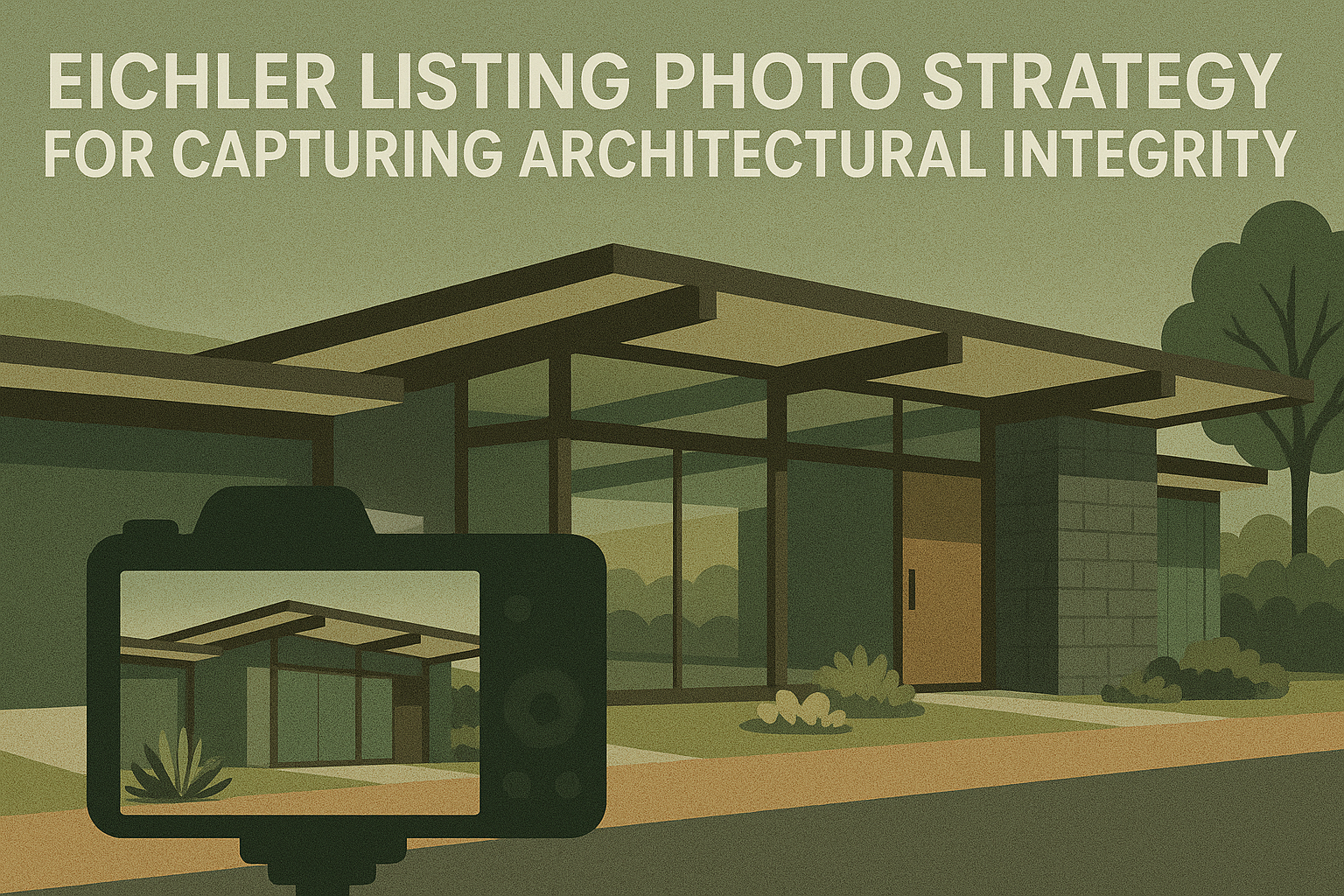
Photography Strategies for Showcasing Eichler Home Listings
Real estate professionals understand that photography can make or break a listing, especially for architecturally distinctive homes like Eichlers. Eichler homes, iconic mid-century modern residences found in California, are renowned for their post-and-beam construction, floor-to-ceiling glass walls, seamless indoor-outdoor flow, and clean geometric lines. Capturing these features in listing photos requires a thoughtful strategy. This guide outlines a comprehensive photo strategy tailored to Eichler homes, emphasizing three key techniques – twilight photography, gridline alignment, and wide-angle lens use – and how each helps convey Eichler’s defining architectural qualities. Below, we break down each technique and offer best practices for presenting Eichler homes in their best light.
Twilight Photography: Warmth, Transparency, and Drama
An Eichler home at twilight, with interior lights glowing through expansive glass walls. The dusk sky and warm interior lighting create an inviting glow that blurs the line between indoors and out.
Twilight is often called the “magic hour” – for good reason. As the sun dips below the horizon, Eichler homes truly come alive. The soft, diffused light of early evening produces a warm, welcoming glow that daytime photos can’t replicateeichlerhomesforsale.com. With interior lights turned on against the deepening blue twilight sky, an Eichler transforms into a lantern-like haven: golden light spills through its floor-to-ceiling glass walls, showcasing the home’s transparent design and drawing the eye insideeichlerhomesforsale.comeichlerhomesforsale.com. This warmth and luminosity make buyers feel the home’s cozy mid-century modern ambiance, not just see it. In real estate marketing, these dusk shots aren’t merely pretty – they’re emotional. Twilight photos add drama and invite imagination, helping an Eichler listing stand out in a sea of bland daytime imageseichlerhomesforsale.com.
Equally important, shooting at twilight beautifully highlights Eichler’s signature indoor-outdoor harmony. Joseph Eichler’s designs centered on blending the interior with nature, and nothing emphasizes this better than an evening shot where glass walls glow from within to reveal the insideeichlerhomesforsale.com. A classic twilight exterior photo might show the home’s post-and-beam silhouette sharply outlined against a dim sky while the interior rooms shine through the glass. This juxtaposition conveys transparency – you see the interior living spaces and the exterior landscaping together in one inviting tableau. Buyers can instantly grasp the indoor-outdoor flow: for example, the living room lighting pours out to the patio, and an illuminated atrium becomes a jewel-like focal point visible from outside. The result is a sense of continuity between house and yard, exactly the lifestyle Eichler intended. (Tip: plan twilight shoots for roughly 15–30 minutes after sunset, and turn on every interior and exterior light – those iconic globe pendants, porch lights, path lights, etc. – to achieve a uniformly warm, balanced exposure.) By leveraging twilight photography’s mix of natural dusk and warm interior lighting, you enhance the visual warmth, transparency, and drama of an Eichler home, immediately communicating its mid-century charm and welcoming glow to prospective buyers.
Gridline Alignment: Showcasing Clean Lines and Symmetry
Eichler architecture is celebrated for its clean lines, balanced forms, and geometric harmonyeichlerhomesforsale.com. To do justice to this design in photos, it’s crucial to align your shots with the home’s architectural “grid.” Gridline alignment means keeping vertical and horizontal lines true and composing images that emphasize the home’s symmetry and structure. In practice, this involves leveling the camera so that walls, posts, and window frames appear perfectly vertical (no converging lines or awkward tilts) and horizontal elements like rooflines remain flat and level. By using the camera’s built-in grid or a tripod with a level, you can parallel the Eichler’s structural lines with the edges of your frame, yielding a crisp, orderly image. The goal is to let the home’s inherent geometry shine. Crooked angles or slanted perspectives can subconsciously make a space feel off-kilter; conversely, straight-on views that respect the home’s geometry convey a sense of stability and design integrity.
Aligning with Eichler’s grid showcases the symmetry and balance that these mid-century homes often possess. Many Eichlers were designed with a modular rhythm – posts and ceiling beams evenly spaced, panels and windows in proportion, sometimes even mirror-image facadeseichlerhomesforsale.com. A well-composed photo should take advantage of that. For example, if an Eichler living room has exposed beams running in parallel, position your shot to capture that repetitive pattern receding into the distance, emphasizing the clean rhythm of the post-and-beam construction. If the front facade has a centered peak or atrium with equal elements on either side, a symmetrical frontal shot can be powerful: it highlights the balance (left-right equality) and draws attention to any centered feature (like the bright front door or A-frame roofline) as a focal point. Industry research in real estate photography shows that viewers find images with straight, perpendicular lines more professional and pleasing, as they accurately represent the space and architecture. In the context of Eichlers, keeping lines straight is even more critical – it underlines what is unique about the home. According to Eichler experts, true Eichler design features structural elements that line up in a regular grid, creating an “ordered rhythm” that is visually calmingeichlerhomesforsale.com. By aligning your camera with that grid, your photos will convey the home’s architectural balance and mid-century modern simplicity. In short, let the Eichler’s geometry guide your composition: showcase those long planar rooflines, the vertical posts and window mullions, and the rectilinear forms in a way that feels perfectly level, proportional, and intentional. This precision not only makes your photos look sleek and polished, but it also celebrates the Eichler’s clean design ethos, giving buyers a true sense of the home’s structural harmony.
Wide-Angle Lens Use: Revealing Openness and Volume
Another cornerstone of Eichler home photography is the judicious use of a wide-angle lens. Eichler interiors are typically open-concept, with flowing spaces and extensive sightlines (often extending to the outdoors). A wide-angle lens (when used correctly) is the best tool to capture that sense of spatial volume and openness. By encompassing more of the scene in one shot, you can show how the living room connects to the dining area and even to the backyard or atrium beyond, all in a single image. In fact, because Eichler layouts are so open, it’s often wise to present multiple zones in one photograph – for example, a living room that also takes in the adjacent atrium and kitchen – to illustrate the easy indoor-outdoor flow buyers will experienceeichlerhomesforsale.com. Wide-angle views physically allow the floor-to-ceiling glass walls and open beam ceilings to be seen in context, underscoring how light and movement travel through the home.
When shooting interiors, position yourself at a corner or a threshold (such as where the living room opens to the patio) to maximize the field of view. A wide lens (often ~16–24mm in full-frame terms) will let you include both the interior space and a glimpse of the exterior, literally showing the indoor-outdoor connection. For example, a shot from just inside the living room might capture the stylish open kitchen to one side and, through the glass walls, the lush backyard sitting area on the other. This composition tells a story: it conveys volume (a sense of a roomy, airy interior) and flow (unobstructed transitions between inside and outside). Floor-to-ceiling glass – one of Eichlers’ most defining features – especially benefits from wide-angle treatment; you can frame the entire glass expanse in one view, giving buyers the full effect of a wall of glass that opens to nature. In a single wide shot, the viewer can appreciate how the post-and-beam structure supports a lofty ceiling, how the spaces connect seamlessly without doors, and how natural light floods in from multiple angles. (One Eichler photography expert notes that balancing grand wide shots with closer vignettes is keyeichlerhomesforsale.com – so include wide angles to show scale, then supplement with some tighter shots of cozy corners or design details to humanize the space.) Used thoughtfully, a wide-angle lens provides an immersive perspective, making the viewer feel as if they’re standing in the home. It should never distort or mislead – the aim isn’t a fish-eye gimmick, but rather an authentic portrayal of the Eichler’s generous layout. With proper technique (level camera, correct height), wide-angle photos will reveal the full breadth of an Eichler’s design, from its expansive rooms to its continuous indoor-outdoor vistas, giving potential buyers a true sense of space and freedom.
Highlighting Eichler’s Defining Features in Photos
Beyond technique, it’s important to remember why these visual strategies matter: they each help emphasize core architectural features that make Eichlers so special. As you implement twilight lighting, precise alignment, and wide-angle views, keep the following Eichler hallmarks in focus and ensure your photos bring them forward:
Post-and-Beam Construction: Eichler’s exposed post-and-beam framework is not only structural but aesthetic. Highlight the beams and posts as design elements. For instance, a twilight shot from outside can silhouette the extended roof beams against the sky, or an interior shot can show the beams running across the ceiling, drawing the eye through the space. By aligning your shot with these beams (as discussed), you reinforce the strong linear character of the home. The beams often extend past the glass to the exterior eaves, so wide compositions can show that continuity – a beam starting in the living room and continuing out over the patio – symbolizing the indoor-outdoor unity. Always make sure these lines are straight and crisp; Eichler’s architecture is honest about its structure, so your photo should be too.
Floor-to-Ceiling Glass Walls: The expanses of glass in Eichler homes blur indoor and outdoor realms. To convey this, shoot when interior lights and exterior views can coexist (twilight is ideal, but daytime works if balanced properly). A photo taken at dusk from the backyard looking in, or from the living room looking out, will show transparent glass facades glowing with light, instead of reflecting like mirrorseichlerhomesforsale.com. This transparency lets viewers see the backdrop of greenery outside from the living room, or conversely, the furnished interior from the patio – exactly the experience of living in an Eichler. Use a wide lens to capture the full height of the glass and even the ceiling above it, so buyers sense the scale of these windows. Also, pay attention to what’s visible through the glass: ensure outdoor spaces are neat and maybe even staged with furniture, emphasizing that the glass isn’t an ending but a gateway to more living area. The result should communicate light, openness, and the modernist ideal of bringing the outside in.
Indoor-Outdoor Flow: Perhaps the ultimate selling point of an Eichler is its seamless indoor-outdoor lifestyle. Your photographs should erase the boundary between inside and outside, just as the architecture does. Achieve this by composing shots that include both interior and exterior elements in one frame. For example, a wide shot from the atrium looking into the living room (with the sky above still slightly aglow) can show interior and open-air space as one continuous environment. Similarly, an open sliding glass door in a photo invites the viewer to imagine walking from the living area straight onto the patio. Use twilight exterior shots to show multiple lit interior rooms opening onto a single outdoor space – this visual linkage reinforces the idea that all these areas function together as one cohesive living space. Even in daylight interior shots, consider angles that show a glimpse of greenery through a window or the continuation of the floor material onto a patio, hinting at that floweichlerhomesforsale.com. Every image is an opportunity to subliminally say: “this house lives bigger than its walls; you’re not just buying the indoors, but the outdoors too.”
Mid-Century Modern Symmetry & Balance: Eichler homes often incorporate symmetry or at least a balanced, rhythmic order in design. Reflect that in your photography. Centered compositions (used sparingly and appropriately) can emphasize a symmetrical facade or room layout – for instance, positioning the atrium in the dead center of a shot if flanked by equal glass panels on each side. More commonly, highlight the balanced repetition in Eichlers: the evenly spaced ceiling beams, the grid of paneling or windows, the alignment of features along an axis. A well-aligned photo of a hallway, for example, can show a pleasing pattern of ceiling panels or trusses receding uniformly. When staging for photos, arrange furniture to complement the home’s geometry (keep things balanced and not lopsided in frame). The viewer might not consciously note the symmetry, but they will feel the order and calmness it brings. Mid-century design prized simplicity and equilibrium; your images should echo that by feeling uncluttered, orderly, and intentional. Clean framing (thanks to gridline alignment) and thoughtful perspective will naturally convey the mid-century modern ethos of “less is more” and allow Eichler’s measured proportions to speak for themselves.
Best Practices for Eichler Listing Photography
To wrap up, here’s a summary of best practices and guiding principles when photographing an Eichler home for a real estate listing. These tips integrate the above techniques into a practical checklist to ensure your images do justice to this architectural style:
Plan for the “Magic Hour”: Schedule an evening shoot to capture stunning twilight exteriors. Arrive before sunset to set up, and shoot quickly during the brief dusk window when the sky is cobalt blue and interior lights are aglow. These shots will be your money-makers – they add instant drama, warmth, and a showcase image for the listing cover.
All Lights On: Prior to shooting, turn on every light in the house (interior and exterior). Eichlers often have eye-catching fixtures like globe pendant lights – use them. The goal is an evenly lit interior that glows through the windows. This not only makes the home look more inviting but also helps the camera capture interior details from outside without heavy shadows. Don’t forget landscape lighting, pool lights, or any accent lights in eaves or atriums; they add depth and sparkle to twilight shots.
Keep It Level and Straight: Use a tripod and the camera’s electronic level or grid overlay to ensure vertical lines are vertical and horizontals are horizontal. Correct any perspective distortion in post-processing if needed so that the structure doesn’t appear to lean. Eichler homes have strong horizontal roof planes and vertical posts – present them ruler-straight. This conveys professionalism and lets the architecture’s precision come through. If you tilt the camera up or down for a dramatic angle, do so judiciously and be aware of converging lines (often, a slightly lower camera height can capture tall features without needing a tilt).
Emphasize Key Architectural Features: Before shooting, identify the home’s standout features – e.g. an atrium, an open beam ceiling, a brick fireplace, a unique facade detail – and plan shots around them. Frame the atrium from multiple angles (looking in and out). Capture the pattern of beams in a ceiling by shooting from a corner looking upward. Include Eichler trademarks like floor-to-ceiling windows, clerestory windows, or original wood paneling in your compositions. These details will resonate with mid-century enthusiasts and make the listing memorable. Just as importantly, avoid letting any eyesores (like large retrofit HVAC units or clutter) steal the focus from the home’s design elements.
Show Context – Inside and Out: Remember that Eichler living is as much about the yard and atrium as the house itself. So, integrate indoor and outdoor views in your photos whenever possible. An interior shot should tease what’s beyond the glass (a glimpse of the garden or patio seating), and an exterior shot at twilight should reveal interior decor through the windows. This context gives buyers a fuller understanding of the property’s flow and the experience of being there. It’s also wise to include a few daytime shots of outdoor spaces (patio, atrium, landscaping) under natural light, since Eichlers often have wonderful outdoor design continuity (e.g. same post-and-beam extending to a pergola). Ensure those outdoor shots are also well-composed (e.g. centered or symmetrical if the design calls for it, or artfully angled to show depth).
Leverage Wide Shots – but Mind Distortion: Use your wide-angle lens to capture whole spaces and transitions, but be careful not to exaggerate to the point of unrealism. Aim for a balanced perspective that makes rooms look spacious yet credible. Typically, photographing from a corner or doorway at about chest height gives a natural, expansive view. If a room looks unnaturally stretched, dial back the wideness a bit. Always check vertical lines (wide lenses can bend them at the edges – you may need to correct this). The benefit of wide shots is you can depict, say, the entire great room and the open atrium beyond it in one frame – a huge selling point. Just pair these with some close-up shots (a reading nook, a stylish light fixture, the texture of wood ceilings) so that the listing doesn’t feel like a series of cavernous spaces. It’s about showcasing volume and openness without losing the human scale.
Maintain Mid-Century Aesthetics in Staging: Finally, a note on staging/composition – Eichler homes look best when their mid-century modern character is embraced. Clear clutter and opt for minimal, period-appropriate furnishings or props when possible (e.g. a pair of iconic butterfly chairs on the patio as seen above, or a simple Eames-style chair by the fireplace). This isn’t a photography technique per se, but it profoundly affects the visuals. A clean, open layout with a few nods to mid-century style will amplify the impact of your photos. It reinforces the message that this home is an architecturally significant, design-savvy space. When your camera work – lighting, alignment, lens choice – is paired with intentional staging, the result will be a cohesive visual story that appeals to the target buyer’s lifestyle aspirations.
By following these guidelines, you create a photo portfolio for the Eichler listing that is cohesive, artful, and informative. Each image should not only be aesthetically pleasing but also communicate something about the home’s design: its warmth at dusk, its sharp architectural lines, its spacious flow. The tone of the photos is modern and sophisticated, befitting the Eichler legacy, yet also inviting to the viewer’s imagination. In a competitive real estate market, this level of visual storytelling is key. Eichler homes are works of art in architecture, and your photography strategy should treat them as such – capturing their essence with careful technique and creative vision. Do this, and you’ll help buyers fall in love at first sight, long before they ever set foot through that distinctive front door. eichlerhomesforsale.comeichlerhomesforsale.com