
Flooring Material Matrix for Eichler Homes
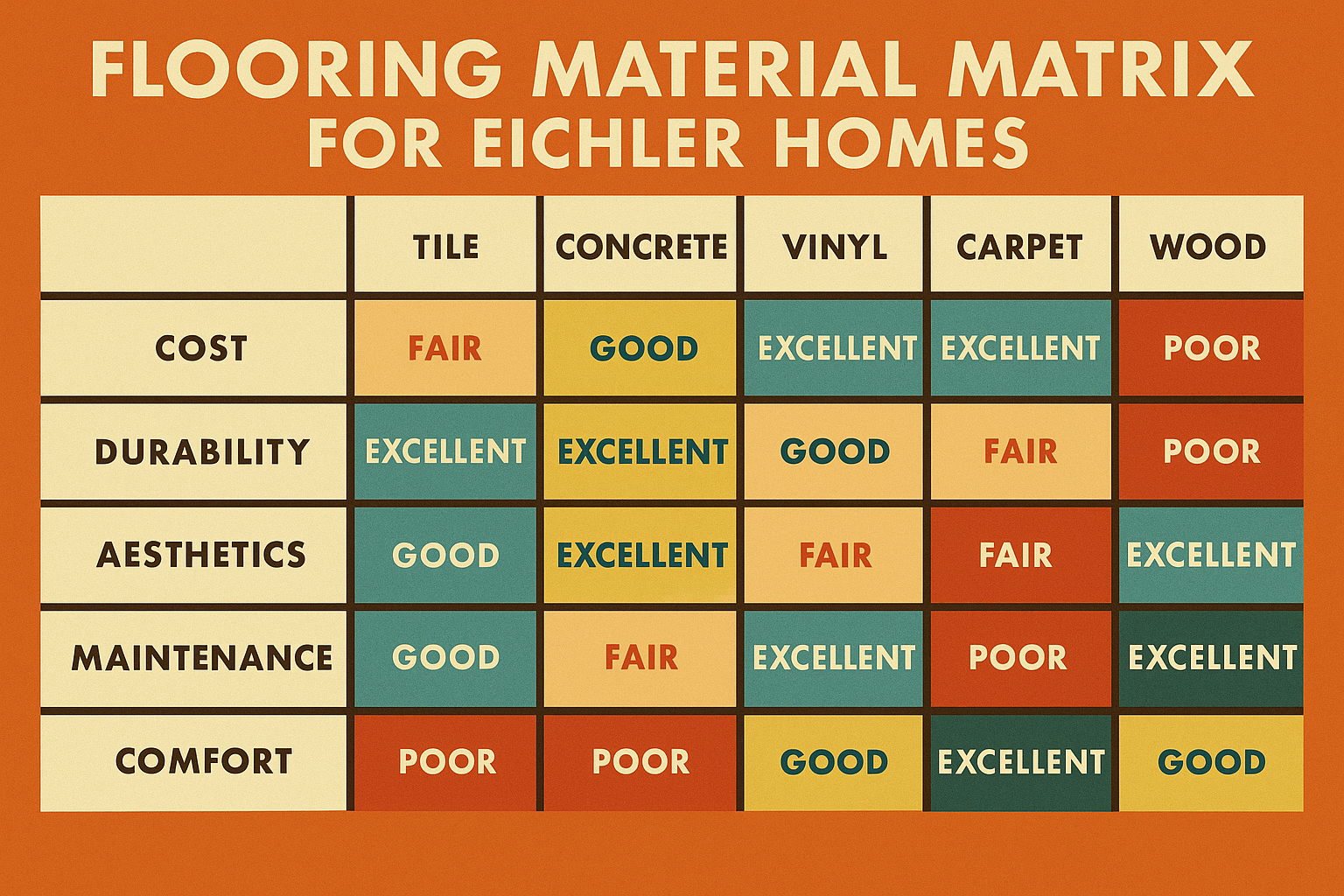
Best Flooring Options for Eichler Homes by Room
Overview: The table below evaluates five flooring materials (sealed concrete, engineered wood, cork, terrazzo, and ceramic/porcelain tile) across various rooms in a classic mid-century Eichler home. Each material is assessed for its radiant heat compatibility, alignment with mid-century modern (MCM) aesthetics, durability, underfoot comfort, sustainability, and maintenance needs. Eichler homes were originally built with slab-on-grade floors housing hydronic radiant heating, and finished in either 9×9 vinyl-asbestos tile or cork tile destinationeichler.com. These original choices were thin, hard-surface materials that allowed heat to radiate efficiently (no thick carpets), and they set a stylistic and functional precedent for today’s flooring selections. The matrix helps compare how each modern material option performs in each room, with additional commentary and expert insights where relevant.
🏡 Eichler Flooring Material Matrix (Room-by-Room Guide)
Entryway / Foyer
Sealed Concrete: ✅ Durable, radiant-compatible, minimalist. Handles wet shoes and traffic with ease.
Engineered Wood: ⚠️ Susceptible to moisture. Warm aesthetic but needs careful maintenance.
Cork: ✅ Soft, quiet, and Eichler-authentic. Requires sealing for moisture protection.
Terrazzo: ✅ Durable, luxurious, radiant-compatible. True mid-century flair.
Tile: ✅ Moisture-proof, radiant-efficient, many design options.
Living Room
Sealed Concrete: ✅ Radiant-friendly and modern. Great for indoor-outdoor flow.
Engineered Wood: ✅ Warm, soft underfoot, stylish with radiant systems.
Cork: ✅ Cozy, quiet, excellent thermal comfort.
Terrazzo: ✅ Ultra-durable, radiant-compatible, statement floor.
Tile: ✅ Durable, easy to clean, best for radiant heat.
Kitchen
Sealed Concrete: ✅ Heat-conductive, stain-resistant, modern industrial look.
Engineered Wood: ↔️ Seamless look, soft underfoot, but water-sensitive.
Cork: ✅ Mid-century favorite, soft and water-resistant when sealed.
Terrazzo: ✅ Commercial-grade toughness, hygienic, radiant-effective.
Tile: ✅ Top choice for durability, water, and radiant heat.
Dining Room
Sealed Concrete: ✅ Seamless, warm with radiant, easy clean.
Engineered Wood: ✅ Cohesive with living areas, elegant, radiant-compatible.
Cork: ✅ Quiet, soft, stylish. Great for acoustics and comfort.
Terrazzo: ✅ Durable and dramatic. Great thermal mass.
Tile: ✅ Family-friendly, consistent with kitchen, easy upkeep.
Bedrooms
Sealed Concrete: ↔️ Radiant-compatible but hard and cold underfoot. Needs rugs.
Engineered Wood: ✅ Warm, insulating, classic comfort.
Cork: ✅ Soft, warm, quiet — ideal for barefoot comfort.
Terrazzo: ✅ High-design but hard underfoot. Needs rugs.
Tile: ✅ Less common. Can work with radiant and rugs.
Bathrooms
Sealed Concrete: ✅ Waterproof, radiant-warm, sleek spa feel.
Engineered Wood: 🚫 Not recommended due to moisture.
Cork: ⚠️ Not ideal in full baths; can swell with water.
Terrazzo: ✅ Great for wet zones, radiant-friendly, needs expert install.
Tile: ✅ Best choice — slip-resistant, radiant-effective, classic.
Hallways
Sealed Concrete: ✅ Tough, radiant-compatible, cohesive with rest of home.
Engineered Wood: ✅ Soft underfoot, consistent flow, radiant-ready.
Cork: ✅ Quiet, soft, warm — needs occasional resealing.
Terrazzo: ✅ Ideal for traffic, radiant-boosted, visual pop.
Tile: ✅ Durable and low-maintenance, but acoustically sharp.
Utility / Laundry
Sealed Concrete: ✅ The best choice — waterproof, appliance-proof, worry-free.
Engineered Wood: ⚠️ Risky in moisture-prone zones.
Cork: ⚠️ Not recommended unless space is dry and light-use.
Terrazzo: ✅ Seamless, durable, radiant-capable, easy clean.
Tile: ✅ Classic, waterproof, ideal for radiant and spills.
Additional Notes:
Radiant Heat Compatibility: All these materials can work with Eichler’s in-slab radiant heating, but they have different thermal behaviors. High-density materials like concrete, terrazzo, and ceramic tile have low insulating value and high thermal conductivity – this means heat from the slab transfers quickly and efficiently through them radiantmadesimple.com destinationeichler.com. Softer, aerated materials like cork and wood have higher R-values (insulation), so they slightly reduce heat flow and slow the system’s response time. Nevertheless, many Eichler owners use cork or wood successfully with radiant heating – the key is that the radiant system was designed for thin floor coverings, and as long as you avoid very thick or carpeted layers, it will warm the home effectively. In fact, owners report that replacing carpet with cork or wood dramatically improved heat output eichlernetwork.com. Always ensure any adhesives or underlayments are rated for radiant heat to avoid odors or failures at elevated slab temperatures.
Mid-Century Modern Aesthetics: Eichler homes have a distinct mid-century modern look, and flooring plays a big role in that. Originally, cork and asphalt tile were used for their simplicity and functionality. To honor that aesthetic, cork, concrete, terrazzo, and even period-style ceramic tile (like vintage mosaic patterns or VCT-look porcelain) are all great choices that “fit perfectly with the Eichler style”. Engineered hardwood, while not original to Eichlers, can still look appropriate if you choose mid-century-appropriate finishes (e.g., teak or walnut tones, or even a whitewashed oak for a Scandinavian MCM twist). It adds a level of warmth that some original finishes lacked. The goal is to complement the open, indoor-outdoor ethos of Eichler design – continuous flooring that flows from room to room (and even to exterior patios in some cases) helps achieve that. Many owners these days opt for a mix: for example, tile or polished concrete in public areas and cork or wood in private areas, balancing authenticity, comfort, and practicality paloaltoonline.com. When choosing colors and patterns, neutral and natural shades tend to work best (think earth tones, grays, or the natural hue of cork/wood), as they allow the home’s post-and-beam architecture and indoor-outdoor landscaping to shine.
Sustainability: Eichler homeowners often value green building principles, and flooring can contribute. Cork is a standout in this regard – it’s a renewable resource, harvested as bark without killing the tree, and it’s fully biodegradable paloaltoonline.com. Its durability also means it doesn’t need frequent replacement (some cork floors last 40+ years paloaltoonline.com), reducing material waste. Engineered wood can be sustainable if sourced properly: using fast-growing species like bamboo (which is actually a grass and regenerates quickly) or FSC-certified wood for the wear layer, and adhesives with low formaldehyde. Bamboo in particular is touted as eco-friendly and is very hard and stable – a good fit for radiant slabspaloaltoonline.com. Concrete and terrazzo leverage the existing structure (the slab) – polished concrete repurposes your slab as finish, avoiding new materials entirely (besides coatings), and terrazzo can include recycled content like glass chips and has a extremely long lifespandestinationeichler.com. Ceramic tiles are inert and often made from natural clay; some brands offer recycled content in their tiles. Plus, the longevity of all these materials means less frequent replacement compared to something like carpet, which aligns with sustainability through longevity. When installing, using low-VOC sealers, finishes, and adhesives will ensure the home’s air quality stays healthy – a consideration in line with Eichler’s clean, open-air design philosophy.
Maintenance Summary: Hard surfaces (concrete, terrazzo, tile) are very low maintenance day-to-day – just keeping them clean is enough. They might need a sealer reapplied occasionally (especially concrete and terrazzo to resist stains, and grout for tile). Wood and cork require a bit more attention to prevent scratches and moisture damage, and their finish will eventually need refreshment (polyurethane will wear in traffic areas and require recoating perhaps every 5-10 years for wood, slightly more often for cork in busy areas). However, none of these options approaches the upkeep of wall-to-wall carpet (which needs frequent vacuuming, deep cleaning, and has a much shorter lifespan). In fact, switching from carpet to any of these floors in an Eichler can greatly reduce allergens and cleaning effort, as noted by Eichler specialists. Cork and wood might require the most mindful maintenance, but they repay it in comfort. Tile and terrazzo are nearly “install-and-forget,” aside from grout or the occasional polish. The radiant heat itself also contributes to maintenance: it keeps floors dry (a warm floor evaporates spills and condensation faster) and that can inhibit mold and make cleaning easier (no damp corners as you might get with a cold tile floor). Always follow manufacturer or installer recommendations for cleaning products – e.g., use pH-neutral cleaners on concrete/terrazzo, avoid wax on polyurethane-finished cork unless it’s the wax-finished type, etc.
In conclusion, each material has its strengths and can be strategically used in an Eichler home: sealed concrete or terrazzo for unbeatable durability and a seamless modern look, tile for a practical and era-appropriate solution in wet areas, cork for comfort and authentic mid-century vibes in bedrooms/living spaces, and engineered wood for a balance of warmth and style in less moisture-prone areas. The matrix above, backed by expert and historical insights, should guide Eichler homeowners in choosing the right flooring for each room, ensuring the selections complement the radiant heating system and the home’s mid-century character while meeting contemporary needs of durability, comfort, and sustainability.
With over two decades at the forefront of Silicon Valley real estate, Eric and Janelle Boyenga are nationally recognized Eichler home experts and founding partners of Compass. Known for their design fluency and data-driven marketing, the Boyenga Team guides clients through every stage of the buying or selling process with deep knowledge, transparency, and next-gen innovation. Whether you're preserving an architectural gem or upgrading for modern living, trust the team that understands Eichler homes—inside and out.
Sources:
Eichler Network & CA-Modern archives – original Eichler flooring materials and expert homeowner advicedestinationeichler.compaloaltoonline.comeichlernetwork.com
Destination Eichler design blog – mid-century modern flooring options (cork, concrete, wood, tile, terrazzo) and radiant heat considerationsdestinationeichler.comdestinationeichler.comdestinationeichler.com
Atomic Ranch (J. Torres, “All About Cork Flooring,” 2023) – history and benefits of cork in mid-century homesatomic-ranch.comatomic-ranch.com
Palo Alto Online (2001, “Floored” article) – green flooring (bamboo, cork) durability and maintenance in Eichler contextspaloaltoonline.compaloaltoonline.com
Radiant heat flooring guides – thermal performance of various floor materials with underfloor heatingradiantmadesimple.comradiantmadesimple.com
Tile Council of North America – technical note on concrete slab cracks telegraphing into tile (reflective cracking)tcnatile.com
Sources