
The Iconic Front Entry of Eichler Homes: A Design Psychology Analysis
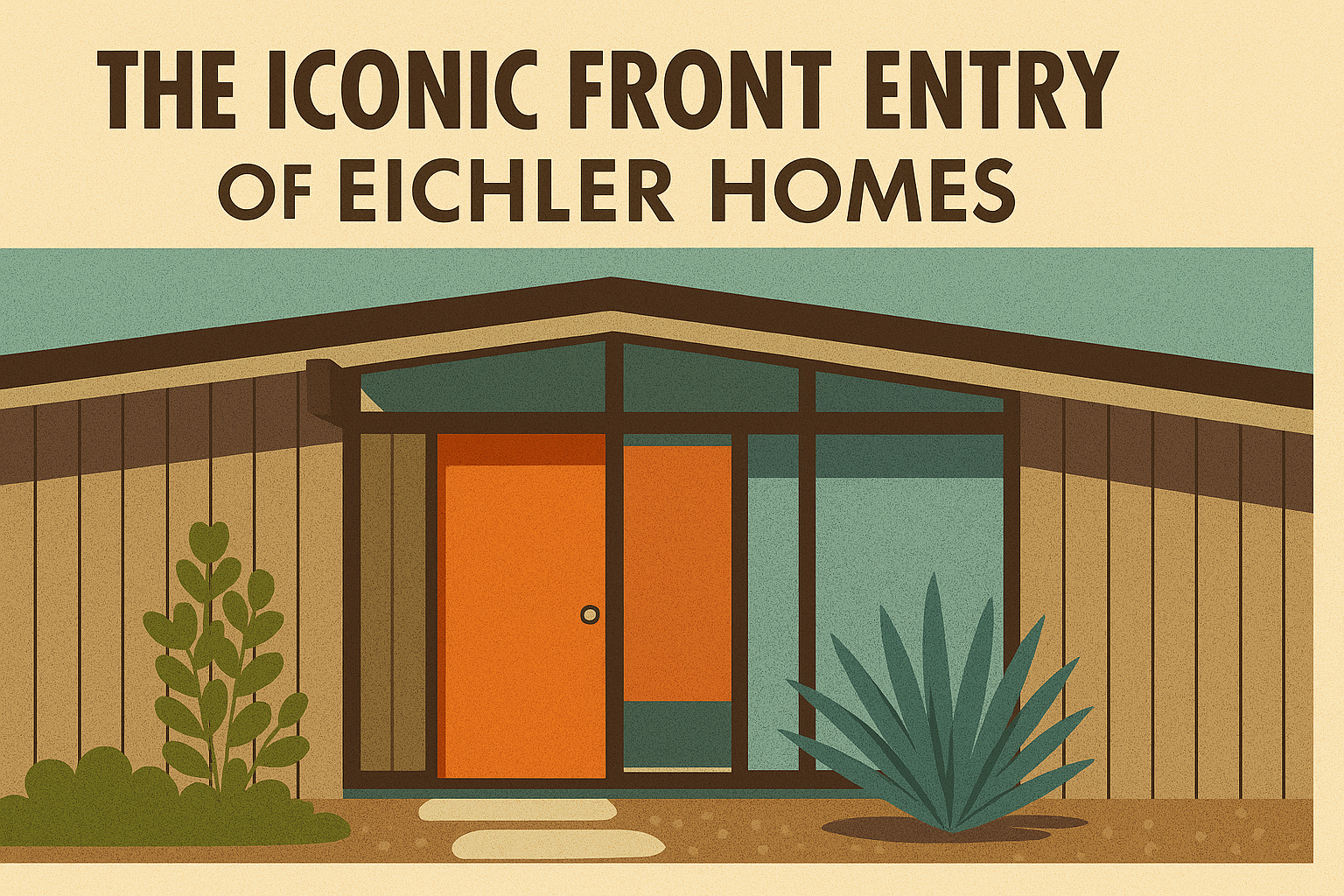
Introduction: The front entry of an Eichler home is more than just a door – it’s an entire experience. Mid-century modern developer Joseph Eichler treated entryways as transformative spaces that set the tone for the home’s atmosphere eichlerhomesforsale.com. From the very first step, visitors are guided through a carefully crafted sequence of design elements – space, materials, color, and landscaping – all intended to evoke balance and emotion. In this report, we explore how Eichler’s iconic entries use design psychology and color theory to create a welcoming yet private atmosphere, and how these principles carry into modern interpretations and real estate appeal.
Historical Context: Eichler’s Vision for Entryways
Eichler homes emerged in California in the 1950s–60s with a radical vision: to bring high-quality modern design to middle-class suburbs eichlerhomesforsale.com. Joseph Eichler and his architects reimagined the experience of entering a home. Early Eichler models by Anshen & Allen often featured U- or L-shaped layouts that created private courtyards or patios by the entrance – precursors to the atrium eichlerhomesforsale.com. These partially sheltered front patios hinted at what lay inside, offering a brief respite before stepping indoors eichlerhomesforsale.com.
By 1958, architects A. Quincy Jones and Frederick Emmons introduced Eichler’s “celebrated atrium entry” – essentially a small open-air courtyard at the front that one passes through before reaching the actual front door eichlerhomesforsale.com. This bold innovation completely redefined the foyer. Instead of a traditional enclosed vestibule, Eichler owners found themselves in a dramatic indoor-outdoor atrium flooded with light, often open to the sky eichlerhomesforsale.com. This atrium concept quickly became “the defining feature” of Eichler homes eichlerhomesforsale.com and was widely embraced; many later Eichler models included a full room-sized atrium right past the street entrance as a signature element eichlerhomesforsale.com. In short, Eichler entryways were conceived as more than doors – they were experiences, aligning with Eichler’s utopian goal of “bringing the outdoors in” to improve suburban living eichlerhomesforsale.com.
Architectural philosophy: The entry was meant to gently transition visitors from the outside world into a grounded, peaceful home environment eichlerhomesforsale.com. Visionary architects like Claude Oakland (Eichler’s primary architect in the 1960s) further expanded atriums into true outdoor rooms central to daily life eichlerhomesforsale.com. Oakland and others carefully choreographed the “ritual of arrival”, treating the approach and entry sequence as a journey that should “slow down” visitors and prepare them for the home’s interior calm eichlerhomesforsale.com. This historical context is crucial: Eichler’s entries were always about setting a tone – balancing privacy with openness, and everyday living with a touch of drama.
Spatial Composition and Materials: The Entry Experience
The spatial composition of Eichler front entrances was deliberately orchestrated to shape the visitor’s experience. From the street, Eichler homes often present a modest, almost secretive face – a stark departure from traditional homes with prominent porches or picture windows. Many Eichlers feature a mostly solid front facade with minimal openings, sometimes nicknamed a “blank face to the street” designed consciously for privacy eichlerhomesforsale.com. For example, a 1962 Eichler in Orange, CA presents a flat facade of vertical wood siding interrupted only by a bold orange door tucked under an extended eave eichlerhomesforsale.com. To one side, translucent glass panels and a low gate hint at an atrium beyond but obscure direct views, creating intrigue while shielding the interior eichlerhomesforsale.com. This approach means that the true entrance is slightly hidden or recessed – you often enter into a sheltered alcove or courtyard before reaching the door. The result is a feeling of discovery and “entering a secret garden” as you leave the public sidewalk and step into the private realm eichlerhomesforsale.com.
A classic Eichler facade in California: muted mid-century exterior walls, broad roof eaves, and a bright orange front door create an iconic first impression. Tall glass panels and an open porch light (the Eichler globe lamp) flank the door, hinting at the light-filled atrium inside while maintaining a private street face atomic-ranch.comeichlerhomesforsale.com. A simple path with geometric pavers through the lawn leads visitors gently to the entry.
Once past the initial facade, the entry sequence often unfolds in layers. In many Eichlers, a visitor passes through a gate or front porch into an open-air atrium or breezeway that is enclosed by the house on all sides. This atrium is typically the heart of the entry experience: surrounded by glass walls and open to the sky, it brings light, air, and nature into the center of the home eichlerhomesforsale.com. In fact, Eichler’s architects noted that the atrium “improved the entry sequence – a visitor passes through a garden before even reaching the front door” eichlerhomesforsale.com. Landscaping plays a key role here: many Eichler atriums included built-in planters, Zen fountains, or space for potted plants, essentially bringing a bit of garden into the entry of the home eichlerhomesforsale.com. This softens the architecture with greenery and creates a calming, tranquil mood – the biophilic effect of nature is felt immediately. As one design case study noted, the courtyard atrium offers “air, light, privacy, security, and tranquility” – nearly universally desired qualities in a home’s entry eichlerhomesforsale.com. Psychologically, this indoor-outdoor threshold acts as a cleansing buffer between the outside world and the sanctuary of the homeeichlerhomesforsale.com, allowing occupants and guests to shed stress as they literally “step into” a more serene space.
Materials and architectural details further shape the experience. Transparency is used masterfully: floor-to-ceiling glass panels line the atrium and often flank the front door itself, blurring indoor and outdoor spaces eichlerhomesforsale.com. Even in models without a full atrium, sidelights or high clerestory windows around the entry bring daylight and offer glimpses of interior spaces, signaling openness. This abundant glass creates a sense of expansiveness and connection – as you stand at the Eichler’s threshold, you might see through the house to a backyard garden beyond, or up to the sky, which gives an immediate feeling of openness and honesty in the architecture eichlerhomesforsale.com. At the same time, the strategic use of translucent or obscured glass in front-facing panels maintains privacy from the street eichlerhomesforsale.com. This careful balance between transparency and shelter is a hallmark of Eichler design psychology: it provides prospect and refuge in the entry – you have views and light (prospect) while feeling protected from outside eyes (refuge).
Material continuity is another design principle Eichler entries use to set tone and balance. Often, the same materials flow from exterior to interior at the entry point. For instance, Eichler architects extended tongue-and-groove wood ceilings from the outside eaves straight through to the inside rooms with no break in between eichlerhomesforsale.com. Standing in an Eichler breezeway, you’ll see a continuous expanse of redwood or Douglas fir planks overhead, making the porch feel like an extension of the living room. This unified ceiling gives a comforting sense of continuity – outside and inside are all part of one cohesive design eichlerhomesforsale.com. Similarly, interior Philippine mahogany wall paneling (a warm reddish wood) might be visible right at the entry or through the atrium windows, immediately conveying organic warmth and craft eichlerhomesforsale.com. Eichler was inspired by Frank Lloyd Wright’s use of natural materials; as a result, “the moment you enter an Eichler, you’re met with wood, not wallpaper” – a tactile reminder of nature and informality eichlerhomesforsale.com. Underfoot, many Eichler entries feature poured concrete slab flooring or ceramic tiles that continue from the outside porch into the interior. In some atriums, the very same concrete floor extends from the living room to the open courtyard, with only a subtle drainage cut – your footing doesn’t change as you cross the threshold eichlerhomesforsale.com. This was unusual for its time and creates a strikingly seamless transition, “quietly telling anyone arriving that this home is unified, considered, and intentionally connected to natural materials” eichlerhomesforsale.com. Together, these material choices (wood, glass, stone, concrete) establish an atmosphere of modern honesty and warmth. They also contribute to visual balance: hard surfaces are tempered by natural textures, and the simplicity of materials avoids overwhelming the senses. The entry feels uncluttered and calm.
Lighting is also carefully integrated. Eichler entries often include the famous globe pendant lights (a round white orb suspended in the atrium or porch). These provide a soft, even glow at night that accentuates the wood ceilings and extends a welcoming radiance to arriving guests eichlerhomesforsale.com. The globe lights have become an iconic Eichler touch, often hung in pairs or lining the entry path, “accentuating the welcoming glow” of the entry in the evening eichlerhomesforsale.com. Combined with the large glass panels, which by night allow interior light to spill outward, the effect is a front entry that glows like a lantern – broadcasting warmth without exposing the interior to view. This balance of openness and privacy (guests see light and shapes, but not all details of the home until invited in) reinforces feelings of both security and welcome.
Finally, landscaping and approach design heighten the entry experience. Eichler homes typically eschew ornate landscaping for a minimalist, modern approach that complements the architecture. A simple concrete stepping-stone path or aggregate walkway often leads the visitor from the sidewalk to the front door, sometimes offset or gently curving to build anticipation. Low, clean-lined planters with succulents or grasses might flank the door or atrium, echoing the home’s geometry. For example, an Eichler atrium might be planted with a few sculptural trees or ferns, creating a Zen-like courtyard visible through the glass. These choices are very intentional: lighting and landscape are critical features because the entry is so open and integrated eichlerhomesforsale.com. A well-placed Japanese maple or palm in the atrium, seen from outside, can signal the home’s calm, indoor-outdoor vibe. Moreover, because Eichler facades are modest, the front door and entry garden become focal points for curb appeal. The pop of door color and greenery against the spare facade creates interest and guides the eye. This careful composition establishes a sense of visual balance on the exterior: horizontal roof lines and blank walls are balanced by vertical elements like narrow glass panels or tall plants, and the overall symmetry (or deliberate asymmetry) of elements feels just right rather than sterile. In summary, spatial design and materials in Eichler entries work in harmony – the architecture literally invites you in by revealing glimpses of light and nature, even as it holds a bit back to heighten curiosity and comfort.
Color Psychology at the Front Door: Bold Hues and Emotional Impact
One of the most memorable aspects of Eichler homes is the bold front door colors. Joseph Eichler’s design team famously paired muted exteriors with vibrant accent hues, using color as a tool to set mood and personality. In the mid-century era, bright colors symbolized the optimism of post-WWII America – a break from the drab tones of wartime. Eichler enthusiastically embraced this, working with consultants to develop palettes that mixed natural earth tones with playful pops of color eichlerhomesforsale.com. Typically, Eichler exterior walls and siding were painted in subdued, “mellow” shades drawn from nature (think soft browns, grays, sandy beiges, or olive greens)eichlerhomesforsale.com. This allowed the materials like wood and brick to feel integral and the houses to blend with the California landscapeeichlerhomesforsale.com. But on key focal points – especially the front entry door – Eichler added “sparingly used” bursts of intense coloreichlerhomesforsale.com. As one design guide notes, “bright accents were mostly used on key features such as doors”, and Eichler’s original accent palette for front doors included vibrant hues like turquoise, sunflower yellow, pumpkin orange, and paprika redeichlerhomesforsale.com. These joyous colors injected individuality and cheer into each home, making the entry “pop” with a modern vibe against the neutral facadeeichlerhomesforsale.com.
Why these colors? Beyond aesthetic contrast, Eichler understood the psychology of color in making a first impression. A classic Eichler front door in a bold hue immediately grabs attention and sets an emotional tone. For instance, “blaze orange or aqua blue” front doors were classic choices that “evoked a sense of California cheer and innovation”eichlerhomesforsale.com. Mid-century color theory held that a splash of a warm color (like orange or red) or a cool yet vibrant color (like aqua/turquoise) could “activate” an otherwise restrained facade, adding personality without overwhelming iteichlerhomesforsale.com. In other words, the bold door becomes a focal point that enlivens the composition and sends a message about the home’s character – friendly, creative, and not afraid of fun.
Color psychology suggests that different hues carry different emotional connotations, and Eichler’s favored tones all have welcome associations. The table below highlights some of the mid-century accent door colors often seen on Eichler homes and the feelings they tend to inspire:
Door ColorPsychological Impression (mid-century context)OrangeStylish, refreshing, fun – an energetic color that stimulates creativity and social warmthmcmsac.com. It combines the energy of red and the optimism of yellow, often suggesting a friendly, adventurous spirit.YellowOptimistic and extroverted – a bright yellow door radiates cheer and happinessmcmsac.com. It can make the entry feel sunny and inviting, like a beacon of warmth to visitors.Aqua / TealCalm and trustworthy – aqua blue tones (turquoise, teal) have a soothing yet uplifting effect mcmsac.com eichlerhomesforsale.com. They evoke sky and water, imparting a sense of freshness and innovation. An aqua door feels both cool and welcoming, and was emblematic of mid-century modern chic.RedLucky, gracious, and hospitable – red is a traditional symbol of welcome across cultures mcmsac.com. A red Eichler door adds excitement but also signals hospitality (in early American tradition, a red door meant “welcome”) reddoorcleaning.ca. It grabs attention and conveys a bold, confident personality.
(Sources: mid-century color meanings from real estate/design resources mcmsac.com and cultural color associations.)
Eichler’s use of these colors was quite deliberate. A contemporaneous design philosophy was that bright colors, used thoughtfully, could influence mood and even behavior. For example, orange is known in color psychology as a stimulating, sociable color – perfect for an entry where you greet guests with upbeat energy. Yellow is associated with happiness and warmth, making people feel at ease and upbeat (imagine the immediate sense of delight seeing a yellow door on a modernist home). Turquoise/Aqua, a quintessential mid-century hue, carries connotations of clarity, freshness, and a forward-looking optimism – it was futuristic yet friendly. And red, aside from its cultural hospitality signals, also simply draws the eye strongly and can increase heart rate slightly, literally energizing the moment of arrival. Eichler and his team balanced these effects by pairing the bright doors with calm surroundings. As noted, a bold door would usually sit in a backdrop of earthy browns, greys, or natural wood, so that the color activates the entry without overwhelming the house eichlerhomesforsale.com. The result is “personality without overpowering” – the home still feels harmonious.
An example of Eichler’s color balance: an original Eichler home with deep brown siding and a turquoise-blue front door (and matching clerestory panel). The earth-toned body blends with nature, while the aqua accent adds a burst of mid-century cheer and contrast eichlerhomesforsale.com. Lush but low-profile landscaping (manicured shrubs and a Japanese maple) frames the entry, softening the modern lines and creating a welcoming, garden-like feel.
Beyond aesthetics, these front door colors influence the emotional experience of arriving home. A brightly painted door can make homeowners feel a spark of joy every time they return, and it signals to visitors that this is a lively, inviting household. Eichler owners often personalize their doors as an expression of self – choosing a hue that reflects “their personality, hopes, and dreams,” as one Eichler real estate source notes. The psychological impact is often immediate: studies show that a first impression of a house is formed within seconds, and color plays a major role in that impression 6sqft.com. A pop of color on the entry communicates a sense of style and even the values of the occupants (for example, a teal door might suggest the owners appreciate retro style and serenity, whereas an orange door might suggest creativity and boldness). In design psychology terms, the Eichler front door serves as an affective cue – it sets an emotional tone (cheerful, warm, bold, etc.) that resonates with the visitor’s subconscious as they step inside.
Importantly, Eichler’s color choices also contribute to a sense of balance and focus. By highlighting only the door (and sometimes a few accent wall panels) in bright color and keeping the rest of the exterior neutral, the design achieves a visual equilibrium. The eye is drawn to the entry, providing a clear focal point and sense of order. This can make the facade feel balanced even when it’s asymmetrical, because the weighted color at the door “anchors” the composition. Mid-century designers often spoke of dynamic balance – using asymmetry but carefully distributing visual weight. A vivid front door against a simple facade does exactly that: one strong pop is enough to balance the broad stretches of quiet color elsewhere.
Finally, from a social psychology standpoint, a colorful front door on an Eichler breaks the ice and signals a welcoming attitude. As you approach a bright orange or yellow door, you intuitively expect a more casual, friendly environment than if you faced a heavy, dark wood door. Eichler homes were indeed informal and family-centric, and the colors telegraph that “we live casually and joyfully here” eichlerhomesforsale.com. This emotional priming means by the time a guest knocks on the door, they already feel a bit of the home’s playful, positive energy.
Design Choices and Perceptions: Balance, Welcome, Security, Openness
Every element in an Eichler entry is orchestrated to influence how the space feels – striking a delicate balance between opposites: openness and enclosure, welcome and security, boldness and restraint. These design choices directly affect psychological perceptions:
Balance & Harmony: Eichler entryways exemplify balanced design, but not in a purely symmetrical way (many Eichler facades are in fact asymmetrical). Instead, balance is achieved through proportional forms, repeated horizontal lines, and the interplay of solid and void. The wide, low roof eaves and the broad planar walls create a sense of stability and horizontality, which is balanced by vertical accents like the front door itself or adjacent glass panes. For example, some models place the front door between twin garage doors, creating a balanced trio of rectangles on the facade (garage–door–garage) with the bright door as the centerpoint eichlerhomesforsale.com. Others offset the door to one side but might counter it with a tall vertical window or a screen on the opposite side. This ensures neither side of the facade feels “heavier” than the other. Psychologically, humans find balanced compositions more calming – our brains can process them more easily, leading to a subtle sense of comfort. Eichler’s use of a consistent material palette (wood, glass, stone) also contributes to harmony; nothing jarringly sticks out as out-of-place. One could say the visual rhythm of posts, beams, and panels at the entry has a gentle order that puts visitors at ease. Even color placement is balanced (as discussed, a single bold accent is balanced by surrounding neutrals). The result is that an Eichler entry feels organized yet dynamic, avoiding the unease that a cluttered or top-heavy design might cause. This aligns with design psychology principles: environments that are coherent and legible (easy to understand at a glance) tend to make people feel more comfortable and in control.
Welcoming Atmosphere: Eichler entryways are renowned for their unpretentious, welcoming feel. Unlike formal foyers in traditional homes (which could feel stiff or “please remove your shoes” stuffy eichlerhomesforsale.com), an Eichler entry immediately communicates informality and warmth. Several features contribute to this. First, the open-air atrium and glass literally open the door for guests – one might be greeted by breezes, sunlight, or even the family dog trotting out through the atrium before the guests have fully entered eichlerhomesforsale.com. This casual integration of life (kids playing in the atrium, plants growing around the entry) says “come as you are.” The materials feel welcoming too: natural wood ceilings and planters create a warm, human-scaled environment (versus, say, a cold marble foyer). Eichler entries often lack a formal threshold; you step straight into the communal space or atrium, which implies trust and hospitality. Furthermore, those bright door colors and iconic globe lights add a cheerful, friendly touch. At night, a glowing orb light and a colored door create an inviting beacon visible from the street – a subtle signal of hospitality. Culturally, as noted, a red door has long meant “welcome” 949whom.com, and even if visitors don’t consciously know that history, they feel it. In Eichler neighborhoods, the variety of door colors and openness of atriums often foster a neighborly vibe; one can imagine evening cocktail parties starting right in the atrium with the door wide open. In fact, “the hospitality of an Eichler home starts at the atrium – a glass of wine might be handed to you before you even step inside fully”, as one writer vividly put it eichlerhomesforsale.com. All these factors make Eichler’s entry design emotionally disarming – guests tend to feel relaxed and welcome immediately. The psychological impact is that of approachability: the house doesn’t stand on ceremony, it invites you into its embrace.
Security & Privacy: Interestingly, Eichler entryways manage to feel inviting and secure at the same time by smart design. From the street perspective, the lack of large front windows and the presence of courtyard walls or fences give a sense of privacy and refuge. This likely made homeowners feel safer and more comfortable, knowing that passersby cannot peer directly into the living space. The solid front facade and gate create a controlled boundary – a threshold that strangers cannot cross uninvited. This taps into a fundamental aspect of environmental psychology: people generally feel more at ease when their home provides refuge and control over visibility. In Eichler’s case, “many Eichlers front the street with solid walls or minimal windows, [so] the family sees the sky, not the neighbors”, preserving privacy eichlerhomesforsale.com. The entry atrium itself, while open-topped, is typically enclosed by high walls, making it a secure courtyard where one can enjoy outdoors in seclusion. Some models include a locking gate at the front of the atrium, effectively creating a secure “outdoor lobby” before the front door. Even without a gate, the psychological effect of stepping into an enclosed atrium is that you’ve left the public realm and entered a protected area – a semi-private zone. This design aligns with the prospect-refuge theory: the atrium offers refuge (you are enclosed and safe) with prospect (you have views of sky and interior, and can see who is approaching the gate). Additionally, sightlines were carefully considered: translucent glass panels admit light but blur views, and tall plants or screens further modulate visibility. All these features ensure that while the entry is light and open-air, it doesn’t compromise the sense of security. The front door itself in Eichler homes is usually solid core wood (often without a window, or with very small lites), which conveys sturdiness. The original Eichler door hardware – a large 6-inch round escutcheon with a central knob – is iconic and solid, subconsciously communicating durability. At night, the well-lit entry (globe lights, etc.) also enhances security by reducing dark hiding spots and warmly illuminating the approach. So, one feels protected yet not closed-off – an ideal balance. The psychological takeaway is an entry that says “this home is our private retreat” but in the same breath “you are welcome to enter and share in its warmth.”
Openness & Transparency: Openness is a core theme in Eichler design, and it profoundly shapes the emotional tone at the entry. The generous use of glass and the continuity of indoor-outdoor space create a sense of freedom and connection. For someone entering an Eichler, the experience can be almost liberating – instead of being confined in a narrow vestibule, you step into a bright, lofty atrium or directly into an open-plan living space with floor-to-ceiling glass looking out to a yard. This gives an immediate visual extension beyond the entry point, making the house feel larger and more breathable. Studies in environmental psychology have shown that views of open space and nature can reduce stress and enhance mood. Eichler seemed to intuit this: by ensuring that “you often see right into the heart of the home” and out through the other side, he gave even first-time visitors a sense of orientation and opennesseichlerhomesforsale.com. There’s also an honesty in this transparency – nothing feels hidden or gloomy; the house reveals itself frankly. As one comparison put it, in a traditional home you might be met with a closed door to a formal parlor, whereas in an Eichler “you can see that life is happening openly – kids’ toys, the kitchen, the garden – and it feels honest and casual”eichlerhomesforsale.com. This openness fosters a kind of immediate intimacy; guests can sense the personality of the home as soon as they enter, which in turn makes them more relaxed. Of course, Eichler’s openness is carefully controlled (only inward-facing glass, maintaining privacy externally, as discussed), which is key. It provides openness when you want it, privacy when you need iteichlerhomesforsale.com. Psychologically, this might be the ultimate achievement of the Eichler entry: it satisfies our contradictory desires for both openness and enclosure. The entry atrium with its open sky gives a dose of nature and openness, while the surrounding walls give security. The glass gives transparency and connection, while the layout prevents exposure to strangers. Thus, an Eichler entry can make one feel free yet sheltered, which is a profound contributor to emotional comfort. The design conveys trust as well – it’s as if the house isn’t hiding anything behind a closed facade, it’s open and welcoming to those invited in.
In sum, Eichler’s front entries masterfully set an emotional tone of balanced welcome. They whisper a message: “Come in, make yourself at home – you are safe here, and we live in harmony with our environment.” Everything from the alignment of the beams to the color of the door supports that message by creating equilibrium (visual and psychological) and a gentle transition from outside chaos to inside calm. It’s no wonder Eichler homeowners and visitors alike describe these entries as giving a “grounded, peaceful” feeling from the first stepeichlerhomesforsale.com.
Original vs. Modern: Eichler Entries Then and Now
More than half a century since they were built, original Eichler entryways continue to inspire architects and homeowners. Many Eichler homes have been carefully preserved or restored so that the entry looks much as it did in the 1960s – complete with the trademark bright door, open atrium, and globe lights. At the same time, modern needs and tastes have led to some reinterpretations of the Eichler entry in both renovations and new Eichler-inspired homes. Let’s compare what has been preserved versus what has changed in modern times:
Atrium and Layout: The central atrium or courtyard entry is still the iconic Eichler feature, and modern homeowners prize it highly. Real estate listings today often specifically advertise an “atrium model” Eichler as a premium featureeichlerhomesforsale.com. The basic concept – an open-air entry court – is usually preserved during renovations, and new homes influenced by Eichler (including some built in recent years in California and beyond) also incorporate front courtyards or light-wells to capture that indoor-outdoor feel. One modern Eichler remodeler noted that the atrium concept has influenced many contemporary designs; even new houses now often include courtyards, acknowledging Eichler was ahead of his timeeichlerhomesforsale.com. However, there are subtle changes: some owners who desire more interior space have covered the atrium with a skylight or turned part of it into an enclosed foyer. Others have added small vestibules or formalized entry halls within the atrium footprint to adapt to modern lifestyle needs (for instance, creating a closet for coats and shoes, which Eichlers originally lack). In one remodeled Eichler by Klopf Architecture, the architects added a “more formalized entry space” with custom storage, while still keeping a large glass wall looking onto the atrium and even adding a mid-century-style geometric screen for decorarchello.com. This shows a trend: modern reinterpretations aim to retain the openness but introduce a touch more structure to the entry for functionality. Nonetheless, the spirit of a sequence of spaces (entry garden leading to door) is usually kept, as it’s so integral to the Eichler identity.
Materials and Transparency: Original Eichlers had single-pane glass and uninsulated walls – not very energy-efficient by today’s standards – yet their aesthetic use of materials is timeless. Modern updates often include dual-pane, tempered glass for the floor-to-ceiling panels around the entry, improving security and insulation while looking nearly identical to the originals. Many renovators are careful to maintain the mahogany paneling or clear-heart redwood siding at the entry, since these materials define the mid-century character. Where wood has deteriorated, modern replacements are milled to match the original tongue-and-groove or shiplap siding atomic-ranch.com. In fact, dedicated Eichler enthusiasts have reproduced original details (down to the exact router bit shape for Eichler cabinet pulls! atomic-ranch.com). Continuity of materials remains key: if anything, modern homeowners double down on it, ensuring the restored entry uses the same wood stains and concrete finishes Eichler did. On the other hand, some new Eichler-inspired homes might use updated materials like steel for posts or aluminum for windows, but they often finish these in muted colors so the look remains similar (since Eichler’s palette was neutral on structure). One noticeable modern touch is the addition of decorative screens or breeze blocks. While a few Eichlers originally had patterned concrete block screens, it’s become popular in modern re-dos to add a mid-century style screen wall near the entry – both as a nod to vintage design and as a way to add privacy/decor. For example, a recent project added a “mid-century-inspired geometric screen” at the atrium entry to both define the space and add retro flair archello.com. This trend actually accentuates transparency and shadow-play at the entry, enhancing the experience. So, materials are largely preserved or thoughtfully modernized, with an eye to maintain Eichler’s honest, simple materiality.
Color Palette: Modern Eichler owners adore the classic door colors and often keep them. It’s common to see freshly painted Eichler doors in original hues like orange, yellow, or turquoise – sometimes even using historic color-match formulas that preservationists have recreated eichlerhomesforsale.com. Eichler’s original color formulas for accents have been recovered and can be used to restore that 1960s look eichlerhomesforsale.com. However, some modern interpretations expand the palette slightly. You might see an Eichler with a lime green door or a bold purple – colors that weren’t in Eichler’s official schemes but express the current owner’s taste. Generally, though, the principle of muted body, bold door is still followed. Many who renovate an Eichler will purposely choose mid-century-appropriate colors (for example, a deep blue or a bright chartreuse) to stay true to the style. A few modernists take the opposite approach and paint the entire house a stark white or charcoal and then also choose a more subdued door (like natural wood or black). This is rare in Eichler communities, as it loses some of the original charm. In fact, there are anecdotes of Eichler-era purists: Joseph Eichler himself once scolded a homeowner for painting the door a non-approved shade of blue! eichlerhomesforsale.com. Today, most homeowners have fun with color – recognizing that the front door is a low-investment, high-impact element (it can always be repainted). Real estate experts often advise sellers to paint the front door to boost curb appeal mcmsac.com, and in Eichler neighborhoods, a fresh coat of a vibrant color can make the house “pop” for buyers walking through. In summary, the bold mid-century hues remain beloved and are frequently preserved; where they are changed, it’s usually to another statement color rather than something bland.
Lighting and Hardware: The iconic globe lights and door hardware are often kept for their retro appeal. Original Eichler entry lights (the white globes) are readily available as reproductions, so many remodels re-install them if they were removed over time. Likewise, the distinctive 6-inch round door escutcheon and knob (originally by Sargent) can be mimicked with modern kits. Eichler enthusiasts love these details – they’re like jewelry for the house. However, modern needs mean some subtle additions: many owners will add a smart lock or a Ring doorbell camera at the entry. They typically do this discreetly, so as not to mar the mid-century aesthetic (e.g. choosing a brass finish smart lock that fits the round escutcheon, or tucking a small camera under the eave). Another change is improved entry lighting – while the globe lights remain, owners might add recessed uplights in landscaping or path lights along the entry walk for better illumination. The idea is still to keep it warm and diffuse rather than harsh. One could say the ambiance of the original is preserved, even if the tech behind it is updated.
Landscaping and Entry Staging: Original Eichler entries were often minimal in landscaping, sometimes just concrete pads and a bit of lawn (many mid-century owners favored a clean look). Today, there’s a trend to enhance the entry landscaping to increase curb appeal while respecting the style. You’ll see more drought-tolerant plants, succulents, and ornamental grasses used in Eichler front yards now – a nod to modern sustainability and California’s climate, but also aesthetically in line with the simple, sculptural plant selections of mid-century design. Some owners incorporate period-appropriate elements like a breeze-block planter or a kidney-shaped front step to amplify the retro vibe. Generally, however, the landscaping remains low-profile and geometric, to frame the house rather than hide it. One modern addition in some remodels is a front courtyard fence or gate with a pattern (often vertical wood slats or mid-century block) to enclose the entry a bit more. This sometimes wasn’t present originally (many Eichlers were open to the street or had only low fences), but owners add them for privacy/security. When done in the Eichler style, it looks seamless – for example, a new courtyard fence painted to match the house, with a frosted glass gate door that echoes the original front door style. The balance between open and closed is thus adjustable by the homeowner. As for staging and decor, realtors know that Eichler entries are major selling points now. It’s not uncommon to see an Eichler on the market with the atrium beautifully staged – perhaps with modern outdoor furniture, a few potted succulents, and colorful cushions to complement the front door. This is done to help buyers emotionally connect with that entry space as an extension of living area. The key preserved element is that the entry remains a clean, uncluttered transition – whether in 1960 or 2025, Eichler entries aren’t meant to be crowded with stuff. The modern mantra “less is more” certainly applies, as it did originally.
In essence, modern reinterpretations of Eichler entryways honor the original spirit – the seamless indoor-outdoor flow, the bold welcoming door, the human-centered scale – while layering in contemporary improvements (better glass, slight tweaks for utility, enhanced lighting). What has changed is often invisible or context-sensitive (energy efficiency, technology), and what is preserved is the experiential quality: walking into an Eichler today still feels like a fresh, modern experience that engages the senses. Many owners actively choose to restore rather than remodel away these features: one Eichler owner noted that the previous owners “had the vision to buy a heavily altered Eichler and chose restoration over renovation,” researching correct materials to return the entry and entire house to its authentic state atomic-ranch.com. This sentiment is common – there’s a recognition that Eichler got the entry formula right the first time. Even new homes built in a modernist vein copy elements like the open atrium, proving the enduring appeal of Eichler’s entry psychology.
To illustrate, here’s a brief side-by-side look at an original Eichler entry vs. a modern update:
AspectOriginal Eichler Entry (1950s–60s)Modern Reinterpretation (2020s)Layout & SpaceAtrium or small front patio as transitional entry space eichlerhomesforsale.com. No formal foyer; entry opens to atrium or living area.Atrium concept retained (highly valued) eichlerhomesforsale.com. In remodels, sometimes a partial enclosure or added closet for convenience archello.com, but largely open and true to original flow.Door & ColorFlush wood slab front door, often painted in a bold mid-century hue (orange, yellow, turquoise, red) eichlerhomesforsale.com. Muted siding colors for contrast.Often the same door style or a replica. Bold colors still popular (many restore original palette) eichlerhomesforsale.com. Some expand to new bright colors, but principle of accent door remains.TransparencyFixed glass sidelights or panels around the door; large atrium windows. Single-pane glass, clear or lightly tinted eichlerhomesforsale.com. Atrium open to sky.Upgraded double-pane safety glass, sometimes larger expanses due to new tech. Atrium sometimes fitted with retractable or glass roof for weather, but still bright and open. May add mid-century decorative screens for style/privacy archello.com.MaterialsNatural wood (redwood siding, mahogany walls, T&G ceilings) and concrete slab floors flowing indoors-outdoors eichlerhomesforsale.com. Original hardware (6” round knob plate) and globe lights.Restored or matched wood siding and paneling (often using original stains)eichlerhomesforsale.com. Improved insulation but hidden. Reproduction globe lights and escutcheon hardware widely used (or original pieces salvaged) for authenticity. New tech (smart locks, LED lighting) integrated subtly.Landscape & CurbMinimalist landscaping: simple entry path, perhaps a lawn or low shrubs. Emphasis on borrowed landscape (views through atrium). Little emphasis on curb appeal in 1950s tract marketing (the idea was the inside sells the home).Enhanced landscaping for curb appeal: use of succulents, grasses, period-appropriate plants to frame entry. Often a small fence or gate added for security. Stagers place decor in atrium to evoke lifestyle. Curb appeal now a selling point – fresh paint and neat landscaping draw buyers to that colorful door 6sqft.com.
Despite these updates, standing at the front of a well-maintained Eichler today one might feel time melt away – the essence of the design is intact. The balanced facade, the inviting splash of color, the hint of a garden and glass beyond, all continue to deliver the same emotional impact they did decades ago. And for new interpretations, architects often explicitly emulate Eichler’s entry principles, knowing how powerful they are. For instance, developer Blum in Palm Springs created “Desert Eichlers” in recent years that copied the atrium-entry model, and countless mid-century renovation shows highlight restoring the Eichler entry as key to success. The continuity from original to modern underscores how ahead of its time Eichler’s design was – those psychological benefits of the entry that we now value (indoor-outdoor connection, calming natural light, open layouts) were revolutionary in the 1950s and remain highly sought-after today.
The Front Door Moment: Curb Appeal and Buyer Emotion Today
In real estate marketing and home design today, much attention is given to the “first impression” – and Eichler’s front entries provide a masterclass in making a good one. The moment a prospective buyer or visitor arrives at the front door (often called the “front door moment”) can be emotionally decisive. Real estate experts note that a large percentage of a house-hunter’s decision to explore a property beyond the curb is based on a quick gut reaction to the exterior and entry – the “wow factor” or lack thereof 6sqft.com. Eichler homes, with their striking mid-century modern look, often have a built-in wow factor: the unusual facade, the pop of color, the sleek lines, and maybe a glimpse of the atrium within. This immediately sets them apart from generic tract homes. As one architecture/design writer put it, a killer first impression “sets the perception stage of what’s to come” beyond the entrance 6sqft.com. Eichler entries do exactly that – they telegraph that the interior will be modern, open, and thoughtfully designed, building anticipation.
Curb appeal is especially interesting with Eichlers because the design intentionally underplays some typical curb appeal elements (like big front windows or ornate details). Instead, the appeal is in the clean modern simplicity and the promise of what’s inside. Sellers and agents often emphasize the front door and entry in listings: professional photos of Eichler homes frequently feature the brightly colored door flanked by the distinctive architecture and maybe the indoor atrium visible through glass. This is because that single image can evoke the emotional response that sells the mid-century lifestyle: hip, creative, relaxed living. In markets like Silicon Valley or Orange County, where Eichlers are hot commodities, a well-staged entry can increase buyer competition. Agents from the Eichler-specialist teams (like the one whose blog we cited) might advise painting the door in an eye-catching period-correct color and ensuring the atrium is tidy and inviting (perhaps with a few Eames chairs in view) to maximize emotional impact.
There’s also an interesting psychological tactic at play: nostalgia and trendiness. Mid-century modern design is very trendy, and many buyers in 2025 have grown up seeing it in magazines, Mad Men, etc. The Eichler front entry encapsulates that appeal. Walking up to an Eichler door can feel like stepping into a piece of design history – it evokes the 1960s optimism. Buyers often report an emotional connection when a house “feels right” at first sight. With Eichler’s design, if a buyer has been specifically seeking mid-century style, that first sight of the sleek Eichler facade and atrium can trigger excitement and even love at first sight. Real estate ads often highlight the entry with phrases like “dramatic atrium entry” or “iconic Eichler front door” to spark this excitement before a buyer even visits.
Additionally, from a purely financial perspective, front door appeal is known to add value. There have been studies (including by Zillow) that found painting a front door certain colors can raise sale prices (e.g., black or charcoal doors on traditional homes) mcmsac.com. For Eichlers, the equivalent might be that maintaining the original character of the entry adds value. A poorly remodeled Eichler that enclosed the atrium or removed the glass will often sell for less or struggle on market, because it’s lost the magic. Conversely, a restored Eichler with a show-stopping entry (bright door, globe lights, lush atrium) can ignite bidding wars. The curb appeal psychology here is that buyers subconsciously equate the quality of the entry with the quality of the home. An Eichler entry that is fresh and true to style suggests that the home has been lovingly cared for (and likely the rest is as well). It also allows buyers to imagine their life there – for example, picturing themselves welcoming friends through that beautiful atrium, or enjoying morning coffee in that sunny entry courtyard. This emotional visualization is a known factor in swaying buyers. As a home stager might say, “you’re not just selling a house, you’re selling a lifestyle.”
Marketing materials for Eichler homes often make a point of this lifestyle, sometimes even starting descriptions with the entry sequence: e.g., “Step through the bold orange door into a serene open-air atrium – the perfect private oasis for entertaining or relaxation – and discover mid-century modern living at its finest.” Such a description directly appeals to the emotions and paints a picture of how good it feels to arrive home to an Eichler.
Even beyond Eichlers, the broader real estate industry has come to appreciate what Eichler knew intuitively: an inviting entrance hugely influences buyers. Experts advise all sellers to spruce up their entries – by cleaning up landscaping, repainting doors, and adding welcoming touches – because as buyers approach, they are already forming opinions cabarrusweekly.com 6sqft.com. In the case of Eichler homes, many of those ideal elements (interesting architecture, color, plants, light) are baked into the design, giving them a leg up in charm. One could argue Eichler homes have built-in curb appeal for the right audience – the kind of people who value design and will emotionally respond to it. It’s telling that even in TV and media, Eichler and similar mid-century homes are used as settings to evoke a cool, modern vibe (for instance, they’ve been featured in countless films and commercials to quickly signal “modern family” or “California cool”).
Finally, the “front door moment” is also important for homeowners themselves every single day. Design psychology isn’t just about impressing others; it’s about how your home makes you feel. Eichler entryways tend to spark joy and pride in their owners. Imagine coming home after work: you drive up to your distinctive home, the sun might be casting shadows through the breezeblock screen onto your walkway, your teal front door gleams against the teak siding, and as you open it you’re greeted by that rush of air and light in the atrium. This daily ritual of arrival can truly improve one’s mood and signal a mental shift from outside stress to indoor relaxation eichlerhomesforsale.com. Many Eichler owners describe a feeling of calm or happiness when they step into their atrium – it’s essentially an outdoor foyer where the day’s worries can drop away. In fact, architects today are focusing on such “transitional spaces” for wellness, something Eichler was already doing by default. As that Eichler blog noted, “entryways… function as psychological thresholds – cleansing buffers between the hustle of the world and the tranquility of home” eichlerhomesforsale.com. This sentiment could be used in a real estate brochure or a mindfulness article alike! In selling an Eichler, you’re also selling that idea: that the home will improve your well-being from the moment you step inside.
To wrap up, Eichler’s iconic front entries have proven to be marketing gold and emotional glue. They grab attention (with style and color), make people feel welcome (with openness and warmth), and satisfy practical needs (privacy and shelter) all at once. In 2025’s housing market, where buyers make snap judgments online and in person, an Eichler with its front door “moment” stands out as both a photogenic star and a genuinely soul-soothing design. The curb appeal is not just skin-deep – it’s backed by thoughtful design that improves quality of life, which is perhaps why Eichler homes continue to be so cherished.
Conclusion
The front entry of an Eichler home is a perfect study in how architecture can shape emotions and experiences. From the historical vision of Joseph Eichler to create “a home that is more than a shelter – an experience”, through to the enduring legacy in modern living, Eichler entryways demonstrate design psychology principles in action. They carefully balance contrasting needs: providing privacy and security with a nearly blank street facade, yet delivering openness and welcome through an inviting atrium and glass. They use color boldly yet strategically to create joy and focus attention. They incorporate natural elements – light, plants, sky, warm wood – to put people at ease the moment they arrive. And they encourage a social, informal lifestyle, making visitors and occupants alike feel the home is a place of cheerful gathering and respite, not stuffy formality.
Design psychology tells us that first impressions matter and environments affect our well-being. Eichler’s front entries were ahead of their time in recognizing this. Walking up to that brightly colored door, beneath the extended eaves, with the glow of an orb light and the sight of greenery beyond, one can’t help but feel a sense of calm arrival – a transition from the outside world into a space of intentional living. It is a “ritual of arrival” that many modern homes strive to achieve, now with conscious use of foyers, but Eichler did it simply by letting a bit of nature and design savvy into the entryway eichlerhomesforsale.com.
In modern terms, an Eichler entry engages biophilia (love of nature), color therapy, and environmental psychology all at once. It’s little wonder that owners are passionate about preserving these features, and that new homebuyers fall in love at first sight. As one analysis elegantly summarized, Eichler’s approach highlights “privacy when you need it, openness when you want it, and a thoughtful journey that reminds you to slow down and enjoy home” eichlerhomesforsale.com. The front door moment in an Eichler is indeed the first chapter of that story – one that continues to captivate and inspire, from the first step over the threshold and for decades beyond.
Sources:
Eichler Network & Eichler-specific resources on design and history eichlerhomesforsale.com, providing context on the evolution and features of Eichler entryways.
Architecture and real estate analysis from Eichler-specialist realtors (Boyenga Team) on atrium design, color palettes, and modern updates eichlerhomesforsale.com archello.com.
Atomic Ranch magazine and mid-century design sources on Eichler aesthetics atomic-ranch.com, noting the trademark muted exteriors with bright doors.
Color theory insights from mid-century home blogs mcmsac.com and cultural references on door color meanings 949whom.com.
Real estate psychology and curb appeal references 6sqft.com highlighting the importance of first impressions at the front entry.
Sources