
Millennials and Eichler Homes: A Generational Design Love Affair in Silicon Valley
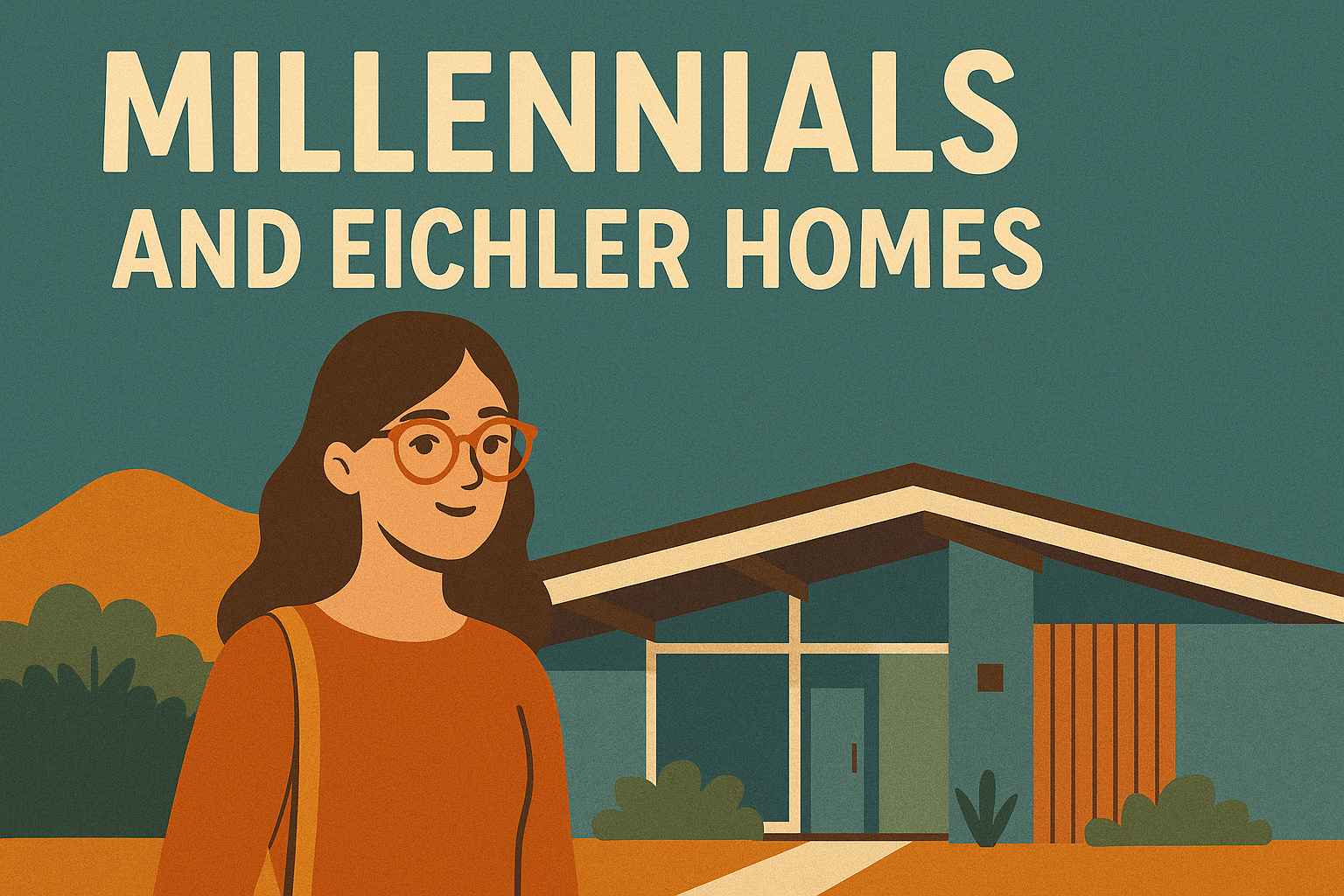
Why Millennials Are Choosing Eichlers in Silicon Valley
Eichler homes – those iconic mid-century modern houses with clean lines and glass walls – are experiencing a resurgence of interest thanks to millennial and Gen Z buyers in Silicon Valley. In classic Eichler enclaves from Palo Alto to Sunnyvale and Mountain View, a generational shift is underway. Older owners (often original mid-century residents) are selling, and younger tech professionals and families are eagerly snapping up these architectural gems. The appeal is multi-faceted: Eichlers offer a blend of vintage modernist design and California indoor-outdoor lifestyle that resonates deeply with 21st-century values. In Palo Alto, where Eichlers can now command up to $3 millionkqed.org, it’s clear these once-modest tract homes have become trophy properties for the next generation. Nearby cities like Sunnyvale and Mountain View – slightly more affordable – have likewise seen Eichler demand skyrocket, with limited inventory sparking bidding wars (often 10%+ above asking prices) patch.com. Millennials remain a driving force in this market, even as overall housing trends fluctuate; in Santa Clara County, for instance, they’re still the predominant homebuyers, with houses routinely receiving multiple offers patch.com. The stage is set: mid-century modern design is colliding with modern Silicon Valley lifestyles, and the result is a real estate love affair between millennials and Eichler homes.
Eichler Neighborhoods: Palo Alto, Sunnyvale, Mountain View and Beyond
Silicon Valley boasts several neighborhoods nearly synonymous with Eichler’s mid-century modern style. Palo Alto alone is home to over 2,700 Eichler houses, the highest concentration anywhere kqed.org. Tracts like Greenmeadow, Fairmeadow, Green Gables, and Charleston Meadow feature the tightly curved streets and flat-roofed profiles Eichler favored, many even designated historic districts. These communities – once sold to 1950s middle-class families for under $20k – now attract successful young buyers willing to pay premium prices to live the California modern dream. It’s nearly impossible to find an Eichler in Palo Alto under $1.7 million today, which has pushed some spillover demand into Sunnyvale and Mountain View, where Eichler and other mid-century modern tracts (like Sunnyvale’s Fairwood, Gavello Glen, Ponderosa Park, and Mountain View’s Monta Loma) offer similar style with a slightly lower price tag. In these “Eichler belt” neighborhoods, it’s common for tech employees from Google, Apple, or Facebook to compete for listings. Homes often receive numerous offers and sell 10–20% over asking as eager buyers seek a foothold in these design-rich communities. Despite the high prices, the draw is clear: great schools and parks (Sunnyvale’s elementary schools score 9/10, a big plus for young families patch.com), convenient access to tech job centers, and the chance to own an architecturally significant home. Local municipalities have even created Eichler-specific design guidelines and zoning overlays to protect the character of these neighborhoods kqed.org, underscoring how special and beloved they are. For millennials raised on HGTV and Instagram, moving into one of these picture-perfect mid-century enclaves isn’t just buying a house – it’s joining a storied community and embracing a piece of Silicon Valley’s architectural heritage.
Why Millennials Love Eichler Design and Lifestyle
A renovated Eichler home in Palo Alto exemplifies the mid-century modern style beloved by younger buyers – note the low-pitched post-and-beam roof, broad eaves, and clean horizontal lines blending into the landscape.
Step through the door of an Eichler and you’ll immediately sense what draws modern buyers in. Open floor plans and flexible layouts create an airy, loft-like feel that today’s buyers crave. Joseph Eichler and his architects pioneered the removal of unnecessary interior walls to connect the kitchen, living, and dining areas in one continuous space. For millennials who prioritize togetherness and informal living, this design is ideal – it encourages interaction and multi-purpose use of space, rather than formal, closed-off rooms. Your eye is drawn straight through the house by floor-to-ceiling windows and glass sliding doors that frame views of the backyard or an interior atrium kqed.org. That seamless indoor/outdoor flow is the hallmark of Eichler homes – “You know that phrase ‘indoor/outdoor living’? This is that,” quips one Eichler owner kqed.org. Current owners often say their favorite aspect is how the outside becomes part of the inside: the patio, atrium and backyard all feel like extensions of the living area, making the home live larger than its square footage dwell.com. Natural light pours in from walls of glass and numerous skylights, creating a bright, uplifting environment that aligns with modern wellness design (goodbye, dark and stuffy interiors of yesteryear!). Many Eichlers feature a central atrium courtyard, essentially a private open-air room in the heart of the house, which brings nature inside and serves as a calming retreat – a place to sip coffee among the plants or let kids play under the sky while still enclosed at home.
Beyond the glass and beams, there’s an authentic mid-century aesthetic that strongly appeals to younger buyers’ sense of style and nostalgia. Eichler homes appear modest and unadorned from the street – flat or low-pitched roofs, modest facades with natural wood or stone – but inside they wow you with bold modernist elements: exposed post-and-beam construction, polished concrete or terrazzo floors, and that iconic Philippine mahogany paneling (in well-preserved examples). The design is minimalist yet warm, “not overblown with all the fanciful accoutrements” of today’s McMansions dwell.com. For a generation that values authenticity, an Eichler offers genuine mid-century modern design (not a faux Tuscan or cookie-cutter suburban box) – it’s a home with an identity. As one design blog noted during an Eichler renovation tour, a thoughtfully updated Eichler can become a “modern, light-filled retreat that maintains its original Eichler charm while meeting the needs of a growing family” onekindesign.com. Millennials adore that balance of heritage and livability. The homes can be decorated with Eames chairs and indoor plants to complete the retro-modern vibe, giving owners serious Instagram bragging rights. In short, Eichler’s design ethos – open, light and airy spaces, honest materials, and integration with nature – aligns perfectly with what young buyers are looking for in a forever home.
Modern Values: Sustainability, Wellness, and Work-Life Flexibility
It’s not just about good looks – Eichler homes also align with many modern values and lifestyles. Remote work has become a norm for Silicon Valley professionals, and having a comfortable, inspiring home environment is more important than ever. Eichlers deliver on this need: the open layouts and expansive windows make for great home offices and creative studios filled with natural light. Instead of being cooped up in a dull spare bedroom, you could set up your desk facing an atrium full of greenery or a backyard maple tree. (Imagine taking your Zoom call with a view of your Zen garden in the atrium – talk about work-from-home goals.) Many Eichlers were originally built around family life, and that translates well to today’s work-life blending: parents working from the kitchen island can keep an eye on kids playing in the atrium; the post-and-beam construction means fewer interior load-bearing walls, making it easier to repurpose or open up spaces as needs change. One Palo Alto couple who downsized from a larger house back East found they “gained access to a large atrium, a front yard, [and] a backyard [usable] most months of the year” – and they didn’t miss the extra indoor space kqed.org. The Eichler lifestyle effectively extends the living area to the outdoors, providing healthy breathing room for remote workers to step outside, garden, or relax between emails without leaving home. This indoor-outdoor living pattern naturally encourages more movement, sunlight, and fresh air – all contributors to wellness, which health-conscious millennials appreciate.
Sustainability is another key value for younger buyers, and Eichler homes can be surprisingly eco-friendly – especially with a few upgrades. Many Eichlers are relatively modest in size (often 1,500–2,000 sq ft), which inherently means a smaller carbon footprint than a sprawling new mansion. The “experimental” design spirit of Eichler’s era included innovative (for the time) radiant floor heating and efficient use of space and materials dwell.com Today’s owners often build on that ethos by adding modern green features: insulating foam roofs (a popular retrofit that greatly improves energy efficiency on Eichler flat roofs), double-pane glazed walls to replace older single-pane glass, and solar panels that sit almost hidden on the broad flat rooflines. It’s not uncommon to find an Eichler with a Tesla in the carport charging from rooftop solar panels – a blend of mid-century and futurism that’s very Silicon Valley. In marketing Eichlers, agents note that this generation of buyers is “values-driven” and seeks homes that align with their principles eichlerhomesforsale.com. Showcasing any sustainable materials (e.g. cork or Marmoleum flooring), drought-tolerant landscaping, or smart home upgrades (smart thermostats, LED lighting, etc.) can resonate with millennial buyers who care about environmental impact and tech integration. An Eichler home that’s been respectfully modernized – say with an energy-efficient kitchen but still keeping the original post-and-beam ceilings – hits the sweet spot: it offers mid-century soul with 21st-century performance.
Perhaps most importantly, buying an Eichler is as much about identity and community as it is about the house itself. In an age where your home is a reflection of your personal brand, many millennials see an Eichler as an extension of their identity – a statement of appreciation for design, creativity, and even a bit of rebellion against bland suburbia. Joseph Eichler himself was a maverick who insisted on building inclusive communities (he famously sold to people of all races and religions in the 1950s, when many others would not). That legacy of diversity and community still echoes today. Eichler neighborhoods tend to be tight-knit; young newcomers are often delighted to find they’ve joined an established network of neighbors who hold block parties and book clubs, trade recommendations for Eichler-savvy contractors, and keep an eye out for each other. “You don’t just buy a home. You’re buying into a community!” as one Eichler owner put it, after experiencing the camaraderie of her Palo Alto Eichler tract kqed.org. This sense of community is rare in many modern developments and is highly attractive to buyers who grew up longing for a neighborly connection. Living in an Eichler also means engaging with a piece of California history – something that appeals to the authenticity-seeking mindset. Millennials often talk about wanting to be part of something real and meaningful; owning and preserving a classic Eichler home – with its distinctive design and backstory – allows them to do just that. As Eichler’s own grandson noted, these homes convey a “quality, value, and ethos” that spoke to buyers in the 1950s and still speaks to people today dwell.com. The bottom line: Eichler homes align beautifully with modern young buyers’ lifestyles, values, and desire for a home that’s more than just four walls – it’s a lifestyle and a statement.
Meet the New Eichler Owners: Profiles of Next-Gen Buyers
Who exactly are the millennials and next-gen buyers falling in love with Eichlers? They’re a diverse bunch, but a few profiles stand out:
First-Time Homebuyers: Some Eichler buyers are young professionals purchasing their very first home – albeit a far cry from a starter-home price point. These tend to be individuals or couples in their early 30s who have saved diligently (or perhaps benefited from tech IPO windfalls) and decided their first house should be something unique. They’re drawn to Eichlers for the “character that looks good” and aren’t interested in generic condos or tract homes. For them, an Eichler represents an investment in a home that will “improve their everyday life” – the design makes day-to-day living enjoyable. They might not have kids yet, so being in a hip mid-century neighborhood with nearby cafes or a short commute to work is more important than a huge yard. Often, they’re okay with the smaller square footage of an Eichler because the layout feels so open and they love having a cool space to entertain friends (indeed, many Eichlers have modernized gourmet kitchens perfect for dinner parties, which is a plus to these social buyers).
Dual-Income Tech Couples: A significant portion of new Eichler owners are dual-income couples working in tech – think software engineers, product managers, etc., often in their late 20s to 40s. With two Silicon Valley salaries, they have the buying power to compete for these homes, and they see value in Eichlers beyond just shelter. Many of them specifically seek out architecturally significant homes as a way to spend their hard-earned money on something personally meaningful. These buyers appreciate that Eichlers were ahead of their time – much like the innovation they pursue in their own careers. It’s no coincidence that Googlers, Apple and Facebook employees are frequently among Eichler bidders. A tech couple might say, “Why buy a sterile new build in a distant suburb when we can have a piece of design history 15 minutes from the office?” They often have an affinity for modern design (their furniture might be a mix of West Elm and authentic Eames pieces) and love how an Eichler’s open living area can accommodate both hosting a game night and setting up a work-from-home station. Being typically busy professionals, this group also leans towards move-in ready properties – they’d rather pay extra for an Eichler that’s already remodeled with updated electrical, a new roof, and maybe even smart-home features, than take on a fixer. As one Bay Area agent noted, “Millennials...want ‘move-in ready’ with all the bells and whistles... updated kitchen, smart home electronics, sustainable materials, and open, light spaces with an indoor/outdoor flow.” That perfectly describes a restored Eichler, and indeed many tech couples happily invest in homes where someone else has done a tasteful mid-century modern renovation.
Creative Professionals and Design Aficionados: Another subset of Eichler buyers are people in creative fields – designers, architects, artists, writers – or simply ardent mid-century enthusiasts. These buyers might be less driven by school districts or commute times and more by the emotional connection to the architecture. To them, owning an Eichler is like owning a classic piece of art or furniture. They adore the history (they can probably tell you the difference between an Anshen & Allen designed model vs. a Claude Oakland model) and often prefer homes in original condition that they can lovingly restore to Eichler’s vision. A creative couple might embrace an Eichler that others see as “dated” – they appreciate original features like globed pendant lights, Philippine mahogany walls, and even seek out vintage Thermador cooktops to maintain the mid-century integrity. Their motivation is as much about preserving authenticity as it is about personalizing the space. Silicon Valley’s ethos of innovation mixed with Eichler’s design gives them endless inspiration. Many in this group are okay with a project, as long as the bones (design) are there. They also value the Eichler community’s social aspect – they’re the ones likely to join the local Eichler Network, attend neighborhood home tours, and host retro cocktail parties under the post-and-beam ceilings. For them, the Eichler is a lifestyle and passion project, not just a home.
Young Families: Increasingly, millennial-aged families with children are choosing Eichler neighborhoods as an alternative to traditional suburban family hubs. It might seem counterintuitive – aren’t these homes “aging tract houses”? – but young families find a lot to love. First, the single-story layouts and open sightlines are great for keeping an eye on little ones. Parents can be cooking in the kitchen while watching the kids play in the atrium or family room without visual barriers. Many Eichler neighborhoods have community amenities that appeal to families: for example, Palo Alto’s Greenmeadow has a neighborhood swim club and park that becomes a social center for families. The community vibe (block parties, kids biking safely on cul-de-sacs) is a huge draw for parents who want a connected, friendly environment to raise children – something that can be hard to find in today’s busy world. Schools in areas like Palo Alto and Sunnyvale are high-quality, which is a practical bonus. A family of five that recently renovated a Palo Alto Eichler did so with “an emphasis on school proximity and nearby grandparents”onekindesign.com – reflecting how location and family lifestyle needs go hand-in-hand. These family buyers might compromise on having less indoor space than a two-story traditional home, because they gain bright, open areas where the family naturally spends time together. Also, having a yard visible through glass walls means kids get a blend of indoor comfort and outdoor play – a healthy environment with room to roam. Importantly, many of these millennial families want a home that inspires their kids, not just shelters them. Living in an Eichler, children grow up appreciating architecture, nature, and community. Parents in this group often do minor upgrades for comfort (insulating the floor, adding air conditioning or heating solutions for comfort for babies, etc.) but overwhelmingly they keep the essence of the home intact. They see themselves as stewards of a California architectural legacy that, in turn, offers their family a unique and enriching lifestyle.
Of course, not every buyer fits neatly into a category – and often a single Eichler household might be a combination (a tech professional married to a designer, for example). What unites all these next-gen buyers is a passion for design, a desire for a lifestyle-oriented home, and the means (or willingness) to invest in a piece of living history. Whether it’s the tech couple outbidding everyone for a turn-key remodeled Eichler, or the young family patiently waiting for the right house on a quiet court, these buyers are fundamentally motivated by the same thing Joseph Eichler offered in the 1950s: a different kind of home that embodies optimism, openness, and community.
How Sellers and Agents Can Market Eichlers to the Next Generation
Given the strong interest from millennial and Gen Z buyers, sellers and real estate agents have a prime opportunity – but also a challenge – to effectively market Eichler homes to this new audience. The next-gen buyer is savvy, discerning, and often inundated with options, so making an Eichler stand out (and educating those unfamiliar with them) is key. Here are some strategies for successfully marketing Eichler homes to today’s buyers:
Emphasize Design and Lifestyle in Marketing Materials: Millennials respond to storytelling and visuals. Highlight the design-forward features of the home in listings and flyers – talk about the open floor plan, the “wall of glass overlooking the garden,” the indoor-outdoor living potential, and any authentic mid-century details (exposed beams, original globe lights, etc.). Use high-quality, bright photography (and drone shots if appropriate) to showcase the unique architecture. A shot of the sunlit atrium or the living room opening to the backyard will instantly communicate what’s special about the home. Remember, this generation often decides whether to visit a house based on online photos and virtual tours they see on their phone. An Eichler, staged and photographed well, is scroll-stopping content. Additionally, consider providing a brief history or fun fact in the description (e.g. “Designed by famed mid-century architect Claude Oakland in 1962”). Many buyers love the idea that their home has a pedigree and story – it creates an emotional connection. As the Boyenga Team (Eichler-specialist agents) observed, younger buyers today seek “architecturally significant homes” that reflect their values eichlerhomesforsale.com, so lean into the fact that an Eichler is exactly that.
Stage for the Modern Minimalist Aesthetic: Staging an Eichler for sale is not like staging a generic suburban home. It’s crucial to accentuate the home’s mid-century modern roots while also showing adaptability to modern living. Sellers should opt for minimalist, tasteful furniture that complements the home’s lines – think low-profile couches, a Nelson bench, geometric area rugs, and plenty of indoor plants to bring warmth. Avoid clutter that would break up the openness. Set up areas to illustrate the Eichler lifestyle: a home office nook with a view (to tap into the remote work appeal), a cozy reading corner by the floor-to-ceiling window, or an outdoor lounge in the atrium with string lights to suggest evening entertaining. Such touches help buyers viscerally imagine the life they could have here. If the original mahogany walls are intact, consider leaving them exposed and styling them with appropriate art – authenticity is a selling point (you’re selling character, not just drywall!). For agents, hosting a themed open house can be fun and effective: e.g., play some Frank Sinatra or bossa nova in the background and serve mid-century-inspired refreshments, creating an ambiance that celebrates the home’s era. This isn’t just a property, it’s an experience – the goal is for potential buyers to fall in love the moment they step inside and see that sun streaming through the atrium.
Address Maintenance and Upgrades Proactively: While many younger buyers adore Eichlers, they may have concerns about an older home’s practicality. Wise sellers and agents can turn potential negatives into positives with the right approach. If the home has seen significant updates – new roof, updated insulation, modern heating/cooling, electrical panel upgrade, etc. – tout those improvements clearly. Mention if the dreaded Eichler radiant heat has been updated or supplemented, or if there’s a new foam roof that improves energy efficiency (which can save energy costs by 30-50%, a great talking point for eco-conscious buyers). If solar panels or an EV charger are installed, highlight them as green upgrades. This way, buyers know they’re not inheriting a costly project. For items not updated, consider providing quotes or plans to show it’s manageable. For example, if the home needs a window upgrade, an agent might have a brochure on hand for double-pane replacements that preserve the original look. Given that “millennial buyers look for homes with little or no work needed”, making an Eichler as move-in ready as possible will expand your buyer pool and potentially raise your sale price. However, balance is key – don’t erase the Eichler character in the name of “updating.” Many agents have found success marketing lightly renovated Eichlers – those that fix functional issues but keep the original charm. For instance, retaining the open-air atrium rather than enclosing it, or refurbishing the original kitchen cabinetry with modern appliances, preserves the soul of the home while meeting modern expectations. Communicate to buyers that this home offers the best of both worlds: mid-century soul and modern comfort.
Leverage Digital Marketing and Tech-Savvy Outreach: To reach millennial and Gen Z buyers, meet them where they are – online. Utilize social media platforms like Instagram, Facebook, and even TikTok to showcase the home with video walkthroughs, drone shots of the neighborhood, and before-and-after renovation stories if available. Eichler homes are visually striking; a well-composed Instagram post of an atrium at golden hour or a TikTok video titled “5 Cool Features of this Palo Alto Eichler” can generate buzz far beyond the usual MLS listing. Encourage current owners to share what they love about the home on a Facebook neighborhood group or Nextdoor – authentic testimonials can be very persuasive. Additionally, be prepared to communicate quickly and transparently; younger buyers expect swift responses and are comfortable with text or email. Virtual tours and 3D walkthroughs (using Matterport or similar) are almost expected at this point – they allow remote or busy buyers to explore the house on their own time. Given that many millennials will spot listings via alerts on their phone, ensure your Eichler listing is mobile-friendly and stands out with a catchy title like “Mid-Century Modern Marvel in Monta Loma” or an emoji or two (🌴✨) in the social media teaser. Agents might also tap into niche markets by advertising in mid-century modern enthusiast forums or working with Eichler specialist realtors who have mailing lists of interested buyers. The tech crowd, especially, will appreciate a high-tech home-buying experience (one reason programs like virtual “Buy Before You Sell” have gained traction eichlerhomesforsale.com). By blending the old (the home itself) with the new (modern marketing methods), you can generate excitement that draws the right eyes to the property.
Sell the Community and Lifestyle Benefits: When marketing an Eichler, it’s not just about the house – it’s about the neighborhood and lifestyle that comes with it. Make sure to highlight any community features: is there a neighborhood association that hosts BBQs or a 4th of July parade? Is there a local park, community center, or pool that residents can enjoy? Many next-gen buyers are explicitly looking for a sense of community and belonging. Mention things like “friendly Eichler neighborhood with annual block party” or “join a community of Eichler enthusiasts who take pride in their homes.” If the area has good schools or a convenient location (many Eichler tracts are near amenities or have easy commute routes), tailor that to the likely buyer: e.g., “Walking distance to top-rated elementary school” for family-oriented marketing, or “Bike to Google campus in 15 minutes” for a young tech couple. Don’t shy away from pointing out the unique support network that comes with an Eichler as well – for example, the fact that there are established resources (like Eichler Network directories of contractors, or local Facebook groups) can assure buyers that they won’t be alone in maintaining a mid-century home. Essentially, you’re painting a picture that owning this home isn’t just a transaction; it’s entry into a welcoming lifestyle. Given how “more than half of new home buyers in Santa Clara come from within the county”, tapping into local pride and word-of-mouth is crucial patch.com. An agent might even organize an Eichler homes tour day or partner with a local Eichler expert to educate prospective buyers on the history and care of these homes – transforming the marketing process into an engaging event. This kind of added value can make an Eichler listing really shine compared to the usual open house.
In summary, marketing Eichlers to the next generation requires a mix of education, inspiration, and practical reassurance. You want to inspire buyers with the vision of the stylish, joyful life they could lead in the home (sunny brunches in the atrium, kids playing freely, chic dinner parties under the stars visible through the skylights) and at the same time address any hesitations by showing that the home is a sound investment that’s been well cared for. Millennials will pay a premium for the right property, especially when it aligns with their identity and values. With Eichler homes, sellers have exactly that kind of product – it’s just a matter of communicating the full package. Do that successfully, and you’ll tap into a wave of eager next-gen buyers who will cherish these homes for decades to come, continuing Joseph Eichler’s legacy of modern living.
The Eichler Legacy, Carried Forward
What we’re seeing in Silicon Valley is more than just a trendy niche in real estate – it’s a generational handoff of a modernist legacy. Millennials and Gen Z buyers are infusing new energy into Eichler neighborhoods, ensuring these mid-century modern icons are not only preserved but also refreshed for the 21st century. The enthusiasm of young buyers “buying by the truckload,” to borrow a phrase, means Eichler homes will grace the Bay Area for many years, lived in and loved by families with new ideas and lifestyles. This generational shift speaks to the timeless appeal of good design: the same “boldness, change, and optimism” Eichler built into these homes in the 1950s are exactly what today’s buyers are looking for in 2025. In an era where technology often pulls people into virtual spaces, the analog joys of an Eichler – sunshine on your living room floor, neighbors chatting over the back fence, the silhouette of a palm tree through the clerestory windows – have become precious.
For Silicon Valley, a region synonymous with rapid change and innovation, it’s poetic that a 70-year-old housing style is capturing the imagination of the next generation. Young professionals who spend their days working on futuristic tech are coming home to classic post-and-beam houses and finding they offer something deeply modern: authenticity, community, and a connection to nature and history. Real estate analysts once wondered if these aging mid-century houses would survive in the land of wealth and teardown McMansions, but the answer is now clear. With passionate new stewards at the helm, Eichler homes are not only surviving – they’re thriving. The mid-century utopia Eichler dreamed up – “distinctive design and that definite sense that you’re living the California Dream” kqed.org – is alive and well, nurtured by millennials who have made that dream their own.
In the end, the story of millennials and Eichler homes is a story of continuity amidst change. Styles and generations evolve, but the core desire for a home that inspires and nurtures us is constant. Joseph Eichler’s vision has proven remarkably adaptable to modern needs, and that’s why a new generation has claimed it. As more next-gen buyers unlock the front doors of their first Eichler, you can almost imagine Joe Eichler smiling, knowing that the optimism and inclusivity he built into those homes are finding new life. The torch has been passed – and the glow from those floor-to-ceiling windows is as bright as ever.
Sources:
San Jose Spotlight/Joint Venture Silicon Valley – Millennials as predominant buyers in local markets (Santa Clara, Sunnyvale)patch.com
KQED News – “How Joseph Eichler Introduced Stylish Housing for the Masses” (Palo Alto Eichler stats, design discussion, and owner perspectives)kqed.orgkqed.orgkqed.orgkqed.orgkqed.org
Dwell Magazine – Interview with Steven Eichler (indoor-outdoor living appeal)dwell.com
OneKindesign – Palo Alto Eichler renovation feature (example of modernized Eichler meeting family needs)onekindesign.com
EichlerHomesForSale (Boyenga Team) – Commentary on millennial and Gen Z demand for architectural homeseichlerhomesforsale.com
Palo Alto Online/Palo Alto Weekly – local real estate trend reports (boomers vs millennials share)patch.com and historical context on Eichler neighborhoods.