
Tech Titans and Eichler Homes: Why Compass’s Tech Buyers Win Silicon Valley’s Mid-Century Gems
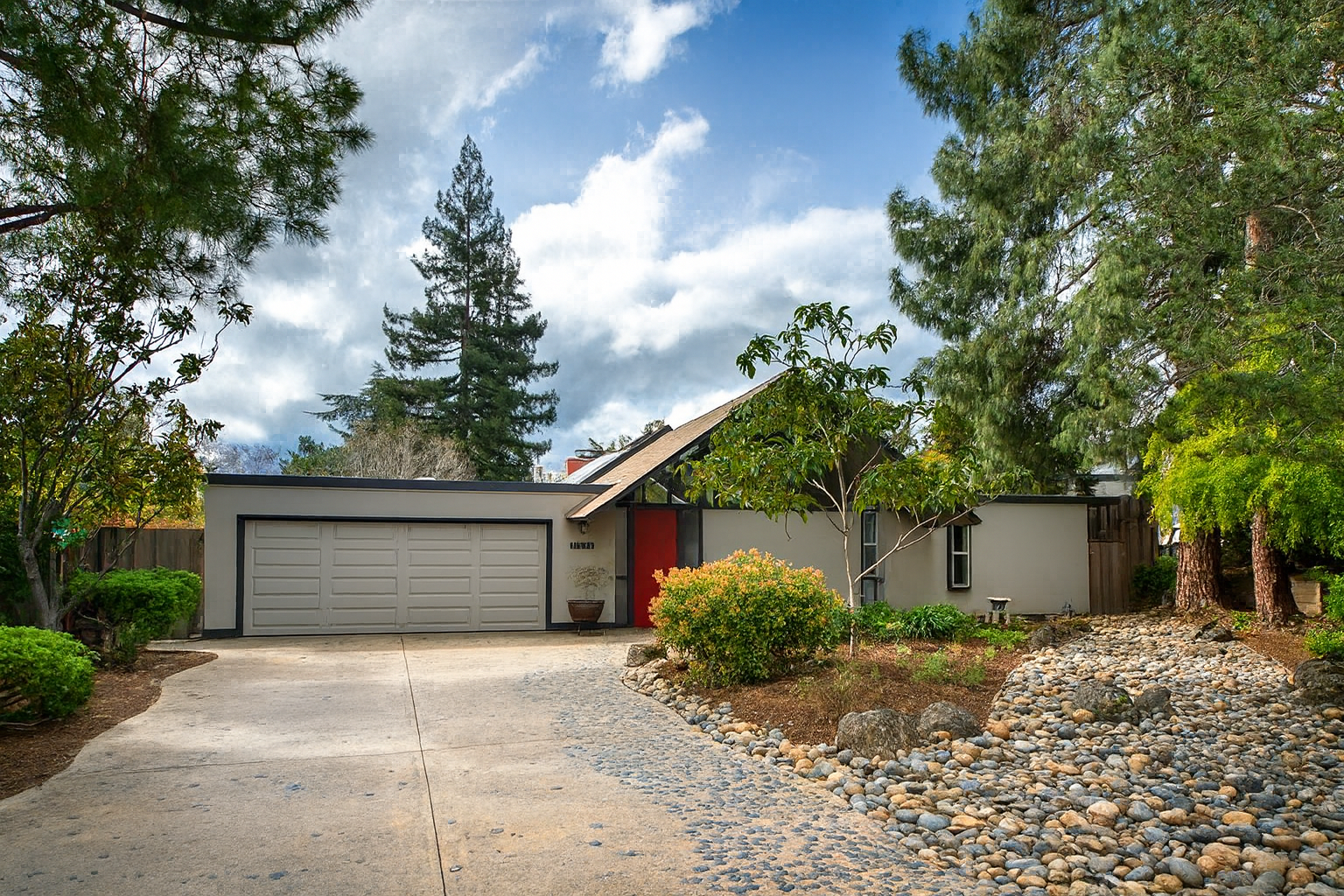
Eichler homes – the iconic mid-century modern houses characterized by open atriums, post-and-beam design, and seamless indoor-outdoor flow – have become highly coveted in Silicon Valley’s real estate market. Once built as affordable tract homes in the 1950s–60s, Eichlers are now trophy properties, often commanding prices well into seven figures. Demand is especially strong among tech industry professionals. In Silicon Valley’s “Eichler belt” neighborhoods (Palo Alto, Sunnyvale, Mountain View, etc.), it’s common to see employees from Apple, Google, Meta (Facebook), and Nvidia competing for these design-forward homes. In fact, many of today’s Eichler buyers are high-earning tech couples and executives, whose financial resources and strategic approach (often aided by Compass’s data-driven realtors) give them an edge in successfully acquiring these homes even amid fierce competition. This report examines the factors behind this trend – from buyer profiling and compensation patterns to design preferences and location choices – and how Compass’s tech-industry clients leverage their advantages to win Silicon Valley’s mid-century modern gems.
Eichler Homes in Silicon Valley: A Market Overview
Joseph Eichler’s legacy is deeply embedded in the Bay Area: over 11,000 Eichler homes were built in California, with the largest clusters in Silicon Valley. Palo Alto alone boasts over 2,700 Eichlers – the highest concentration anywhere – while Sunnyvale has about 1,100 Eichlers, the second-largest population of these homes. Other South Bay cities like San Jose (Willow Glen area), Mountain View, Cupertino, and Santa Clara host smaller Eichler tracts (ranging from a few hundred down to a single tract of ~225 homes in Cupertino’s Fairgrove neighborhood) eichlerhomesforsale.com.
Key Eichler Enclaves Near Major Silicon Valley Tech Employers
Apple (Cupertino)
Nearby Eichler neighborhoods:
Fairgrove Eichler tract in Cupertino (~225 homes)
Multiple Sunnyvale Eichler tracts (~1,100 homes)
Appeal:
Minutes from Apple Park
Access to top-rated Cupertino and Sunnyvale schools
Extremely high demand among Apple engineers
Google (Mountain View)
Nearby Eichler neighborhoods:
Monta Loma, Fairview, and surrounding Mountain View modernist tracts (~275 homes)
Appeal:
Quick 5-mile commute to the Googleplex
More attainable pricing than Palo Alto
Ideal for bike-commuting Googlers
Meta (Facebook) – Menlo Park
Nearby Eichler neighborhoods:
Palo Alto Eichler districts such as Greenmeadow, Midtown, and Charleston Meadows (2,700+ homes)
Appeal:
Only 5–8 miles from Meta’s Menlo Park HQ
Menlo Park contains very few Eichlers, so employees target Palo Alto and parts of Redwood City
Strong school districts and classic Eichler communities
Nvidia (Santa Clara)
Nearby Eichler neighborhoods:
Pomeroy West & Pomeroy Green Eichler townhome communities (~250 homes)
Additional single-family Eichlers near the Santa Clara–Cupertino border
Appeal:
2–3 miles from Nvidia’s Santa Clara headquarters
Unique Eichler townhome architecture
Close to other major chip employers (Intel, AMD)
Figure Summary
Palo Alto holds the largest Eichler concentration (~2,700 homes), followed by Sunnyvale (~1,100 homes).
These clusters align directly with the homebuying patterns of employees from Apple, Google, Meta, and Nvidia — creating the modern “Eichler belt” of Silicon Valley
Figure: Distribution of Eichler homes by city in Silicon Valley, with colors highlighting tech-company associations (Apple in Sunnyvale/Cupertino, Google in Mountain View, Meta near Palo Alto, Nvidia in Santa Clara). Palo Alto’s ~2,700 Eichlers are the largest cluster, followed by Sunnyvale’s ~1,100; these coincide with preferred residential areas for employees of nearby tech giants.
Pricing and competition: Eichler homes have appreciated dramatically as tech wealth pours into these areas. In Palo Alto, Eichlers routinely sell for $2–3 million (in some cases more), and it’s virtually impossible to find one under ~$1.7M now. Even in slightly more affordable markets like Sunnyvale or Mountain View, limited inventory and high demand spark bidding wars, with homes often selling 10–20% above asking price after attracting multiple offers. Millennials and young families in tech remain a driving force, keeping the market competitive despite broader housing fluctuations. For example, in Santa Clara County (the heart of Silicon Valley), 68% more homes priced $5M+ sold in 2024 vs 2023, a surge attributed largely to tech-driven wealth and demand . In this high-stakes environment, Eichler buyers need both deep resources and smart strategies to prevail – a combination often epitomized by well-paid tech employees working with Compass’s seasoned Eichler-specialist agents.
Profile of Tech Eichler Buyers: High-Earning, Design-Savvy, and Strategic
A significant portion of new Eichler owners are dual-income tech couples – e.g. software engineers, product managers – typically in their late 20s to 40s. With two Silicon Valley salaries (often augmented by stock equity), these buyers have the financial firepower to compete and are willing to invest big in a home that reflects their values. They are not just looking for shelter; many specifically seek architecturally significant homes as a meaningful way to spend their earnings. As one Eichler-focused agent observed, “Younger buyers today seek ‘architecturally significant homes’ that reflect their values” – a description that Eichlers certainly fulfill.
Behavioral profile: Tech buyers tend to be analytical and data-driven in their approach (befitting their professions), which aligns well with Compass’s tech-enabled real estate tools and market analyses. They often monitor sales trends, school ratings, and commute times meticulously before deciding on a neighborhood. Many have an affinity for mid-century modern design and see Eichler homes as “ahead of their time – much like the innovation [they] pursue in their own careers”. It’s no coincidence that Googlers and Apple/Facebook employees are frequently among Eichler bidders. One can imagine a tech couple reasoning: “Why buy a sterile new build in a distant suburb when we can have a piece of design history 15 minutes from the office?”. This mindset highlights a key preference – they prioritize proximity to work and an interesting design over sheer size or a short-term bargain in a far-flung area.
Competitive tactics: Tech buyers in this arena know they must act decisively. Being busy professionals, they often favor move-in-ready Eichlers that have been tastefully updated – and they’re willing to pay a premium for it. Rather than take on a fixer-upper project, a time-strapped engineer will gladly spend extra for an Eichler that already features a new roof, updated electrical, modern kitchen, and even smart-home integrations. In multiple-offer situations, these buyers tend to put their best foot forward: large down payments (or all-cash offers in some cases), waived contingencies, and flexibility on closing terms. Their tech stock windfalls play a role here – for instance, surging stock prices have given many tech employees the capital for huge down payments, making them less sensitive to high mortgage rates. One 2024 market report noted that employees with valuable stock were “less fazed by consistently high mortgage rates, and could make large down payments,” allowing them to win homes despite expensive financing. In short, these buyers leverage their economic advantages (big incomes, stock equity) and strategic savvy to beat out the competition.
Tech Industry Relocation and Compensation Patterns Fueling Eichler Demand
Silicon Valley’s tech giants are continually importing talent, and this constant influx of highly-compensated professionals feeds the housing demand near their campuses. As Apple, Google, Meta, Nvidia, and others have grown, they’ve attracted thousands of new engineers and executives to the Bay Area – many of whom eventually turn from renting to buying. Companies often offer relocation packages that cover temporary housing or closing costs, easing the transition for newcomers eyeing homeownership. With median tech salaries well into six figures (not to mention lucrative stock grants), a new hire at Apple or Google can realistically consider purchasing a home in the $1–3M range after a couple of years of employment or an IPO/stock vesting event. Indeed, in Cupertino (Apple’s hometown), the median household income now exceeds $200,000 – a dramatic indicator of how many affluent tech workers reside there. This ultra-high-income demographic directly translates into robust demand for high-priced homes, including Eichlers, which often fall in the luxury price tier in today’s market.
Another pattern is mobility within the tech sector. Employees commonly transfer between Bay Area companies or move from satellite offices to headquarters. For example, an Nvidia engineer from out-of-state might relocate to Santa Clara, or a Meta employee might move from Seattle to Menlo Park – each relocation representing a well-paid buyer entering the local market. These buyers typically want housing immediately (often motivated by new-job timelines or expiring corporate housing), and Eichler neighborhoods near the campus are prime targets if they appreciate modernist style. Compass agents report that many incoming tech buyers gravitate straight to known Eichler enclaves, informed by colleagues or online research that these areas offer both convenience and architectural charm. The result is a steady pipeline of eager, qualified buyers funneling into Eichler-rich neighborhoods year-round, keeping competition intense.
Crucially, stock-based compensation has amplified purchasing power. During the 2020–2024 tech boom, soaring stock valuations (e.g. Nvidia’s stock rising ~90% in 2024) created sudden wealth for employees, enabling down payments that outmatched those of non-tech bidders. A Compass market report noted that in Santa Clara County (home to Nvidia, Intel, Google), “major stock option increases [have] give tech employees the capital to buy luxury homes”. In practice, this means an engineer who’s been at a company through a stock upswing can readily put 40% down in cash or even buy outright – a huge advantage in a bidding war. Tech firms also tend to have employee homebuyer assistance programs or partnerships with real estate services (Compass is often a beneficiary of such referrals), streamlining the purchase process for their workers. All these factors make tech employees unusually well-equipped – financially and logistically – to acquire desirable homes like Eichlers quickly.
Architectural and Lifestyle Preferences: Why Tech Buyers Love Eichlers
Beyond financial means, why are Apple/Google/Meta/Nvidia employees drawn to Eichler homes? The answer lies in the unique lifestyle and design these homes offer, which resonates strongly with modern tech professionals:
Mid-Century Modern Aesthetic: Eichlers are celebrated for their clean lines, minimalist facades, and honest use of materials – a refreshing contrast to cookie-cutter McMansions or generic tract homes. Tech buyers, often design-conscious, value this authenticity. Many furnish their Eichlers with Eames chairs, Noguchi tables, and a mix of vintage and modern décor, embracing the “Mad Men” vibe with a Silicon Valley twist. There’s even a bit of status symbolism at play: owning an Eichler signals appreciation for innovation and history, which fits the ethos of tech culture. As one article quipped, Eichler owners get serious “Instagram bragging rights” for their photogenic atriums and retro-modern style.
Open, Flexible Interiors: The hallmark Eichler open floor plan – where kitchen, living, and dining areas flow together – aligns perfectly with contemporary living. Tech workers often cite collaboration and openness as values in their work life, and they seek the same at home. Stepping into an Eichler can feel like entering a loft-like modern space: “unnecessary interior walls” are removed to create one continuous living area, ideal for entertaining or family togetherness. A young software engineer couple might love that they can cook, dine, and lounge in one connected space while streaming music over WiFi, rather than being compartmentalized into formal rooms. Additionally, Eichler’s trademark floor-to-ceiling glass walls and central atriums flood the home with natural light and blur the line between indoors and outdoors. For buyers used to sleek tech offices with large windows and collaborative spaces, this home environment feels both inspiring and conducive to the remote-work era. (It’s easy to set up a Zoom home office facing an atrium garden and feel more creative and calm.)
“California Living” Lifestyle: Eichler neighborhoods often come with an appealing lifestyle package – something tech buyers with young families or pets appreciate. Many Eichler tracts feature parks, community pools, or quiet cul-de-sacs where kids can play safely. The indoor-outdoor living emphasis (private patios, backyards visible through glass walls, open-air atriums) suits the Bay Area climate and wellness trends. Tech employees working long hours love the idea of returning to a home where they can BBQ in an inner courtyard or relax by a pool under mid-century breeze blocks. It’s a haven that supports work-life balance: instead of a long commute from a distant suburb, they can spend evenings in their stylish Eichler backyard oasis just minutes from campus. As a bonus, Eichler neighborhoods foster community – original design elements like communal spaces and the lack of front-facing windows encourage neighborly interactionheritageparkmuseum.org. This appeals to tech transplants seeking a sense of belonging; moving into an Eichler tract often means inheriting a built-in community (with neighborhood potlucks, mid-century home tours, etc.), easing the social transition for newcomers.
In summary, Eichler homes check all the boxes for many tech professionals: design innovation, modern convenience, community vibe, and proximity to nature (via all that glass and greenery) – all within a short drive or bike ride of Silicon Valley’s major campuses. It’s a lifestyle upgrade that feels tailor-made for the Silicon Valley elite.
Neighborhood Trends: Proximity to Campus as a Driving Force
One striking pattern is how each tech company’s employees gravitate to Eichler-heavy neighborhoods near their respective workplaces. Convenience is king – in notorious Bay Area traffic, a 15-minute commute can be the difference between a balanced life and hours wasted on the freeway. Compass’s data on homebuyer search patterns show that many tech buyers draw a circle around their office on the map and start house-hunting within that radius. Consequently, we see micro-clusters of tech-affiliated Eichler buyers in different Silicon Valley cities:
Apple (Cupertino/Sunnyvale): Apple’s headquarters, the spaceship-like Apple Park in Cupertino, is surrounded by Eichler enclaves. The Fairgrove Eichler tract (225 homes) lies in southeast Cupertino not far from campuseichlerhomesforsale.com, making it a top choice for Apple engineers who want to bike or drive just a few miles to work. Adjacent Sunnyvale, immediately north of Cupertino, offers multiple Eichler tracts (e.g. Fairbrae, Rancho Verde, Cherry Chase) within a 5–8 mile commute of Apple Park. Apple employees have indeed flocked to Sunnyvale – a city known for excellent schools and services – which is “one of the most popular destinations for Eichler buyers” in part due to its proximity to major employersatriare.comatriare.com. Notably, Apple’s connection to Eichlers goes back to the beginning of Silicon Valley: Steve Wozniak grew up in a Sunnyvale Eichler, and many early Apple employees lived in the area, cementing a cultural affinity for these homes. Today’s Apple staff continue that trend, often outbidding others for Sunnyvale Eichlers that offer mid-century style plus a short commute down Homestead or Wolfe Road to the Apple campus.
Google (Mountain View): Google’s Googleplex campus in Mountain View is another Eichler-adjacent hub. The Monta Loma neighborhood in Mountain View – a 1950s modern tract similar in style to Eichlers – and nearby Miramonte/Fairview Eichler tracts are magnets for Googlers. These areas are literally minutes from Google’s main office and future expansions, allowing employees to swap a grueling highway commute for a quick bike ride on the Stevens Creek Trail or a local street. Although Mountain View has fewer Eichlers (roughly 270 mid-century homeseichlerforsale.com), the limited supply means Google buyers compete aggressively when one hits the market. It’s common for a Mountain View Eichler listing to receive multiple offers from Google or LinkedIn employees who live in company-rented apartments and are eager to put down roots near HQ. When Mountain View inventory is exhausted, Google families also look to south Palo Alto or north Sunnyvale, which are one or two Caltrain stops away. The result is a heatmap of demand centered on Mountain View and radiating outward – closely mirroring Google’s office footprint.
Meta/Facebook (Menlo Park/Palo Alto): Meta’s headquarters in Menlo Park sits in a region with fewer Eichlers, but employees make up for that by targeting nearby Palo Alto and even Redwood City. Menlo Park’s housing stock is a mix of older ranches and new builds (with only a smattering of Eichler or Eichler-like homes in pockets such as the Stanford Hills area). Thus, many Meta professionals turn to Palo Alto, just across Highway 101, which as noted has the largest Eichler collection (neighborhoods like Greenmeadow, Midtown, and Charleston Meadows are about a 10–15 minute drive from Meta’s campus). These areas are very desirable – offering both the Eichler lifestyle and top Palo Alto schools – so Meta employees often face stiff competition from each other and from Stanford academics or Google/Apple buyers for the same homes. It’s not uncommon for a well-renovated Palo Alto Eichler to receive offers from multiple Facebook engineers. Some Meta folks also explore Redwood City, which has a few small Eichler tracts (e.g. Atherwood) on the west side of townatriare.com. Though farther (Menlo Park to west Redwood City is ~6–8 miles via surface streets), these neighborhoods can be slightly more affordable and still within a reasonable commute to Meta’s campus in Menlo Park or the auxiliary campus in Redwood City. In effect, Meta’s Eichler buyers form a ring around Menlo Park – with a strong preference for Palo Alto’s cachet and convenience, and a secondary node in Redwood City.
Nvidia (Santa Clara): Nvidia’s rise (especially with the recent AI boom) has brought attention to Santa Clara’s Eichler communities. Santa Clara is home to the only Eichler townhouses ever built – the Pomeroy West and Pomeroy Green complexeseichlernetwork.com – which are conveniently located near Lawrence Expressway and Benton St., just a short drive from Nvidia’s headquarters on San Tomas Expressway. These mid-century modern townhomes (built by Eichler in the 1960s) offer a comparatively attainable entry point into Eichler living, and have seen an influx of young tech professionals. Nvidia employees – along with those from nearby Intel and other chip companies – have been snapping up units in Pomeroy West/Green when available, attracted by the 5-minute commute and the Eichler aesthetic (atriums and glass, even in a townhome setting) they can get for well under the price of a Palo Alto Eichler. Beyond Pomeroy, Santa Clara has a few single-family Eichlers in the Rancho Rinconada area (on the Cupertino border)eichlerforsale.com, which likewise appeal to Nvidia folks who want a detached home near work. Santa Clara’s overall home sales have been surging at the high end, with record numbers of $5M+ transactions in 2024mansionglobal.com – a trend fueled in part by Nvidia’s own stock success creating new millionaires. The pattern is clear: Nvidia’s workforce is driving demand in Santa Clara’s nicer pockets, Eichler neighborhoods included.
(In addition to the above, it’s worth noting that many tech buyers choose Eichler communities for practical reasons as well: these neighborhoods often boast excellent schools (e.g. Cupertino and Sunnyvale’s districts score 9/10 or above), and they’re centrally located in Silicon Valley, allowing dual-working couples to each be a reasonable distance from different company campuses. The “Eichler belt” roughly follows the Peninsula/South Bay tech corridor, which maximizes flexibility for households employed at multiple firms.)
The Compass Advantage: Data-Driven Strategy in a Niche Market
Navigating the Eichler market’s intense competition requires more than just money – it requires local expertise, strategic insight, and sometimes insider access. This is where Compass and its Eichler-specialist agents (such as the Boyenga Team, known as “the Property Nerds”) provide a key edge to tech buyers. Compass’s approach in Silicon Valley’s mid-century niche can be summarized in two words: data and network.
Data-driven decisions: Compass agents leverage analytics to guide tech buyers on pricing and offer strategy. In a market where paying 15% over asking is often necessary, it’s critical to know exactly how far to go. The Boyenga Team, for example, performs “granular, hyper-local market analysis” down to specific Eichler tracts and even streets. They advise clients with detailed comps, trend graphs, and even school boundary effects on value. A Compass agent might tell a Google engineer couple: “Greenmeadow Eichlers are averaging 12% over list this year, and three offers on average – we should prepare a pre-emptive offer at $X to beat the crowd.” This level of precision instills confidence in tech buyers who are used to making decisions based on data. It’s no surprise these clients often describe their Compass agents more like strategic partners than salespeople. The Boyenga Team’s moniker “Property Nerds” itself reflects an analytical, consultative style that resonates with Silicon Valley buyers. By using proprietary Compass market intelligence tools and AI-driven insights, agents help tech buyers decide when to aggressively bid and when to walk away – ensuring they secure their dream Eichler at a fair (if high) price without succumbing to purely emotional bidding wars.
Exclusive listings and networks: In an inventory-scarce arena, finding the home before it hits the market can make all the difference. Compass excels here through its extensive agent network and “Coming Soon” marketing. Top Compass Eichler agents often have a pipeline of off-market “pocket” listings – homeowners who are willing to sell but haven’t formally listed. They tap into this network to give their buyer clients first crack at coveted properties. For instance, the Boyenga Team notes that in an exclusive market like Cupertino 95014, “access to properties before they hit the broader market is paramount,” and they frequently provide clients exclusive access to pre-market Eichlers. Tech buyers from Apple or Meta working with Compass have consequently been able to tour and secure Eichler homes via private sales, facing zero competition by acting early – a huge win when public listings would have drawn multiple offers. Additionally, Compass’s culture of collaboration means an agent in Palo Alto can quickly reach out to colleagues in Menlo Park or Sunnyvale to sniff out any upcoming Eichler sales, leveraging an internal Compass referral system to match buyers and sellers quietly. This interconnected network is something a solo homebuyer simply can’t replicate on their own using Zillow or Redfin.
Tactical negotiation and concierge services: Even after finding the right house, closing the deal in a hot market requires skill. Compass agents pride themselves on crafting compelling, often data-backed offers that stand out in a stack of 10+ bids. They might prepare offer packages highlighting the buyer’s excellent credentials (e.g. stable employment at a Fortune 500 tech firm, large down payment, etc.) and include personalized letters to appeal to Eichler owners who often care about their home’s legacy. Eric and Janelle Boyenga, for example, use analytical rigor to advise on offer terms, and their team “craft[s] highly compelling offers that stand out,” navigating intense bidding wars to secure their buyers’ homes at the best possible terms. Their success rate with tech buyers is high in part because they know how to differentiate an offer beyond just the dollar amount, sometimes identifying seller needs (like rent-backs or flexible closing dates) that their buyers can accommodate due to corporate housing or other resources. Moreover, Compass offers programs like Compass Concierge, fronting the cost of home improvement or staging for sellers. This has an indirect benefit for buyers too: Compass-listed Eichlers often come to market already optimized (repaired, staged, and attractively presented), which increases the chances of a smoother transaction (fewer condition surprises) for the ultimately successful buyer. Compass’s tech-savvy marketing (3D Matterport tours, virtual open houses) also means busy tech employees can evaluate properties quickly and remotely, sometimes putting in offers sight-unseen if necessary to beat the competition.
All these factors translate into higher success rates for Compass clients in acquiring Eichler homes. Indeed, Compass’s internal metrics show that their buyers in Eichler neighborhoods often prevail even when they aren’t the highest bid, thanks to superior offer terms and agent reputation in the local agent community. In a “sophisticated, high-stakes environment” like Silicon Valley real estate, having “unparalleled representation” is not just an advantage but “absolutely essential for success,” as the Boyenga Team emphasizes. Tech buyers employed at Apple, Google, Meta, Nvidia, etc., recognize this, which is why so many partner with Compass – a brokerage that mirrors their own ethos of innovation and strategic thinking. The result: a notable number of Eichler keys end up in the hands of Compass-represented tech professionals.
Convergence of tech industry
The convergence of tech industry wealth, lifestyle preferences, and strategic real estate services has made Silicon Valley’s Eichler market the domain of the modern tech elite. Buyers from Apple, Google, Meta, Nvidia and their peers bring the means (high incomes, stock equity) and the motive (love of design, desire for convenience) to aggressively pursue these mid-century modern treasures. Backed by Compass’s data-driven approach and insider market access, they have tilted the odds in their favor – often winning bidding wars and off-market deals that less prepared or less funded buyers cannot. The outcome is a fascinating socio-economic phenomenon: neighborhoods of flat-roofed 1950s homes now populated by 21st-century tech titans. In these Eichler enclaves, one can see Teslas in carports designed 60 years ago, and families of coders enjoying cocktail hours in open-air atriums, carrying forward Joseph Eichler’s legacy of innovative living. Silicon Valley’s Eichler love affair shows no sign of abating, as long as the tech boom continues to mint enthusiasts who appreciate that in this fast-paced digital era, an old-modern Eichler home can perfectly embody both innovation and comfort – and for those determined buyers, that mix is worth every effort and dollar it takes to attain.
Sources: Silicon Valley Eichler market data and trends from Boyenga Team/Compass reports; buyer behavioral insights from Eichler Homes for Sale blog; tech compensation and relocation impact from Compass and Mansion Global reports; Eichler neighborhood details from Heritage Park Museum and Eichler Network resources eichlerhomesforsale.com; and Compass marketing/strategy highlights from Boyenga Team materials.