
The Ultimate Eichler Buyer’s Checklist: 25 Things to Inspect Before You Fall in Love
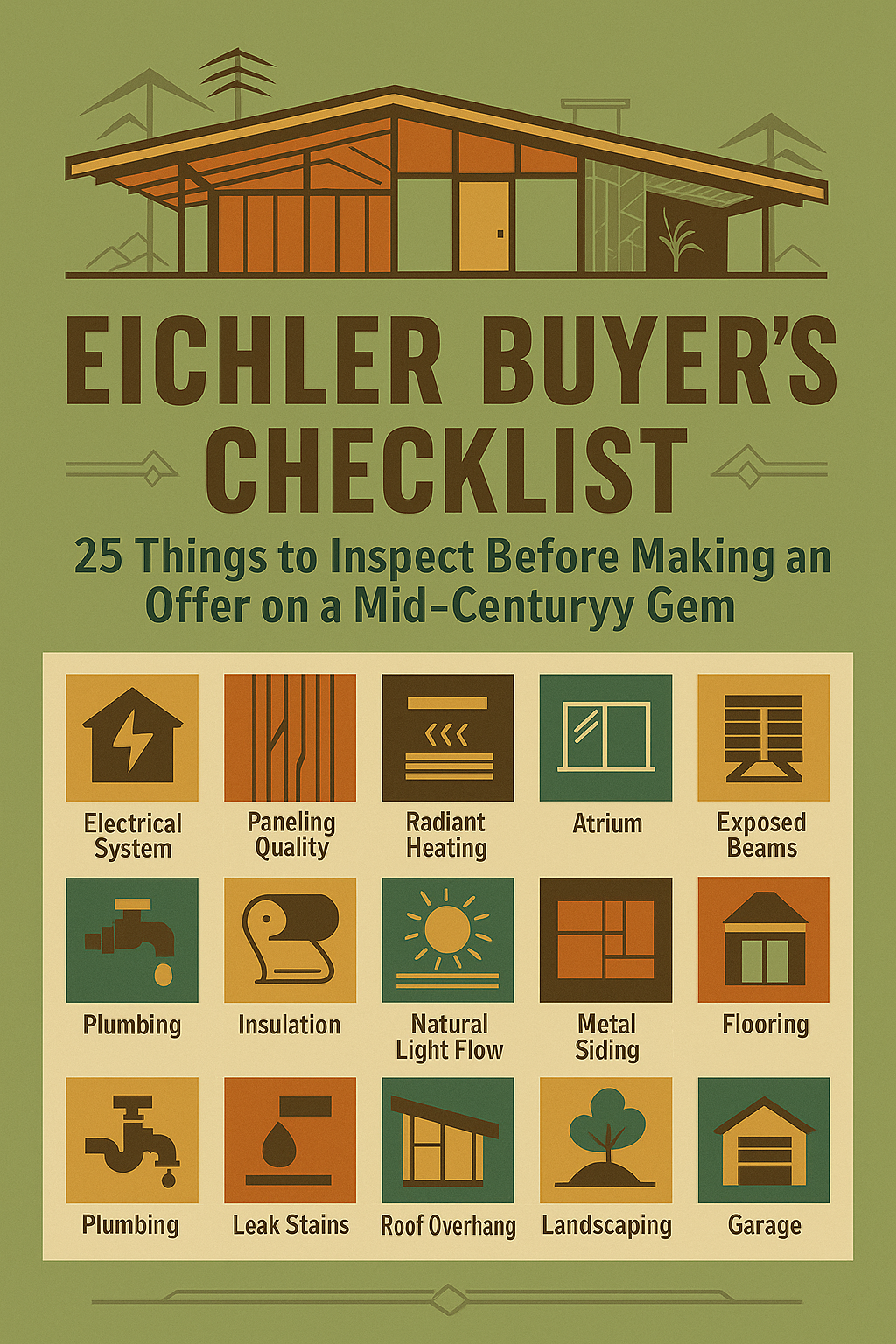
Eichler homes are mid-century modern gems found across Northern and Southern California, famed for their walls of glass, open atriums, and post-and-beam design. However, buying an Eichler means inheriting 50–70-year-old architecture with unique quirks. Before you get starry-eyed by the clean lines and indoor-outdoor flow, use this 25-point checklist to scrutinize the home’s critical systems and distinctive features. Each item explains what to inspect, why it matters, and how it could affect the home’s structural integrity and your long-term investment. Arm yourself with these insights so you can confidently decide whether to preserve original elements or plan for smart upgrades – all while maintaining that Eichler charm. Let’s dive into the ultimate Eichler buyer’s inspection guide.
1. Radiant Floor Heating System (Leaks & Performance)
What to Inspect: Nearly all Eichlers were built with in-slab hydronic radiant heating – hot water pipes embedded in the concrete floor and connected to a boiler radiantheat.net. Check if the system is operational and leak-free. Ask for a recent pressure test or inspection report; look for cold spots on floors or water pressure loss, which can indicate leaks. Inspect the boiler (often located in a closet or garage) for rust, and verify that it turns on and heats the floors. Why it Matters: Radiant heat is a hallmark Eichler feature that provides silent, even warmth underfoot – a selling point for purists destinationeichler.com. But aging steel or copper radiant pipes can corrode and leak over time radiantheat.net. Repairing leaks means jackhammering the slab to replace sections of pipe destinationeichler.com, a costly and invasive job. Impact on Integrity & Value: A functioning original radiant system preserves the home’s architectural authenticity and comfort. Conversely, a failed system can lead to water damage in the slab and force a switch to new heating methods (like baseboards or mini-splits) that might alter the home’s design. Evidence of leaks or a non-working system is a red flag – you’ll need to budget for repairs or retrofitting, and it could be a point for renegotiating price.
2. Roof Condition & Material (Flat, Low-Slope or Pitched)
What to Inspect: Examine the roof type and condition closely. Most Eichlers have flat or low-slope roofs with a minimalist silhouette eichlerhomesforsale.com, and a few models feature pitched “A-frame” or gabled roofs. Identify the roofing material: is it original tar-and-gravel, a modern single-ply membrane, or a sprayed foam roof? Check for signs of leaks such as stains on the ceilings or eaves, ponding water on flat sections, or patches/repairs. If the roof has internal drains or scuppers, ensure they’re clear. On pitched A-frame designs, look for any missing or damaged shingles or ridge caps. Why it Matters: The roof is one of the most critical (and expensive) components. Eichler flat roofs are notoriously leak-prone if neglectedquora.com – their very low pitch means water must be managed carefully, and even small defects can allow water intrusion. Traditional flat roofs can be hard to repair piecemeal, since leaks travel and are “difficult to locate” for roofersquora.com. A-frame Eichlers have better natural drainage, but still need proper maintenance of materials and flashing. Impact on Integrity & Value: A well-maintained roof protects the tongue-and-groove ceilings and structure from water damage. If the roof is old or leaking, expect potential dry rot in beams or mold in insulation. Roof replacement on an Eichler (especially to preserve the clean lines) can be costly, so a failing roof diminishes the home’s value and safety. On the other hand, a newer roof (with warranty) is a great asset – for example, switching an uninsulated tar-and-gravel roof to an insulated foam roof dramatically improves livability, cooling the home by 15–20°F in summer atomic-ranch.com. Always factor roof condition into your purchase decision, and when in doubt, get a professional roof inspection specializing in flat roofs.
3. Aging Foam Roofing (Insulation & Recoating Needs)
What to Inspect: If the Eichler has a foam roof (common as a retrofit on Eichlers), evaluate its age and upkeep. A foam roof is typically a sprayed polyurethane foam with a protective coating. Look for areas where the foam is exposed, yellowed, cracked, or peeling – these indicate the UV coating has worn off. Check for any bubbles, soft spots, or ponding on the foam. Ask the seller when the foam roof was installed and last recoated; documentation should show periodic recoat every 5–10 years (depending on material) to keep it waterproof. Why it Matters: Foam roofs have been a popular modern solution for Eichlers because they provide excellent insulation and a seamless barrier on flat surfacesarmstrong1234.com. However, foam degrades under sunlight and needs regular maintenance. An aged, unmaintained foam roof can develop cracks or water infiltration that aren’t obvious until damage is done. If water penetrates the foam, it can reach the wood decking and cause rot. Impact on Integrity & Value: A properly maintained foam roof greatly enhances an Eichler’s energy efficiency (mitigating the insulation limitations of the design) and protects the home from leaks. In contrast, an expired foam roof that hasn’t been recoated on schedule may be nearing the end of its life – meaning you’ll be looking at a refoam or replacement soon. This can run tens of thousands of dollars, but it’s crucial for preserving the home. Red flag: evidence of widespread coating failure or past leak repairs on a foam roof. A diligent buyer will budget for recoating or negotiate accordingly if the foam is past its recommended service period. A fresh foam roof, on the other hand, is a green light, offering peace of mind that the home is well-sheltered and better insulated against heat and coldatomic-ranch.com.
4. Tongue-and-Groove Wood Ceilings (Leak Stains & Damage)
What to Inspect: Inside the home, look up at the ceilings – Eichler’s exposed tongue-and-groove (T&G) plank ceilings double as the roof decking eichlerhomesforsale.com. These wood boards (often 2x6 tongue-and-groove) span between beams and are usually stained or painted. Check for water stains, dark discolorations, rings, or peeling paint, especially near beam intersections or edges – these often indicate past or present roof leaks. Run your eye along the ceiling boards for sags or warping; a board that “gets real flimsy” when damaged eichlernetwork.com may have dry rot from prolonged moisture. Also note if any sections have been replaced or patched (they might not match in color or wood grain). In some homes, owners install recessed lighting or skylights – inspect around these cutouts for proper sealing or any gaps. Why it Matters: The T&G ceiling is both a defining aesthetic feature and a structural element of Eichlers. Because there’s no attic space, those boards are the only barrier between your living space and the elements. Any leak in the roofing will directly affect them – they’ll soak up water, stain, and eventually rot or even disintegrate if not addressed eichlernetwork.com. Beyond water, watch for carpenter ants or termites: piles of sawdust or tiny holes on the ceiling could mean wood-destroying pests have moved into damp sections (they often attack softened wood). Impact on Integrity & Value: Sagging or rotted ceiling boards can be expensive to fix – you can’t simply cover them with drywall without losing the Eichler look, so restoration often means carefully splicing in new matching T&G boards and refinishing. Extensive staining points to roof problems that might still be active, threatening the home’s integrity. Buyers should value a ceiling that’s in good shape (no stains or only old, resolved ones) as evidence of a well-maintained roof. If you see many patches or watermarks, it’s a caution to investigate the roof above and be ready for repairs. Preserving the original wood ceilings is ideal for architectural continuity, so you’ll want to catch any issues early to avoid losing them to rot.
5. Post-and-Beam Structural System (Integrity & Modifications)
What to Inspect: Eichler homes feature a distinctive post-and-beam construction – vertical posts and horizontal beams form the skeleton of the house, carrying the roof load so that walls can be mostly glasseichlerhomesforsale.com. Examine all visible posts and beams (both inside and out). Indoors, check where beams meet the posts for any gaps or separation, which could indicate settling or framing changes. Sight down the length of beams to see if any are bowed or sagging. Pay attention to any beams that have been cut or notched (for example, to run electrical or during a past remodel) – this can weaken the structure. If an addition or wall removal was done, ensure a proper beam was added to support the load. Why it Matters: These beams and posts are literally holding up the roof; their integrity is crucial. Unlike conventional stud-framed houses, Eichlers have fewer structural walls, so any compromised beam or post is a big deal. Over decades, posts can settle into the slab or beams can deflect, especially if there was water damage or someone overloaded them. Sometimes homeowners, not understanding the structure, might have altered or removed portions during renovations – you want to confirm that no critical support was taken out or poorly modified. Impact on Integrity & Value: A sound post-and-beam frame means the home’s bones are solid. If you find severe sagging or shoring posts added, that could signal an expensive structural fix or even a safety hazard. For example, a beam that visibly “caves in” or bulges downward could be a sign of dry rot or termites weakening iteichlernetwork.com. Such deterioration, if widespread, can threaten the entire roof’s stability. An inspection report noting damaged structural members would be a serious red flag for any buyer – extensive repairs could be required to ensure the house remains safe to occupy. Conversely, if all beams are straight and posts plumb, it’s a green flag that the structure has held up well. Pro Tip: If you love an Eichler that has undergone interior layout changes, have an engineer or Eichler-experienced inspector verify that any altered parts were properly reinforced. The value of an Eichler is highest when its structure is both original and sound, or when any modifications have been done in a structurally responsible manner.
6. Exposed Beam Ends and Exterior Wood (Rot & Termite Damage)
What to Inspect: Eichler beams often extend beyond the interior to form deep eaves or trellises, leaving their ends exposed to the elements. Walk around the home’s exterior and closely examine the ends of beams and rafters, especially where they protrude past the roofline or support patio covers. Look for soft, crumbling wood, visible rot (dark, spongy areas), or fresh sawdust (a telltale sign of insects like termites or carpenter ants). Often, paint may be concealing damage – pay attention to any bubbling or peeling paint on beam ends, as moisture may be trapped underneath. You might even gently tap suspect areas with a screwdriver; rotten wood may sound hollow. Also inspect where beams attach to the house – if there’s a metal cap or flashing missing, those beam tails could have been soaking up water for years. Why it Matters: Exterior beam tails and wood trim are high-risk spots for dry rot and termites, given their exposure to rain and lack of modern pressure-treatment. In Eichlers, a beam can look solid from the outside but be rotting withineichlernetwork.com. Termites (especially in warmer Southern California areas) can invade from the ends and chew inward. Sprinklers and landscaping can worsen the issue: wood siding and beams will rot faster if sprinklers regularly wet them or if plants cling to themeichlernetwork.com. Over time, a rotted beam end can compromise the structural continuity of the beam, and in severe cases, sections of a roof or carport might start to sag. Impact on Integrity & Value: Healthy beams and woodwork are crucial for both structural support and the classic Eichler aesthetic of continuous indoor-outdoor lines. If many beam ends are rotted, you’re looking at significant restoration work – either “beam surgery” to splice in new wood or full beam replacement in worst caseseichler.blogeichler.blog. These repairs can be complex and need skilled craftsmanship to blend old and new wood. Active termite infestations will require fumigation and wood repair, which is a negotiable item in most sales but still an inconvenience and cost. A few small rotten spots can be treated with epoxy and sealers, but widespread rot will impact the home’s value until fixed. Always check if the home already had some beam repairs – newer sections or differing wood may indicate previous fixes. Well-maintained beam ends (solid wood, recently painted with no rot) are a sign the prior owners stayed on top of maintenance, which bodes well for the house’s overall condition.
7. Atrium and Courtyard Drainage (Water Management)
What to Inspect: Many Eichlers, especially mid-1950s and later models, boast an open-air central atrium – essentially a courtyard in the middle of the house surrounded by glass walls. If the home has an atrium or any sunken courtyard, find out how it drains. Look for one or more drain grates in the atrium floor (often a round metal grate set in the concrete)eichlerhomesforsale.com. Ensure the drain is clear of debris, functional, and sloped properly. If there are planter beds or soil in the atrium, check that water can’t just soak into the slab edge. Ask the owner if any flooding has occurred during heavy rains. If the atrium has been covered or partially enclosed by a previous owner, examine the workmanship: does the roof over the atrium have proper gutters and waterproofing? Also inspect the atrium’s perimeter: any water stains at the base of walls or doors leading to the atrium could signal past overflow or poor drainage. Why it Matters: The atrium is a signature Eichler feature that brings light and nature inside – but without a roof, it’s exposed to rain. Proper drainage is absolutely critical: a clogged or undersized drain can turn your atrium into a wading pool during a storm, with water potentially seeping under the sliding doors into the living areas. In Northern California, heavy winter rains test these drainage systems; in Southern California, sudden downpours can overwhelm them if not maintained. Water intrusion from the atrium can damage interior walls, flooring, and even undermine the slab if chronic. Impact on Integrity & Value: A well-drained atrium (or courtyard) keeps the living spaces dry and trouble-free, preserving the home’s design appeal. Buyers should be wary if they see things like improvised drainage fixes, e.g. a pump or lots of sandbags – that could indicate a long-standing drainage issue. In contrast, a clean, functional atrium drain (try pouring a bucket of water to see if it clears quickly)eichlerhomesforsale.com gives confidence. If the atrium was enclosed (some owners add a glass roof to make it an indoor solarium), ensure it was permitted and properly tied into the existing roof drainage. Poor atrium enclosures can leak or trap water in wrong places. Bottom line: atrial drainage issues are often overlooked but can be expensive (floor repairs, mold remediation) if not addressed. It’s a point where restoration vs. modification comes in – some buyers choose to cover the atrium to prevent rain problems, but purists love it open. Know the status so you can plan accordingly and protect the investment.
8. Site Grading and Exterior Drainage
What to Inspect: Beyond the atrium, evaluate how well the overall lot drains water, since Eichlers typically have minimal eaves and no roof gutters (water sheets off the roof straight to the ground). Walk around the house’s perimeter: the ground or patio should slope away from the foundation slab. Check for areas where soil or landscaping is piled up against the siding – earth or mulch in direct contact with wood can invite rot and pests. Look for any installed French drains, drain pipes, or swales and ask if they were added to mitigate past water issues. During the inspection, note any standing water or puddles near the home – even after irrigation. Also examine the bottom edges of exterior siding for water staining or delamination, which might indicate that rainwater routinely splashes back onto the walls. If the home has gutters (some owners retrofit them), inspect that they’re securely attached and leaders direct water well away. Why it Matters: Eichler slabs are close to ground level, and poor drainage or negative slope can lead to water seeping under the slab or into walls. In heavy rains, homes in flat areas can experience water pooling around the slab if there’s nowhere for it to go. Over time, chronic moisture at the foundation line can cause siding rot, mold, or even foundation movement if soil expands. Proper grading and drainage protect against these issues. Also, moisture at the base encourages termites and ants to invade. Impact on Integrity & Value: Good site drainage is a sign of a well-maintained property – it means the risk of moisture damage and foundation problems is lower. If you identify drainage problems (like obvious low spots against the house or downspouts dumping by the foundation), you might need to invest in landscaping fixes or drains. This isn’t as costly as some structural fixes, but it’s vital to prevent bigger issues. On the flip side, if a previous owner already installed a drainage system (e.g. perimeter French drains or sump pumps), that can be a great benefit – just verify it’s working and was done with permits if required. Poor drainage is often an overlooked issue that can snowball into structural damage if ignored. So as a buyer, note it and use the information: you may ask the seller to address grading issues or factor it into your plans (especially if you plan to restore original landscaping, ensure it’s also functional for water flow). Keeping water away from the Eichler’s wooden elements and slab will preserve the home’s integrity for the long term.
9. Concrete Slab Foundation & Floor Cracks
What to Inspect: Eichler homes sit on a concrete slab foundation (no crawl space), which also contains the radiant heat pipes. Inspect the visible areas of the slab inside the house (closets, garage, exposed concrete in mechanical rooms, etc.) for cracks. Small hairline cracks are common in any concrete slab, but take note of any large cracks (wider than 1/8 inch) or cracks that are uneven (one side of the crack higher than the other). Uneven floors or doors that drag on the floor can indicate the slab has shifted slightly. Check along the baseboards and lower wall panels for any separation or warping, which could hint at slab movement. In the garage, where the slab is usually visible, look for cracks running across or emanating from the corners – the garage slab is part of the whole foundation. Also, if parts of the interior floor have been refinished or newly carpeted, ask if it was to cover a repair or just aesthetic. Why it Matters: The slab is literally the foundation of the home – its condition affects everything from structural stability to door operation. While minor hairline cracks in the concrete are usually not structural concernsnar.realtor, anything significant might suggest soil settlement, tree root issues, or past earthquake effects. Because Eichlers have the heating pipes in the slab, any major foundation work or movement could risk those pipes (and conversely, if a pipe leak occurred, you might see an isolated newer patch of concrete where the slab was opened). Also, if the home is in an area with expansive clay soil (common in parts of California), seasonal moisture changes can cause slabs to heave or crack. Impact on Integrity & Value: A mostly crack-free, level slab is a great sign – it likely means the home has stayed stable over decades. This stability preserves the integrity of the post-and-beam frame (no undue stresses) and keeps the doors and windows fitting correctly. On the other hand, a horizontal crack with any bulging or displacement should be evaluated by a foundation expertnar.realtor; severe slab issues are expensive to remedy (sometimes requiring underpinning or slab jacking) and can scare off lenders or buyers. Most Eichler transactions include a termite report, which also notes any excessive slab cracks or evidence of sub-slab moisture. If you see cracks, use the inspection period to determine if they’re old and inactive or ongoing. A little crack with efflorescence (white mineral deposits) might mean moisture has seeped through at some point. Ultimately, while Eichler slabs are generally robust, you want to ensure there’s no active movement. It affects long-term investment because a home with a failing foundation will need repair (costly) and will have a reduced value until fixed. If you find only typical shrinkage cracks, that’s normal – just keep an eye on them over timenar.realtor.
10. Flooring Materials and Potential Asbestos
What to Inspect: Examine the flooring throughout the home. Many Eichlers originally had vinyl tile or linoleum directly on the slab, and some had cork flooring in bedrooms or carpet added later. Identify if any old 9-inch by 9-inch vinyl tiles are present (often in older Eichlers these were used) – these tiles and the black mastic glue beneath them may contain asbestos common in mid-century construction. If floors are carpeted, try to peek at the edges or in closets to see what’s underneath (sometimes original tiles remain under carpeting). Check for any damp spots on floors or dark stains on carpet, which could indicate moisture coming through the slab (possibly from a radiant leak or poor drainage). If the home has newer flooring (like laminate or hardwood), ask if a vapor barrier was installed – it’s important on slabs to prevent warping. Also, note if the flooring type might impede the radiant heat (thick carpet and pad can insulate the slab, reducing heating efficiency). Why it Matters: Floors are both a cosmetic and functional aspect. Original tiles or vinyl may contain asbestos – while not dangerous if intact, any future removal or disturbance must be done carefully by professionals. This can add cost and complexity to your renovation plans (as asbestos abatement can be pricey). Moisture issues in flooring could signal slab leaks or vapor coming up; cork tiles that are lifting or vinyl that’s bubbling might be due to water pressure from below. For Eichlers with intact original flooring, some buyers value that mid-century look, but you’ll need to judge the condition – worn-out 60-year-old linoleum might need replacement (factor that into costs). Impact on Integrity & Value: In terms of investment, hazardous materials like asbestos can affect resale – you might need to disclose them and/or remediate. It’s better to know now if you have them. If the flooring is newer, high-quality, and properly installed, that’s a value-add (and it means someone likely addressed subfloor prep, vapor barriers, etc.). However, be cautious if a flipper quickly threw laminate over an unprepared slab – you might inherit problems later (mold or buckling floors). For radiant heating, hard surfaces like tile are ideal; if the house currently has wall-to-wall carpeting, you might not feel the heat as much and could consider different flooring later. Additionally, check transitions and edges – poorly installed floors can hint at DIY jobs or larger issues being covered up. Overall, ensure the floor materials pose no health hazards and suit your plans, and use any findings (like “these old tiles likely contain asbestosquora.com”) as leverage to have them properly handled or to negotiate the price.
11. Exterior Siding and Wood Trim Condition
What to Inspect: Eichler exteriors are typically clad in vertical wood siding – often 4x8 panels with grooves (for example, the iconic striated plywood siding) or tongue-and-groove redwood boards. Walk around and inspect all siding panels and wood trim. Look for rotting or soft wood at the bottom edges and corners of the siding, where rain splash-back is common. Check for delamination on plywood siding – if you see layers of the panel peeling or separating, that’s a sign of water damage. Note any swollen or buckling areas which might indicate prolonged moisture exposure. If the siding has been replaced in sections, the pattern or texture might change – see if you can spot patches of newer wood versus original (color differences or newer nails are clues). Don’t forget the fascia boards along the roof edges and any chimney chase siding – these too should be checked for rot or termite damage. Why it Matters: The siding is the skin of the house, protecting the structure from the elements. Eichler siding, often made of redwood or mahogany plywood, resists rot to a degree but after decades can succumb if not maintained. Water from roof runoff (since Eichlers often lacked gutters) can drench siding during storms, and without proper paint or sealing, wood decay starts. Additionally, some Eichlers may have had siding replaced with different materials (e.g. fiber cement or hardboard) – while durable, it may not match the original look and could affect historical value. Impact on Integrity & Value: Sound original siding is a big plus – it means the house can be restored with its authentic materials intact. If siding is in poor condition (such as 90% needing replacement, as in some nightmare renovationsatomic-ranch.com), you’re looking at a significant cost to re-side the house. Replacing siding also opens up the walls – which could be an opportunity to add insulation or fix electrical, but it’s still a major project. Rotten siding can also be a symptom: it could indicate hidden structural damage or chronic leaks. For example, in one Eichler renovation, extensive rot in siding coincided with rot in the posts and beams behind itatomic-ranch.com. On the value side, extensive new siding work might scare off some buyers or lenders until resolved. However, if the siding is generally good with a few problem spots, you might be able to repair just those sections (and possibly find replica Eichler siding from specialty suppliers to maintain the look). Pay attention to DIY patches – if you see pieces of plywood tacked over areas, it might be covering a hole or damage. In summary, solid siding equals better protection and less immediate expense, while failing siding is a red flag to investigate further for water issues and to budget for repairs. It’s also a negotiating point: original pattern redwood siding is valued by Eichler enthusiasts, so a house with it intact could justify a premium, whereas one with mismatched or ruined siding might not.
12. Paint Finish and Lead-Based Paint
What to Inspect: Evaluate the exterior and interior paint conditions. Many Eichlers retain original or older layers of paint, especially on the Philippine mahogany interior paneling and on the exterior siding or beams. On exteriors, look for areas where paint is peeling, chipping, or flaking down to bare wood – common on eaves and beam ends. Interiors with original wood paneling might have been painted over by previous owners; check if the paint is peeling or if the wood beneath shows through in patches. Also, identify if the current paint job is recent or if it looks decades old. If the home was built before 1978 (all Eichlers were), assume any old paint may contain lead unless documentation says otherwise. You might see telltale alligatoring (cracked pattern) in very old paint or a chalky residue on touch – signs of old lead-based paint. Why it Matters: Aside from aesthetics, failing paint is a protection issue – exposed wood will deteriorate faster. More importantly, lead-based paint is a health hazard, especially if it’s peeling or present in dust form. Many mid-century homes have layers of lead paint on trim or even walls. An Eichler with children residing will need lead-safe conditions. On the interior, if you plan to restore original wood look, painted paneling means you’ll have to strip or replace it (stripping could be laborious and raise lead dust concerns). On exteriors, a fresh coat of paint (done properly) seals the wood and can last for years, whereas neglected paint might mean you need to repaint very soon. Impact on Integrity & Value: Good paint condition signals that the house has been cared for – it not only looks nicer but has been shielded from rot and pests. If there’s evidence of lead paint, you have legal obligations as a homeowner (disclosure, and using lead-safe practices for renovation). While lead paint is common in older homes, its presence might require professional abatement if surfaces are deteriorating. For the investment perspective, budgeting for a whole-house repaint (with possible lead remediation) can be a few thousand dollars or more, depending on if old paint needs stripping. It’s worth noting if the color scheme is original Eichler or a later choice – some buyers value the authentic Eichler exterior colors and even door accent colors as part of the mid-mod appeal. If the current paint is unsalvageable (peeling everywhere), it detracts from curb appeal and could lower the home’s immediate value. However, a quality paint job is one of the simpler fixes and can transform an Eichler’s appearance dramatically. Just be cautious: if you see bubbling paint on exterior wood, remember it might be hiding rot underneatheichler.blog. Include paint status in your overall assessment – sometimes stripping to refinish interior wood or doing a proper exterior repaint can be part of the restoration to boost long-term value and protect the architecture.
13. Expansive Glass Walls and Sliding Doors
What to Inspect: Eichler homes famously blur indoor and outdoor spaces with floor-to-ceiling glass panels and sliding glass doors. Examine each large window panel and slider. Check for cracks or chips in the glass – especially corners (a small crack can propagate across a big pane). Note if the glass is single-pane (likely original) or double-pane replacements. Single-pane glass will feel very thin and you won’t see the telltale edge of a dual-pane unit. Inspect the wood or aluminum frames around the glass for rot, warping, or corrosion. Many original Eichler glass walls had wood framing; over time these can rot at the base due to water exposure. Open and close the sliding doors: they should slide relatively smoothly. If a door sticks, it could be due to a warped frame (foundation movement) or simply debris in the track – clean tracks are important. Look at the bottom track for drainage weep holes and ensure they’re not clogged (so rainwater that hits the door tracks can drain out). Also test the door locks and latches – are they functioning and sturdy? If the home has any floor-to-ceiling fixed windows, check how they’re secured (rubber gasket, wood stops, etc.) and if those seals are intact. Why it Matters: These expansive glass walls are key to Eichler’s design, but as components they have pros and cons. Single-pane glass offers almost no insulation – you’ll feel heat loss in winter and heat gain in summer. It can also be a safety hazard if not tempered; large modern glass must be tempered by
13. Expansive Glass Walls and Sliding Doors (Single-Pane vs. Modern)
What to Inspect: Eichler homes famously blur indoors and outdoors with floor-to-ceiling glass panels and sliding glass doors. Examine each large window and slider: check for cracks or chips in the glass, especially at corners, and inspect how tightly they seal. Determine if the glass is original single-pane (very thin with a greenish tint) or a modern double-pane unit (thicker edge, often added later). Inspect the frames: many Eichlers used wooden window frames that can rot at the base, or aluminum frames that can corrode. Look for soft wood or water damage at the bottom of glass walls where they meet the slab – these spots often get wet from condensation or rain blow-in. Slide the doors open and closed; they should move smoothly on their tracks. If a slider sticks or the frame seems bent, it could indicate foundation shifting or damage. Check that door hardware and locks are functional (important for security given so much glass). Also, if original, the sliding door frames might not have great weather-stripping – see if light or drafts come through edges. Why it Matters: The glass walls are integral to Eichler’s design magic, but original single-pane glass has *no insulation value and can make the home energy-inefficient】. You’ll likely feel the cold radiating in winter and intense heat in summer through these panes. They can also sweat with condensation in cool weather, potentially causing moisture issues at frames. Safety is a concern: modern code requires tempered safety glass for large panels, but Eichler-era glass is not tempered – if a big pane breaks, it can shatter into dangerous shards. Additionally, poorly sealing sliders or gaps mean dust, drafts, and even water can enter during storms. Impact on Integrity & Value: Original windows maintain the Eichler authenticity (the delicate look of the era), which is a plus for mid-century enthusiasts. However, many buyers today prefer upgraded double-pane glass for comfort – it improves insulation and often has UV coatings to protect interiors. If the home you’re inspecting already has a quality window upgrade (e.g., custom double-pane units that match the style), that’s a significant value-add for efficiency. Just ensure they were done thoughtfully – cheap vinyl replacements can look out of place in an Eichler and may hurt the architectural value. Conversely, if the home still has all single-pane glass, factor in higher heating/cooling costs and possibly plan for an upgrade (which can be expensive given the large sizes and quantity of glass). Cracked or foggy panes are red flags: a cracked pane should be replaced promptly (for safety and to prevent shattering), and fog between panes means a failed double-pane seal. Also consider the door condition: a slider that doesn’t lock or close well is both a security risk and a sign of needed repair. When weighing restoration vs. replacement, know that preserving the original glass look can be done with modern glass alternatives, but it’s an investment. Good condition original glass walls (no rot in frames, no cracks) are a green light, while damaged or inefficient ones are a point for careful consideration in your overall budget and plans.
14. Interior Mahogany Wall Paneling (Condition & Finish)
What to Inspect: Step inside and take note of the wall finishes. Eichler interiors were typically clad in Philippine mahogany (Lauan) wood paneling – thin, 1/8-inch or 1/4-inch sheets with a clear finish that gives a warm glo】. Identify where this paneling exists and its condition. Look for panels that are warped, delaminating, or stained. Pay special attention in areas prone to moisture: around exterior doorways (rain splash or past leaks might stain panels), behind the kitchen sink, or in bathrooms (some Eichlers originally even ran wood paneling into bathrooms, behind tile). If panels have been painted over, note that – it might hide damage or simply be a cosmetic update. Check for any gaps or buckling between panels, and see if the trim strips (usually at panel seams) are intact. In some homes, previous owners might have removed paneling and installed drywall; if so, you might only find paneling in closets or behind cabinets – peek there to see the original material. Also look for fading from sun exposure on panels that face large windows, and any holes or cuts where outlets and switches were added (sometimes indicating modifications in wiring). Why it Matters: The mahogany paneling is a signature mid-century element that gives Eichlers their cozy, woodsy feel. It’s also an item that can be expensive to restore or replace today – Lauan mahogany is not commonly used as in the 1950s. If the paneling is in good shape (no rot, minimal fading), it can be a huge asset for maintaining the period charm. However, paneling has its drawbacks: it’s thin and offers little insulation or soundproofing, and if not sealed well, it can absorb moisture or be a medium for dry rot and termites (termites will happily chew the paper-thin wood if they get in). Painted or wallpapered paneling might indicate past owners tried to modernize the look; stripping paint from such thin wood is difficult, so you might have to replace it if you want the wood look back. In wet areas, like that atomic ranch story where Eichler bathrooms had paneling behind tile, the wood often *ended up rotted and termite-damaged】. Impact on Integrity & Value: Pristine original paneling can boost an Eichler’s appeal and value significantly for MCM enthusiasts – it’s getting rarer as many homes have been remodeled with drywall. If the home’s paneling has been well-kept (perhaps oiled occasionally, not water-damaged), that’s a strong point for preservation. On the other hand, if large sections are ruined or missing, you face a decision: try to source similar mahogany panels (some suppliers or salvage sources exist, but they can be costly) or replace walls with drywall, which is cheaper but alters the vintage ambiance. From an investment standpoint, keeping or reinstating the mahogany can pay off in uniqueness, but it must be weighed against maintenance – wood walls require care to avoid future rot (e.g., ensuring the exterior is watertight, good ventilation). If you discover termite damage in paneling, it may also hint at possible pests in other wood elements. Bottom line: note the condition of wall panels in every room; their state will guide you on how much of Eichler’s mid-century soul you can enjoy as-is versus how much you’ll need to spend on interior surface restoration.
15. Insulation (or Lack Thereof) in Roof and Walls
What to Inspect: Ask about and look for any insulation upgrades in the home. Eichlers were built at a time when insulation standards were minimal – originally, many had no insulation in the walls and minimal insulation in the roof. During your tour, see if any renovation records or seller disclosures mention added insulation (in a remodel, someone might have added foam insulation above the T&G ceiling or blown insulation into walls). If the roof has been redone (especially with foam, as noted in item #3), that adds insulation value. Also check if there’s any insulation visible in the garage roof or walls (garage ceilings sometimes expose if insulation was placed between T&G and roofing during a re-roof). You can also gauge during a site visit: on a hot or cold day, does the interior quickly reflect outdoor temperatures? If the home has an attic-like space (rare, but a few models with slight attics), peek to see insulation batts. Why it Matters: Lack of insulation is a well-known Eichler issu】. Uninsulated walls and ceilings mean higher heating and cooling costs and sometimes an uncomfortably warm or chilly house. In Northern California winters, Eichlers can be tough to keep warm if heat just radiates out through single-pane glass and uninsulated roofs. In Southern California, summer heat can be intense under a bare roof. Modern building codes would require insulation, but in these older homes any improvement is optional and often retrofitted by enthusiastic owners. Insulation can be added – for example, converting to a foam roof adds both waterproofing and insulatio】, or one can open up walls (during siding replacement) to add batts or rigid insulation panels. Some owners also install an insulated drop ceiling inside, but that conceals the open-beam aesthetic. Impact on Integrity & Value: An Eichler with improved insulation (like a foam roof, insulated walls, or at least some attic insulation where possible) will be much more comfortable and energy-efficient, increasing its livability and appeal to a wider range of buyers. It also reduces stress on the heating system and can prevent issues like condensation (warm moist indoor air hitting a cold ceiling can cause drips). On the flip side, an uninsulated Eichler isn’t a deal-breaker, but you should be prepared for higher energy bills and consider future upgrades. It’s important to realize you can’t insulate an Eichler in the usual ways without some construction: there’s no attic to roll out fiberglass, and walls are thin. Thus, solutions may involve adding insulation above the roof (best done during re-roof) or carefully injecting foam in walls (watch out, too much moisture or improper install can warp walls). From a value perspective, insulation upgrades aren’t as visibly exciting as, say, a new kitchen, but they greatly improve the home’s performance. If energy efficiency is a priority, factor in upgrades like a foam roof or insulating panels under new siding. California energy costs are high, so this impacts long-term investment. In summary: Recognize if the home is as originally built (likely “zero insulation”】 and budget for remedies, or celebrate if a previous owner already tackled this less glamorous but important aspect.
16. Electrical System & Panel (Capacity and Wiring)
What to Inspect: Find out what powers the home: locate the electrical panel (often hidden in a closet or on an exterior wall) and check its amperage rating and condition. Many Eichlers built in the 1950s-60s originally came with only a 60-amp or 100-amp service paneeichlernetwork.com】. See if the panel looks updated (newer breakers, modern panel brand) or original (possibly an old fuse box or small breaker box). Open the panel door (if you’re comfortable and safe) to see if there are any labels or hand-written notes indicating old circuits or upgrades. Ask the seller if the wiring in the house has been updated – original Eichlers often had two-prong ungrounded outlets and limited circuits. During the tour, test a few outlets (with a tester or simply by plugging something in) to see if they are grounded (three-prong with proper ground) or not. Also note the number of outlets and their locations – older wiring means fewer outlets per room, which can be inconvenient. If the home has any additions (e.g., added appliances like an EV charger or hot tub, or a new AC system), check if a sub-panel was added for those. Why it Matters: A modern lifestyle often strains an old electrical system. Eichler electrical panels might need upgrading to 125-200 amps to support today’s needeichlernetwork.com】 (electric car charging, air conditioning, high-end kitchen appliances, etc.). If the existing panel is undersized or full, adding new circuits will be problematic without a panel upgrade. Old wiring may also pose safety concerns: cloth-insulated or original Romex wiring can degrade, and ungrounded outlets are not safe for modern electronics. Additionally, the electrical panel in Eichlers is sometimes located in a bedroom closet for aesthetics – but this can be a fire hazard or at least an inconvenience (and today’s code wouldn’t allow a panel in a clothes closet). Upgrading could mean relocating it, which is extra woreichlernetwork.com】 (sometimes needing to “enlarge the closet space” or move it outside, per Eichler experteichlernetwork.com】). Impact on Integrity & Value: An upgraded electrical system is a big selling point for an older home – it means the buyer won’t have to worry about rewiring or tripping breakers when running a hairdryer and microwave at the same time. If the Eichler you’re eyeing has a new 200-amp panel, GFCI outlets in wet areas, and mostly grounded three-prong outlets, that’s a green flag indicating recent electrical investment. If everything is original, you’ll likely want to budget for at least some electrical work. This can be a chance to thoughtfully integrate it without spoiling the architecture: e.g., adding floor outlets to avoid cords across the post-and-beam open areas, or putting in a new panel in a discrete side yard spot. While electrical upgrades aren’t cheap, they greatly improve safety and convenience, affecting long-term value and insurability (some insurance companies may not insure homes with very old panels or known problematic brands). On the flip side, be cautious if you see a hodgepodge of wiring (like DIY additions, lots of extension cords or power strips in use – a sign the household doesn’t have enough outlets). That suggests immediate attention needed. In summary, verify the electrical capacity meets modern demands and plan to upgrade if it doesn’t – it’s a worthwhile investment to protect your Eichler and enjoy it fully.
17. Plumbing Supply Lines and Sewer Drain (Leaks & Material)
What to Inspect: Investigate the home’s plumbing system, both water supply and drainage. Determine what type of water supply pipes are present: original Eichlers likely have galvanized steel piping for water lines (which corrodes over time), unless they’ve been updated to copper or PEX. Look under sinks at the visible pipes – galvanized ones are gray metal, often with threading, whereas copper is reddish metal and PEX is plastic (various colors). Galvanized pipes often show corrosion or rust, especially at joints. Low water pressure or rusty-colored water (run a tap and see) can be clues to galvanized pipe issues. Next, consider the sewer drain lines: Eichlers used cast iron for main sewer laterals and smaller galvanized or cast iron for branch drains. Signs of drain trouble include slow drains, gurgling toilets, or clean-out caps that have stains around them (indicating past backups). Check if there’s an obvious sewer clean-out pipe in the front yard or side yard – if it’s new PVC, perhaps the sewer line was replaced; if old cast iron, it might be original. Also ask if a sewer scope has been done recently (sellers sometimes do this to show condition). Inside, look at the base of toilets and around showers/tubs for water damage – leaks could mean plumbing or waterproofing issues. Why it Matters: Old plumbing is a common problem in Eichlers and mid-century homequora.com】. Galvanized water pipes corrode internally, eventually reducing flow and leading to leaks as they thin out. If not already replaced, they are nearing the end of their life (after ~60+ yearsforum.nachi.org】. A leak in a slab (for radiant heat or a water line) can be very disruptive to fix. Sewer lines, if original cast iron, can develop cracks or root intrusion, causing sewage backups – a health hazard and nightmare scenario. In fact, “pipes rust out in the slab” was noted as a pain point by Eichler ownerreddit.com】. Upgrading supply lines to copper or PEX and potentially trenchless lining or replacement of the sewer line are expensive but important projects. Impact on Integrity & Value: Updated plumbing (e.g., a full re-pipe to copper/PEX and a new ABS sewer line) is a huge plus for an Eichler. It means fewer worries about hidden leaks or water damage down the road, and better water pressure. On the flip side, if the home still has all original plumbing, you should be prepared for the possibility of a major plumbing overhaul. Look for evidence of past leak fixes: patched sections of concrete floor (a sign of slab leak repair), new looking pipes in some areas but not others (partial updates), or even active stains on drywall or paneling around plumbing locations. When evaluating value, remember plumbing isn’t visible in photos but hugely affects functionality – a home with new plumbing is more valuable than one without, even if it’s not immediately apparent. Consider getting a specialized inspection like a sewer camera inspection during escrow; it can reveal the condition of the underground drains (so you know if a $15k sewer replacement might be looming). Also note if the water heater and any tankless systems are updated, as they tie into plumbing health. In summary, don’t overlook the pipes: they may be out of sight, but a failing pipe can wreak havoc on an Eichler’s slab foundation and interiors. Knowing their status helps you gauge how much additional investment may be needed soon after purchase.
18. Heating & Cooling Systems (Boiler, Water Heater, and Air Conditioning)
What to Inspect: Beyond the radiant floor heating (covered in #1), check the other HVAC components: Does the home have any air conditioning or supplemental heating system? Many Eichlers rely solely on radiant heat, but some owners add mini-split AC units, central AC (rare due to no attic), or heat pumps. Look for evidence of cooling: wall-mounted AC units, an outdoor compressor, or ceiling cassettes. If present, test that the AC or heat pump works. Examine the boiler for the radiant heat – is it a modern high-efficiency unit or a decades-old original? A newer boiler (tankless style or modern system) is great, whereas an old rusty boiler might be living on borrowed time. Check the water heater as well: identify its age (manufacture date on label) and capacity. It might be located in the garage or an outside closet. If it’s an original or older than 15 years, budget for replacement. Also note if there’s a solar water heating system on the roof (some Eichler owners added them for radiant heat assist back in the 1970s energy crisis). Inspect any thermostats and controls – original radiant thermostats are simple dials; updated systems might have modern thermostats. If the home uses baseboard heaters or wall heaters instead of the radiant floor, ask why (it could mean the radiant failed). Why it Matters: Eichlers present challenges for retrofitting HVAC. No attics or crawlspaces mean adding ductwork for central heating/cooling requires creativity (sometimes soffits or exterior-mounted ducts). Many owners thus opt for ductless mini-splits for cooling, or they stick it out with just fans and the radiant heat. Knowing what’s in place saves you surprises – for example, if there’s no AC and you’re buying in a hotter inland SoCal area, you may need to plan a cooling solution (and factor cost). The boiler and water heater are mechanical workhorses: a well-maintained boiler can last decades, but an ancient one could fail and leave you with no heat on a cold night. Water heater failure can flood areas and is generally an easy item to preemptively replace if old. Impact on Integrity & Value: A thoughtfully upgraded HVAC system (like a new high-efficiency boiler for the radiant heat, plus a few discreet mini-split AC units) makes the home comfortable year-round without spoiling aesthetics – that’s a selling point. It also indicates prior owners invested in the home’s infrastructure. If the house has no cooling and you know the area gets 100°F summers, the value might be lower to general buyers (though some Eichler fans won’t mind, using the original design’s cross-breezes). Still, you should account for the cost of adding AC if you want it. Check if any additions caused issues: e.g., sometimes folks cut holes in the T&G ceiling to install recessed lights or vents – which can compromise insulation or even the roof structure. If you find such modifications, ensure they were done correctly (sealed, no leaks). Another angle: homes that abandoned radiant heat might have added a forced-air furnace in the closet or garage with ducts running through the crawl space…except Eichlers don’t have crawl spaces, so ducts might be in the ceiling with a drop ceiling added, etc. These modifications can change the character of the home and may need evaluation for efficiency and safety. In terms of value, new HVAC equipment (boiler, AC, water heater) is a plus, whereas original equipment is a likely near-future expense. A combination of an old boiler and hints that the radiant isn’t working (like supplemental heaters present) is a red flag. Always consider: comfortable living in an Eichler can be achieved, but it relies on these systems being in good shape or smartly upgraded. Plan and negotiate accordingly.
19. Kitchen Condition and Mid-Century Features
What to Inspect: Take a critical look at the kitchen, an area where function and style meet – and where costly upgrades often hide. Are the cabinets original (flat-panel wood, often mahogany or walnut veneer) or have they been replaced? Original Eichler cabinets can be identified by their simple slab doors and sometimes sliding upper doors. Check the cabinets for wood condition: any sagging, water stains (especially under the sink – a prime spot for rot or past leaks), or swollen particleboard if they’re later additions. Look at the countertops: original ones might be laminate with metal edging, which by now could be worn or chipped. If the kitchen was remodeled in the past, assess the quality – sometimes “improvements” from the ’80s or ’90s are themselves dated or not in character with the home. Test the appliances: oven, stove, dishwasher, etc. – note their age and whether they are modern or vintage. Older appliances might fit the retro aesthetic but be energy hogs or safety concerns. Also, see if the layout has been altered. Eichler kitchens were often galley-style and open to the dining area; if walls have been removed or islands added, ensure the workmanship is solid (no incomplete drywall, electrical in new island up to code, etc.). Don’t forget to inspect the exhaust hood or ventilation – many original kitchens had minimal exhaust, which can lead to grease buildup. Ensure any range hood vents to the outside and not just recirculating into the attic (since there’s no attic, it must go outside or it’s ineffective). Why it Matters: The kitchen is one of the most used parts of a home and a major cost center in renovations. An Eichler kitchen with well-preserved original cabinetry is somewhat rare and a treat for purists (the wood quality was often good), but it might not meet modern storage needs or tastes. Conversely, a totally updated kitchen can make the home immediately livable without big expense – but if done without respect to Eichler style, it could feel dissonant (for instance, super ornate cabinets in a mid-century modern home). Practical issues: if cabinets are rotting or delaminating, they might need full replacement. Old plumbing under the sink (drains, supply lines) often leaks – hence checking for damage there tells you if that’s been a problem. Electrical in kitchens is another concern: today we use more gadgets, so are there enough outlets? GFCI-protection? Upgraded kitchens should have those. If the kitchen has a original cooktop in the island or peninsula, check if there’s a down-draft vent and if it still works. Impact on Integrity & Value: A kitchen in good shape (whether original or nicely remodeled) greatly enhances the home’s value and your enjoyment. If it’s an original Eichler kitchen that’s mostly intact, you face a decision: preserve it (great for historic vibe, might need gentle restoration) or renovate. Historic enthusiasts might pay a premium for unaltered kitchens, but many buyers prefer something already modernized. If the kitchen clearly needs a gut remodel (say, cabinets falling apart, appliances ancient, layout not functional), remember to budget that in – kitchen renovations are expensive, especially if you aim to keep a mid-century look with custom features. Sometimes overlooked in Eichler kitchens are the pantries or lack thereof – storage is limited. See if there’s a utility room or extra storage cabinets elsewhere; if not, you might have to integrate that into a remodel, affecting cost. One more quirky thing: some Eichlers had original warming drawers or built-in blender bases in counters – neat if they survive! Value-wise, a turnkey kitchen is obviously positive, but even a dated one can be workable if it’s clean and appliances function (you can live with it and plan your dream remodel later). Just identify any red flags like active leaks, non-working stove, or dangerous old electrical – those would need immediate attention. Lastly, don’t ignore the flooring in the kitchen – many Eichlers had 1’x1’ cork tiles or linoleum that might contain asbestos (as noted in item #10). If the kitchen still has old flooring and you plan to renovate, factor safe removal. All in all, inspect the kitchen with both a preservationist’s eye and a pragmatic one for how it serves a modern household.
20. Bathroom Condition and Ventilation
What to Inspect: Examine each bathroom closely, as these small spaces can hide big issues. Eichler bathrooms often retained original features like tiled shower enclosures, wall-hung vanities, and even sometimes the Philippine mahogany wall paneling (yes, some Eichlers had wood paneling in bathrooms originally!). Check the shower and tub tiles: are any loose, cracked, or visibly patched? Probe grout lines and corners for signs of mold or soft drywall – could indicate a leak behind the tiles. If the bathroom still has original tiling, that’s charming but the waterproofing could be well past its prime. Next, inspect the vanity and sink area: look inside the vanity cabinet for water stains or rot (from plumbing leaks or faucet drips). If the vanity is the original floating style, ensure it’s still well-secured to the wall. Flush the toilets to ensure they work and look around their base for leaks (any puddling or a constantly running toilet? Those need repair). Turn on the faucets and shower – check for decent water pressure (low pressure could hint at clogged old pipes) and that hot water arrives. Also, ventilation: most original Eichlers did not have great bath ventilation – maybe a small window only. See if there are any added exhaust fans in the ceiling or wall. If yes, turn it on to see if it’s functional or noisy (noisy fans often mean they’re old or clogged). If there is no fan and just a window, be aware that humidity can be an issue; see if there’s any peeling paint or mildew on the ceiling as evidence. Why it Matters: Bathrooms combine the challenges of plumbing, moisture, and finishes all in a confined space. A small leak or poor waterproofing can lead to dry rot or termites, especially since some Eichler builders made the mistake of running wood paneling behind tile or using plywood as a shower backe】. Over decades, it’s common to find moisture damage in walls or floors around showers and toilets. Ventilation is critical to prevent mold growth; adding a proper exhaust fan is a common upgrade if none exists. Also, consider the fixtures: original mid-century toilets are cool but may use lots of water; original faucets might leak or lack mixing valves (some old showers have two handles, which could potentially scald). Impact on Integrity & Value: Solid bathrooms (no active leaks, updated plumbing, adequate ventilation) mean you likely won’t have to rip them apart immediately, saving money and hassle. If the bathrooms have been remodeled tastefully with a nod to Eichler style, that’s a win for value and enjoyment. In contrast, if you see extensive rot (soft flooring around toilet, vanity base crumbling) or signs of termite damage in wood trim, be prepared for a renovation. That atomic ranch example of paneling behind tile leading to ro】 is a cautionary tale – if something similar happened here, a full gut rehab might be needed to properly rebuild the shower with cement board and vapor barriers. Ensure the shower pan (floor) is sound – if it’s a tiled shower floor, does it feel solid or spongy? Spongy could mean subfloor rot. Because Eichlers are slab-on-grade, you usually don’t worry about subfloor (no wood subfloor except maybe in raised extension); however, any wood underlayment or sleeper for flooring could rot. A well-maintained original bathroom has vintage appeal, but consider future: do you need to upgrade for low-flow fixtures or ADA comfort (Eichler tubs are typically standard 14” height – stepping in might be a challenge for some)? Value-wise, buyers often look at kitchens and bathrooms as the costly rooms. If yours are in great shape, that supports a higher price. If they’re problematic, use that in negotiations. Always get any suspicious moisture checked – sometimes a simple re-grouting or new toilet wax ring fixes a leak, other times it’s a sign of deep damage. Also verify if the number of bathrooms suits your needs; some Eichlers have just one hallway bath and one master bath – adding another later can be complex due to slab plumbing. In summary: ensure the bathrooms are dry, functional, and note original elements that might need eventual modernization (like adding an exhaust fan or replacing old steel pipes in the wall). Protecting these areas from water is key to keeping the whole house healthy.
21. Fireplace and Chimney (Structural & Functional)
What to Inspect: If the Eichler has a fireplace, typically a brick or concrete block hearth and chimney, give it a thorough once-over. Inspect the firebox (where the fire burns) for cracks or deterioration in the bricks or mortar. A few small cracks are common, but wide cracks or chunks missing could be a hazard. Look up the chimney with a flashlight to see if you can spot any obstructions or heavy soot buildup – creosote can accumulate if it hasn’t been cleaned. On the roof, if safely visible, check the chimney exterior: Eichler chimneys are often short since the homes are single-story, but ensure it’s not leaning and that the top has a proper rain cap and spark arrestor (required by code now, though older homes might not have one). Examine the junction where chimney meets roof for good flashing (since leaks can occur there). Inside, note if there’s any staining on the ceiling or nearby walls – could indicate past chimney leaks or smoke spillage. Also consider how the fireplace is built into the home: some Eichlers have central fireplaces that also serve as room dividers. Ensure that any such design elements are stable and not separating from the ceiling. If the home has a metal flue pipe instead of masonry chimney (some later Eichlers or remodels might), check it’s well-supported and not rusted. Why it Matters: A fireplace is a cozy feature but can become a nuisance or safety issue if not in good condition. Unrepaired cracks in a chimney or firebox can pose fire hazards, allowing heat to reach wood framing or letting smoke seep inside. California is earthquake country, and chimneys are vulnerable – many mid-century chimneys have been damaged by past quakes. A tilted or cracked chimney might need an expensive rebuild or removal for safety. Additionally, Eichler fireplaces were designed in an era of wood burning; if you plan to use it, you’ll want to ensure it drafts properly so you don’t smoke up the house. A cold, unused chimney can also be an entry point for moisture (hence the need for a cap) and even pests. Impact on Integrity & Value: A well-maintained fireplace (or a modern gas insert, if installed) adds charm and functionality, potentially increasing appeal. However, if an inspection finds that the chimney is unsafe (for example, **“unreinforced masonry chimney” that might not survive a quake), you could have to factor a retrofit or removal. Some Eichler owners, faced with costly chimney repairs, choose to remove the fireplace entirely – this could open space for them but might remove an architectural focal point. If you love the idea of a crackling fire, having to do major chimney work is a budget consideration (chimney liners, masonry repair, etc.). Check if the seller has done any upgrades like seismic bracing of the chimney or added a gas line for gas logs – those can be positives. Also see if the damper works (the damper is the flap that opens/closes the flue). A stuck damper means heat will escape or smoke will enter; it’s a minor fix to replace usually. From an investment perspective, an operational and safe fireplace is expected by many buyers; one that’s non-functional or dangerous can detract. If there’s significant staining on nearby walls or ceiling, be cautious: it might indicate a history of smoke damage or a chimney leak through the roof, which could mean hidden damage. Lastly, consider usage: In some areas of California, wood-burning restrictions exist on certain days for air quality – some owners convert wood fireplaces to gas for convenience and compliance. If you want to keep it wood-burning, ensure you’re willing to maintain it (annual chimney sweep, etc.). In short: verify that this cozy centerpiece isn’t a ticking time bomb of repairs, and you can enjoy it safely as part of your Eichler living experience.
22. Unpermitted Modifications or Additions
What to Inspect: Scan the property for any changes that don’t match original Eichler plans – this could be a room addition, an enclosed atrium or carport, a remodeled garage, etc. Common modifications include converting the open carport into a closed garage, enclosing the atrium to create more interior space, or adding extensions to the back of the house. Look carefully at transitions: does an added room have a different floor height or a step down? Are there inconsistencies in the roofline or materials (for example, an added room with a slightly different ceiling pattern or windows that don’t match the rest of the house)? These can hint at an addition. Also, check the city permit history if available (your inspector or agent can help here). Physically, telltale signs of unpermitted work might include electrical junctions outside of boxes, unusual plumbing routing, or differences in craftsmanship (like one room has drywall instead of paneling, or vinyl windows while rest are original). If the atrium was roofed over, inspect how it was done – does the new roof properly integrate with the old? For any suspect addition, ask the age and who built it. Why it Matters: Unpermitted additions can be a double whammy: they might be built below standard (if someone skirted permits, maybe they cut corners), and they can become your headache if the city requires retroactive permits or corrections when you eventually remodel or sell. For instance, an enclosed atrium done without proper waterproofing could leak or fail structurally. Or a DIY garage conversion might not have proper footings or seismic considerations. Also, from a design perspective, insensitive additions can compromise the Eichler aesthetic (like a second story pop-up, which thankfully is rare). Electrical or plumbing added in later might not tie into the main system safely. Impact on Integrity & Value: If modifications were done well and with permits, they can add value by increasing living space while maintaining style. However, if they’re shoddy or unpermitted, they may actually lower value – buyers might negotiate down due to the risk and future costs of bringing it up to code. For example, an unpermitted room might not be counted in the official square footage and may have to be torn down or rebuilt correctly. Always have a qualified inspector evaluate any addition. Sometimes, cities are more lenient on older unpermitted work, but it varies. As a buyer, you’d ideally want the seller to sort out any major permit issues before closing, or price the home accordingly. On the integrity side, structural safety is key: ensure beams or posts removed during a remodel were compensated for. One classic example: enclosing an atrium means removing a portion of open roof – was the new span properly supported with beams? If not, you could have a sagging roof. Also, check that any new roof over an addition has its own drainage that doesn’t overload the original system. If the home has a historic status or is in a Eichler preservation neighborhood, exterior changes might also affect compliance with guidelines. In summary, look for anything that seems “off” compared to typical Eichlers – and verify if it was done right. A little detective work now can save huge headaches later, ensuring you’re not stuck with someone else’s code violations or structural mistakes.
23. Signs of Pest Infestations (Termites, Ants, Rodents)
What to Inspect: Be vigilant for evidence of pests that commonly plague Eichlers. Termites (both subterranean and drywood) love the abundant wood; look for mud tubes along the slab or foundation edges (subterranean termites build pencil-thin mud tunnels on surfaces), and pinholes or small piles of sawdust (frass) along beams, siding, or paneling – these can indicate drywood termites or carpenter ants. Probe suspicious wood with a screwdriver gently – if it easily sinks in, could be rotten or termite-eaten. Check the attic space of the garage (if any accessible area at the eaves) for wasp nests or rodent droppings. Rodents sometimes enter low-pitch roof attics or crawl into wall cavities – droppings or gnawed wires are clues. Around the exterior, see if there are any rodent bait stations or traps; that could mean an existing issue is being managed. Also inspect screen seals on garage doors or any gaps around utility pipes where mice could enter. If the home has a crawl space (very few Eichlers do, mostly slab), definitely look there for nests or droppings. Another pest: carpenter bees sometimes bore holes in exposed wood beams – look for perfectly round small holes on the underside of eaves. And don’t forget to ask if there’s a history of pest control treatments; a recent tent fumigation for termites, for instance, is good to know (you might see small drill holes in exterior wood where chemical was injected, or plugs in concrete from termite treatments). Why it Matters: Pests can cause extensive damage over time. Termites and dry rot often go hand-in-hand, as termites favor moist wood – so a leak can lead to rot which invites termites, compounding the proble】. In California, termite inspections are standard and often paid by sellers; insist on getting a report. Unchecked, termites can hollow out beams (we saw earlier how a beam can appear fine but be internally weakene】). Carpenter ants, similar story – they don’t eat wood like termites but remove it to nest, often in already damaged wood. Rodents can chew wiring (potential fire hazard) and foul insulation with droppings, creating health issues. Even if you don’t see live bugs, signs like frass or mud tubes mean active or past infestations that should be addressed. Impact on Integrity & Value: A home free of pests or with only minor, managed issues is obviously more valuable and less worrisome. If the termite report comes back clear or just with minor “section 2” items (like areas to monitor), you can proceed with confidence. However, if significant termite damage is found – say many beams or siding sections are infested – you’ll need treatment (fumigation or localized treatment) and repairs. This can cost thousands, but more importantly, severe structural damage can hurt the value until fixed. Many buyers will ask the seller to handle termite issues before closing escrow. Ensure that’s done with a warranty. For you as a future owner, budgeting for periodic pest control is wise in Eichlers. If the house was recently tented (within a few years), that’s a plus and usually comes with a warranty that can transfer. But remember, termites can return, so staying vigilant is key. Also, neighborhoods with lots of Eichlers might have community termite problems due to the construction style – you can ask neighbors or inspectors about prevalence. In sum, treat pest inspection as non-negotiable: know what unwanted guests you may be inheriting. Catching an infestation early (during your inspection contingency) means it can be dealt with, and you won’t “fall in love” with a house only to have it literally eaten out from under you.
24. Seismic and Safety Features (Earthquake Prep and Hazards)
What to Inspect: California homes are subject to earthquakes, and Eichlers have some unique structural considerations. Look for any evidence of seismic retrofitting: this could include steel straps or brackets at beam/post connections, plywood shear panels added on interior walls (often hiding behind drywall in what used to be open paneling), or anchor bolts in the perimeter of the slab (harder to see without access to edge of slab). Check if the water heater is strapped to the wall – a simple but required safety feature in earthquake country. If the home has a brick chimney (as per #21), see if there are steel braces or a steel frame around it which some owners add for reinforcement. Note the glass: while you can’t change it now, be aware if large glass panels are not tempered, they pose a hazard during quakes (shattering). Some owners apply safety film to old glass for shatter resistance – you can inquire if that’s been done. Also, identify any potential hazards like unsecured tall cabinets or furniture (not a house feature per se, but something you’ll want to address when moving in). If the home is in a known seismic hazard zone (liquefaction area, etc.), there might be additional foundation bolting or lack thereof to consider – though Eichler slabs are heavy and broad, which helps. Lastly, look for smoke detectors and carbon monoxide detectors (safety requirement: one per bedroom area and CO detector per floor) – easy to add if missing, but mandatory for occupancy. Why it Matters: Eichler homes, with their large glass expanses and post-and-beam design, behave differently in earthquakes than typical houses. They lack the interior shear walls of conventional construction, relying on exterior walls and some bracing. If an Eichler hasn’t been retrofitted, it’s essentially in original condition from a seismic standpoint; some held up fine in past quakes, others suffered cracked slabs or collapsed chimneys. Knowing what, if any, seismic upgrades have been done will inform your peace of mind and insurance. Water heater strapping and retrofit shear walls significantly reduce damage risk. Safety-wise, something as mundane as working smoke alarms can be life-saving, especially since Eichlers often have older electrical that could pose fire risk. Impact on Integrity & Value: While seismic retrofitting might not be the flashiest selling point, it definitely adds value in terms of protection. Buyers (especially locals familiar with quakes) will appreciate a home that’s been bolted and braced. If nothing has been done, it’s an opportunity for you after purchase – retrofits (like adding shear panels in the crawl space, if any, or adding plywood to certain wall sections) can usually be done without massive disruption and are a solid investment in the home’s longevity. They might also earn you insurance discounts. One common safety retrofit for mid-century homes is installing an automatic gas shutoff valve (it triggers and shuts gas in an earthquake) – see if one is present at the gas meter; if not, it’s a good upgrade to plan. The presence of such features indicates prior owners cared about safety. On the other hand, if you find things like an unstrapped water heater or a wobbly heavy light fixture, it shows some neglect of basic safety, which you’d want to address quickly. None of these are deal breakers per se (strapping a heater is cheap, adding alarms is easy), but collectively they tell you how turnkey the home is regarding safety. If the area had a recent quake and this house shows cracking or damage from it, weigh that in – will future quakes cause more? Overall, an Eichler can be made quite safe without ruining its design, through subtle reinforcement. The key is knowing what’s been done and what hasn’t, so you can prioritize post-purchase improvements to protect both your family and your investment.
25. Restore or Replace? Decision Points for Key Eichler Features
What to Inspect: Finally, as you compile all your findings, focus on the critical original Eichler features that may need attention and decide if you aim to restore them or replace with modern alternatives. This isn’t a single item to inspect, but rather a mindset for every unique element you’ve inspected above. For each of the following, assess its condition and your inclination: Radiant Heat System – if it works, will you preserve it or replace with a new heating system if it fails? Tongue-and-Groove Ceiling – do you need to refinish and patch it, or cover it with insulation and drywall? Mahogany Wall Paneling – will you restore its finish or remove it for painted drywall? Single-Pane Windows – keep for historic authenticity (with their flaws) or swap for double-pane glass? Original Siding and Beams – can you repair and epoxy-treat small rot areas to save them, or is full replacement warranted? Go through the list of all the quirky Eichler elements – globe pendant lights (do they remain, and will you use replica fixtures if not?), original tar-and-gravel roof (maybe you’ll upgrade to foam), even original Philco or Thermador appliances if any are intact (use vs. display). Why it Matters: Owning an Eichler often means walking the line between preservation and modernization. Neither approach is all right or wrong – it’s about balance and what makes the home both enjoyable and financially sensible. From a purist’s perspective, saving original fabric (like paneling, windows, cabinetry) maintains the mid-century integrity and can even be a bragging point in niche markets. However, some original features are energy inefficient or high-maintenance (like that uninsulated roof or aging boiler) and replacing them can improve livability and value to the general market. This item on the checklist encourages you to consciously note the condition of each feature so you can prioritize: which ones are in good shape to preserve, and which are better off upgraded. For example, if the *single-pane glass is a big issue and you’re not a stickler for originality, you might plan a window upgrad】, trading a bit of mid-century authenticity for comfort. Or if the radiant heat is shot and slab leaks are everywhere, you might abandon it in favor of a modern HVAC systemreddit.com】. Alternatively, you might go the restoration route: patching radiant pipes and re-polishing the concrete floor rather than carpeting over it. Impact on Integrity & Value: Your approach will influence the home’s future value and appeal. Eichler enthusiasts value original details – a house with its original paneling, globes, and Philippine mahogany door fronts intact might fetch a premium from the right buyer. Yet, broader buyers might pay more for an Eichler that has “the look” but with all modern systems (insulated roof, new double-pane windows, upgraded electrical, contemporary kitchen) because it promises less upkeep. There’s also the question of cost: restoration can sometimes be more labor-intensive (finding that special siding or custom matching stain) versus a straightforward replacement with new materials. By inspecting and listing these out now, you can create a game plan and budget. Maybe you’ll choose a hybrid: replace things that don’t meet safety or comfort needs, but salvage and restore cosmetic or architectural elements. For instance, you may decide to replace the failing original closet sliders with new ones, but keep the mahogany paneling on the living room wall because it’s in great shape. Ultimately, an Eichler’s value is as much emotional and historical as it is monetary – falling in love is easy, but maintaining the relationship takes work! By checking these 25 items and understanding each quirk, you’re well on your way to being a smart steward of a Joseph Eichler masterpiece, balancing love with due diligence.
Conclusion: Buying an Eichler is unlike buying any other home – you’re purchasing a piece of architectural history with all its mid-century glory and challenges. This 25-point checklist has guided you through inspecting the unique elements that define an Eichler: from the silent warmth underfoot to the walls of glass, from the humblest screw in a radiant pipe to the grand post-and-beam structure reaching out to the atrium. By carefully examining each aspect – and understanding why it matters – you can approach your Eichler purchase with eyes wide open. You’ll know what issues are mere patina that come with age, what are red flags requiring negotiation or repair, and where you might need to decide between faithful restoration or smart replacement. Armed with this knowledge, you can confidently evaluate any Eichler in California, ensuring that when you do fall in love, it’s with a home that will love you back in the years to come. Happy Eichler house hunting!
The Ultimate Eichler Buyer’s Checklist: 25 Things to Inspect Before You Fall in Love
Introduction: Eichler homes are mid-century modern gems found across Northern and Southern California, famed for their walls of glass, open atriums, and post-and-beam design. However, buying an Eichler means inheriting 50–70-year-old architecture with unique quirks. Before you get starry-eyed by the clean lines and indoor-outdoor flow, use this 25-point checklist to scrutinize the home’s critical systems and distinctive features. Each item explains what to inspect, why it matters, and how it could affect the home’s structural integrity and your long-term investment. Arm yourself with these insights so you can confidently decide whether to preserve original elements or plan for smart upgrades – all while maintaining that Eichler charm. Let’s dive into the ultimate Eichler buyer’s inspection guide.
1. Radiant Floor Heating System (Leaks & Performance)
What to Inspect: Nearly all Eichlers were built with in-slab hydronic radiant heating – hot water pipes embedded in the concrete floor and connected to a boilerradiantheat.net. Check if the system is operational and leak-free. Ask for a recent pressure test or inspection report; look for cold spots on floors or water pressure loss, which can indicate leaks. Inspect the boiler (often located in a closet or garage) for rust, and verify that it turns on and heats the floors. Why it Matters: Radiant heat is a hallmark Eichler feature that provides silent, even warmth underfoot – a selling point for puristsdestinationeichler.com. But aging steel or copper radiant pipes can corrode and leak over timeradiantheat.net. Repairing leaks means jackhammering the slab to replace sections of pipedestinationeichler.com, a costly and invasive job. Impact on Integrity & Value: A functioning original radiant system preserves the home’s architectural authenticity and comfort. Conversely, a failed system can lead to water damage in the slab and force a switch to new heating methods (like baseboards or mini-splits) that might alter the home’s design. Evidence of leaks or a non-working system is a red flag – you’ll need to budget for repairs or retrofitting, and it could be a point for renegotiating price.
2. Roof Condition & Material (Flat, Low-Slope or Pitched)
What to Inspect: Examine the roof type and condition closely. Most Eichlers have flat or low-slope roofs with a minimalist silhouetteeichlerhomesforsale.com, and a few models feature pitched “A-frame” or gabled roofs. Identify the roofing material: is it original tar-and-gravel, a modern single-ply membrane, or a sprayed foam roof? Check for signs of leaks such as stains on the ceilings or eaves, ponding water on flat sections, or patches/repairs. If the roof has internal drains or scuppers, ensure they’re clear. On pitched A-frame designs, look for any missing or damaged shingles or ridge caps. Why it Matters: The roof is one of the most critical (and expensive) components. Eichler flat roofs are notoriously leak-prone if neglectedquora.com – their very low pitch means water must be managed carefully, and even small defects can allow water intrusion. Traditional flat roofs can be hard to repair piecemeal, since leaks travel and are “difficult to locate” for roofersquora.com. A-frame Eichlers have better natural drainage, but still need proper maintenance of materials and flashing. Impact on Integrity & Value: A well-maintained roof protects the tongue-and-groove ceilings and structure from water damage. If the roof is old or leaking, expect potential dry rot in beams or mold in insulation. Roof replacement on an Eichler (especially to preserve the clean lines) can be costly, so a failing roof diminishes the home’s value and safety. On the other hand, a newer roof (with warranty) is a great asset – for example, switching an uninsulated tar-and-gravel roof to an insulated foam roof dramatically improves livability, cooling the home by 15–20°F in summeratomic-ranch.com. Always factor roof condition into your purchase decision, and when in doubt, get a professional roof inspection specializing in flat roofs.
3. Aging Foam Roofing (Insulation & Recoating Needs)
What to Inspect: If the Eichler has a foam roof (common as a retrofit on Eichlers), evaluate its age and upkeep. A foam roof is typically a sprayed polyurethane foam with a protective coating. Look for areas where the foam is exposed, yellowed, cracked, or peeling – these indicate the UV coating has worn off. Check for any bubbles, soft spots, or ponding on the foam. Ask the seller when the foam roof was installed and last recoated; documentation should show periodic recoat every 5–10 years (depending on material) to keep it waterproof. Why it Matters: Foam roofs have been a popular modern solution for Eichlers because they provide excellent insulation and a seamless barrier on flat surfacesarmstrong1234.com. However, foam degrades under sunlight and needs regular maintenance. An aged, unmaintained foam roof can develop cracks or water infiltration that aren’t obvious until damage is done. If water penetrates the foam, it can reach the wood decking and cause rot. Impact on Integrity & Value: A properly maintained foam roof greatly enhances an Eichler’s energy efficiency (mitigating the insulation limitations of the design) and protects the home from leaks. In contrast, an expired foam roof that hasn’t been recoated on schedule may be nearing the end of its life – meaning you’ll be looking at a refoam or replacement soon. This can run tens of thousands of dollars, but it’s crucial for preserving the home. Red flag: evidence of widespread coating failure or past leak repairs on a foam roof. A diligent buyer will budget for recoating or negotiate accordingly if the foam is past its recommended service period. A fresh foam roof, on the other hand, is a green light, offering peace of mind that the home is well-sheltered and better insulated against heat and coldatomic-ranch.com.
4. Tongue-and-Groove Wood Ceilings (Leak Stains & Damage)
What to Inspect: Inside the home, look up at the ceilings – Eichler’s exposed tongue-and-groove (T&G) plank ceilings double as the roof deckingeichlerhomesforsale.com. These wood boards (often 2x6 tongue-and-groove) span between beams and are usually stained or painted. Check for water stains, dark discolorations, rings, or peeling paint, especially near beam intersections or edges – these often indicate past or present roof leaks. Run your eye along the ceiling boards for sags or warping; a board that “gets real flimsy” when damagedeichlernetwork.com may have dry rot from prolonged moisture. Also note if any sections have been replaced or patched (they might not match in color or wood grain). In some homes, owners install recessed lighting or skylights – inspect around these cutouts for proper sealing or any gaps. Why it Matters: The T&G ceiling is both a defining aesthetic feature and a structural element of Eichlers. Because there’s no attic space, those boards are the only barrier between your living space and the elements. Any leak in the roofing will directly affect them – they’ll soak up water, stain, and eventually rot or even disintegrate if not addressedeichlernetwork.com. Beyond water, watch for carpenter ants or termites: piles of sawdust or tiny holes on the ceiling could mean wood-destroying pests have moved into damp sections (they often attack softened wood). Impact on Integrity & Value: Sagging or rotted ceiling boards can be expensive to fix – you can’t simply cover them with drywall without losing the Eichler look, so restoration often means carefully splicing in new matching T&G boards and refinishing. Extensive staining points to roof problems that might still be active, threatening the home’s integrity. Buyers should value a ceiling that’s in good shape (no stains or only old, resolved ones) as evidence of a well-maintained roof. If you see many patches or watermarks, it’s a caution to investigate the roof above and be ready for repairs. Preserving the original wood ceilings is ideal for architectural continuity, so you’ll want to catch any issues early to avoid losing them to rot.
5. Post-and-Beam Structural System (Integrity & Modifications)
What to Inspect: Eichler homes feature a distinctive post-and-beam construction – vertical posts and horizontal beams form the skeleton of the house, carrying the roof load so that walls can be mostly glasseichlerhomesforsale.com. Examine all visible posts and beams (both inside and out). Indoors, check where beams meet the posts for any gaps or separation, which could indicate settling or framing changes. Sight down the length of beams to see if any are bowed or sagging. Pay attention to any beams that have been cut or notched (for example, to run electrical or during a past remodel) – this can weaken the structure. If an addition or wall removal was done, ensure a proper beam was added to support the load. Why it Matters: These beams and posts are literally holding up the roof; their integrity is crucial. Unlike conventional stud-framed houses, Eichlers have fewer structural walls, so any compromised beam or post is a big deal. Over decades, posts can settle into the slab or beams can deflect, especially if there was water damage or someone overloaded them. Sometimes homeowners, not understanding the structure, might have altered or removed portions during renovations – you want to confirm that no critical support was taken out or poorly modified. Impact on Integrity & Value: A sound post-and-beam frame means the home’s bones are solid. If you find severe sagging or shoring posts added, that could signal an expensive structural fix or even a safety hazard. For example, a beam that visibly “caves in” or bulges downward could be a sign of dry rot or termites weakening iteichlernetwork.com. Such deterioration, if widespread, can threaten the entire roof’s stability. An inspection report noting damaged structural members would be a serious red flag for any buyer – extensive repairs could be required to ensure the house remains safe to occupy. Conversely, if all beams are straight and posts plumb, it’s a green flag that the structure has held up well. Pro Tip: If you love an Eichler that has undergone interior layout changes, have an engineer or Eichler-experienced inspector verify that any altered parts were properly reinforced. The value of an Eichler is highest when its structure is both original and sound, or when any modifications have been done in a structurally responsible manner.
6. Exposed Beam Ends and Exterior Wood (Rot & Termite Damage)
What to Inspect: Eichler beams often extend beyond the interior to form deep eaves or trellises, leaving their ends exposed to the elements. Walk around the home’s exterior and closely examine the ends of beams and rafters, especially where they protrude past the roofline or support patio covers. Look for soft, crumbling wood, visible rot (dark, spongy areas), or fresh sawdust (a telltale sign of insects like termites or carpenter ants). Often, paint may be concealing damage – pay attention to any bubbling or peeling paint on beam ends, as moisture may be trapped underneath. You might even gently tap suspect areas with a screwdriver; rotten wood may sound hollow. Also inspect where beams attach to the house – if there’s a metal cap or flashing missing, those beam tails could have been soaking up water for years. Why it Matters: Exterior beam tails and wood trim are high-risk spots for dry rot and termites, given their exposure to rain and lack of modern pressure-treatment. In Eichlers, a beam can look solid from the outside but be rotting withineichlernetwork.com. Termites (especially in warmer Southern California areas) can invade from the ends and chew inward. Sprinklers and landscaping can worsen the issue: wood siding and beams will rot faster if sprinklers regularly wet them or if plants cling to themeichlernetwork.com. Over time, a rotted beam end can compromise the structural continuity of the beam, and in severe cases, sections of a roof or carport might start to sag. Impact on Integrity & Value: Healthy beams and woodwork are crucial for both structural support and the classic Eichler aesthetic of continuous indoor-outdoor lines. If many beam ends are rotted, you’re looking at significant restoration work – either “beam surgery” to splice in new wood or full beam replacement in worst caseseichler.blogeichler.blog. These repairs can be complex and need skilled craftsmanship to blend old and new wood. Active termite infestations will require fumigation and wood repair, which is a negotiable item in most sales but still an inconvenience and cost. A few small rotten spots can be treated with epoxy and sealers, but widespread rot will impact the home’s value until fixed. Always check if the home already had some beam repairs – newer sections or differing wood may indicate previous fixes. Well-maintained beam ends (solid wood, recently painted with no rot) are a sign the prior owners stayed on top of maintenance, which bodes well for the house’s overall condition.
7. Atrium and Courtyard Drainage (Water Management)
What to Inspect: Many Eichlers, especially mid-1950s and later models, boast an open-air central atrium – essentially a courtyard in the middle of the house surrounded by glass walls. If the home has an atrium or any sunken courtyard, find out how it drains. Look for one or more drain grates in the atrium floor (often a round metal grate set in the concrete)eichlerhomesforsale.com. Ensure the drain is clear of debris, functional, and sloped properly. If there are planter beds or soil in the atrium, check that water can’t just soak into the slab edge. Ask the owner if any flooding has occurred during heavy rains. If the atrium has been covered or partially enclosed by a previous owner, examine the workmanship: does the roof over the atrium have proper gutters and waterproofing? Also inspect the atrium’s perimeter: any water stains at the base of walls or doors leading to the atrium could signal past overflow or poor drainage. Why it Matters: The atrium is a signature Eichler feature that brings light and nature inside – but without a roof, it’s exposed to rain. Proper drainage is absolutely critical: a clogged or undersized drain can turn your atrium into a wading pool during a storm, with water potentially seeping under the sliding doors into the living areas. In Northern California, heavy winter rains test these drainage systems; in Southern California, sudden downpours can overwhelm them if not maintained. Water intrusion from the atrium can damage interior walls, flooring, and even undermine the slab if chronic. Impact on Integrity & Value: A well-drained atrium (or courtyard) keeps the living spaces dry and trouble-free, preserving the home’s design appeal. Buyers should be wary if they see things like improvised drainage fixes, e.g. a pump or lots of sandbags – that could indicate a long-standing drainage issue. In contrast, a clean, functional atrium drain (try pouring a bucket of water to see if it clears quickly)eichlerhomesforsale.com gives confidence. If the atrium was enclosed (some owners add a glass roof to make it an indoor solarium), ensure it was permitted and properly tied into the existing roof drainage. Poor atrium enclosures can leak or trap water in wrong places. Bottom line: atrial drainage issues are often overlooked but can be expensive (floor repairs, mold remediation) if not addressed. It’s a point where restoration vs. modification comes in – some buyers choose to cover the atrium to prevent rain problems, but purists love it open. Know the status so you can plan accordingly and protect the investment.
8. Site Grading and Exterior Drainage
What to Inspect: Beyond the atrium, evaluate how well the overall lot drains water, since Eichlers typically have minimal eaves and no roof gutters (water sheets off the roof straight to the ground). Walk around the house’s perimeter: the ground or patio should slope away from the foundation slab. Check for areas where soil or landscaping is piled up against the siding – earth or mulch in direct contact with wood can invite rot and pests. Look for any installed French drains, drain pipes, or swales and ask if they were added to mitigate past water issues. During the inspection, note any standing water or puddles near the home – even after irrigation. Also examine the bottom edges of exterior siding for water staining or delamination, which might indicate that rainwater routinely splashes back onto the walls. If the home has gutters (some owners retrofit them), inspect that they’re securely attached and leaders direct water well away. Why it Matters: Eichler slabs are close to ground level, and poor drainage or negative slope can lead to water seeping under the slab or into walls. In heavy rains, homes in flat areas can experience water pooling around the slab if there’s nowhere for it to go. Over time, chronic moisture at the foundation line can cause siding rot, mold, or even foundation movement if soil expands. Proper grading and drainage protect against these issues. Also, moisture at the base encourages termites and ants to invade. Impact on Integrity & Value: Good site drainage is a sign of a well-maintained property – it means the risk of moisture damage and foundation problems is lower. If you identify drainage problems (like obvious low spots against the house or downspouts dumping by the foundation), you might need to invest in landscaping fixes or drains. This isn’t as costly as some structural fixes, but it’s vital to prevent bigger issues. On the flip side, if a previous owner already installed a drainage system (e.g. perimeter French drains or sump pumps), that can be a great benefit – just verify it’s working and was done with permits if required. Poor drainage is often an overlooked issue that can snowball into structural damage if ignored. So as a buyer, note it and use the information: you may ask the seller to address grading issues or factor it into your plans (especially if you plan to restore original landscaping, ensure it’s also functional for water flow). Keeping water away from the Eichler’s wooden elements and slab will preserve the home’s integrity for the long term.
9. Concrete Slab Foundation & Floor Cracks
What to Inspect: Eichler homes sit on a concrete slab foundation (no crawl space), which also contains the radiant heat pipes. Inspect the visible areas of the slab inside the house (closets, garage, exposed concrete in mechanical rooms, etc.) for cracks. Small hairline cracks are common in any concrete slab, but take note of any large cracks (wider than 1/8 inch) or cracks that are uneven (one side of the crack higher than the other). Uneven floors or doors that drag on the floor can indicate the slab has shifted slightly. Check along the baseboards and lower wall panels for any separation or warping, which could hint at slab movement. In the garage, where the slab is usually visible, look for cracks running across or emanating from the corners – the garage slab is part of the whole foundation. Also, if parts of the interior floor have been refinished or newly carpeted, ask if it was to cover a repair or just aesthetic. Why it Matters: The slab is literally the foundation of the home – its condition affects everything from structural stability to door operation. While minor hairline cracks in the concrete are usually not structural concernsnar.realtor, anything significant might suggest soil settlement, tree root issues, or past earthquake effects. Because Eichlers have the heating pipes in the slab, any major foundation work or movement could risk those pipes (and conversely, if a pipe leak occurred, you might see an isolated newer patch of concrete where the slab was opened). Also, if the home is in an area with expansive clay soil (common in parts of California), seasonal moisture changes can cause slabs to heave or crack. Impact on Integrity & Value: A mostly crack-free, level slab is a great sign – it likely means the home has stayed stable over decades. This stability preserves the integrity of the post-and-beam frame (no undue stresses) and keeps the doors and windows fitting correctly. On the other hand, a horizontal crack with any bulging or displacement should be evaluated by a foundation expertnar.realtor; severe slab issues are expensive to remedy (sometimes requiring underpinning or slab jacking) and can scare off lenders or buyers. Most Eichler transactions include a termite report, which also notes any excessive slab cracks or evidence of sub-slab moisture. If you see cracks, use the inspection period to determine if they’re old and inactive or ongoing. A little crack with efflorescence (white mineral deposits) might mean moisture has seeped through at some point. Ultimately, while Eichler slabs are generally robust, you want to ensure there’s no active movement. It affects long-term investment because a home with a failing foundation will need repair (costly) and will have a reduced value until fixed. If you find only typical shrinkage cracks, that’s normal – just keep an eye on them over timenar.realtor.
10. Flooring Materials and Potential Asbestos
What to Inspect: Examine the flooring throughout the home. Many Eichlers originally had vinyl tile or linoleum directly on the slab, and some had cork flooring in bedrooms or carpet added later. Identify if any old 9-inch by 9-inch vinyl tiles are present (often in older Eichlers these were used) – these tiles and the black mastic glue beneath them may contain asbestos common in mid-century construction. If floors are carpeted, try to peek at the edges or in closets to see what’s underneath (sometimes original tiles remain under carpeting). Check for any damp spots on floors or dark stains on carpet, which could indicate moisture coming through the slab (possibly from a radiant leak or poor drainage). If the home has newer flooring (like laminate or hardwood), ask if a vapor barrier was installed – it’s important on slabs to prevent warping. Also, note if the flooring type might impede the radiant heat (thick carpet and pad can insulate the slab, reducing heating efficiency). Why it Matters: Floors are both a cosmetic and functional aspect. Original tiles or vinyl may contain asbestos – while not dangerous if intact, any future removal or disturbance must be done carefully by professionals. This can add cost and complexity to your renovation plans (as asbestos abatement can be pricey). Moisture issues in flooring could signal slab leaks or vapor coming up; cork tiles that are lifting or vinyl that’s bubbling might be due to water pressure from below. For Eichlers with intact original flooring, some buyers value that mid-century look, but you’ll need to judge the condition – worn-out 60-year-old linoleum might need replacement (factor that into costs). Impact on Integrity & Value: In terms of investment, hazardous materials like asbestos can affect resale – you might need to disclose them and/or remediate. It’s better to know now if you have them. If the flooring is newer, high-quality, and properly installed, that’s a value-add (and it means someone likely addressed subfloor prep, vapor barriers, etc.). However, be cautious if a flipper quickly threw laminate over an unprepared slab – you might inherit problems later (mold or buckling floors). For radiant heating, hard surfaces like tile are ideal; if the house currently has wall-to-wall carpeting, you might not feel the heat as much and could consider different flooring later. Additionally, check transitions and edges – poorly installed floors can hint at DIY jobs or larger issues being covered up. Overall, ensure the floor materials pose no health hazards and suit your plans, and use any findings (like “these old tiles likely contain asbestosquora.com”) as leverage to have them properly handled or to negotiate the price.
11. Exterior Siding and Wood Trim Condition
What to Inspect: Eichler exteriors are typically clad in vertical wood siding – often 4x8 panels with grooves (for example, the iconic striated plywood siding) or tongue-and-groove redwood boards. Walk around and inspect all siding panels and wood trim. Look for rotting or soft wood at the bottom edges and corners of the siding, where rain splash-back is common. Check for delamination on plywood siding – if you see layers of the panel peeling or separating, that’s a sign of water damage. Note any swollen or buckling areas which might indicate prolonged moisture exposure. If the siding has been replaced in sections, the pattern or texture might change – see if you can spot patches of newer wood versus original (color differences or newer nails are clues). Don’t forget the fascia boards along the roof edges and any chimney chase siding – these too should be checked for rot or termite damage. Why it Matters: The siding is the skin of the house, protecting the structure from the elements. Eichler siding, often made of redwood or mahogany plywood, resists rot to a degree but after decades can succumb if not maintained. Water from roof runoff (since Eichlers often lacked gutters) can drench siding during storms, and without proper paint or sealing, wood decay starts. Additionally, some Eichlers may have had siding replaced with different materials (e.g. fiber cement or hardboard) – while durable, it may not match the original look and could affect historical value. Impact on Integrity & Value: Sound original siding is a big plus – it means the house can be restored with its authentic materials intact. If siding is in poor condition (such as 90% needing replacement, as in some nightmare renovationsatomic-ranch.com), you’re looking at a significant cost to re-side the house. Replacing siding also opens up the walls – which could be an opportunity to add insulation or fix electrical, but it’s still a major project. Rotten siding can also be a symptom: it could indicate hidden structural damage or chronic leaks. For example, in one Eichler renovation, extensive rot in siding coincided with rot in the posts and beams behind itatomic-ranch.com. On the value side, extensive new siding work might scare off some buyers or lenders until resolved. However, if the siding is generally good with a few problem spots, you might be able to repair just those sections (and possibly find replica Eichler siding from specialty suppliers to maintain the look). Pay attention to DIY patches – if you see pieces of plywood tacked over areas, it might be covering a hole or damage. In summary, solid siding equals better protection and less immediate expense, while failing siding is a red flag to investigate further for water issues and to budget for repairs. It’s also a negotiating point: original pattern redwood siding is valued by Eichler enthusiasts, so a house with it intact could justify a premium, whereas one with mismatched or ruined siding might not.
12. Paint Finish and Lead-Based Paint
What to Inspect: Evaluate the exterior and interior paint conditions. Many Eichlers retain original or older layers of paint, especially on the Philippine mahogany interior paneling and on the exterior siding or beams. On exteriors, look for areas where paint is peeling, chipping, or flaking down to bare wood – common on eaves and beam ends. Interiors with original wood paneling might have been painted over by previous owners; check if the paint is peeling or if the wood beneath shows through in patches. Also, identify if the current paint job is recent or if it looks decades old. If the home was built before 1978 (all Eichlers were), assume any old paint may contain lead unless documentation says otherwise. You might see telltale alligatoring (cracked pattern) in very old paint or a chalky residue on touch – signs of old lead-based paint. Why it Matters: Aside from aesthetics, failing paint is a protection issue – exposed wood will deteriorate faster. More importantly, lead-based paint is a health hazard, especially if it’s peeling or present in dust form. Many mid-century homes have layers of lead paint on trim or even walls. An Eichler with children residing will need lead-safe conditions. On the interior, if you plan to restore original wood look, painted paneling means you’ll have to strip or replace it (stripping could be laborious and raise lead dust concerns). On exteriors, a fresh coat of paint (done properly) seals the wood and can last for years, whereas neglected paint might mean you need to repaint very soon. Impact on Integrity & Value: Good paint condition signals that the house has been cared for – it not only looks nicer but has been shielded from rot and pests. If there’s evidence of lead paint, you have legal obligations as a homeowner (disclosure, and using lead-safe practices for renovation). While lead paint is common in older homes, its presence might require professional abatement if surfaces are deteriorating. For the investment perspective, budgeting for a whole-house repaint (with possible lead remediation) can be a few thousand dollars or more, depending on if old paint needs stripping. It’s worth noting if the color scheme is original Eichler or a later choice – some buyers value the authentic Eichler exterior colors and even door accent colors as part of the mid-mod appeal. If the current paint is unsalvageable (peeling everywhere), it detracts from curb appeal and could lower the home’s immediate value. However, a quality paint job is one of the simpler fixes and can transform an Eichler’s appearance dramatically. Just be cautious: if you see bubbling paint on exterior wood, remember it might be hiding rot underneatheichler.blog. Include paint status in your overall assessment – sometimes stripping to refinish interior wood or doing a proper exterior repaint can be part of the restoration to boost long-term value and protect the architecture.
13. Expansive Glass Walls and Sliding Doors
What to Inspect: Eichler homes famously blur indoor and outdoor spaces with floor-to-ceiling glass panels and sliding glass doors. Examine each large window panel and slider. Check for cracks or chips in the glass – especially corners (a small crack can propagate across a big pane). Note if the glass is single-pane (likely original) or double-pane replacements. Single-pane glass will feel very thin and you won’t see the telltale edge of a dual-pane unit. Inspect the wood or aluminum frames around the glass for rot, warping, or corrosion. Many original Eichler glass walls had wood framing; over time these can rot at the base due to water exposure. Open and close the sliding doors: they should slide relatively smoothly. If a door sticks, it could be due to a warped frame (foundation movement) or simply debris in the track – clean tracks are important. Look at the bottom track for drainage weep holes and ensure they’re not clogged (so rainwater that hits the door tracks can drain out). Also test the door locks and latches – are they functioning and sturdy? If the home has any floor-to-ceiling fixed windows, check how they’re secured (rubber gasket, wood stops, etc.) and if those seals are intact. Why it Matters: These expansive glass walls are key to Eichler’s design, but as components they have pros and cons. Single-pane glass offers almost no insulation – you’ll feel heat loss in winter and heat gain in summer. It can also be a safety hazard if not tempered; large modern glass must be tempered by
13. Expansive Glass Walls and Sliding Doors (Single-Pane vs. Modern)
What to Inspect: Eichler homes famously blur indoors and outdoors with floor-to-ceiling glass panels and sliding glass doors. Examine each large window and slider: check for cracks or chips in the glass, especially at corners, and inspect how tightly they seal. Determine if the glass is original single-pane (very thin with a greenish tint) or a modern double-pane unit (thicker edge, often added later). Inspect the frames: many Eichlers used wooden window frames that can rot at the base, or aluminum frames that can corrode. Look for soft wood or water damage at the bottom of glass walls where they meet the slab – these spots often get wet from condensation or rain blow-in. Slide the doors open and closed; they should move smoothly on their tracks. If a slider sticks or the frame seems bent, it could indicate foundation shifting or damage. Check that door hardware and locks are functional (important for security given so much glass). Also, if original, the sliding door frames might not have great weather-stripping – see if light or drafts come through edges. Why it Matters: The glass walls are integral to Eichler’s design magic, but original single-pane glass has *no insulation value and can make the home energy-inefficient】. You’ll likely feel the cold radiating in winter and intense heat in summer through these panes. They can also sweat with condensation in cool weather, potentially causing moisture issues at frames. Safety is a concern: modern code requires tempered safety glass for large panels, but Eichler-era glass is not tempered – if a big pane breaks, it can shatter into dangerous shards. Additionally, poorly sealing sliders or gaps mean dust, drafts, and even water can enter during storms. Impact on Integrity & Value: Original windows maintain the Eichler authenticity (the delicate look of the era), which is a plus for mid-century enthusiasts. However, many buyers today prefer upgraded double-pane glass for comfort – it improves insulation and often has UV coatings to protect interiors. If the home you’re inspecting already has a quality window upgrade (e.g., custom double-pane units that match the style), that’s a significant value-add for efficiency. Just ensure they were done thoughtfully – cheap vinyl replacements can look out of place in an Eichler and may hurt the architectural value. Conversely, if the home still has all single-pane glass, factor in higher heating/cooling costs and possibly plan for an upgrade (which can be expensive given the large sizes and quantity of glass). Cracked or foggy panes are red flags: a cracked pane should be replaced promptly (for safety and to prevent shattering), and fog between panes means a failed double-pane seal. Also consider the door condition: a slider that doesn’t lock or close well is both a security risk and a sign of needed repair. When weighing restoration vs. replacement, know that preserving the original glass look can be done with modern glass alternatives, but it’s an investment. Good condition original glass walls (no rot in frames, no cracks) are a green light, while damaged or inefficient ones are a point for careful consideration in your overall budget and plans.
14. Interior Mahogany Wall Paneling (Condition & Finish)
What to Inspect: Step inside and take note of the wall finishes. Eichler interiors were typically clad in Philippine mahogany (Lauan) wood paneling – thin, 1/8-inch or 1/4-inch sheets with a clear finish that gives a warm glo】. Identify where this paneling exists and its condition. Look for panels that are warped, delaminating, or stained. Pay special attention in areas prone to moisture: around exterior doorways (rain splash or past leaks might stain panels), behind the kitchen sink, or in bathrooms (some Eichlers originally even ran wood paneling into bathrooms, behind tile). If panels have been painted over, note that – it might hide damage or simply be a cosmetic update. Check for any gaps or buckling between panels, and see if the trim strips (usually at panel seams) are intact. In some homes, previous owners might have removed paneling and installed drywall; if so, you might only find paneling in closets or behind cabinets – peek there to see the original material. Also look for fading from sun exposure on panels that face large windows, and any holes or cuts where outlets and switches were added (sometimes indicating modifications in wiring). Why it Matters: The mahogany paneling is a signature mid-century element that gives Eichlers their cozy, woodsy feel. It’s also an item that can be expensive to restore or replace today – Lauan mahogany is not commonly used as in the 1950s. If the paneling is in good shape (no rot, minimal fading), it can be a huge asset for maintaining the period charm. However, paneling has its drawbacks: it’s thin and offers little insulation or soundproofing, and if not sealed well, it can absorb moisture or be a medium for dry rot and termites (termites will happily chew the paper-thin wood if they get in). Painted or wallpapered paneling might indicate past owners tried to modernize the look; stripping paint from such thin wood is difficult, so you might have to replace it if you want the wood look back. In wet areas, like that atomic ranch story where Eichler bathrooms had paneling behind tile, the wood often *ended up rotted and termite-damaged】. Impact on Integrity & Value: Pristine original paneling can boost an Eichler’s appeal and value significantly for MCM enthusiasts – it’s getting rarer as many homes have been remodeled with drywall. If the home’s paneling has been well-kept (perhaps oiled occasionally, not water-damaged), that’s a strong point for preservation. On the other hand, if large sections are ruined or missing, you face a decision: try to source similar mahogany panels (some suppliers or salvage sources exist, but they can be costly) or replace walls with drywall, which is cheaper but alters the vintage ambiance. From an investment standpoint, keeping or reinstating the mahogany can pay off in uniqueness, but it must be weighed against maintenance – wood walls require care to avoid future rot (e.g., ensuring the exterior is watertight, good ventilation). If you discover termite damage in paneling, it may also hint at possible pests in other wood elements. Bottom line: note the condition of wall panels in every room; their state will guide you on how much of Eichler’s mid-century soul you can enjoy as-is versus how much you’ll need to spend on interior surface restoration.
15. Insulation (or Lack Thereof) in Roof and Walls
What to Inspect: Ask about and look for any insulation upgrades in the home. Eichlers were built at a time when insulation standards were minimal – originally, many had no insulation in the walls and minimal insulation in the roof. During your tour, see if any renovation records or seller disclosures mention added insulation (in a remodel, someone might have added foam insulation above the T&G ceiling or blown insulation into walls). If the roof has been redone (especially with foam, as noted in item #3), that adds insulation value. Also check if there’s any insulation visible in the garage roof or walls (garage ceilings sometimes expose if insulation was placed between T&G and roofing during a re-roof). You can also gauge during a site visit: on a hot or cold day, does the interior quickly reflect outdoor temperatures? If the home has an attic-like space (rare, but a few models with slight attics), peek to see insulation batts. Why it Matters: Lack of insulation is a well-known Eichler issu】. Uninsulated walls and ceilings mean higher heating and cooling costs and sometimes an uncomfortably warm or chilly house. In Northern California winters, Eichlers can be tough to keep warm if heat just radiates out through single-pane glass and uninsulated roofs. In Southern California, summer heat can be intense under a bare roof. Modern building codes would require insulation, but in these older homes any improvement is optional and often retrofitted by enthusiastic owners. Insulation can be added – for example, converting to a foam roof adds both waterproofing and insulatio】, or one can open up walls (during siding replacement) to add batts or rigid insulation panels. Some owners also install an insulated drop ceiling inside, but that conceals the open-beam aesthetic. Impact on Integrity & Value: An Eichler with improved insulation (like a foam roof, insulated walls, or at least some attic insulation where possible) will be much more comfortable and energy-efficient, increasing its livability and appeal to a wider range of buyers. It also reduces stress on the heating system and can prevent issues like condensation (warm moist indoor air hitting a cold ceiling can cause drips). On the flip side, an uninsulated Eichler isn’t a deal-breaker, but you should be prepared for higher energy bills and consider future upgrades. It’s important to realize you can’t insulate an Eichler in the usual ways without some construction: there’s no attic to roll out fiberglass, and walls are thin. Thus, solutions may involve adding insulation above the roof (best done during re-roof) or carefully injecting foam in walls (watch out, too much moisture or improper install can warp walls). From a value perspective, insulation upgrades aren’t as visibly exciting as, say, a new kitchen, but they greatly improve the home’s performance. If energy efficiency is a priority, factor in upgrades like a foam roof or insulating panels under new siding. California energy costs are high, so this impacts long-term investment. In summary: Recognize if the home is as originally built (likely “zero insulation”】 and budget for remedies, or celebrate if a previous owner already tackled this less glamorous but important aspect.
16. Electrical System & Panel (Capacity and Wiring)
What to Inspect: Find out what powers the home: locate the electrical panel (often hidden in a closet or on an exterior wall) and check its amperage rating and condition. Many Eichlers built in the 1950s-60s originally came with only a 60-amp or 100-amp service paneeichlernetwork.com】. See if the panel looks updated (newer breakers, modern panel brand) or original (possibly an old fuse box or small breaker box). Open the panel door (if you’re comfortable and safe) to see if there are any labels or hand-written notes indicating old circuits or upgrades. Ask the seller if the wiring in the house has been updated – original Eichlers often had two-prong ungrounded outlets and limited circuits. During the tour, test a few outlets (with a tester or simply by plugging something in) to see if they are grounded (three-prong with proper ground) or not. Also note the number of outlets and their locations – older wiring means fewer outlets per room, which can be inconvenient. If the home has any additions (e.g., added appliances like an EV charger or hot tub, or a new AC system), check if a sub-panel was added for those. Why it Matters: A modern lifestyle often strains an old electrical system. Eichler electrical panels might need upgrading to 125-200 amps to support today’s needeichlernetwork.com】 (electric car charging, air conditioning, high-end kitchen appliances, etc.). If the existing panel is undersized or full, adding new circuits will be problematic without a panel upgrade. Old wiring may also pose safety concerns: cloth-insulated or original Romex wiring can degrade, and ungrounded outlets are not safe for modern electronics. Additionally, the electrical panel in Eichlers is sometimes located in a bedroom closet for aesthetics – but this can be a fire hazard or at least an inconvenience (and today’s code wouldn’t allow a panel in a clothes closet). Upgrading could mean relocating it, which is extra woreichlernetwork.com】 (sometimes needing to “enlarge the closet space” or move it outside, per Eichler experteichlernetwork.com】). Impact on Integrity & Value: An upgraded electrical system is a big selling point for an older home – it means the buyer won’t have to worry about rewiring or tripping breakers when running a hairdryer and microwave at the same time. If the Eichler you’re eyeing has a new 200-amp panel, GFCI outlets in wet areas, and mostly grounded three-prong outlets, that’s a green flag indicating recent electrical investment. If everything is original, you’ll likely want to budget for at least some electrical work. This can be a chance to thoughtfully integrate it without spoiling the architecture: e.g., adding floor outlets to avoid cords across the post-and-beam open areas, or putting in a new panel in a discrete side yard spot. While electrical upgrades aren’t cheap, they greatly improve safety and convenience, affecting long-term value and insurability (some insurance companies may not insure homes with very old panels or known problematic brands). On the flip side, be cautious if you see a hodgepodge of wiring (like DIY additions, lots of extension cords or power strips in use – a sign the household doesn’t have enough outlets). That suggests immediate attention needed. In summary, verify the electrical capacity meets modern demands and plan to upgrade if it doesn’t – it’s a worthwhile investment to protect your Eichler and enjoy it fully.
17. Plumbing Supply Lines and Sewer Drain (Leaks & Material)
What to Inspect: Investigate the home’s plumbing system, both water supply and drainage. Determine what type of water supply pipes are present: original Eichlers likely have galvanized steel piping for water lines (which corrodes over time), unless they’ve been updated to copper or PEX. Look under sinks at the visible pipes – galvanized ones are gray metal, often with threading, whereas copper is reddish metal and PEX is plastic (various colors). Galvanized pipes often show corrosion or rust, especially at joints. Low water pressure or rusty-colored water (run a tap and see) can be clues to galvanized pipe issues. Next, consider the sewer drain lines: Eichlers used cast iron for main sewer laterals and smaller galvanized or cast iron for branch drains. Signs of drain trouble include slow drains, gurgling toilets, or clean-out caps that have stains around them (indicating past backups). Check if there’s an obvious sewer clean-out pipe in the front yard or side yard – if it’s new PVC, perhaps the sewer line was replaced; if old cast iron, it might be original. Also ask if a sewer scope has been done recently (sellers sometimes do this to show condition). Inside, look at the base of toilets and around showers/tubs for water damage – leaks could mean plumbing or waterproofing issues. Why it Matters: Old plumbing is a common problem in Eichlers and mid-century homequora.com】. Galvanized water pipes corrode internally, eventually reducing flow and leading to leaks as they thin out. If not already replaced, they are nearing the end of their life (after ~60+ yearsforum.nachi.org】. A leak in a slab (for radiant heat or a water line) can be very disruptive to fix. Sewer lines, if original cast iron, can develop cracks or root intrusion, causing sewage backups – a health hazard and nightmare scenario. In fact, “pipes rust out in the slab” was noted as a pain point by Eichler ownerreddit.com】. Upgrading supply lines to copper or PEX and potentially trenchless lining or replacement of the sewer line are expensive but important projects. Impact on Integrity & Value: Updated plumbing (e.g., a full re-pipe to copper/PEX and a new ABS sewer line) is a huge plus for an Eichler. It means fewer worries about hidden leaks or water damage down the road, and better water pressure. On the flip side, if the home still has all original plumbing, you should be prepared for the possibility of a major plumbing overhaul. Look for evidence of past leak fixes: patched sections of concrete floor (a sign of slab leak repair), new looking pipes in some areas but not others (partial updates), or even active stains on drywall or paneling around plumbing locations. When evaluating value, remember plumbing isn’t visible in photos but hugely affects functionality – a home with new plumbing is more valuable than one without, even if it’s not immediately apparent. Consider getting a specialized inspection like a sewer camera inspection during escrow; it can reveal the condition of the underground drains (so you know if a $15k sewer replacement might be looming). Also note if the water heater and any tankless systems are updated, as they tie into plumbing health. In summary, don’t overlook the pipes: they may be out of sight, but a failing pipe can wreak havoc on an Eichler’s slab foundation and interiors. Knowing their status helps you gauge how much additional investment may be needed soon after purchase.
18. Heating & Cooling Systems (Boiler, Water Heater, and Air Conditioning)
What to Inspect: Beyond the radiant floor heating (covered in #1), check the other HVAC components: Does the home have any air conditioning or supplemental heating system? Many Eichlers rely solely on radiant heat, but some owners add mini-split AC units, central AC (rare due to no attic), or heat pumps. Look for evidence of cooling: wall-mounted AC units, an outdoor compressor, or ceiling cassettes. If present, test that the AC or heat pump works. Examine the boiler for the radiant heat – is it a modern high-efficiency unit or a decades-old original? A newer boiler (tankless style or modern system) is great, whereas an old rusty boiler might be living on borrowed time. Check the water heater as well: identify its age (manufacture date on label) and capacity. It might be located in the garage or an outside closet. If it’s an original or older than 15 years, budget for replacement. Also note if there’s a solar water heating system on the roof (some Eichler owners added them for radiant heat assist back in the 1970s energy crisis). Inspect any thermostats and controls – original radiant thermostats are simple dials; updated systems might have modern thermostats. If the home uses baseboard heaters or wall heaters instead of the radiant floor, ask why (it could mean the radiant failed). Why it Matters: Eichlers present challenges for retrofitting HVAC. No attics or crawlspaces mean adding ductwork for central heating/cooling requires creativity (sometimes soffits or exterior-mounted ducts). Many owners thus opt for ductless mini-splits for cooling, or they stick it out with just fans and the radiant heat. Knowing what’s in place saves you surprises – for example, if there’s no AC and you’re buying in a hotter inland SoCal area, you may need to plan a cooling solution (and factor cost). The boiler and water heater are mechanical workhorses: a well-maintained boiler can last decades, but an ancient one could fail and leave you with no heat on a cold night. Water heater failure can flood areas and is generally an easy item to preemptively replace if old. Impact on Integrity & Value: A thoughtfully upgraded HVAC system (like a new high-efficiency boiler for the radiant heat, plus a few discreet mini-split AC units) makes the home comfortable year-round without spoiling aesthetics – that’s a selling point. It also indicates prior owners invested in the home’s infrastructure. If the house has no cooling and you know the area gets 100°F summers, the value might be lower to general buyers (though some Eichler fans won’t mind, using the original design’s cross-breezes). Still, you should account for the cost of adding AC if you want it. Check if any additions caused issues: e.g., sometimes folks cut holes in the T&G ceiling to install recessed lights or vents – which can compromise insulation or even the roof structure. If you find such modifications, ensure they were done correctly (sealed, no leaks). Another angle: homes that abandoned radiant heat might have added a forced-air furnace in the closet or garage with ducts running through the crawl space…except Eichlers don’t have crawl spaces, so ducts might be in the ceiling with a drop ceiling added, etc. These modifications can change the character of the home and may need evaluation for efficiency and safety. In terms of value, new HVAC equipment (boiler, AC, water heater) is a plus, whereas original equipment is a likely near-future expense. A combination of an old boiler and hints that the radiant isn’t working (like supplemental heaters present) is a red flag. Always consider: comfortable living in an Eichler can be achieved, but it relies on these systems being in good shape or smartly upgraded. Plan and negotiate accordingly.
19. Kitchen Condition and Mid-Century Features
What to Inspect: Take a critical look at the kitchen, an area where function and style meet – and where costly upgrades often hide. Are the cabinets original (flat-panel wood, often mahogany or walnut veneer) or have they been replaced? Original Eichler cabinets can be identified by their simple slab doors and sometimes sliding upper doors. Check the cabinets for wood condition: any sagging, water stains (especially under the sink – a prime spot for rot or past leaks), or swollen particleboard if they’re later additions. Look at the countertops: original ones might be laminate with metal edging, which by now could be worn or chipped. If the kitchen was remodeled in the past, assess the quality – sometimes “improvements” from the ’80s or ’90s are themselves dated or not in character with the home. Test the appliances: oven, stove, dishwasher, etc. – note their age and whether they are modern or vintage. Older appliances might fit the retro aesthetic but be energy hogs or safety concerns. Also, see if the layout has been altered. Eichler kitchens were often galley-style and open to the dining area; if walls have been removed or islands added, ensure the workmanship is solid (no incomplete drywall, electrical in new island up to code, etc.). Don’t forget to inspect the exhaust hood or ventilation – many original kitchens had minimal exhaust, which can lead to grease buildup. Ensure any range hood vents to the outside and not just recirculating into the attic (since there’s no attic, it must go outside or it’s ineffective). Why it Matters: The kitchen is one of the most used parts of a home and a major cost center in renovations. An Eichler kitchen with well-preserved original cabinetry is somewhat rare and a treat for purists (the wood quality was often good), but it might not meet modern storage needs or tastes. Conversely, a totally updated kitchen can make the home immediately livable without big expense – but if done without respect to Eichler style, it could feel dissonant (for instance, super ornate cabinets in a mid-century modern home). Practical issues: if cabinets are rotting or delaminating, they might need full replacement. Old plumbing under the sink (drains, supply lines) often leaks – hence checking for damage there tells you if that’s been a problem. Electrical in kitchens is another concern: today we use more gadgets, so are there enough outlets? GFCI-protection? Upgraded kitchens should have those. If the kitchen has a original cooktop in the island or peninsula, check if there’s a down-draft vent and if it still works. Impact on Integrity & Value: A kitchen in good shape (whether original or nicely remodeled) greatly enhances the home’s value and your enjoyment. If it’s an original Eichler kitchen that’s mostly intact, you face a decision: preserve it (great for historic vibe, might need gentle restoration) or renovate. Historic enthusiasts might pay a premium for unaltered kitchens, but many buyers prefer something already modernized. If the kitchen clearly needs a gut remodel (say, cabinets falling apart, appliances ancient, layout not functional), remember to budget that in – kitchen renovations are expensive, especially if you aim to keep a mid-century look with custom features. Sometimes overlooked in Eichler kitchens are the pantries or lack thereof – storage is limited. See if there’s a utility room or extra storage cabinets elsewhere; if not, you might have to integrate that into a remodel, affecting cost. One more quirky thing: some Eichlers had original warming drawers or built-in blender bases in counters – neat if they survive! Value-wise, a turnkey kitchen is obviously positive, but even a dated one can be workable if it’s clean and appliances function (you can live with it and plan your dream remodel later). Just identify any red flags like active leaks, non-working stove, or dangerous old electrical – those would need immediate attention. Lastly, don’t ignore the flooring in the kitchen – many Eichlers had 1’x1’ cork tiles or linoleum that might contain asbestos (as noted in item #10). If the kitchen still has old flooring and you plan to renovate, factor safe removal. All in all, inspect the kitchen with both a preservationist’s eye and a pragmatic one for how it serves a modern household.
20. Bathroom Condition and Ventilation
What to Inspect: Examine each bathroom closely, as these small spaces can hide big issues. Eichler bathrooms often retained original features like tiled shower enclosures, wall-hung vanities, and even sometimes the Philippine mahogany wall paneling (yes, some Eichlers had wood paneling in bathrooms originally!). Check the shower and tub tiles: are any loose, cracked, or visibly patched? Probe grout lines and corners for signs of mold or soft drywall – could indicate a leak behind the tiles. If the bathroom still has original tiling, that’s charming but the waterproofing could be well past its prime. Next, inspect the vanity and sink area: look inside the vanity cabinet for water stains or rot (from plumbing leaks or faucet drips). If the vanity is the original floating style, ensure it’s still well-secured to the wall. Flush the toilets to ensure they work and look around their base for leaks (any puddling or a constantly running toilet? Those need repair). Turn on the faucets and shower – check for decent water pressure (low pressure could hint at clogged old pipes) and that hot water arrives. Also, ventilation: most original Eichlers did not have great bath ventilation – maybe a small window only. See if there are any added exhaust fans in the ceiling or wall. If yes, turn it on to see if it’s functional or noisy (noisy fans often mean they’re old or clogged). If there is no fan and just a window, be aware that humidity can be an issue; see if there’s any peeling paint or mildew on the ceiling as evidence. Why it Matters: Bathrooms combine the challenges of plumbing, moisture, and finishes all in a confined space. A small leak or poor waterproofing can lead to dry rot or termites, especially since some Eichler builders made the mistake of running wood paneling behind tile or using plywood as a shower backe】. Over decades, it’s common to find moisture damage in walls or floors around showers and toilets. Ventilation is critical to prevent mold growth; adding a proper exhaust fan is a common upgrade if none exists. Also, consider the fixtures: original mid-century toilets are cool but may use lots of water; original faucets might leak or lack mixing valves (some old showers have two handles, which could potentially scald). Impact on Integrity & Value: Solid bathrooms (no active leaks, updated plumbing, adequate ventilation) mean you likely won’t have to rip them apart immediately, saving money and hassle. If the bathrooms have been remodeled tastefully with a nod to Eichler style, that’s a win for value and enjoyment. In contrast, if you see extensive rot (soft flooring around toilet, vanity base crumbling) or signs of termite damage in wood trim, be prepared for a renovation. That atomic ranch example of paneling behind tile leading to ro】 is a cautionary tale – if something similar happened here, a full gut rehab might be needed to properly rebuild the shower with cement board and vapor barriers. Ensure the shower pan (floor) is sound – if it’s a tiled shower floor, does it feel solid or spongy? Spongy could mean subfloor rot. Because Eichlers are slab-on-grade, you usually don’t worry about subfloor (no wood subfloor except maybe in raised extension); however, any wood underlayment or sleeper for flooring could rot. A well-maintained original bathroom has vintage appeal, but consider future: do you need to upgrade for low-flow fixtures or ADA comfort (Eichler tubs are typically standard 14” height – stepping in might be a challenge for some)? Value-wise, buyers often look at kitchens and bathrooms as the costly rooms. If yours are in great shape, that supports a higher price. If they’re problematic, use that in negotiations. Always get any suspicious moisture checked – sometimes a simple re-grouting or new toilet wax ring fixes a leak, other times it’s a sign of deep damage. Also verify if the number of bathrooms suits your needs; some Eichlers have just one hallway bath and one master bath – adding another later can be complex due to slab plumbing. In summary: ensure the bathrooms are dry, functional, and note original elements that might need eventual modernization (like adding an exhaust fan or replacing old steel pipes in the wall). Protecting these areas from water is key to keeping the whole house healthy.
21. Fireplace and Chimney (Structural & Functional)
What to Inspect: If the Eichler has a fireplace, typically a brick or concrete block hearth and chimney, give it a thorough once-over. Inspect the firebox (where the fire burns) for cracks or deterioration in the bricks or mortar. A few small cracks are common, but wide cracks or chunks missing could be a hazard. Look up the chimney with a flashlight to see if you can spot any obstructions or heavy soot buildup – creosote can accumulate if it hasn’t been cleaned. On the roof, if safely visible, check the chimney exterior: Eichler chimneys are often short since the homes are single-story, but ensure it’s not leaning and that the top has a proper rain cap and spark arrestor (required by code now, though older homes might not have one). Examine the junction where chimney meets roof for good flashing (since leaks can occur there). Inside, note if there’s any staining on the ceiling or nearby walls – could indicate past chimney leaks or smoke spillage. Also consider how the fireplace is built into the home: some Eichlers have central fireplaces that also serve as room dividers. Ensure that any such design elements are stable and not separating from the ceiling. If the home has a metal flue pipe instead of masonry chimney (some later Eichlers or remodels might), check it’s well-supported and not rusted. Why it Matters: A fireplace is a cozy feature but can become a nuisance or safety issue if not in good condition. Unrepaired cracks in a chimney or firebox can pose fire hazards, allowing heat to reach wood framing or letting smoke seep inside. California is earthquake country, and chimneys are vulnerable – many mid-century chimneys have been damaged by past quakes. A tilted or cracked chimney might need an expensive rebuild or removal for safety. Additionally, Eichler fireplaces were designed in an era of wood burning; if you plan to use it, you’ll want to ensure it drafts properly so you don’t smoke up the house. A cold, unused chimney can also be an entry point for moisture (hence the need for a cap) and even pests. Impact on Integrity & Value: A well-maintained fireplace (or a modern gas insert, if installed) adds charm and functionality, potentially increasing appeal. However, if an inspection finds that the chimney is unsafe (for example, **“unreinforced masonry chimney” that might not survive a quake), you could have to factor a retrofit or removal. Some Eichler owners, faced with costly chimney repairs, choose to remove the fireplace entirely – this could open space for them but might remove an architectural focal point. If you love the idea of a crackling fire, having to do major chimney work is a budget consideration (chimney liners, masonry repair, etc.). Check if the seller has done any upgrades like seismic bracing of the chimney or added a gas line for gas logs – those can be positives. Also see if the damper works (the damper is the flap that opens/closes the flue). A stuck damper means heat will escape or smoke will enter; it’s a minor fix to replace usually. From an investment perspective, an operational and safe fireplace is expected by many buyers; one that’s non-functional or dangerous can detract. If there’s significant staining on nearby walls or ceiling, be cautious: it might indicate a history of smoke damage or a chimney leak through the roof, which could mean hidden damage. Lastly, consider usage: In some areas of California, wood-burning restrictions exist on certain days for air quality – some owners convert wood fireplaces to gas for convenience and compliance. If you want to keep it wood-burning, ensure you’re willing to maintain it (annual chimney sweep, etc.). In short: verify that this cozy centerpiece isn’t a ticking time bomb of repairs, and you can enjoy it safely as part of your Eichler living experience.
22. Unpermitted Modifications or Additions
What to Inspect: Scan the property for any changes that don’t match original Eichler plans – this could be a room addition, an enclosed atrium or carport, a remodeled garage, etc. Common modifications include converting the open carport into a closed garage, enclosing the atrium to create more interior space, or adding extensions to the back of the house. Look carefully at transitions: does an added room have a different floor height or a step down? Are there inconsistencies in the roofline or materials (for example, an added room with a slightly different ceiling pattern or windows that don’t match the rest of the house)? These can hint at an addition. Also, check the city permit history if available (your inspector or agent can help here). Physically, telltale signs of unpermitted work might include electrical junctions outside of boxes, unusual plumbing routing, or differences in craftsmanship (like one room has drywall instead of paneling, or vinyl windows while rest are original). If the atrium was roofed over, inspect how it was done – does the new roof properly integrate with the old? For any suspect addition, ask the age and who built it. Why it Matters: Unpermitted additions can be a double whammy: they might be built below standard (if someone skirted permits, maybe they cut corners), and they can become your headache if the city requires retroactive permits or corrections when you eventually remodel or sell. For instance, an enclosed atrium done without proper waterproofing could leak or fail structurally. Or a DIY garage conversion might not have proper footings or seismic considerations. Also, from a design perspective, insensitive additions can compromise the Eichler aesthetic (like a second story pop-up, which thankfully is rare). Electrical or plumbing added in later might not tie into the main system safely. Impact on Integrity & Value: If modifications were done well and with permits, they can add value by increasing living space while maintaining style. However, if they’re shoddy or unpermitted, they may actually lower value – buyers might negotiate down due to the risk and future costs of bringing it up to code. For example, an unpermitted room might not be counted in the official square footage and may have to be torn down or rebuilt correctly. Always have a qualified inspector evaluate any addition. Sometimes, cities are more lenient on older unpermitted work, but it varies. As a buyer, you’d ideally want the seller to sort out any major permit issues before closing, or price the home accordingly. On the integrity side, structural safety is key: ensure beams or posts removed during a remodel were compensated for. One classic example: enclosing an atrium means removing a portion of open roof – was the new span properly supported with beams? If not, you could have a sagging roof. Also, check that any new roof over an addition has its own drainage that doesn’t overload the original system. If the home has a historic status or is in a Eichler preservation neighborhood, exterior changes might also affect compliance with guidelines. In summary, look for anything that seems “off” compared to typical Eichlers – and verify if it was done right. A little detective work now can save huge headaches later, ensuring you’re not stuck with someone else’s code violations or structural mistakes.
23. Signs of Pest Infestations (Termites, Ants, Rodents)
What to Inspect: Be vigilant for evidence of pests that commonly plague Eichlers. Termites (both subterranean and drywood) love the abundant wood; look for mud tubes along the slab or foundation edges (subterranean termites build pencil-thin mud tunnels on surfaces), and pinholes or small piles of sawdust (frass) along beams, siding, or paneling – these can indicate drywood termites or carpenter ants. Probe suspicious wood with a screwdriver gently – if it easily sinks in, could be rotten or termite-eaten. Check the attic space of the garage (if any accessible area at the eaves) for wasp nests or rodent droppings. Rodents sometimes enter low-pitch roof attics or crawl into wall cavities – droppings or gnawed wires are clues. Around the exterior, see if there are any rodent bait stations or traps; that could mean an existing issue is being managed. Also inspect screen seals on garage doors or any gaps around utility pipes where mice could enter. If the home has a crawl space (very few Eichlers do, mostly slab), definitely look there for nests or droppings. Another pest: carpenter bees sometimes bore holes in exposed wood beams – look for perfectly round small holes on the underside of eaves. And don’t forget to ask if there’s a history of pest control treatments; a recent tent fumigation for termites, for instance, is good to know (you might see small drill holes in exterior wood where chemical was injected, or plugs in concrete from termite treatments). Why it Matters: Pests can cause extensive damage over time. Termites and dry rot often go hand-in-hand, as termites favor moist wood – so a leak can lead to rot which invites termites, compounding the proble】. In California, termite inspections are standard and often paid by sellers; insist on getting a report. Unchecked, termites can hollow out beams (we saw earlier how a beam can appear fine but be internally weakene】). Carpenter ants, similar story – they don’t eat wood like termites but remove it to nest, often in already damaged wood. Rodents can chew wiring (potential fire hazard) and foul insulation with droppings, creating health issues. Even if you don’t see live bugs, signs like frass or mud tubes mean active or past infestations that should be addressed. Impact on Integrity & Value: A home free of pests or with only minor, managed issues is obviously more valuable and less worrisome. If the termite report comes back clear or just with minor “section 2” items (like areas to monitor), you can proceed with confidence. However, if significant termite damage is found – say many beams or siding sections are infested – you’ll need treatment (fumigation or localized treatment) and repairs. This can cost thousands, but more importantly, severe structural damage can hurt the value until fixed. Many buyers will ask the seller to handle termite issues before closing escrow. Ensure that’s done with a warranty. For you as a future owner, budgeting for periodic pest control is wise in Eichlers. If the house was recently tented (within a few years), that’s a plus and usually comes with a warranty that can transfer. But remember, termites can return, so staying vigilant is key. Also, neighborhoods with lots of Eichlers might have community termite problems due to the construction style – you can ask neighbors or inspectors about prevalence. In sum, treat pest inspection as non-negotiable: know what unwanted guests you may be inheriting. Catching an infestation early (during your inspection contingency) means it can be dealt with, and you won’t “fall in love” with a house only to have it literally eaten out from under you.
24. Seismic and Safety Features (Earthquake Prep and Hazards)
What to Inspect: California homes are subject to earthquakes, and Eichlers have some unique structural considerations. Look for any evidence of seismic retrofitting: this could include steel straps or brackets at beam/post connections, plywood shear panels added on interior walls (often hiding behind drywall in what used to be open paneling), or anchor bolts in the perimeter of the slab (harder to see without access to edge of slab). Check if the water heater is strapped to the wall – a simple but required safety feature in earthquake country. If the home has a brick chimney (as per #21), see if there are steel braces or a steel frame around it which some owners add for reinforcement. Note the glass: while you can’t change it now, be aware if large glass panels are not tempered, they pose a hazard during quakes (shattering). Some owners apply safety film to old glass for shatter resistance – you can inquire if that’s been done. Also, identify any potential hazards like unsecured tall cabinets or furniture (not a house feature per se, but something you’ll want to address when moving in). If the home is in a known seismic hazard zone (liquefaction area, etc.), there might be additional foundation bolting or lack thereof to consider – though Eichler slabs are heavy and broad, which helps. Lastly, look for smoke detectors and carbon monoxide detectors (safety requirement: one per bedroom area and CO detector per floor) – easy to add if missing, but mandatory for occupancy. Why it Matters: Eichler homes, with their large glass expanses and post-and-beam design, behave differently in earthquakes than typical houses. They lack the interior shear walls of conventional construction, relying on exterior walls and some bracing. If an Eichler hasn’t been retrofitted, it’s essentially in original condition from a seismic standpoint; some held up fine in past quakes, others suffered cracked slabs or collapsed chimneys. Knowing what, if any, seismic upgrades have been done will inform your peace of mind and insurance. Water heater strapping and retrofit shear walls significantly reduce damage risk. Safety-wise, something as mundane as working smoke alarms can be life-saving, especially since Eichlers often have older electrical that could pose fire risk. Impact on Integrity & Value: While seismic retrofitting might not be the flashiest selling point, it definitely adds value in terms of protection. Buyers (especially locals familiar with quakes) will appreciate a home that’s been bolted and braced. If nothing has been done, it’s an opportunity for you after purchase – retrofits (like adding shear panels in the crawl space, if any, or adding plywood to certain wall sections) can usually be done without massive disruption and are a solid investment in the home’s longevity. They might also earn you insurance discounts. One common safety retrofit for mid-century homes is installing an automatic gas shutoff valve (it triggers and shuts gas in an earthquake) – see if one is present at the gas meter; if not, it’s a good upgrade to plan. The presence of such features indicates prior owners cared about safety. On the other hand, if you find things like an unstrapped water heater or a wobbly heavy light fixture, it shows some neglect of basic safety, which you’d want to address quickly. None of these are deal breakers per se (strapping a heater is cheap, adding alarms is easy), but collectively they tell you how turnkey the home is regarding safety. If the area had a recent quake and this house shows cracking or damage from it, weigh that in – will future quakes cause more? Overall, an Eichler can be made quite safe without ruining its design, through subtle reinforcement. The key is knowing what’s been done and what hasn’t, so you can prioritize post-purchase improvements to protect both your family and your investment.
25. Restore or Replace? Decision Points for Key Eichler Features
What to Inspect: Finally, as you compile all your findings, focus on the critical original Eichler features that may need attention and decide if you aim to restore them or replace with modern alternatives. This isn’t a single item to inspect, but rather a mindset for every unique element you’ve inspected above. For each of the following, assess its condition and your inclination: Radiant Heat System – if it works, will you preserve it or replace with a new heating system if it fails? Tongue-and-Groove Ceiling – do you need to refinish and patch it, or cover it with insulation and drywall? Mahogany Wall Paneling – will you restore its finish or remove it for painted drywall? Single-Pane Windows – keep for historic authenticity (with their flaws) or swap for double-pane glass? Original Siding and Beams – can you repair and epoxy-treat small rot areas to save them, or is full replacement warranted? Go through the list of all the quirky Eichler elements – globe pendant lights (do they remain, and will you use replica fixtures if not?), original tar-and-gravel roof (maybe you’ll upgrade to foam), even original Philco or Thermador appliances if any are intact (use vs. display). Why it Matters: Owning an Eichler often means walking the line between preservation and modernization. Neither approach is all right or wrong – it’s about balance and what makes the home both enjoyable and financially sensible. From a purist’s perspective, saving original fabric (like paneling, windows, cabinetry) maintains the mid-century integrity and can even be a bragging point in niche markets. However, some original features are energy inefficient or high-maintenance (like that uninsulated roof or aging boiler) and replacing them can improve livability and value to the general market. This item on the checklist encourages you to consciously note the condition of each feature so you can prioritize: which ones are in good shape to preserve, and which are better off upgraded. For example, if the *single-pane glass is a big issue and you’re not a stickler for originality, you might plan a window upgrad】, trading a bit of mid-century authenticity for comfort. Or if the radiant heat is shot and slab leaks are everywhere, you might abandon it in favor of a modern HVAC systemreddit.com】. Alternatively, you might go the restoration route: patching radiant pipes and re-polishing the concrete floor rather than carpeting over it. Impact on Integrity & Value: Your approach will influence the home’s future value and appeal. Eichler enthusiasts value original details – a house with its original paneling, globes, and Philippine mahogany door fronts intact might fetch a premium from the right buyer. Yet, broader buyers might pay more for an Eichler that has “the look” but with all modern systems (insulated roof, new double-pane windows, upgraded electrical, contemporary kitchen) because it promises less upkeep. There’s also the question of cost: restoration can sometimes be more labor-intensive (finding that special siding or custom matching stain) versus a straightforward replacement with new materials. By inspecting and listing these out now, you can create a game plan and budget. Maybe you’ll choose a hybrid: replace things that don’t meet safety or comfort needs, but salvage and restore cosmetic or architectural elements. For instance, you may decide to replace the failing original closet sliders with new ones, but keep the mahogany paneling on the living room wall because it’s in great shape. Ultimately, an Eichler’s value is as much emotional and historical as it is monetary – falling in love is easy, but maintaining the relationship takes work! By checking these 25 items and understanding each quirk, you’re well on your way to being a smart steward of a Joseph Eichler masterpiece, balancing love with due diligence.
Conclusion: Buying an Eichler is unlike buying any other home – you’re purchasing a piece of architectural history with all its mid-century glory and challenges. This 25-point checklist has guided you through inspecting the unique elements that define an Eichler: from the silent warmth underfoot to the walls of glass, from the humblest screw in a radiant pipe to the grand post-and-beam structure reaching out to the atrium. By carefully examining each aspect – and understanding why it matters – you can approach your Eichler purchase with eyes wide open. You’ll know what issues are mere patina that come with age, what are red flags requiring negotiation or repair, and where you might need to decide between faithful restoration or smart replacement. Armed with this knowledge, you can confidently evaluate any Eichler in California, ensuring that when you do fall in love, it’s with a home that will love you back in the years to come. Happy Eichler house hunting!
Sources