
Wild Homes and Internet Fame: The Rise of Crazy Real Estate (2015–2025)
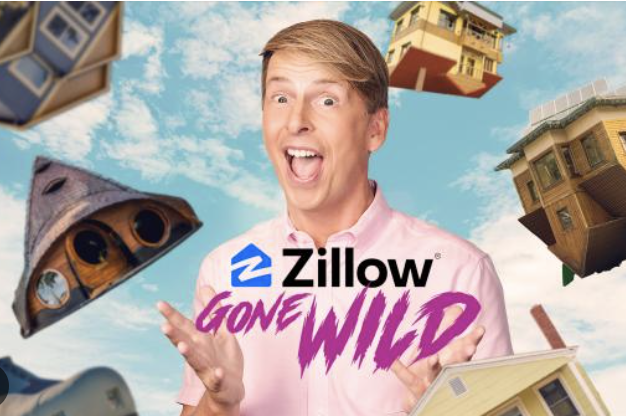
In the age of social media, even houses can become internet celebrities. Over the past decade, a wave of bizarre property listings – from castle‑themed mansions to eerie “haunted” homes – has captured the public’s imagination. This craze coalesced into a cultural phenomenon centered on Zillow Gone Wild, a social media account launched in late 2020. By collecting and sharing the most outrageous real estate photos, Zillow Gone Wild (created by Samir Mezrahi) helped turn unusual architecture into meme-worthy content. Other platforms and creators soon joined in, making “crazy real estate” a viral trend. The phenomenon tapped into pandemic‐era boredom and a craving for novelty, and it even influenced how homes are marketed today.
Early Wild Listings and the Meme Trend (2015–2019)
Long before Zillow Gone Wild, oddball listings occasionally made headlines. In 2016, for example, a luxury home in Avon, Connecticut – filled with ghoulish, horror‐movie decor – went viral, sparking jokes like “American Horror Story: Season 8” nationalmortgageprofessional.comnational mortgageprofessional.com. An Atlas Obscura piece later revealed that house was actually an artist’s avant‑garde creation (not exactly a typical real estate listing) nationalmortgageprofessional.com. But the online reaction highlighted a growing appetite for “cursed” or haunted listings.
Similarly, realtor.com’s podcast noted that by 2020 “crazy real estate listings” had become commonplace topics: they’d covered everything from hobbit‑house‑style abodes to converted churchesrealtor.com. In August 2020, realtor.com even featured a former sheriff’s house in Missouri with nine jail cells attached – a listing that tricked viewers until they hit photo 33!realtor.com. Such examples showed that unusual homes could spark massive online interest. (In fact, just a few months later Zillow Gone Wild itself would post that very sheriff’s house.)
In parallel, independent curators on TikTok, Twitter, and Pinterest began surfacing odd listings. Enthusiasts would share screenshots of strange Zillow finds – pet‑unfriendly carpeted ceilings, secret doll‑filled bunkers, or gaudy themed rooms – using hashtags like #ZillowGoneWild or #Zillowtastrophes. These posts often elicited “jaw‑dropping” comments as people bonded over the absurdities of fellow buyers’ tastesarchitecturaldigest.comlogicmag.io.
The Launch of Zillow Gone Wild (2020–2021)
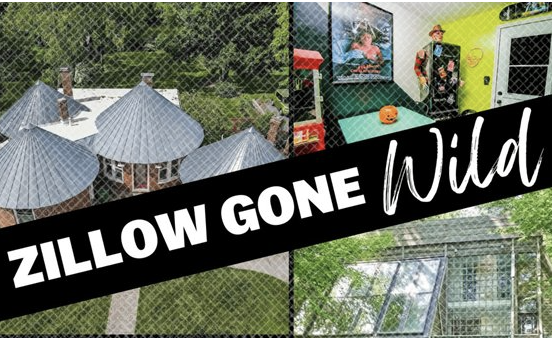
The trend coalesced when Samir Mezrahi, a former BuzzFeed social media editor, decided to curate these wild finds in one place. In December 2020, Mezrahi launched the Instagram account Zillow Gone Wildnpr.org. It immediately took off: within two weeks the account claimed 440,000 followers housebeautiful.com, and it grew to millions over the next year. In interviews he explained that during the pandemic he had filled downtime by “browsing homes…for years” online, and realized others might enjoy the strangest ones housebeautiful.comarchitecturaldigest.com.
Zillow Gone Wild thrives on extremes: unorthodox architecture, garish interiors, and tongue-in-cheek captions. Notable early posts included a domestic “tiger‑king” room (complete with a throne and jungle decorations) housebeautiful.com and a lighthouse‑converted castle (floating on an ocean reef) npr.org. Mezrahi added pop culture and humor: one Zillow Gone Wild tweet joked “we need to talk about the elephant in the room” under a photo of an elephant‑shaped table housebeautiful.com.
By early 2021 the craze was entrenched. House Beautiful reported that Zillow Gone Wild had expanded from oddball listings to “Mansion Mondays,” featuring outlandish luxury estates (mansions with indoor baseball fields, skate parks, etc.) housebeautiful.com. The account’s growth spilled into TikTok and Twitter, and fans started submitting tips of bizarre homes. Realtors soon noticed the power of a Zillow Gone Wild feature: Justin McGiver, a Chicago agent, told Realtor magazine that after two listings he tagged were picked up by Zillow Gone Wild, his phone “blew up” with messages from buyers housebeautiful.com.
Other Viral Real Estate Influencers
Zillow Gone Wild isn’t the only social media account riding this wave. TikTok creator Jessica More (@Zillowtastrophes) went viral for similarly scouring Zillow for odd listings. By mid-2023, More’s TikTok had over 700,000 followers and 23 million likes foxnews.comfoxnews.com. She curated compilations of “weird” homes – for instance a “haunted” Texas property filled with caskets and skeletons, listed at $125K, or an Oklahoma house with an underground “doll jail” – gathering millions of views per clip foxnews.com.
These influencers often overlap: Zillow Gone Wild reposts More’s finds, and vice versa. Beyond these, dozens of related accounts, hashtags, and Pinterest boards proliferated. Users on Pinterest pin boards of “The Craziest Zillow Listings” and share them widely. Even mainstream real estate media took note: National Mortgage Professional ran stories (2016, 2022) on viral weird homes, underscoring how once-incongruous design features were suddenly newsworthy.
Iconic Viral Listings (Examples)
Some listings became internet legends and drew media coverage. A few standouts include:
Nine‑Cell Sheriff’s House (Missouri, 2020): When realtor.com revealed the jail‑attached home (above), it went instantly viral. Listeners joked about “the ultimate nursery” because of the cell blocks realtor.com.
Flaming Nashville Mansion (Tennessee, 2023): A $1.5M mansion that had burned to a shell was listed “as is” on Zillow – featuring photos of flames shooting out the roof. The listing racked up over 360,000 views in a few days fox17.com. Amazingly, it sold in four days despite the fire damage, demonstrating that even “hot” debris can ignite bidding wars! fox17.com.
The “Doll Jail” (Oklahoma, 2023): A TikTok by Zillowtastrophes showed a home with a secret crawlspace housing dozens of creepy dolls. It drew 1.7 million views overnight foxnews.com.
Mid‑Century Tile House (Minnesota, 2022): A Seattle couple flew to Minneapolis to see a unique midcentury home covered entirely in tile mosaics. The house, found on Zillow Gone Wild, was eventually snapped up by fans who loved its “James Bond” vault aestheticarchitecturaldigest.com.
Alice-in-Wonderland Seuss Home (California, 2023): A Sacramento house with Dr. Seuss/Alice-in-Wonderland decor became famous online. The community begged the new buyer not to demolish it (calling it a public treasure) architecturaldigest.com.
Golden Saxophone House (Washington State): A house built around a giant golden saxophone (featured on the HGTV show) became a meme about absurd luxury.
Figure: A strange, half‑built tower in Uzbekistan – one example of the many idiosyncratic properties now studied and shared online. Sources: Zillow Gone Wild (social posts) npr.orglogicmag.io.
Cultural and Psychological Appeal
Why does “crazy real estate” resonate so much? Psychologists note that humans are wired for novelty and surprise madresult.commadresult.com. Weird houses break the scrolling: they trigger curiosity and strong emotions (laughter, shock, awe), prompting shares and comments worthingtonrealty.commadresult.com. As one realtor put it, posts on Zillow Gone Wild let ordinary viewers “get a glimpse into a world we don’t live in” and “dream a little bit about what it’d be like to live in one of those houses” washingtonpost.com. In other words, outrageous homes are harmless escapism and communal entertainment – especially welcome during the 2020–21 lockdowns. Indeed, an Architectural Digest profile noted that surfing Zillow for odd homes became “a great escape” from pandemic cabin feverarchitecturaldigest.com.
Creators like Jessica More have even articulated a philosophy: viewers connect over a kind of outsider appreciation. More (TikTok @Zillowtastrophes) says people learn to embrace each other’s quirky tastes (“don’t yuck someone’s yum”) foxnews.com. Her criteria for a viral Zillow include an “uncanny valley” quality – one bizarre detail that creeps people out (like miniaturized hallways or indoor cages) logicmag.io. These uncanny features hit hard emotionally: viewers frequently comment questions like “What was this person thinking?” or “bro, that price” logicmag.io.
Real estate marketing analysts have taken notice too. A 2024 report on Zillow Gone Wild observed that “the homes [featured] aren’t always luxurious or practical, but they are always something people talk about”worthingtonrealty.com. In other words, unforgettable listings “stop the scroll… get shared [and] become memes” worthingtonrealty.com. These accounts proved that real estate isn’t just about glossy perfection – the most memorable listings are the ones that make people feel something, not just admire neat stagingworthingtonrealty.com.
Figure: Even eerie listings can become pop culture – this “haunted house” (Scotland, 2020) fits the vibe of many viral Zillow finds. Practically every unusual property – from castles to capsule homes – now gets its own cult following online logicmag.ioworthingtonrealty.com.
Home‐Price Trends (2015–2025)
Meanwhile, the broader housing market was heating up. Zillow’s data show that the typical US home roughly doubled in value from the mid-2010s to the mid-2020s. In mid‑2015, the Zillow Home Value Index (median estimate) was about $180,000 nationalmortgageprofessional.com. By early 2025 it reached $361,263 on average zillow.com – an increase of roughly 100%. Much of that growth came in 2020–2022, when prices spiked over 20% per year, before cooling in 2023–24 as interest rates rose. (Zillow’s own forecasts in 2024 still predicted modest gains for 2025.) In practical terms, homes listed in 2024/25 stayed on the market only ~26 days on average zillow.com, and most sold under the original asking price as the frenzied buyer competition began to ease.
These market shifts give context: at the peak of the trend, nearly anything quirky could go viral and be lucrative. A wild listing seen on social media could quickly get thousands of views (far more exposure than a normal listing) and even lead to multiple offers. Zillow Gone Wild’s Mezrahi noted that his posts not only spiked web traffic but in some cases directly led to home sales marketingbrew.com. In one case, Zillow data proved a burnt‑out mansion still fetched $1.5M after its viral listing fox17.com.
Impact on Marketing and Buyers
The crazy-listing craze has already influenced how agents market homes. Recognizing that “interesting” trumps “perfect,” some agents now embrace eccentric features in photos instead of hiding them. As Zillow’s marketing chief put it, Zillow Gone Wild has been a “net positive” for the brand, keeping Zillow “on the tip of people’s tongues” marketingbrew.com. Zillow itself took a hands-off approach, even licensing the name for Mezrahi’s HGTV show rather than suing, because the social buzz drives traffic back to its sitemarketingbrew.commarketingbrew.com.
Buyers too changed their behavior. Instead of just filtering by neighborhood or price, many have started “browsing Zillow for fun,” following these meme accounts or searching keywords like “unique” and “outdoor pool” to see weird finds foxnews.com. During COVID in particular, legions of home-bound Millennials and Gen Z viewers developed a new hobby: tracking the latest viral listing on TikTok and Pinterest. In some markets, local papers now feature sections on “strange homes,” and agents tout quirky selling points (train sets, secret bookcases, etc.) to try to capture viral attention.
Zillow Gone Wild on TV: Mainstream Success
By 2024, Zillow Gone Wild had truly entered the mainstream. The social media pages had several million followers across Instagram, Twitter, TikTok, and Facebook npr.orgzillowgonewild.com. In May 2024 HGTV premiered “Zillow Gone Wild,” a reality series based on Mezrahi’s accounts. Hosted by comedian Jack McBrayer, the show featured outrageous properties (a concrete missile‑silo home, a pirate‑ship themed Las Vegas house, etc.) and even ran contests to pick the “wildest” home npr.orgzillowgonewild.com. The debut season was a hit – reaching 12.5 million viewers across cable and streaming zillowgonewild.com – and HGTV renewed it for a second season in 2025 zillowgonewild.com.
The TV adaptation cemented the trend’s place in pop culture. Today, stories about novel real estate (often featuring a Zillow Gone Wild nod) appear on news sites and gossip blogs. Official Zillow social channels sometimes piggyback on the craze. And while “listings gone wild” remain niche, they have undeniably expanded what modern buyers and sellers expect from real estate marketing.
Summary of Key Points
Timeline: The “crazy listings” meme grew throughout the 2010s (viral Zillow ads circa 2016) and exploded during the 2020 pandemic. Samir Mezrahi launched Zillow Gone Wild in Dec 2020npr.org. By 2023–24 it was a multimillion-follower brand and an HGTV series npr.orgzillowgonewild.com.
Influencers: Major accounts include Zillow Gone Wild (Instagram, TikTok, Twitter) and TikTok’s Zillowtastrophes. Fans also curate Pinterest boards of bizarre homes. Key influencers like Mezrahi and Jessica More turned outrageous listings into social‐media content foxnews.comnpr.org.
Cultural appeal: Audiences love novelty and humor. Outlandish homes tap our curiosity and offer escapism – “a glimpse into a world we don’t live in”washingtonpost.com. Psychologically, weird content triggers strong emotions (surprise, amusement) and sharingmadresult.comworthingtonrealty.com.
Iconic examples: Notable viral listings include the Missouri sheriff’s house with jail cellsrealtor.com, a Tennessee mansion sold as‑burned with flames in photos fox17.com, “haunted” homes with caskets foxnews.com, and cartoonishly decorated mansions. These posts garnered tens of thousands of comments and media write‑ups.
Market trends: From 2015 to 2025 U.S. home values roughly doubled. Zillow data show a median home at ~$180K in mid‑2015 nationalmortgageprofessional.com versus ~$361K in early 2025 zillow.com. Prices surged especially in 2020–22, then cooled by 2024. Many wild listings went fast: a viral burned mansion sold in 4 daysfox17.com.
Marketing impact: The meme made agents highlight (rather than hide) unique features. Zillow embraced the phenomenon as positive PR marketingbrew.com. Sellers now often pitch their homes as “quirky,” and consumers expect entertainment value even in realty ads.
Sources: Contemporary accounts and research (NPR, Realtor Magazine, Washington Post, Zillow, etc.) document the rise of Zillow Gone Wild and related social trends npr.org marketingbrew.com foxnews.comnationalmortgageprofessional.com zillow.com. These citations illustrate the timeline, examples, and data discussed above.
Sources