
Authentic Eichler vs. Imitation: A Silicon Valley MCM Guide
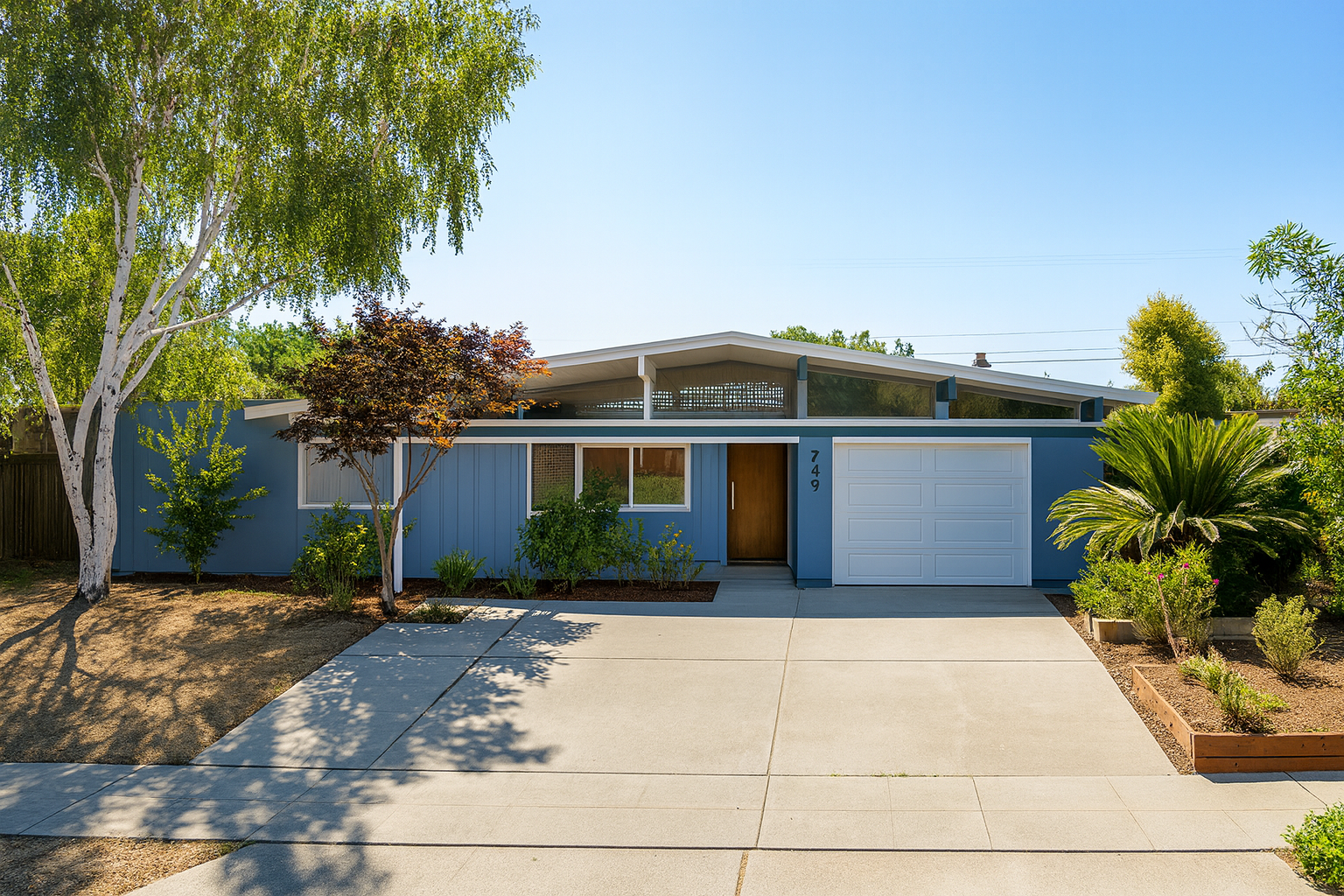
Identifying a true Eichler home versus a mid-century modern imitation can be both exciting and challenging. Silicon Valley’s post-war suburbs are sprinkled with real Eichlers – iconic modern tract homes built by developer Joseph Eichler – as well as lookalikes by other builders. Serious Mid-Century Modern (MCM) fans know that subtle details make all the difference. This guide dives deep (with a bit of architectural nerdiness) into how to spot an authentic Eichler in Silicon Valley and distinguish it from the “almost Eichler” crowd.
What Makes a Home a True Eichler?
A “True Eichler” is more than just a mid-century modern style house – it’s one built by developer Joseph Eichler’s company during the prime years of 1949–1974. Eichler homes were designed by leading modernist architects of the era, including Anshen & Allen, Jones & Emmons, and Claude Oakland, among others. These architects, influenced by Frank Lloyd Wright’s ideas, gave Eichler developments a distinct design language that set them apart from ordinary ranch houses. In total, Eichler’s firm built nearly 11,000 homes in California, with large concentrations in Northern California (Marin, the East Bay, San Mateo County, and especially Silicon Valley areas like Palo Alto, Sunnyvale, and San Jose) and a few tracts in Southern California. If a home wasn’t built by Eichler’s organization (or its close partners) in that mid-century timeframe, it isn’t a “true Eichler,” no matter how similar the style.
Eichler’s vision was to bring modern architecture to mainstream homebuyers. His communities were characterized by bold modernist features that were revolutionary for the 1950s: indoor-outdoor living, open floor plans, walls of glass, atriums, and even innovative technology like in-floor radiant heating. Unlike generic tract builders, Eichler insisted on quality materials and refused to cut corners on design. He was also a social progressive – notably, Eichler was one of the first builders to sell to buyers of all races, at a time when others wouldn’t. All these elements – the who, when, and how – define a true Eichler home. In short: if you’re standing in a California Modern tract house built in the 1950s or ’60s by Joe Eichler’s team, with hallmark design features described below, you’ve likely found the real deal.

Signature Eichler Architectural Features
How do you recognize those “hallmark design features” of an authentic Eichler? Eichler homes have a well-defined set of architectural identifiers. Here are the key features that genuine Eichlers possess (and which imitators often only approximate):
Exposed Post-and-Beam Structure: Eichlers are true post-and-beam constructions – you can literally see the structural beams running through the home. Inside, stout beams span across ceilings (often extending through to the outside eaves) with minimal internal walls. This creates the open layouts Eichlers are famous for. Imitation mid-century homes might copy the look with fake decorative beams tacked on, but an authentic Eichler’s beams are part of its skeleton. A telltale sign: in a real Eichler, the beams align from interior to exterior and there’s no attic hiding them (you might even see the beam ends poking out under the eaves).
Tongue-and-Groove Wood Ceilings (No Attic): Look up at an Eichler’s ceiling and you’ll usually see wooden planks (tongue-and-groove decking), not drywall. Those 2-inch thick planks are the ceiling and the roof’s underside in one – there’s no attic above, just roofing material on top of the boards. The result is a beautiful linear wood pattern overhead. In a true Eichler, these ceilings follow the roofline and often show the wood grain (sometimes stained or painted white). Copycats might have flat drywall ceilings or applied paneling that’s not structural. If you spot attic vents or a crawlspace above the ceiling, that house deviates from Eichler’s no-attic design.
Concrete Slab Foundation with Radiant Heat: Eichler homes were pioneers of radiant floor heating. Authentic Eichlers sit on a concrete slab embedded with a grid of hot-water pipes (originally copper or steel) that gently heat the home from the floor up. This means no forced-air ducts – no furnace in the attic, no floor registers or baseboard heaters in original condition. (Many Eichlers still have their functioning radiant heat, which enthusiasts love, or have upgraded systems if the old pipes failed.) If you see a forced-air furnace, ductwork, or crawlspace under the floor, that’s a sign the house may be a “faux Eichler” or heavily altered. The slab also typically had 4x4 inch asphalt tiles or linoleum originally – a little vintage detail. In short, true Eichler = warm concrete floors, while imitators often used conventional raised foundations and furnaces.
Floor-to-Ceiling Glass Walls: Perhaps the most dramatic Eichler feature is the expanses of floor-to-ceiling glass. Eichler’s designs blur indoor and outdoor spaces with entire walls of glass in living areas. It’s common to have a large glass facade at the rear of the house (living room/dining room) opening onto the backyard via sliding glass doors. These are typically single-pane glass in thin aluminum frames stretching from slab to ceiling. In the front, many Eichlers also have glass walls looking into an entry atrium. Imitations might have big windows too, but often not as continuous or as tall. A lookalike builder might put a row of windows with wall beneath, rather than true floor-to-ceiling glass. Also, check the frames: authentic mid-century Eichler windows have a delicate, minimal frame profile (and were single-glazed), whereas modern replacements or copycats could have thicker frames or divided lights. The “wall of glass” oriented to a private outdoor space is a quintessential Eichler trait – step into an Eichler living room and you should immediately see the yard or atrium through a broad glass wall.
Open-Plan Layout (Minimal Hallways): Eichler homes embrace open concept living well ahead of their time. Living, dining, and sometimes kitchen areas flow together without full walls separating them. Many Eichlers have only small partial dividers or cabinetry between kitchen and living spaces, creating a great room effect. Hallways, if present, are usually short and bedrooms cluster on one side of the house. This was very different from conventional 1950s homes with segmented rooms. If you enter a home that claims to be an Eichler but find a long central hallway or a closed-off formal living room, something’s off. (It could be an Eichler that was remodeled badly, or just not an Eichler at all.) The authentic Eichler feel is informal and airy – you can often stand at the front door and see straight through the open living area to the backyard.
Central Atrium (in Many Models): One of Eichler’s signature innovations was the atrium – an open-air courtyard in the middle of the house. Not all Eichlers have atriums (early models did not), but by the late ’50s Eichler introduced models where you enter into a rectangular atrium before reaching the interior rooms. This was essentially a private outdoor foyer, open to the sky but enclosed by glass walls around it. A true atrium Eichler has multiple rooms (living room, kitchen, etc.) facing this interior courtyard with floor-to-ceiling glass. It’s a wow factor: you walk through a front gate or door and find yourself outdoors yet inside your home. Few other mid-century builders copied this feature exactly. A “not-quite-Eichler” house might have a small enclosed entry patio or porch, but not the full integrated atrium that Eichler made famous. If you see a generous open atrium as the home’s entry, it’s a strong sign you’re in an Eichler. (Atriums were popular in Eichler tracts in Palo Alto, Orange (SoCal), San Mateo Highlands, etc., and are a beloved hallmark of Eichler design.)
Low-Pitched Rooflines with Deep Eaves: Eichler roofs are distinctive – flat or very low-pitched gable roofs, usually with no attic and wide, flat eaves extending out. Many Eichlers appear almost flat from the street, though some have shallow A-frame gables or peaked sections for visual interest. The roof profile is thin – often you can see the edge of those tongue-and-groove ceiling planks at the eaves because there’s no bulky roof truss above. Deep overhangs are common, providing shade and emphasizing the horizontal lines. Copycats might attempt a “flat roof” look but usually still hide a small attic under a slightly higher pitch, which results in a thicker fascia or visible ventilation grills. Also, Eichler’s original roofs were often tar-and-gravel or bonded tar (in modern days frequently redone in foam roofing to mimic that look). If you see a house with a noticeable conventional pitched roof, an attic space, or perhaps a different roofing material like heavy shingles or tiles, it’s likely not an unaltered Eichler (except for a few rare late Eichler models). The classic Eichler roof is light and planar, almost floating above the glass-walled living spaces.
Clerestory Windows & Minimal Street Facade: Privacy was a key element in Eichler design. Most Eichlers present a modest face to the street – often a blank wall, carport, or garage door, with maybe a few clerestory windows (small horizontal windows up near the roof) and no big picture windows facing the front. Those clerestories let light into the front rooms while keeping prying eyes out. It’s typical to see translucent or high strip windows instead of large front-facing glass in an Eichler. Imitation MCM homes sometimes break this rule: another builder might put a normal front window or more street-facing glass for curb appeal, which Eichler generally avoided. If a house has a very open or symmetric facade with big front windows, it’s probably not an Eichler (or it’s been remodeled). Eichler’s approach was “private in front, party in the back” – a nearly blank front and expansive glass at the back and/or atrium. Also note the front door on many Eichlers is often tucked behind a fenced courtyard or not obvious from the street. Authentic Eichler entries are usually understated – a simple flush door (often brightly painted) with little adornment. If you see a lot of ornamental front details (fancy porticos, bay windows, etc.), it’s deviating from Eichler’s minimalism.
Mahogany Paneling & Open Interiors: Inside an Eichler, you’ll frequently find Philippine mahogany wood paneling on the walls (lauan plywood sheets with vertical grain). Eichler used these 1/4-inch panels in many rooms instead of plaster or drywall, giving the interiors a warm mid-century character. The panels were usually a rich natural brown tone (though some owners have painted them white over the years). Many imitators did not include such extensive wood paneling – they went with standard painted drywall finishes. So if a house has all-white drywall everywhere and no trace of wood (especially in a mid-century tract), that could be a clue it’s not an Eichler or has lost its original character. Authentic Eichlers often also feature simple globe light fixtures, sliding closet doors made of the same panel material, and other period touches. And because of the post-and-beam structure, interior partitions don’t always go to the ceiling (Eichler sometimes used partial-height walls or sliding shoji screens) to keep sightlines open. All these create an open, modern vibe. In short, an untouched Eichler interior feels like 1960s modernism – open, woodsy, and a bit minimalist – whereas a lookalike might feel more like a standard ranch inside.
Distinctive Exterior Siding and Carport: Eichler exteriors typically have vertical grooved siding panels – often called “Eichler siding” today. These are flat boards or panels with regular vertical grooves (common patterns were grooves spaced about 2 inches or 8 inches apart) giving a uniform, textured look. Importantly, original Eichlers did not use brick, stone, or even horizontal siding on the outside. If you see a bunch of brick veneer, clapboard, or rustic stone on a supposed Eichler, that’s a red flag of either a remodel or a different builder. The vertical plywood siding was a hallmark – even today, restoration suppliers mill “Eichler siding” to match those exact groove patterns. Additionally, Eichler homes often have an integrated carport or garage that blends with the house: usually set at the front, under the main roofline, with a flat plain garage door or an open carport with posts. Eichler carports/garages were kept low-profile so as not to dominate the facade. For example, many models have a carport that leads right to the front door, sheltered by the same roof. Other builders might include carports in their mid-century homes, but Eichler’s tend to share the exact same beam-and-roof structure as the house (not a later add-on). If a home has a big protruding garage that sticks out or a highly decorative garage door, it’s likely not an Eichler design – Joe Eichler favored simplicity (often just a flat panel door) and even used open carports in early years. The combination of elements – clean vertical siding, simple front with carport, and all the other features above – creates the unmistakable Eichler look. A genuine Eichler will typically have all these pieces present in some form, whereas a lookalike might get a few right but not the rest.
Spotting “Not-Quite-Eichlers” (Common Imitation Features)
With the above in mind, what distinguishes an Eichler imposter? In the 1950s and 60s, seeing Eichler’s success, other developers in Silicon Valley began building their own modern tract homes. Companies like Mackay Homes, Alliance, Stern & Price, Gavello, and others produced Eichler-style houses that can fool the untrained eye. Moreover, contemporary remodels or new builds sometimes emulate Eichler aesthetics. Here are the subtle (and not-so-subtle) differences often seen in “Eichler-esque” homes that aren’t true Eichlers:
Conventional Construction Clues: Many copycat builders borrowed Eichler’s look but not his exact methods. For example, John Mackay’s homes (found in parts of Santa Clara, Mountain View, etc.) were built with raised foundations and crawl spaces instead of slabs, and typically used forced-air heating with ducts. That means a Mackay or similar house will often have floor vents or wall furnaces (and possibly a furnace closet or attic), whereas an Eichler would originally have none. If you peek under the house and see a crawl space (or notice a couple of steps up at the entry due to a raised foundation), you might be in an Eichler-lookalike, since Eichlers hug the ground on their slabs. Hint: Mackay Homes were sometimes literally designed by Eichler’s architects (Anshen & Allen) and look very much like Eichlers, but these structural differences give them away.
Roof Pitch and Attic Tells: Imitation MCM homes often have a slightly steeper roof pitch or a small attic for utilities. An Eichler’s roof is usually almost flat and, crucially, has no attic vents on the fascia. If you see vent grilles near the roof or a thick fascia board hiding trusses, the house might not be an Eichler. Some “Eichler-inspired” designs also used butterfly roofs or more pronounced peaks as stylistic flourishes that Eichler homes (aside from a few rare models) didn’t use eichlerhomesforsale.com. Mackay roofs, for instance, tend to be low-gabled with a bit more pitch and sometimes feature visible gable vents or decorative beams that don’t align with interior beams eichlerhomesforsale.com. In short, if the roofline doesn’t have that super-thin, hovering quality – or if it has standard shingles where your gut expects gravel – be suspicious.
Windows and Glass Differences: Many imitators did include big glass panes, but often not floor-to-ceiling. You might notice a knee-high wall below the glass, or windows that aren’t as tall as an Eichler’s. Also, check the front of the house: Eichler would rarely put a wide picture window facing the street, whereas other builders sometimes did (they wanted curb appeal). So if the front has a large picture window or symmetrical set of windows flanking the door, it could be a lookalike trying to appear modern yet still appease conventional expectations. Window framing is another clue: Eichlers used slim aluminum frames. A remodel or newer faux-Eichler might have thick dual-pane vinyl frames or added grilles that break the expanses of glass. Original Eichler glass also tended to be single large panes; many imitators in the mid-century era couldn’t afford such large custom glass and might have used smaller sections or more sliding windows instead of huge fixed panes. Overall, authentic Eichler fenestration has a very minimalist, transparent look, while imitators might interrupt it with more framing or a different window layout.
Facade Layout & Symmetry: Eichler facades often have an off-center, asymmetric composition (e.g. garage on one side, maybe an atrium entry offset) and generally lack decorative symmetry. If you see a highly symmetric facade – say a centered front door with matching big windows on either side – that’s actually not typical of Eichler tract designs. Some other builders (and later architects) did create “mid-century modern” homes with a more formal, balanced front elevation. Eichler’s architects, by contrast, were usually playing with asymmetry or hidden entries to create privacy. Example: A rival developer’s home might have the front door dead center and a picture window looking out front; an Eichler might hide the door around a corner and have a blank wall or clerestory in front, putting the big glass in back. Serious MCM spotters know to look for those Eichler rhythms – e.g., an Eichler might have a front gable that’s not centered on the house, which feels subtly different from a symmetric ranch. If the facade feels “too traditional” in its balance, it could be a faux-modern.
Interior Finish and Floor Plan: Inside, non-Eichler mid-century homes often feel more traditional. They may have a formal entry foyer or longer hallways than an Eichler would. For instance, Mackay homes sometimes included a small foyer or more compartmentalized spaces as a nod to convention, whereas Eichlers unabashedly opened everything up. Imitators also seldom went all-in on features like the atrium – at most, you might find a small courtyard or patio, but not the full atrium in the center of the house. Check the ceiling: if it’s not open beam and plank but instead standard ceiling panels or tiles, that’s a giveaway (Mackay homes in some tracts used Celotex ceiling tiles – basically a soft fiberboard – instead of Eichler’s wood decking). Look at the walls – Eichler = mahogany in original form, others = drywall. In fact, a quick cheat-sheet from one Silicon Valley neighborhood (Monta Loma in Mountain View, which had Eichlers alongside Mackay and Mardell-built homes) goes like this: Eichler = open radiant floors, mahogany walls, plank ceiling; Mackay = forced-air heat, sheetrock walls, painted ceiling tiles; Mardell (another builder) = forced-air, hardwood floors, plank ceiling. So slight construction differences can tip you off if you know what to look for.
Materials & Trim: Over-embellishment is the enemy of Eichler’s aesthetic. If you see “extra” decorative elements that seem out of place (for example, brick chimneys on the facade, stone wainscoting, ornate ironwork, or shutters on windows), it’s likely not an Eichler – or it’s an Eichler that had unfortunate remodels. Many imitators stuck some brick or stone on the front to make buyers happy, or used T1-11 siding that has a rough texture instead of Eichler’s smooth grooves. Eichler exteriors were uniformly wooden and modernist plain. Also, authentic Eichlers have almost no trim – e.g., no crown moldings, no fancy window casings. If you walk inside a supposed Eichler and see crown molding on the ceilings or colonial-style baseboards, that interior has strayed (Eichler’s ceilings meet the beams with no trim). In short, “faux-modern” homes or poorly remodeled Eichlers tend to introduce traditional trim or materials Eichler would never use. Watch out for things like textured stucco walls, brick veneers, decorative shutters, or overly busy color schemes – Eichler’s palette was typically natural and subdued (earthy tones, with maybe a bold accent front door). For example, an original Eichler might be stained mahogany inside and painted warm grey or beige outside with an orange door, whereas a remodeled or imitation might have, say, a bright blue exterior or a mish-mash of styles. If it feels over-dressed, it’s probably not authentically Eichler. Remember, Joseph Eichler’s motto was “keep it simple, keep it honest.” Imitators sometimes violated that with extra frou-frou.
Knowing these difference points, you can start playing detective. Oftentimes, one or two features alone won’t prove it – but an accumulation of inconsistencies will raise your eyebrow. For instance, you might find a house with Eichler-like beams and glass, but then notice it has a crawlspace and decorative brick; that likely means it’s an “Eichler-style” tract by another builder, not Eichler. Or you might tour an alleged Eichler that has the right slab and siding, but a weird added vestibule – perhaps an owner-added entry that isn’t original (remodels can confuse the picture, which we’ll get into later).
“Faux-Modern” Checklist: Is That House a Real Eichler?
For quick reference, here’s a checklist of questions to ask when you’re assessing a mid-century modern home’s authenticity. Enthusiasts and prospective buyers can use this as a field tool – if most answers align with Eichler characteristics, you likely have the real thing; if not, you might be looking at a faux-modern or heavily altered example:
Beams & Ceilings: Do you see exposed beams running continuously through the interior to the outside eaves? (Yes = Eichler vibe) Are the ceiling panels wooden T&G with no attic above (and no ceiling vents)? (Yes = Eichler; if there’s an attic or just drywall ceilings, caution).
Heating & Foundation: Is the home built on a slab with radiant floor heating (and notably no forced-air ducts or furnace)? (Original Eichler = heated slab, no vents) Check for clues: old boiler in garage, lack of duct grates on the floor, etc. If instead you find a crawlspace, furnace or many air vents, it’s likely not an untouched Eichler.
Atrium & Layout: Does the layout feature a central atrium or a very open indoor-outdoor flow? When you enter, do you step directly into an open-air atrium or see straight through glass to a backyard? (Classic Eichler models do.) Or is there a traditional foyer and closed rooms? (Long hallways and formal foyers were not Eichler hallmarks).
Glass Walls: Are there floor-to-ceiling glass panels and sliding doors facing a yard or atrium? (Essential Eichler trait) And are street-facing windows minimal (just clerestories or frosted glass)? (Yes = Eichler; No = suspect.) A big picture window facing the street, or half-height windows instead of full-height glass, often signals an imitator.
Interior Materials: Does the home retain unpainted mahogany wood paneling on walls or original globe lights and sliding closet doors? (These scream Eichler.) If the interior is all drywall and standard light fixtures, either it’s been remodeled or it wasn’t an Eichler to begin with. Original Eichlers often have at least some paneling in main living areas – absence of any might be a clue of a remodel or non-Eichler.
Exterior Siding & Details: Examine the cladding: is it vertical groove wood siding with a smooth finish? (Likely Eichler.) Or do you see brick, stone, or horizontal siding? (Not Eichler). Also check if the garage door is a simple flat panel (or if there’s an open carport). Eichler fronts are unassuming – an ornate front elevation with lots of trim, shutters, or a prominent chimney would be atypical.
Neighborhood & Builder: Is the house located in a known Eichler tract (Palo Alto’s Greenmeadow/Green Gables, Cupertino’s Fairgrove, Sunnyvale’s Fairwood/Fairbrae, San Jose’s Fairglen, etc.) and built in the 1950s-60s? If so, odds are it’s a real Eichler (though those areas have a few similar-looking homes too). If the house is in a development known to be by another builder (e.g. a Mackay or Alliance Homes tract), then it’s not an Eichler – even if it looks amazingly similar. When in doubt, research the tract name or original builder – Eichler homes are well-documented by location. A house built in, say, 1978 or 2005 that “looks Eichler-like” is definitely not a true Eichler (could be a custom homage).
Consistency of Features: Finally, do the home’s features make sense together? True Eichlers tend to check all the boxes: post-and-beam + slab + glass + atrium (in later models) + etc. If some elements are spot on but others are way off, be skeptical. For example, an Eichler-style roof but with colonial windows would be a strange mix – likely a remodel or a pseudo-Eichler. Use a combination of the above criteria to make an informed call.
By running through this checklist, you can quickly gauge authenticity. For instance, imagine you’re visiting an open house: you notice open beams and a big glass wall (promising), but also carpeted floors with heating vents (uh-oh), and the neighborhood was built in 1965 by “XYZ Homes” not Eichler (ding ding, probably not real!). A genuine Eichler will usually score positives on most of these bullet points. And if you’re still unsure, you can always consult resources or experts (more on that below).
Visual Comparison: Eichler vs. Lookalike Homes
A picture is worth a thousand words. Let’s put an authentic Eichler next to an imitator to spot the differences in real life. Below, left is a verified Eichler home (the Foster Residence Eichler in Granada Hills, Los Angeles) and right is a mid-century modern home by another developer (Mackay Homes in Mountain View’s Monta Loma tract). Both houses share a low-slung profile and broad eaves, but look closely at their details:
Left: A classic Eichler home with an open-beam A-frame entry and minimal street-facing windows. Right: A Mackay mid-century tract house – similar post-and-beam vibe, but note the slightly higher gable pitch and additional facade elements.
In the Eichler (left), you can see the open-beam construction extending to form a peaked entry roof, and a largely solid front with just a clerestory strip under the eaves. The garage door is flush and unadorned, and there’s virtually no ornamentation – this house “hides” its glass walls on the other side (facing a private atrium or yard). The roof is ultra-thin and flat except for that center A-frame pop-up. In contrast, the Mackay home (right) has a comparable mid-century form but with subtle giveaways: the roof pitch is a touch steeper, and if you look carefully, you might spot attic vents or a slightly thicker fascia at the gable ends (signalling a small attic space). The front of the Mackay shows a bit more visible window area and pattern – for instance, some Mackay models placed windows or decorative panels symmetrically, whereas Eichlers often eschew any large front windows. Also, the Mackay home may have a different foundation height (some Mackays are on raised foundations, which can create a step-up at the entrance or a vent grid along the base of the wall). These nuances illustrate how two houses can both scream “mid-century modern” yet only one is a true Eichler.
Another side-by-side example: imagine an interior view – an Eichler living room would have open beams and wood panels, while a lookalike might have similar post-and-beam lines but with painted ceilings or added crown molding (misguided later addition) that Eichler would never include. Seeing original and imitation together trains you to notice that Eichler designs feel a bit more minimal, more integrated. The imitators, excellent as many were, often made tiny concessions to mainstream tastes (like that extra window, or slightly higher roof for storage, or a decorative accent) that now serve as tells.
For Silicon Valley specifically, there’s even a mix within some neighborhoods that allows on-the-spot comparisons. For example, in Mountain View’s Monta Loma area, you can literally stand on one street and see an Eichler and a Mackay-built house nearby – a living “spot the difference” game. Eichler Network once noted that in some tracts like Monta Loma, only an attentive eye can notice which homes are Eichlers after years of remodeling, but those eyes get sharper with practice!
Eichler Neighborhoods in Silicon Valley (and Where Imitations Lurk)
Understanding local context is hugely helpful. Silicon Valley was a hotbed of Eichler developments, but also home to other modern tract builders. Here’s a regional rundown with some local insight:
Palo Alto: Palo Alto is Eichler central. The city boasts over 2,700 Eichler homes – more than any other city – in neighborhoods like Green Gables, Greenmeadow, Fairmeadow, and Charleston Meadows. These were some of Eichler’s earliest projects (built starting ~1950) and are so significant that Greenmeadow and Green Gables are listed on the National Register of Historic Places. Drive through south Palo Alto and you’ll find entire subdivisions of one-story Eichlers with their distinct fences, carports, and flat roofs. Palo Alto is serious about preserving its Eichler heritage – the city even created Eichler design guidelines and single-story overlay zones to protect the mid-century character. In these areas, authentic Eichlers are the norm, but watch for remodels: a number of Palo Alto Eichlers have been altered (some owners added second stories before stricter rules, etc.). Also, interestingly, a few non-Eichlers sit among Eichlers – e.g., some older ranch houses or a stray Mackay home can exist adjacent to Eichler tracts. But locals often know which is which. In general, if you’re in Palo Alto’s Eichler districts, chances are any given house is the real McCoy unless it’s been completely rebuilt.
Sunnyvale: Sunnyvale can claim the title “Home of the Eichlers” as well, with over 1,000 Eichler homes across about 16 tracts. Eichler’s very first tract development was in Sunnyvale (the Eichler Homes 1st Addition, around 1949–50), and he went on to build extensively there through the 1950s. Key Eichler neighborhoods in Sunnyvale include Fairwood, Fairbrae, Rancho Verde, Loyola Corners, and Sunnyvale Manor (the Eichler homes in Sunnyvale are scattered in pockets, often easily spotted by their modern look amid more typical houses). Sunnyvale’s Fairbrae tract even has the Eichler Swim & Tennis Club, a community facility built for Eichler owners. Because Sunnyvale had such a large Eichler presence, imitation builders also popped up. Tracts like Gavello Glen (Sunnyvale Manor II) were built by another developer (Gavello) and feature MCM homes that look a lot like Eichlers but aren’t – in Gavello’s case, the homes have subtle differences like brick accents and different window placements. A trained eye in Sunnyvale will note that while Eichler was prolific, not every flat-roof MCM there is by Eichler. If you’re house-hunting in Sunnyvale, it pays to know tract names: “Eichler” tracts vs others. Fun fact: Sunnyvale Eichlers range from some of the smallest models Eichler built (modest 3-bed/1-baths in the early ’50s) to larger 4-bedroom models in the ’60s – touring Sunnyvale can give you a mini history of Eichler evolution.
Cupertino: In Cupertino, the main Eichler enclave is the Fairgrove tract. Fairgrove was built around 1960–1961 and includes 223 Eichler homes in the area near Miller Avenue and Bollinger Road. These Eichlers are prized for being in a city known for tech and top schools, so there’s both enthusiasm and pressure on them. Cupertino has even rezoned Fairgrove with an “Eichler overlay” to help preserve the neighborhood’s character (preventing McMansions from replacing Eichlers). In Cupertino, Eichlers have low-gable roofs and many have atriums. Are there imitations? Not many within Cupertino – Fairgrove is mostly pure Eichler. But just next door in Santa Clara and West San Jose, there are plenty of Mackay homes and others. So if you go a few blocks out, you might encounter “Cameyo” or “Mackay” modern homes that can confuse the unwary. Within Cupertino city limits, Fairgrove is the Eichler gem, whereas other MCM-style homes in Cupertino (if any) were likely custom builds. A note on modifications: Some Cupertino Eichlers, like elsewhere, have seen remodels – you might spot a Fairgrove Eichler with a second story pop-up or a fully remodeled facade. Thankfully, community efforts exist to maintain the integrity (there’s an active Fairgrove Eichler Homeowners group).
San Jose: San Jose is a sprawling city, and it has several Eichler pockets, especially in the Willow Glen and Cambrian Park areas. The most famous is Fairglen in Willow Glen – a tract of about 218 Eichler homes built 1959–1961, known collectively as the Fairglen Additions. Fairglen Eichlers are so notable they were added to the National Register of Historic Places in 2019 as a historic district. These are gorgeous Eichlers on tree-lined streets (street names like Booksin Ave, Fairglen Drive) and the neighbors are quite Eichler-savvy. Willow Glen actually has three Eichler tracts (Fairglen Units 1–3, plus a smaller tract near Curtner Ave) totaling around 350 Eichlers in San Jose. There’s also a tract near Rose Glen and even a few Eichlers by Campbell (the San Jose/Campbell border). If you’re in an Eichler cluster in San Jose, most of the homes around you will indeed be Eichlers. However, San Jose also has many random mid-century neighborhoods – you might find a lone atomic ranch or custom modern that is not Eichler. Also, because San Jose’s Eichlers often have larger lots, many have been altered over time. It’s not uncommon to see, say, an Eichler where the atrium was roofed over to create more interior space (a practice purists bemoan – it “breaks” the Eichler design). As a local tip: if you’re touring San Jose Eichlers, check out the Fairglen neighborhood – neighbors host occasional Eichler home tours there, and it’s one of the most intact Eichler areas in the South Bay.
Mountain View & Los Altos: While not mentioned explicitly in the question, it’s worth noting that Mountain View has the Monta Loma neighborhood we discussed – which is a mix of Eichler and non-Eichler MCM homes. Also, Los Altos has a small number of Eichlers (in neighborhoods like Rancho San Antonio area or along Fallen Leaf Lane) and many Brown & Kaufmann modern homes (those are another Eichler contemporary, often larger custom-looking MCM homes in Los Altos that are sometimes mistaken for Eichlers). If you’re in Los Altos and see a mid-century modern house, chances are it’s not Eichler but a custom or another developer’s, since Eichler didn’t do large tracts there.
Santa Clara: The city of Santa Clara surprisingly has zero Eichler-built homes (Joe Eichler didn’t develop there), but it has a Mackay Homes stronghold. The Maywood and Fairmede tracts in Santa Clara (off Lawrence Expressway and Monroe, for example) are full of Mackay mid-century modern houses. These were designed by Anshen & Allen for John Mackay, so they look a lot like Eichlers – low roofs, courtyard entries, etc. Locals sometimes assume they’re Eichlers until informed otherwise. If you’re in Santa Clara’s 95051 zip code and see MCM homes, you’re likely in Mackay territory. Many Mackays in Santa Clara have been remodeled beyond recognition, but a good number remain with original character (and are finally getting recognition – homeowners are realizing they’re mid-century gems too). Santa Clara’s Mackay tracts are a prime spot where an Eichler enthusiast might get fooled – they have post-and-beam construction and even some have atrium-like layouts. But remember the cheat: Santa Clara city = Mackay (or Stern & Price), since Eichler didn’t build there.
Other Areas: San Mateo Highlands (in San Mateo County) deserves mention as the largest contiguous Eichler tract (over 700 Eichlers), and while it’s a bit north of “Silicon Valley proper,” many MCM fans visit it. It’s pure Eichler (lots of atrium models and even some two-story Eichlers there). Redwood City and Menlo Park also have a smattering of Eichler neighborhoods (e.g., Redwood City’s Mount Carmel area has Alliance-built homes that look similar, and nearby Ladera and University Heights have Eichler and non-Eichler MCM homes mixed). If you venture to Marin County or East Bay – plenty more Eichlers, but that’s beyond our Silicon Valley scope.
In Silicon Valley’s Eichler enclaves, faux-Eichlers and heavily modified Eichlers are most common on the fringes – or as one-off rebuilds. For example, in some Palo Alto Eichler areas, a few homes were replaced in the 2000s with new modern houses that nod to Eichler style but obviously aren’t original. Similarly, in neighborhoods with mixed builders (like Monta Loma or parts of Sunnyvale), you’ll find “near miss” designs interspersed. Enthusiasts here often swap notes on which addresses are true Eichlers. The Eichler Network site even lists addresses/tracts by city so you can verify if a given house was Eichler-built.
Local Eichler homeowner associations (like Greenmeadow in Palo Alto or Fairglen in San Jose) also keep the flame alive by educating neighbors about what not to do in remodels and by celebrating the history. When you walk these neighborhoods, you might notice period details like original Eichler address plaques or globe porch lights – neighbors often restore these, and imitation homes might lack those exact touches or use different designs (for instance, Mackay houses had their own style of address numbers and sometimes used different porch lights).
Where are “fakes” or modified homes common? Sadly (from a purist perspective), in almost every Eichler tract you will find some heavily remodeled homes. Commonly, owners in the past added second-story additions (resulting in a “pop-top” appearance that clashes with the Eichler aesthetic eichlerhomesforsale.com), or they enclosed carports, or even walled over glass walls to create more privacy or space. In Palo Alto and Mountain View in the ’70s and ’80s, quite a few Eichlers got Spanish tile roofs or other stylistic overlays during remodel crazes – the good news is many of those are being restored back to Eichler looks now as MCM has come back in vogue. Also, in tracts like the Santa Clara Mackay neighborhoods, extensive remodeling over decades made some Mackay mid-century houses barely recognizable until folks started reversing the changes. It’s not uncommon to see one house with its beams intact next to another whose beams got boxed in or whose T&G ceiling was drywalled over.
A hotspot of “Eichler-like” confusion is Monta Loma (Mountain View): Eichler, Mackay, and Mardell homes all intermingle. You could see an Eichler with original siding next to a Mackay where the owner stucco’d the exterior. Enthusiasts actually enjoy pointing out the subtle differences on walks there (plank ceiling vs. tile ceiling, etc.). Another is parts of San Mateo Highlands vs. nearby Foster City: Foster City has some later Eichler-looking homes by other builders. In general, knowing the neighborhood’s history will tell you a lot – Eichler communities often brand themselves as such, whereas an imitation tract might go by a different subdivision name.
Preserving Eichler Integrity: Why It Matters
For aficionados, an Eichler isn’t just a house – it’s a design treasure. The architectural integrity of these homes is key to their value (both aesthetic and monetary). When remodels ignore Eichler’s design principles, the result can be jarring – the house may lose that Eichler soul that made it special.
Architectural integrity means maintaining those core elements we outlined: the clean lines, open beams, glass expanses, etc. Alterations that disrupt Eichler’s “rules” can obscure its authenticity. For example, filling in an atrium with a new room or roof not only erases a signature feature but also often causes odd proportions and loss of light. Similarly, adding a second story on top of a single-story Eichler tends to make the home look top-heavy and no longer “quiet” and horizontal as intended eichlerhomesforsale.com. Eichler’s low profile was deliberate; a big addition can throw the whole geometry off. Neighbors and Eichler fans sometimes lament these changes as “breaking the Eichler.” In fact, many Eichler neighborhoods have guidelines or even rules to discourage unsympathetic remodels because once one house sprouts a towering addition, it affects the feel of the whole street.
From a design perspective, mismatched remodels create visual dissonance. Think of an Eichler with its beams and clerestories – now imagine someone installs ornate French doors and shutters on it. The result would be, frankly, a bit of a Frankenstein. Eichler’s minimalist style doesn’t play well with heavy ornamentation. Homeowners in the past who didn’t appreciate the style would sometimes tack on “improvements” like brick facades or cottage-style windows, which essentially camouflages the Eichler underneath. As a result, a true Eichler could be hiding in plain sight but not look like one anymore due to these changes.
Why does it matter? Aside from aesthetics, it matters because market value and cultural heritage are at play. Eichler homes today command a premium among mid-century enthusiasts – but only if key features remain. A well-preserved Eichler that “feels Eichler” will typically attract multiple eager buyers (often driving up price), whereas an Eichler that lost its character might actually sell for less, as buyers either don’t recognize it or see the cost to restore it. Real estate sites often note that unremuddled Eichlers sell for top dollar to design-savvy buyers. As the Boyenga Team (Eichler-specialist realtors) point out, maintaining an authentic Eichler look protects resale value, because the pool of Eichler lovers will pay for authenticity. On the flip side, a poorly executed remodel can limit your buyer pool – true fans might pass on it, and those wanting a generic house might also be unsure, so you end up in a no-man’s land.
There’s also the aspect of community identity. In Eichler neighborhoods, residents often collectively cherish the mid-century look. Remodels that respect Eichler style (like updating kitchens while keeping post-and-beam ceilings and atriums) are celebrated, whereas those that radically change exteriors can spur community pushback. We’ve seen instances where neighbors rally against proposals to demolish an Eichler and replace it with a McMansion. The Eichler tract in Palo Alto, for instance, got a single-story overlay enacted specifically to prevent tall rebuilds that would loom over iconic low-slung homes. In San Jose’s Eichler tracts, the city developed Eichler Neighborhood Design Standards to guide homeowners on compatible alterations.
In summary, keeping an Eichler true to its roots isn’t just nostalgia – it preserves the unique atmosphere of these neighborhoods and honors a slice of architectural history. For homeowners, there’s a pride in saying “Yes, this is an Eichler and it still has the original beams, atrium, etc.” It’s akin to owning a classic car with original parts versus one that’s been heavily modified – collectors value the former more. Remodels can certainly modernize comfort (e.g., better insulation, new appliances) but the best ones do so invisibly or in harmony with Eichler’s design. Many owners now reverse past alterations – exposing the beams again, reinstalling floor-to-ceiling glass where someone put in smaller windows, etc., to let the Eichler be an Eichler.
As you evaluate a home, if it has some odd additions – say a faux Tudor trim nailed onto the eaves or a roofed-over courtyard – you might factor in the cost to restore its Eichler essence. Sometimes, what’s under the surface is still an Eichler waiting to shine (e.g., original paneling might be hidden behind drywall, original beams might be intact above a drop ceiling). Part of the fun for Eichler buffs is rescuing those features. And from a historical standpoint, every Eichler preserved is one less lost piece of mid-century Californian heritage.
Resources and Experts for Eichler Enthusiasts
Embarking on the Eichler journey – whether you’re buying, restoring, or just learning – is made easier by tapping into the wealth of resources and experts devoted to these homes:
Eichler Network: This is the go-to hub for all things Eichler. The Eichler Network (eichlernetwork.com) publishes CA-Modern magazine and has a website filled with articles, historical info, and even a Service Directory of Eichler-experienced contractors by region eichlernetwork.com. They’ve covered everything from restoration how-tos to neighborhood spotlights. It’s also a community – there are forums where Eichler owners chat about issues like finding mahogany paneling or fixing radiant heat. If you want to verify if a house is an Eichler, Eichler Network likely has a Neighborhood A-Z listing (or you can ask on their forum). They often host or announce Eichler home tours and events, which are gold mines for seeing original features in person.
Eichler-Savvy Real Estate Agents: In Silicon Valley, several realtors specialize in Eichler and mid-century modern homes. For example, the Boyenga Team (who run EichlerHomesForSale.com) and EichlerForSale.com (run by the Erdal Swartz Team) provide listings and info specifically about Eichlers. These folks often have maps of Eichler tracts, floor plans, and can even help connect you with past records. If you’re trying to authenticate a home, an Eichler-specialist agent or appraiser can usually tell – they know which streets were Eichler developments and what the defining traits are. Some have libraries of original Eichler brochures and can match your home to a model number.
Local Historical Resources: Several Eichler neighborhoods have their own associations or have documentation with city planning departments. For instance, Palo Alto has an “Eichler Design Guidelines” PDF (available on the city website) for homeowners in its Eichler districts, which also includes a bit of history and recommended preservation practices. San Jose has an Eichler Neighborhood Design Standards document. These can be useful to understand what features are considered integral. If a home is in an official historic Eichler district (like Palo Alto’s Greenmeadow or San Jose’s Fairglen Additions), there may be plaques, archives, or even guided tours available.
Experts & Consultants: There are architecture and design professionals who focus on mid-century modern restoration. If you’re restoring an Eichler, you might reach out to architects like John Klopf (who has done many Eichler remodels) or others who are known for sensitive Eichler updates. They aren’t “authenticators” per se, but they can definitely identify original elements and suggest how to reintroduce Eichler-esque features. Additionally, some original Eichler architects’ firms are still around in successor forms (for example, Claude Oakland’s firm continued into the 2000s). While Mr. Oakland and the original architects have passed on, their archives and any protegés might provide insights.
Online Communities: Beyond Eichler Network’s forum, places like Facebook groups or subreddits (e.g., r/midcenturymodern) have Eichler owner communities. They often share tips on sourcing materials (like where to buy Eichler-specified “Wideline” siding or globe lights). Fellow owners can be great resources – they might even know your specific house (“Oh, I live around the corner, yes that one was built by Mackay, not Eichler, here’s how I know…”).
The Eichler Database/Books: There are a few books on Eichler homes – such as “Eichler: Modernism Rebuilds the American Dream” by Paul Adamson – which include lists of tracts and lots of photographs. These can be both educational and serve as verification (some books have appendices listing addresses of Eichler subdivisions). Atomic Ranch magazine often features Eichler remodel stories as well. Joseph Eichler’s grandson, Steven Eichler, has shared insights and even rare photos in articles, which can deepen your knowledge of distinguishing features.
Professional Appraisers/Historical Consultants: If you require formal authentication (say, for getting a home listed as historic), you might hire a preservation consultant or appraiser who specializes in mid-century architecture. They can prepare a report confirming the home’s provenance (using tract maps, permits, etc.). However, for most enthusiasts, the informal route – comparing features and consulting Eichler-oriented sources – is sufficient to determine authenticity.
In practice, Eichler Network and Eichler-specific realtors are often the first stop. For example, Eichler Network’s Neighborhoods section and articles will tell you exactly which areas in Silicon Valley have Eichlers eichlernetwork.com. Their articles (some of which we cited here) also compare Eichlers to competitors, so they’re effectively training materials for new fans. If you’re buying, align with an agent who knows Eichlers – they’ll ensure you know what you’re getting (there are even stories of agents pointing out to clients that a house was not an Eichler but a “Brown & Kaufmann” etc., preventing mistaken identity).
Finally, there’s the Eichler Home Tour culture – events where owners open their homes to the public for a day. These happen in various Bay Area Eichler neighborhoods and are often fundraising events. Attending one is a superb way to see pristine examples and chat with owners about what’s original versus changed. Many owners love to talk about restoring mahogany walls or finding the right replacement globe lights, and you’ll often hear them swap contractor recommendations (“this person refixes Eichler sliding door tracks,” “that company knows how to repair radiant heat”). Through these community connections, you gain not just knowledge but also an appreciation for the why behind keeping Eichlers authentic.
In summary, spotting an authentic Eichler home is about knowing the signature features (post-and-beam, atrium, etc.), being aware of the imitators’ quirks, and using local context to your advantage. With this guide – and perhaps a healthy dose of enthusiasm – you’ll be equipped to tell Eichler from almost-Eichler in Silicon Valley’s sea of mid-century modern homes. Enjoy the hunt, and as any Eichler nerd would say, welcome to the club! The Boyenga Team at Compass — led by top Silicon Valley real estate strategists Eric and Janelle Boyenga — are recognized as the region’s foremost Eichler experts. With decades of hands-on experience representing both buyers and sellers of mid-century modern homes, they bring an unmatched understanding of architectural authenticity, neighborhood history, and long-term property value.
Eric and Janelle’s client-first approach blends deep local knowledge with next-generation marketing, leveraging advanced digital strategies to highlight the architectural integrity of each Eichler they represent. Their expertise includes identifying untouched originals, evaluating remodel potential, advising on preservation-friendly upgrades, and maximizing market exposure through Compass’s industry-leading platforms.
Whether you’re searching for a pristine Atrium model, evaluating a home’s architectural authenticity, or preparing your Eichler for a record-setting sale, the Boyenga Team’s guidance ensures every detail is handled with precision and care. Their passion for mid-century design, combined with their reputation for advocacy and negotiation excellence, makes them Silicon Valley’s trusted authority for Eichler Real Estate.