Claude Oakland & Associates: Shaping the Eichler Homes Legacy

Claude Oakland & Associates and the Eichler Evolution
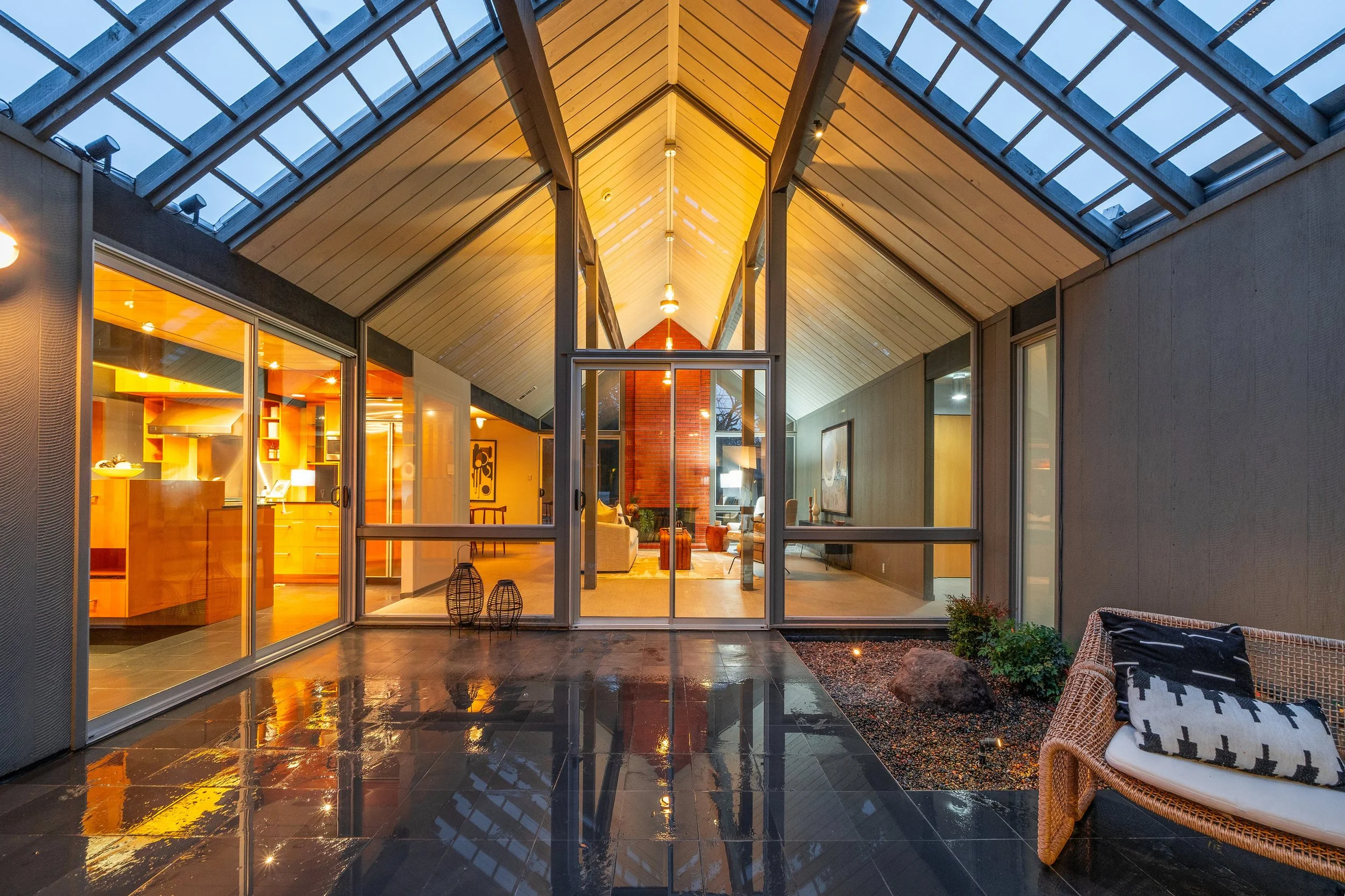
Open interiors and seamless indoor-outdoor flow were hallmarks of Eichler homes – qualities that architect Claude Oakland honed and refined in hundreds of mid-century residences.

From Tulane to Anshen & Allen: Oakland’s Early Career

Claude Oakland’s journey in architecture began far from California. Born in 1919 in Louisiana, he earned his architecture degree at Tulane University before serving in the Navy’s Seabees construction battalion during World War IIsfgate.com. After the war, Oakland moved west and briefly worked under avant-garde architect Bruce Goff in Berkeleysfgate.com. In 1950, he landed at the San Francisco firm Anshen & Allen – just as a visionary developer named Joseph Eichler hired that firm to design modern tract homes for postwar Californiaced.berkeley.edusfgate.com. Oakland, though a junior with no big reputation, quickly proved indispensable. By the early 1950s he was acting as de facto principal designer for Eichler projects within Anshen & Allen, sketching many of the model homes that established the “Eichler look”eichlerhomesforsale.comsfgate.com. He helped translate Eichler’s radical idea – using real architects to design affordable tract houses – into built reality. Early Eichler homes in the 1950s (such as those in Sunnyvale) featured open floor plans, post-and-beam construction, and floor-to-ceiling glass facing private yardseichlerhomesforsale.com – a dramatic break from traditional suburbia. Oakland was instrumental in crafting those features behind the scenes, learning from mentors like Robert Anshen yet quietly innovating on his owneichlerhomesforsale.com. This apprenticeship would set the stage for Oakland’s pivotal role in Eichler’s next chapter.

Taking the Helm: Eichler’s Lead Architect in the 1960s

By 1960, Oakland was ready to step out of the shadows. Frustrated by lack of public credit (and limited pay) at Anshen & Allen, he left to start his own firm – and Joseph Eichler immediately dropped Anshen & Allen and made Claude Oakland & Associates his primary architects going forwardeichlerhomesforsale.comsfgate.com. Eichler even encouraged Oakland to form his own office by promising, “If you’d set up your own firm, I’d give you all the work”sfgate.com. Thus Oakland, the quiet architect who had been designing Eichlers all along, officially became Eichler’s architect. This marked the beginning of an extraordinarily close partnership. Eichler would literally lean over Oakland’s drafting table to collaborate on ideas; their tastes and values were in synceichlerhomesforsale.comsfgate.com. Both men believed in modern design for everyone and shared an “unwavering, no-fuss insistence” on progressive ideals like racial equality in housingeichlerhomesforsale.com. Under Oakland’s sole design leadership from 1960 until Eichler’s death in 1974, thousands of Eichler homes were built across Californiaeichlerhomesforsale.com. In fact, Oakland ultimately designed more Eichler homes than any other architect – roughly 3,000 to 5,000 of them by most estimateseichlerhomesforsale.comsfgate.com. As SFGate later noted, “few, if any, architects anywhere produced as many modern homes” as Claude Oaklandeichlerhomesforsale.com. Yet despite this prolific output, Oakland remained modest: he “never theorized nor blew his own horn…he would just do it,” recalled his longtime colleague Kinji Imadaeichlerhomesforsale.comsfgate.com. This unassuming pragmatism, paired with creative skill, made Oakland the ideal custodian of Eichler’s vision during the 1960s.

Design Innovations: Atriums, Galleries, and New Horizons

As lead architect, Oakland both preserved Eichler’s core design DNA and pushed it in new directions. One signature element he embraced was the atrium – the open-air courtyard at the center of many Eichler homes. The atrium concept had been introduced around 1958 by architects A. Quincy Jones & Frederick Emmons (Eichler’s other design team)eichlerhomesforsale.com. Oakland immediately recognized its value and made atriums (or similar courtyards) virtually standard in Eichler plans of the ’60s. In fact, he is often “said to have created the Eichler atrium” in its fully realized formeichlerhomesforsale.com, by refining and standardizing this indoor-outdoor focal point. Nearly every Eichler home Oakland designed from 1960 onward has either an atrium or a variant on iteichlerhomesforsale.com. This feature not only brings light and nature into the heart of the house, but also “provides unimpeded views throughout the house” for a sense of calm spaciousness, as one Eichler homeowner observedsfgate.com.

Oakland didn’t stop at the open atrium. In the mid-1960s he pioneered the “Gallery” model – an innovative solution for wetter or cooler climates where a fully open atrium might be less practical. In a Gallery plan, a long skylit hallway or foyer serves as an enclosed atrium, extending through the center of the homeeichlerhomesforsale.com. This design still achieves the feeling of an atrium (bringing in light and linking the home’s wings) but keeps the space roofed over. Oakland “invented the ‘Gallery’ plan” around 1966 as essentially a covered atrium concepteichlerhomesforsale.com. The prototype debuted in the Fairhills Eichler tract in Orange County in 1964, where Oakland co-designed a model featuring a central gallery halleichlerhomesforsale.comboyengateam.com. Gallery models soon appeared in Bay Area Eichlers as well (for example, in late-1960s Sunnyvale tracts), providing a versatile new Eichler layout that catered to evolving regional needseichlerhomesforsale.com. This kind of subtle innovation – tweaking the classic Eichler formula to suit site and climate – was a hallmark of Oakland’s approach.

Another area where Oakland expanded Eichler design was building upward. Joseph Eichler had preferred single-story homes, but by the early ’60s land constraints and hillsides led to experiments with two-story designs. Oakland devised clever ways to add a second level without losing the Eichler essence of openness. In San Francisco’s Diamond Heights neighborhood (1962), he designed Eichler houses on steep lots that appear as single-story, flat-roofed boxes from the street, but actually cascade down the slope as two-story homeseichlerhomesforsale.com. He kept the upper street facade low and clean, then stepped the living spaces down the hill with tall windows to maintain the trademark Eichler light and airy feeleichlerhomesforsale.com. A contemporary news writer noted these were a “significant departure…introducing boxy modern two-story layouts” yet still instantly recognizable as Eichler homeseichlerhomesforsale.com. Only a few dozen two-story Eichlers were ever built (they remain rare collector’s items)eichlerhomesforsale.com, but Oakland proved that Eichler’s vision could be adapted to multiple stories when neededeichlerhomesforsale.com. He also tackled hillside design in other ways, such as split-level floor plans that hugged uneven terrain. In Castro Valley’s Greenridge tract and the San Francisco Peninsula’s hilly neighborhoods, Oakland and his colleagues created models that integrated with the slope while preserving panoromic views and privacy. “Super Eichlers” like the spacious 1969 model in Walnut Creek’s hills (known as the “Super H” plan) exemplified how Oakland pushed Eichlers to be larger and more topography-conscious, all while keeping open layouts and post-and-beam elegancedwell.com.

Oakland’s contributions went beyond single-family homes as well. Under Eichler’s direction, he helped design innovative Eichler townhouses and even high-rises in the 1960s, though these were less common. For example, Oakland was the principal designer of Pomeroy Green in Santa Clara (1962), a community of 78 two-story Eichler townhomes arranged around shared gardenseichlerhomesforsale.com. He managed to give attached homes the feel of Eichler single-family houses by incorporating private courtyard entrances and atrium-like lightwells for each uniteichlerhomesforsale.com. And when Eichler ventured into high-rise living with The Summit, a 32-story modernist tower on Russian Hill (completed 1965), Oakland’s firm co-designed the initial planseichlerhomesforsale.com – bringing Eichler sensibilities (clean lines, focus on views) to an entirely different building type. These explorations into higher-density design showed Oakland’s versatility. He “expanded Eichler homes into new residential formats,” from cluster homes to condos, proving the adaptability of Eichler’s modern principleseichlerhomesforsale.com. Whether one-story or two, courtyard house or townhouse, Oakland found ways to imbue each project with the Eichler spirit of livable modernism. As an Eichler Network tribute put it, “Oakland’s legacy within the Eichler story is one of continuity and gentle evolution”eichlerhomesforsale.com – innovating just enough to keep Eichler homes fresh and functional, but never straying from their mid-century modern soul.

Evolving Style: Materials, Layouts & Regional Adaptations

One reason Oakland was so effective is that he understood how to evolve the Eichler style to meet changing tastes and codes in the 1960s. He was a practical architect at heart, willing to incorporate new materials and techniques if they improved the homeseichlerhomesforsale.com. For instance, as building regulations changed and families desired a bit more space, Oakland introduced larger models (some with four or five bedrooms, or with separate family rooms) while maintaining the open-plan feelboyengateam.com. He quietly modernized the material palette too – experimenting with options beyond the original redwood and mahogany. He integrated materials like composite wood siding and new finishes that could withstand weather better, especially in wetter localeseichlerhomesforsale.com. Under Oakland, Eichler homes also saw more variety in roof profiles. While early Eichlers were mostly flat-roofed or gently sloping, Oakland added interest by featuring higher-peaked gable roofs on select models. In some late-’60s designs, a dramatic steep gable would soar over the atrium or living room, adding volume and street presenceeichlerhomesforsale.comsfgate.com. For example, in Marin County he created models with an arresting central A-frame gable that “soars over the open-air atrium…and shoots out toward the backyard,” as one Marin homeowner describes, making the home a showstopper while still entirely Eichler in charactersfgate.com. These bold rooflines not only appealed to buyers’ growing love for dramatic mid-century styling, but also allowed for clerestory windows and taller interior volumes.

Oakland was strategic in how he applied such changes across different regions. In Upper Lucas Valley (Marin), where he was the sole tract architect in 1963–65, he mostly used low-pitch post-and-beam roofs that hugged the landscape – but he interspersed occasional steep-gabled models to break up the streetscape and create focal points eichlerhomesforsale.com. The result was a harmonious neighborhood of one-story atrium houses nestled against rolling hills, with just enough variation to feel organic eichlerhomesforsale.com. (Notably, all utility lines in Lucas Valley were run underground at Oakland’s insistence, to preserve the natural views eichlerhomesforsale.com.) In Southern California tracts like Fairhills (Orange, 1964), Oakland collaborated with Jones & Emmons and embraced more exuberant features suited to the locale – such as striking double A-frame façades that became icons of that tract eichlerhomesforsale.com. Many of those dramatic high-peaked models are credited to A. Quincy Jones’s flair, but Oakland contributed other plans there (including the aforementioned Gallery plan) that balanced the tract with some more practical designs eichlerhomesforsale.com. In the East Bay, Oakland’s designs in hillside communities like Greenridge (Castro Valley) and Sequoyah Hills (Oakland) optimized views and terrain. At Greenridge – a 185-home development built along a Castro Valley ridge between 1960 and 1965 – Eichler used plans by Jones & Emmons and Oakland to handle the sloping lots thespaces.com. The homes range from flat-roofed ranchers to split-level models, all taking advantage of the hilltop vistas. And in the South Bay’s Fairglen tract (San Jose, 1959–62), which was a transitional Eichler neighborhood bridging the ’50s and ’60s, Oakland’s influence is seen in the later phase models that introduce atriums and more glass, updating the earlier modest ranch designs by Anshen & Allen. In short, Oakland deftly adapted Eichler’s core style to its context – be it the foggy hills of San Francisco (where a covered atrium or stepped design made sense), the sunny expanses of Orange County (where dramatic rooflines could shine), or the family suburbs of Silicon Valley (where extra bedrooms and storage were welcomed). Through these evolutions, he ensured Eichler homes remained modern in both form and function as the 1960s progressed eichlerhomesforsale.com.

Signature Eichler Neighborhoods Designed by Oakland

By the 1960s, many of Eichler’s most notable communities bore Oakland’s imprint. Here are a few key Eichler neighborhoods where Claude Oakland & Associates played a major design role:

  • Greenridge (Castro Valley) – An enclave of ~185 Eichler homes built 1960–65 along a panoramic ridge in the East Bay hills. Developed by Eichler to bring modern homes to a dramatic site, Greenridge was co-designed by Jones & Emmons and Claude Oakland thespaces.com. Oakland’s hillside models here feature split-level layouts and ample glass opening to valley views. The tract’s variety – from low-profile atrium ranchers to “pop-top” two-story designs – illustrates the collaboration between architects and the adaptation to steep terrain. Today Greenridge is prized for its views and well-preserved mid-century designs (several have set East Bay price records in recent years).

  • Upper Lucas Valley (Marin County) – A master-planned Eichler development north of San Francisco, built 1963–65, for which Oakland was the sole architect eichlerhomesforsale.com. This community of 330 homes is often cited as “the pinnacle of Eichler design” eichlerhomesforsale.com. Oakland laid out the tract to harmonize with the natural beauty of Lucas Valley, even designing a community center in Eichler style and keeping utilities underground eichlerhomesforsale.com. The homes themselves include some of Eichler’s finest models – mostly single-story atrium plans, with a mix of flat and double-gable roofs for visual interest. Consistent materials and deep mid-century detailing give Lucas Valley an almost custom-home feel, yet it’s a cohesive tract. Many enthusiasts consider it an open-air museum of Eichler’s late-period work, lovingly maintained by homeowners who cherish its “stunning natural backdrop” and timeless design eichlerhomesforsale.com.

  • The Highlands (San Mateo) – The Highlands is the largest contiguous Eichler tract ever built (over 700 homes, 1956–64) en.wikipedia.org. While most Highlands models were originally designed by Jones & Emmons, the neighborhood exemplifies Eichler’s evolution that Oakland later led. In fact, the first atrium model Eichlers made their debut in the Highlands in the late ’50s, paving the way for Oakland’s atrium-centric focus. As Eichler continued building in the Highlands into the early ’60s, Oakland-influenced refinements appeared – such as more varied façades and updated floor plans. This tract’s success (it’s a scenic mid-century community in the hills above San Mateo) provided a template that Oakland would echo in other regions. Today, the Highlands remains a showcase Eichler neighborhood, complete with annual home tours that draw fans of mid-century modern architecture mv-voice.com.

  • Fairglen (San Jose) – A beloved Eichler neighborhood in San Jose’s Willow Glen area, Fairglen consists of about 250 homes built 1959–1961, plus two small “Fairglen Addition” phases through 1963 eichlerhomesforsale.com. The initial development was a collaboration between Anshen & Allen and Jones & Emmons, featuring classic mid-century forms (including some distinctive butterfly roofs) eichlerhomesforsale.com. As the tract expanded, Oakland – newly independent in 1960 – contributed to the later models, integrating open-air atriums and other contemporary updates. The result is a tract that bridges Eichler’s early and mid periods. Fairglen’s tree-lined streets and distinctive low-slung profiles give it a serene charm. Many homes retain original elements like Philippine mahogany walls and globe lights, thanks to active preservation by owners. The neighborhood’s “Eichler Home Tour” in recent years has showcased beautifully restored Oakland-designed atrium models alongside their 1950s predecessors, highlighting the continuity of Eichler’s vision.

  • Rancho San Miguel (Walnut Creek) – A mid-century Eichler tract of about 375 homes in Walnut Creek’s Northgate area, built 1959–1962. Oakland took the lead on design here right after launching his firm, making Rancho San Miguel one of the first tracts fully under Claude Oakland & Associates eichlerhomesforsale.com. These one-story, atrium-equipped models brought Eichler’s modern aesthetic to Contra Costa County and are considered some of the East Bay’s best mid-century homes eichlerhomesforsale.com. The houses feature classic Oakland touches – sheltered atriums, broad low-pitch roofs, and clever siting on their lots to maximize privacy and views of Mt. Diablo. Decades later, Rancho San Miguel’s Eichlers are highly sought-after; residents have formed active Eichler clubs and many homes have been sensitively renovated rather than replaced. The tract’s success cemented Eichler’s expansion into the East Bay, proving that the Eichler/Oakland formula of “modern homes for the middle class” resonated widely eichlerhomesforsale.com.

These neighborhoods (among others like Greenmeadow in Palo Alto’s second phase, Foster City’s single-family and townhouse Eichlers, and Balboa Highlands in L.A.) stand as open-air legacies of Claude Oakland’s work. In each, one can see Oakland’s contributions—from master planning of the community layout to the fine details of the floor plans. As one Eichler owner in Marin attests, living in an Oakland-designed Eichler offers “a certain inner peace…a tranquility to it” sfgate.com that comes from the harmonious design. And another longtime Eichler owner put it simply: “I see so many houses...but I never see a house I’d like to live in more than this.” sfgate.com – a sentiment shared by many who reside in these Oakland/Eichler creations today.

Comparing Oakland to Jones & Emmons and Anshen & Allen

Claude Oakland’s style both overlapped with and diverged from the other architects who shaped Eichler homes. Anshen & Allen (Robert Anshen and Steve Allen) were Eichler’s first architects (circa 1949–1960) and established the fundamental California Modern aesthetic of Eichler houses: open layouts, honest materials (wood, glass, concrete), and integration with the outdoors eichlerhomesforsale.com. Their early Eichlers were often compact single-story homes with flat or modestly pitched roofs – elegant in their simplicity but relatively limited in variety. Jones & Emmons (led by A. Quincy Jones and Frederick Emmons), who joined Eichler in the mid-1950s, expanded the design vocabulary. They introduced bold new ideas like the atrium courtyard (first appearing around 1958) and experimented with striking rooflines – including the dramatic double-gable “A-frame” that became an Eichler icon eichlerhomesforsale.com. Jones & Emmons also emphasized community planning, designing entire Eichler subdivisions with greenbelts and shared amenities, particularly in Southern California tracts eichlerhomesforsale.com. Their Eichler models grew larger and more complex over time, featuring innovations such as compartmentalized bedroom wings and exposed concrete block elements. By 1960, Eichler homes had a rich mix of designs thanks to these two firms.

Claude Oakland, having been involved from the beginning, was the bridge that connected and continued these ideas into the 1960s. In many ways, Oakland refined and humanized the work of his predecessors. He inherited the open-plan philosophy of Anshen & Allen and the indoor-outdoor drama of Jones & Emmons, but applied a pragmatic lens to make the homes livable at scale. As one analysis notes, “Oakland continued Eichler’s emphasis on light and glass but added new spatial schemes” boyengateam.com. For instance, whereas Jones & Emmons might create an attention-grabbing design for a custom model, Oakland would adapt that concept into a version that could be mass-produced across a tract without losing its charm. He often took Jones’s showpiece ideas – like the atrium – and standardized them so every Eichler buyer could enjoy them eichlerhomesforsale.com. Oakland was also responsive to client feedback: he included more storage, flexible multi-purpose rooms, and practical touches (like laundry alcoves or accessible kitchens) that earlier designs sometimes lacked eichlerhomesforsale.com. In essence, Jones & Emmons were the bold experimenters, unafraid to wow with architecture (the Fairhills A-frames, the X-100 steel house, etc.), while Oakland was the quiet innovator who made the Eichler formula cohesive and sustainable for the long run. “Oakland evolved and diversified the style (larger plans, new models, and multi-family schemes) to keep Eichler homes fresh through 1970”. boyengateam.com, notes one comparison, whereas the earlier firms laid the initial groundwork. It’s telling that even after Jones & Emmons stopped working with Eichler (around 1969), Oakland seamlessly continued designing Eichlers that felt authentic. As historian Dave Weinstein observed, “It was Oakland who made sure that Eichler homes of the late ’60s still felt like Eichlers, even as trends shifted.” eichlerhomesforsale.com Without Oakland, Eichler’s later developments might have veered in disparate directions; with him, they retained an “unmistakable Eichler-ness” while still adapting to the times eichlerhomesforsale.com.

To put it another way: Anshen & Allen originated the Eichler ethos, Jones & Emmons added architectural bravado, and Claude Oakland provided the steady continuity and creativity that carried Eichler homes into the 1960s and beyond eichlerhomesforsale.com. All three were essential, and Oakland, having worked with and learned from the others, became the ultimate Eichler expert – sometimes unsung, but absolutely pivotal.

Enduring Legacy and Modern Appreciation

Today, Eichler homes – and especially those from the 1960s – are cherished as mid-century modern gems. The designs that Claude Oakland and his peers created for “average” families have become modern classics, complete with fan clubs and legends sfgate.com. In Northern California, entire neighborhoods of Eichlers enjoy historic preservation status or conservation guidelines to protect their distinctive look. Homeowners swap tips on restoring original luan mahogany paneling and globe pendant lights. Enthusiast organizations like the Eichler Network celebrate the architecture with newsletters and home tour events sfgate.com. Many Oakland-designed Eichler tracts have active community groups that promote maintaining the mid-century character. For instance, Lucas Valley’s homeowners famously rallied to keep their Eichler homes intact and even got the tract listed on the National Register of Historic Places due to its architectural significance eichlerhomesforsale.com. Similarly, Palo Alto’s Greenmeadow and Orange’s Fairhills neighborhoods have been recognized for their Eichler heritage, much of it shaped by Oakland’s designs.

The market has also spoken: demand for Eichler homes is high, and they often command premium prices. Whereas Eichler houses sold for ~$10,000 in the 1950s eichlerhomesforsale.com, renovated examples now sell for millions in sought-after areas. Real estate listings frequently highlight “designed by legendary architect Claude Oakland” to entice mid-century aficionados dwell.com. Some larger Eichlers are playfully nicknamed (the “Super Eichler” in Walnut Creek, for example) and draw competitive offers when they hit the market dwell.com. Beyond monetary value, there is a deep emotional appreciation. Second- and third-generation owners lovingly update kitchens and bathrooms but strive to preserve the open beams, atriums, and spirit of the home. “Every square foot is usable…there is no dead space,” marvels one owner of an Oakland-designed Eichler, noting the efficiency of the layout sfgate.com. Another longtime owner recounts how the design’s simplicity brings “inner peace” and how even after seeing countless other houses, they wouldn’t trade their Eichler for anything sfgate.com. Such testimonials underscore the timeless livability of these homes.

Architecture critics have also lauded Oakland’s Eichlers for their “modern homes for the masses” idealism fulfilled eichlerhomesforsale.com sfgate.com. What was once radical – floor-to-ceiling glass walls, post-and-beam minimalism in a suburb – is now revered as an exemplar of American mid-century modernism. Exhibits, books, and documentaries feature the later Eichler homes alongside works by famed modern architects. In 2020, for instance, the Museum of Modern Art highlighted Eichler houses (with Oakland’s designs front and center) in a retrospective on inclusive modernist design. And each year, Eichler Home Tours in places like the San Mateo Highlands or Orange’s Fairhills sell out as people line up to experience these spaces in person mv-voice.com. Walking through an atrium filled with lush plants, or seeing the way a roof seemingly “floats” above glass walls, continues to inspire new admirers. The genius of Claude Oakland is that these inspiring moments are not confined to custom one-off homes or famous architect estates – they exist in thousands of tract homes that ordinary families have lived in for decades. That democratization of good design is Eichler’s legacy, and Oakland was its chief practitioner.

Stewardship and Expertise: The Boyenga Team and Eichler Homes Today

Preserving and trading Eichler homes in the 21st century often requires specialized knowledge – and this is where modern experts step in. The Boyenga Team at Compass, based in Silicon Valley, has emerged as one of the trusted authorities on Eichler homes and mid-century modern real estate. Eric and Janelle Boyenga, known in the industry as the “Property Nerds,” have built a reputation as Eichler home experts who intimately understand these unique properties eichlerhomesforsale.com. Much like Joseph Eichler insisted on quality and innovation, the Boyenga Team brings a next-generation approach to buying and selling Eichlers. They leverage cutting-edge digital marketing and tech tools (earning them recognition as “#NextGenAgents” in real estate circles compass.com) to connect with the niche audience of Eichler enthusiasts. More importantly, they bring architectural knowledge – often guiding clients through the nuances of Eichler design, from the significance of an atrium model to tips on sourcing period-appropriate materials for restorations.

The Boyenga Team’s website, EichlerHomesForSale.com, serves as an educational hub, featuring Eichler floor plans, neighborhood histories, and even design guidelines for maintaining mid-century style. Their emphasis on “continuing to put the interests of their clients above all else” and on innovative marketing has made them a go-to resource for Eichler sellers and buyers alike eichlerhomesforsale.com. Homeowners working with the Boyenga Team have noted the advantage of agents who can tell the story of Claude Oakland’s vision to prospective buyers – adding value by conveying what makes these homes special. In practice, the team might advise a seller on highlighting an Oakland-designed home’s original Philippine mahogany walls and center atrium (features that generalist agents might overlook), or help a buyer understand the potential of an intact Eichler in need of a little TLC versus a remodeled one. By combining passion for mid-century architecture with savvy real estate strategy, the Boyenga Team embodies a new generation of stewards for Eichler homes. They, along with dedicated Eichler owners and preservationists, are helping ensure that Claude Oakland’s and Joseph Eichler’s legacy not only survives but thrives in the modern era.

In summary, Claude Oakland & Associates left an indelible mark on the Eichler Homes story – from early beginnings under Anshen & Allen, to leading the design evolution through the 1960s with atriums, galleries, and beyond. Oakland’s Eichlers married form and function in a way that still feels contemporary, which is why these homes remain so beloved. Each time an Eichler tract is celebrated on a home tour, or an Eichler listing draws multiple eager families, it’s a tribute to the architect who quietly “carried Eichler’s modernist dream into new realms without diluting its essence” eichlerhomesforsale.com. Decades later, the Oakland-Eichler creations continue to be lived in, appreciated, and safeguarded – a living legacy of mid-century modern ideals, passed down from an visionary developer, his gifted architect, and now to a new generation of enlightened homeowners and experts.

Sources: Claude Oakland biography and archives ced.berkeley.edusfgate.com; Eichler Homes evolution and architect collaborations eichlerhomesforsale.com; SFGate “Signature Style: Claude Oakland” (2005) sfgate.com; Eichler Network and Boyenga Team articles on Eichler design innovations eichlerhomesforsale.com; Eichler neighborhood profiles and historical records thespaces.comen.wikipedia.org; homeowner and expert quotes from SFGate and Dwell sfgate.com dwell.com.