
Eichler Communities: How Visionary Neighborhood Planning Shaped the Silicon Valley We Know Today
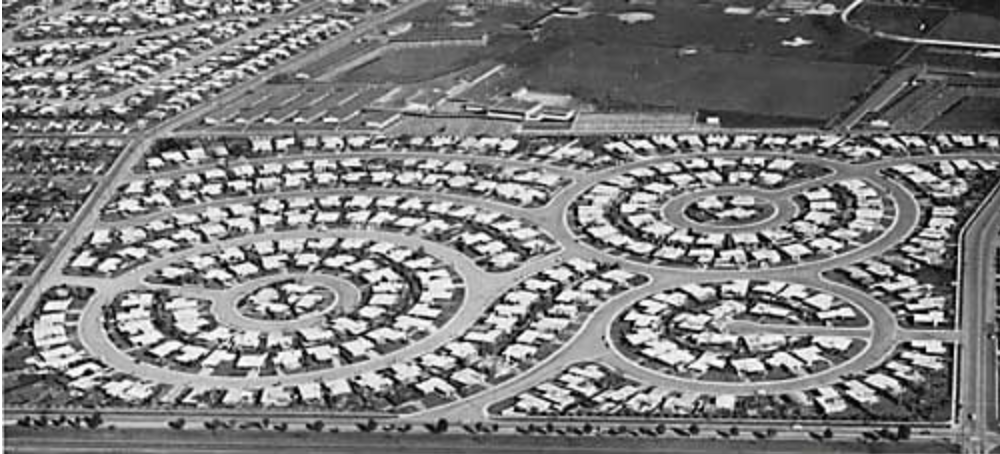
In the 1950s and 60s, developer Joseph Eichler didn’t just build houses – he built walkable, community-oriented neighborhoods. His signature tracts in Silicon Valley cities like Palo Alto, Sunnyvale, San Jose, and Cupertino were master-planned with features far ahead of their time: interconnected sidewalks, central parks and pools, communal centers, and no front-yard fences. Eichler explicitly aimed for “inclusive and diverse planned communities, ideally featuring integrated parks and community centers”en.wikipedia.org. Today’s smart-growth and New Urbanism movements echo these same goals – but Eichler was doing it decades earlier.
Visionary Design Principles
Eichler subdivisions were designed to promote neighbors meeting neighbors, safety, and sustainability. Key features included:
Walkable Street Networks: Streets often curve into cul‑de‑sacs or traffic circles (as at Palo Alto’s Fairmeadow and Green Gables) to calm traffic and keep through‑traffic out. Broad cul‑de‑sac layouts in Greenmeadow, for example, “reduce traffic and [enhance] the safety of the residents” npgallery.nps.gov. Continuous sidewalks and bike paths link houses, so “neighbors talk with each other and use shared spaces such as sidewalks and bicycle paths” cityofpaloalto.org. This creates a pedestrian-friendly environment far removed from typical 1950s superblocks.
Central Green Spaces & Community Centers: Rather than tucking all open space into backyards, Eichler tracts often dedicate a central park, pool, or community building. Palo Alto’s Greenmeadow, for instance, was built with a two-building community center and swimming pool at its core almanacnews.com. In fact, architect A. Quincy Jones even negotiated zoning exceptions so Eichler could shrink private lot sizes and trade the extra land for a shared park and community centernpgallery.nps.gov. These amenities were meant to be the neighborhood “core of neighborly activity” almanacnews.com – the very model of community-first design.
Open Front Yards, No Fences: Early Eichler covenants explicitly discouraged front‑yard fences. The effect is a continuous green streetscape: tree‑lined streets and lawns run unbroken between homes cityofpaloalto.org. Palo Alto’s design guidelines note that Eichler neighborhoods have “few fences that divide front yards, which increases the sense of a shared landscape” cityofpaloalto.org. In practice, most Eichler homes present a simple, uncluttered facade to the street – often with just a garage door and a small clerestory or frosted window – and open up at the rear.
Indoor‑Outdoor Living: Eichler houses themselves blur the line between inside and outside. They feature extensive floor-to-ceiling glass on back walls, open atriums or courtyards, and deep overhanging eaves. As one renovation article notes, Eichlers “eschewed front-facing windows in the interest of privacy” while using large glass walls and atriums to “bring the outdoors in” en.wikipedia.orgtriplepundit.com. In other words, each home is its own personal patio, and the yards feel like natural extensions of the living space.
Inclusivity and Cohesion: Eichler’s communities were intended to be socially diverse and cohesive. He had a strict non‑discrimination policy (he even resigned from the Home Builders’ Association over this) en.wikipedia.org, and he believed architecture could foster neighborliness. The result was tracts where, for example, a typical design quote proclaimed: “In your magnificent Eichler home, you live in a world of beauty… achieved by the skillful combining of materials and the harmonious blending of colors.” fairgleneichlers.org. Residents of these neighborhoods often report a close-knit, respectful community atmosphere – exactly the “vibrant community life” Eichler envisioned.
These principles anticipate today’s planning ideas. Modern New Urbanism prizes walkable streets, human-scale development and public open space – the very things Eichler pioneered. Green building and sustainability goals echo his use of passive design: large overhangs and redwood siding for climate comfort, radiant slab heating, and reliance on natural light. And community-first trends are built into Eichler tracts: by placing parks, pools and schools within easy reach, he created neighborhoods where children can safely play on sidewalks or in shared courts, and families mingle at block parties or local centers.
Iconic Silicon Valley Eichler Neighborhoods
Greenmeadow (Palo Alto)
One of the finest examples is Greenmeadow, a 243‑home tract in South Palo Alto (1954–55) designed by Jones & Emmons. Eichler built 270 similar homes laid out around a centrally located community center with a park, swimming pool, and meeting roomalmanacnews.comcityofpaloalto.org. This central amenity, unique among Silicon Valley neighborhoods at the time, was intended to be the social hub – a place where neighbors would naturally gather and interact.
Key features of Greenmeadow:
Centrally planned open space. Eichler even obtained zoning variances so he could dedicate a swath of land to a park and pool npgallery.nps.gov. The community pool building, framed by lawns and plazas, is the literal heart of the tract.
Calm, curving streets. Most roads loop into cul‑de‑sacs, virtually eliminating through‑traffic. As the National Register nomination notes, “many of the broad streets are cul de sacs” in Greenmeadow npgallery.nps.gov, keeping the streets quiet and safe for children.
Shared greenways. The street trees and plantings form a continuous canopy. Front yards typically have only low lawns or shrubs (no hedges or solid fences), so homeowners enjoy an expansive, park‑like streetscape cityofpaloalto.org.
Private backyards. In contrast, the rear of each Eichler home is almost entirely glassed in. The district report highlights that “no windows face the street but extensive areas of floor-to-ceiling glass along the rear elevation open up the house to the outdoor, private patio area” npgallery.nps.gov. This orientation keeps the street front minimal while creating bright, indoor-outdoor living spaces in back.
Together, these design choices made Greenmeadow a “suburban utopia” of its dayalmanacnews.com. Today it is a National Register historic district, noted for its intact modern landscape and strong community bonds.
Image: Vintage Eichler sales brochure for Fairglen (San Jose). Eichler’s promotional materials – here proclaiming the “wonderful world of Eichler” – emphasized modern beauty and family-oriented living fairgleneichlers.org.
Fairglen (San Jose – Willow Glen)
Fairglen (1960–62) is a ~200‑home Eichler tract in San Jose’s Willow Glen neighborhood, designed by Anshen & Allen and Jones & Emmons. Fairglen exemplifies Eichler’s community ethos. According to its neighborhood history: “Eichler designed the tract to foster a sense of neighborhood and community interaction”, with home orientations and streets arranged to encourage neighbors to mingle fairgleneichlers.org. In fact, many Fairglen streets end in cul‑de‑sacs, specifically to reduce traffic and create a “safer, more pedestrian-friendly environment” fairgleneichlers.org.
Notable aspects of Fairglen include:
Cul‑de‑sacs for safety. Like Greenmeadow, Fairglen uses dead-end streets to keep cars slow and scarce. Children can play more freely on the block, and adults walk dogs or chat along the sidewalks.
Open, inward-facing layouts. Eichler placed few or no windows on the street side. Instead, each house opens onto a private atrium or patio in back, with large sliding-glass walls for light and air. This inward focus makes the front yards feel like extensions of one another, further bonding neighbors.
Diverse, welcoming community. Eichler’s commitment to non‑discrimination meant Fairglen attracted a mixed population from its inception en.wikipedia.orgfairgleneichlers.org. Anecdotally, for decades the community has even held an annual Fairglen Art Festival drawing thousands of visitors – a testament to its strong neighborhood spirit.
Modern amenities. Original Eichler features – radiant slab floors, post-and-beam ceilings, and built-in cabinets – still characterize Fairglen homes. The architectural harmony was even promoted in sales copy: one brochure promised homes where “in your magnificent Eichler home, you live in a world of beauty…achieved by… the harmonious blending of colors” fairgleneichlers.org.
Fairglen’s plan created a cohesive suburban neighborhood long before that term was commonplace. Its recent listing on the National Register of Historic Places (2019) cites how the tract’s design “maximizes privacy while also encouraging social connections”fairgleneichlers.org – in other words, it balanced family privacy with community togetherness.
Los Arboles (Palo Alto)
Los Arboles is a pair of Eichler neighborhoods in Palo Alto (first built 1959–61, with an addition in 1972–74). The first phase (by Anshen & Allen/Jones & Emmons) contains ~86 homes on Holly Oak Drive and nearby streets, while the later “Los Arboles Addition” (by Claude Oakland) added another ~34, including a handful of rare two‑story Eichlers. Despite spanning two decades, Los Arboles maintains a remarkably cohesive plan.
Key features:
Atrium-centered homes. As in other Eichler tracts, each house is designed around a private atrium or courtyard. Oakland’s additions often use a U‑shaped plan wrapping around a rear patio. All are unified by the classic Eichler hallmarks: flat or low roofs, post-and-beam structure, and full-height glass looking into private yardsnpgallery.nps.gov cityofpaloalto.org.
No front windows. The addition’s homes (and the original tract) have minimal street glazing. Large expanses of glass are reserved for the back, so from the street one mostly sees wood siding and garage faces – a consistent, understated façade.
Cohesive aesthetic. Even with two-story homes mixed in, Los Arboles retains a “horizontal emphasis, solid planar surfaces contrasting with large panes of glass”cityofpaloalto.org. In fact, city review notes that Los Arboles has architectural cohesion that “equals or surpasses” the nearby Greenmeadow historic district. Residents today still enforce single-story overlay zoning and design guidelines to preserve this unity.
In essence, Los Arboles shows Eichler’s flexibility without sacrificing community feel. By orienting each home inward and repeating a cohesive style, even this extended, multi-phase subdivision feels like a single, carefully planned enclave.
Legacy: Community-First Design Ahead of Its Time
Across Silicon Valley, Eichler neighborhoods set a template for community-first suburban design. Decades before planners coined “New Urbanism,” Eichler’s tracts featured pedestrian amenities, environmental sensitivity, and social equity. Families could walk safely between neighbors or to nearby parks and schools, porches and patios invited spontaneous gatherings, and common facilities (parks, pools, meeting halls) gave everyone places to connect. In many Eichler communities today, homeowners’ groups and historic design guidelines keep that vision alive – limiting front fences and second-story additions to preserve the open, park-like street character.
These principles mirror modern sustainable planning: mixed-use nodes (community center), open space preservation (greened streets, central park), and human-scale density (smaller lots traded for shared amenities)npgallery.nps.gov cityofpaloalto.org. For example, one Silicon Valley tract reviewer noted that Eichler homes offered “a daring alternative to the suburban ranch home” by organizing clusters around interior courtyards and pathseichlerhomesforsale.com – a campus‑like design still prized for walkability. In short, Eichler communities were an early version of the “complete neighborhood”: they had housing diversity, open space, and social infrastructure built in from the start, all of which are hallmarks of 21st‑century planning.
Today, these neighborhoods remain sought-after. Their postwar modern houses have proved adaptable (many now have solar panels, drought-tolerant landscaping, etc.), and their layouts continue to support a strong community ethos. As one Palo Alto historian put it, Greenmeadow and its peers offer a rare look at “the suburban utopia the builder envisioned”almanacnews.com – a vision that, half a century on, still shapes the character of Silicon Valley.
Sources: Historical records and analyses of Eichler tracts (including Palo Alto city preservation reports and Eichler neighborhood archives) have informed this accounten.wikipedia.org npgallery.nps.gov fairgleneichlers.org almanacnews.com, as have modern urban planning commentaries on community design cityofpaloalto.orgcityofpaloalto.org. Each Eichler subdivision cited above (Greenmeadow, Fairglen, Los Arboles) is documented in local historic registers and planning studies, which detail their layouts and communal features npgallery.nps.gov fairgleneichlers.org cityofpaloalto.org.
Sources