
Eichler Homes: A Self-Regulating Microclimate by Design
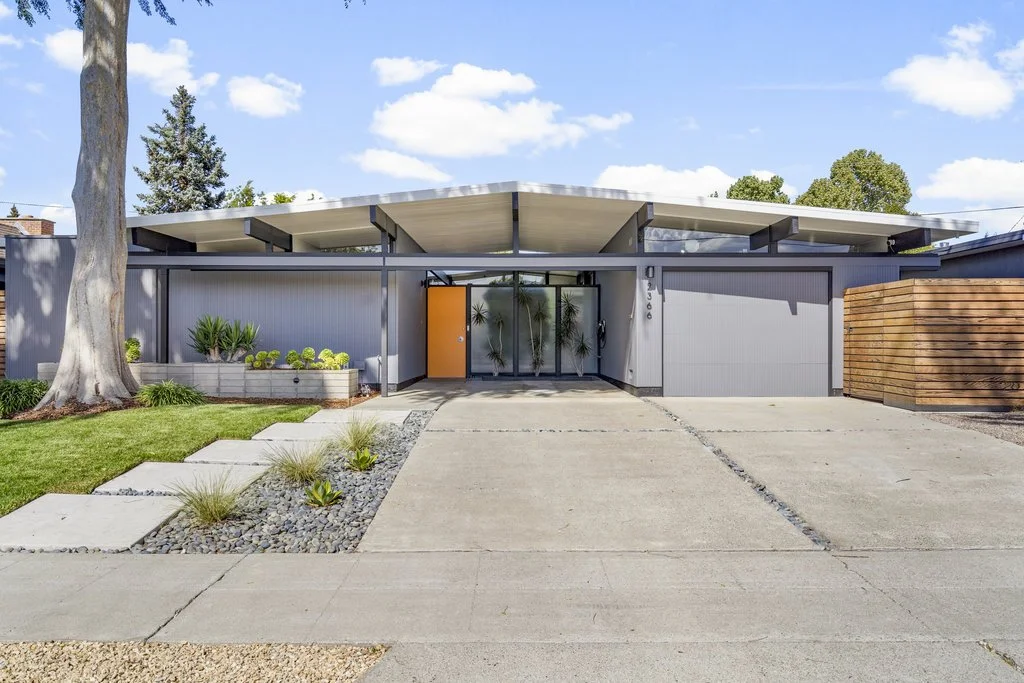
Mid-century modern Eichler homes are more than just iconic glass walls and post-and-beam construction – they are early examples of climate-conscious design. Built in California from the 1950s to 1970s, Eichler houses were originally constructed without air conditioning, instead relying on passive strategies and the region’s mild climate eichlerhomesforsale.com. Features like open-air atriums, operable clerestory windows, broad roof overhangs, and radiant-heated concrete slabs work together to create a self-regulating microclimate inside the home. The design intent of Eichler’s architects (such as A. Quincy Jones & Frederick Emmons) and contemporaries like Richard Neutra was to “bring the outdoors in” while maintaining comfort eichlerhomesforsale.com. The result is a home that naturally balances airflow, temperature, and even humidity – principles that today’s sustainable architecture proudly echoes. Below, we explore how each of these elements contributes to airflow patterns, temperature stability, and humidity control in Eichler homes, using passive design strategies that modern climate-conscious homebuyers can appreciate.
Atrium: The Home’s Breathable Core
Eichler atriums are central, open-to-the-sky courtyards completely enclosed by the house – a dramatic indoor-outdoor space that also serves a key environmental function. Often called the “hole in the house” by enthusiasts , an atrium acts as a natural ventilation chimney. Warm air within the house rises into the atrium and escapes upward, while cooler air is drawn in through lower openings – effectively flushing heat out. Like a chimney, atriums take in little air but have a high outlet, creating healthy ventilation houzz.com. In practice, homeowners can open the sliding glass doors or wall panels that face the atrium, as well as any high windows, to allow the entire house to “breathe” through this central shaft.
Cross-section diagram of an Eichler atrium home. Cool air enters through low openings (blue arrows) while warm air exits out the top of the atrium and clerestory vents (red arrows), illustrating the stack-effect ventilation.
In warm weather, the atrium becomes the home’s lungs, expelling hot air and inducing cross-breezes in surrounding rooms eichlerhomesforsale.com. This was an intentional design strategy. Many Eichler models were “designed to encourage cross-breezes and vent hot air out” via the atrium and operable vents eichlerhomesforsale.com. As hot air accumulates near the high ceiling, it can escape through the atrium’s open roof. Meanwhile, cooler outside air is pulled in through peripheral windows or screen doors, creating a gentle convective current that cools the interior. Homeowners often describe this as the house “breathing out the heat”, with the atrium acting as the exhaust vent eichlerhomesforsale.com. On summer evenings, once outside temperatures drop, Eichler owners open atrium doors to perform a “night flush”, purging residual heat so the concrete slab and walls cool down overnight eichlerhomesforsale.com. This passive airflow cycle can keep the home comfortable through typical California summer days without mechanical AC, as many original owners experienced eichlerhomesforsale.com.
Beyond cooling, the atrium contributes to the home’s microclimate in other ways. It brings in natural light to the interior rooms and provides a sheltered outdoor-feeling space that can host plants and even small water features. These atrium gardens introduce a bit of humidity and evaporative cooling to the dry California air, further enhancing comfort. Landscape architects note that an atrium forms its own microclimate – with limited direct sun, reflective heat from walls, and unique plant growth conditions. By selecting appropriate plant species (often hardy tropicals or succulents) and sometimes adding a lightweight cover or shade screen, Eichler owners create a lush mini-ecosystem at their home’s core. This not only improves air quality but also helps moderate humidity: plants release moisture into the air, preventing the indoor environment from becoming too dry. In essence, the Eichler atrium is a climate buffer – it tempers the transition between outdoors and indoors, harnessing the best of both. It was this genius idea (pioneered by architect Anshen & Allen in Eichler’s 1958 models) that has made the atrium a defining and beloved feature of Eichler homes.
Clerestory Windows: High Ventilation and Daylight
If the atrium is the lungs, clerestory windows are the pressure valves that make Eichler homes truly breathe. Clerestories are the small windows or vents located up near the roofline (often just beneath the eaves or in the peaks of Eichler’s A-frame models). Many Eichlers include operable clerestory windows and vent panels near the roof peak or above sliding doors eichlerhomesforsale.com. These high vents were deliberately placed to exhaust rising hot air. As warm air naturally stratifies toward the ceiling, cracking open a clerestory allows that built-up heat to escape outside. In tandem with a lower window open on the opposite side of the room, this creates a convective air current – warm air exits up high, pulling in cooler air below eichlerhomesforsale.com. Essentially, Eichler’s architects were leveraging the stack effect: hot air rises and can be vented out at the top of the space, inducing a slight vacuum that draws in cooler air from lower openings.
The effect is even more powerful in models with atriums or high ceilings, where a clerestory turns the whole house into a ventilation tower. As noted in an Eichler homeowner guide, “even a small vent at the top can act as a thermal chimney”, dramatically improving ventilation when paired with open windows down low eichlerhomesforsale.com. In moderate weather, many Eichler residents simply open these clerestories and let physics do the rest – warm air trickles out through the high vents, maintaining a comfortable interior temperature without fans. It’s reported that on all but the hottest days, these passive ventilation tricks (high venting plus strategic window opening) keep the house quite pleasant in California’s climate eichlerhomesforsale.com.
Clerestory windows serve a dual purpose: besides venting heat, they bring in natural daylight from high on the walls. This illuminates interior rooms with soft light and reduces the need for artificial lighting during the day. Joseph Eichler’s designs prized natural light as a form of livability – expansive glass walls and clerestories “maximize natural light, creating a warm, energy-efficient environment” inside eichlerhomesforsale.com. High windows allow sunlight to penetrate deep into the house, often bouncing off the white tongue-and-groove ceilings to brighten the space indirectly. In winter, this added sunlight contributes passive heat as well. The clerestories in many Eichlers face south or west, capturing low-angled winter sun which can warm interior surfaces. Yet, because they are small openings and often shaded by eaves, they don’t contribute to overheating in summer. In fact, Eichler architects in the 1960s began to include more operable clerestory windows in the hotter climate tracts (e.g. Orange County and Granada Hills in SoCal) specifically to boost cross-ventilation and cooling eichlerhomesforsale.com. This was a response to critiques that the glassy homes could get too hot – the solution was not to add air conditioning, but to refine the passive design. By increasing high vents and still leveraging the radiant floor heating for winter, Jones & Emmons made sure Eichlers in warm regions had a built-in way to cool off in summer and stay cozy in winter eichlerhomesforsale.com.
In summary, clerestory windows in Eichler homes are subtle yet powerful climate regulators. They act as release valves for heat buildup and channels for daylight. Together with the atrium, they complete a natural airflow circuit: cool air enters low, warm air exits high. This continuous gentle air exchange not only controls temperature but also keeps fresh air circulating, maintaining good indoor air quality without the stale, closed-in feeling of many conventional houses. It’s a feature often copied in modern green building – high vent windows are now a staple in passive cooling design, proving that Eichler’s mid-century innovations were well ahead of their time.
Broad Overhangs: Shading the Sun, Shaping the Climate
One of the first things you notice about Eichler exteriors are the dramatic eaves – broad roof overhangs that extend well beyond the walls. These aren’t just stylistic flourish; they are finely tuned passive solar design elements. Eichler architects incorporated deep overhangs that block high-angle summer sun from baking the interior eichlerhomesforsale.com. In the Bay Area’s latitude, the summer sun rides high in the sky. The roof eaves were sized so that during peak summer, the direct rays are largely shaded off the large glass windows. By contrast, in winter the sun is lower in the sky and its rays can slip under the overhangs to penetrate the home. This design means that come the cooler season, floor-to-ceiling glass panes welcome in the lower-angled sun, pouring warmth and light into the home eichlerhomesforsale.com. The overhangs essentially perform an automatic seasonal adjustment: shade in summer, sun in winter.
Passive solar design in action. The Eichler’s wide roof overhang (grey) blocks the high summer sun (orange arrow at top) but allows the low winter sun (orange arrow at bottom) to reach the interior. The concrete slab floor acts as a thermal mass, absorbing heat during the day (red arrow) and releasing it slowly to stabilize indoor temperatures.
This passive solar control was not only intentional but critical given Eichler’s extensive use of glass. A typical Eichler has whole walls of single-pane glass opening to the yard or atrium eichlerhomesforsale.com. Without shading, those areas could overheat like a greenhouse. The architects countered that with form follows function elegance: “broad roof eaves...blocking high-angle summer sun”, often augmented by trellises or pergolas and strategically planted trees eichlerhomesforsale.com. Many original Eichler owners planted deciduous trees on the west and south sides of their homes – a natural complement to the overhangs. In summer, leafy trees and vine-covered trellises filter and block intense sun, while in winter, bare branches let sunlight through eichlerhomesforsale.com. This approach was explicitly recommended in Eichler’s era and remains a sound strategy today: shade the house in hot months, soak in sun during cool months eichlerhomesforsale.com.
The effect of the overhangs on the indoor microclimate is significant. By preventing the high summer sun from directly striking windows and the slab, the home stays markedly cooler. Measurements have shown that shaded glass and a white insulated roof can keep Eichler interiors 10–20 °F cooler in summer compared to an unshaded, dark-roofed counterpart eichlerhomesforsale.com. This reduces or eliminates the need for air conditioning on many days eichlerhomesforsale.com. Conversely in winter, when the sun’s warmth is desired, the overhangs gracefully yield and allow sunlight to stream in. Sunlight falling on the dark tiles or concrete of the floor is absorbed as heat. The concrete slab floor acts as thermal mass – absorbing daytime solar heat and slowly radiating it back as temperatures drop eichlerhomesforsale.com. In effect, Eichler homes gain a free heating boost on sunny winter days, taking the edge off the morning chill. Homeowners often find that a bright day can warm the house enough that the furnace (or radiant floor boiler) hardly needs to run until after sunset. In mid-century marketing terms, it was comfort “by climate control at no cost”; today we’d call it passive solar heating. Importantly, all this was achieved while keeping the famous Eichler aesthetic of glass walls – a perfect marriage of form and environmental function.
Another benefit of overhangs is protection of the building materials and a more stable thermal environment just outside the home. The shaded zone around the perimeter keeps exterior wood siding and doors from direct sun exposure, prolonging their life and reducing expansion/contraction. It also creates a cooler envelope of air right outside the open windows, meaning incoming breezes are a bit cooler than ambient. In terms of humidity, shading prevents intense solar drying of soil and plants immediately adjacent to the house, which can help maintain a comfortable moisture level in the immediate surroundings. While California isn’t humid, this subtle effect means the air entering through open sliders isn’t parched hot air off sunbaked concrete, but slightly cooler, moister air from shaded garden beds or atrium planters.
Overall, Eichler’s overhangs and shading strategy show a deep understanding of sun and wind dynamics. They exemplify what modern green builders still aim for: Keep the heat out when you don’t want it, invite it in when you do. By integrating this into the very geometry of the house, Eichler’s team ensured that the home’s microclimate adjusts with the seasons almost automatically. It’s a hands-off, energy-saving approach that enhances comfort year-round.
Radiant Floor Slabs: Gentle Heat and Thermal Stability
Perhaps the most innovative feature of Eichler homes for their time was the slab-on-grade radiant heating system. Every Eichler was built on a concrete slab embedded with a grid of hot water pipes, which provided quiet, even heating from the floor up. This had immediate comfort advantages – no drafts, warm floors underfoot – but it also contributed greatly to the home’s self-regulating climate. The concrete slab acts as a large thermal mass, resisting rapid temperature swings and storing heat. By heating this mass (or allowing it to absorb heat from sunlight), Eichler homes achieve a steady indoor temperature that conventional homes struggled to match.
In cool weather, the radiant slab delivers “gentle heat” that rises evenly without stratification eichlerhomesforsale.com. Unlike forced-air heating, which can create hot ceilings and cold floors, radiant heat keeps the floor (where the people are) warm while the air above stays a bit cooler – a more natural comfort gradient. In fact, with radiant heating, occupants often feel comfortable at lower thermostat settings because their bodies are warmed by direct heat radiation from the floor and furnishings. It eliminates the “cold feet, hot head” problem. A cited benefit is that radiant floors prevent heat from being stolen away at the feet and reduce uneven temperatures. Additionally, because the heat is stored in the slab, the home is slow to cool down; it’s inherently buffered against sudden cold snaps. Many Eichler owners find that even if the heat turns off, the slab will continue radiating warmth for hours, keeping the house comfortable through the night.
The slab’s thermal mass works year-round. In summer, if kept cool overnight (by ventilating or running cooler water through it), the slab will absorb excess heat during the day, flattening out indoor temperature spikes eichlerhomesforsale.com. Think of it as a thermal battery: it charges up with coolness at night, then soaks up warmth by day, helping to prevent overheating indoors. This principle – cooling the mass at night so it can absorb heat next day – is a classic passive cooling strategy known as night purge and thermal mass cooling, and Eichler homes “inadvertently use” it thanks to their slab construction eichlerhomesforsale.com. On a hot day, the first several degrees of temperature rise are absorbed by the cool slab, meaning the interior air stays relatively cooler until the slab’s surface warms up. By late afternoon when the slab is warmer, outside air may have begun to cool again, and windows can be opened to re-cool the slab. It’s a virtuous cycle that can significantly reduce reliance on air conditioning.
Another aspect of the radiant slab is how it influences indoor humidity and air quality. Because it’s a hydronic (water-based) radiant system embedded in concrete, it does not blow air or remove moisture. Radiant heating therefore “retains natural humidity, unlike forced-air systems that dry out the air”, often eliminating the need for a humidifier in winter. Eichler homes in winter are known to avoid that parched feeling you get in furnace-heated houses – no static shocks, less dry skin – because the heating method doesn’t strip moisture from the air. In the summer, the slab’s cooling effect (when windows are open at night) can slightly raise indoor relative humidity as the air cools, but because Eichlers are in a mostly dry-summer climate, this stays in a comfortable range. Importantly, the lack of ducts means less dust and allergens circulating, contributing to a healthier indoor environment. The radiant system is silent and invisible, preserving the clean architecture while quietly doing its job.
It’s worth noting that this radiant slab was cutting-edge in mid-century tract housing. Frank Lloyd Wright had experimented with radiant floors in custom homes, and Eichler brought it to mainstream production housing. Jones & Emmons believed in its user comfort benefits and paired it with their passive design elements from day one. They anticipated concerns about those glass walls being “too cold” in winter by ensuring the radiant heat would counteract that. In Southern California Eichlers, as mentioned, the combination of radiant floor heat for winter and operable vents for summer addressed critiques that the glass houses could get too cold or hot eichlerhomesforsale.com. In modern terms, the slab and radiant system make the Eichler an early example of a thermally active building system – something that keeps the home’s microclimate balanced with minimal effort from the occupants. Today’s green homes often add thermal mass (like concrete or phase-change materials) to achieve exactly what Eichler homes had inherently.
Bringing It All Together: An Indoor-Outdoor Microclimate
Combining all these features, an Eichler home operates as a self-regulating microclimate system. The design intelligently manipulates airflow, temperature, and humidity in concert, using passive means, to keep occupants comfortable in varying conditions. Think of the home as an ecosystem: the atrium and clerestories move air and refresh the atmosphere; the overhangs and glass manage solar energy input; the slab floor and radiant pipes store and release thermal energy; and the open-plan layout ensures this all happens evenly throughout the space.
In summer, an Eichler cools itself by a sequence of passive actions: the wide eaves and “built-in sunshades” prevent most solar heat gain eichlerhomesforsale.com, the atrium and clerestories vent out any hot air buildup (letting the house “breathe out” the heat eichlerhomesforsale.com), and the slab floor absorbs residual warmth. By evening, as outside air cools, the home eagerly exchanges its warm air for cool night breezes – a process made efficient by the central atrium acting like a giant exhaust cap eichlerhomesforsale.com. After a night of open windows, the slab is cooled and the cycle repeats. Many owners report that with these passive strategies, their Eichlers stay quite pleasant on all but the hottest days eichlerhomesforsale.com, whereas a conventional house might stifle without air conditioning. It’s telling that most Eichlers thrived without A/C in the 1950s–60s – they were literally designed for it eichlerhomesforsale.com.
In winter, the dynamic shifts: now the goal is to retain heat and gain free warmth from the sun. The same features oblige. The atrium becomes a sun-trap on sunny days, its glass walls allowing solar rays to heat the adjacent interiors. Overhangs no longer cast shade, so the low sun reaches deep into the house, warming the slab and interior surfaces eichlerhomesforsale.com. At night, the hefty slab gently radiates that stored heat, keeping the home’s temperature more stable eichlerhomesforsale.com. Meanwhile, the radiant floor system provides a baseline of warmth (set your thermostat and the floor pipes quietly maintain that), eliminating cold spots and ensuring comfort even on cloudy or very cold days. Eichler homes famously lack attics or much insulation eichlerhomesforsale.com, yet they remain livable in winter in large part due to the synergy of radiant heat and passive solar gain. Occupants can fine-tune their microclimate simply by adjusting shades or opening/closing the high vents as needed – essentially using the “tools” the design provides. As one orientation guide puts it, Eichler homes give you the tools (glass, slab, clerestories, etc.), and you can tune the indoor climate using them. Want it cooler? Crack the clerestories and create a cross-breeze. Need more warmth? Let in more sun and let the slab soak it up. The house responds accordingly.
Humidity control in Eichlers is largely achieved through this natural ventilation (to expel excess humidity from cooking or showers) and the absence of forced-air dryness. If the air is too dry (a common winter issue), the radiant system inherently helps retain moisture, and indoor plants in the atrium or living spaces add a dose of humidity through transpiration. If the air is too humid, opening windows – even a small gap – equalizes it with the generally dry Californian outdoors. The result is an environment that feels fresh, not stuffy or static. Indeed, Richard Neutra, the famed modernist architect, was a proponent of designing for bioclimate and human health, incorporating “pioneering approaches to passive cooling, shading, and ventilation” in his projects. Eichler homes embody that philosophy at a mass scale, creating a benign indoor climate that works with nature, not against it.
Mid-Century Vision, Modern Climate Principles
It’s fascinating to see how the historical design intent of Eichler’s architects aligns with today’s climate-conscious principles. A. Quincy Jones & Frederick Emmons, Eichler’s principal designers, were attuned to California’s climate variability. They oriented homes and positioned glazing for optimal light and ventilation, added those clerestories for hot regions, and championed the radiant floors for comfort eichlerhomesforsale.com. Their goal was to democratize good design, which to them included functional climate control by design. Joseph Eichler himself insisted on “bringing the outdoors in” – large glass walls, atriums, and seamless indoor-outdoor flow eichlerhomesforsale.com – not just for aesthetics, but because it improved quality of life. Fresh air, sunlight, and a connection to nature were considered integral to a healthy home. This resonates strongly with modern sustainability, which emphasizes daylighting, natural ventilation, and passive solar techniques to reduce energy use.
Architects like Richard Neutra and Rudolf Schindler (who influenced the era) similarly wove climate responsiveness into their homes. Neutra’s Lovell Health House (1929) and later projects in Southern California used wide eaves, operable walls, roof vents, and even reflecting pools for evaporative cooling – all precursors to what Eichler tract homes would popularize. Neutra believed architecture should enhance well-being by responding to climate; his work on passive cooling and shading was “ahead of its time, aligning with today’s emphasis on sustainability”. In the same vein, Eichler homes can be seen as early green homes. A recent analysis noted that Eichler’s open atrium layouts, use of natural light, and cross-ventilation give them “many of the passive benefits seen in modern green building”, comparable in spirit to Passive House standards eichlerhomesforsale.com. Of course, mid-century builders didn’t have high-tech insulation or triple-glazed windows, but they made the best of climate through design intelligence.
Modern climate-conscious design principles – such as optimizing solar orientation, using thermal mass, providing shading devices, and ensuring natural ventilation paths – are essentially a refined version of what Eichler and his architects practiced. For instance, today we know a south-facing home can cut heating needs by up to 20% via passive solar gain eichlerhomesforsale.com, and Eichler neighborhoods often oriented houses to capture that winter sun. We preach cross-ventilation and stack effect cooling in sustainable design guides, and Eichler homes literally have a built-in stack (the atrium) and ample operable windows to create cross-breezes. In energy-efficient retrofits of Eichlers, owners focus on adding insulation and double glazing – improvements to what’s essentially a sound passive design framework. The concept of a self-regulating house – one that adjusts to diurnal and seasonal changes with minimal mechanical intervention – was exemplified by these mid-century designs. It’s no surprise that Eichlers remain popular among eco-minded buyers in California; they feel different from a typical suburban house, in a way that’s hard to quantify but easy to appreciate when you live in one.
Eichler vs. Conventional Homes: A Climate Comfort Comparison
To truly understand the brilliance of Eichler’s self-regulating microclimate, it helps to compare it to a conventional home (then and now). Here’s how Eichler homes stack up against more typical construction in terms of thermal comfort and environmental performance:
Airflow & Ventilation: A conventional mid-century house often had small, punch-out windows and a compartmentalized layout, limiting cross-breeze potential. Eichlers, by contrast, were designed for cross-ventilation – open floor plans, aligned windows, and atriums that act as central air shafts eichlerhomesforsale.com. This means an Eichler can ventilate heat and bring in fresh air far more effectively. A traditional home might rely on a powered attic fan or just suffer stuffiness on hot days, whereas an Eichler simply uses the stack effect (atrium + clerestories) to vent hot air. The result: Eichler interiors refresh faster and stay cooler without AC. Many Eichlers in the Bay Area still operate comfortably with no AC at all, something almost unthinkable in a standard 21st-century tract home eichlerhomesforsale.com.
Solar Heat Gain & Daylighting: Conventional homes often have no particular orientation; you might get a big west-facing picture window that turns the living room into an oven in July, or too few windows resulting in dark interiors (necessitating lights on during the day). Eichler homes, on the other hand, balance expansive glass with strategic orientation and shading. Their broad overhangs and often south-facing atrium courtyards manage solar gain so that the home is bright but not overheated eichlerhomesforsale.com. In winter, Eichlers capture more sunlight (through that floor-to-ceiling glass) than a conventional home with small double-hung windows ever could, giving free warmth and light. Studies have found that optimizing a home’s orientation and window design (as Eichler’s did) can reduce heating needs significantly and cut lighting energy by ~40% simply by better daylight distribution eichlerhomesforsale.com. In essence, an Eichler is working with the sun’s cycles, while many conventional homes work against them (and then rely on HVAC to fix the imbalance).
Thermal Mass & Temperature Stability: Typical wood-frame homes with raised floors and drywall interiors have very low thermal mass – they heat up and cool down rapidly with the weather. That can mean hot afternoons and cold nights indoors, unless the HVAC is constantly cycling. Eichler’s thick concrete slab flips that script. The high thermal mass moderates temperature swings, keeping the indoor climate more even hour-to-hour. For example, on a hot day a conventional house might spike to uncomfortable temperatures by late afternoon, whereas an Eichler’s slab absorbs heat and keeps the peak temperature lower. At night, the conventional house might cool off too fast (or require heating to maintain comfort), while the Eichler’s slab slowly releases heat to keep the interior warmer longer eichlerhomesforsale.com. In winter, the radiant heating in the slab further ensures evenness – no more cold spots in far corners or near floors that one often feels in a drafty standard house. Occupants in radiant homes often remark how comfortable the warmth feels compared to forced air – it’s not just temperature, it’s the quality of heat (no blowing, no noise, no dust). Traditional forced-air furnaces also tend to overdry the air (ever wake up parched in winter?), whereas radiant heat retains moisture and maintains more natural humidity levels. This difference in comfort can be profound: an Eichler’s indoor air doesn’t have that stuffy, heated feel of a sealed house – it’s fresher and gentler on the lungs and skin.
Integration with Outdoors: Many conventional homes treat the outdoors and indoors as separate realms – small windows to “keep weather out” and heavy insulation with mechanical systems to regulate climate. Eichler homes blur that line by integrating outdoors-in features: atriums, big sliders, and generous glazing. Psychologically and physically, this creates a more pleasant environment. You see greenery, you get daylight, you feel connected to nature’s rhythms (morning sun in the kitchen, evening breeze through the house). That has health benefits (natural circadian lighting, biophilic calming effect) that don’t show up on an energy bill but certainly improve comfort. In an Eichler, you might leave doors open and kids can play from yard to atrium to living room seamlessly – the microclimate extends to an entire indoor-outdoor living space. In a conventional home, you’d be running in and out, dealing with a blast of outdoor air each time. The Eichler’s semi-enclosed atrium particularly creates an in-between microclimate: warmer than outside on a chilly day, but cooler than inside on a hot day – a perfect buffer zone. Conventional designs rarely have this feature (unless you count an enclosed porch or sunroom, which were afterthoughts rather than central to the plan).
Ultimately, what Joseph Eichler achieved was a production home that didn’t fight the environment but flowed with it. Today’s homeowners pay top dollar for custom passive-solar houses with courtyards, tall operable windows, and radiant floors – essentially rediscovering what Eichler delivered decades ago for the middle class. Of course, no home is perfect: Eichlers needed later retrofits for insulation and double glazing as energy codes advanced eichlerhomesforsale.com. But the underlying principles remain solid. A well-maintained Eichler, upgraded sensitively, often outperforms conventional 20th-century homes in energy efficiency and comfort, precisely because of these passive features. As one green architect quipped, “Eichler got a lot right – we’re just tweaking it for the 21st century.”
Conclusion: Engaging Mid-Century Design, Enduring Climate Comfort. Eichler homes stand as a testament that thoughtful design can create its own microclimate – one that largely regulates itself through smart use of air, sun, and materials. For climate-conscious homebuyers, an Eichler offers lessons writ large in wood, glass, and concrete: harmony with the environment doesn’t require sacrificing style or comfort. On the contrary, the indoors and outdoors can dance together in equilibrium, making everyday living both eco-friendly and delightful. Walking into an Eichler on a summer afternoon, you might notice it’s cooler than the air outside, with a soft breeze wafting through the atrium and sunbeams gently filtered by the eaves – no humming AC, no artificial gloom. In winter, you’ll find a sunlit corner on a chilly morning and feel the warmth under your feet after sunset. These are the subtle joys of a self-regulating home. As we look to build or buy homes in an era of climate challenge, the Eichler example encourages us to embrace these passive strategies. Good design is truly timeless – a mid-century Eichler can meet modern sustainability goals with grace, proving that sometimes the best way to move forward is to look back at what already worked eichlerhomesforsale.com. The genius of Eichler atriums, clerestories, overhangs, and radiant slabs is how they orchestrate nature’s forces to keep a home comfortable. It’s a symphony any climate-conscious homeowner can appreciate – one that plays on, decades after the first Eichler was built, reminding us that living in tune with the climate is not only possible, but beautiful.
Sources:
Eichler Homes For Sale Blog – Keeping Your Eichler Cool: Passive Design + Smart HVAC Options eichlerhomesforsale.com
Eichler Homes For Sale Blog – Orientation Matters: North-Facing Atriums, Sunset Bedrooms & Morning Light Kitchens eichlerhomesforsale.com
Houzz – Design Dictionary: Atrium (ventilation chimney effect)houzz.com
Eichler Homes For Sale Blog – Jones & Emmons: Defining Eichler’s Mid-Century Modern Homes eichlerhomesforsale.com
Eichler Homes For Sale Blog – Eichler’s Vision Meets Passive House (passive design parallels) eichlerhomesforsale.com