
Eichler Homes: The Unofficial Architecture of Silicon Valley’s Creative Class
Introduction: In the heart of Silicon Valley’s suburbs, a unique mid-century modern housing style has become a status symbol and creative sanctuary for the region’s innovators. Eichler homes – the glass-walled, flat-roofed tract houses developed by Joseph Eichler in the 1950s and ’60s – were once affordable middle-class dwellings. Today, they are coveted by tech founders, engineers, and creatives who see in them not just a house, but a lifestyle emblematic of innovation and progressive values. These residences, with their open plans and indoor-outdoor ethos, stand in stark contrast to cookie-cutter postwar suburbs, and have quietly become the unofficial architecture of Silicon Valley’s creative class.
Stylized depiction of Silicon Valley Eichler enclaves. Mid-century modern Eichler houses (bottom) have become intertwined with the region’s tech identity – from Palo Alto (left, home to Stanford University) to Sunnyvale (center, with circuit-like motifs) to Mountain View (right, with a nod to Apple’s spaceship campus). The area’s creative class prizes these classic homes as symbols of innovation and design.
Mid-Century Origins and Sociological Context of Eichler Homes
Eichler homes emerged in post-World War II California, when demand for housing spurred vast new suburbs. Most developers churned out bland, mass-produced tract houses, often ranch-style, that prioritized quantity over design and excluded non-white buyers. Joseph Eichler took a radically different path. After experiencing a Frank Lloyd Wright-designed home, Eichler became determined to bring modernist architecture to ordinary families. In 1949 he founded Eichler Homes and over the next two decades built roughly 11,000 homes across Northern and Southern California. Unlike the typical “cookie-cutter” suburbs of the era, Eichler’s tracts featured bold modern design and were open to people of all races and religions – a progressive stance virtually unheard of at the time.
From the start, Eichler’s developments attracted forward-thinking residents. The clean, contemporary aesthetics and inclusive ethos drew a mix of professionals, academics, and creatives even in the 1950s. As one housing historian notes, Eichler neighborhoods “often attracted artists, engineers, architects, and researchers” – people who appreciated innovation in design. This set Eichler homes apart as islands of modernism within the conformist postwar landscape. While other tract developers replicated traditional styles, Eichler hired leading modernist architects (like Anshen & Allen and Jones & Emmons) to design open-plan houses with floor-to-ceiling glass, post-and-beam construction, and integrated indoor-outdoor spaces. The result was a new kind of suburbia that embodied both social progress and cutting-edge design.
Joseph Eichler’s Progressive Vision vs. Postwar Conformity
Joseph Eichler’s philosophy was grounded in modernist ideals and social equity. Architecturally, he championed “clean design and simple capability” for the masses boyengarealestateteam.com. Key Eichler features included:
Open floor plans and atriums: Walls of glass and central courtyards that blurred the line between indoors and outdoors, embracing California’s climate. (As one owner quipped, “You know that phrase ‘indoor/outdoor living’? This is that.”)
Post-and-beam construction: Exposed structural beams and tongue-and-groove ceilings that gave the homes a sleek, honest aesthetic.
Floor-to-ceiling windows: Rear walls of glass opening to private yards, bringing nature and light into the home.
Flat or low-pitched roofs with broad eaves: A distinctive low-slung profile, markedly different from neighboring peaked-roof ranch houses.
Radiant floor heating and modular kitchens: Technologically advanced comforts for the era, underscoring the idea that modern design could enhance everyday living.
Socially, Eichler was equally avant-garde. He openly rejected the racial segregation common in mid-century housing. If a buyer was qualified, Eichler would sell to them – period. In 1954, his company sold a home in Palo Alto’s Greenmeadow tract to a Black family at a time when non-white buyers were routinely barred; when a white neighbor objected, Eichler bought back that neighbor’s house and resold it rather than acquiesce to discrimination. He had begun quietly selling to Asian American buyers even earlier, in the very first Eichler subdivisions around 1950. This moral stance – and Eichler’s public resignation from the National Association of Home Builders over its discriminatory policies – cemented his legacy as a civil rights trailblazer in housing. “Eichler believed people of modest means could still have beautiful things,” and he insisted that “well-designed houses with a sense of moral purpose” be accessible to all. In an era of rigid conformity and redlining, Eichler’s neighborhoods offered an alternative vision: inclusive, architecturally daring communities that reflected the progressive, optimistic spirit of postwar California.
It’s worth noting that Eichler’s bold approach met resistance. Early on, some buyers were unsure about the “strange” modern designs – with their big glass walls and atriums – which diverged from conventional homes. But Eichler’s formula proved successful, and by the 1960s his developments were highly sought after. In Northern California, “Palo Alto is home to more Eichlers than anyplace else: more than 2,700 homes”, as Eichler made that city a showcase of his work. Across the Bay Area and Los Angeles, thousands of families moved into Eichler homes and formed tight-knit neighborhoods built around community centers, parks, and pools boyengarealestateteam.com. These original Eichler owners – many of them scientists from Stanford, tech engineers from early Silicon Valley companies, and creative professionals – nurtured a culture of community that persists to this day. As an Eichler resident from the 1960s recalls, “you don’t just buy a home; you’re buying into a community!”.
Resurgence During the Tech Boom: Eichlers and the Silicon Valley Ethos
By the 1970s and ’80s, Eichler homes were simply older houses in need of upkeep, sometimes even seen as dated or quirky. But as Silicon Valley’s tech economy surged in the late 20th and early 21st century, mid-century modern design experienced a renaissance. A new generation of homeowners – many of them millennial tech workers and design-savvy professionals – rediscovered Eichlers and embraced them as “architectural treasures”. Several factors fueled this resurgence:
Alignment with Tech Values: The Bay Area’s creative class saw parallels between Eichler’s design philosophy and the innovation culture of tech. The homes’ clean lines, functionalism, and forward-thinking nature mirrored the spirit of Silicon Valley. Tech luminaries themselves have acknowledged this influence: Steve Jobs grew up in an Eichler home in Mountain View, crediting “the clean elegance of the Eichler home, available to everyone” as inspiration for Apple’s product design ethos. (“That’s what we tried to do with the first Mac… that’s what we did with the iPod,” Jobs said, linking Eichler’s mass-market modernism to Apple’s philosophy). Likewise, Apple co-founder Steve Wozniak was raised in an Eichler in Sunnyvale, and many early Silicon Valley engineers fondly recall the open, light-filled Eichlers as spaces that nurtured creativity. In this way, Eichler homes became intertwined with the mythology of Silicon Valley – symbols of accessible innovation and “bringing beauty to ordinary things,” as Jobs put it.
Design Trend and Nostalgia: Beginning in the 2000s, mid-century modern design made a stylish comeback (helped by pop culture and shows like Mad Men). Eichlers, as authentic mid-century artifacts, surged in popularity. Younger buyers raised on HGTV and Instagram found the retro-modern aesthetic of Eichler homes appealing – from the Eichler’s trademark globe light fixtures to its minimalist Eichler furniture classics. What was once an old-fashioned tract home was now a “prized mid-century icon” boyengarealestateteam.com. Publications and design blogs extolled Eichlers’ virtues, and Dwell magazine featured numerous Eichler remodels, spreading the gospel of post-and-beam chic. This broader trend elevated all things mid-century, turning Eichlers into “collector’s items” in the housing market.
Lifestyle Fit: The Silicon Valley tech boom also changed how people live and work, and Eichler homes turned out to be surprisingly well-suited for modern lifestyles. The indoor-outdoor flow and open layouts resonate in an era of remote work and casual, home-centered life. Many tech workers value flexible spaces for home offices and creative projects – something Eichlers provide with their multi-use great rooms and atriums. As one commentary noted, “the Eichler lifestyle effectively extends the living area to the outdoors, providing healthy breathing room for remote workers to step outside, garden, or relax between emails without leaving home.” The abundant natural light and connection to nature are seen as boosts to well-being and creativity, aligning with the wellness-oriented ethos of today’s workforce. In Silicon Valley’s mild climate, Eichler homeowners can enjoy that California indoor–outdoor lifestyle year-round, which has only grown more appealing as people spend more time at home.
Countercultural Appeal: There’s also a sociological draw. In a region dominated by skyrocketing real estate and ever-larger “McMansions,” Eichler homes represent an anti-status-quo choice. They are modest in size (often 1,500–2,000 sq ft) and nearly all single-story, but rich in character. Buying an Eichler can be a statement of rejecting ostentatious wealth in favor of authentic style and history. As one Eichler advocate put it, Eichler lovers don’t say the wealthy shouldn’t build huge homes – “They should just do it someplace else”, not in these enclaves. This preservationist attitude dovetails with the tech creative class’s appreciation for uniqueness and originality. Living in an Eichler is “joining a storied community and embracing a piece of Silicon Valley’s architectural heritage,” not just acquiring square footage eichlerhomesforsale.com. That narrative has powerful appeal for buyers who see themselves as innovators and free-thinkers.
Silicon Valley’s Eichler Enclaves and Buyer Trends
The resurgence of Eichler homes is especially evident in Silicon Valley’s real estate market, where competition for these mid-century gems has become intense. Classic Eichler neighborhoods in the region’s tech corridors are now among the most desirable (and expensive) places to live for those in the tech industry. Older original owners have begun to downsize and sell, and younger tech professionals are eagerly snapping up these architectural gems eichlerhomesforsale.com. In effect, a generational turnover is underway: the mid-century modern homes built for 1950s middle-class families are being adopted by 21st-century innovators who see them as the perfect backdrop for contemporary Silicon Valley life.
To understand this movement, one can look at the specific buyer demographics and locales of Eichler activity. Tech employees – from engineers at Google and Apple to startup founders and venture capitalists – have been prominent among recent Eichler buyers. In Palo Alto, Sunnyvale, Mountain View, and Cupertino, it’s “common for tech employees from Google, Apple, or Facebook to compete for listings” in Eichler neighborhoods eichlerhomesforsale.com. Homes often receive multiple offers and sell 10–20% over asking price due to bidding wars eichlerhomesforsale.com. Millennials in particular are a driving force behind this demand; even when the broader housing market cools, millennial and Gen Z buyers remain keen on Eichlers, seeing them as the ideal convergence of vintage style and modern Silicon Valley living eichlerhomesforsale.com. In Santa Clara County overall, millennials have been the predominant homebuyers in recent years – and nowhere is this clearer than in the competition for Eichlers, where houses average 9 offers and nearly 10% over-ask in hot markets like Sunnyvale.
Geographically, Silicon Valley’s Eichler stock is concentrated in a few key areas. The table below highlights notable Eichler enclaves, their approximate original home counts, and recent price trends, illustrating how these mid-century neighborhoods align with today’s tech hubs:
Palo Alto – ~2,700 Eichlers (Largest Concentration)
Neighborhoods: Greenmeadow, Fairmeadow (“The Circles”), Green Gables, Walnut Grove, and others
2024 Median Eichler Price: ~$3.0M
Highlights:
Core of Silicon Valley’s Eichler history; highest concentration anywhere
Greenmeadow & Green Gables are National Register districts
Extremely competitive (often 10+ offers)
Strong buyer pool: tech execs, Stanford academics
City guidelines actively protect Eichler architectural character
Top-tier schools + central location
Sunnyvale – ~1,100 Eichlers
Neighborhoods: Fairbrae, Cherry Chase, Gavello Glen, Cumberland-area tracts
2024 Median Eichler Price: ~$2.85M
Highlights:
Second-largest Eichler population in the Bay
Loved for family-friendly energy + high-rated schools (9/10)
Draws young tech families (Apple, LinkedIn, Google very close)
Active neighborhood associations keep the classic 1950s community vibe alive
Slightly more affordable than Palo Alto, but still highly competitive with frequent bidding wars
Cupertino – ~230 Eichlers
Neighborhoods: Fairgrove (Rancho Rinconada area)
2024 Median Eichler Price: ~$2.6M
Highlights:
Small but iconic enclave just 1–2 miles from Apple HQ
Top Cupertino schools fuel strong demand from Apple engineers & tech talent
Many homes beautifully preserved or thoughtfully restored
Some pressure from teardowns, but city offers single-story overlays to protect mid-century character
Mountain View – ~240 Eichlers
Neighborhoods: Monta Loma/Fairview (~185 homes), Bell Meadows (~53 homes)
2024 Median Eichler Price: ~$2.3M
Highlights:
Minutes from Googleplex – a favorite among Googlers and startup employees
Mix of classic 1950s models and later 1960s layouts
Engaged community with neighborhood events and strong preservation culture
Slightly lower pricing offers an “entry-level Eichler” alternative to Palo Alto
San Jose (Willow Glen & Cambrian) – ~247 Eichlers
Neighborhoods: Fairglen (Willow Glen), plus smaller Cambrian-area tracts
2024 Median Eichler Price: ~$2.1M
Highlights:
Most affordable Eichler cluster relative to Peninsula markets
Popular among first-time Eichler buyers and dual-income tech professionals
Larger lots + classic Willow Glen charm (tree-lined streets, retro neighborhood feel)
No strict Eichler zoning protections, but strong community respect for mid-century aesthetics
Significant appreciation in recent years as demand for authentic MCM design grows
Note on Pricing (2024)
Median prices represent Eichler-specific sales, which often exceed general city medians.
Example:
Sunnyvale 2024 overall median: ~$1.7M
Sunnyvale Eichler median: ~$2.8–$2.9M
As the table suggests, Palo Alto remains the epicenter of Eichler activity, with the largest number of homes and record-setting prices (median around $3M) eichlerhomesforsale.com. Its Eichler districts are steeped in history – two neighborhoods even have federal historic designation for their mid-century significance boyengarealestateteam.com – and buyers often pay a hefty premium to join these “architectural museums.” Sunnyvale and Mountain View Eichler communities have surged as well, boosted by their adjacency to major tech campuses and excellent schools. In Sunnyvale, where about 1,125 Eichlers were built, young families enjoy a mix of mid-century charm and high-performing schools (Sunnyvale’s elementary schools score 9/10, a big draw). A “neighborly camaraderie” pervades these tracts – many have their own swim clubs, holiday events, and even second-generation Eichler owners who grew up in the neighborhood and returned as adults boyengarealestateteam.com. Cupertino’s Fairgrove Eichler tract, though smaller, has the unique cachet of being steps from Apple Park; it’s not uncommon to find Apple designers and engineers living in Fairgrove, relishing the short commute and iconic design. Meanwhile, in San Jose’s Willow Glen, Eichler homes have become a hot commodity for those priced out of Palo Alto – offering a relatively budget-friendly way to get an Eichler, along with larger yards and a retro Silicon Valley feel (the Rosicrucian Egyptian Museum and vintage downtown San Jose are nearby). Across all these areas, a consistent trend is evident: demand far outstrips supply. Eichler listings are rare (many owners simply don’t want to let go of these beloved homes), and when one does hit the market, it tends to “sell quickly at a premium price” boyengarealestateteam.com. The competition is fierce, underscoring how strongly Silicon Valley buyers now value mid-century modern living.
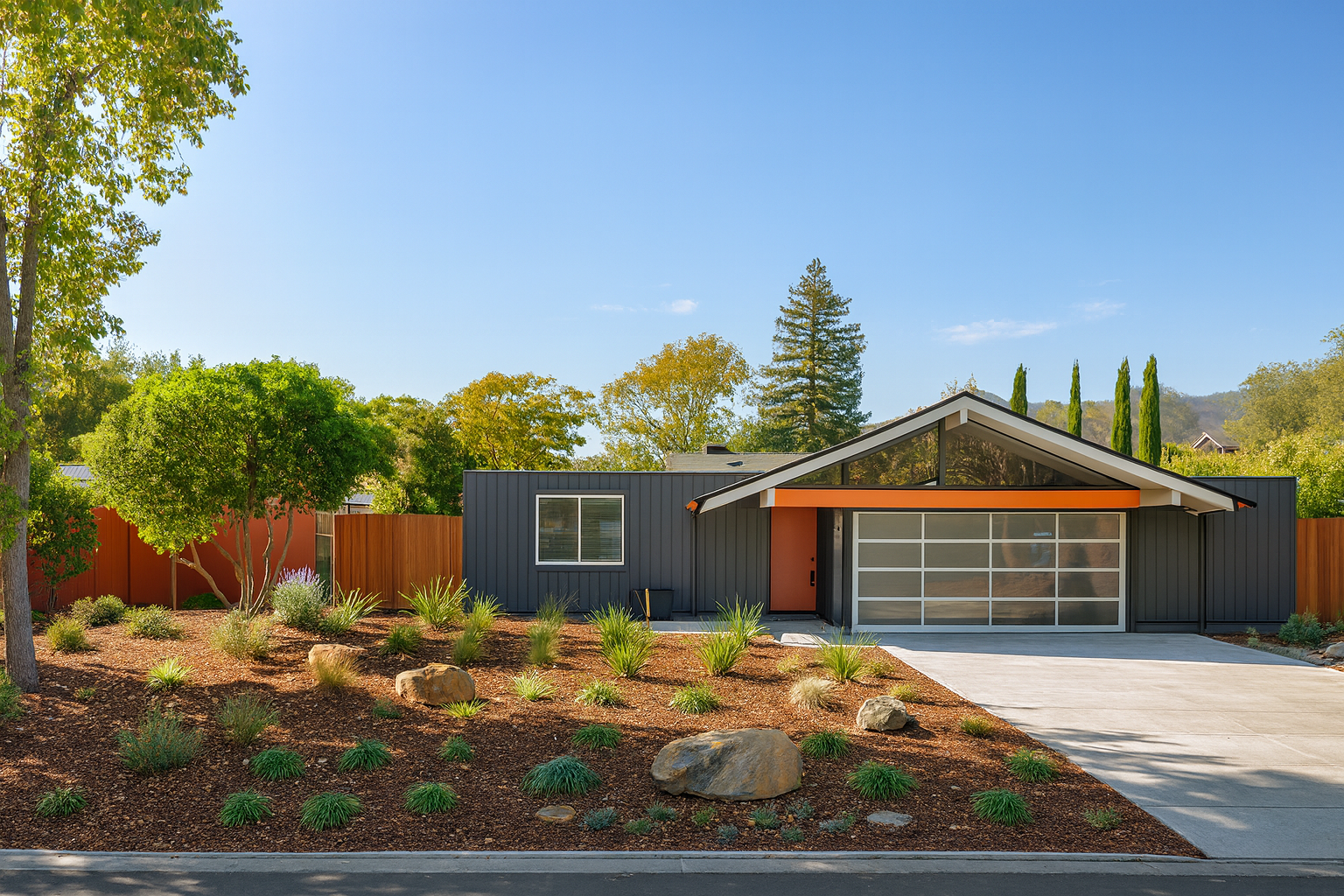
A classic Eichler home in Palo Alto, exemplifying mid-century modern architecture. Note the low-pitched roof and broad eaves, clean lines with wood and glass facade, and minimal street-facing windows – all hallmarks of Eichler design. The garage and entry court are front-facing, while floor-to-ceiling glass opens the rear of the house to a private yard (hidden from street view), achieving Eichler’s goal of “bringing the outside in.” Such aesthetic and functional features have enduring appeal among Silicon Valley’s creative homeowners.
Cultural and Aesthetic Appeal to Tech Buyers
What makes Eichler homes so attractive to today’s tech community, beyond the data and demographics, is the culture and lifestyle they represent. In Silicon Valley – a region that prides itself on disruption, creativity, and an embrace of modernity – the mid-century modern Eichler fits like a glove. Several cultural factors help explain this appeal:
Design Authenticity: Eichler homes offer “living in harmony with nature, fostering community, and celebrating clean, honest design” boyengarealestateteam.com – values that resonate with many in the tech and creative fields. The honesty of the post-and-beam construction and the lack of superfluous ornamentation align with a minimalist design ethos (much as clean user-interface design or elegant code might appeal to a software engineer). Tech professionals often have an appreciation for mid-century modern furniture and design (Eames chairs, Noguchi tables, etc.), and an Eichler provides the perfect architectural canvas for that aesthetic. The “indoor/outdoor” living concept in particular is a prized feature: glass-walled atriums and open courtyards create a bright, fluid space that feels creative – a sharp contrast to the cubicle farms many tech workers hope to avoid. One Eichler owner described “looking up from a window and seeing the sky when you’re in the house” as a daily inspiration. In dense Silicon Valley, that sense of openness and light is luxury itself.
Historical Connection and Story: Mid-century modern homes carry a story and heritage that newer constructions lack. For the creative class, owning an Eichler is like owning a piece of California history – it’s “joining a storied community” eichlerhomesforsale.com that traces back to the optimistic 1950s tech boom (when HP, Fairchild, and others were just starting out in this valley). Many tech buyers are highly educated on design/architectural history and appreciate that Joseph Eichler was a maverick developer who stood up for his principles. Living in an Eichler, therefore, signals an appreciation for authenticity and courage in design. This narrative appeals to people who see themselves as innovators: just as they might disrupt a technology, they also choose to live differently from the norm. As one long-time Palo Alto Eichler resident (herself a tech worker) wrote, the homes’ “clean lines and forward-thinking nature mirrored the spirit of Silicon Valley”, making it a joy to live in one for 30 years.
Community and Collaboration: Silicon Valley’s creative workforce often seeks environments that encourage interaction and community – a mindset born from open-plan tech offices and collaborative culture. Eichler neighborhoods, by design, foster community. They were built with communal parks and swim clubs, and their very layout (many cul-de-sacs and circular street plans in places like Palo Alto Fairmeadow) was intended to discourage through-traffic and create safe, village-like enclaves boyengarealestateteam.com. Today, these areas continue to have block parties, neighborhood potlucks, and collective preservation efforts. Younger buyers are drawn to that “neighborly warmth” boyengarealestateteam.com which can be rare in modern subdivisions. It harkens to the start-up culture idea of a close-knit team or community. For instance, Palo Alto’s Greenmeadow still revolves around a community center and pool where families gather, much as they did 60+ years ago boyengarealestateteam.com. In an age of digital social networks, Eichler owners enjoy analog social networks right on their street – a meaningful perk for those who may have moved to Silicon Valley from elsewhere and are seeking a sense of belonging.
Preservation as a Value: There is also a certain pride and passion in preserving these mid-century homes that resonates with techies who appreciate problem-solving and tinkering. Many Eichler buyers relish the challenge of restoring original features – whether it’s refinishing Philippine mahogany wall panels or repairing radiant heating systems – akin to how a classic car enthusiast might restore a vintage vehicle. “Eichlers are now akin to ‘classic cars’ in the housing market – rare and highly sought after by enthusiasts, including many tech professionals” eichlerhomesforsale.com. The care and craftsmanship involved in maintaining an Eichler (versus buying a turnkey new mansion) can be a rewarding hobby. Enthusiast groups and online forums (and the Eichler Network magazine/website) connect owners with specialized contractors and vintage parts. This aspect of hands-on engagement with one’s home dovetails with the DIY maker ethos present in Silicon Valley (think of those who build their own custom PCs or hack hardware – they apply the same love to preserving an original Eichler kitchen appliance or light fixture). For many, there’s also an environmental angle: preserving an existing home (and adapting it with green upgrades like solar panels on flat roofs) is seen as more sustainable than tearing down and building new. Tech workers mindful of sustainability appreciate that Eichler’s designs, ahead of their time, emphasized “bringing nature in” and efficient use of space, which aligns with modern green design principles.
In sum, the cultural cachet of Eichler homes among Silicon Valley’s creative class comes from a blend of aesthetics, values, and lifestyle. These houses are conversation pieces and design laboratories; they are historical artifacts and modern family hubs all at once. It is not unusual to find an Eichler in Palo Alto where the living room has a whiteboard on the wall (a remnant of a startup brainstorming session hosted at home), an Eames lounge chair in the corner, and children running freely in and out of the atrium. The Eichler home gives form to the ideals of innovation and openness – literally, with its transparent walls and flexible spaces – that the Valley’s culture celebrates. As one writer quipped, Eichlers were “modernist post-war dreams” and decades later, the dream is alive and well, nurtured by a new generation who have made it their own.
Preservation, Restoration, and Market Trajectory
The rising demand for Eichler homes has been paralleled by efforts to protect and preserve their unique character. In several Silicon Valley cities, local governments and residents have taken action to guard Eichler neighborhoods against insensitive remodeling or redevelopment. For example, Palo Alto established Eichler design guidelines and single-story overlay zones that limit second-story additions and require any alterations to respect mid-century aesthetics. This came after some instances where Eichlers in wealthy areas were torn down in favor of bigger homes, sparking community backlash. Sunnyvale and Cupertino have followed with their own protections: Cupertino’s city council in 2017 made it easier for neighborhoods to petition for single-story zoning overlay – explicitly anticipating that Eichler tracts like Fairgrove might want to preserve their one-story skyline. (Interestingly, as of 2018 Fairgrove hadn’t pursued the overlay, perhaps because “people here love the architecture” and no major two-story intrusions had occurred yet, but the tool is available if needed.) These measures underscore that Eichler communities are “special and beloved” enough to warrant formal preservation rules eichlerhomesforsale.com.
Beyond official guidelines, homeowner associations and informal networks play a big role. Many Eichler neighborhoods have active associations dating back to the original tract’s founding. Palo Alto’s Greenmeadow Community Association, for instance, still hosts annual barbecues, publishes newsletters, and manages a private community pool – fostering continuity with the past boyengarealestateteam.com. Such associations often educate new owners on Eichler-friendly remodeling (steering them toward options like compatible paint colors, preserving original window lines, etc.). The Eichler Network organization (publisher of the CA-Modern magazine) connects enthusiasts and shares resources, and local real estate agents known as “Eichler specialists” often act as de facto guardians of the legacy, matchmaking homes with preservation-minded buyers. Restoration specialists have also emerged – contractors who focus on Eichler renovations, knowing how to update an Eichler (for example, insulating the roof or updating wiring) without spoiling its mid-century integrity. These micro-industries around Eichlers illustrate how a preservation community sustains these homes’ value, both cultural and monetary.
Speaking of value: the market trajectory of Eichler homes has been nothing short of remarkable. Once sold for as little as $10,000–$20,000 in the 1950s, Eichlers in Silicon Valley now regularly fetch 100–300 times those amounts boyengarealestateteam.com. A Palo Alto Eichler that cost $19,500 in 1960 can easily sell for $3 million today – a testament not only to Bay Area real estate inflation but also to the premium attached to Eichler’s design. In percentage terms, some Eichlers have appreciated over 30,000% from their original price. During the recent tech booms, Eichler prices accelerated rapidly: over the past five years alone, Silicon Valley Eichlers have seen surging demand driving prices to record highs, often outperforming the broader market eichlerhomesforsale.com. For instance, in Sunnyvale the median Eichler price (~$2.8–$2.9M) is significantly higher than the city’s overall median (~$1.7M) eichlerhomesforsale.com. This indicates that buyers are willing to pay a premium specifically for the Eichler architecture and lifestyle. Real estate analyses confirm that Eichler homes, when well-preserved, tend to appreciate faster than generic homes – essentially because they are a limited, desirable commodity eichlerhomesforsale.com.
Another facet of this market dynamic is the trophy home phenomenon. As Eichlers become “trophy properties for the next generation” (especially in Palo Alto) eichlerhomesforsale.com, some buyers approach them as both investments and passion projects. We see tech executives who could afford larger new houses instead choosing an Eichler and investing heavily in thoughtful renovations – adding modern kitchens, solar panels, and smart-home tech within the Eichler framework rather than replacing it. Such bespoke restorations often set price records. There was the case of a 1970s Eichler in Mountain View’s Bell Meadows tract, extensively updated, which sold for around $3.2M – one of the highest in that city eichlerhomesforsale.com. Likewise, in Palo Alto, architecturally pristine Eichlers have drawn bidding frenzies, pushing prices well above $4M for ~2,000 sq ft homes boyengarealestateteam.com. This trajectory was unthinkable a few decades ago, when mid-century homes were sometimes razed as outdated. Now, scarcity and reverence fuel their value.
Finally, it’s important to recognize the role of restoration and preservation in sustaining market appreciation. Eichler owners often say they view themselves as “stewards” of a work of art. This mindset means many homes remain in excellent condition or are improved in historically sensitive ways. The collective effect is that Eichler neighborhoods have retained their allure, which keeps values high. As a Redfin report noted, “today, people who live in Eichler homes are fiercely loyal. Many have restored them to fit their original designs… These Eichler communities bring people together… They believe that Eichler homes are more than modern houses, but also a philosophy of living.”. In other words, it’s not just real estate – it’s a shared cultural enterprise. Such passion is infectious; new buyers often catch the bug and continue the cycle of caring for and elevating these homes. Looking ahead, the combination of tech wealth, limited Eichler supply, and enduring mid-century appeal suggests that Eichler homes will likely continue appreciating and remain a distinctive feature of Silicon Valley’s landscape.
Modernist houses with a moral purpose
From their radical mid-century beginnings to their current status as high-tech heirlooms, Eichler homes have charted a fascinating course. They started as an egalitarian experiment – “modernist houses with a moral purpose” – and have become the unofficial architecture of Silicon Valley’s creative class, treasured by those who build the future but admire the legacy of the past. In Silicon Valley, where change is the only constant, these low-slung modern houses stand as enduring symbols. They symbolize an ideal of living that values openness (those glass walls), innovation (the bold design), community (the cul-de-sacs and block parties), and inclusivity (a home for anyone qualified to buy, as Joe Eichler insisted). It’s little wonder that walking through an Eichler neighborhood in Palo Alto or Sunnyvale today, you might see electric cars in the carport and app developers in the yard – different trappings from the 1950s, but the same spirit of optimism and creativity housed under those iconic post-and-beam roofs. Eichler homes have proven that good design is timeless, and in doing so, they have indeed become the architectural emblem of a community that thrives on invention and imagination. Silicon Valley’s creative class has adopted Eichlers as more than homes – they are a lifestyle and a legacy, bridging mid-century modernism and 21st-century innovation in a way that is uniquely Silicon Valley.
The Boyenga Team at Compass, led by Eric and Janelle Boyenga, stands at the forefront of Silicon Valley’s Eichler and mid-century modern real estate. As founding partners at Compass and long-known as the region’s top Eichler specialists, they combine deep architectural knowledge with advanced Next-Gen marketing strategies to help clients buy, sell, and protect these iconic homes.
Eric and Janelle are trusted advocates for their clients—educating buyers on structural nuances, guiding sellers through preservation-minded preparation, and ensuring that every Eichler transfers to a homeowner who values its architectural integrity. Their hands-on approach, market expertise, and passion for mid-century modern design have made the Boyenga Team the go-to advisors for Silicon Valley’s creative class seeking authentic architecture and a community-driven lifestyle.
Sources: Historical and architectural context drawn from KQED News kqed.org and Dwell dwell.com; buyer trends and market data from Eichler specialist reports eichlerhomesforsale.com and San Jose Spotlight (Joint Venture Silicon Valley study); cultural commentary from Architects + Artisans (Frank Harmon on Steve Jobs) architectsandartisans.com and Eichler Network/Redfin insights eichlerhomesforsale.com; and various local real estate sources for enclave specifics boyengarealestateteam.com. All linked citations provide further detail and evidence of how Eichler’s mid-century vision continues to thrive in modern Silicon Valley. eichlerhomesforsale.com