
Sunnyvale’s 94087: Eichler Homes Hub in Silicon Valley
Historical Context: From Orchards to Eichlers
Sunnyvale’s 94087 zip code emerged as a significant Eichler hub due to a convergence of postwar opportunity and visionary development. In the mid-20th century Sunnyvale was transforming from the “Apricot Capital of the World” – a flat expanse of orchards – into a booming suburb. After World War II, Sunnyvale’s population exploded (from ~10,000 in 1950 to over 52,000 by 1960 eichlerhomesforsale.com) amid a massive housing shortage. Developer Joseph Eichler stepped in at this pivotal moment. In 1949, he formed the Sunnyvale Building Company and built his very first modern tract homes here eichlerhomesforsale.com. Sunnyvale became Eichler’s proving ground: over the next two decades his company constructed 16 different Eichler tracts in the city eichlerhomesforsale.com. By the 1960s, entire neighborhoods of glass-walled modern homes dotted 94087, helping define Sunnyvale’s suburban landscape eichlerhomesforsale.com. Several factors made Sunnyvale ideal for Eichler’s vision. The city had expansive, flat former orchard land – perfect for mass-construction of single-story homes – and a mild Bay Area climate that suited Eichler’s indoor-outdoor designs eichlerhomesforsale.com. Economically, Sunnyvale was booming: aerospace and electronics firms like Lockheed were hiring droves of educated young professionals eichlerhomesforsale.com. Eichler’s houses, which were stylishly modern yet relatively affordable, exactly matched the tastes of these forward-looking families who craved something beyond cookie-cutter ranch houses eichlerhomesforsale.com. Just as importantly, Sunnyvale’s city planners embraced Eichler’s avant-garde ideas – approving modern tract subdivisions to quickly address housing demand eichlerhomesforsale.com. By the 1950s–60s Sunnyvale had become Eichler’s “playground,” essentially a living museum of mid-century modern architecture with entire neighborhoods embodying California’s postwar optimism eichlerhomesforsale.com.
Not only did Eichler bring modern design to the masses in 94087, he also pioneered progressive social values. Eichler was one of the first builders anywhere to sell homes to buyers of all races and religions, at a time when discrimination was rampant. In 1958 he famously quit the National Association of Home Builders in protest of their exclusionary policies eichlerhomesforsale.com. This spirit of inclusivity fit Sunnyvale’s progressive streak and further ingrained Eichler homes into the community’s identity. Today the city officially recognizes the historic value of its Eichlers – instituting special design guidelines and single-story zoning overlays to preserve their character eichlerhomesforsale.com. In short, Sunnyvale’s 94087 became an Eichler epicenter thanks to abundant land, a receptive city, and a postwar populace eager for modern living. The result was over 1,000 Eichler homes built in Sunnyvale (the second-largest concentration after Palo Alto) eichlerhomesforsale.com – a legacy that firmly anchors 94087 as a mid-century modern mecca.
Eichler Neighborhoods of 94087: Tracts and Maps
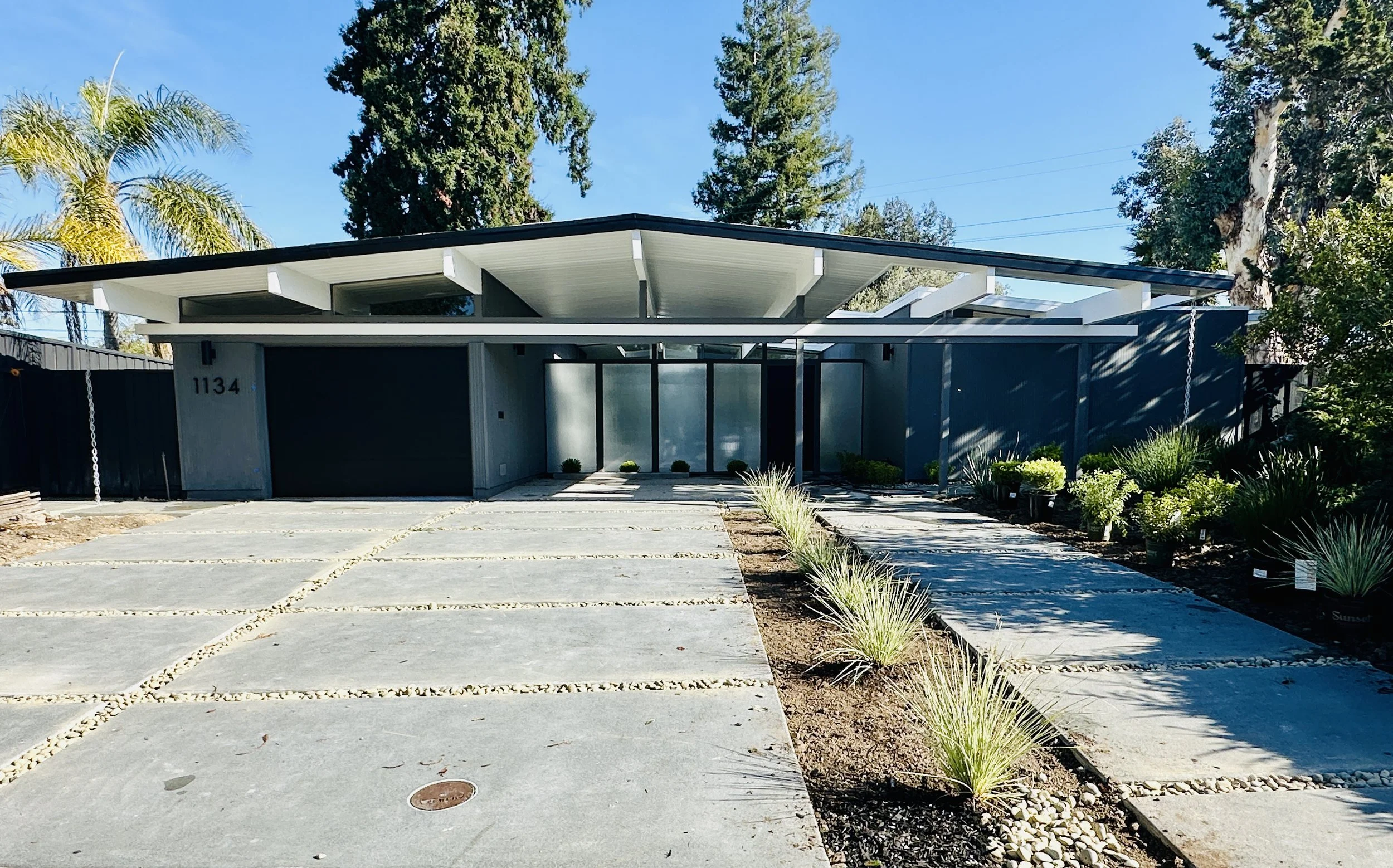
1134 Strawberry Court in 94087 Sunnyvale’s Fairbrae neighborhood.
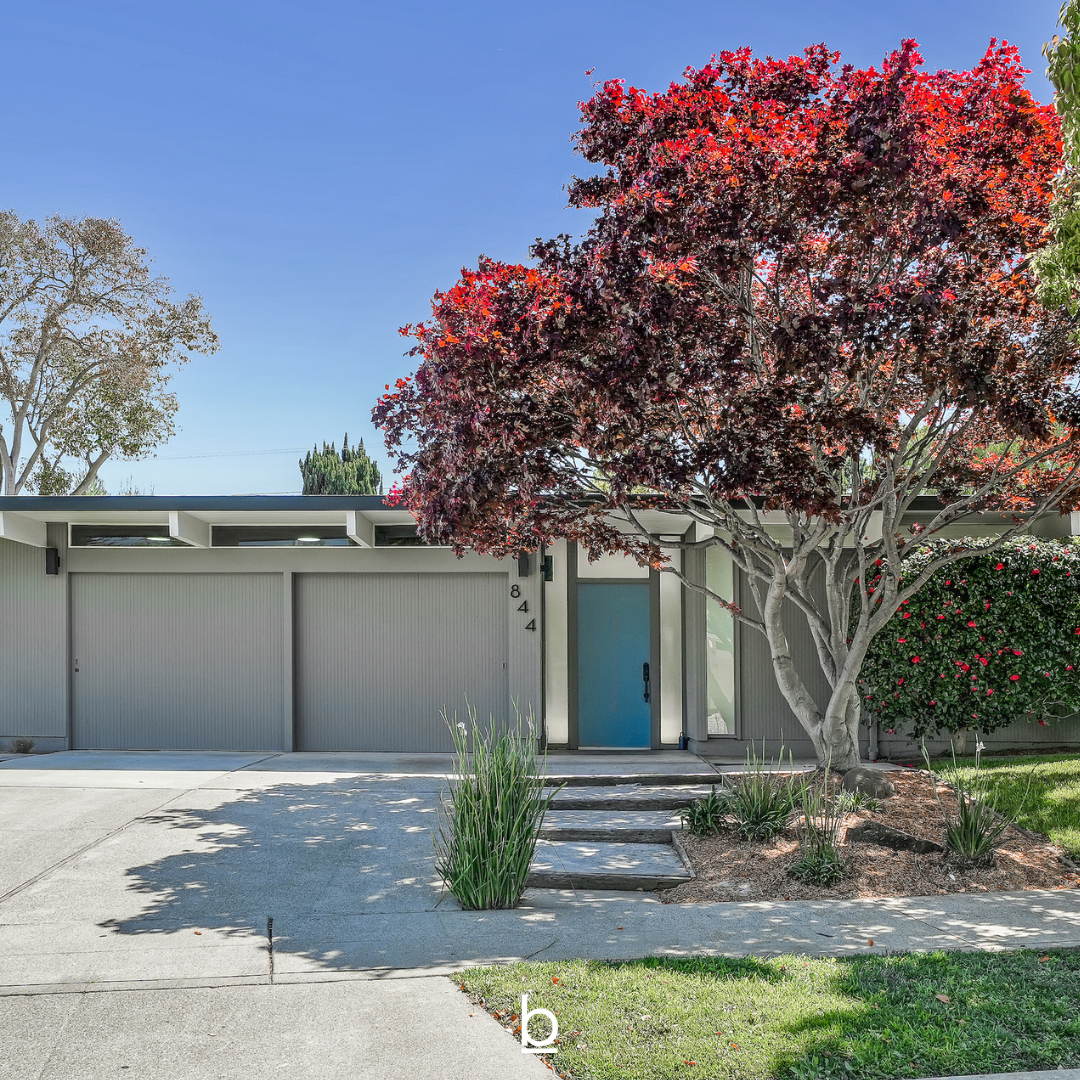
844 Trenton Drive, Sunnyvale 94087 located in the Rancho Verde Tract
Within the 94087 zip code lie numerous Eichler tracts – each a distinct neighborhood of mid-century modern homes. (See Appendix A of Sunnyvale’s Eichler Design Guidelines for detailed tract maps and boundariesscribd.com.) These developments were built sequentially from the 1950s into the early 1970s, reflecting Eichler’s evolving architectural concepts. Below we identify the major Eichler neighborhoods in 94087, along with their key features and histories:
Fairorchard (1954) – Eichler’s first project in Sunnyvale’s southwest corner, Fairorchard introduced 54 modern homes along Wright, Edmonton, Helena, La Salle and Homestead Road. These were larger than Eichler’s earlier houses, offering 3–4 bedrooms (1370–1890 sq ft) and incorporating both courtyard and atrium models. The tract’s architectural consistency is evident in its low-pitched roofs and open-plan layouts, yet no two houses are identical – subtle variations in entry placement and facade details create visual interest. A fun bit of lore: Apple co-founder Steve Wozniak grew up in a Fairorchard Eichler on Edmonton Avenue, reflecting how Eichler neighborhoods attracted the tech innovators of the day. Fairorchard’s desirability endures partly due to its top-ranked schools (West Valley Elementary, Cupertino Middle, Homestead High) which continue to draw families into this Eichler enclave.
Fairbrae Tract (1958) and Fairbrae Addition (1959–60) – Located just east of Fairorchard, the Fairbrae developments represent the heart of Sunnyvale’s Eichler community. The original Fairbrae tract included 78 homes on streets like Pome, Quince, Sheraton, Pulora and Hollenbeck. Eichler aimed slightly more upscale here – many models were L-shaped courtyard homes (for indoor-outdoor privacy), and buyers could join the new Fairbrae Swim & Tennis Club built as a neighborhood amenity. The following year, Eichler massively expanded this area with the Fairbrae Addition – 275 additional homes spread across numerous cul-de-sacs such as Sesame Dr/Ct, Torrington, Templeton, Strawberry, Rockport, Sage, Smyrna and more. Every home in the addition was a 4-bed/2-bath plan (either courtyard or atrium layout), maintaining architectural harmony despite the tract’s large size. Fairbrae’s cohesive look – post-and-beam structures, paneled walls, and globe entry lights – is so emblematic that many consider it the quintessential Sunnyvale Eichler neighborhood. To this day, Fairbrae residents bond through the private swim club and community events, sustaining Eichler’s original vision of neighborhood interaction and shared recreation heritageparkmuseum.org.
Rancho Verde (1960) and Rancho Verde Addition (1962) – These twin tracts added about 180 Eichler homes in central-west Sunnyvale, roughly around Mary Avenue, Ticonderoga, Trenton, Plum, Sherwood and adjoining courts. Rancho Verde’s one-story homes continued Eichler’s modernist idiom – open atriums, floor-to-ceiling glass, and integrated living spaces – but also debuted new ideas. The Rancho Verde Addition in ’62 was a smaller enclave of 40 homes touted as more upscale, where Eichler first rolled out the “Gallery” model homes designed by architect Claude Oakland. These Gallery Eichlers featured an innovative long gallery hallway, and their appearance marked Eichler’s shift toward larger, more customized designs. Both sections of Rancho Verde include Eichler’s beloved roof variations – flat and slightly pitched forms as well as a few dramatic peaked profiles – giving the neighborhood a mix of silhouettes while staying true to mid-century style. Many double A-frame elevations (twin gables forming an atrium entry) appear here too, which have become highly prized by enthusiasts. Overall, Rancho Verde’s quiet cul-de-sacs lined with glassy modern homes remain a time capsule of 1960s California Modernism.
Cherry Chase Neighborhood (1950s–60s) – Centered around Cherry Chase Elementary (near Hollenbeck and Fremont), this area is not a single tract but a larger neighborhood fabric into which Eichlers were woven. The “Cherry Chase charm” comes from hundreds of mid-century homes (Eichlers and other ranches) built in the late ’50s and early ’60s eichlerhomesforsale.com. In fact, roughly 2,500 homes in Cherry Chase date to that era eichlerhomesforsale.com, making it one of Santa Clara County’s largest mid-century clusters. Eichler’s contribution includes several pockets of atrium-model houses (often 4 bed/2 bath, c. 1961) showcasing classic Eichler features: open-air central atriums, exposed post-and-beam ceilings, and seamless flow to the outdoors eichlerhomesforsale.com. What sets Cherry Chase apart is the mature environment that has grown up around the homes – towering camphor and fruit trees (many predating the houses) now arch over the streets and lush gardens envelop the low-slung Eichlers eichlerhomesforsale.com. The neighborhood is highly coveted by families for its top-ranked schools (Cherry Chase Elementary is a California Distinguished School) and strong community spirit eichlerhomesforsale.com. An active Cherry Chase Neighborhood Association organizes block parties, holiday parades, and watch programs, creating a tight-knit community where even original 1950s owners still join in the fun eichlerhomesforsale.com. Strolling through Cherry Chase’s Eichler-lined courts truly feels like stepping back into 1950s California – mid-century homes lovingly maintained, kids biking to school, and neighbors gathering at nearby De Anza Park – an Eichler neighborhood living its best life in the 21st century.
Fairwood Tract (1961–62) – Over on the eastern side of 94087 (near Wolfe Road and Fremont), Eichler undertook one of his last large Sunnyvale projects: Fairwood. This tract of 215 homes (on Mallard, Kingfisher, Dartshire, Carlisle, Dunholme, etc.) was notable as Eichler’s push toward higher-volume production. Fairwood Eichlers retained the hallmark post-and-beam construction and open layouts, but Eichler was simultaneously busy with ambitious projects elsewhere (like high-rises in San Francisco) and Fairwood’s execution reflected some cost-cutting. Many Fairwood models had slightly more standardized features and simpler finishes, signaling Eichler’s attempt to “shift downmarket and toward economies of scale,” as later noted by historians. Indeed, Eichler Homes, Inc. went bankrupt a few years after Fairwood was built. Nonetheless, Fairwood homes today are extremely popular with tech buyers – the tract sits within a mile of Apple’s campus, and many Apple employees snap up these homes so they can bike to work. The neighborhood’s mid-century character is intact, and recent resident-led efforts achieved a single-story overlay zone to preserve Fairwood’s one-story Eichler streetscape (preventing tall rebuilds from looming over the classic low profiles). In essence, Fairwood stands as Eichler’s volume-build experiment in Sunnyvale – slightly more modest in detail but still delivering the iconic walls of glass, indoor-outdoor patios, and family-friendly layouts that make Eichlers timeless.
Late-1960s “Gallery” Tracts – As the 1960s progressed, Eichler pivoted to semi-custom infill developments in Sunnyvale, resulting in a few smaller but distinctive tracts in 94087. Parmer Place (1967) added 42 upscale Eichlers along Cumberland, Piper, Pear and Brookline Here Eichler offered eleven different floor plans (some up to 2,400 sq ft) and even a rare “Loggia” model, catering to buyers seeking larger homes. A cautionary note for Parmer: some lots back onto high-voltage power lines – a quirk of the infill site. In 1968 Eichler built Rancho San Souci (35 homes on Mackenzie, Laurentian, Olympus, Pendleton) featuring some of the largest Eichlers in Sunnyvale – many are breathtaking atrium designs with soaring double A-frame roofs. That same period saw Primewood (1968–70), a 35-home tract on Alison, Lennox and Beaverton Courts. Primewood was essentially an Eichler showcase for big plans: ten different layouts ranging 1750–2300 sq ft, on generous lots up to 12,000 sq ft. This tract is known for its high-gabled double A-frame models, which are rare and extremely coveted for their striking architecture. In fact, Primewood’s median prices ($2.5M–$3M) are among the highest of any Sunnyvale Eichler enclave, reflecting how collectors prize those twin-gable designs eichlerhomesforsale.com. Finally, Eichler’s swan song in Sunnyvale was a tiny 1971 build-out: Fairwood Addition (20 homes on Chukar and Chickadee Courts) and Fairpark Addition (20 homes on Homestead Rd and Lorne Way). These last homes were smaller 3–4 bedroom models (some only ~1,550 sq ft) – a surprising reversion to compact designs likely aimed at more affordable pricing. With that, Eichler’s development chapter closed, but not before leaving 94087 with an unmatched tapestry of mid-century neighborhoods.
Architectural Consistency and Unique Features
Despite spanning different years and architects, Sunnyvale’s Eichler tracts share a recognizable consistency in architectural philosophy. Hallmark Eichler elements abound: post-and-beam construction, open floor plans integrating kitchen, dining and living areas, and generous use of glass to “bring the outdoors in” heritageparkmuseum.org. Most Eichlers feature floor-to-ceiling glass walls or sliding doors opening onto private patios and atriums, effectively blurring the boundary between indoor and outdoor space eichlerhomesforsale.com. The homes sit on concrete slab foundations with in-floor radiant heating – an innovative (if maintenance-prone) system Eichler introduced to eliminate the need for bulky radiators eichlerhomesforsale.com. From the street, Eichler homes present a minimalist, horizontal profile: low or flat rooflines with broad eaves, vertical wood siding (often grooved plywood), and almost no street-facing windows for privacy eichlerhomesforsale.com. This was a radical departure from traditional 1950s houses and gave Eichler tracts a unified modern aesthetic. In Sunnyvale’s Eichler neighborhoods, one readily notices how the houses relate harmoniously – their rooflines and materials complement each other, and even when models differ, the consistent one-story height and modern lines create visual unity.
At the same time, each Eichler tract has its unique architectural touches. Eichler employed several top architects over the years – including Anshen & Allen in the early 1950s, Jones & Emmons in the mid-50s, and Claude Oakland (formerly of Anshen’s office) who designed many 1960s Eichlers. These collaborations yielded an evolution of styles. Early Sunnyvale Eichlers had simple flat or shed roofs and no atriums (e.g. the 1949–50 Sunnyvale Manor houses), whereas by the late ’50s, Eichler was introducing the atrium model – exemplified by the 4-bedroom atrium homes in Fairbrae and Cherry Chase eichlerhomesforsale.com. In the mid ’60s, architects Jones & Emmons and Claude Oakland pushed Eichler design further by adding dramatic roof profiles. One celebrated innovation was the “double A-frame” or twin gable model, where two steep A-shaped gable roofs intersect, often with a peaked glass-walled atrium in between sf.curbed.com. Sunnyvale contains a number of these double A-frame Eichlers (especially in Rancho Sans Souci and Primewood tracts). They are visually stunning and rare, since only a handful were built across all Eichler communities eichlerhomesforsale.com. Collectors today pay a premium for these models due to their soaring interiors and iconic appearance.
Later Eichler designs featured dramatic rooflines – for example, this “Double A-Frame” model in Sunnyvale boasts two steep gables framing a central atrium entry sf.curbed.com eichlerhomesforsale.com.
Other unique Eichler features in 94087 include the courtyard vs. atrium layouts. Courtyard models (more common in mid-50s tracts like Fairorchard/Fairbrae) are L- or U-shaped houses that wrap around a private side courtyard, whereas atrium models (ubiquitous in 1960s tracts) place a glass-walled atrium at the core of the house. Both served Eichler’s goal of bringing light in and creating outdoor living space, but the atrium in particular became an Eichler signature – essentially an open-air “outdoor room” in the center of the home eichlerhomesforsale.com. The presence of an atrium now adds significant value: buyers covet that wow-factor entry, and well-preserved atrium Eichlers often fetch 10–20% higher prices than similar non-atrium models in Sunnyvale eichlerhomesforsale.com. Additionally, Eichler designs evolved to include features like attached two-car garages in later years (early models had carports), and variations in facade materials (occasional brick or stone accents on some 1970s models, though wood siding remains dominant). Yet through all these variations, Eichler maintained a cohesive architectural language – clean lines, horizontal massing, honest materials, and integration with nature. This consistency is a big reason entire Eichler tracts in 94087 are often mistaken for being designed by a single architect (when in fact multiple architects contributed over time). It’s also why Sunnyvale’s Eichler neighborhoods have stood the test of time: the “California Modern” aesthetic Eichler championed never really went out of style, and today these homes feel retro yet remarkably contemporary.
Notable Collaborations: Gavello, Mackay and Others
Eichler’s success in Sunnyvale inspired other builders, and even some direct collaborations, that left their mark on 94087. Most famously, Eichler frequently teamed with the architecture firm Anshen & Allen (Robert Anshen and Steve Allen). It was Anshen who designed Eichler’s very first houses and later the iconic Eichler atrium models. In Sunnyvale Manor II (built 1950), Eichler brought in Anshen & Allen to design 51 homes – the first time their modern architectural flair appeared in a tract. These particular houses were quite experimental (they lacked the later Eichler atrium/courtyard, using instead novel window placements and open beam ceilings) and are sometimes not immediately recognized as Eichlers because they differ from the “classic” models that came late. Nonetheless, the Eichler–Anshen partnership was pivotal in setting the architectural direction for all Eichler homes to follow. Another firm, Jones & Emmons, took over many designs in the mid-50s (they are behind the well-known Eichler X-100 steel house and many later tract layouts). By the 1960s, Claude Oakland had become Eichler’s principal architect, designing thousands of the later homes (including in Fairbrae, Rancho Verde, etc.). Claude Oakland’s influence is seen in the refined atrium concepts and the introduction of the gallery and double-gable models. Sunnyvale’s Eichlers thus encapsulate the work of all these architects – making the city a showcase of Anshen’s early modernist ideas through Oakland’s late-modern flourishes.
Interestingly, Eichler’s architects sometimes lent their talents to other developers too – resulting in “Eichler-esque” enclaves in Sunnyvale that weren’t built by Eichler at all. A prime example is Gavello Homes. In the mid-1950s, local builder Elmer Gavello developed a small tract known as Gavello Glen (in what is now Sunnyvale’s Ponderosa Park area). To design these homes, Gavello actually hired Anshen & Allen – the same architects Eichler was using boyengateam.com. The result was a cluster of roughly 60 mid-century modern houses that look strikingly like Eichlers, with post-and-beam construction, open layouts and A-frame rooflines eichlerhomesforsale.com. In fact, many consider Gavello Glen an “honorary” Eichler tract since the homes strongly embody Eichler’s style and ethos. Eichler aficionados enjoy pointing out subtle differences (Gavello Homes often have larger lots and some different interior details) boyengateam.com, but the architectural kinship is undeniable. This collaboration underscores Eichler’s outsized influence – even his would-be competitors emulated his designs to satisfy the demand for modern homes. Other developers also built Eichler-like homes in Sunnyvale’s 94087 during the same era, including John Mackay (developer of modern tract homes in nearby Mountain View and parts of Sunnyvale) eichlerhomesforsale.com. Mackay’s homes and others (e.g. Alliance, Stern & Price) copied elements like open beam ceilings and atriums, contributing to a broader mid-century modern scene in Sunnyvale. Ponderosa Park and Bahl’s 1970s “Hawaiian” homes in Sunnyvale are examples of non-Eichler mid-century tracts that add to the mix.
In summary, Joe Eichler’s developments in 94087 did not exist in a vacuum – they set a trend that others followed. The collaborations with star architects (Anshen & Allen, Jones & Emmons, Oakland) ensured top-notch design consistency across Sunnyvale’s Eichlers. And the presence of high-quality Eichler inspired homes (like Gavello’s) in the vicinity further cemented Sunnyvale 94087’s reputation as a hotbed of Mid-Century Modern architecture. To this day, even seasoned real estate agents sometimes double-check whether a given Sunnyvale listing is a “true Eichler” or a very convincing contemporary – a testament to how influential Eichler’s style became in this zip code.
Preservation and Community Efforts
Sunnyvale has taken active steps to preserve the architectural integrity of its Eichler neighborhoods – a recognition of their historical and cultural value. In 2008–2009, the City of Sunnyvale worked with residents to develop Eichler Design Guidelines, a set of rules and recommendations for remodeling Eichler homes. These guidelines (formally adopted in 2009) aim to ensure that additions or changes are in harmony with the original Eichler aesthetics scribd.com. For example, they advise maintaining low-pitch rooflines, using materials similar to the original wood siding, and avoiding second-story additions that overpower the single-story context scribd.coms. The city even produced maps identifying the boundaries of each Eichler neighborhood and the non-Eichler homes within them, to help apply the guidelines appropriately scribd.com. While the guidelines are not outright laws, they have been quite effective – many homeowners follow them when updating kitchens, replacing windows, or re-roofing, resulting in sensitive renovations that retain mid-century character (e.g. using foam roofing and dual-pane glass that improve efficiency yet look period-appropriate eichlerhomesforsale.com). Sunnyvale also went a step further by establishing single-story overlay districts in several Eichler tracts covering about 287 homes eichlerhomesforsale.com. In these overlay zones, new second stories are prohibited, preventing the “McMansion” effect and preserving the iconic low-profile look of the Eichler streetscape. The overlay process requires strong neighborhood support – and Sunnyvale Eichler owners have indeed rallied for it, reflecting their pride and desire to protect the historic ambiance.
Grassroots community efforts play a huge role as well. Many Eichler neighborhoods in 94087 have active associations or informal networks. As mentioned, Cherry Chase residents formed a Neighborhood Association that hosts social events and watches out for preservation concerns eichlerhomesforsale.com. In Fairbrae, the member-owned Fairbrae Swim Club (established by Eichler himself in 1960) remains a social hub – Eichler owners gather there for summer BBQs, swim meets, and meetings. This kind of community amenity was part of Eichler’s original vision (several tracts were built with pools, parks or greenbelts nearby) and it continues to bind neighbors together heritageparkmuseum.org. Sunnyvale Eichler owners also connect through broader organizations like Eichler Network and neighborhood email lists, where they swap referrals for restoration specialists, plan home tour caravans, or advocate for things like undergrounding utilities. It’s common to see groups of Eichler homeowners collectively hiring a painter who knows how to restore the original mahogany paneling, or jointly lobbying the city for street improvements that complement the mid-century look (for example, historically appropriate street lighting). Because Eichlers are distinctive, owners often feel a shared identity – they’re not just living in any tract, but part of a mid-century heritage community. This is evident in the low turnover rates: original owners in Sunnyvale Eichler tracts often stay for decades, and when they do sell, many specifically hope to sell to another “Eichler lover” who will appreciate and care for the home eichlerhomesforsale.com. Such unofficial stewardship has helped keep these neighborhoods remarkably intact.
There have also been notable restoration efforts in 94087. Rather than tearing down or drastically altering Eichlers, many new owners choose to restore them – polishing up the mid-century gems. A number of Sunnyvale Eichler homes have undergone award-winning restorations: for instance, owners may remove inappropriate past remodels (like an unsightly second-floor addition from the 1980s) and restore the original Eichler profileeichlernetwork.com, or they might strip layers of paint to refinish the interiors in the original Philippine mahogany and bring back vintage globe lights. Preservation-minded architects (such as Klopf Architecture, a firm known for sensitive Eichler remodels) have worked on many Sunnyvale projects to update kitchens and bathrooms while honoring the Eichler style. Publications often feature these makeovers – e.g. a Dwell magazine article highlighted a painstaking renovation of a Sunnyvale Eichler where walls were opened up to reconnect with the outdoors, exactly as Eichler intended punchmagazine.com. The city’s Heritage Preservation Commission has even discussed creating formal historic districts for some Eichler tracts, though to date Sunnyvale’s approach has favored the flexible overlay zoning over strict historic designation. Nonetheless, walking through 94087’s Eichler enclaves today, one is struck by how authentic they feel. Thanks to community pride, city guidelines, and enthusiastic preservation, most of these 50–70 year-old homes still sport their original mid-century flair: unpainted wood ceilings, original geometric entry screens, and thoughtfully landscaped atriums. In essence, Sunnyvale’s Eichler neighborhoods have not only survived – they’ve thrived as living pieces of architecture history.
Market Trends and Pricing Evolution: 1950s to Today
The trajectory of Eichler home prices in 94087 tells a dramatic story of California real estate. In the 1950s, when these homes were new, Eichlers were famously affordable – true to Joe Eichler’s mission of providing modern design for the middle class. In fact, original Eichler homes in the late ’50s sold for roughly $9,000 to $12,000 (with down payments as low as $300 and monthly payments around $70!) midcenturymondays.com. Even the larger 4-bedroom models in the early ’60s were often under $20,000. Adjusted for inflation, that’s only about $120,000 in today’s dollars midcenturymondays.com – an almost inconceivably low price for Silicon Valley real estate. By the 1960s, Eichler’s later Sunnyvale builds (bigger homes with atriums) were pricing in the $20k–$30k range brand new eichlerhomesforsale.com. For example, Eichler’s upscale tracts in San Francisco around 1962 listed homes at $34k–$46k sf.curbed.com, so Sunnyvale’s might have been similarly priced for top-end models.
Home values really took off in the 1970s–1980s as the Bay Area economy boomed. An Eichler that sold for ~$15,000 in 1955 might have resold for perhaps $50,000–$80,000 by the late 1970s (amid high inflation). Then the early ’80s tech boom and limited housing supply drove prices into the low six figures. Longtime Sunnyvale residents recount buying Eichlers in the mid-1980s for around $150,000–$200,000 – a hefty sum then, but one that, in hindsight, was a bargain. The region’s real estate had its ups and downs: a late-1980s surge was followed by an early ’90s dip (when aerospace cuts and recession hit California). Even so, by the late 1990s dot-com boom, Eichler homes in 94087 were typically selling in the high six figures (e.g. $700k–$900k), depending on lot size and condition. The year 2000 saw frenzy over scarce Silicon Valley homes, and mid-century modern chic was gaining renewed appreciation, which helped Eichlers command a premium. The early 2000s bubble pushed many Eichlers over the $1 million mark (only to see a brief correction around 2008 when the broader market crashed). However, Eichler values proved quite resilient – demand for these architectural gems quickly rebounded.
By the 2010s, with Silicon Valley’s explosive growth, Eichler prices went from strong to stratospheric. Around 2015–2016, original unrenovated Sunnyvale Eichlers were often $1.5M+, and nicely updated ones were topping $2M. In recent years, the 2020–2022 market boom (fueled by tech wealth and low interest rates) saw stunning new highs: many Eichlers in 94087 began selling for $2.5–$3.5 million. In fact, experts noted that original Eichlers which once cost ~$20k now routinely fetch $1–3 million (or more) depending on location and upgrades eichlerhomesforsale.com. Sunnyvale’s top Eichler sales have even neared the $4M threshold. For instance, in 2021–2022 at least nine Sunnyvale Eichler homes sold above $3 million, according to local market data, with the highest recorded Eichler sale around $3.6–$3.7 million eichlerhomesforsale.com. One particular home on Dawn Drive (expanded and high-end renovated) attracted a bidding war that drove its price into the high $3 millions (setting a price record for Sunnyvale Eichlers). And in 2023, an Eichler on Maraschino Drive sold for $3.155M after restoration – noted as the 4th highest Eichler sale in Sunnyvale’s history. These lofty prices underscore the almost cult-like demand: Eichlers have become collector’s items in Silicon Valley’s housing market midcenturymondays.com. Tech professionals and design-savvy buyers especially will pay a premium for an authentic Eichler, valuing the architecture and lifestyle over sheer square footage.
To contextualize by decades/cycles: 1950s–60s was the era of initial sales under $30k; 1970s saw values climb into the tens of thousands; 1980s into low hundreds of thousands; 1990s into mid-to-high hundreds; 2000s crossed $1M; 2010s reached ~$2M; and 2020s have reached $3M+ in 94087. Major market cycles did influence Eichler values (they dipped in early ’90s and 2008–2011, for example), but overall the trajectory has been sharply upward. Eichler homes in 94087 have appreciated roughly 100-fold (or more) from their original prices when adjusted for inflation midcenturymondays.com. Yet despite the eye-popping values, these homes continue to be beloved by their owners. Notably, turnover is low – many Eichler owners hold on for decades – which keeps supply scarce and supports values eichlerhomesforsale.com. When one does hit the market in 94087, it often sells fast and over asking, with multiple offers from eager buyers. Local realtors have specialized in the Eichler niche, marketing them as pieces of livable art. Some recent record sales illustrate trends: a fully restored Eichler in Willow Glen (San Jose) sold for $2.625M in 2024, the highest ever in that tract eichlerhomesforsale.com, showing that a sensitively modernized Eichler can break records. In Sunnyvale, top-condition Eichlers with atriums now regularly exceed $3M eichlerhomesforsale.com, whereas ones needing work (or lacking the signature atrium) might trade in the low $2M range eichlerhomesforsale.com – still exponentially above their original cost. The bottom line: Eichler homes have evolved from affordable tract houses into luxury real estate, all while retaining the soul of Joe Eichler’s egalitarian vision. Their value appreciation is a testament to limited supply (only ~11,000 Eichlers were ever built eichlerhomesforsale.com) and enduring demand for their design pedigree and 94087’s location. Few other mid-century tract homes have proven to be such sound investments – or such treasured heirlooms – as Sunnyvale’s Eichlers.
Notable Sales, Restorations, and Legacy
Sunnyvale’s 94087 Eichler neighborhoods have had their share of notable moments and famous residents. We’ve already mentioned that a young Steve Wozniak grew up in an Eichler on Edmonton Avenue – a fitting origin for someone who would embody Silicon Valley’s innovative spirit. In nearby Los Altos, Steve Jobs spent his teen years in a modern tract house influenced by Eichler’s style, and one can’t help but see a parallel in how these open, light-filled homes might inspire open, creative minds. Over the years, some Eichler properties themselves have become minor celebrities. For example, a beautifully preserved Eichler in Sunnyvale’s Fairbrae tract was featured on an “Eichler Home Tour” organized by local architecture buffs, drawing hundreds of visitors to experience its time-capsule 1960 interior. Another Eichler on Ticonderoga Drive (Rancho Verde) made news when its owners, instead of tearing it down, opted to restore every original detail – from the globe entry lamp to the accordion closet doors – earning them a preservation award. Real estate agents often tout certain homes as the “best Eichler on the market in years,” such as the 1230 S. Mary Ave double A-frame Eichler that Curbed SF highlighted for its jaw-dropping atrium atrium design and impeccable condition sf.curbed.com. That home’s red door and peaked glass atrium became something of a social media star, proving how photogenic (and Instagrammable) Eichler architecture can be.
In terms of record sales, Sunnyvale Eichlers have repeatedly set new highs for mid-century homes. One particularly record-breaking sale was at 1166 Maraschino Dr (in the Cherry Chase/Fairwood area) in 2023: after an extensive renovation, it sold for $3.155M – at the time the 4th highest price ever for a Sunnyvale Eichler. What made this sale notable was the strategy behind it: the sellers invested ~$275k in restoring and updating the long-vacant home before listing, via a concierge program, which resulted in multiple offers and the record price. This case exemplified how much buyers value authentic Eichler character combined with modern amenities. The restored Claude Oakland-designed home maintained its 1962 spirit but had new roofing, appliances, and a refreshed garden – yielding a combination that buyers were willing to pay a premium for. Similarly, Eichler specialists like the Boyenga Team have reported bidding frenzies for upgraded Eichlers – for instance, a Willow Glen Eichler they marketed in late 2024 attracted fervent Eichler fan buyers and sold far above neighboring home values eichlerhomesforsale.com. These high-profile sales underscore that Eichlers aren’t just historically interesting homes; they’re coveted luxury assets in today’s market.
On the restoration front, Sunnyvale Eichler owners are often very hands-on in preserving history. A number of neighborhood groups have organized workshops on Eichler maintenance – teaching everything from how to replace aging luan paneling to sourcing reproduction lighting. Companies specializing in mid-century restoration (e.g. for Eichler-specific globe lights, or period-correct front doors) do brisk business in this zip code. There are also instances of community-led projects, like fundraising to restore the mid-century modern neighborhood entrance signs that Eichler installed (a few tracts had stylized entrance markers or original street lamps that residents are now keen to maintain). One intriguing anecdote: in the Fairwood tract, neighbors noticed that a handful of original backyard fruit trees (remnants of the old orchards) were dying off, so they collaborated to plant young apricot and plum trees in their yards to “replenish” the historic orchard feel – a blend of preservation and practicality that Joseph Eichler would likely have appreciated.
Lastly, it’s worth noting that Sunnyvale’s Eichler hub has influenced broader preservation efforts in the region. The city’s success with Eichler design guidelines has been cited by neighboring cities (like Palo Alto and Mountain View) in crafting their own mid-century preservation policieseichlerforsale.com. Sunnyvale’s approach demonstrates that you can balance modern living needs with historic character – homeowners can add solar panels, remodel kitchens, even expand (thoughtfully) without losing the Eichler essence. This has kept the neighborhoods economically viable and culturally vibrant. Neighborhood associations remain vigilant: if a non-Eichler style remodel is proposed, you can bet local Eichler owners will politely educate that homeowner about the guidelines and suggest alternatives that fit the style. The result is that nearly 70 years on, 94087’s Eichler districts still look and feel much as they did when new – only the saplings are now towering trees and the original owners are now grandparents (or have passed the torch to a new generation of Eichler aficionados).
In conclusion, Sunnyvale’s 94087 became a significant hub for Eichler Homes due to a perfect storm of timing, vision, and community. What started as Joe Eichler’s bold experiment – building modern architecture for the everyman in a postwar orchard town – has matured into a cherished and protected enclave of mid-century design. The tract-level details (from Fairbrae’s swim club to Cherry Chase’s schoolyard gatherings) give each neighborhood its own story, but collectively they form a larger narrative of architectural consistency, innovation, and preservation. Collaborations with architects like Anshen & Allen produced timeless designs, and even competing developers like Gavello were drawn into Eichler’s orbit, reinforcing the area’s modernist legacy. Over decades, the value of these homes skyrocketed, yet the value they provide is more than monetary – it’s a lifestyle rooted in openness, simplicity, and community. Whether it’s an evening stroll past illuminated atriums, a chat with a neighbor about restoring original ceiling beams, or a record-breaking sale that makes headlines, Sunnyvale’s Eichler neighborhoods continue to thrill real estate experts and architecture lovers alike. In 94087, Eichler’s promise – “modern homes for modern living” – is alive and well, bridging the gap between Silicon Valley’s pioneering past and its cutting-edge present in a way that is uniquely and delightfully Sunnyvaleeichlerhomesforsale.comeichlerhomesforsale.com.
Sources: Historical and market data were compiled from Eichler specialist publications, Sunnyvale historical records, and real estate analyses, including the Sunnyvale Heritage Park Museum heritageparkmuseum.org, Eichler Network and Eichler Homes archives midcenturymondays.com eichlerhomesforsale.com, and contemporary market reports eichlerhomesforsale.com. Specific tract information and anecdotes are drawn from local Eichler realtors (Boyenga Team) who have documented Sunnyvale’s Eichler tracts in detail. These sources collectively paint a comprehensive picture of why 94087 stands out as an Eichler epicenter, from the 1950s through today. Each Eichler neighborhood in Sunnyvale contributes a chapter to this story – together they preserve a unique chapter of American architectural history in the heart of Silicon Valley.
Sources