
The Eichler Landscape Blueprint: Planting Plans That Fit the Architecture
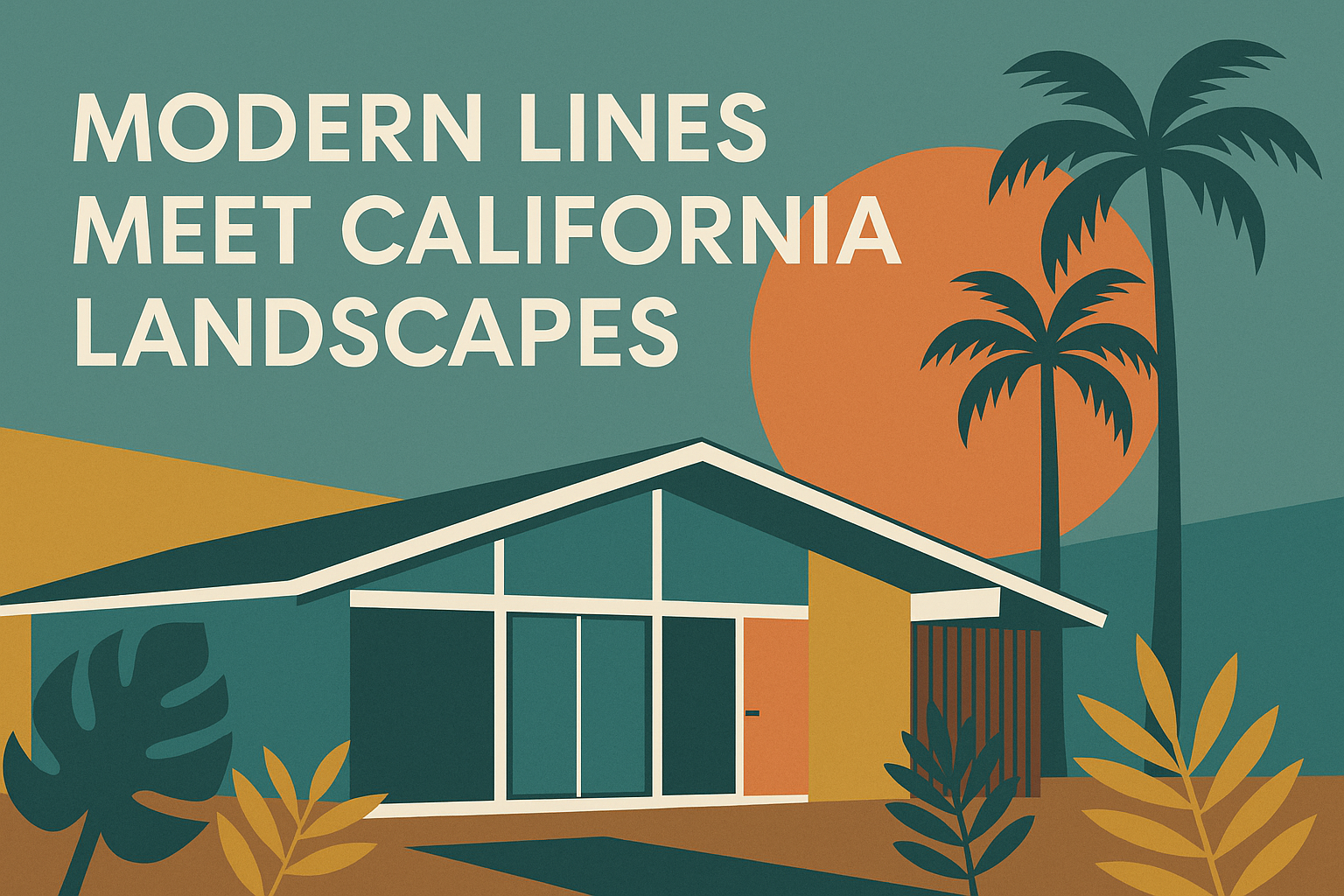
Modern Lines Meet California Landscapes
Eichler homes are iconic mid-century modern dwellings known for clean lines, open glass walls, and seamless indoor-outdoor flow. Landscaping an Eichler property means echoing those modernist principles in the garden – using simplicity, geometry, and climate-appropriate plants to complement the architecture. In Northern California’s Mediterranean climate (wet winters, dry summers), drought-tolerant planting is not just stylish but essential. The goal is a design-savvy, architecture-forward landscape that feels like an extension of the Eichler’s minimalist, light-filled design. As one Eichler expert notes, original Eichler yards embraced “geometric simplicity: low planters, rock or brick edging, and open sightlines,” often with a subtle Japanese influence in plant choiceeichlerhomesforsale.com. With this blueprint, we honor that legacy while updating it for today’s tastes – focusing on low-water succulents, sculptural trees, modern materials, and layouts that highlight (not hide) the home’s mid-century character.
Succulent-Based Plant Palettes & Low-Water Strategies
A front yard showcasing drought-tolerant design – sculptural agaves, a golden barrel cactus, and other succulents set in gravel and river rock mulch beneath a mature pine. This “desert modern” arrangement complements the Eichler’s horizontal lines while requiring minimal water.
Succulents are the darlings of modernist landscaping, prized for their bold shapes, architectural forms, and easy maintenance. In an Eichler landscape, succulents (and their spiny cousins, cacti) provide sculptural focal points that echo the home’s clean lineseichlerhomesforsale.com. Even better, they thrive on little water – perfect for California’s dry summers. A low-water palette might include:
Agaves: Stately rosettes that come in sizes from the petite Agave victoriae-reginae to larger varieties. Agave ‘Blue Glow’, for example, has blue-green leaves with red margins – a dramatic accent in gravel bedsdestinationeichler.comeichlerhomesforsale.com. Many agaves store water in their leaves, so they survive drought with ease.
Aloes: Sculptural and exotic, aloes like Aloe vera or Aloe brevifolia form spiky clumps and often send up bright orange flower spikes that add a retro pop of coloreichlerhomesforsale.com. Smaller aloes (e.g. Aloe ‘Blue Elf’) work great in pots or along paths, and hummingbirds love their blooms.
Echeveria & Sedum: These low-growing succulents bring in geometry at a smaller scale. Echeveria species form neat rosettes (in hues from silvery blue to pink) that can be massed as a groundcover or arranged in a grid of containers. Sedums (stonecrops) and Sempervivum (hens-and-chicks) can carpet a dry bed or fill planters, creating a textured mosaic that stays neateichlerhomesforsale.com.
Cacti & Unusual Succulents: For a true Palm Springs-inspired vibe, a few choice cacti can be stunning. The golden barrel cactus (Echinocactus grusonii), with its round form and yellow spines, is a mid-century favorite that provides sculptural punctuation and a touch of whimsy. Tall columnar cacti or euphorbias can also work as living sculptures – but use sparingly as accents. Other intriguing options include Senecio mandraliscae (blue chalksticks) for groundcover and Euphorbia tirucalli (fire sticks) for a wild splash of color.
Low-water landscaping strategies go hand-in-hand with these plant choices. Group your succulents and other xeric (dry-loving) plants by water needs, and install a drip irrigation system to deliver water directly to roots with minimal wasteeichlerhomesforsale.comeichlerhomesforsale.com. In planting beds, mulch heavily with gravel or bark to retain moisture – a 2–3 inch layer of mulch can dramatically reduce evaporation and weedseichlerhomesforsale.comeichlerhomesforsale.com. Pro tip: use inorganic mulch like crushed rock or pea gravel in visibly modern design areas for a sharp, clean look, and to echo Eichler’s zen influenceseichlerhomesforsale.com. Succulents are generally low-maintenance (many “thrive on neglect”), but they do appreciate occasional deep watering in the dry season and good drainage. With thoughtful placement, they can be arranged as living art pieces in the gardeneichlerhomesforsale.com – try clustering a few large specimens in a raised bed or entry planter for instant mid-century flair. As one Bay Area landscape designer puts it, a “minimalist modern planting design with architectural succulents and other low-water plants” not only echoes the Eichler aesthetic, but also yields a low-maintenance update with serious curb appealdigyourgarden.com.
Sculptural Trees and Statement Plants (Olive Trees & More)
Every great landscape needs some vertical structure. Mid-century modern gardens typically feature one or two sculptural trees or accent plants to anchor the design. In Eichler yards, these specimens should be chosen with care: they must complement the low-slung architecture, tolerate the local climate, and not overwhelm the space. Olive trees are a quintessential choice. A fruitless olive (e.g. Olea europaea ‘Swan Hill’) brings a Mediterranean vibe with its gnarled gray trunk and silvery-green leaves, and once established it needs very little water – perfect for Eichler gardenseichlerhomesforsale.com. An olive’s soft, willow-like foliage castes dappled shade that suits the modern aesthetic (and since ‘Swan Hill’ doesn’t drop messy fruit, it keeps patios clean). Plant a multi-trunk olive as a sculptural focal point in a front courtyard or backyard corner where its twisted form can be admired from the glass walls.
Other excellent architectural trees and shrubs for Eichler landscapes include:
Japanese Maple (Acer palmatum): In an atrium or protected courtyard, a dwarf Japanese maple can thrive and lend a classic mid-century Asian-inspired touch. Its delicate, layered form and seasonal color make it a living artwork (though note it will need some summer water and afternoon shade). Many Eichler atriums historically featured Japanese maples as a nod to Japanese garden design.
Western Redbud (Cercis occidentalis): A California native small tree (or large shrub) with an elegant branching structure. It erupts in magenta-pink blossoms in spring and has heart-shaped leaves that turn gold in fall. Redbud does well with winter rain and very limited summer water – plus it stays petite (10–15 feet), ideal for Eichler lot sizeseichlerhomesforsale.comeichlerhomesforsale.com. Another climate-adapted choice is Toyon (Heteromeles arbutifolia), an evergreen native shrub that can be trained as a small tree; it offers white blooms and red winter berries (hence its nickname California holly).
Palm or Cycad: A dash of palm instantly says “California modern.” In Eichler neighborhoods, it’s common to see the silhouette of a palm as a distant focal point. For most yards, stick to smaller species like the Mediterranean fan palm (Chamaerops humilis), which has a clumping growth of fanned fronds and stays fairly low. Another option is using a Sago palm (Cycas revoluta, actually a cycad) in a pot – sagos have a bold, prehistoric look with glossy fern-like fronds, grow very slowly (great for containers), and are extremely drought-tolerant once establishedeichlerhomesforsale.comeichlerhomesforsale.com. A well-placed sago can read as living sculpture with almost no care.
Dragon Tree or Aloe Tree: For a true mid-century statement, consider a Dracaena draco (Dragon Tree) or a tree-form Aloe. Dragon trees develop thick trunks and a striking umbrella of silver-blue bayonet leaves – they thrive in our climate with little water and lend a dramatic silhouette (think of the famous specimens in Palm Springs courtyards). Aloe bainesii (tree aloe) is another striking choice; it grows a branching trunk with aloes at each tip and orange bloom spikes, very sculptural and drought-hardyeichlerhomesforsale.com. Use these bold accents sparingly – one is usually enough to create a focal point.
When choosing trees or accent plants, mind the scale. Eichler homes have a horizontal, human-scaled profile; avoid trees that will tower over the house or dense foliage that could block those iconic floor-to-ceiling windows. Multi-trunk or low branching forms are often better than very tall, upright forms. Also consider maintenance: evergreens or trees with small leaves are preferable so you’re not constantly clearing large leaves or debris from the flat roof and atrium drains. (For instance, an olive or citrus drops far less litter than, say, a liquidambar or magnolia – which would be poor fits despite their beauty.) Always plant with the house in mind: preserve open views from inside out. As Eichler landscape pros advise, choose specimens that “won’t overwhelm the house or drop excessive litter in those iconic flat-roof gutters!”eichlerhomesforsale.com – a practical tip to keep your Eichler and its landscape in harmony.
Corten Steel Planters & Edging: Modern Minimalist Materiality
Nothing bridges the gap between landscape and architecture quite like Corten steel. This weathering steel develops a rusty patina that exudes a warm, industrial-chic vibe – a perfect complement to Eichler materials. Joseph Eichler’s designs often featured natural wood, glass, and stone; the addition of Corten’s earthy metal texture feels right at home with that palette. In the landscape, Corten steel is incredibly versatile: use it for planter boxes, retaining walls, lawn edging, or even sculptural screens. For example, a long rectangular Corten planter against an Eichler’s exterior wall can create a sharp linear planting bed that echoes the home’s horizontal lineseichlerhomesforsale.comeichlerhomesforsale.com. Many Eichler owners install custom Corten edging strips to define gravel areas or lawns – the thin steel edge provides a clean, straight line that subtly ties into the home’s modern framework. Unlike raw steel, Corten is made to rust in a controlled way; after a few months outdoors it forms a stable patina that actually protects it from further corrosion. The result is a handsome orange-brown finish that lasts for decades with essentially zero maintenanceeichlerhomesforsale.comeichlerhomesforsale.com.
Corten’s aesthetic is both industrial and organic – the patina can pick up tones from surrounding stone or wood. A pair of Corten steel cube planters at the front entry, filled with agaves or horsetail reeds, can act as a modernist greeting. Likewise, a custom laser-cut Corten panel (as a gate, screen, or wall art) can create a striking focal point that nods to mid-century metalwork. In one Eichler project, designers added an artful Corten sculpture screen by the front door, giving instant wow-factor while echoing the home’s minimalist designdigyourgarden.comdigyourgarden.com. The key is to use Corten in simple geometric forms – its color and texture are statement enough. Whether as a raised bed for succulents or an edging for a decomposed granite patio, Corten steel brings mid-century minimalist materiality to the garden in a very 21st-century way.
Hardscape Materials: Gravel, Decomposed Granite & Concrete
Mid-century modern landscapes are as much about hardscape as they are about plants. In fact, Eichler and his contemporaries famously minimized lawns and instead used patios, courtyards, and paved paths to extend living space outdoorseichlerhomesforsale.comeichlerhomesforsale.com. For a drought-tolerant Eichler yard, the following materials offer function and style while honoring the home’s modern lines:
Gravel & Pebbles: Replacing thirsty lawn with gravel is one of the quickest ways to achieve a water-wise, Eichler-appropriate look. A layer of crushed gravel or river pebbles creates a clean, permeable surface that lets rain percolate and requires no irrigationeichlerhomesforsale.com. Common choices are gray pea gravel, which gives a zen-garden simplicity, or warmer-toned decomposed granite gravel for a desert-modern feel. You can even use black or dark gray gravel to contrast with green plants. Gravel pairs beautifully with succulents and cacti, enhancing that “desert modern” vibe when agaves or golden barrels are nestled among the rockseichlerhomesforsale.comeichlerhomesforsale.com. To keep gravel areas tidy and defined, use metal or stone edging – for instance, 4-inch steel edging (even Corten steel edging) can discretely border a gravel patio so it doesn’t migrate into planting bedseichlerhomesforsale.com. Also, incorporate large stepping stones or concrete pads through gravel sections to form clear paths (no one wants to wade through loose gravel to reach the door)eichlerhomesforsale.com. A classic mid-century look is a grid of square concrete pads set in gravel, which provides sure footing and a striking geometric pattern.
Decomposed Granite (DG): Decomposed granite is essentially very fine gravel that packs down into a firm surface. It has a sandy, natural look (usually golden-tan in color) that complements Eichler color schemes and California floraeichlerhomesforsale.comeichlerhomesforsale.com. DG is fantastic for pathways, large patio areas, or even as a lawn substitute to create an open “plaza” space. When properly installed (with a compacted base and stabilizer if desired), DG offers a semi-solid surface that can handle foot traffic, bikes, even the occasional car – yet it still drains rainwater, preventing runoff. Picture a spacious DG patio in the backyard with modern lounge chairs and a fire pit, or a meandering DG path connecting front and back yards. It’s inexpensive, needs no watering, and its muted color lets plants and architecture take the spotlight. Just be sure to use edging (like Corten or bender board) to contain it, and refresh or recompact every few years as needed. Over time, DG hardens like natural adobe, giving a clean, ground-hugging expanse that feels right at home alongside mid-century concrete and wood.
Concrete Pads & Pavers: Nothing says “mid-century modern” quite like concrete. Eichler homes themselves sit on concrete slab foundations, and extending that material out into the landscape creates an indoor-outdoor continuity. Instead of one monolithic slab, modern designers favor modular concrete pads – for example, a grid of squares or rectangles separated by strips of gravel or groundcovereichlerhomesforsale.com. This pattern was popular in the 1960s and remains a go-to for MCM landscapeseichlerhomesforsale.com. You might have a series of 2’x2’ or 3’x3’ concrete squares forming a walkway from the street to the atrium, set in black Mexican beach pebbles for contrasteichlerhomesforsale.com. Or a patio composed of rectangular concrete pavers laid in a repeating pattern. The straight edges and right angles of these pads echo the geometry of Eichler architecture, reinforcing the home’s grid. To add interest, some designers use exposed aggregate concrete (a finish where the top layer of cement is washed off to reveal pebbles) – this was actually a common patio finish in mid-century homes and can be a subtle retro toucheichlerhomesforsale.com. Concrete can also be used vertically: low concrete planter walls or seat walls were features of some original Eichler designseichlerhomesforsale.com. If your Eichler still has a built-in concrete planter, consider restoring it as a design focal point for succulents. New concrete walls or pavers should be kept minimalist (clean lines, unadorned finishes) to match Eichler style. Done right, concrete elements are extremely durable and architectural in effect – essentially extending the house into the landscape.
Natural Stone & Boulders: While mid-century design avoided overly fussy ornament, it did embrace natural stone in simple ways. A few well-placed boulders can make a bold statement in a gravel bed or lawn-less front yard – for instance, a grouping of three granite boulders among blue fescue grasses and sedums can evoke a Japanese rock garden aesthetic that inspired many mid-century landscapeseichlerhomesforsale.comeichlerhomesforsale.com. Flat stones like flagstone can serve as stepping stones or to create a small dry stream bed for drainage (which doubles as a design feature)eichlerhomesforsale.comeichlerhomesforsale.com. The key with stone is restraint: use it as an accent or functional element, not cladding everything. A low stack of stones can become a seat or a low divider in the garden, blending function with art. If your Eichler has original brick or stone elements (some models included brick planters or slate rock work), try to work with those existing materials so that any new stone you add feels integratedeichlerhomesforsale.comeichlerhomesforsale.com. A cohesive material palette is part of the Eichler ethos.
By mixing these hardscape materials – gravel, DG, concrete, and stone – you can reduce water usage (no lawn needed), increase outdoor living space, and reinforce the home’s modern lines. Aim for a balance: perhaps a concrete pad dining patio next to an area of DG with a tree, all edged in gravel for contrast. The hardscape should create the stage on which plants are the minimalist actors. In mid-century style, the voids (open space) are as important as the solids – a broad swath of raked gravel or a grid of paving with greenery in between can be more effective than a densely planted garden. Remember Eichler’s philosophy: the outdoors is an “extra room” of the homeeichlerhomesforsale.comeichlerhomesforsale.com. Choosing the right modern materials for floors and walls of that outdoor room sets the tone for the entire landscape design.
Geometric Layouts: Rectilinear Forms with Asymmetrical Balance
Mid-century modern landscapes often feel both structured and free-form – a design magic achieved through careful use of geometry and asymmetry. With Eichler homes, the architecture provides a strong rectilinear grid (thanks to post-and-beam construction and lots of right angles). Echo those lines in your landscape layout. For instance, align pathways, planter beds, and edges so they run parallel or perpendicular to the house. This creates a sense of order and connection between house and garden. (One Eichler homeowner on a curved street stretched strings in the yard perfectly perpendicular to the house to lay out their new planting areas – the result was an optical illusion of a squared-up garden in an odd-shaped lotdestinationeichler.com!). Using the home’s footprint as your guide, you might design a rectangular patio that mirrors the shape of the living room, or a long linear planter that extends the line of an exterior wall. This rectilinear approach is very much in keeping with Eichler’s aesthetic and the Japanese gardens that influenced mid-century design (which often rely on straightforward geometric organization)eichlernetwork.comeichlernetwork.com.
At the same time, overly rigid symmetry would feel out of place – Eichler landscapes are not formal European gardens. Instead, strive for asymmetrical balance. This means you can place elements off-center or in non-matching groupings, as long as the overall composition feels harmonious. For example, you might plant a cluster of three red yuccas on one side of a path and a single specimen agave on the other as a counterpoint, rather than two and two. Or, design a patio with pavers that extend further into the garden on one side than the other. Asymmetry adds a sense of organic ease to the design, preventing it from feeling too static. This approach was influenced by Japanese design principles that mid-century designers admired – one basic tenet being to avoid perfect symmetry and instead create interest through varied composition and the use of negative spaceeichlernetwork.comeichlernetwork.com.
Here are some layout tips to get that geometry/asymmetry balance right:
Repeat shapes for coherence: Pick a geometric form (say, the rectangle) and repeat it in the landscape – in planters, pads, or planting beds. This establishes a visual language. But vary the size or placement of those rectangles for interest. For instance, a small rectangular cactus bed on one side of the yard can be balanced by a larger rectangular DG seating area on the other. Repeating forms ties things together even if the composition is asymmetrical.
Plant in masses or rows: Rather than dotting one of every plant randomly (which looks chaotic), group plants in bold masses or linear rows. A row of five sculptural barrel cacti along a entry path or a mass of ten blue fescue grasses under a window will have far more visual impact and a modern feel than a mix of singleseichlerhomesforsale.comeichlerhomesforsale.com. Repetition of plants creates rhythm. As a bonus, maintaining a few large groups is easier than tending many scattered individuals. Mid-century gardens often use this graphic approach – blocks of groundcover, a line of identical shrubs – to create pattern and structure.
Layer low to high, front to back: In front yards especially, keep the taller elements (trees, tall shrubs) towards the back or sides, and low plantings in front. This preserves the sightline openness that Eichlers are known for, ensuring the house’s architecture remains in vieweichlerhomesforsale.com. A classic Eichler curb look might be low succulents and groundcovers nearest the street, a medium layer of grasses or low shrubs behind them, and maybe one accent tree off to one side – all low enough not to obscure the home. This horizontal layering echoes the home’s long, low roofline.
Integrate voids (open space): Don’t feel obligated to fill every inch with plants. Areas of empty space – a swath of gravel, an open patio, a simple lawn panel if you keep one – can provide breathing room and highlight the surrounding elements. MCM landscapes often have an almost sparse look compared to traditional gardens, yet every element is intentional. As a design guide once noted, nearly any plant can work if thoughtfully placed and pruned, but focusing on a limited palette of “drought-tolerant, sustainable options” arranged in a clean layout will give you a lush yet streamlined lookeichlerhomesforsale.comeichlerhomesforsale.com. Less can be more when it comes to modern design.
In practice, you might draw an informal plan that extends the lines of your house outward and then position plant groupings within that grid. Maybe you create a rectangular planter off the end of the atrium, filled with a grid of succulents, while the opposite side of the yard features an asymmetrically placed cluster of boulders and grasses. Walk around and view the composition from different angles (inside the house as well as from the street) – an Eichler’s glass walls mean your landscape is on display from the living room, so it should look good from inside too! By embracing simple geometries and balanced asymmetry, your planting plan will feel architectural and intentional, the perfect foil to your Eichler’s modern lines.
Eichler Curb Appeal: Open Sightlines & Horizontal Layers
First impressions matter – especially in Eichler neighborhoods where the architecture is the star. Curb appeal for an Eichler home is all about showcasing the home’s design while creating a welcoming, modern landscape. Key principles include preserving openness, emphasizing horizontal elements, and keeping things low and clean. Unlike traditional homes that might have tall hedges or showy flower borders, Eichlers benefit from a more subtle front yard treatment that frames the house rather than hides it.
Sightlines and low fencing: Original Eichler tracts often had no front fences, or very low ones, to foster a friendly openness. If privacy allows, consider keeping fences or hedges low in front – nothing higher than mid-window height. For example, a 3-4 foot tall fence or screen can define a entry courtyard without blocking views of the home’s facade. In one makeover featured on a home show, designers actually replaced a 6-foot fence with a 4-foot one to “extend the vista” and let the Eichler’s form be seen from the street. The philosophy: let the house breathe. If you do need privacy, opt for a transparent solution like horizontal slat fencing (with gaps between slats) or frosted glass panels, rather than a solid wall. Many Eichler owners also keep their front atrium entry gates low or visually open (e.g. see-through metal or wood patterns) so that a peek of the atrium garden is visible from the street – it’s an inviting glimpse of the home’s character. Maintaining sightlines also means keeping trees limbed up and shrubs low near windows. As noted earlier, preserving views to those floor-to-ceiling glass walls and “exposing the home’s architecture” is crucial for authenticityeichlerhomesforsale.com. An Eichler enthusiast will tell you that seeing the post-and-beam lines and the iconic A-frame or flat roof outline from the curb is part of the art. Don’t hide it behind overgrown bushes!
Horizontal layering: Eichler homes strongly emphasize horizontal lines (think roof eaves, carport planes, clerestory windows). Extend that motif into the landscape with low horizontal elements. This could be a low planter box running along the front facade, a hedge trimmed in a level plane, or even bands of different ground materials (for instance, a strip of dark gray gravel in front of a strip of lighter decomposed granite). One great trick is to use retaining walls or planter walls that are low and linear – maybe a 12-18 inch tall concrete or Corten steel planter spanning part of the frontage, which both retains soil and serves as a visual base for the house. Even the plant arrangements can be horizontal: think of a row of dwarf grasses or a bedding of succulents that stretches in a line. A classic mid-century curb planting was a row of sculptural junipers or cloud-pruned shrubs along the front – a style some Eichler owners still embrace for its quirky bonsai look. Today, you might swap that for a row of dwarf olive bushes or neatly clipped Westringia (coastal rosemary) to achieve a similar effect in a more native-friendly way. The idea is to create low horizontal layers (groundcover layer, mid-height layer, maybe an accent tree) that complement the home’s form.
Materials and accents for curb appeal: The front yard is a great place to tie in materials from the house. If your Eichler has natural redwood siding or fencing, let that material shine as part of the landscape – a warm-toned redwood slat fence or gate can be both functional and era-appropriate. California redwood was used extensively in Eichler exteriors and remains ideal for fences and screens, being rot-resistant and rich in coloreichlerhomesforsale.com. Some owners stain or even paint their fences dark (charcoal or black) as Beth Mullins (a San Francisco landscape designer) did on a project – the dark backdrop can make greenery pop dramaticallygardenista.comgardenista.com. Consider flanking your front door with period-style planters (ceramic or fiberstone with clean lines) planted with something simple like sansevieria or a symmetrical succulent arrangement. Less is more here: one striking planter on each side of the entry can make a stronger statement than lots of little pots. Speaking of entries, Eichler address numbers and posts are an iconic element of curb appeal – if you have the classic Eichler address post, keep it and landscape around it (perhaps a low succulent at its base). If not, installing a modernist address sign or a post with the house number in mid-century font can instantly signal the home’s style.
Lighting for curb appeal: We’ll discuss lighting more later, but for the front yard specifically, subtle lighting can highlight the architecture at night. Think of soft uplights washing the wooden siding or illuminating an entry screen, and a few low path lights guiding to the front door. Eichler homes often had globe lights or soffit lights originally – these can be updated with LED bulbs (in warm white) to save energy while retaining a period look. A trick many realtors use in staging Eichlers for sale is to add landscape lighting that grazes the home’s texture or lights up a feature tree, giving the house a dramatic “modern art” look after darkeichlerhomesforsale.comeichlerhomesforsale.com. For example, an olive tree in the front yard with a well-placed ground uplight becomes a sculptural beacon at night, and the light also highlights the home’s wood and glass backdrop in a moody way.
Overall, Eichler curb appeal is about restraint and coherence. Keep the palette of materials tight (maybe concrete, gray gravel, and redwood, with green plants and a pop of one accent color from the front door or flowers). Avoid anything overly cottagey, fussy, or tall that would compete with the home. A successful design will make a passerby think the landscape was designed with the house back in 1965 – even if everything is freshly updated. By using low, linear elements, maintaining open vistas, and integrating a few authentic touches, you ensure the front yard enhances the Eichler’s architecture. As Eichler specialists point out, this authenticity is valued: buyers and enthusiasts will pay a premium for a home that “feels right” and doesn’t betray its mid-century rootseichlerhomesforsale.comeichlerhomesforsale.com.
Atrium & Courtyard Planting Integration
One of the Eichler’s most brilliant innovations is the atrium – an open-air courtyard at the heart of the home. Atriums and enclosed courtyards blur indoors and outdoors, bringing light and nature into the center of daily life. Landscaping these spaces requires a delicate balance: you’re essentially gardening inside the architecture, so every choice should complement the interior decor and sightlines. The good news is atriums are typically sheltered and small, allowing for jewel-box design moments.
Design approach: Treat your atrium or courtyard as an outdoor room. Incorporate elements of hardscape (pavers, stone, decking) as the “floor” and carefully chosen plants as living decor. Many Eichler atriums originally had concrete slab floors with a few cut-out planter pocketseichlerhomesforsale.com. You can preserve that classic look – for example, a rectangular planter bed in the atrium corner can host a burst of greenery without cluttering the space. If your atrium is currently just bare slab or dirt, consider adding decorative rock or gravel as ground cover to visually unify the areaeichlerhomesforsale.comeichlerhomesforsale.com. A layer of Mexican beach pebbles or crushed gravel looks finished and modern, and you can then cluster a few container plants or specimen plantings on it. In small atriums, containers are often the best solution: stylish pots (mid-century style bullet planters, large ceramic bowls, fiberglass cubes, etc.) let you control soil and water easily and rearrange as neededeichlerhomesforsale.comeichlerhomesforsale.com. Try a trio of pots in varying heights near a seating area or by the front door – for instance, a tall pot with a skinny Dracaena draco (dragon tree) or slender Yucca, a medium pot with a spilling succulent like string-of-pearls (Senecio rowleyanus), and a low dish with a cluster of echeveriaseichlerhomesforsale.comeichlerhomesforsale.com. This creates a dynamic, layered vignette without permanent planting bed construction.
Atrium plant selections: Because atriums are enclosed by the house, they often have unique microclimates – sometimes full sun blasting in, other times quite shaded, and usually protected from wind. Choose plants that can handle some neglect and limited root space, since many will be in pots or small planters. Here are a few categories and examples:
Succulent “shrubs”: These give structure without needing much water. Euphorbia tirucalli (Stick’s on Fire) is a striking choice – it’s a tall, branching succulent with coral-orange new growth that adds a pop of color and a wild form (just be cautious of its sap). Crassula ovata (Jade Plant) is another atrium classic; it can be trained into a small tree form, is evergreen, and thrives on neglecteichlerhomesforsale.comeichlerhomesforsale.com. A jade plant in a ceramic pot can live for decades, becoming a chunky bonsai-like specimen that greets visitors with its zen presence.
Tropical-look accents: For a touch of lushness, consider plants that look tropical but are still water-wise. Nolina recurvata (Ponytail Palm) – which is actually a succulent with a bulbous trunk – has long curly leaves and survives in pots with rare wateringeichlerhomesforsale.comeichlerhomesforsale.com. Similarly, Beaucarnea recurvata (often synonymous with ponytail palm) has that fun fountain of foliage. These add a bit of height and whimsy. You might also use a Potted citrus (like a dwarf Meyer lemon) if your atrium gets sun; it provides fragrance and fruit, though it will need regular watering and feeding (less drought-tolerant than succulents).
Shade-tolerant greenery: If parts of your atrium are shaded (north-facing or under roof eaves), look for hardy low-water shade plants. The Cast Iron Plant (Aspidistra elatior) is one such champion – broad, dark green leaves that survive low light and irregular water, excellent for a foliage backdrop in a cornereichlerhomesforsale.comeichlerhomesforsale.com. Another interesting accent for part shade is Sansevieria (snake plant) which is very modern-looking and practically indestructible; tall varieties can even be used as a living partition.
Succulent flowers: To bring a hint of color and attract hummingbirds, try Hesperaloe parviflora (Red Yucca). It’s not a true yucca but a grass-like succulent that sends up red-orange tubular flowers – great if your atrium gets a lot of suneichlerhomesforsale.comeichlerhomesforsale.com. It thrives in pots or in-ground with minimal water. Aloes, as mentioned, can also bloom beautifully in atriums (some aloes bloom in winter, bringing off-season interest).
Vines or living walls: Atrium walls can be stark; softening them with plants is a nice touch if done carefully. In a larger atrium, you might train a Clematis armandii (evergreen clematis) vine on a trellis – it has fragrant white blooms and shiny leaves, doing fine in a big pot with trellis supporteichlerhomesforsale.comeichlerhomesforsale.com. It will need moderate water, but being in a pot controls its spread. For a truly modern twist, consider a succulent living wall panel – modular systems are available where you can plant sedums, small echeverias, and other succulents vertically on a fence or wall, creating a piece of living art that needs only occasional misting irrigationeichlerhomesforsale.comeichlerhomesforsale.com. Just ensure any wall-mounted feature won’t introduce moisture problems for the house wall – using a proper backing and frame is key.
Mini-trees: If you have the space and desire an atrium tree, go for something that stays small and thrives in a pot. We mentioned Japanese maple earlier (which would love the protected atrium environment if shaded from hottest sun). A dwarf olive or dwarf citrus can also work, but remember even a dwarf tree in a pot will need regular watering. Some Eichler owners have planted Japanese black pines or pygmy date palms in atriums for a dramatic look – these can work, but think long term maintenance (pines may outgrow the space; palms may need frond trimming). Often, less is more: one medium tree or two medium shrubs is plenty for most atriums.
Balance of hardscape and plants: In designing an atrium or courtyard, strive for a harmonious mix of greenery and open space. Too many plants can make it feel cluttered (and encroach on those glass walls), while too few can make it cold. A good rule is to start with one or two “feature” plants (like a small tree or a standout succulent) and then add 3–5 smaller companion plants around, depending on your space. Leave clear open areas for walking and viewing – you might place a couple of mid-century modern chairs or a built-in bench in the atriumeichlerhomesforsale.com. Even if you don’t sit there daily, a pair of wire Bertoia chairs or a Nelson bench, for instance, instantly makes the space inviting and ties it to the interior style. Many Eichler atriums also sport decorative elements like fountains or sculptures. A simple dish fountain or a reflecting ball can add a focal point without taking up much room (and the sound of water, if you choose a fountain, gives a tranquil ambiance echoing the original mid-century outdoor living vibe). Keep decor minimal and in line with the home’s style – think abstract, natural, or geometric. A concrete or terrazzo planter, a teak stool, or a grouping of smooth river stones can all serve as functional art in the atrium.
Finally, be mindful of water and drainage in atriums. Ensure any new planters have proper waterproofing if they’re on the slab, and that you don’t accidentally flood your atrium (drains should be clear, and automatic irrigation if used should be fine-tuned). Using drip irrigation or simply hand-watering potted plants is usually sufficient given the small scale – and it keeps water off the house walls. With the right choices, your atrium will thrive as a calming green core of the home. A few dramatic plants, a few well-chosen furnishings, and a seamless transition to the indoor flooring (many owners even match the interior tile or continue the aggregate outside) will make your atrium feel like an extra boutique hotel lobby inside your home. It’s the ultimate mid-century feature to celebrate: an oasis that blurs architecture and landscape.
Exterior Lighting: Subtle Highlights on Structure
Thoughtful exterior lighting can completely transform an Eichler house and landscape after sundown. The key is to use lighting strategically – highlighting architectural and landscape features without overwhelming the serene, minimalist vibe. In modern landscaping, a little light goes a long way, and it should be warm and inviting, never harsh.
Basics of Mid-Century Outdoor Lighting: Start by choosing energy-efficient LED fixtures, which align with our eco-friendly goals (they use a fraction of the electricity of old incandescent bulbs)eichlerhomesforsale.com. Look for LED fixtures that cast a warm white light (around 2700K to 3000K color temperature) to create that cozy golden glow reminiscent of mid-century eveningseichlerhomesforsale.com. Avoid overly cool or bluish lights which would clash with the Eichler wood tones and make the space feel too stark. Next, plan for layers of light at different levels: low-level path lights, mid-level accent lights for plants, and perhaps some soffit or wall-wash lights on the house itself.
Here are some lighting ideas tailored to Eichler landscapes:
Path and Step Lighting: For safety and ambiance, install low-voltage path lights along walkways, but keep the design simple – think black or bronze modern fixtures, or even recessed lights in concrete pads. Many mid-century homes use small mushroom or dome-shaped path lights that are barely noticeable in daytime. These provide pools of light on the ground without glare. If you have steps or level changes, consider LED strip lights hidden under the lip of a step or along a railing for an invisible light source that makes the floating steps look like they’re glowing.
Uplighting the Architecture: Eichlers often have distinctive architectural lines – the outline of the roof, the texture of wood siding, the beams of an atrium. Placing a few uplights at ground level near the house can accentuate these. For example, a bullet-style uplight at the base of the post-and-beam frames will graze light upward, emphasizing the structure’s rhythmeichlerhomesforsale.com. Wall-wash lights can be used to illuminate an expanse of that beautiful tongue-and-groove siding or an exterior feature wall. The idea is not to flood the whole facade, but to pick out key details. If your home has an entry courtyard with a screen or decorative block wall, lighting it from below can create fantastic shadow patterns at night. Eichler experts note that outdoor lighting can act like art – by highlighting select features and setting a subtle mood from day to nighteichlerhomesforsale.comeichlerhomesforsale.com.
Accent Lighting for Plants: Just as we choose sculptural plants, we can use lighting to enhance them. A sculptural tree, like that olive or Japanese maple, is stunning with a focused uplight at its base – the canopy and trunk textures will stand out in relief. Similarly, clustering a few small spike lights among a bed of agaves can produce dramatic shadows of their spines on a wall behind. One trick is to use adjustable spotlights (often LED) that you can aim at focal plants or landscape features like boulders or a water fountain. Less is more; maybe highlight two or three elements in the whole yard. This creates focal points and contrasts of light and dark that add depth.
Integrated Architectural Lighting: Many Eichler homes have soffit lights (recessed lights under the eaves) or original globe lights in the atrium. If you have these, use them to your advantage – update them with LEDs or smart bulbs so you can control brightness. Soffit lighting running around the perimeter of the house can softly wash the walls and ground below, almost like the house is hovering in gentle lighteichlerhomesforsale.com. It’s an elegant look that highlights the continuous indoor-outdoor nature of the design. Additionally, if you have outdoor roof extensions or pergolas, stringing some inconspicuous LED tape lights or pendant lights can provide functional light for outdoor dining without visible fixtures (for instance, cove lighting hidden atop a beam). Smart home enthusiasts might integrate these with a system to adjust scenes for entertaining vs. relaxing.
Mid-century Fixture Styles: If you need to add fixtures, choose ones that complement the architecture. Classic mid-century outdoor lights include globe pendant lights, cylinder downlights, or angled “eyeball” sconces. For example, a simple cylindrical wall sconce by the front door in black or brushed aluminum can echo the era. There are also many contemporary LED fixtures that have a mid-century look (think minimal, geometric). You could even incorporate step lights flush with a concrete or wood wall to mark entryways with a gentle glow.
Remember to avoid over-lighting. The goal is a subtle, museum-like lighting of an exhibit – your exhibit being the house and its landscape. A few well-placed lights are far better than an overly bright yard. Not only does keeping lighting subdued maintain the serene atmosphere, it’s also neighborly (no one wants light pollution glaring into the next home’s bedroom, especially in Eichler tracts where homes can be close). Using dimmers or smart controls lets you dial the intensity to just right. You might even incorporate solar-powered path lights or step lights for efficiency, but ensure their color temperature matches your wired lights (many solar lights skew blue-white; search for “warm solar lights”).
Lastly, consider special effect lighting in moderation. If you’re hosting a party, colored LED bulbs (hue-controlled) could wash a wall in Eichler orange or teal for fun – but generally, for everyday, stick to warm white to maintain the mid-century authenticity. A fire feature like a modern fire pit is another form of lighting; the flicker of a fire bowl on a patio not only provides light but becomes a social focal point (and it aligns with the vintage idea of an outdoor fire “conversation pit”, updated safely). Water features can be lit from within to cast moving light reflections. These touches, along with perhaps some landscape path lights and uplights, complete a composition where structure, plants, and light are in balance. As one design expert noted, the combination of subtle lighting and bold art or architecture creates a magical scene, making your Eichler’s outdoor spaces come alive at nighteichlerhomesforsale.comeichlerhomesforsale.com.
Modernist Staging and Resale Tips
Designing your Eichler landscape isn’t just about personal enjoyment – it can also significantly boost your home’s value and appeal. Whether you plan to sell soon or just want that magazine-worthy look, there are some staging and update strategies that particularly resonate with modern design lovers (and prospective buyers of Eichlers). The idea is to highlight the home’s mid-century virtues while demonstrating a low-maintenance, eco-friendly yard.
Embrace Drought-Tolerant Curb Appeal: Today’s buyers in California are actively looking for landscapes that are both beautiful and water-wise. Realtors who specialize in Eichlers report that many buyers specifically appreciate “drought-tolerant landscaping… that balances modern minimalism and serene beauty”eichlerhomesforsale.com. If you have an old patchy lawn or overgrown shrubs, consider replacing them with a sleek gravel garden dotted with sculptural plants (as we’ve outlined). It instantly telegraphs “modern lifestyle” and “responsible homeowner.” Even if you’re not doing a full redesign, simple changes like removing a dead lawn and putting down gravel or mulch with a few succulents can refresh the look and save water. This signals to buyers that the home is up-to-date with California’s climate needs.
Key Upgrades with ROI: Some landscape improvements not only look great but offer good return on investment. For example, adding a pergola or shade structure over a patio can extend living space and recall Eichler’s original pergola designs – a contemporary slatted wood or aluminum pergola in the backyard can be a selling point (outdoor dining room!). Similarly, updating an aging fence to a new horizontal redwood slat fence can completely elevate the backyard’s look. If your concrete patio is cracked or your pathway awkward, invest in those hardscape fixes – a new concrete pad walkway or a chic DG seating area reads as “this home has been cared for.” Eichler-focused realtors like the Boyenga team even offer concierge programs to help coordinate such improvements before sale, knowing that a design-forward yard can raise an Eichler’s sale priceeichlerhomesforsale.comeichlerhomesforsale.com. Little details count too: modern house numbers, period-appropriate exterior paint colors, and a tidy carport (perhaps with a breeze block screen) all contribute to the overall impression.
Staging outdoor rooms: Don’t leave your atrium or patio empty when showing the house. Stage these areas as you would an indoor room. Stylish planters, outdoor lighting, and modern furniture can help buyers imagine the lifestyleeichlerhomesforsale.com. For instance, in the atrium set up a couple of Eames or Acapulco chairs and a small table – suddenly it feels like bonus living space. Place some attractive potted succulents by the front door or along the walkway to add a curated, welcoming touch (fresh pots of jade or echeveria on either side of the entry make a great first impression)eichlerhomesforsale.comeichlerhomesforsale.com. On the back patio, maybe arrange a dining table or a pair of loungers with bright cushions that pick up the colors of the landscape. These props don’t have to be expensive; even a pair of mid-century replica chairs and an outdoor rug can define a space. Also consider staging a portable fire pit or chiminea in a corner of the yard – it suggests cozy evening gatherings. The goal is to make every outdoor corner say “yes, you can live out here stylishly.” Good staging helps people emotionally connect with the home’s lifestyle.
Tell the Eco Story: If you’ve invested in sustainable features like drip irrigation, rain barrels, or native plants, let prospective buyers know. Highlight that you have a smart drip system that uses 60% less water than sprinklerseichlerhomesforsale.comeichlerhomesforsale.com, or that the yard is mulched to conserve moisture and suppress weeds (so they’ll spend less time on yard work)eichlerhomesforsale.comeichlerhomesforsale.com. These are selling points. Demonstrating low maintenance (no mowing!) combined with design can really win buyers over. Some Eichler specialists will even point out in listings or flyers that “this landscape requires only monthly maintenance” or that “a drip system and native plant palette keep water bills minimal.” It positions the home as both modern and money-saving.
Professional input: If selling is on the horizon, it can be worth consulting an Eichler-savvy landscape designer or real estate team for fine-tuning. They might suggest small tweaks like repositioning a plant that blocks a view, adding a few flowering natives for seasonal color, or power-washing and re-staining that Eichler siding to make the greenery pop. The Boyenga Team, for example, emphasizes preserving authentic touches like “maintaining sightlines to expose those floor-to-ceiling glass walls, or keeping the iconic Eichler address post out front,” since Eichler enthusiasts pay attention to those details eichlerhomesforsale.com. Their approach (and that of similar experts) is to “honor the architectural legacy while embracing innovative design solutions” – which in practice might mean you don’t rip out that 60s brick planter (a cool original feature), but you do fill it with fresh succulents and add a drip line to it eichlerhomesforsale.com. In short, merge the old and new thoughtfully.
Final polish: A few days before showings or an open house, do the final polish on the landscape. Rake the gravel, touch up mulch, trim any yellow leaves or spent flowers off plants (so everything looks crisp), and maybe plant a flat or two of instant color if needed (though usually, a minimalist approach avoids lots of florals – perhaps place a couple of bowls of succulents or seasonal annuals in key spots instead). Clean those large glass walls so the garden is visible in all its glory from inside. And pro tip: set the timed lighting so that if buyers come in the late afternoon or evening, the exterior lights have just turned on – the house will glow from within the landscape, a truly enchanting sight that can seal the deal.
By implementing these strategies, you’re not only making your Eichler landscape enjoyable for yourself, but also leveraging it as a major asset. Eichler buyers are a discerning bunch – they love design, they notice authenticity, and many are willing to pay more for a home that already has a great modern landscape rather than one they’ll have to overhaul. A well-executed landscape update can thus be both a labor of love and a smart investment. In the end, whether you stay or sell, you’ve created an outdoor environment that enhances the Eichler living experience, blending mid-century charm with contemporary sustainability. And that is the essence of The Eichler Landscape Blueprint – a garden that fits the architecture like a tailored suit, every plant and pathway contributing to the unified modernist vision.
As leading Eichler specialists and founding Compass partners, Eric and Janelle Boyenga understand that outdoor design is integral to Eichler living. With deep architectural insight and extensive local market experience, the Boyenga Team guides clients in enhancing curb appeal through smart, low-maintenance landscaping that stays true to Joseph Eichler’s vision. Whether prepping for sale or planning long-term enjoyment, Eric and Janelle connect homeowners with vetted landscape architects and deliver strategic advice to ensure every planting plan supports both design integrity and resale value.
Sources: Beth Mullins via Gardenista gardenista.com;
Eichler Network & Eichler Homes For Sale guides eichlerhomesforsale.com
Dig Your Garden portfolio (Eileen Kelly) digyourgarden.com.