
Natural Light and Well-Being in Eichler Homes: Design Features and Their Impact

An Atrium Eichler Home in Fairglen
Eichler homes – the mid-century modern houses developed by Joseph Eichler in California – are renowned for their bright, open, and nature-connected designs. This report examines how key architectural features of Eichler homes – clerestory windows, floor-to-ceiling glass walls, and open-air atriums – influence residents’ circadian rhythms, emotional well-being, and sense of calm. We begin with scientific background on natural light’s effects on the mind and body, then analyze each Eichler design element, and finally compare different Eichler models using a mini “Eichler Light Index.” Buyer-friendly takeaways highlight lessons in design psychology and what to look for in a light-filled home.
Scientific Background: Natural Light, Circadian Biology, and Mood
Modern science confirms what Eichler’s designs intuitively embraced: abundant natural light is a powerful contributor to health and emotional wellness. Sunlight exposure is the primary cue for our circadian rhythms – the internal 24-hour clock that regulates sleep-wake cycles, hormone release, and energy levels. Regular exposure to daylight (especially morning sun) helps synchronize our circadian system, leading to better sleep at night and higher alertness during the day. In home and work environments, studies have found that people without windows or daylight report worse sleep, lower mood, and more stress than those in sunlit spaces. In one experiment, office workers in windowless rooms had elevated stress hormones and more depression compared to those with natural light – a clear indicator of light’s effect on mental health.
Natural light also profoundly improves mood and reduces stress. Sun exposure triggers the release of serotonin, a neurotransmitter associated with happiness and calm, and helps prevent Seasonal Affective Disorder in darker months. Medical experts note that “decades of studies have shown that natural light has a powerful, and often positive, effect not only on mental health, but also on physical health and general well-being”. Large-scale population research recently linked each additional hour spent outdoors in daylight to a lower risk of depression and improved overall mood. Conversely, spending most of one’s time under artificial lighting is associated with higher rates of anxiety and depression. In short, sunlight is a natural anti-depressant and stress-reliever: it lowers cortisol (the stress hormone) and boosts vitamin D and serotonin production.
Importantly, the timing and quality of light matter. Morning light is gently blue-rich and signals the body to wake up, suppressing melatonin (the sleep hormone) and setting the day’s circadian rhythm. Evening light, especially if intense, can delay melatonin onset and disturb sleep – which is why thoughtful home design seeks to provide bright light by day and softer light in the evening. Natural light also delivers a full spectrum of colors and a dynamic quality that artificial lights can’t replicate. As sunlight shifts from the warm glow of sunrise to bright midday to golden-hour evening tones, it creates a natural variety that our brains find stimulating yet soothing. Exposure to these daily light cycles reinforces our connection to nature’s rhythms, which is inherently calming and “recharges” us psychologically.
In sum, ample natural light in a home can enhance circadian alignment, lift mood, and reduce stress. With this science in mind, it’s easy to see how Eichler’s light-filled architecture – unprecedented in mid-century suburbia – was not just aesthetically innovative, but also fostered healthier, happier living environments.
Eichler Architecture and Natural Light: Key Design Features
Joseph Eichler’s homes were explicitly designed to “bring the outside in,” using innovative architecture to flood interiors with daylight and nature. Three signature features achieve this: clerestory windows (a band of high windows near the roofline), floor-to-ceiling glass walls, and the central atrium (open-air courtyard inside the home). These elements work in concert to create bright, airy spaces that nurture well-being. Below, we analyze each feature and how it influences light exposure, circadian health, and emotional calm.
Clerestory Windows: Daylight, Privacy, and Rhythmic Design
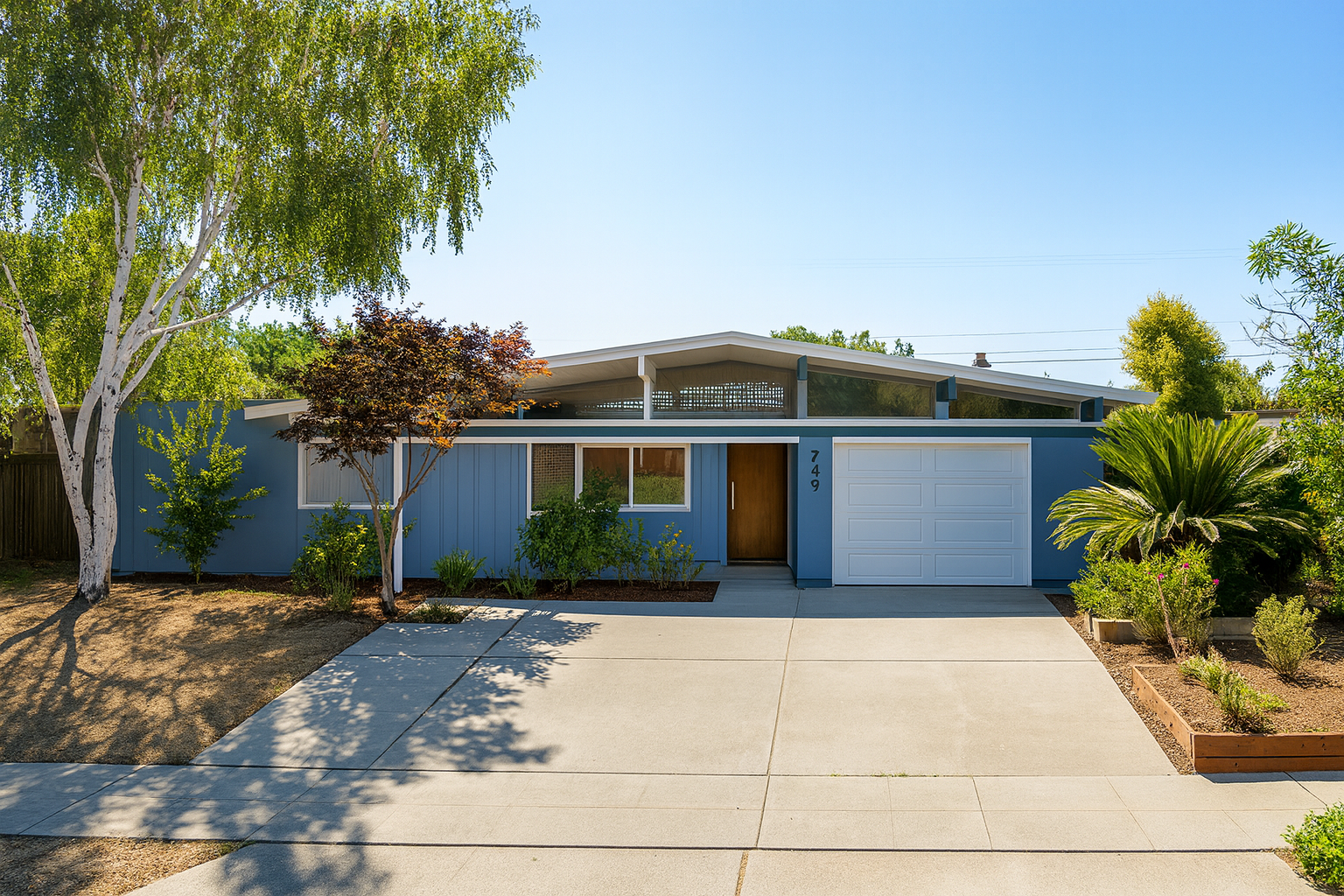
Clerestory windows (pronounced “CLEAR-story”) are the short panes of glass set high in the walls, just below the eaves. Eichler homes made masterful use of these high windows to introduce soft, indirect light into the house. Because clerestories sit near the ceiling, they catch sunlight from above and diffuse it gently across rooms, much like a linear skylight. In many Eichler models with flat or low-pitch roofs, clerestories form a continuous ribbon of glass along the roofline, creating an even wash of daylight across interior ceilings. As one architecture source notes, “clerestory windows are a hallmark of Eichler homes, allowing light to filter into rooms while maintaining privacy.” Positioned above eye level, they admit sunshine throughout the day without the glare or hotspots that floor-to-ceiling windows might cause. The incoming light often bounces off the white or natural wood tongue-and-groove ceilings, producing a gentle ambient glow that reaches deep into the home eichlerhomesforsale.com. The result is a high quality of daylight: bright but never blinding, and remarkably uniform. Homeowners frequently note that even the center of an Eichler house has very few dark corners – “during the day, they rarely need to turn on a light” because clerestories illuminate areas a typical window cannot reach.
Crucially, Eichler’s clerestories achieve this while preserving privacy. Early Eichlers present a modest face to the street, often just a blank facade with a band of high windows. This means you get ample sunlight and even glimpses of sky through the clerestories, but neighbors and passersby cannot see directly inside. This design embodied Eichler’s “private-yet-open” philosophy: solid walls at eye level for seclusion, transparent panes above for light and sky views. Occupants enjoy a connection to the outdoors – watching clouds or tree foliage move across the clerestory – without sacrificing the refuge of their home. In terms of circadian effects, clerestories extend the duration of natural light exposure indoors, supporting the occupants’ daylight intake. Morning light can enter high windows even if lower windows face away from the sun, helping occupants wake with natural illumination. As the sun moves, clerestories on different sides capture its arc, providing consistent, indirect light that keeps the indoor environment aligned to the time of day.
Beyond practical lighting, clerestory windows also contribute to a psychological sense of order and calm through design rhythm. Eichler homes use post-and-beam construction, so the exposed ceiling beams often march across the rooms in modular bays. Clerestories were carefully aligned with this structure: for example, each bay might have a clerestory panel between beams. This creates a pleasing repetition of glass and wood – an A-B-A-B pattern of alternating window and beam along the top of the wall. Our eyes instinctively enjoy this organized rhythm; one design blogger noted it “creates organized movement” and an underlying harmony to the space. The continuous horizontal band of clerestory glass unifying the rooms adds to the sense of spaciousness too. By visually “separating” the roof from the walls (the roof appears to float above the glass strip), clerestories make ceilings feel higher and rooms more expansive. Many Eichler owners describe the effect as the roof seeming to hover, which elevates the perceived volume of even a modest-sized room. This enhanced spaciousness and visual order can have subtle positive effects on mood – cluttered, dark spaces tend to raise stress, whereas open, sunlit, orderly spaces feel tranquil. In essence, Eichler’s clerestory windows deliver “limitless” light and uplift in a way that’s both emotional (mood-brightening) and architectural (structurally integrated).
Floor-to-Ceiling Glass Walls: Indoor–Outdoor Connection and Bright Atmosphere
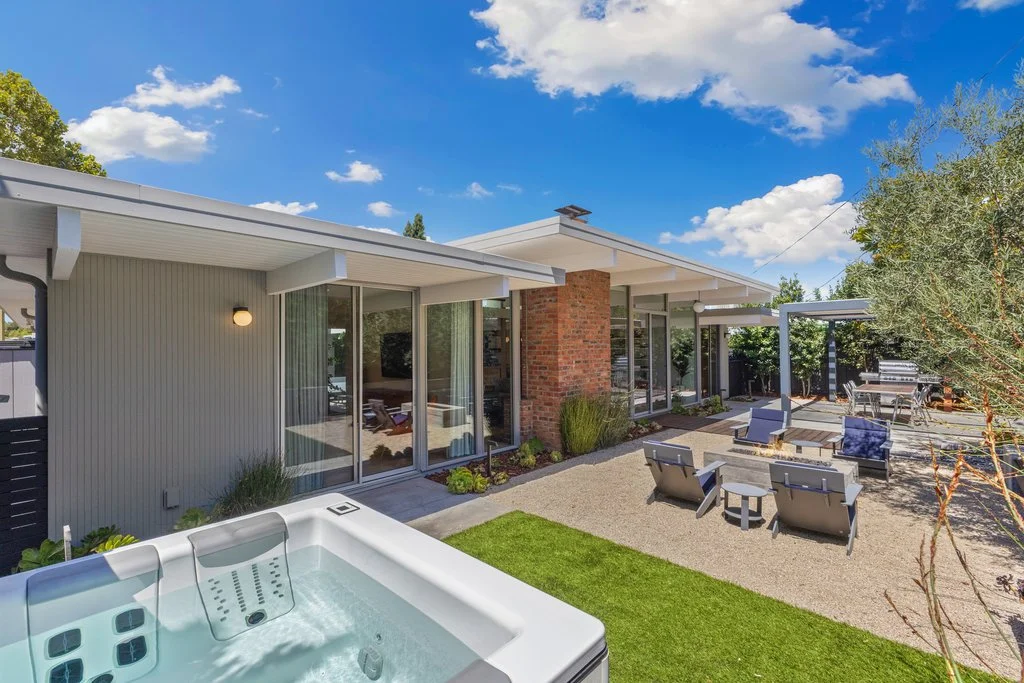
Perhaps the most iconic Eichler feature is the floor-to-ceiling glass wall. Instead of small punched windows, Eichler living rooms, dining areas, and even bedrooms often have entire walls made of glass – usually facing a private backyard or an interior atrium. These expanses of glass physically and visually dissolve the boundary between indoors and outdoors. Natural light floods in from multiple sides, and views of the exterior landscape become an ever-present backdrop to daily life. Stand in an Eichler great room and you’ll likely see sunlight streaming through a glass wall to the yard and through another glass wall or clerestory to the atrium – an experience of being surrounded by daylight. A mid-century author described Eichler houses as “bright and cheerful” inside due to this abundant glazing. Modern observers now recognize that this design has concrete health benefits: it yields an uplifting, energizing atmosphere proven to enhance mood and even productivity. One resident noted that the sunny openness makes it hard to ever go back to a dark, traditional house.
Beyond brightness, the quality of light through floor-to-ceiling glass is dynamic and mood-enhancing. With a wall of glass, the shifting daylight becomes part of the interior decor – clouds casting moving shadows, the golden late-afternoon sun painting the walls, or the gentle glow of dusk signaling evening. Eichler homes thus allow residents to experience natural light’s daily cycles intimately, reinforcing circadian timing (bright days, dimmer nights) in a way enclosed rooms cannot. Large windows also provide views of nature, which psychology research has shown to be therapeutic. A famous 1984 study found hospital patients recovered faster and needed less pain medication when their room had a view of trees. In Eichler houses, one is almost always looking onto greenery – be it a backyard garden, atrium plants, or distant trees. These views act as “micro-restorative” breaks for the brain, reducing stress and fostering calm. The Eichler concept effectively turns your garden into living artwork: a wall of glass frames the outdoor scene, giving occupants visual access to nature’s calming influence throughout the day. Even on a gray day, the ever-present connection to outdoors can make the interior feel more alive and less confining. On a bright day, it’s positively energizing – often lights are left off during daytime in Eichlers because they simply aren’t needed when sunshine pours through every wall.
Joseph Eichler was careful to balance this openness with functional considerations. Since most glass walls face the backyard or atrium, homeowners get privacy as well as light; the street side is typically more opaque, an arrangement Eichler felt was key to comfortable indoor–outdoor living. He also employed passive solar design strategies: broad roof eaves often overhang the glass to block high summer sun but permit lower-angle winter sun to stream in. This means Eichler interiors capture warmth and sun when needed, without overheating in July. In fact, a well-oriented Eichler with south-facing glass can be bright and sun-warmed all winter (cutting down heating needs), yet shaded and cool in summer. Such designs not only save energy but also keep the indoor climate comfortable, which indirectly benefits well-being (nobody feels calm if they’re squinting in glare or sweltering). If an Eichler room did face intense west sun, builders included roll-down shades or encouraged planting deciduous trees for seasonal shading – simple fixes to preserve that beautiful evening light while mitigating its downsides. All of this reflects an integrated approach: maximize the positive effects of light and nature, minimize discomfort, and maintain privacy.
From a circadian perspective, the generous use of glass ensures Eichler residents get plenty of daytime light exposure, which is crucial for keeping internal clocks in sync. Morning sun entering a kitchen or bedroom can naturally help you wake up with more energy (many Eichler kitchens and dining nooks were placed on east-facing sides for this reason, to catch breakfast sun). By afternoon, the sun may be streaming into living areas, boosting alertness and mood when you’re active. In the evening, as light softens, the large windows allow a graceful dimming of the interior – signaling the approach of night. (If one prefers to darken a bedroom for early sleep, blackout shades can always be used without negating the daytime benefits.) The key point is that Eichler homes let people live in tandem with the sun’s rhythm: sunrise in the kitchen, daylight all around, sunset in the living room. This creates a natural sense of time and balance that many modern homes (relying on artificial light and closed blinds) lack.
Emotionally, floor-to-ceiling glass fosters a sense of freedom and tranquility. It visually extends interior spaces outward, making rooms feel larger and more open to possibility. Psychologically, this openness can translate to a lighter mood and a reduction in claustrophobic or anxious feelings. Many owners describe an Eichler as “serene” or “peaceful,” attributing that to the constant presence of sky and garden around them. Indeed, architects today try to emulate this by designing “indoor-outdoor” great rooms and big sliders – essentially reaping what Eichler sowed decades ago. As a UCLA Health article summarized, “people who receive adequate exposure to natural daylight are less likely to experience depression and anxiety”. Eichler’s floor-to-ceiling glass made sure every primary living space received that daylight dose. Few things lift the spirit like waking up to a sun-dappled floor or watching the sunset glow through your own walls of glass – in an Eichler, those daily moments of light are built into the very experience of the home.

Central Atrium: Biophilic Design and the Experience of Calm
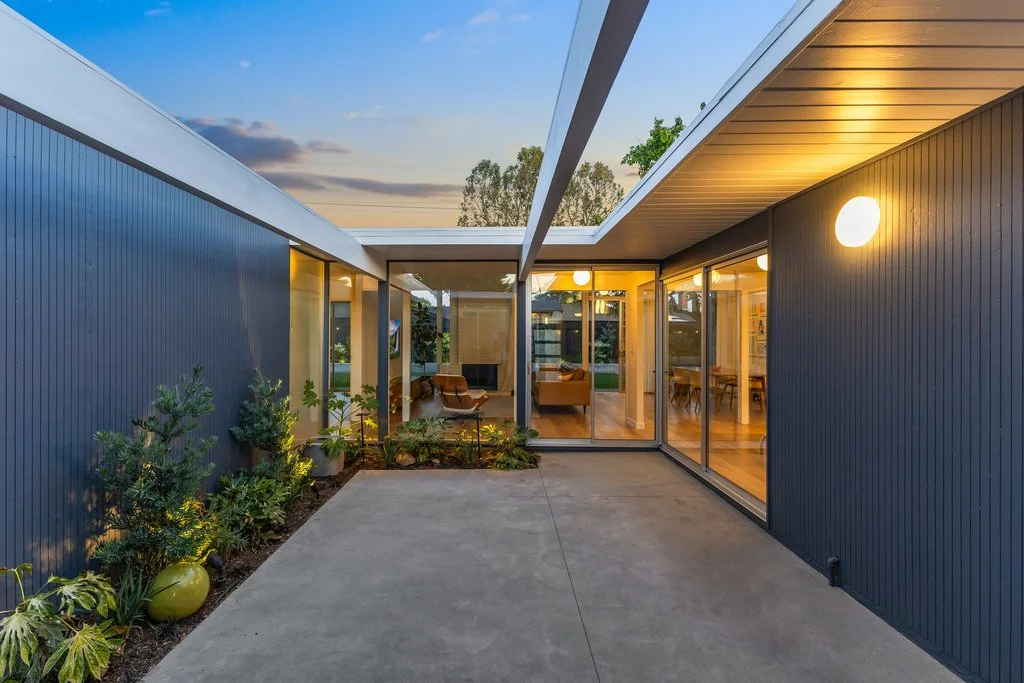
Many Eichler models, especially from the late 1950s onward, feature a central atrium – an open-air courtyard typically at the entrance or heart of the house. This is arguably Eichler’s most celebrated innovation, transforming the home’s core into an outdoor room flooded with natural light and fresh air. The atrium is surrounded by the house on three or four sides but open to the sky above (like a roofless room), and usually lined with floor-to-ceiling glass panels and sliding doors that connect to the interior rooms. In effect, Eichler atriums bring nature into the middle of the home. This has profound impacts on circadian rhythm, mood, and the sense of calm in these spaces.
From a light standpoint, the atrium acts as a giant light well, channeling sunlight into the center of the house. Rooms that would normally be inboard (with no exterior windows) now have glass walls facing the atrium, meaning even they receive daylight and views. Morning sun can pour into the atrium from the east and illuminate adjacent kitchens or hallways; midday sun shines down from above, and if the atrium faces north it still captures abundant indirect light all day. In fact, architects often prized a north-facing atrium because it would bask in cool, even light from dawn to dusk without harsh glare – “not too harsh, not too dim – just right,” as one Eichler article quips. Indirect light in an atrium keeps it comfortable to use at noon (no scorching), and at the same time, the open sky exposure means brighter rooms overall than a house with only perimeter windows. A well-designed atrium essentially guarantees that every major interior space has at least one source of natural light and often a view of the sky or stars at night. This 360-degree daylight penetration helps maintain strong circadian cues indoors; you can sense the shifting sun more fully. As one remodeler noted, having an atrium “that can be viewed from almost every room” creates a layout of brilliant logic for fostering connectedness and calm – the entire home shares in the atrium’s light and energy.
The biophilic benefits of an atrium are even more tangible. Biophilic design is about integrating nature into the built environment to support well-being, and Eichler’s atrium is a perfect embodiment of that concept. Residents commonly fill their atriums with plants, trees, and sometimes water features. Stepping into an Eichler atrium, you might find yourself among lush greenery, hearing birds or a fountain, with sunlight streaming down – all within the confines of your home. Owners describe these spaces as “therapeutic,” an “oasis,” or their “zen garden.” eichlerhomesforsale.comIt’s not just a pretty architectural quirk; it becomes the emotional center of the home eichlerhomesforsale.com. One Eichler listing touted an atrium “overflowing with greenery – the perfect spot to enjoy indoor-outdoor living,” and indeed residents report that “life in an Eichler atrium just feels good.” There is a calming, restorative quality to having a private patch of sky and earth inside your house. Decades of research validate this: views of nature and access to greenery reduce stress, lower blood pressure, and improve concentration. In one famous study, simply seeing natural scenery helped hospital patients heal faster. The atrium delivers such therapeutic nature exposure daily – a dose of what some call “atrium therapy.”
During the COVID-19 lockdowns, Eichler atriums gained renewed appreciation as a “balm for modern living”. Families could step into their atrium for sunshine and fresh air without leaving home. This proved invaluable for mental health: the atrium offered relief from indoor confinement, a safe way to connect with nature and mark time (morning coffee in the sun, an evening cocktail under twilight). Many owners set up lounges or meditation corners in their atriums – effectively creating a sanctuary for relaxation and mindfulness. “The atrium is where people enjoy drinking a cup of coffee as the sun rises or a cocktail in the evening,” said one Eichler renovator, emphasizing how it anchors daily rituals in a peaceful setting. Unlike a fully exposed backyard, the atrium feels enclosed and secure (house walls around you) while still open to the outdoors above, yielding an “enveloping calm”. This blend of shelter and openness is psychologically ideal for relaxation – you get comfort and safety, and the freedom of being outside. It’s telling that post-pandemic design trends in wider architecture now call for “healing gardens” and “indoor courtyards” in homes, essentially catching up to what Eichler pioneered: a home that nurtures mental wellness by design.
Furthermore, the atrium enhances the social and sensory experience of living in an Eichler. It creates a central focus that organizes the home’s flow – every path leads to a light-filled hub, which can improve orientation and mood (humans generally prefer clear, sunlit focal points over dark, maze-like interiors). The open-air nature means you can feel breezes and hear rainfall or birds while still in your house – subtle sensory inputs that can be soothing and reduce the stale feeling of indoor air. At night, an atrium can even allow moonlight to reach inside or permit stargazing from your living room, helping preserve natural day-night cues. One could argue this supports circadian health too: seeing the evening sky darken helps signal the body it’s time to wind down, reinforcing the cycle that the morning sun will later reset.
All told, Eichler’s atrium is a masterclass in designing for calm and well-being. It’s a private garden retreat, a source of copious daylight, and a spatial strategy to bring nature’s rhythms into the home’s core. Architectural historians consider the Eichler atrium the zenith of his indoor-outdoor experiment – “blending atrium and interior so fluidly that it’s hard to tell where house ends and garden begins”. Little wonder that these homes “convey the promise… that modern design can enhance our quality of life,” as one design expert put it. Eichler anticipated by half a century what today’s wellness architecture is all about: sunlit, green, uplifting spaces that inspire and soothe the people who inhabit them.
Eichler Light Index: Comparing Natural Light Across Models
Early Eichler (1950s, No Atrium)
Example: 1954 Palo Alto “Greenmeadow”
Design Features
Clerestory windows (often triangular) on the street-facing side
Floor-to-ceiling glass along the rear façade
Open-plan living/dining oriented to backyard patio
Daylight Experience
Bright in main living spaces; more moderate light in secondary areas
Rear glass walls bring strong afternoon light and garden views
Clerestories add daylight + privacy
No atrium → some hallways/rooms depend on secondary lighting or skylights
Brighter than traditional 1950s homes but not as evenly lit as later models
Eichler Light Index
7/10 — Moderate-High
Bright in primary spaces; interior areas can feel less evenly illuminated
Standard Atrium Model (1960s)
Example: Jones & Emmons 4-bedroom atrium model
Design Features
Central open-air atrium, glass-walled on all sides
Continuous clerestory windows under deep eaves
Floor-to-ceiling glass in living room and atrium-facing bedrooms/kitchen
Daylight Experience
Very bright and balanced throughout the entire home
Atrium brings daylight into the home’s core all day
Rear + atrium glass capture both morning and afternoon sun
Clerestories eliminate dark zones and provide soft, even illumination
Strong indoor–outdoor ambiance; views of sky and plants from most rooms
Eichler Light Index
9/10 — High
Classic luminous Eichler experience with excellent daylight distribution
“Gallery” Atrium Model (Late 1960s)
Example: Large Claude Oakland elongated-atrium design
Design Features
Oversized, elongated atrium (often partially covered)
Gallery-style glass hallway running the length of the atrium
High pitched ceilings with clerestories/gable windows
Extensive floor-to-ceiling glazing around atrium and rear
Daylight Experience
Spectacular levels of multi-directional light
Atrium acts as a full outdoor living room; daylight penetrates deeply
Glass gallery creates panoramic courtyard views from inside
High ceilings pull daylight deep into the home
Perfect mix of bright sun and soft reflected light — feels seamlessly merged with outdoors
Eichler Light Index
10/10 — Very High
Maximum indoor–outdoor fusion and exceptional daylight coverage
Double A-Frame Eichler (Custom 1960s)
Example: “Double A” twin-gable (e.g., X-100)
Design Features
Twin peaked rooflines forming an “M” shape
Vaulted cathedral ceilings with clerestories in gable peaks
Floor-to-ceiling rear glass; some layouts include atriums or large front windows
Daylight Experience
Dramatic, lofty, uplifting interior light
Clerestories create striking sun patterns and deep illumination
Huge windows create “airy,” voluminous living spaces
Orientation varies widely — custom siting affects brightness
Secondary rooms may be dimmer if no atrium is included
Eichler Light Index
8–9/10 — High
Extraordinary great-room light; slightly less uniform if lacking a courtyard
Two-Story “Split-Level” Eichler (Rare 1960s)
Example: Diamond Heights, San Francisco
Design Features
Split-level layout with upper bedrooms/office
Double-height glass or stairwell atrium
Post-and-beam construction + glass walls maintained throughout
Light-sharing features: open-tread stairs, interior balconies
Daylight Experience
Bright upper level with strong views and daylight
Main living room often very bright (especially with 2-story windows)
Some downstairs areas receive less sky exposure due to second floor massing
Skylights, stairwells, and open voids often used to balance light
Still feels very open and glassy, but less uniformly lit than single-level atriums
Eichler Light Index
7/10 — Moderate-High
Great primary-space daylight; some lower areas depend on architectural light wells
Notes on Orientation & Variation
Index scores vary significantly with north/south orientation, lot placement, and any owner modifications.
Even identical models can feel very different depending on solar exposure.
Eichler architects used deep eaves, siting, and landscaping to achieve a “Goldilocks” balance of not-too-harsh, not-too-dim light.
Across all models, Eichlers outperform almost all other mid-century tract homes in daylight, openness, and indoor–outdoor flow.
Buyer Takeaways: Designing for Light and Well-Being
For homebuyers or design enthusiasts interested in light-conscious design and the psychology of space, Eichler homes offer valuable lessons. Here are key takeaways and tips, drawn from Eichler’s principles and backed by research, to consider when evaluating or designing a home for wellness:
Prioritize Natural Light in Primary Living Areas: Spaces where you spend most of your day (living room, kitchen, home office) should have ample access to daylight and preferably views of the outdoors. As seen in Eichlers, features like floor-to-ceiling windows or skylights can dramatically improve mood and productivity by flooding rooms with natural light. When touring a home, take note of how each room is lit during the day – do you feel uplifted in those spaces? Bright, sunlit interiors help occupants feel “cheerful and connected to the outside world.”
Look for Indoor-Outdoor Harmony: A connection to nature is a huge plus for emotional well-being. This might come in the form of an atrium or courtyard, large garden-facing windows, or even well-placed glass doors to a patio. Such features allow for “restorative” views of greenery and easy outdoor access, which can lower stress and provide a calming retreat at home. If a home has a courtyard or sunroom, consider how it could be your daily sanctuary (a place for morning coffee in the sun or a quiet reading nook amidst plants). The more a home design “brings the outside in,” the more it can naturally support your wellness.
Mind the Orientation – It Affects Light (and Life): The direction a house faces can influence the quality of light in each room. South-facing rooms get sun most of the day (great for bright living areas and for passive winter heating), north-facing rooms receive gentler, consistent light (ideal for studios or an atrium you use all day). East-facing bedrooms or kitchens will catch inspiring morning light (helping you wake up naturally), whereas west-facing rooms glow with warm afternoon sun (nice for evenings, though potentially hot on summer days). Think about your lifestyle and preferences: do you love waking with the sun? An east bedroom could be a boon. Not a morning person? Maybe a west orientation with sunset views is more your style – just ensure there are shades for summer heat. When buying, ask about a home’s orientation and notice where the “light rooms” are. As Eichler expert Eric Boyenga notes, “know the block, the layout, the orientation – a small compass tweak can change the whole mood of the house.”
Balance Light and Privacy with Smart Design: One challenge of big windows is privacy, but Eichler solved this by using clerestory windows and fenced rear yards. You can have both light and privacy by placing large windows toward private outdoor spaces (backyard, courtyard) and using high or frosted windows on the street side. If you’re designing or remodeling, consider top-lighting (clerestories or skylights) for areas where you want daylight without exposure (bathrooms, front-facing rooms). Also, use landscaping: a well-positioned tree can screen a window and also filter the light beautifully. Modern solutions like translucent shades or smart glass can further fine-tune this balance.
Create “Calm Corners” with Nature and Light: Take a page from the Eichler atrium and carve out a small area in your home that has a view of greenery or gets soft light, and make it your relaxation spot. This could be as simple as orienting a chair near a window overlooking a garden or placing houseplants and a fountain on a balcony. Exposure to even a little “indoor nature” can lower cortisol and quiet the mind. Many Eichler owners set up seating in their atriums to enjoy the enveloping calm and have a quick escape within their home. In any home, identify a potential biophilic refuge – a sunlit corner for yoga, a reading seat by the window, etc. – and value that as part of your purchase decision or design plan.
Beware of Light “Deal-Breakers”: If you crave a light-filled environment, be cautious of homes with small or few windows, low ceilings, or dark finishes that absorb light. You might find such spaces require artificial lighting even at noon, which can impact your mood and energy (studies show working in windowless settings can contribute to fatigue and poorer sleep). While some issues can be improved (e.g. adding skylights or enlarging openings), it’s worth assessing the cost of darkness. On the other hand, don’t be overly scared of too much glass either – features like Eichler’s deep eaves and modern low-E coatings help manage heat and glare while keeping the benefits of light.
Daylight as a Value-Add: Finally, recognize that a home designed for natural light and wellness isn’t just good for you – it’s also increasingly desirable in the market. Post-2020, buyers are placing a premium on homes with good light, ventilation, and flexible indoor-outdoor spaces. An Eichler home, for instance, often commands attention for its “light-filled rooms” and “private outdoor oasis.” Real estate listings now highlight these aspects because they know how much they resonate with people’s well-being desires. So if you invest in daylight-friendly design (say, remodeling to add larger windows or preserving an atrium rather than covering it), you’re likely also investing in long-term value. As one trend report put it, architecture is “finally prioritizing daylight as a key element of healthy homes”, something Eichler did all along.
Eichler homes demonstrate the profound impact that architectural features can have on our daily rhythms and emotional health. Clerestory windows bring harmonious light and privacy, glass walls connect us with nature and time of day, and atriums create serene retreats that nourish the soul. By studying these designs and the science behind them, we see that a well-lit home is more than just aesthetically pleasing – it is a foundation for a healthier lifestyle, a calmer mind, and a happier you. Whether you’re considering an Eichler or any light-filled home, remember that good design is good for you. In Joseph Eichler’s words (through his designs), bringing the outside in isn’t just about style – it’s about living better by living in harmony with light, nature, and modern life.
Boyenga Team focused on Eichler’s legacy
Eric and Janelle Boyenga of the Boyenga Team at Compass continue Joseph Eichler’s legacy by guiding clients toward homes that elevate both lifestyle and well-being. As top Eichler Real Estate specialists in Silicon Valley, they bring deep architectural knowledge, decades of market insight, and a client-first approach that blends modern marketing, design fluency, and negotiation expertise. Whether advising buyers on orientation, light quality, and model variations or preparing sellers to showcase an Eichler’s wellness-driven design, the Boyenga Team represents clients with precision, passion, and next-generation strategy.
Sources:
Boyenga Team (Eichler Homes For Sale) – “Clerestory Magic: How High Windows Make Eichlers Feel Limitless”; “Atrium Therapy: Why the Eichler Floor Plan Still Wins in a Post-Pandemic World” eichlerhomesforsale.com;
“Orientation Matters: North-Facing Atriums, Sunset Bedrooms & Morning Light Kitchens”; “The Five Rarest Eichler Floorplans” eichlerhomesforsale.com
UCLA Health – “Being in natural light improves mood, increases happiness” (Ask the Doctors, 2022)
Ralston Architects – “Transforming Homes: The Power of Natural Light in House Design” (Sept 30, 2024)
Dwell – “An Elegant Eichler Hits the Market…” (Lagdameo, 2021)
Almanac News – “Eichler’s Greenmeadow tract” (Menlo Park Almanac)
Design Milk – “Eichler remodel insight”
Health Design & ReThinkingTheFuture – research on restorative environments & biophilic design.
Eichler Homes For Sale – various archives on Eichler orientation and design eichlerhomesforsale.com.