
Horizon Mid-Century Modern Homes in San Jose: The Forgotten Modernist Experiment Hidden in Silicon Valley

Why Horizon Homes May Be One of San Jose's Most Interesting Mid-Century Neighborhoods
In the world of Silicon Valley mid-century modern real estate, certain names instantly command attention. Eichler. Streng. Mackay. Perhaps even Claude Oakland or A. Quincy Jones among the more architecturally obsessed.
Yet tucked quietly into San Jose is a neighborhood that often flies under the radar despite embodying many of the same ideals that made California modernism one of the most influential residential design movements in American history.
Welcome to Horizon Homes.
For the casual observer, Horizon might simply appear to be another attractive collection of mid-century residences. But for architecture enthusiasts, design lovers, and what we affectionately call fellow Property Nerds®, Horizon represents something far more interesting: a snapshot of an era when builders believed that great design should be accessible, functional, and deeply connected to everyday life.
These homes emerged during a transformative period in Silicon Valley history—a time when orchards were slowly giving way to neighborhoods, technology companies were beginning to reshape the regional economy, and a new vision of modern family living was taking shape across California.
Today, Horizon Homes remains one of San Jose's most intriguing architectural discoveries, offering buyers an opportunity to own a piece of that modernist legacy.
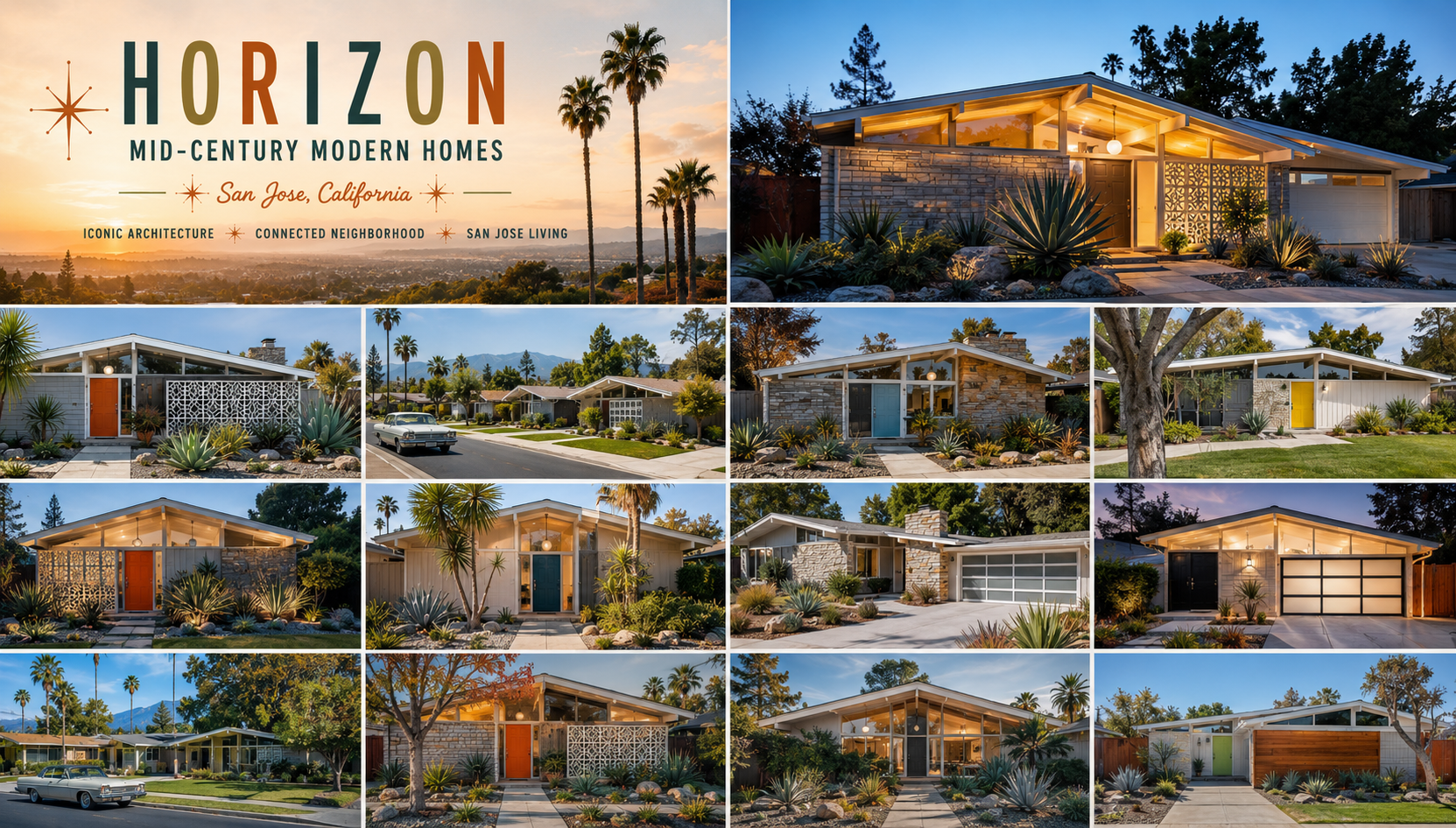
The Silicon Valley That Built Horizon
To understand Horizon Homes, it helps to imagine what San Jose looked like when these homes were first conceived.
Long before Silicon Valley became synonymous with billion-dollar startups and global technology companies, the Santa Clara Valley was known for something very different: agriculture.
Apricot orchards stretched for miles.
Prune trees lined country roads.
Packing plants and canneries dominated the local economy.
But following World War II, the region began changing at a breathtaking pace.
Thousands of returning servicemen sought housing. New industries emerged. Families migrated west in search of opportunity and California sunshine. Demand for housing exploded.
Developers suddenly faced an important question:
How should homes be designed for a completely new generation?
Many builders responded by simply replicating traditional architectural styles.
Others looked toward the future.
Influenced by modernist architects working throughout Southern and Northern California, progressive developers began embracing new ideas about how families actually wanted to live.
Walls came down.
Windows became larger.
Formal rooms disappeared.
Outdoor spaces became extensions of the home.
Natural light became a design feature rather than an afterthought.
The result was a new form of suburban architecture that remains remarkably relevant today.
Horizon Homes emerged from this exciting period of experimentation.
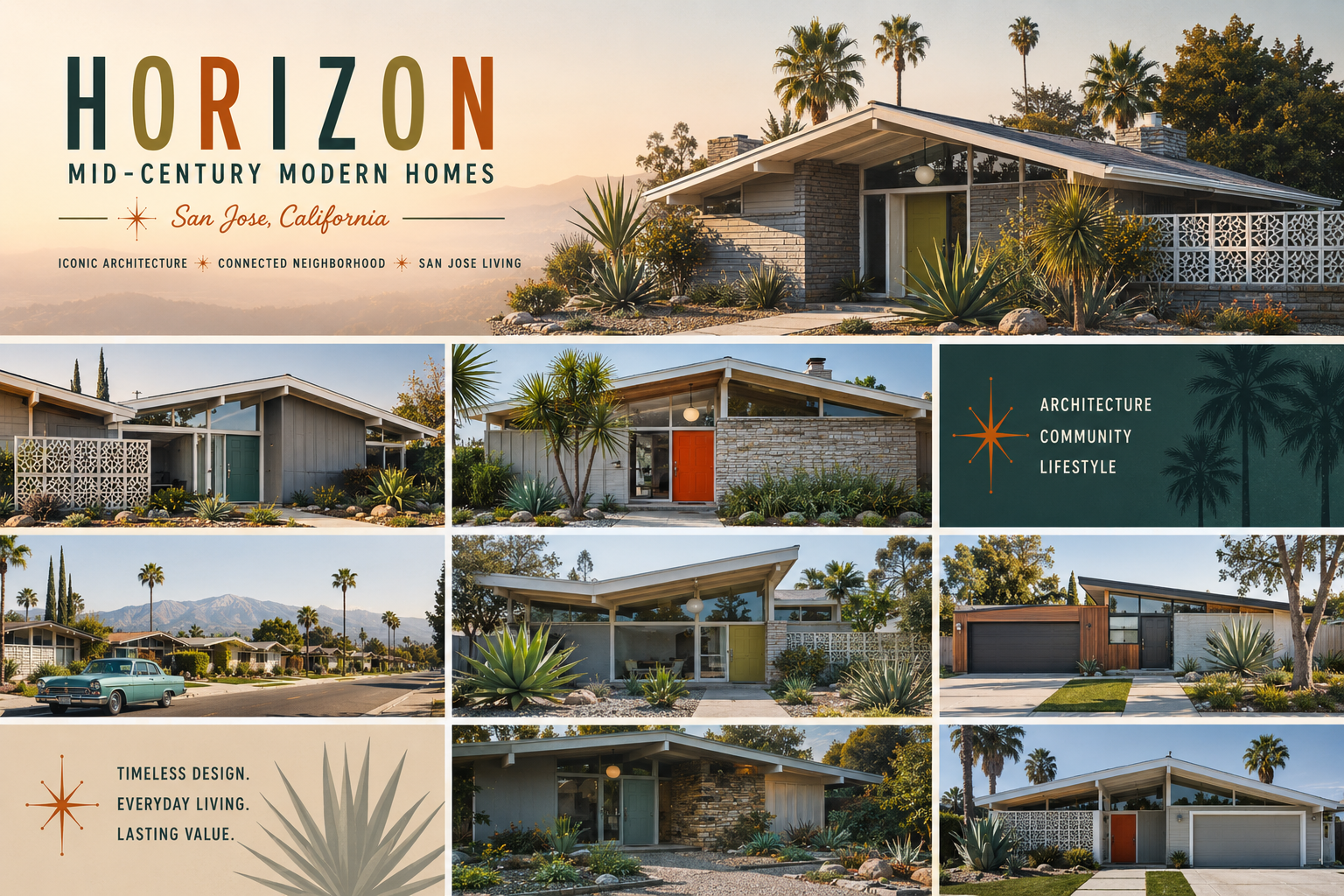
What Makes Horizon Different?
One of the most fascinating aspects of Horizon Homes is that they demonstrate many of the principles that define great mid-century modern architecture without necessarily receiving the same recognition as some of their more famous contemporaries.
As Property Nerds®, we often tell clients that truly understanding a neighborhood requires looking beyond square footage and bedroom counts.
The real story lies in how the homes were designed.
The first thing many visitors notice is the neighborhood's horizontal character.
The architecture feels grounded.
Rooflines stretch rather than soar.
Structures appear integrated into their sites rather than imposed upon them.
This emphasis on horizontal geometry reflects one of the core ideas of mid-century design: architecture should complement the landscape rather than dominate it.
The visual effect creates a sense of calm that remains surprisingly powerful decades later.
The Language of Glass
Perhaps no architectural element better captures the spirit of Horizon Homes than glass.
Mid-century architects understood something fundamental about human experience:
People enjoy natural light.
They enjoy seeing gardens.
They enjoy feeling connected to nature.
As a result, many Horizon homes feature expansive window systems that transform sunlight into one of the home's primary design materials.
Morning light enters differently than afternoon light.
Seasonal changes become visible from inside the home.
Landscaping becomes part of the architecture.
The home evolves throughout the day.
This creates a living environment that feels dynamic rather than static.
Modern builders frequently attempt to recreate this effect, yet many mid-century homes achieved it more successfully decades ago using surprisingly simple design principles.
Indoor-Outdoor Living Before It Became a Buzzword
Today nearly every luxury home listing mentions "indoor-outdoor living."
In the 1950s and 1960s, however, this concept was still revolutionary.
The designers behind neighborhoods like Horizon understood that California's climate was one of its greatest assets.
Rather than treating the backyard as separate from the house, they envisioned the landscape as another room.
Sliding glass doors connected living spaces to patios.
Large windows framed gardens.
Outdoor entertaining areas became extensions of family rooms.
Private courtyards introduced sunlight and nature into daily routines.
This approach fundamentally changed how homeowners interacted with their properties.
Even now, many Horizon homes provide an indoor-outdoor experience that feels more contemporary than homes built fifty years later.
The Mid-Century Floor Plan Revolution
One of the most overlooked aspects of Horizon Homes is their contribution to the evolution of residential floor plans.
Prior generations of homes often separated activities into distinct rooms.
Living room.
Dining room.
Kitchen.
Each with clearly defined boundaries.
Mid-century designers challenged these assumptions.
Why should the cook be isolated from guests?
Why should family members occupy disconnected spaces?
Why should entertaining require navigating multiple enclosed rooms?
Horizon homes embraced openness.
Living spaces flowed together.
Sightlines expanded.
Natural gathering areas emerged organically.
These innovations now feel completely normal because modern housing has largely adopted the same philosophy.
But at the time, these layouts represented a dramatic departure from tradition.
In many ways, Horizon helped pioneer the open-concept living environments that dominate residential design today.
Architectural Details Worth Appreciating
For architecture enthusiasts, Horizon Homes reward close observation.
The neighborhood contains numerous details that reveal the thoughtfulness of mid-century design.
Look carefully and you may notice:
Clerestory windows designed to introduce light while preserving privacy.
Deep roof overhangs that help regulate interior temperatures.
Carefully positioned glazing that frames landscape views.
Simple material palettes emphasizing texture over ornamentation.
Clean geometric forms that remain visually timeless.
Efficient circulation patterns that minimize wasted space.
These features demonstrate how mid-century architects approached design as both an artistic and practical exercise.
Every element served a purpose.
Beauty emerged through function.
Why Horizon Homes Continue to Attract Buyers
One of the most common questions we hear from buyers is why mid-century neighborhoods continue to command such strong interest.
The answer becomes obvious after spending time in Horizon.
These homes simply feel different.
Natural light is abundant.
Spaces feel connected.
The relationship between architecture and landscape feels intentional.
Many buyers also appreciate the authenticity.
In an era when many new developments strive to imitate historic styles, Horizon represents the real thing.
The neighborhood is not trying to be mid-century modern.
It actually is.
That distinction matters.
Authenticity has become increasingly valuable in residential real estate.
As supply remains limited and appreciation for architectural design continues growing, neighborhoods like Horizon often attract buyers seeking something more distinctive than standard production housing.
Renovating a Horizon Home: Balancing History and Modern Living
One of the most exciting aspects of Horizon ownership is the opportunity to thoughtfully update a historic home.
The best renovations rarely involve erasing original character.
Instead, they build upon it.
Successful projects often focus on enhancing the features that made the home special in the first place.
Updated kitchens can preserve clean modern lines.
Energy-efficient windows can respect original design intent.
Contemporary materials can complement rather than compete with existing architecture.
Modern systems can improve comfort without sacrificing character.
The goal is not to turn a mid-century home into something else.
The goal is to help it become the best version of itself.
Horizon Homes and Silicon Valley Real Estate
As Silicon Valley continues evolving, architectural neighborhoods like Horizon occupy a unique position within the market.
They offer something increasingly difficult to replicate.
Mature landscaping.
Established neighborhoods.
Architectural identity.
Walkable streets.
Human-scale design.
A connection to local history.
Many new communities can provide square footage.
Far fewer can provide a sense of place.
That distinction often becomes a major driver of long-term desirability.
For buyers who value architecture, community character, and thoughtful design, Horizon Homes represents one of San Jose's most compelling opportunities.
The Future of Horizon
One of the most encouraging trends we have observed over the past decade is the growing appreciation for mid-century neighborhoods throughout Silicon Valley.
What previous generations sometimes viewed as simply older homes are increasingly recognized as important examples of California design history.
Buyers are becoming more educated.
Architectural preservation awareness is growing.
Original design features are being celebrated rather than removed.
As this appreciation continues to expand, neighborhoods like Horizon are likely to receive the recognition they deserve.
Not simply as collections of houses.
But as living examples of an architectural movement that transformed how Americans think about home.
Why the Boyenga Team Loves Horizon Homes
As longtime students of Silicon Valley architecture and self-proclaimed Property Nerds®, we are endlessly fascinated by neighborhoods that tell a story.
Horizon Homes tells a particularly compelling one.
It represents optimism.
Innovation.
Design experimentation.
The belief that architecture could improve everyday life.
Those values helped shape Silicon Valley itself.
They also happen to be the same values that continue attracting buyers to Horizon today.
Whether you are considering buying, selling, restoring, or simply learning more about Horizon Mid-Century Modern Homes, understanding the architectural DNA of the neighborhood is essential.
Because great homes are more than structures.
They are ideas made visible.
And Horizon remains one of San Jose's most interesting ideas.
Thinking About Buying or Selling a Horizon Home?
The Boyenga Team has spent decades helping buyers and sellers navigate Silicon Valley's most architecturally significant neighborhoods. From Eichlers and Strengs to custom mid-century modern residences and hidden modernist enclaves like Horizon, we understand what makes these homes special—and how to properly market, evaluate, and preserve them.
If you are considering buying or selling a Horizon home, contact Eric and Janelle Boyenga. We'd love to share the history, architecture, market trends, and opportunities that make this remarkable neighborhood one of San Jose's best-kept mid-century secrets.