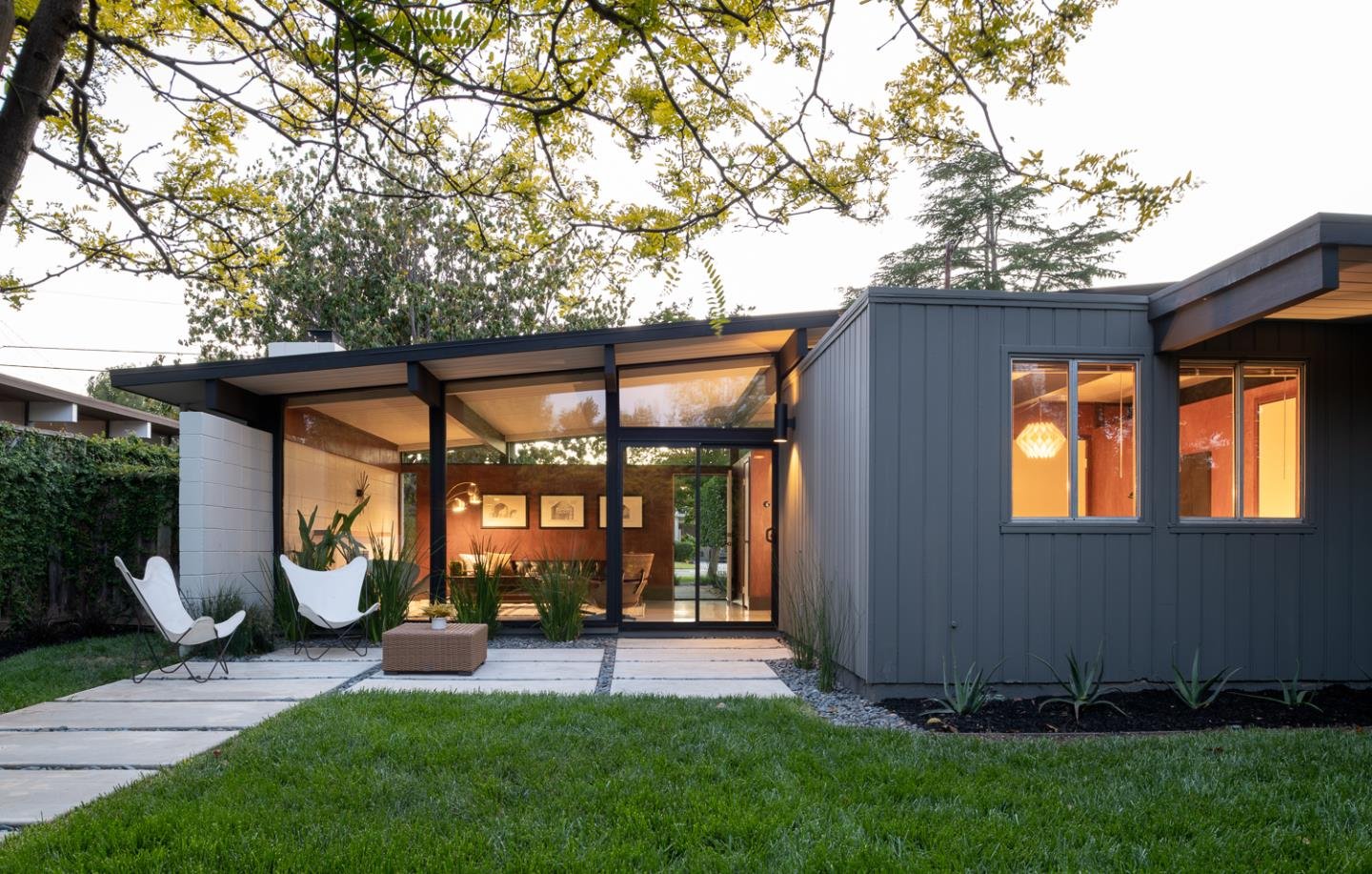
In a conventional house, the attic hides ducts, wiring, exhaust, insulation and decades of technological change. Many Eichlers and related post-and-beam homes remove that buffer: the ceiling is the roof deck, the beams are exposed, the walls are glass and the floor may be a radiant slab. Modernization therefore becomes a routing problem as much as an equipment decision. This Property Nerd field guide introduces the Systems Routing Equation, Eight No-Attic Routing Zones, Pathway Hierarchy, Penetration Budget, Serviceability Radius, Twelve-Pass No-Attic Audit and a 45-point Systems Integration Score. It examines where heat pumps, condensate, ventilation, kitchen and bath exhaust, repiping, electrical feeders, lighting, Wi-Fi, cameras, solar, batteries, EV infrastructure, roof insulation and future technology can travel without sacrificing tongue-and-groove ceilings, fascia lines, original paneling, glass-wall proportions or maintenance access. It also explains what buyers should verify, how sellers can organize a credible systems file and how Compass-powered Boyenga Team workflows turn distributed technical records into a coherent architectural property story.
Read MoreAn Eichler rarely announces its front door with a conventional porch or symmetrical facade. The entrance may sit sideways beneath an overhang, hide beyond a gate or wait across an atrium, which makes small signals unusually important. This Property Nerds® field guide examines how house numbers, mailboxes, door color, Saturn escutcheons, bells, smart locks, globe lights, paving and landscaping work together from curb to threshold. Using the Boyenga Team’s six-stage Arrival Signal Chain, Component Provenance Map and 35-point Curb-to-Threshold Score, readers learn how to improve recognition, privacy, nighttime legibility and first impressions without turning a disciplined modernist facade into a collection of decorative “mid-century” accessories.
Read MoreAn Eichler feature can depart from the familiar model plan and still belong to the home’s earliest history. Original buyers sometimes negotiated doors, windows, room divisions, cabinetry and accessibility changes before completion; other first owners made thoughtful adaptations soon after moving in. This Property Nerds® field guide explains how to distinguish documented builder variants, purchaser-requested customizations, early owner alterations, compatible later work and unsupported imitation. Using the Boyenga Team’s Five-Bucket Origin Map, Evidence Ladder and 35-point Nonstandard Feature Provenance Score, readers learn how to evaluate plans, permits, photographs, oral history, materials and construction sequence—then describe the result accurately without confusing rarity, originality, condition or value.
Read MoreA perfectly restored mid-century modern home can still feel as though no one is allowed to live there. This Property Nerd field guide replaces the museum effect with “occupied authenticity”—a practical system for balancing architectural character with comfort, storage, technology, privacy, children, pets, personal collections and daily mess. Use the Preserve–Adapt–Personalize Map, 24-Hour Friction Audit and 35-point Living Modernism Score to make an Eichler feel both important and genuinely inhabited.
Read MoreAn Eichler ceiling is the house’s forgotten fifth elevation: exposed roof deck, structural grid, daylight reflector, acoustic canopy and decades-long repair record in one continuous plane. This comprehensive Property Nerd guide explains how to evaluate beam rhythm, board continuity, finishes, penetrations, lighting, roof stains, mechanical systems and staging, then introduces a 35-point Fifth Elevation Score and reflected-ceiling audit.
Read MoreAn Eichler begins before the front door. This comprehensive Property Nerd field guide analyzes the walk from street and carport through the gate, atrium and interior reveal, then introduces a 35-point Entry Sequence Score for legibility, compression, privacy, nighttime clarity, material continuity and daily function. Buyers, sellers and owners can use it to protect one of the house’s most powerful—and most easily disrupted—architectural experiences.
Read MoreWhat makes a mid-century material honest? This Property Nerd field guide examines mahogany veneer, cork, true linoleum, terrazzo and brick, then introduces a 30-point scoring system for substance, installation, architectural compatibility, repairability, patina and documentation. It helps Eichler buyers and sellers distinguish authentic fabric, compatible replacements and honest contemporary work from surface imitation and architecture-erasing renovation.
Read MoreSome architects leave behind landmarks. William Krisel left behind neighborhoods people still compete to buy into.
While many architects focused on custom homes for wealthy clients, Krisel transformed California housing by bringing Modernism to everyday families. His butterfly roofs, walls of glass, indoor-outdoor living spaces, and innovative tract communities helped define the California Dream and continue to influence buyer preferences more than half a century later.
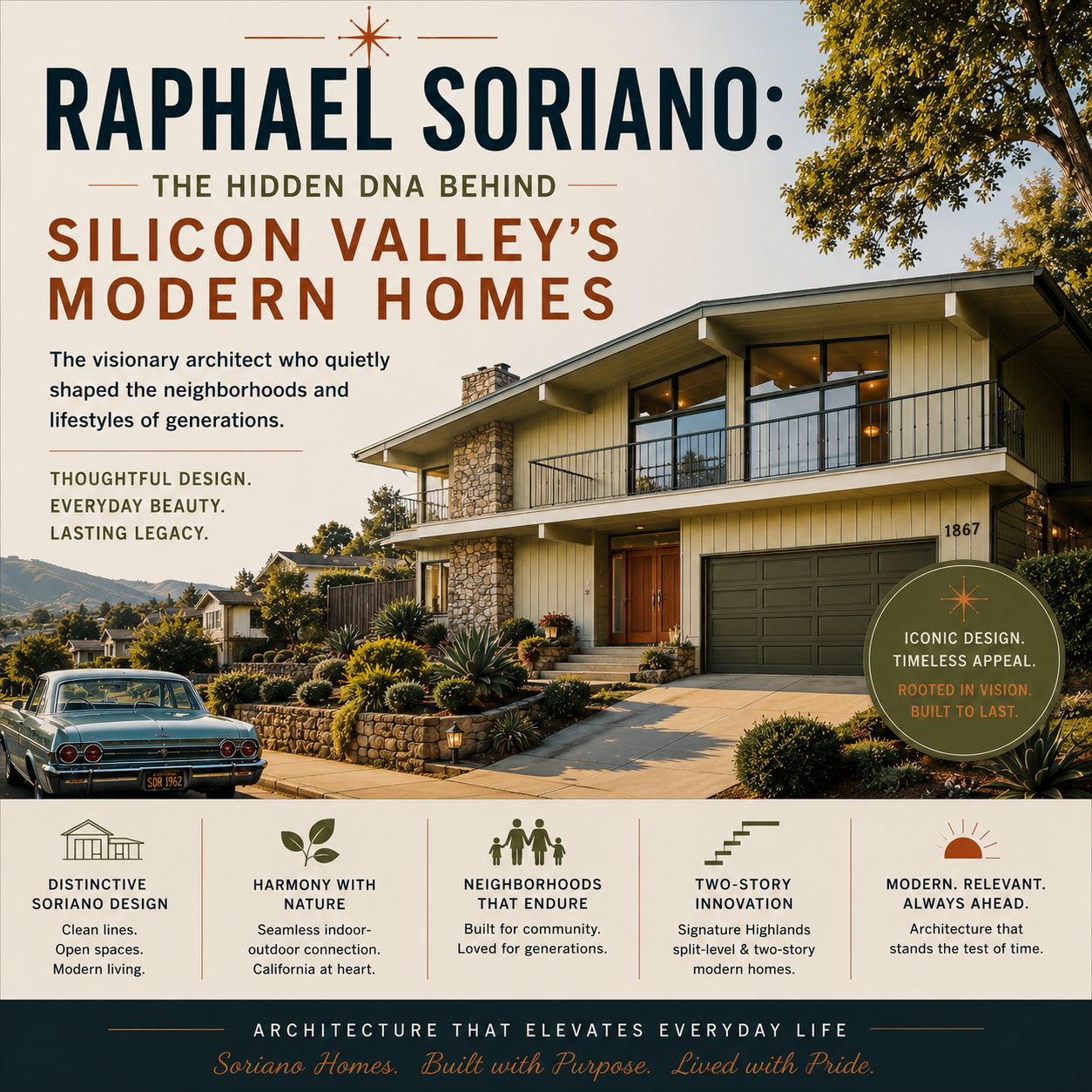
Read MoreMost Silicon Valley homeowners have never heard of Raphael Soriano, yet many of the architectural features buyers value most today can be traced back to the ideas he helped pioneer. Long before open floor plans, indoor-outdoor living, walls of glass, and modern luxury design became mainstream, Soriano was exploring how architecture could better respond to light, landscape, technology, and human experience. His influence extends far beyond the homes he designed, shaping the architectural DNA of Eichler neighborhoods, California modernism, and many of the most desirable Mid-Century Modern homes throughout Silicon Valley. Understanding Raphael Soriano is ultimately about understanding how California learned to live modern.
Read MoreCarter Sparks may not be as widely known as Joseph Eichler, Claude Oakland, or A. Quincy Jones, but his work belongs in the same Northern California modernist conversation. Best understood through his association with Streng Brothers homes and the broader movement toward livable, light-filled, indoor-outdoor family housing, Sparks helped define a softer, highly adaptable version of California modernism. For Silicon Valley homeowners, his legacy offers a new way to understand Eichler-adjacent design, modern ranch homes, and the enduring appeal of postwar architectural neighborhoods.
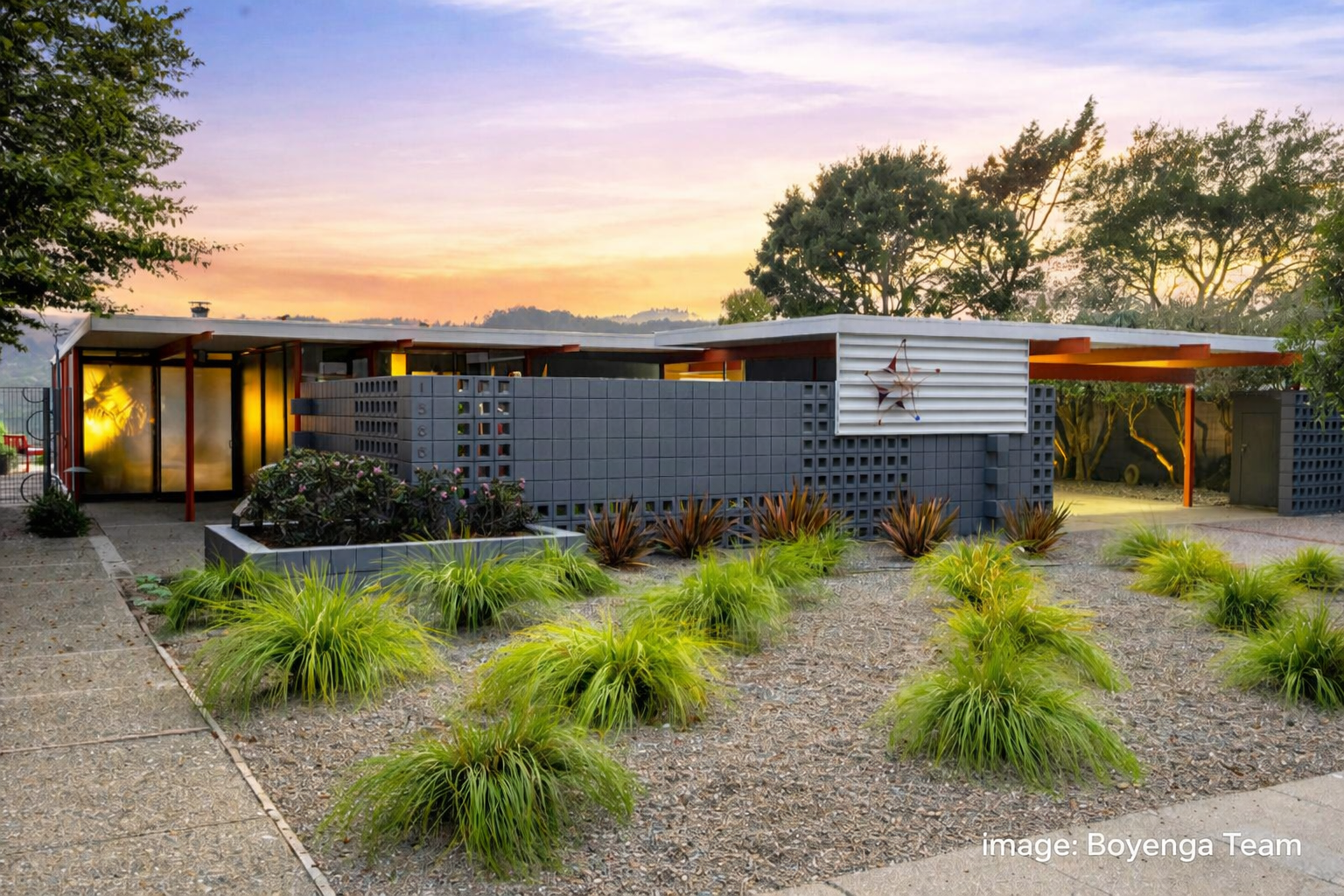
Read MoreHidden within San Jose is one of Silicon Valley's most overlooked mid-century modern neighborhoods. Horizon Homes embodies the optimism and innovation of post-war California design, with expansive glass, open floor plans, indoor-outdoor living, and timeless architectural character. Discover the history, design philosophy, lifestyle appeal, and real estate opportunities that make Horizon Homes a favorite among architecture enthusiasts, modernist homeowners, and fellow Property Nerds® seeking a unique piece of Silicon Valley's architectural heritage.
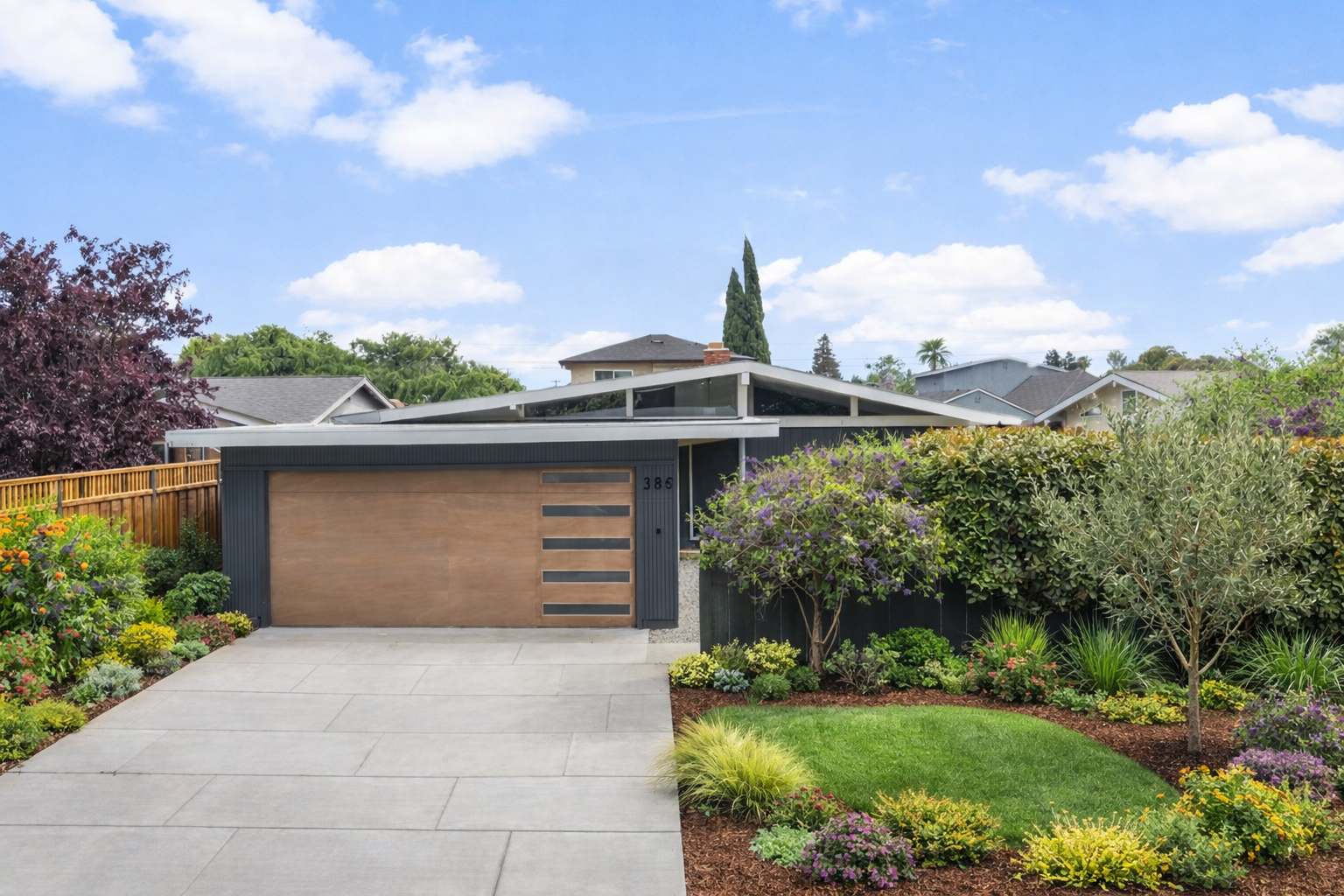
Read MoreA refined mid-century modern residence in Santa Clara, 385 Cronin Avenue blends architectural integrity with modern livability. With walls of glass, seamless indoor-outdoor flow, and thoughtful upgrades, this home offers a rare opportunity to experience design-driven living in the heart of Silicon Valley.
Read MoreThe Eichler X-100 is not simply a home—it is a bold architectural experiment that redefined what modern living could be. Designed in 1956 as a steel-framed prototype for the future of housing, it remains one of the most significant and visionary residences of the mid-century era. Now offered for sale, this is a rare opportunity to own a true piece of design history—where innovation, lifestyle, and legacy converge.
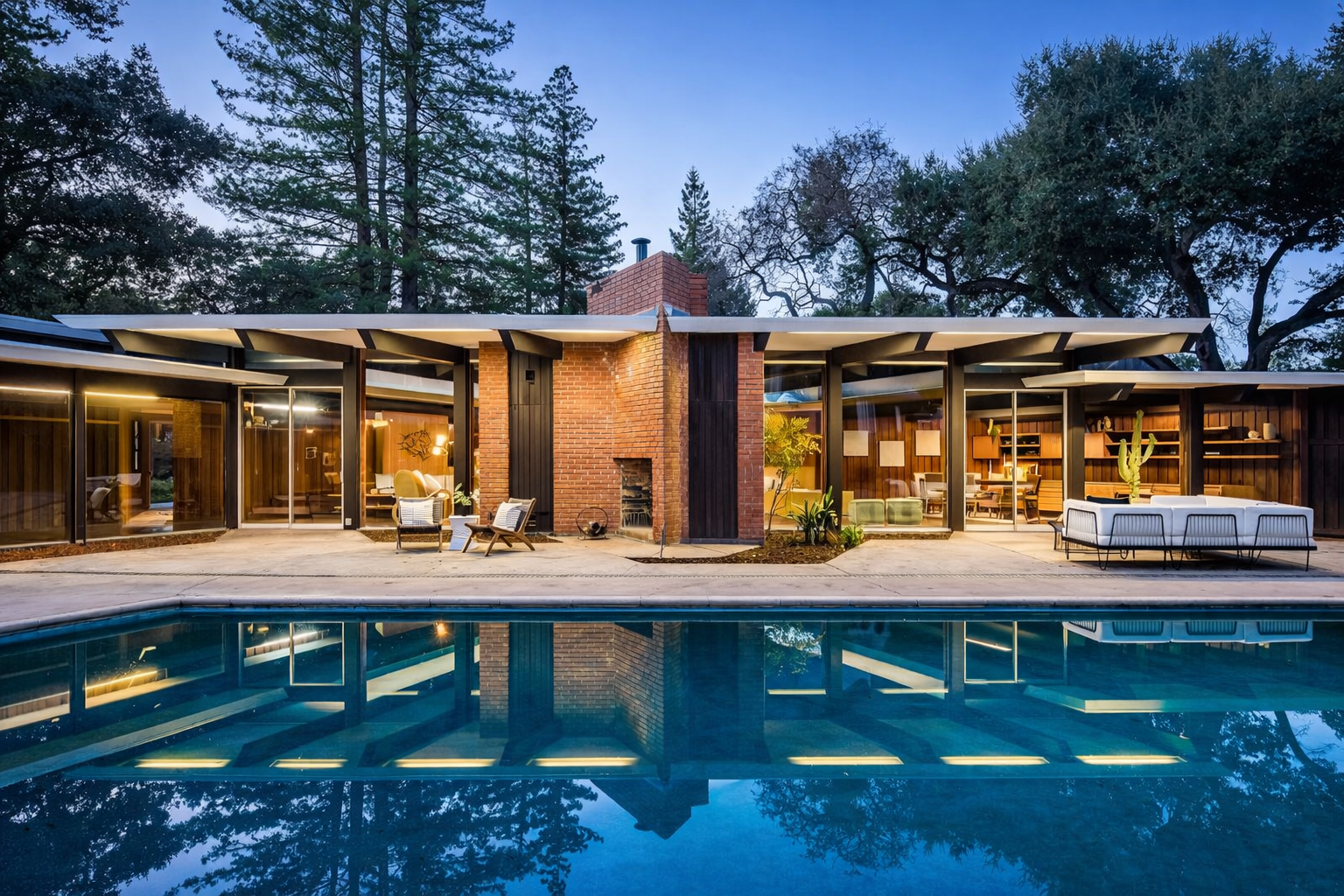
Read MoreNestled among Atherton’s mature oaks, 19 Irving Avenue is a 5-bedroom, 5.5-bath, 3,700-square-foot Eichler home that was custom-built for Joseph Eichler in 1951. This pristine mid-century modern estate, offered for the first time in six decades, features an open V-shaped floorplan, walls of glass and a redwood-clad post-and-beam design – the very innovations Eichler later introduced throughout Northern California.
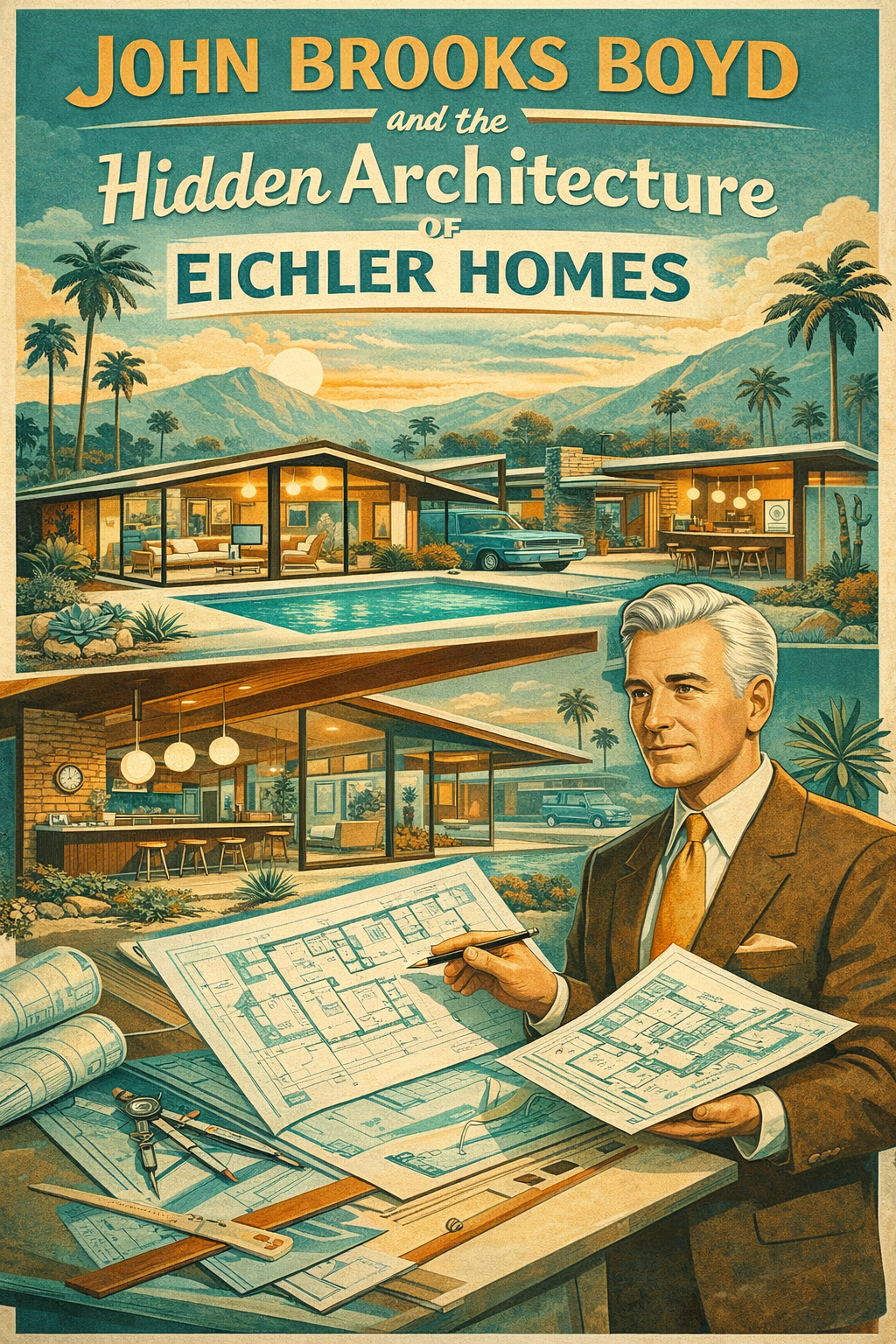
Read MoreJohn Brooks Boyd’s work reveals how modernist systems survive when ideal conditions disappear. Operating quietly within the Eichler organization, Boyd adapted architectural logic to sites, regulations, and environmental constraints without diluting the principles that defined Eichler Homes. His legacy is not one of authorship, but of continuity—demonstrating that the true resilience of mid-century modernism lies not in repetition, but in intelligent adaptation.
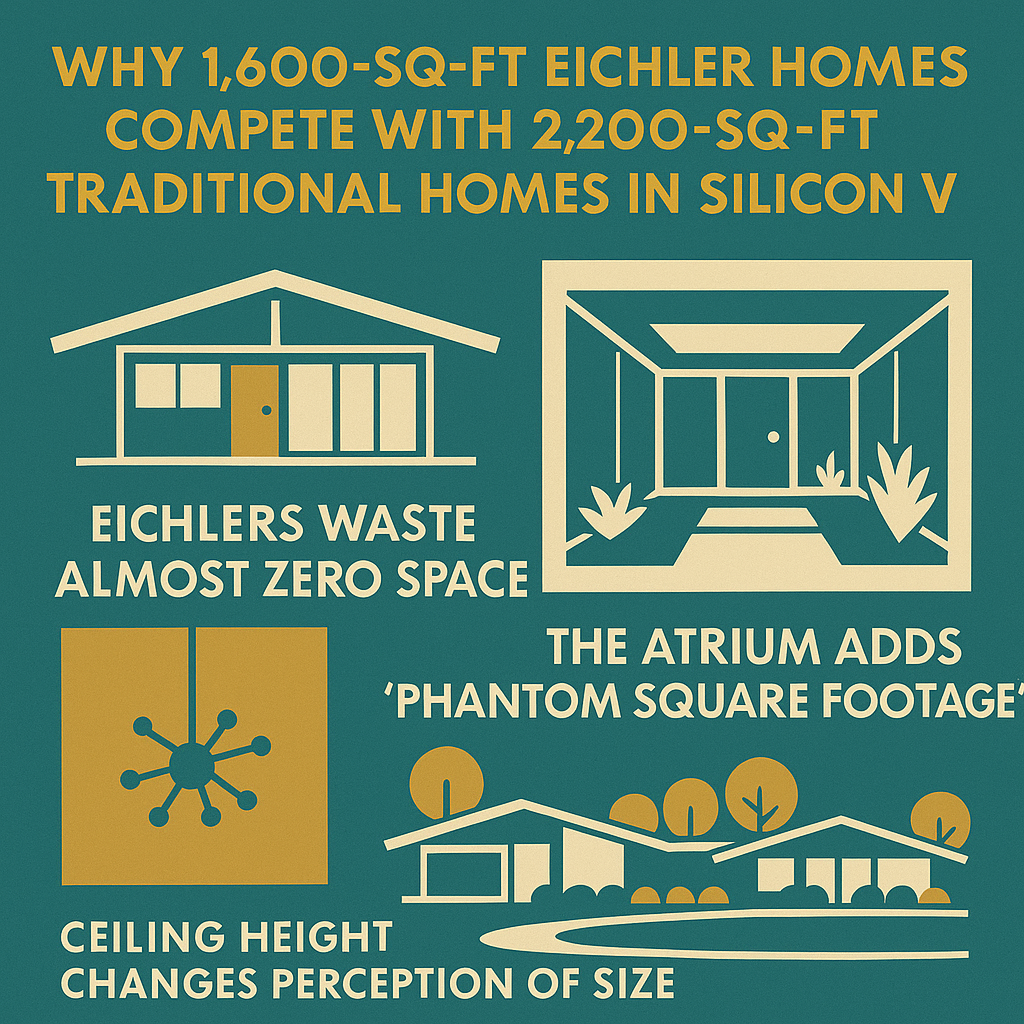
Read More“Eichler homes prove that perception beats math. Through open plans, walls of glass, and seamless indoor-outdoor flow, a 1,600-square-foot Eichler consistently lives larger — and trades stronger — than a 2,200-square-foot traditional home.”
Read MoreIn Silicon Valley, a new generation of architects is redefining Joseph Eichler’s mid-century modern legacy. “Eichler 2.0” homes blend timeless post-and-beam architecture, open atriums, and seamless indoor-outdoor flow with sustainable materials, smart technology, and modern luxury. These homes honor Eichler’s human-centered ideals while meeting the energy-efficient, design-forward lifestyle of today’s Silicon Valley elite.
Read MoreVisible beams aren’t just a design detail—they’re the soul of Eichler architecture. Post-and-beam construction transformed how we live, replacing walls with light, openness, and connection. In every Eichler home, structure becomes philosophy: honest, transparent, and deeply human.
Read MoreMountain View’s 94043 ZIP code epitomizes Silicon Valley living. Our 20-page deep dive covers its history (from Spanish ranchos to tech boom), community profile (demographics, schools, culture), lifestyle highlights (Shoreline Park, Castro Street dining), and real estate trends (mid-century Eichler homes, market stats). We spotlight luxury agents Eric & Janelle Boyenga (Compass) and their innovative approach to buying and selling in this high-end, tech-centric neighborhoodmountainview.govzillow.com.
Read MoreIn Sunnyvale’s coveted Rancho San Miguel enclave, mid-century modern Eichler homes grace wide, tree-lined streets – a harmonious blend of iconic design and Silicon Valley lifestyle. Floor-to-ceiling glass walls, open-beam ceilings, and indoor-outdoor atriums define these architectural gems, while spacious lots and top-rated schools add practical allure. It’s a neighborhood where modernist luxury meets community charm, all expertly showcased by Silicon Valley’s Eichler specialists, the Boyenga Team.
Read More