In a conventional house, the attic hides ducts, wiring, exhaust, insulation and decades of technological change. Many Eichlers and related post-and-beam homes remove that buffer: the ceiling is the roof deck, the beams are exposed, the walls are glass and the floor may be a radiant slab. Modernization therefore becomes a routing problem as much as an equipment decision. This Property Nerd field guide introduces the Systems Routing Equation, Eight No-Attic Routing Zones, Pathway Hierarchy, Penetration Budget, Serviceability Radius, Twelve-Pass No-Attic Audit and a 45-point Systems Integration Score. It examines where heat pumps, condensate, ventilation, kitchen and bath exhaust, repiping, electrical feeders, lighting, Wi-Fi, cameras, solar, batteries, EV infrastructure, roof insulation and future technology can travel without sacrificing tongue-and-groove ceilings, fascia lines, original paneling, glass-wall proportions or maintenance access. It also explains what buyers should verify, how sellers can organize a credible systems file and how Compass-powered Boyenga Team workflows turn distributed technical records into a coherent architectural property story.
Read MoreIn a post-and-beam home, the structure is already part of the architecture. Exposed beams define the ceiling, posts organize the glass, and the roof deck may also be the finished interior surface. That makes seismic strengthening a design problem as well as an engineering one. This Property Nerd field guide introduces the Load-Path/Sightline Matrix, five Retrofit Visibility Classes and a 40-point Structural Restraint Score to help owners evaluate roof diaphragms, shear walls, moment frames, beam-to-post connections, post bases, radiant slabs, carports, atriums, clerestories and additions without accepting avoidable visual damage. It also explains why visible hardware is not a complete retrofit, how to document concealed work and how the Boyenga Team uses Compass-powered workflows to build a credible structural and architectural property story.
Read MoreAn Eichler rarely announces its front door with a conventional porch or symmetrical facade. The entrance may sit sideways beneath an overhang, hide beyond a gate or wait across an atrium, which makes small signals unusually important. This Property Nerds® field guide examines how house numbers, mailboxes, door color, Saturn escutcheons, bells, smart locks, globe lights, paving and landscaping work together from curb to threshold. Using the Boyenga Team’s six-stage Arrival Signal Chain, Component Provenance Map and 35-point Curb-to-Threshold Score, readers learn how to improve recognition, privacy, nighttime legibility and first impressions without turning a disciplined modernist facade into a collection of decorative “mid-century” accessories.
Read MoreAn Eichler feature can depart from the familiar model plan and still belong to the home’s earliest history. Original buyers sometimes negotiated doors, windows, room divisions, cabinetry and accessibility changes before completion; other first owners made thoughtful adaptations soon after moving in. This Property Nerds® field guide explains how to distinguish documented builder variants, purchaser-requested customizations, early owner alterations, compatible later work and unsupported imitation. Using the Boyenga Team’s Five-Bucket Origin Map, Evidence Ladder and 35-point Nonstandard Feature Provenance Score, readers learn how to evaluate plans, permits, photographs, oral history, materials and construction sequence—then describe the result accurately without confusing rarity, originality, condition or value.
Read MoreA perfectly restored mid-century modern home can still feel as though no one is allowed to live there. This Property Nerd field guide replaces the museum effect with “occupied authenticity”—a practical system for balancing architectural character with comfort, storage, technology, privacy, children, pets, personal collections and daily mess. Use the Preserve–Adapt–Personalize Map, 24-Hour Friction Audit and 35-point Living Modernism Score to make an Eichler feel both important and genuinely inhabited.
Read MoreWhat happens when the original Eichler panel, siding profile, window system, flooring, laminate or fixture no longer exists? This comprehensive Property Nerd guide introduces a Replacement Ladder and 35-point Compatibility Matrix for comparing repair, salvage, custom reproduction, same-family materials, modern substitutes and quiet contemporary work—while protecting architectural character, technical performance and buyer confidence.
Read MoreThe Eichler X-100 is more than a rare mid-century modern home — it is the perfect symbol of today’s Silicon Valley market, where architectural scarcity, AI-driven cash wealth, remodeling economics, and land value all collide.
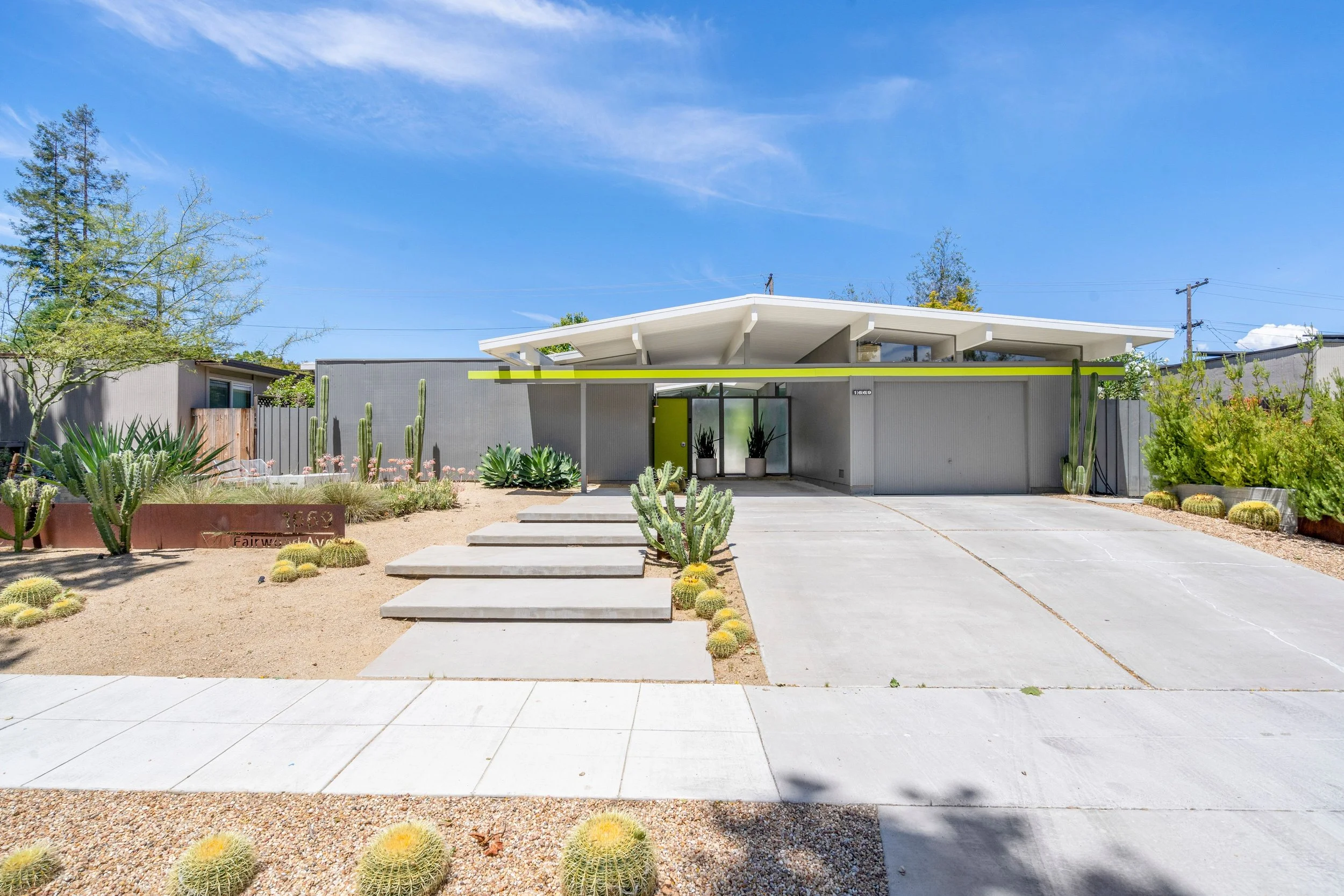
Read More"At 1669 Fairwood Drive, the timeless principles of Eichler design meet contemporary California luxury. From its dramatic desert-modern landscaping and iconic glass-wrapped atrium to its chef's kitchen, spa-inspired interiors, and resort-style backyard complete with an outdoor kitchen and pizza oven, this Fairglen Eichler is a masterclass in how mid-century architecture can evolve without losing its soul."
Read MoreAn Eichler is designed for visual calm. The bin map is how real life stays out of the sightline. Behind every glass wall, atrium, carport, side yard, and private garden is a practical question most buyers do not ask until they live there: where do the trash, recycling, compost, cardboard, pet waste, yard clippings, food scraps, and delivery boxes actually go? This Property Nerd guide explains how Eichler buyers and sellers can manage utility zones, curb appeal, organics, odors, pests, side-yard access, staging, and resale value without letting the bins become the first thing people notice.
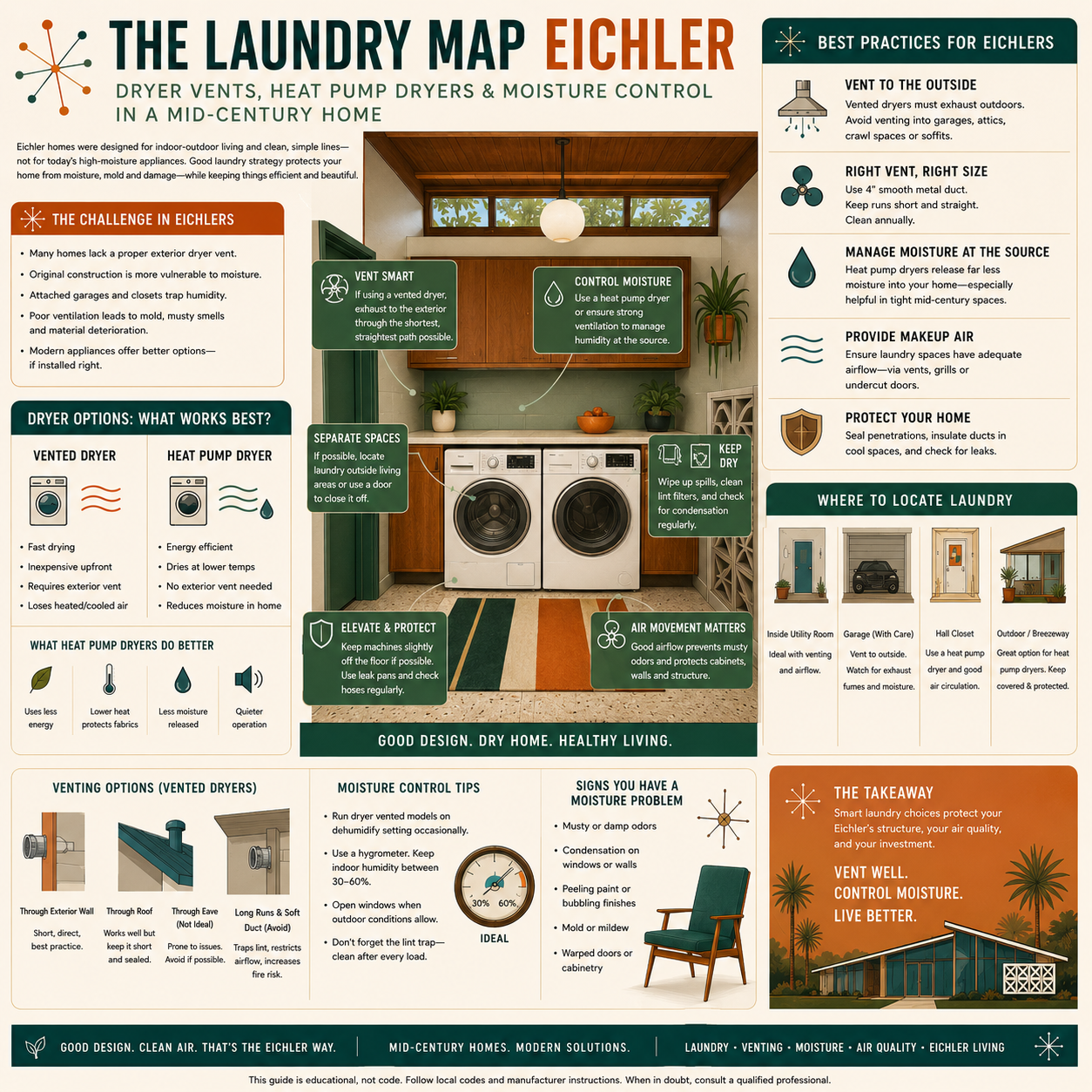
Read MoreAn Eichler laundry area does not need to be fancy. It needs to be dry, safe, serviceable, and honest. Behind the glass walls, atriums, radiant slabs, carports, and open floor plans, every Eichler still needs a practical utility zone where lint, water, heat, moisture, electricity, gas, and drainage all behave. This Property Nerd guide explains how buyers and sellers can understand dryer vents, heat pump dryers, washer leaks, slab-safe laundry planning, garage and carport utility zones, inspections, documentation, staging, and resale value.
Read MoreAn Eichler kitchen does not just cook dinner. In an open-plan home, it sends air, heat, steam, grease, smell, and particles into the entire architectural experience. The range hood is not just an appliance above the stove — it is the traffic controller for cooking air. This Property Nerd guide explains how Eichler buyers, sellers, and remodelers can read the kitchen exhaust map: where the air goes, whether the hood vents outside, how flat-roof ducting affects remodels, why induction still needs ventilation, and how a thoughtful airflow strategy can protect comfort, staging, indoor air quality, and resale value.
Read MoreAn Eichler may be a house of glass, beams, atriums, and light — but escrow often turns on what the camera sees underground. Sewer laterals, cleanouts, slab plumbing, tree roots, old pipes, local compliance rules, and future remodel plans can all affect buyer confidence and resale value. This Property Nerd guide explains how Eichler buyers and sellers can follow the underground sewer map before a hidden pipe becomes a negotiation surprise.
Read MoreAn Eichler is a house of layers. Original wood ceilings, radiant slabs, old flooring, painted siding, roof coatings, utility closets, adhesives, carport materials, and decades of remodel decisions all tell a story. The key is knowing which layers are valuable, which are ordinary, which are unknown, and which should not be disturbed blindly. This Property Nerd guide explains how Eichler buyers, sellers, and remodelers can read the materials map before sanding, scraping, cutting, grinding, pulling up floors, or starting a renovation that may uncover lead paint, asbestos, or other mid-century surprises.
Read MoreAn Eichler is designed to live close to nature. The pest map is how you make sure nature stays respectfully outside the wood. Atriums, glass walls, wood siding, exposed beams, carports, gardens, roof edges, and low-slung indoor-outdoor design all create the magic buyers love — but they also shape where termites, dry rot, fungus, moisture, ants, rodents, and inspection findings may appear. This Property Nerd guide explains how buyers and sellers can read the hidden pest map behind an Eichler before it becomes a negotiation surprise.
Read MoreAn Eichler is a house of light. In Silicon Valley, it also needs to be a house of signal. Glass walls, atriums, open plans, bedroom wings, carports, garages, home offices, smart locks, EV chargers, solar apps, security cameras, and backyard living all depend on invisible connectivity that buyers often do not notice until something freezes mid-Zoom. This Property Nerd guide explains how Eichler buyers and sellers can read the home’s “signal map” — where internet enters, where Wi-Fi dies, where work happens, where smart devices live, and how to make modern connectivity feel effortless without cluttering the mid-century modern architecture.
Read MoreAn Eichler does not just bring the outside in. It reflects the outside back. The same glass walls, atriums, clerestories, sliding doors, and private gardens that make Eichlers feel magical to people can sometimes confuse birds, turning reflections of sky, trees, and greenery into invisible hazards. This Property Nerd guide explores how Eichler buyers, sellers, and owners can create a bird-safer home using reflection mapping, subtle window treatments, smart feeder placement, nighttime lighting strategies, and landscape design — without sacrificing the transparency, architectural calm, and indoor-outdoor living that make Eichlers so special.
Read MoreEvery Eichler has a power map. Solar panels, batteries, EV chargers, heat pumps, radiant boilers, refrigerators, routers, garage doors, smart locks, lights, and home offices all depend on invisible circuits that matter most when the grid goes dark. A power-ready Eichler is not simply the one with the most equipment — it is the one with the smartest map. This Property Nerd guide explains how buyers and sellers can understand backup power, critical loads, solar batteries, documentation, safety, and resale confidence without compromising mid-century modern design.
Read MoreEvery Eichler has two floor plans: the one it was born with, and the one time created. Somewhere between the original atrium, the converted garage, the added skylight, the relocated kitchen, the mystery subpanel, and the enclosed patio is the real story of the house. This Property Nerd guide explains how buyers and sellers can read permit history, remodel clues, square footage, disclosures, additions, garage conversions, atrium enclosures, and architectural authenticity before escrow turns curiosity into a negotiation problem.
Read MoreAn Eichler carport is not just covered parking. It is the place where the home meets the street, where daily routines begin, and where modern Silicon Valley life now asks for more: e-bike storage, cargo bikes, scooters, helmets, chargers, backpacks, locks, stroller parking, EV access, and Caltrain commutes. This Property Nerd guide explores how to create a bike-ready Eichler — or “bikeport” — without turning a beautiful mid-century modern entry into a sporting-goods warehouse.
Read MoreA great Eichler does not just look calm. It sounds calm. These homes are famous for glass walls, atriums, exposed beams, radiant slabs, and open plans, but those same features shape how voices, footsteps, music, Zoom calls, pool pumps, pets, and neighborhood sounds move through the home. This Property Nerd guide explores Eichler acoustics — from home offices and media rooms to bedroom privacy, atrium echoes, rugs, sliders, mechanical noise, and staging — so buyers and sellers can understand the invisible soundscape that affects comfort, value, and daily life.
Read More