
The Silicon Valley Property Nerd Report: AI Cash, Eichler Fever, Remodel Wars & the New Rules of Local Real Estate
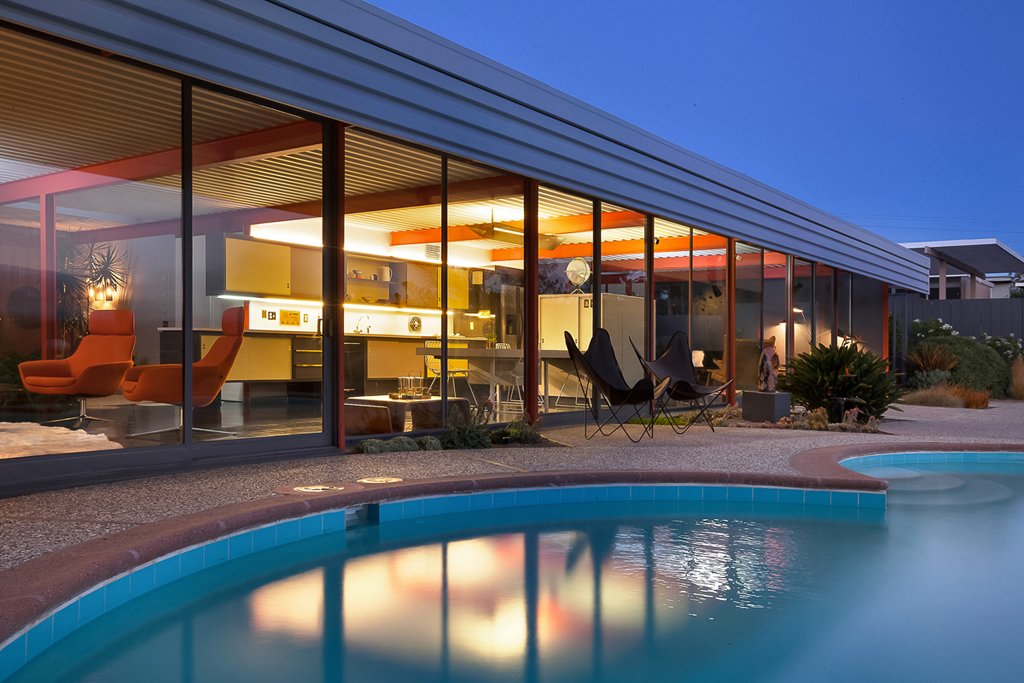
Silicon Valley real estate has always been a little different.
This is not a normal housing market. It is a land-scarcity market. A tech-equity market. A school-district market. A design-obsessed market. A teardown market. A “wait, that sold for how much?” market.
And right now, the 2026 Silicon Valley real estate ecosystem is being shaped by four major forces: architectural scarcity, AI-driven cash wealth, rising construction costs, and major local policy shifts.
But if you want one property that captures the moment perfectly, look at the Eichler X-100.
The X-100 is not just another mid-century modern home. It is one of the most important experimental homes in California modernist history — a futuristic Joseph Eichler prototype in the San Mateo Highlands that pushed beyond the familiar post-and-beam formula and explored steel-frame construction, industrial materials, indoor-outdoor living, radiant heating, openness, efficiency, and the optimistic “home of tomorrow” mindset that defined the best of postwar California design.
In many ways, the X-100 is the perfect symbol for today’s Silicon Valley market: rare, design-forward, technically fascinating, historically significant, and located in a region where buyers still compete aggressively for architectural authenticity.
For buyers, sellers, investors, builders, and fellow property nerds, the real story is not hiding in the broad market averages. It is happening street by street, school boundary by school boundary, and lot by lot.
Let’s nerd out.
1. The Mid-Century Modern Premium Is Real — And the Eichler X-100 Is the North Star
In Silicon Valley, architectural pedigree matters.
And when it comes to mid-century modern housing, Joseph Eichler remains one of the most powerful names in California real estate. Eichler homes are not just houses. They are lifestyle statements, design artifacts, and emotional buyer magnets.
The current market is proving that once again.
Turnkey mid-century modern homes are seeing highly compressed inventory and intense buyer demand. When the architecture is authentic, the restoration is thoughtful, and the neighborhood is strong, buyers move quickly.
That is exactly why the Eichler X-100 matters so much.
Located in the San Mateo Highlands, the X-100 was Eichler’s experimental “Home of Tomorrow,” created as a prototype for how modern families might live in the future. Unlike the typical Eichler formula of wood post-and-beam construction, atriums, glass walls, and open indoor-outdoor flow, the X-100 pushed into more experimental territory with steel-frame construction and a more industrial-modern architectural language.
It was not just a house. It was a research project, a design manifesto, and a glimpse into a future that Silicon Valley would eventually make real.
That is why the X-100 resonates so strongly today. It connects the original California dream — affordable modernism, indoor-outdoor living, optimistic design, and mass-market innovation — with the modern Silicon Valley dream of engineering, experimentation, design thinking, and high-performance living.
The X-100 is basically the original Property Nerd house.
It is where architecture, engineering, lifestyle, and market psychology all meet.
And in 2026, that kind of property does not just attract buyers. It attracts believers.
2. Eichler Fever: Why Architectural Scarcity Is Moving the Market
The Eichler premium is not just about square footage.
It is about scarcity.
There are only so many authentic Eichler homes. There are even fewer that remain architecturally intact. Fewer still have been restored with sensitivity, restraint, and respect for the original design language.
And then there is the X-100 — a one-of-one architectural landmark.
That level of rarity changes buyer psychology.
A standard remodeled home competes against other remodeled homes. An architecturally significant Eichler competes in a different category altogether. A property like the X-100 becomes part real estate, part collectible, part cultural artifact.
That is why mid-century modern buyers often behave differently from ordinary buyers. They are not only asking, “How many bedrooms?” or “How updated is the kitchen?”
They are asking:
Is the design authentic?
Has the original architecture been respected?
Are the materials consistent with the period?
Does the home still feel like an Eichler?
Does the indoor-outdoor flow still work?
Has the soul been preserved?
In this market, soul has value.
That is why turnkey Eichlers and other mid-century modern homes can generate fast velocity, multiple offers, and emotional bidding. Foster City, San Mateo Highlands, Palo Alto, Sunnyvale, Mountain View, and parts of San Jose continue to see strong demand for clean, updated, architecturally interesting homes.
And when a property has an extra layer of design credibility — whether that is a rare Eichler model, a historically important prototype like the X-100, or a landscape connection to someone like Robert Royston — the market can move from competitive to completely unhinged.
Some specialized mid-century properties have shattered local comps, including homes closing more than $1.2 million over asking.
That is not just buyer demand.
That is architectural scarcity meeting Silicon Valley liquidity.
3. The AI Cash Buyer Is Changing the Game
Here is the next-gen agent reality: mortgage rates still matter, but they do not matter equally to every buyer.
In parts of Silicon Valley, especially in prime submarkets like North Los Altos, Palo Alto, Menlo Park, Atherton-adjacent pockets, top Cupertino school zones, and architecturally desirable pockets like the San Mateo Highlands, buyers are often operating with a very different financial playbook.
They are not stretching to qualify.
They are not asking whether the monthly payment feels comfortable.
They are not necessarily rate-sensitive.
They are coming in with cash, stock wealth, liquidity from AI-driven equity gains, and a long-term belief in land scarcity.
That creates what we like to call the “AI Cash Equity Divide.”
In the highest-demand micro-markets, homes can close $2 million or more over list price. Some elite locations are pushing toward $3,000 per square foot, especially when the property has a premium lot, top schools, architectural value, or redevelopment potential.
The most important thing to understand is that these buyers are often not just buying the house. They are buying the land, the location, the optionality, and the future.
And this is where the X-100 becomes such a powerful market metaphor.
The X-100 was built around the idea of the future. It was experimental. It was engineered. It was optimistic. It asked what housing could become.
Today’s Silicon Valley buyers are doing something similar. They are not only buying present-day shelter. They are buying future scarcity, future lifestyle, future land value, and future optionality.
That is why even teardowns on large lots can generate wild bidding. The existing structure may be secondary. The dirt is the asset.
But when the structure itself has architectural significance, like an Eichler or especially the X-100, the valuation equation becomes more layered.
Now the property has both land value and cultural value.
That is when things get interesting.
4. The Remodel Divide: Turnkey Homes Are Winning, But Opportunity Still Exists
One of the most interesting micro-trends right now is the flood of remodeled homes coming to market.
In some tracked Silicon Valley neighborhoods, fully remodeled single-family homes may represent close to 70% of active inventory, compared with a more typical historical share closer to 25%.
That is a huge shift.
Why does it matter?
Because today’s buyers are increasingly allergic to construction risk.
They know remodeling costs are high. They know permitting can be slow. They know contractor availability can be frustrating. They know materials are expensive. And they know a “simple remodel” in Silicon Valley is rarely simple.
So when a clean, modern, move-in-ready home hits the market, it often gets rewarded.
But the X-100 teaches an important lesson here: not all remodels are created equal.
There is a major difference between updating a home and erasing it.
For architecturally significant homes, especially Eichlers, the best restorations are not about forcing a generic luxury aesthetic onto the property. They are about understanding the original design intent and making the home function beautifully for modern life while preserving the soul of the architecture.
That matters because buyers can feel the difference.
A thoughtfully restored Eichler feels intentional.
A flipped Eichler can feel wrong.
A preserved modernist home feels rare.
A generic remodel can feel replaceable.
That distinction is becoming more important as inventory fills with polished, staged, remodeled homes. The homes that stand out are the ones with point of view.
For the right buyer, builder, or investor, un-updated homes may still offer some of the best long-term upside. The gap between updated and outdated inventory is creating a more sophisticated market, where the discount has to be measured against renovation costs, timeline risk, architectural integrity, and future resale value.
A next-gen buyer should not just ask, “Is this home remodeled?”
They should ask:
What is the lot worth?
What is the cost to modernize?
What is the neighborhood ceiling?
Is the floor plan worth saving?
Is there architectural value hiding under bad updates?
Would an Eichler-sensitive renovation create a premium?
Could this become a long-term design asset?
Is the current pricing already reflecting the construction headache?
That is where the opportunity lives.
5. Construction Costs Are Now a Valuation Issue
Construction costs are no longer just a contractor problem. They are a real estate valuation problem.
Every buyer looking at a fixer, every seller considering pre-market improvements, and every investor evaluating a redevelopment play needs to understand the new cost environment.
Material inflation, tariff pressure, labor costs, and supply-chain volatility are all affecting what a home is worth in its current condition.
Softwood lumber tariffs, derivative product costs, steel-related expenses, and copper volatility are creating real pricing pressure. For major structural work, steel-intensive modern builds, and high-end remodels, embedded cost increases can add meaningful dollars per square foot.
This is especially important when discussing Eichlers and other mid-century modern homes.
These homes are beautiful, but they are also technical.
Radiant heat systems, slab foundations, foam roofs, glass walls, original electrical systems, drainage, insulation, and period-correct materials all require a more specialized understanding. The X-100 takes that technical complexity even further because of its experimental steel-framed design and landmark-level significance.
That is why real valuation today requires more than a basic comp sheet.
You need to understand the architecture.
You need to understand the systems.
You need to understand the cost to preserve versus replace.
You need to understand whether the buyer pool will reward authenticity.
You need to understand whether the home is a remodel project, a restoration project, or a preservation-grade asset.
A next-gen agent does not just say, “This home needs work.”
A next-gen agent helps quantify the work, understand the resale math, respect the design, and position the property correctly in the market.
That is the Property Nerds difference.
6. San Jose’s Historic Preservation Shift Could Reshape Development Math
Now let’s talk policy, because local rules can quietly change property values.
San Jose recently made a major move by amending its Historic Preservation Ordinance, specifically around council override authority. The change came after legal and redevelopment battles involving St. James Park and historic preservation constraints.
The key issue: the City Council now has broader authority to approve demolition or major exterior changes to designated historic resources if it determines that the economic or social benefits outweigh the preservation harm.
That is a big deal.
For preservationists, this raises serious concerns about the future of historic buildings and neighborhood character.
For developers, property owners, and land-use nerds, it changes the risk profile. Historic designation may no longer be the absolute barrier it once appeared to be, depending on the project, political will, and public benefit argument.
And this is why the Eichler X-100 belongs in this conversation.
The X-100 reminds us that not every older building is just an obstacle to redevelopment. Some properties carry design, cultural, and historical value that reaches far beyond their lot lines. In a region constantly pushing for more housing, more density, and more economic output, the challenge is figuring out which places should evolve, which should be protected, and how cities can balance growth with architectural memory.
This does not mean historic properties are suddenly easy to demolish. Far from it. But it does mean San Jose is signaling a more aggressive approach to balancing preservation against housing, redevelopment, and economic priorities.
In a region desperate for more housing, this could become one of the most important local policy shifts to watch.
7. Seasonality Still Matters — Especially for Townhomes and Condos
Here is one for the data nerds.
Silicon Valley single-family inventory often builds toward a summer peak, commonly around July. But townhomes and condos can behave differently. Historically, attached-home inventory may lag and peak closer to September, after a slight dip around the back-to-school period.
That matters for both buyers and sellers.
For sellers, timing the market is not just about “spring is best.” Product type matters. Neighborhood matters. School-year psychology matters. Interest-rate sentiment matters. Inventory composition matters.
For buyers, late summer and early fall may create more selection in the townhome and condo segment, especially if sellers who missed the spring window start adjusting expectations.
This is why broad market advice can be dangerous.
Silicon Valley is not one market. It is dozens of micro-markets stacked on top of each other.
An Eichler in the San Mateo Highlands is not the same market as a Los Altos teardown.
A Sunnyvale ranch is not the same market as a Palo Alto estate.
A remodeled townhome is not the same market as an untouched mid-century modern home.
And a once-in-a-generation property like the X-100 is not really a comp at all.
It is a category of one.
Final Takeaway: Silicon Valley Real Estate Is Becoming More Technical, More Design-Literate, and More Micro-Market Driven
The 2026 Silicon Valley market rewards people who understand nuance.
It is not enough to know the average price.
It is not enough to know the citywide days on market.
It is not enough to say “buyers are cautious” or “inventory is low.”
The real action is happening in the details:
Architectural scarcity.
AI cash buyers.
Lot value.
School boundaries.
Remodel premiums.
Construction inflation.
Policy shifts.
Historic preservation rules.
Inventory timing.
Neighborhood-level psychology.
And at the center of this conversation sits the Eichler X-100 — a reminder that the best Silicon Valley real estate has always been about more than shelter.
It is about ideas.
The X-100 was an idea about the future of housing. Eichler was selling more than walls and roofs. He was selling light, openness, efficiency, optimism, and a new way to live in California.
That same spirit still drives the most interesting parts of the market today.
For sellers, the question is: how do we position the property to capture the highest-value buyer pool?
For buyers, the question is: where is the hidden opportunity before everyone else sees it?
And for the true property nerds, the answer is always in the data, the dirt, and the design.
About the Boyenga Team
The Boyenga Team at Compass, led by Eric and Janelle Boyenga, specializes in Silicon Valley luxury real estate, Eichler and mid-century modern homes, trust and estate sales, strategic preparation, and high-level listing execution.
Known as the Property Nerds, the Boyenga Team combines deep local market knowledge with design fluency, data-driven pricing, strong negotiation strategy, and next-generation marketing. Whether representing a rare architectural property, a luxury estate, a family home near top schools, or a complex trust sale, Eric and Janelle work to help clients make smart, confident real estate decisions in one of the most competitive markets in the country.
For Eichler owners, mid-century modern buyers, and Silicon Valley sellers who want more than generic real estate advice, the Boyenga Team brings the market intelligence, design sensitivity, and strategic execution needed to tell the right story — and reach the right buyer.