Posts in Eichler Homes
Foster City Eichlers: About 200 Homes on Land Raised From the Bay

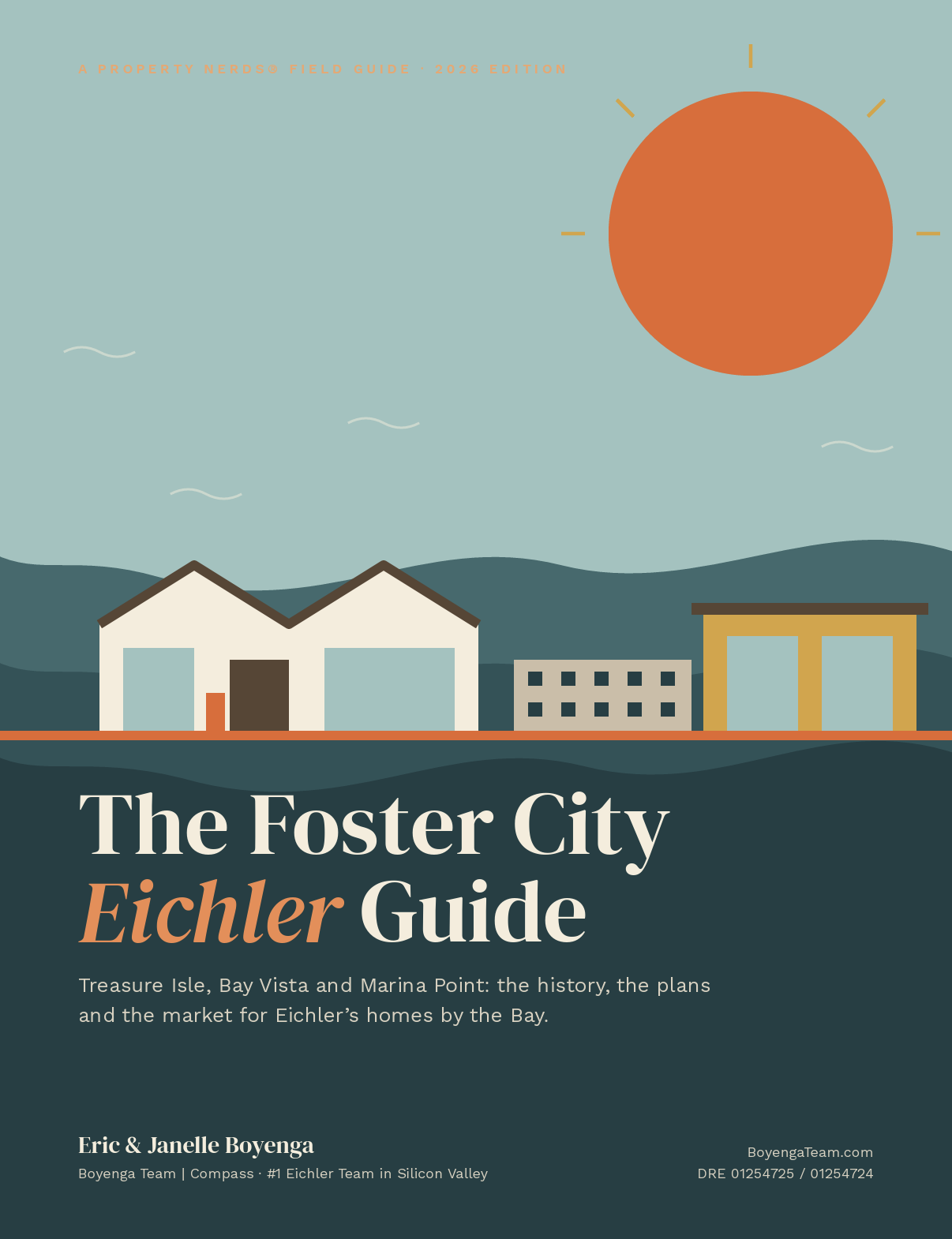
Between 1963 and 1968, Eichler Homes built roughly 200 to 235 houses on Foster City's engineered fill, scattered in clusters across Treasure Isle, Bay Vista and Marina Point. Our City Eichler Guide covers the history, four original plan sheets, the 1968 outrigger-beam homes of Mainsail Court, and what to check before you buy.

Read More
Monte Sereno Eichlers: Sixteen Claude Oakland Gallery Houses on One Cul-de-Sac

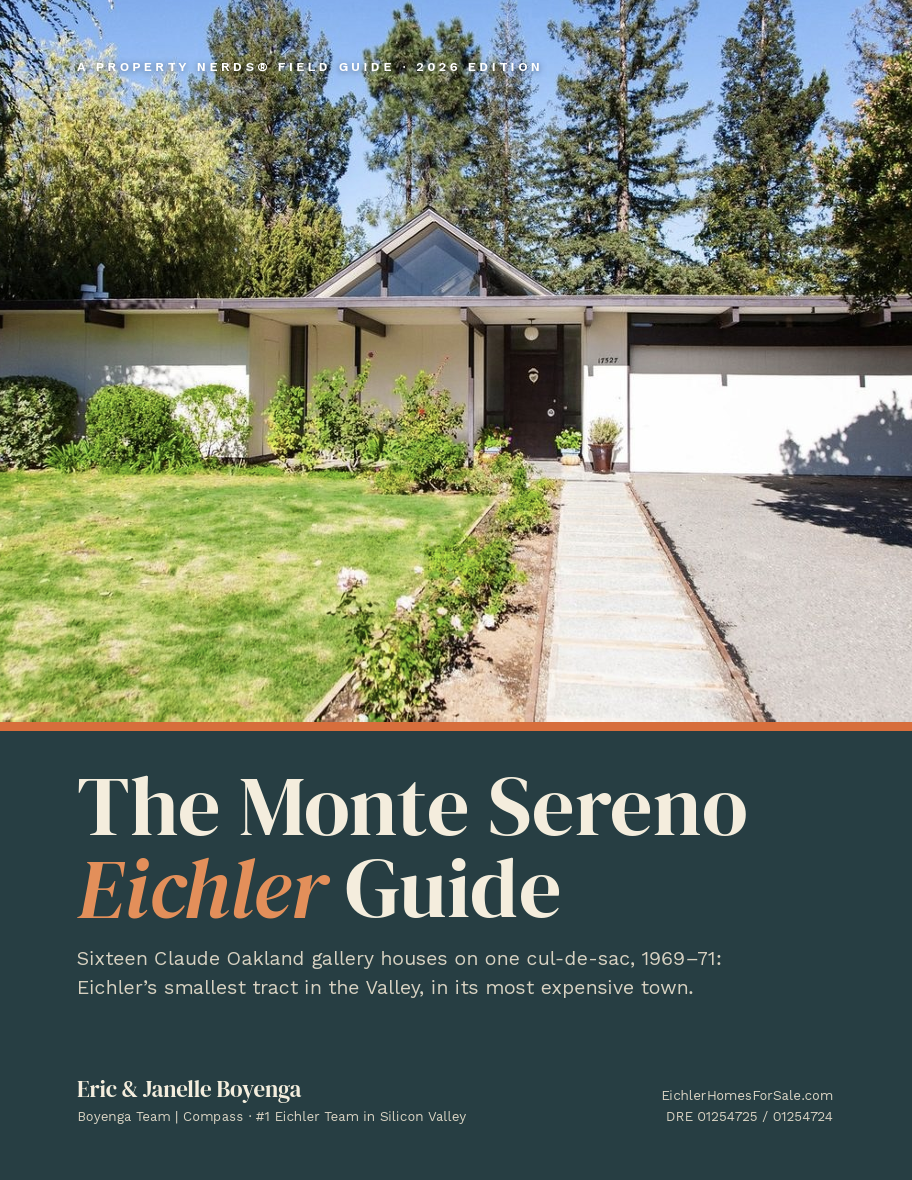
Monte Sereno has exactly sixteen Eichlers, all on Via Sereno, a cul-de-sac Joe Eichler built in 1969–71 to Claude Oakland plans after his company's bankruptcy. Our new City Eichler Guide covers the gallery model, the town around it, the buyer and owner checklist, and every recent sale, including the $4.0 million street record.

Read More
Redwood City Eichlers: 121 Buildings, Ten Butterfly Roofs and the Only Eichler Duplexes

Redwood City has 121 Eichler buildings, all built 1950 to 1956 and all before the atrium: Atherwood, Fairwood, Sequoia Meadow and the Roble Avenue duplexes. Our new City Eichler Guide covers the butterfly roofs, the tracts, our own 1156 Parkwood Way renovation and every recent sale.

Read More
Palo Alto Eichlers: 32 Tracts and 2,700 Homes in the City Eichler Built

Joseph Eichler built roughly 2,700 houses in Palo Alto from 1949 to 1974, across 32 recorded tracts, more than any other city. Our Palo Alto Eichler Guide covers Green Gables, Greer Park, Triple El, Greenmeadow, Fairmeadow and Los Arboles, the Register, overlay and design-guideline rules, and four of our own recent Palo Alto Eichler sales.

Read More
Happy 70th Birthday: Celebrating 70 Years of the Eichler X-100’s Forward-Thinking Design

The Eichler X-100 turns 70 on October 6, celebrating seven decades of forward-thinking design, steel-framed innovation, glass, light, landscape, and California modernist vision. Now returning to market, this one-of-one San Mateo Highlands prototype offers a rare opportunity to become the next steward of Eichler’s legendary “house of the future.”

Read More
The House Where Eichler Began, and the House Where He Dreamed Biggest — and the Silicon Valley Team Trusted with Both

From the Frank Lloyd Wright house that made him a modernist to the steel-framed X-100, this is the full story of Joseph Eichler — told through his own first home in Atherton and his most daring experiment in San Mateo, and the Boyenga Team trusted with both. A data-forward look at how history shapes what an Eichler is worth today.

Read More
The No-Attic Problem: Where Modern Systems Go in a Mid-Century Modern Home

In a conventional house, the attic hides ducts, wiring, exhaust, insulation and decades of technological change. Many Eichlers and related post-and-beam homes remove that buffer: the ceiling is the roof deck, the beams are exposed, the walls are glass and the floor may be a radiant slab. Modernization therefore becomes a routing problem as much as an equipment decision. This Property Nerd field guide introduces the Systems Routing Equation, Eight No-Attic Routing Zones, Pathway Hierarchy, Penetration Budget, Serviceability Radius, Twelve-Pass No-Attic Audit and a 45-point Systems Integration Score. It examines where heat pumps, condensate, ventilation, kitchen and bath exhaust, repiping, electrical feeders, lighting, Wi-Fi, cameras, solar, batteries, EV infrastructure, roof insulation and future technology can travel without sacrificing tongue-and-groove ceilings, fascia lines, original paneling, glass-wall proportions or maintenance access. It also explains what buyers should verify, how sellers can organize a credible systems file and how Compass-powered Boyenga Team workflows turn distributed technical records into a coherent architectural property story.

Read More
The Architecture of Arrival: House Numbers, Mailboxes, Front Doors, Globe Lights, and First Impressions

An Eichler rarely announces its front door with a conventional porch or symmetrical facade. The entrance may sit sideways beneath an overhang, hide beyond a gate or wait across an atrium, which makes small signals unusually important. This Property Nerds® field guide examines how house numbers, mailboxes, door color, Saturn escutcheons, bells, smart locks, globe lights, paving and landscaping work together from curb to threshold. Using the Boyenga Team’s six-stage Arrival Signal Chain, Component Provenance Map and 35-point Curb-to-Threshold Score, readers learn how to improve recognition, privacy, nighttime legibility and first impressions without turning a disciplined modernist facade into a collection of decorative “mid-century” accessories.

Read More
Original Owner Customizations: Why Some “Nonstandard” Eichler Features May Actually Be Period-Correct

An Eichler feature can depart from the familiar model plan and still belong to the home’s earliest history. Original buyers sometimes negotiated doors, windows, room divisions, cabinetry and accessibility changes before completion; other first owners made thoughtful adaptations soon after moving in. This Property Nerds® field guide explains how to distinguish documented builder variants, purchaser-requested customizations, early owner alterations, compatible later work and unsupported imitation. Using the Boyenga Team’s Five-Bucket Origin Map, Evidence Ladder and 35-point Nonstandard Feature Provenance Score, readers learn how to evaluate plans, permits, photographs, oral history, materials and construction sequence—then describe the result accurately without confusing rarity, originality, condition or value.

Read More
Mid-Century Modern Without the Museum Effect: How to Make an Architectural Home Feel Livable

A perfectly restored mid-century modern home can still feel as though no one is allowed to live there. This Property Nerd field guide replaces the museum effect with “occupied authenticity”—a practical system for balancing architectural character with comfort, storage, technology, privacy, children, pets, personal collections and daily mess. Use the Preserve–Adapt–Personalize Map, 24-Hour Friction Audit and 35-point Living Modernism Score to make an Eichler feel both important and genuinely inhabited.

Read More
A Reimagined Fairglen Eichler Where Desert Modernism Meets Classic California Living

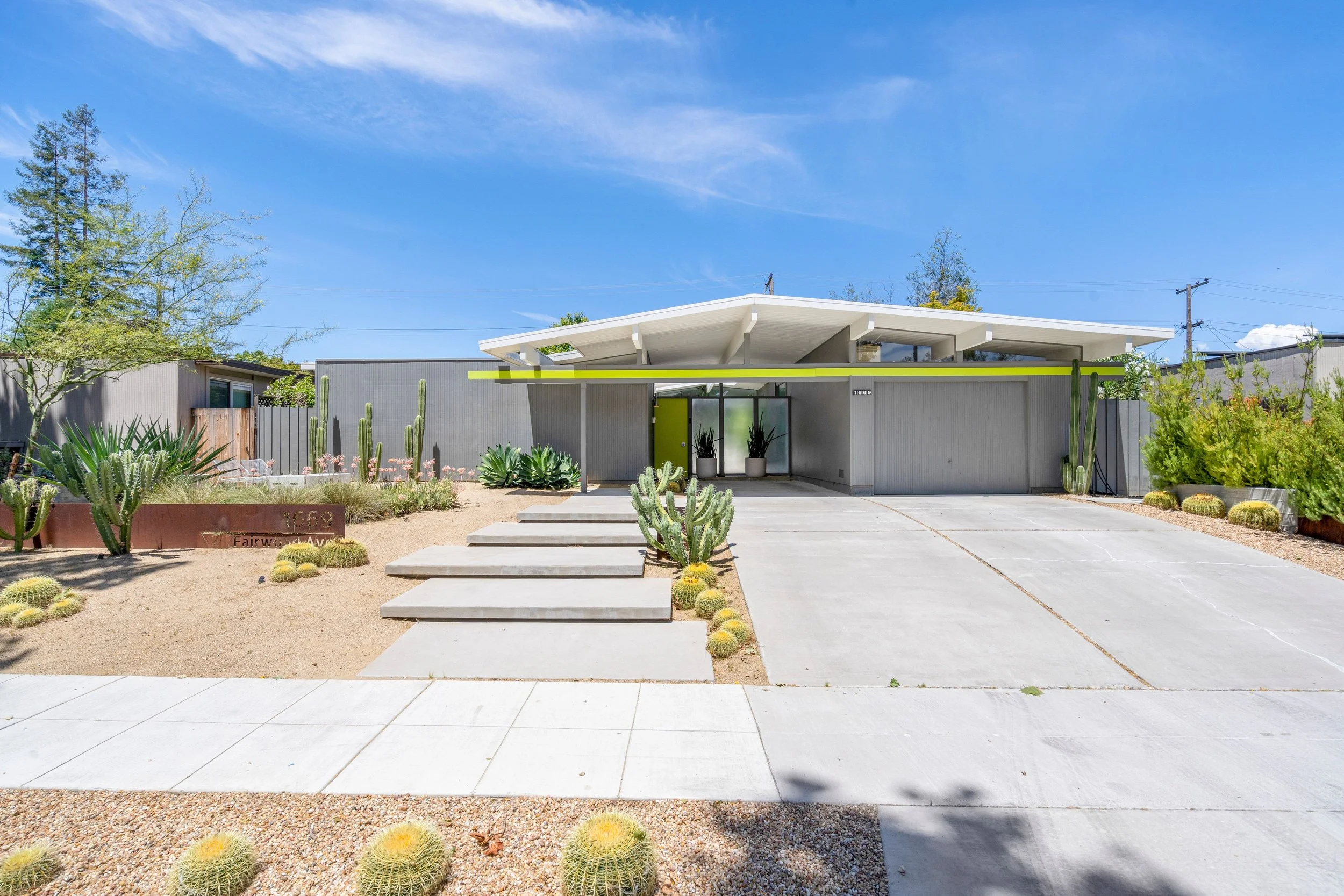
"At 1669 Fairwood Drive, the timeless principles of Eichler design meet contemporary California luxury. From its dramatic desert-modern landscaping and iconic glass-wrapped atrium to its chef's kitchen, spa-inspired interiors, and resort-style backyard complete with an outdoor kitchen and pizza oven, this Fairglen Eichler is a masterclass in how mid-century architecture can evolve without losing its soul."

Read More
The Bin Map Eichler: Trash, Recycling, Compost & Side-Yard Design Without Ruining the Architecture

An Eichler is designed for visual calm. The bin map is how real life stays out of the sightline. Behind every glass wall, atrium, carport, side yard, and private garden is a practical question most buyers do not ask until they live there: where do the trash, recycling, compost, cardboard, pet waste, yard clippings, food scraps, and delivery boxes actually go? This Property Nerd guide explains how Eichler buyers and sellers can manage utility zones, curb appeal, organics, odors, pests, side-yard access, staging, and resale value without letting the bins become the first thing people notice.

Read More
The Bird-Safe Eichler: Glass Walls, Reflections & Wildlife-Friendly Modernism

An Eichler does not just bring the outside in. It reflects the outside back. The same glass walls, atriums, clerestories, sliding doors, and private gardens that make Eichlers feel magical to people can sometimes confuse birds, turning reflections of sky, trees, and greenery into invisible hazards. This Property Nerd guide explores how Eichler buyers, sellers, and owners can create a bird-safer home using reflection mapping, subtle window treatments, smart feeder placement, nighttime lighting strategies, and landscape design — without sacrificing the transparency, architectural calm, and indoor-outdoor living that make Eichlers so special.

Read More
The Backup Power Map Eichler: Solar Batteries, Critical Loads & Mid-Century Resilience

Every Eichler has a power map. Solar panels, batteries, EV chargers, heat pumps, radiant boilers, refrigerators, routers, garage doors, smart locks, lights, and home offices all depend on invisible circuits that matter most when the grid goes dark. A power-ready Eichler is not simply the one with the most equipment — it is the one with the smartest map. This Property Nerd guide explains how buyers and sellers can understand backup power, critical loads, solar batteries, documentation, safety, and resale confidence without compromising mid-century modern design.

Read More
The Eichler X-100 in San Mateo Highlands: Video Sneak Peek + Open Homes

The Eichler X-100 is not just a home in the San Mateo Highlands; it is a rare chance to step inside one of California modernism’s most fascinating experiments. Built as a steel-framed “house of the future,” the X-100 blends glass, garden atriums, exposed structure, indoor-outdoor living, and preserved mid-century character into a residence that still feels radically forward-thinking. Watch the video sneak peek, then experience the architecture in person during the upcoming open homes.

Read More
The Water Map Eichler: Atmospheric Rivers, Atrium Drains & the Mid-Century Science of Staying Dry

Every Eichler has a water map. Rain lands on the flat or low-slope roof, moves toward scuppers and drains, drops into side yards, tests atrium grates, crosses patios, and stops at the most important line in the whole house: the threshold between indoor-outdoor living and water intrusion. In the dry season, an Eichler is architecture. In the rainy season, it becomes a diagram. This Property Nerd guide explains how buyers and sellers can understand flat roofs, atrium drains, slab foundations, patios, landscaping, atmospheric rivers, flood risk, inspections, disclosures, and resale confidence.

Read More
The Secure Drop-Off Eichler: Packages, Smart Locks & Mid-Century Privacy in the Age of Porch Pirates

The modern Eichler front door is no longer just an entrance. It is a logistics hub, privacy filter, security checkpoint, delivery zone, and design moment — all before anyone reaches the atrium. Online shopping has changed how homes function, but Eichlers were built around privacy long before porch pirates existed. This guide explores how Eichler owners can protect packages, manage smart locks, gates, carports, cameras, lighting, and delivery access without turning a beautiful mid-century modern entry into a gadget wall.

Read More
The Hidden Eichler: Storage, Closets & Modern Life in a Minimalist Mid-Century Home

Eichlers were designed for visual calm, but modern life comes with backpacks, bikes, pet gear, laptops, tools, pantry overflow, sports equipment, delivery boxes, and everything else real households need. The secret to a great Eichler is not having less life inside it — it is learning how to hide modern life beautifully. This guide explores closets, garages, carports, kitchens, entry zones, built-ins, radiant-slab considerations, staging, and resale value through a Property Nerd lens: storage should support the architecture, not compete with it.

Read More
The Patina Premium: When Original Eichler Details Add Value — and When “Vintage” Becomes Deferred Maintenance

In an Eichler, not every imperfection is a flaw. Some are the evidence of a home worth preserving. Original wood ceilings, exposed beams, mahogany paneling, glass walls, atriums, globe lights, slab doors, radiant heat, and mature landscaping can all add warmth, authenticity, and value — but only when they are cared for, functional, and honestly documented. This guide explains how Eichler buyers and sellers can tell the difference between valuable patina and costly deferred maintenance, and how the Boyenga Team at Compass helps clients protect the mid-century modern soul of these remarkable homes.

Read More