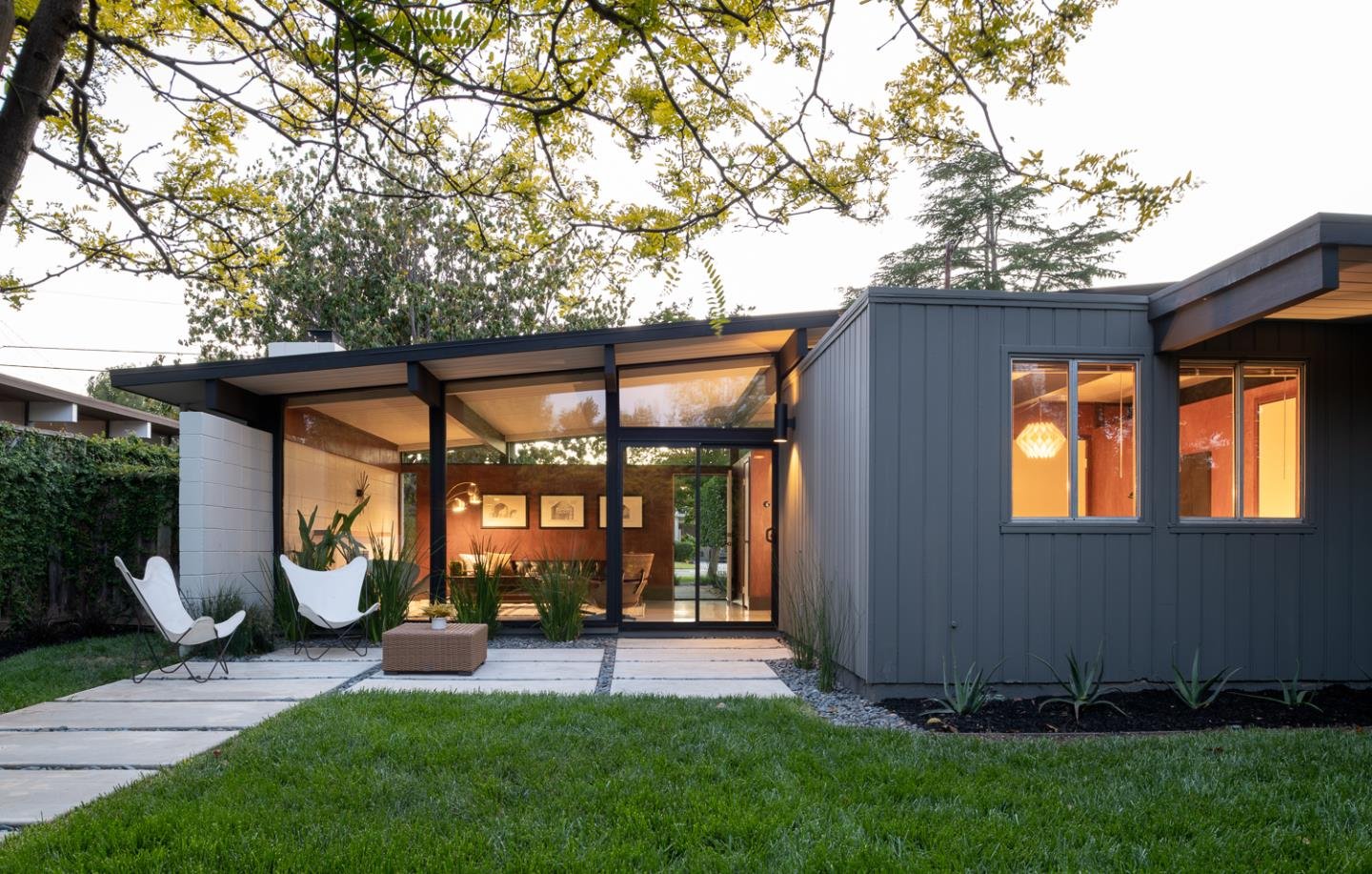
Every Eichler has a water map. Rain lands on the flat or low-slope roof, moves toward scuppers and drains, drops into side yards, tests atrium grates, crosses patios, and stops at the most important line in the whole house: the threshold between indoor-outdoor living and water intrusion. In the dry season, an Eichler is architecture. In the rainy season, it becomes a diagram. This Property Nerd guide explains how buyers and sellers can understand flat roofs, atrium drains, slab foundations, patios, landscaping, atmospheric rivers, flood risk, inspections, disclosures, and resale confidence.
Read MoreIn an Eichler, not every imperfection is a flaw. Some are the evidence of a home worth preserving. Original wood ceilings, exposed beams, mahogany paneling, glass walls, atriums, globe lights, slab doors, radiant heat, and mature landscaping can all add warmth, authenticity, and value — but only when they are cared for, functional, and honestly documented. This guide explains how Eichler buyers and sellers can tell the difference between valuable patina and costly deferred maintenance, and how the Boyenga Team at Compass helps clients protect the mid-century modern soul of these remarkable homes.
Read MoreBuying or selling an Eichler requires a different inspection mindset. These mid-century modern homes are loved for their flat or low-slope roofs, radiant-heated slabs, post-and-beam construction, glass walls, atriums, clerestory windows, and indoor-outdoor flow — but those same features require specialized due diligence. A standard inspection is important, but Eichler buyers and sellers also need to understand roof history, radiant heat condition, drainage, slab issues, termites, electrical upgrades, permits, remodel quality, insurance-sensitive details, and architectural integrity. This guide explains what to inspect, what to document, and how the Boyenga Team at Compass helps clients move through Eichler escrow with clarity and confidence.
Read More