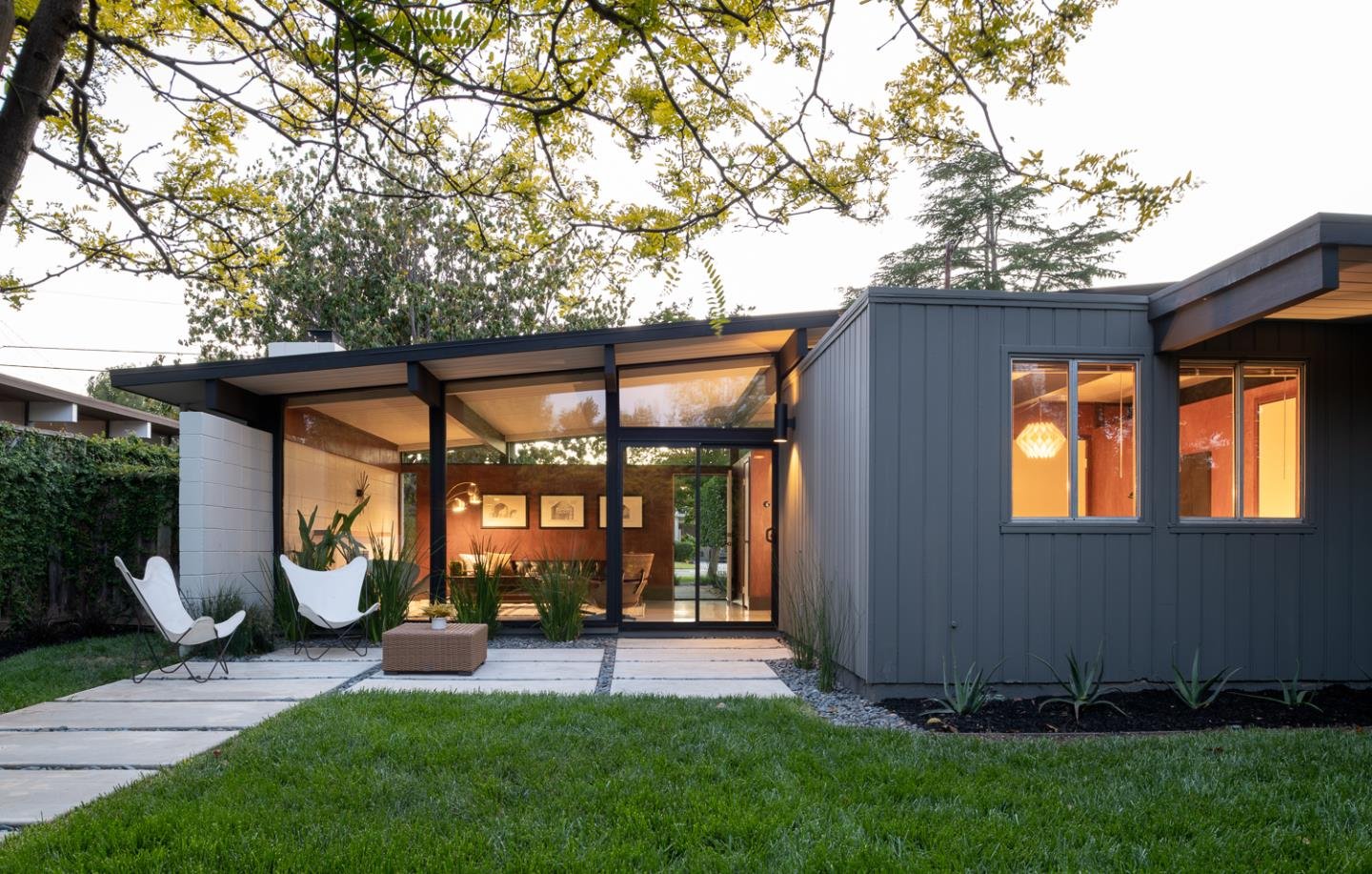
An Eichler kitchen does not just cook dinner. In an open-plan home, it sends air, heat, steam, grease, smell, and particles into the entire architectural experience. The range hood is not just an appliance above the stove — it is the traffic controller for cooking air. This Property Nerd guide explains how Eichler buyers, sellers, and remodelers can read the kitchen exhaust map: where the air goes, whether the hood vents outside, how flat-roof ducting affects remodels, why induction still needs ventilation, and how a thoughtful airflow strategy can protect comfort, staging, indoor air quality, and resale value.
Read MoreAn Eichler may be a house of glass, beams, atriums, and light — but escrow often turns on what the camera sees underground. Sewer laterals, cleanouts, slab plumbing, tree roots, old pipes, local compliance rules, and future remodel plans can all affect buyer confidence and resale value. This Property Nerd guide explains how Eichler buyers and sellers can follow the underground sewer map before a hidden pipe becomes a negotiation surprise.

Read MoreEvery Eichler has a power map. Solar panels, batteries, EV chargers, heat pumps, radiant boilers, refrigerators, routers, garage doors, smart locks, lights, and home offices all depend on invisible circuits that matter most when the grid goes dark. A power-ready Eichler is not simply the one with the most equipment — it is the one with the smartest map. This Property Nerd guide explains how buyers and sellers can understand backup power, critical loads, solar batteries, documentation, safety, and resale confidence without compromising mid-century modern design.
Read MoreEvery Eichler has two floor plans: the one it was born with, and the one time created. Somewhere between the original atrium, the converted garage, the added skylight, the relocated kitchen, the mystery subpanel, and the enclosed patio is the real story of the house. This Property Nerd guide explains how buyers and sellers can read permit history, remodel clues, square footage, disclosures, additions, garage conversions, atrium enclosures, and architectural authenticity before escrow turns curiosity into a negotiation problem.
Read MoreEvery Eichler has a water map. Rain lands on the flat or low-slope roof, moves toward scuppers and drains, drops into side yards, tests atrium grates, crosses patios, and stops at the most important line in the whole house: the threshold between indoor-outdoor living and water intrusion. In the dry season, an Eichler is architecture. In the rainy season, it becomes a diagram. This Property Nerd guide explains how buyers and sellers can understand flat roofs, atrium drains, slab foundations, patios, landscaping, atmospheric rivers, flood risk, inspections, disclosures, and resale confidence.
Read MoreA great Eichler does not just look calm. It sounds calm. These homes are famous for glass walls, atriums, exposed beams, radiant slabs, and open plans, but those same features shape how voices, footsteps, music, Zoom calls, pool pumps, pets, and neighborhood sounds move through the home. This Property Nerd guide explores Eichler acoustics — from home offices and media rooms to bedroom privacy, atrium echoes, rugs, sliders, mechanical noise, and staging — so buyers and sellers can understand the invisible soundscape that affects comfort, value, and daily life.
Read MoreIn an Eichler, the fireplace is not just where the fire goes. It is where the room gathers. A simple mid-century hearth can anchor the living room, balance the glass walls, warm the open floor plan, and create one of the most emotional moments in the home. But in today’s Bay Area, fireplaces also raise practical questions about wood-smoke rules, disclosures, chimney inspections, indoor air quality, gas or electric conversions, earthquake safety, staging, and resale value. This guide explains how Eichler buyers and sellers can understand the fireplace as both an architectural feature and a due-diligence item.
Read MoreIn an Eichler, not every imperfection is a flaw. Some are the evidence of a home worth preserving. Original wood ceilings, exposed beams, mahogany paneling, glass walls, atriums, globe lights, slab doors, radiant heat, and mature landscaping can all add warmth, authenticity, and value — but only when they are cared for, functional, and honestly documented. This guide explains how Eichler buyers and sellers can tell the difference between valuable patina and costly deferred maintenance, and how the Boyenga Team at Compass helps clients protect the mid-century modern soul of these remarkable homes.
Read MoreEichlers were designed for lightness, openness, glass, gardens, and indoor-outdoor living. But in earthquake country, a truly modern Eichler should also be prepared. From slab foundations and post-and-beam construction to water heater bracing, glass walls, remodel permits, earthquake insurance, and interior safety, seismic readiness is now part of smart Eichler ownership. This guide explains how buyers, sellers, and homeowners can think about earthquake resilience without compromising the mid-century modern soul of the home.
Read MoreBuying or selling an Eichler requires a different inspection mindset. These mid-century modern homes are loved for their flat or low-slope roofs, radiant-heated slabs, post-and-beam construction, glass walls, atriums, clerestory windows, and indoor-outdoor flow — but those same features require specialized due diligence. A standard inspection is important, but Eichler buyers and sellers also need to understand roof history, radiant heat condition, drainage, slab issues, termites, electrical upgrades, permits, remodel quality, insurance-sensitive details, and architectural integrity. This guide explains what to inspect, what to document, and how the Boyenga Team at Compass helps clients move through Eichler escrow with clarity and confidence.
Read MoreIn an Eichler, a remodel is not automatically an upgrade. Buyers often value the very details that make these homes different: exposed beams, tongue-and-groove ceilings, radiant-heated slabs, glass walls, atriums, clerestory windows, vertical siding, flat or low-slope rooflines, and seamless indoor-outdoor living. The best Eichler updates improve comfort, function, safety, and marketability while preserving the mid-century modern soul of the home. This guide explains what to restore, what to modernize, what to avoid, and how the Boyenga Team at Compass helps Eichler buyers and sellers make smarter real estate decisions.
Read MoreAdding an ADU to an Eichler is not the same as adding a backyard cottage to an ordinary home. Eichlers were designed around privacy, glass walls, atriums, post-and-beam structure, radiant slabs, low rooflines, and carefully framed indoor-outdoor spaces. A well-designed ADU can add flexibility, rental potential, multigenerational living, guest space, or a work-from-home studio — but a poorly placed one can block views, compromise privacy, overwhelm the lot, or weaken the home’s mid-century modern character. This guide explains how Eichler owners, buyers, and sellers can think about ADUs in a way that protects both function and architecture.
Read MoreElectrifying an Eichler is not like upgrading an ordinary home. These mid-century modern icons were designed around radiant-heated slabs, flat or low-slope roofs, exposed beams, glass walls, atriums, and seamless indoor-outdoor living. The challenge is not simply adding heat pumps, solar panels, batteries, EV chargers, or new electrical systems — it is doing so without compromising the architecture. For Eichler buyers and sellers, smart modernization means improving comfort, efficiency, and long-term value while preserving the clean lines, warmth, and California modern spirit that make Eichlers so desirable.
Read More