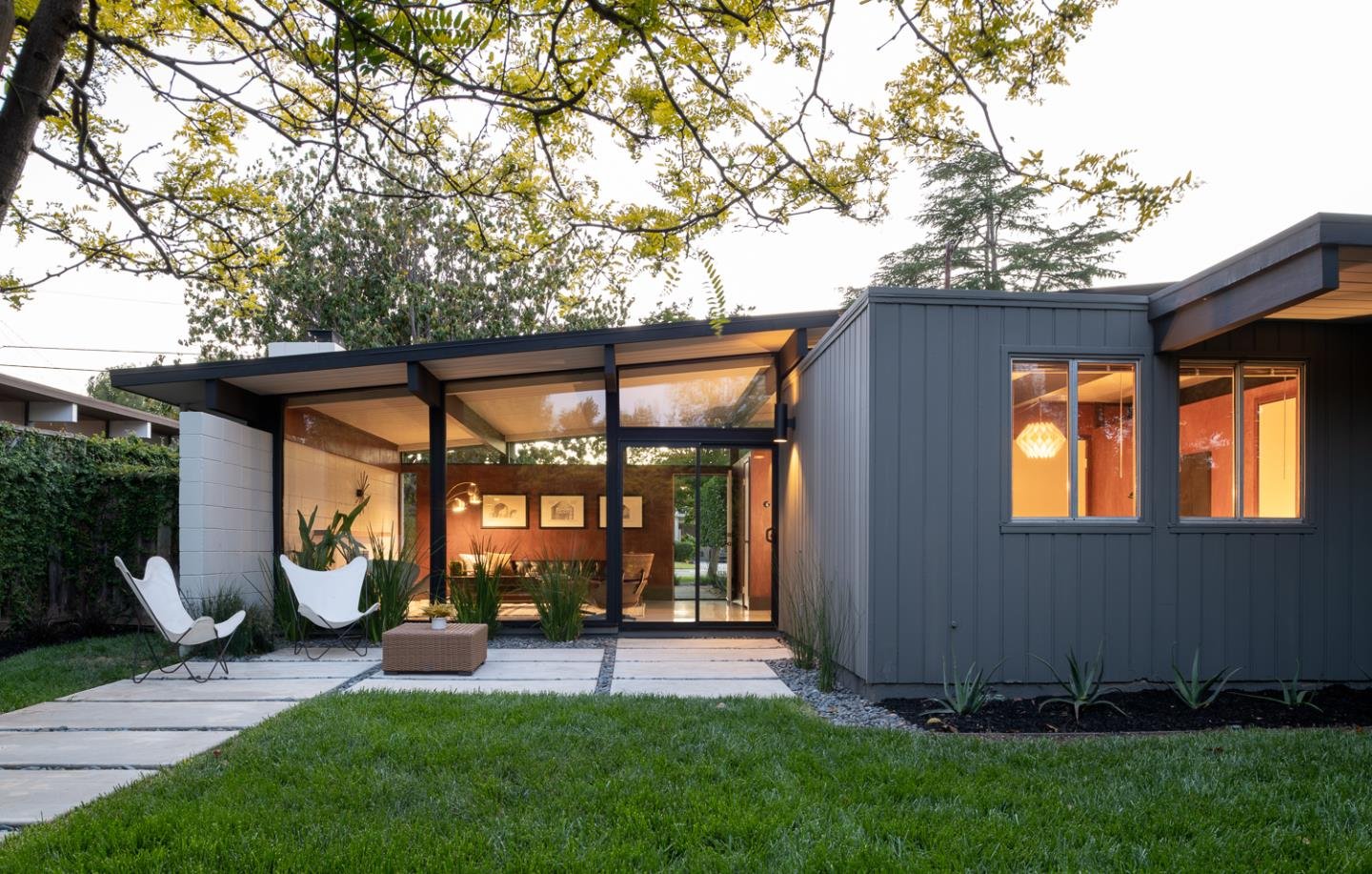
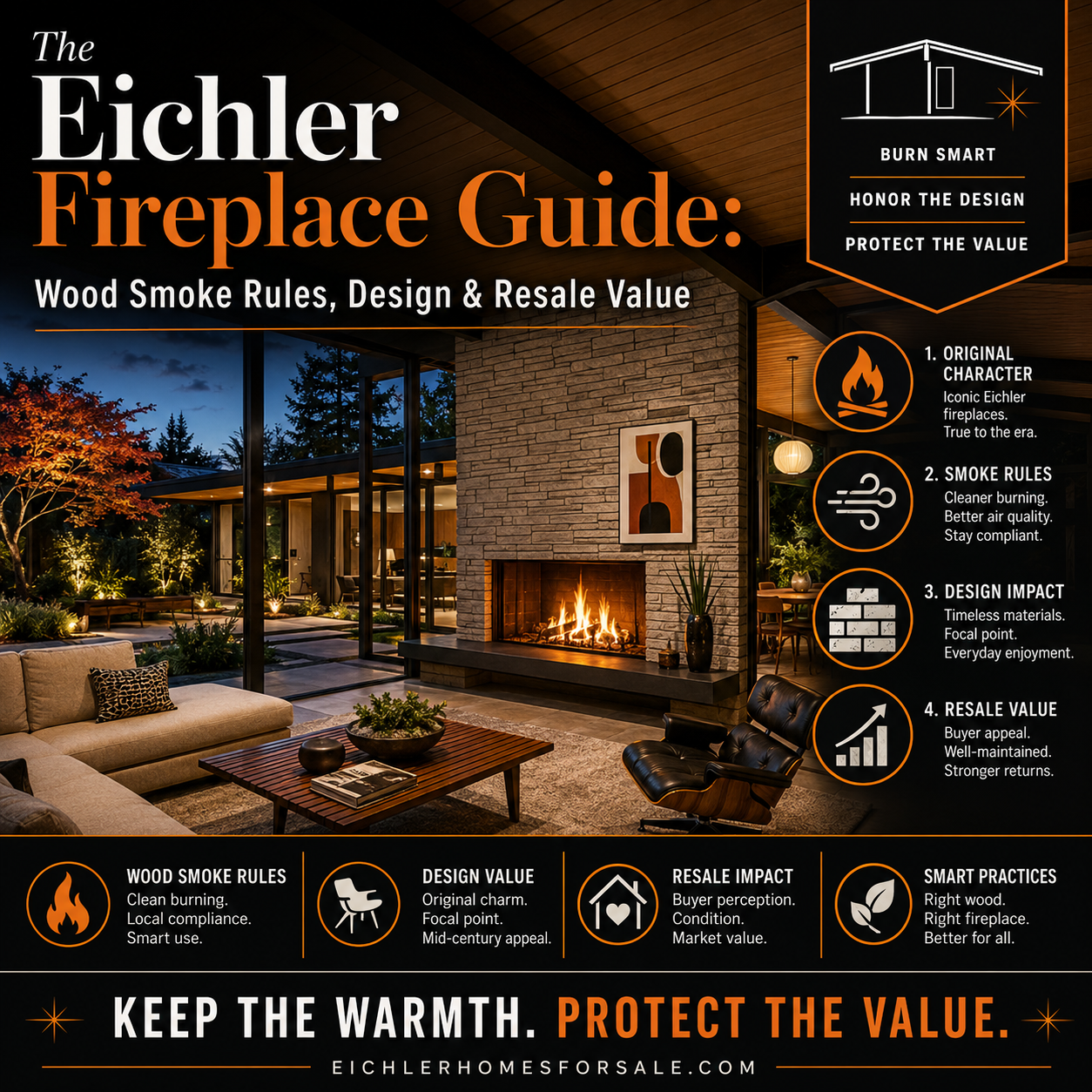
In an Eichler, the fireplace is not just where the fire goes. It is where the room gathers. A simple mid-century hearth can anchor the living room, balance the glass walls, warm the open floor plan, and create one of the most emotional moments in the home. But in today’s Bay Area, fireplaces also raise practical questions about wood-smoke rules, disclosures, chimney inspections, indoor air quality, gas or electric conversions, earthquake safety, staging, and resale value. This guide explains how Eichler buyers and sellers can understand the fireplace as both an architectural feature and a due-diligence item.
Read MoreIn an Eichler, not every imperfection is a flaw. Some are the evidence of a home worth preserving. Original wood ceilings, exposed beams, mahogany paneling, glass walls, atriums, globe lights, slab doors, radiant heat, and mature landscaping can all add warmth, authenticity, and value — but only when they are cared for, functional, and honestly documented. This guide explains how Eichler buyers and sellers can tell the difference between valuable patina and costly deferred maintenance, and how the Boyenga Team at Compass helps clients protect the mid-century modern soul of these remarkable homes.
Read MoreIn an Eichler, a remodel is not automatically an upgrade. Buyers often value the very details that make these homes different: exposed beams, tongue-and-groove ceilings, radiant-heated slabs, glass walls, atriums, clerestory windows, vertical siding, flat or low-slope rooflines, and seamless indoor-outdoor living. The best Eichler updates improve comfort, function, safety, and marketability while preserving the mid-century modern soul of the home. This guide explains what to restore, what to modernize, what to avoid, and how the Boyenga Team at Compass helps Eichler buyers and sellers make smarter real estate decisions.
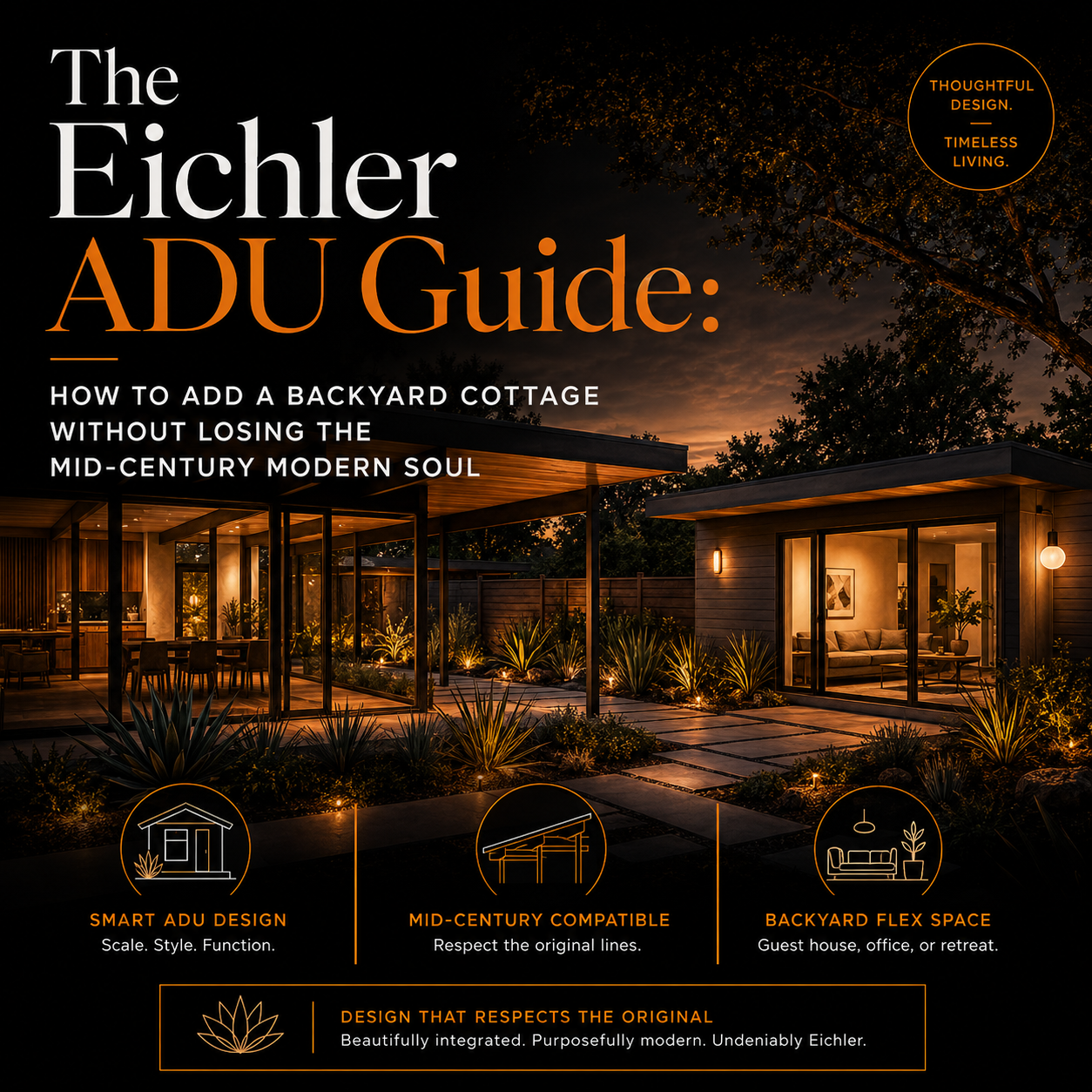
Read MoreAdding an ADU to an Eichler is not the same as adding a backyard cottage to an ordinary home. Eichlers were designed around privacy, glass walls, atriums, post-and-beam structure, radiant slabs, low rooflines, and carefully framed indoor-outdoor spaces. A well-designed ADU can add flexibility, rental potential, multigenerational living, guest space, or a work-from-home studio — but a poorly placed one can block views, compromise privacy, overwhelm the lot, or weaken the home’s mid-century modern character. This guide explains how Eichler owners, buyers, and sellers can think about ADUs in a way that protects both function and architecture.
Read MoreElectrifying an Eichler is not like upgrading an ordinary home. These mid-century modern icons were designed around radiant-heated slabs, flat or low-slope roofs, exposed beams, glass walls, atriums, and seamless indoor-outdoor living. The challenge is not simply adding heat pumps, solar panels, batteries, EV chargers, or new electrical systems — it is doing so without compromising the architecture. For Eichler buyers and sellers, smart modernization means improving comfort, efficiency, and long-term value while preserving the clean lines, warmth, and California modern spirit that make Eichlers so desirable.
Read MoreIn 2026, Eichler home insurance has become one of the most important conversations for Bay Area buyers and sellers. Flat or low-slope roofs, radiant heat, glass walls, mature landscaping, and wildfire exposure can all raise questions during underwriting. That does not mean Eichlers are uninsurable — it means buyers should confirm coverage early, and sellers should prepare roof records, system documentation, drainage details, and home-hardening information before going on the market. The Boyenga Team at Compass helps Eichler buyers and sellers understand these practical details so the architecture remains the star of the story, not a source of escrow surprises.
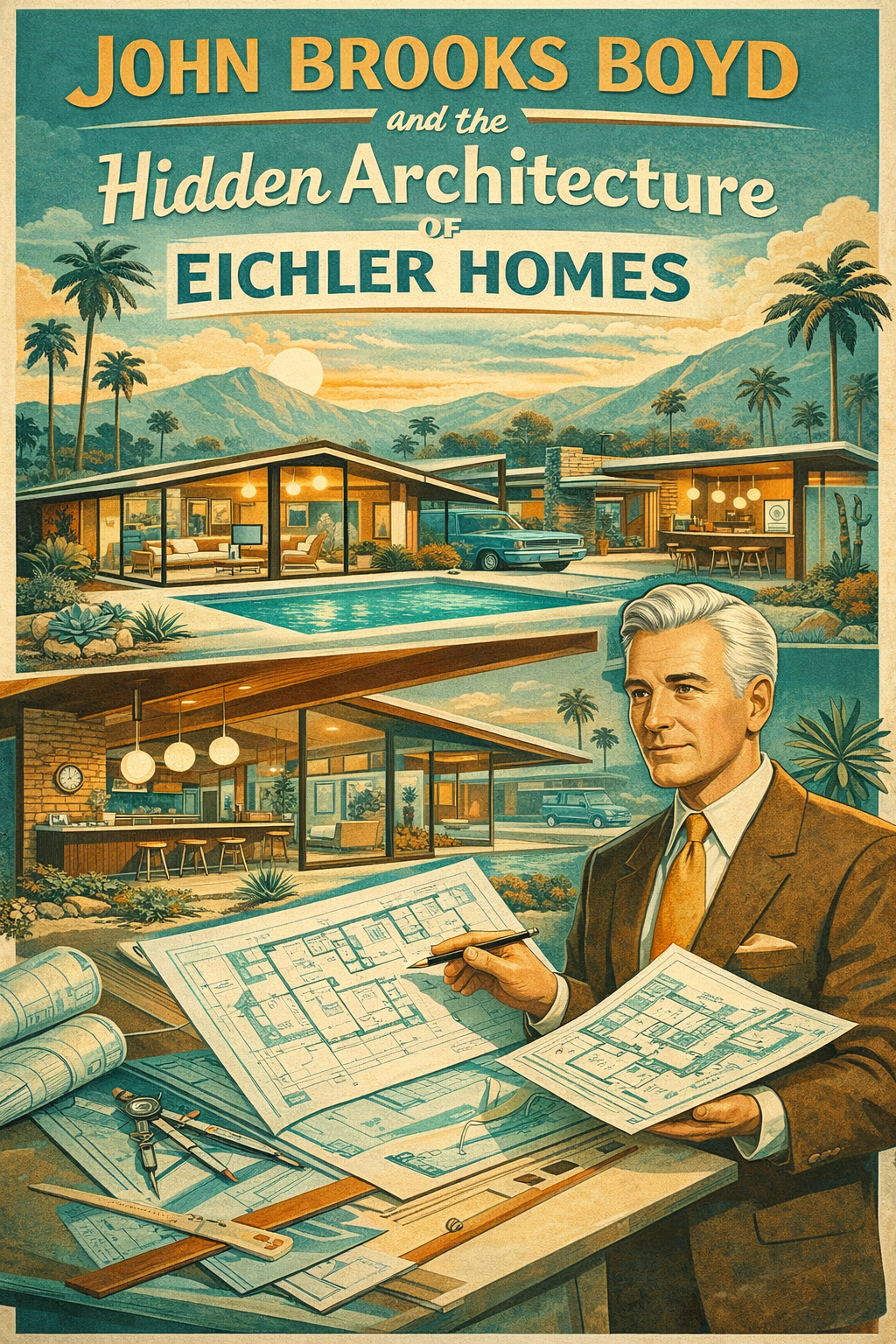
Read MoreJohn Brooks Boyd’s work reveals how modernist systems survive when ideal conditions disappear. Operating quietly within the Eichler organization, Boyd adapted architectural logic to sites, regulations, and environmental constraints without diluting the principles that defined Eichler Homes. His legacy is not one of authorship, but of continuity—demonstrating that the true resilience of mid-century modernism lies not in repetition, but in intelligent adaptation.
Read More“In the Eichler market, value is not the sum of renovation receipts—it is the preservation of experience. Buyers don’t pay for visible luxury; they pay for light, restraint, and architectural integrity.”
Read MoreEichler homes endure as more than mid-century modern icons—they function as cultural archetypes that embody American ideals of openness, optimism, reinvention, and harmony with nature. Through glass walls, atriums, and radical inclusivity, Joseph Eichler created not just houses but a mythic vision of modern living where transparency, community, and progressive design shape daily life. Stepping into an Eichler feels like entering a space where architecture and aspiration meet, offering a timeless, deeply emotional connection that continues to captivate new generations.
Read MoreEichler homes may look simple at first glance, but beneath the clean lines and glass walls lies an entire universe of clever, often overlooked design quirks. From rare triangular clerestory windows and floating rooflines to double A-frame atriums, gallery models, and original hardware that collectors obsess over, each Eichler model contains unique architectural “Easter eggs” that shape light, flow, and lifestyle. Understanding these subtleties isn’t just fascinating—it’s essential for buyers, sellers, and mid-century modern enthusiasts who want to evaluate authenticity, preserve architectural integrity, and maximize long-term property value.
Read MoreEichler homes were built not just by celebrated architects, but by Japanese-American craftsmen rising from internment, European modernist émigrés escaping war, and immigrant laborers whose skill and resilience shaped California’s most iconic mid-century neighborhoods. Behind every glass wall and post-and-beam roof is a human story of hope, diversity, and reinvention.
Read More“Eichler homes have evolved from mid-century modern experiments to the unofficial architecture of Silicon Valley’s creative class. With their glass walls, open plans, and indoor–outdoor flow, they embody the same spirit of innovation, inclusivity, and forward-thinking design that defines the region’s tech culture. Today’s engineers, founders, and creatives choose Eichlers not just as homes, but as symbols of authenticity, originality, and the California modern lifestyle.”
Read MoreSpotting a true Eichler is an art form. From post-and-beam construction to iconic atriums, authentic Eichler homes reveal their lineage through unmistakable architectural signatures. This guide breaks down the exact details that separate genuine Eichlers from lookalikes — helping buyers, sellers, and mid-century fans decode Silicon Valley’s most beloved modern homes with confidence.
Read MoreEichler homes require expert care. From flat roofs to glass walls, discover Bay Area architects, remodelers, and contractors who specialize in Eichler-friendly renovations — and how the Boyenga Team connects clients with the best Eichler resources.
Read MoreSunnyvale holds one of the nation’s richest collections of Mid-Century Modern homes, with ~1,100 Eichlers that chart the full evolution of California Modern—from early Sunnyvale Manor to late, dramatic Primewood models. Today, these design icons face a classic Silicon Valley tension: land values that reward teardowns vs. the cultural and architectural value that drives the “Eichler premium.” Sunnyvale’s response blends policy and grassroots action—city Eichler Design Guidelines and resident-driven Single-Story Overlays—to protect low-slung streetscapes, privacy, and indoor-outdoor living. The path forward isn’t stasis, but sensitive renovation: upgrading systems, glazing, and layouts while honoring post-and-beam bones, atriums, and tongue-and-groove ceilings. Sunnyvale’s story is a national model for balancing preservation, market forces, and community identity in the tech age.
Read MoreTransforming your Silicon Valley Eichler into a short-term rental means more than just furniture and photos—it’s about preserving mid-century soul while embracing modern hospitality. This guide walks you through design-savvy staging, Eichler-friendly upgrades, and hosting tips that attract the right guests without compromising architectural integrity.
Read MoreNavigating HOA rules in Silicon Valley’s Eichler neighborhoods can be complex—but essential for preserving architectural integrity. From Palo Alto’s single-story overlays to Cupertino’s Eichler zoning, this guide breaks down which tracts have design protections, architectural review boards, or historic designations that impact your remodel or resale. Whether you're a buyer or long-time owner, understanding your neighborhood’s rules is key to honoring the mid-century vision—and protecting your investment.
Read MoreIn Menlo Park’s 94025 ZIP code, a handful of rare Eichler enclaves showcase the contrast between post-and-beam originals and multi-million-dollar luxury remodels. From the low-key charm of Flood Park Triangle to the architectural prestige of Fairmeadow, discover how modern buyers and preservationists navigate the balance between mid-century modern integrity and new construction ambition
Read MoreEichler homes aren’t just places to live—they’re sanctuaries, design statements, and emotional anchors. With radiant warmth, glass walls that flood interiors with light, and vibrant community ties, it’s no wonder that owners stay for decades. Once you live in an Eichler, everything else feels like a compromise.
Read More“From the fog-kissed atriums of Marin to the sun-drenched courtyards of Palm Springs, California’s Eichler neighborhoods tell the story of mid-century modern design unlike any other. This statewide photo-driven guide explores original and inspired Eichler communities—each a timeless expression of architecture, community, and innovation.”
Read More