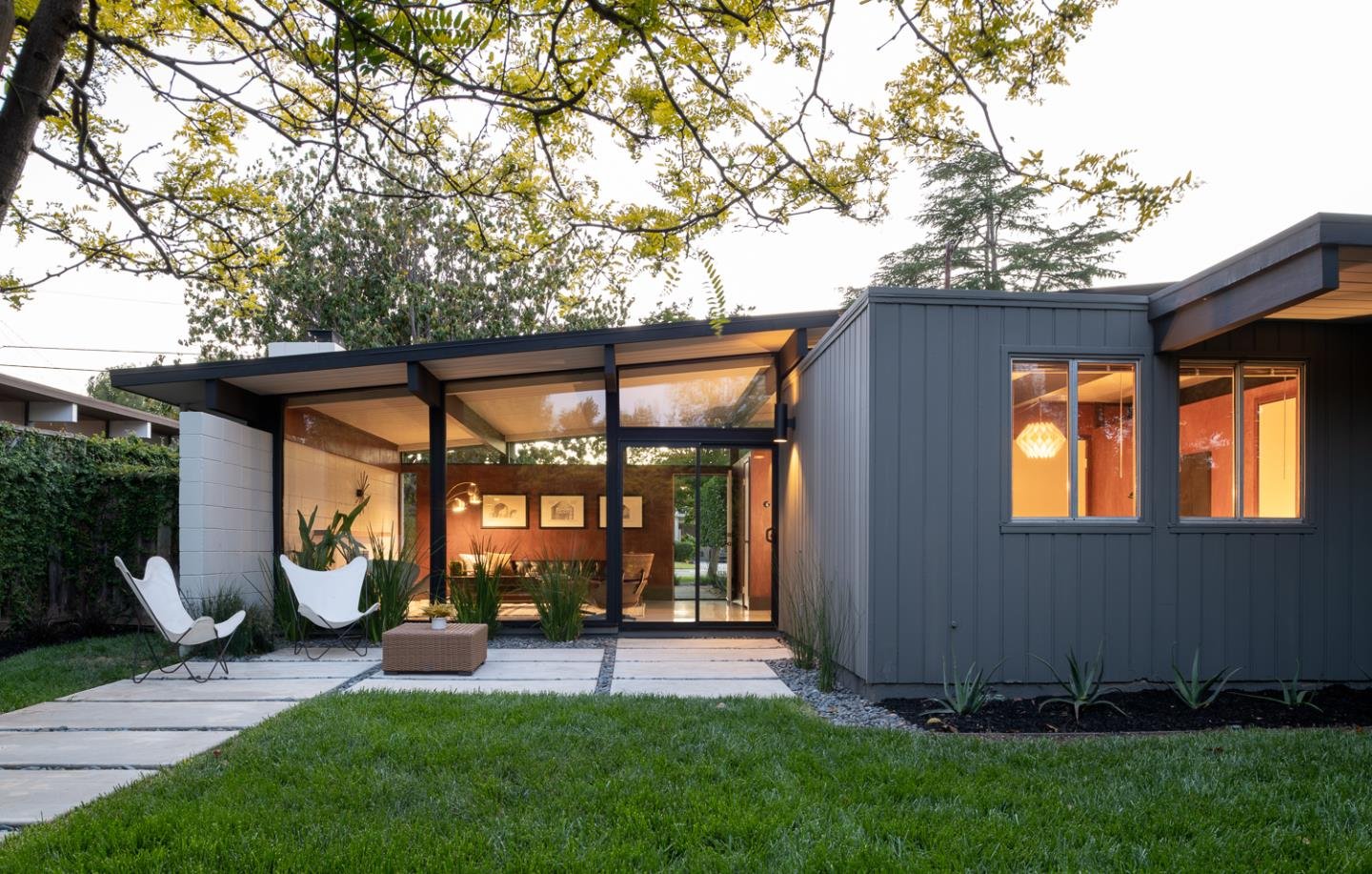
Every Eichler has a water map. Rain lands on the flat or low-slope roof, moves toward scuppers and drains, drops into side yards, tests atrium grates, crosses patios, and stops at the most important line in the whole house: the threshold between indoor-outdoor living and water intrusion. In the dry season, an Eichler is architecture. In the rainy season, it becomes a diagram. This Property Nerd guide explains how buyers and sellers can understand flat roofs, atrium drains, slab foundations, patios, landscaping, atmospheric rivers, flood risk, inspections, disclosures, and resale confidence.
Read MoreAn Eichler does not need a dedicated gym to become a wellness home. The atrium, radiant slab, glass walls, private garden, garage, and open floor plan are already part of the experience. From yoga and Pilates to strength training, recovery spaces, garage gyms, meditation corners, and indoor-outdoor movement, Eichlers offer a rare architectural foundation for healthier daily living. The key is creating wellness spaces that feel calm, flexible, and design-sensitive — not cluttered, commercial, or disconnected from the mid-century modern soul of the home.
Read MoreIn a great Eichler, the pool is not behind the house. It is part of the house. Water reflects the glass, sky, beams, and California modern lifestyle that buyers come looking for. But an Eichler pool is also a serious ownership feature: safety barriers, inspections, equipment, heating, resurfacing, permits, insurance, maintenance, staging, and resale value all matter. This guide explains how buyers and sellers can understand the Eichler pool effect — where architecture, outdoor living, and due diligence meet.
Read MoreEichlers were designed for lightness, openness, glass, gardens, and indoor-outdoor living. But in earthquake country, a truly modern Eichler should also be prepared. From slab foundations and post-and-beam construction to water heater bracing, glass walls, remodel permits, earthquake insurance, and interior safety, seismic readiness is now part of smart Eichler ownership. This guide explains how buyers, sellers, and homeowners can think about earthquake resilience without compromising the mid-century modern soul of the home.
Read MoreBuying or selling an Eichler requires a different inspection mindset. These mid-century modern homes are loved for their flat or low-slope roofs, radiant-heated slabs, post-and-beam construction, glass walls, atriums, clerestory windows, and indoor-outdoor flow — but those same features require specialized due diligence. A standard inspection is important, but Eichler buyers and sellers also need to understand roof history, radiant heat condition, drainage, slab issues, termites, electrical upgrades, permits, remodel quality, insurance-sensitive details, and architectural integrity. This guide explains what to inspect, what to document, and how the Boyenga Team at Compass helps clients move through Eichler escrow with clarity and confidence.
Read MoreIn an Eichler, a remodel is not automatically an upgrade. Buyers often value the very details that make these homes different: exposed beams, tongue-and-groove ceilings, radiant-heated slabs, glass walls, atriums, clerestory windows, vertical siding, flat or low-slope rooflines, and seamless indoor-outdoor living. The best Eichler updates improve comfort, function, safety, and marketability while preserving the mid-century modern soul of the home. This guide explains what to restore, what to modernize, what to avoid, and how the Boyenga Team at Compass helps Eichler buyers and sellers make smarter real estate decisions.
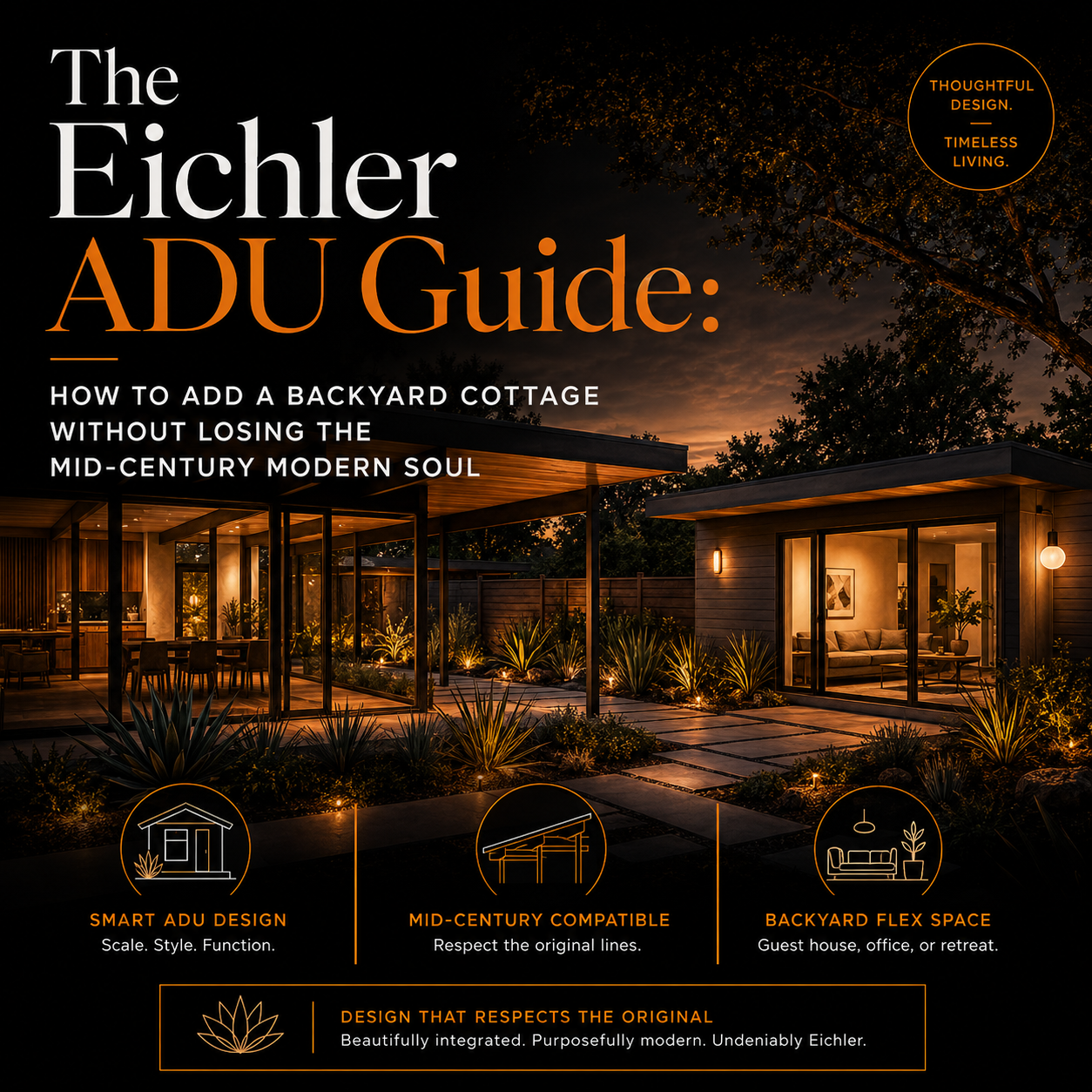
Read MoreAdding an ADU to an Eichler is not the same as adding a backyard cottage to an ordinary home. Eichlers were designed around privacy, glass walls, atriums, post-and-beam structure, radiant slabs, low rooflines, and carefully framed indoor-outdoor spaces. A well-designed ADU can add flexibility, rental potential, multigenerational living, guest space, or a work-from-home studio — but a poorly placed one can block views, compromise privacy, overwhelm the lot, or weaken the home’s mid-century modern character. This guide explains how Eichler owners, buyers, and sellers can think about ADUs in a way that protects both function and architecture.
Read MoreElectrifying an Eichler is not like upgrading an ordinary home. These mid-century modern icons were designed around radiant-heated slabs, flat or low-slope roofs, exposed beams, glass walls, atriums, and seamless indoor-outdoor living. The challenge is not simply adding heat pumps, solar panels, batteries, EV chargers, or new electrical systems — it is doing so without compromising the architecture. For Eichler buyers and sellers, smart modernization means improving comfort, efficiency, and long-term value while preserving the clean lines, warmth, and California modern spirit that make Eichlers so desirable.
Read More“Eichler’s atriums weren’t just architectural statements—they were Cold War sanctuaries. In an era marked by nuclear anxiety and postwar optimism, Joseph Eichler offered glass-walled openness buffered by protective privacy. His homes married efficient design with democratic ideals, creating modernist havens that reflected both the fears and freedoms of mid-century America.”
Read MoreBuying an Eichler isn’t just a real estate transaction—it’s a deep dive into architecture, engineering, and history. From radiant heat to window authenticity, this comprehensive guide unpacks the 10 essential questions every buyer should ask before making an offer. Learn how to spot thoughtful renovations, protect design integrity, and avoid costly surprises with insights only true Property Nerds (and Eichler Experts) understand.
Read MoreConcrete is the unsung hero of every Eichler home—forming the foundation underfoot, flowing seamlessly into patios, and shaping the modernist rhythm of sidewalks, slabs, and aggregate entries. It’s not just structural; it’s a design statement that grounds the home in California’s indoor-outdoor lifestyle.
Read MoreExplore why Joseph Eichler’s mid-century modern homes were built without baseboards – and how this intentional detail reinforces modernist design values. Discover how the absence of baseboards in Eichler homes creates floating wall planes, seamless indoor-outdoor transitions, and an honest celebration of materials that together define the iconic Eichler aesthetic.
Read More