
Fairgrove Eichler Homes in Cupertino
Architecture, ownership and your next move.
Find an Eichler → Get your home’s value →
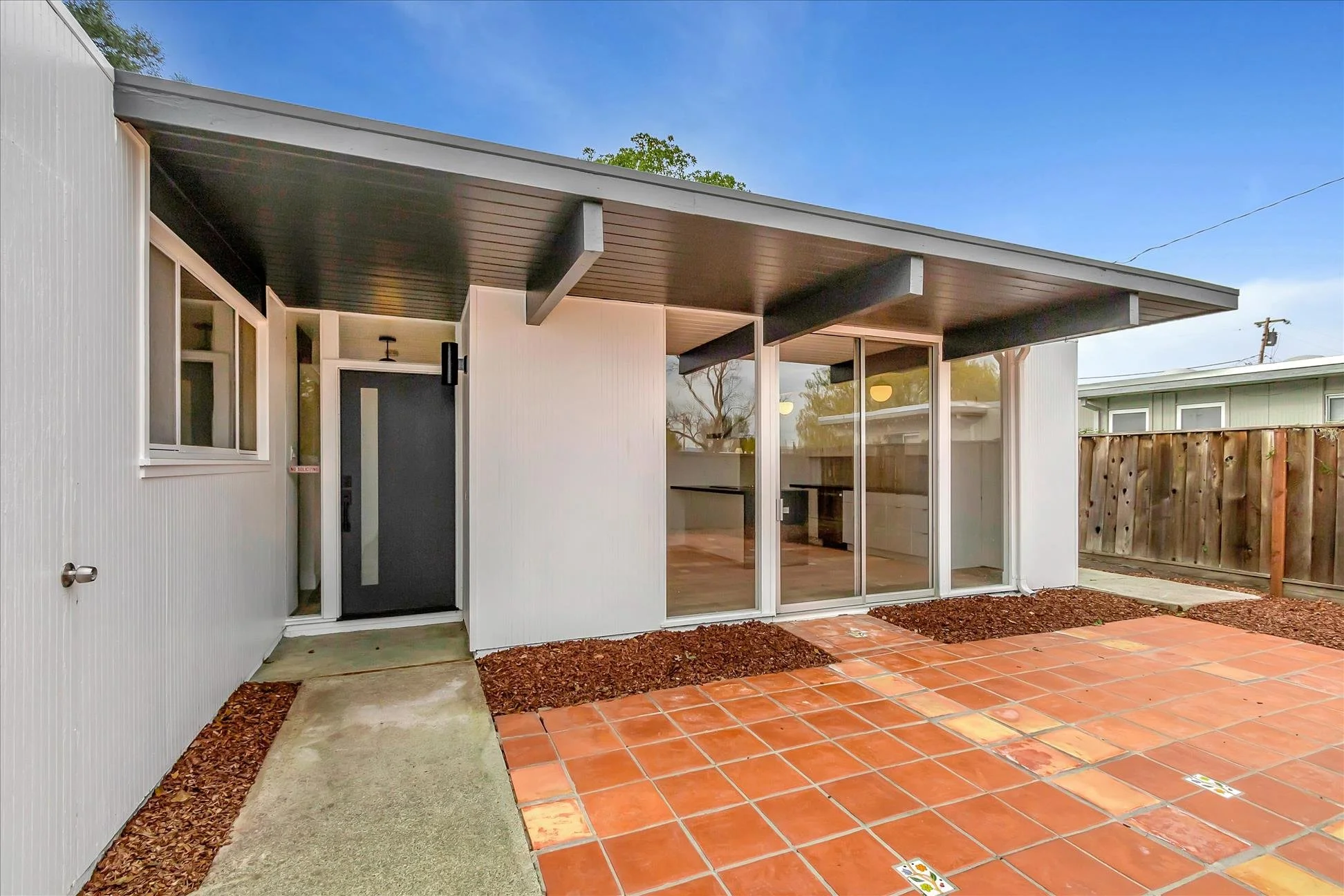
Photo below: 943 Brookgrove Lane, Fairgrove, Cupertino 95014. Original Boyenga property photograph from the Drive archive; historical presentation, not current availability.
CUPERTINO / A PRACTICAL FAIRGROVE FIELD GUIDE
A neighborhood worth understanding before you choose a home
Fairgrove offers a particularly useful way into Eichler ownership: you can explore the architecture and consult a city-published design resource for the neighborhood. Use both. The streets help you notice the relationship between a house, its outdoor spaces and its neighbors; the documents help you ask more precise questions about its history and your future plans.
Start with Cupertino’s available-home search, then use this guide to research any Fairgrove address on your shortlist. Citywide results are not a Fairgrove-only inventory, and homes described in a neighborhood guide are not necessarily for sale.
Where is Fairgrove?
Cupertino’s Eichler Design Handbook, dated January 16, 2001, describes Fairgrove between Phil Lane, Tantau Avenue, Bollinger Road and Miller Avenue. It documents a group of 220 Eichler homes built in the early 1960s. Treat that figure as the handbook’s historical description, not a current audited count or an inventory total.
Use an exact address when investigating a property. A familiar neighborhood name does not establish its parcel boundaries, present zoning, school assignment or the scope of any previous approvals. Keep the source and date beside every piece of information you collect.
Read the handbook in two parts
The 2001 handbook separates voluntary exterior design guidance from its discussion of R1e zoning requirements. Its design topics include rooflines, building form, glazing, materials, colors and streetscape. That distinction matters: a design recommendation and an applicable development requirement are different kinds of information.
Use the handbook to prepare a conversation, then confirm current requirements for your address and proposed work with Cupertino Planning and Building staff. Do not use this older document, a neighbor’s project or a listing description as a present-day approval determination. Keep any current guidance you receive with the rest of your property records.
The Fairgrove observation walk
Before comparing finishes, look at how the house meets its surroundings. From public areas, observe roof shapes, the rhythm of solid walls and glass, entry paths and the transition into the garden. Stay on public routes unless invited onto a property, and ask before photographing private spaces during a showing.
At the home itself, make three notes: a feature you want to preserve, a daily-life need you want the plan to meet, and a question that needs evidence. For example: “Keep the view from the living area; find room for two desks; establish whether the enclosed space appears in the available plans.” This is a hypothetical prompt, not a description of a particular Fairgrove house.
Look beyond a model name. A roof profile or letter used in a plan archive does not establish the exact original model or present configuration of a house. Compare address-specific records with what exists today using our floor-plan comparison worksheet.
A useful home file has six parts
Identity: Address, parcel reference when available, claimed builder or model, and the source for that attribution.
Original context: Historical photographs, drawings or sales material you have permission to use, clearly labeled by source.
Changes: A dated list of additions, enclosed areas, replaced components and other known alterations.
Supporting records: Available plans, permits, inspection documents, invoices and service records, organized by project.
Present observations: Notes from showings or ownership, kept separate from professional findings.
Open questions: What remains unclear, who can address it and what information they need.
A missing document is a question to investigate. It does not by itself prove that work was unapproved or that everything is in order. Ask the relevant source about the extent of its records before drawing a conclusion.
Your Fairgrove project brief
Before asking for a design or price, describe the problem you want to solve. A clear brief can keep several conversations focused on the same goal. Copy these prompts into a document and bring it to the appropriate design, construction or City professional.
01 / The need
What activity is difficult today? Where does it happen? Who uses the space? Write a concrete observation, such as “the work area has glare during afternoon calls,” instead of starting with a predetermined construction solution.
02 / What matters architecturally
Which views, materials, proportions or connections to outdoor space do you value? Attach your own labeled photographs and describe why each feature matters. This gives a professional something more useful than a general request to “keep it Eichler.”
03 / What is known
List the drawings and records you have, with dates. Identify anything that describes a different model or predates an alteration. Include current measurements only with their source; avoid treating an archive image as a measured drawing of your home.
04 / What must be checked
Separate design feasibility, condition, construction scope and approval questions. Assign each to the appropriate professional. If your preferred outcome depends on moving a wall, altering the roof or enclosing outdoor space, make that dependency explicit before relying on a rough estimate.
05 / How you will compare proposals
Ask each proposal to identify included work, exclusions, assumptions, responsibilities and the next decision needed. Keep your priorities visible. A lower headline price is not a like-for-like comparison if two proposals describe different work.
Buying: compare the home with your real routine
Bring the same questions to each showing. Where would you work, eat, store everyday items and relax outside? Note the time of day and the conditions of the visit so that light and sound observations have context. The Eichler Showing Notebook gives you a repeatable structure, and the Eichler Decision Desk lets you organize three homes side by side.
For location needs, test your own routes at relevant times and verify school assignment and enrollment directly with the district for the address and school year. A neighborhood guide cannot promise your commute or access to a particular school.
Selling: explain what makes your home understandable
Help a buyer distinguish original features, documented changes and open questions. Gather the records before planning discretionary work. Our preserve, repair or discuss worksheet provides a starting sequence for a preparation conversation.
For pricing, request an address-specific Eichler value review. Ask which completed sales are relevant and how condition, layout, site and timing affect the comparison. Architectural character deserves explanation; this guide does not assign it a fixed price premium.
Fairgrove questions, answered
Does the handbook approve a renovation?
No. It is a dated City resource to read alongside current, address-specific guidance. Confirm the process and requirements for your proposed scope directly with the City.
Can I identify a floor plan by its roof?
A visible feature can suggest a research question. Confirm model attribution through suitable records and compare the historic drawing with the present home.
Are all results in the Cupertino search in Fairgrove?
No. Check each result’s address and current listing details. The search is labeled citywide so you can distinguish broader availability from tract information.
What should a new owner organize first?
Start with the records received at purchase, equipment information and a dated question list. Our Eichler house-book guide turns those materials into a practical reference.
Make your next Fairgrove decision a clearer one
Talk with Eric & Janelle Boyenga about Fairgrove. Tell us whether you are buying, selling or organizing questions about a home you own. Bring your shortlist or project brief, and we can help focus the next real-estate conversation.
Learn more about Fairgrove and the other Eichler tracts in Cupertino, CA.

Want more information about South Bay Eichler Tracts?
Dive into the world of Eichler Homes with The Boyenga Team. Contact us to discover your dream mid-century modern home today! Your Eichler journey starts here.
Contact us Now!

Your next move starts here
Talk with Eric & Janelle Boyenga about buying or selling a Fairgrove Eichler.
408-506-3942
Eichlers@Boyenga.com
Schedule your Eichler consultation →
Share your address or search priorities and your preferred timing in the form below.