
The Atrium Light Diary: Read an Eichler Across a Day
An atrium photograph captures one arrangement of light. Living with an atrium means watching that arrangement move. The seat that looks perfect during a showing may become a very different place for a laptop, a conversation, or a late-afternoon meal.
The Department of Energy’s passive solar guide explains that orientation, layout, materials, and landscaping all affect how a house uses sunlight. That is a design principle, not evidence that every glass-rich Eichler performs as a passive solar home. The useful next step is observation at the actual property.
Choose three moments, not three assumptions
With permission, observe the space in the morning, around midday, and later in the afternoon. If repeat access is not possible, ask for dated photographs from the same positions and treat them as limited evidence. Record the date, weather, and approximate time. A cloudy November visit cannot stand in for a clear summer afternoon.
Use the same three viewpoints: the main seat, the kitchen connection, and the route to the bedroom wing. Mark the direction you face on a sketch. You are building a repeatable diary, not a performance certificate.
Record what you would actually do
At each viewpoint, note whether direct sun reaches the seat or work surface, whether glare affects a screen, and whether you would want shade. Separate the observation from the preference. “Sun reached this chair” is different from “I would not work here at this hour.”
If you record temperature, keep the instrument location and indoor conditions consistent and note whether heating or cooling is operating. A casual reading cannot establish the home’s energy performance, but an accurately described observation can help frame a professional assessment.
Look at the edges of the outdoor room
Notice how the roof edge, planting, doors, and adjacent glass shape the space. Photograph the shadow boundary without assuming it will fall there in another season. Ask which shade elements are fixed and which can change. A proposed screen, canopy, or planting scheme needs its own review for fit, maintenance, and any applicable approvals.
The goal is not to make every corner behave the same way. An atrium can offer different places for different moments. That variety becomes useful when you understand it rather than infer it from a single polished photograph.
Keep the diary with the plan
Pair the notes with a current floor plan and identify unresolved questions. This makes a conversation with a designer or energy professional much more concrete than asking whether the house gets good light.
For a showing, email Eichlers@Boyenga.com with the address and the activities you hope to accommodate. Eric and Janelle can help you prepare a light-and-layout brief that starts with the home, not a generic label.
Sources and further reading
U.S. Department of Energy: passive solar design — checked 2026-11-24
Explore the Field Guide · Watch Eichler tours
Eric & Janelle Boyenga | Compass
DRE 01254724 / 01254725 · Equal Housing Opportunity
Eichlers@Boyenga.com
How we research Eichlers · Read archive photos · Compare two homes · Find official records
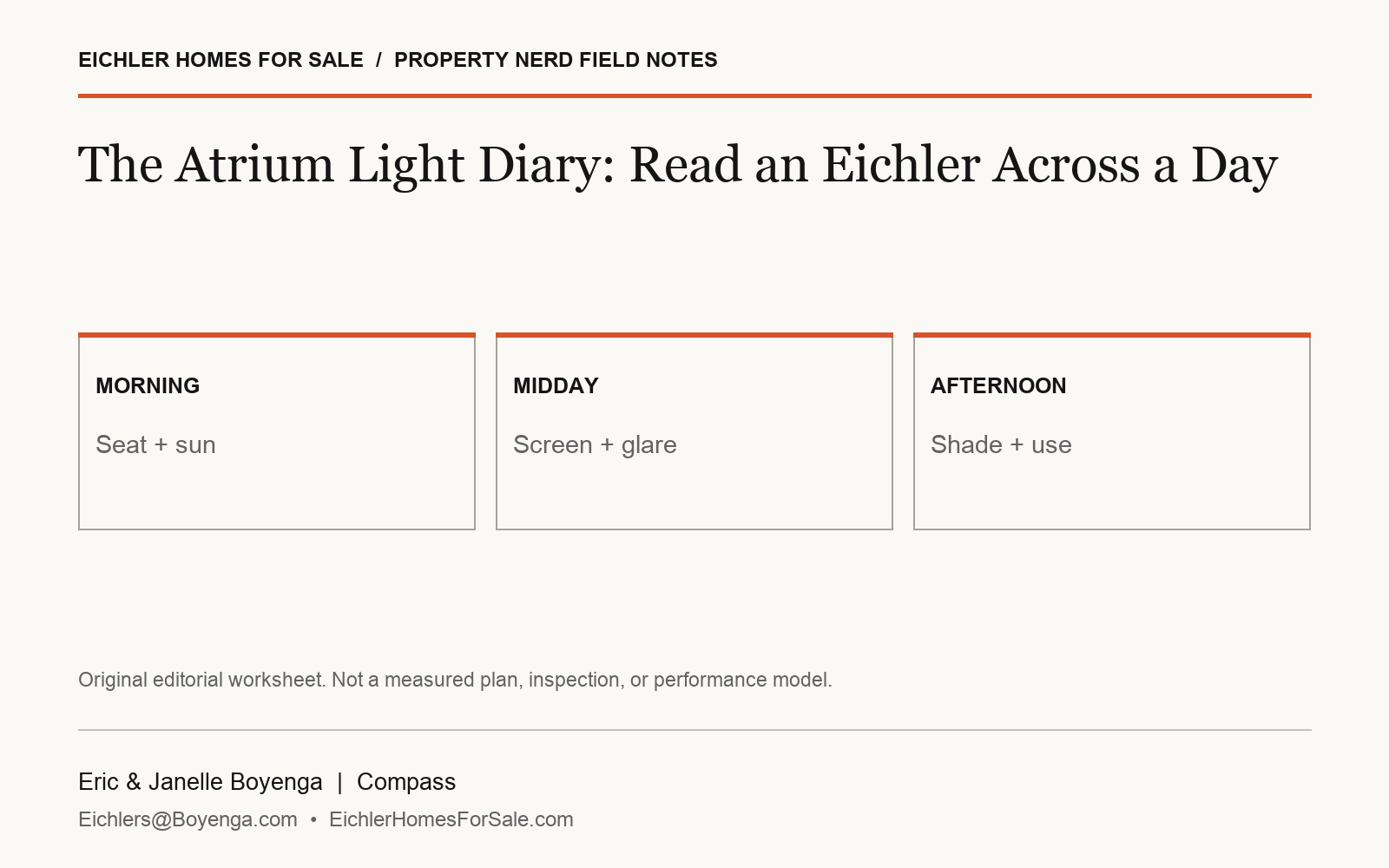
3 moments | Morning • midday • late afternoon. Original editorial worksheet. Not a measured plan, inspection, or performance model.