
Before Replacing Eichler Glass, Test the Sightlines
Stand at the entry and look through the living space toward the garden. Before comparing a window specification, notice the composition: narrow vertical lines, the height of the glass, and the way the ceiling appears to continue outdoors. Those relationships deserve a place in the project brief.
The National Park Service treats historic character and energy efficiency as compatible goals. Its guidance supports improvements that respect character-defining materials and features rather than wholesale removal solely to obtain an environmental rating. This is a useful preservation principle; it does not mean every Eichler is designated historic or subject to the same rules.
Inventory the view before choosing the product
Photograph each opening straight on and from the room’s principal viewing position. Label its location on a plan. Note visible frame width, divisions, opening direction, glass appearance, and alignment with adjacent panels. Keep the observations factual: a dark frame in a photograph does not establish its material or age.
Ask what documentation supports the existing assembly’s history. An original drawing, dated alteration record, or specialist assessment is more useful than a listing adjective. Where the history is unknown, say so.
Request a detail, not only a catalog page
Two products can occupy the same rough opening while producing different visible glass areas. Ask the designer or installer to show the proposed assembly in section and elevation, including the frame within the existing opening. Compare the sightlines from your inventory photographs.
Build the decision table around four subjects: appearance, documented performance, installation detail, and serviceability. Record the actual product being proposed. A generic claim about modern glazing is not a specification for the assembly that will arrive on site.
Separate a comfort symptom from its diagnosis
A chilly seat beside glass deserves investigation. It is not enough evidence by itself to select a replacement window. Ask a qualified building professional to distinguish the relevant causes and assess the whole assembly. The appropriate response may involve repair, seals, shading, an upgrade, or replacement; the right sequence depends on condition and the building.
Request an explanation of how the proposed work handles surrounding materials and water management. Avoid treating a beautiful mockup as evidence that the installation details are resolved.
Keep the long view
The most persuasive project record is concise: dated before photographs, the selected specifications, approvals where required, installation documentation, and maintenance instructions. It helps the next owner understand what changed and why.
This article’s four-part comparison is an editorial worksheet, not an energy model or a finding about a specific home. Send Eichlers@Boyenga.com the property address and the architectural details you hope to preserve. We can help you organize the questions for the appropriate specialists.
Sources and further reading
National Park Service: preservation and energy efficiency — checked 2026-11-24
Explore the Field Guide · Watch Eichler tours
Eric & Janelle Boyenga | Compass
DRE 01254724 / 01254725 · Equal Housing Opportunity
Eichlers@Boyenga.com
How we research Eichlers · Read archive photos · Compare two homes · Find official records
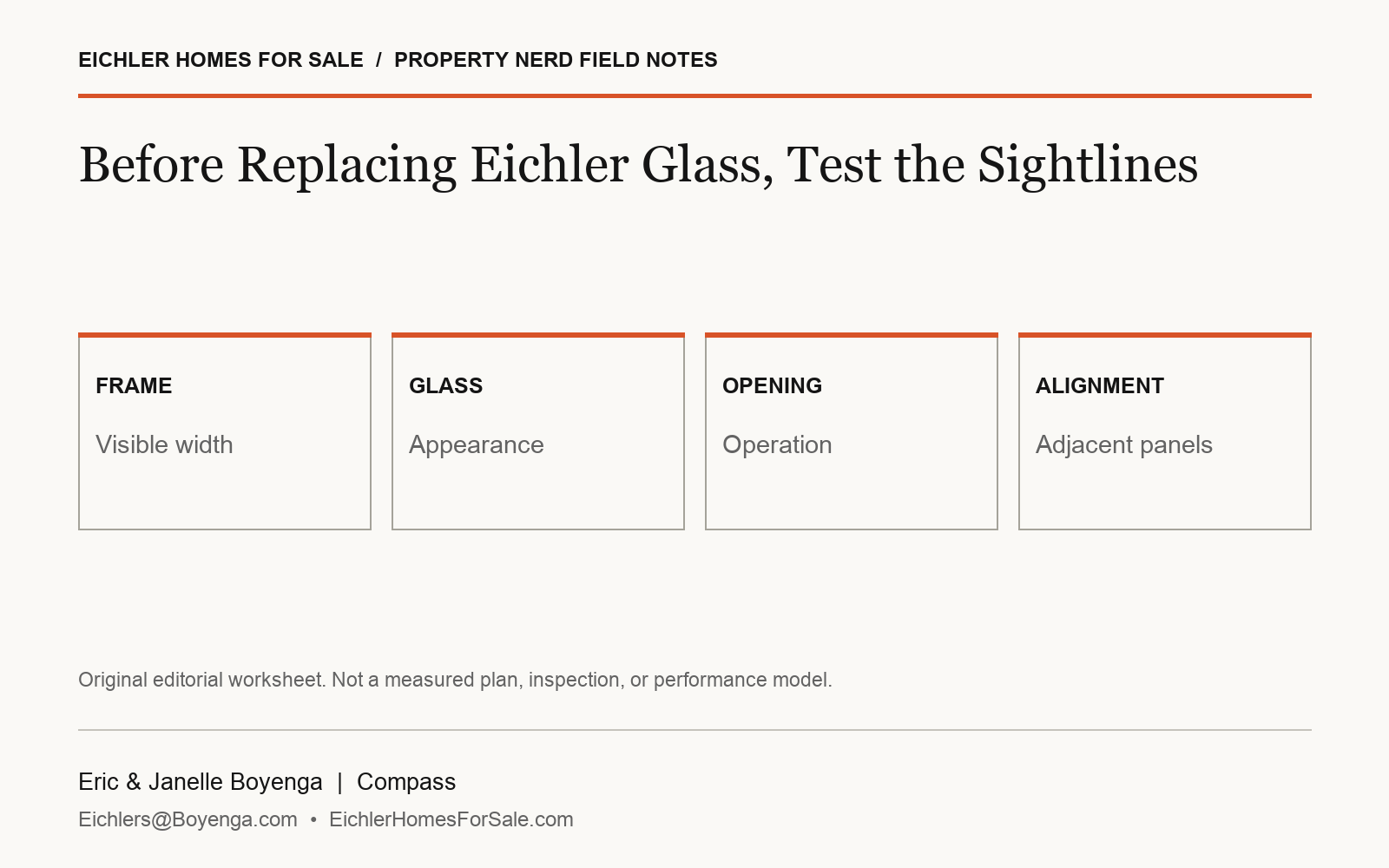
4 details | Frame • glass • opening • alignment. Original editorial worksheet. Not a measured plan, inspection, or performance model.