
How to Price an Unrenovated Original Eichler vs. a Restored Showpiece in Silicon Valley
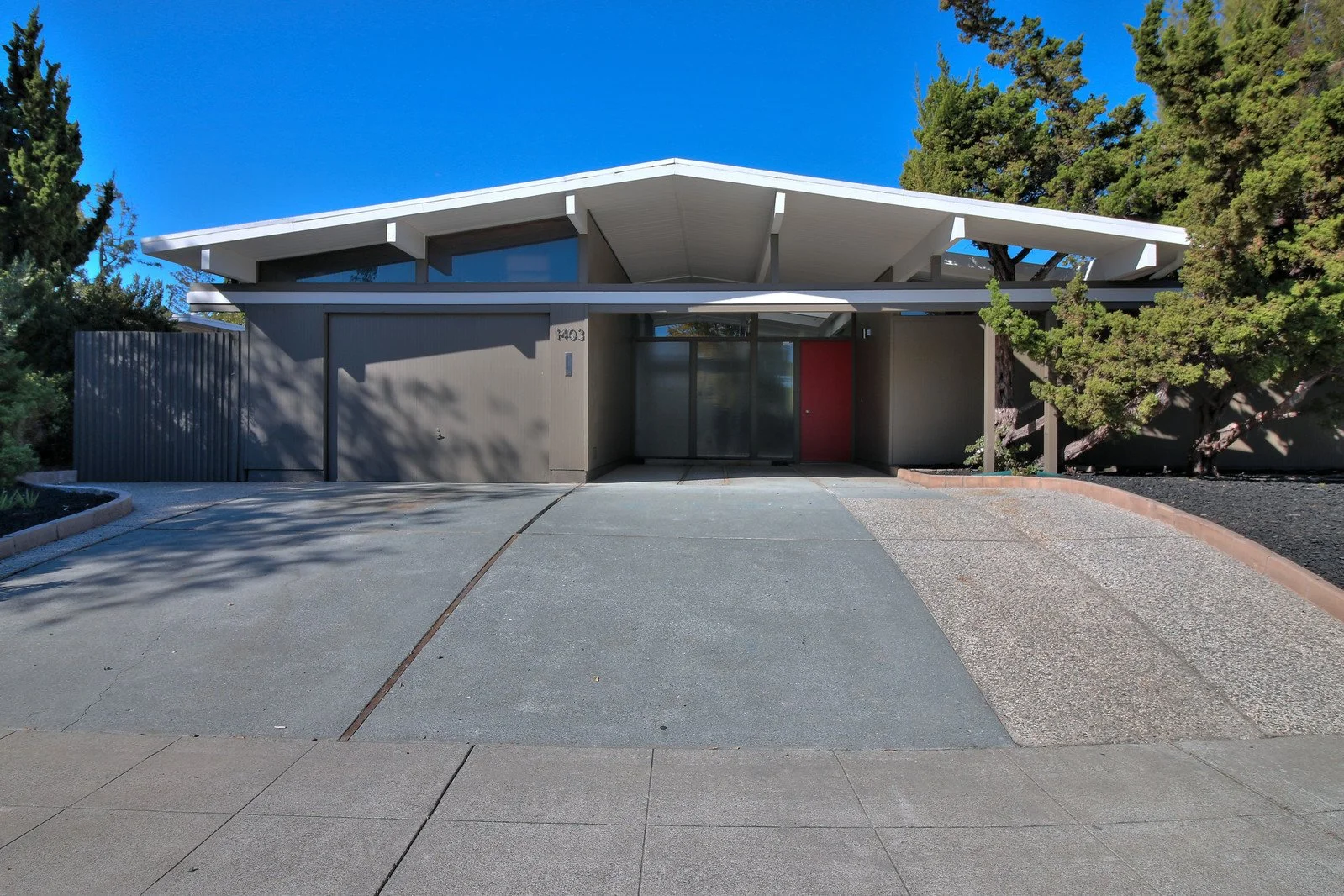
Pricing a Joseph Eichler home in Silicon Valley is nothing like pricing a standard tract ranch. In conventional neighborhoods, square footage and bedroom count drive 80% of the valuation. In an Eichler enclave—whether Palo Alto's Greenmeadow, Sunnyvale's Rancho Verde, or San Jose's Fairglen—buyers underwrite architectural integrity, mechanical risk, and restoration quality with surgical precision. Here is the Property Nerds framework for pricing an untouched 1950s original against a museum-grade restored showpiece.
1. The Architectural Integrity Baseline (Why "Original" Has a Floor)
Unrenovated Eichlers with intact Philippine mahogany paneling, untouched tongue-and-groove ceilings, original globe lighting, and unmolested post-and-beam rooflines command a dedicated purist buyer pool. Even when systems are dated, preserving the original floor plan avoids the steep "de-remuddling" discount that hits homes chopped up with 1990s drywall soffits, dropped ceilings, or vinyl windows. When pricing an original Eichler, start with land value plus an architectural authenticity premium, then deduct concrete capital-expenditure reserves.
2. Mechanical CapEx Deductions on Unrenovated Homes
Buyers of original Eichlers immediately price in four core infrastructure buckets: foam roofing and rigid insulation upgrades, cast-iron or galvanized plumbing replacement, 200-amp electrical panel modernization, and radiant heating remediation or mini-split heat pump conversion. Together, these foundational upgrades typically represent $150,000 to $300,000+ in hard costs depending on square footage and trenching complexity. Transparent pre-listing sewer scopes, radiant pressure tests, and roof certifications prevent buyers from padding those deductions with worst-case contingency buffers.
3. What Separates a "Flip" from a Restored Showpiece
Not all renovations earn top-dollar comps. A generic developer remodel—painted beams, recessed can lights punched through tongue-and-groove decking, quartz waterfall islands, and gray LVP over radiant slabs—often sells below a clean original because purists factor in the cost of undoing bad work. By contrast, a true architectural showpiece featuring custom rift-cut cabinetry, restored mahogany walls, dual-pane low-E bronze-anodized glazing, and hydronic-compatible concrete or terrazzo finishes regularly captures a 15% to 25% price-per-square-foot premium over unrenovated neighbors.
4. Micro-Tract Comps, Lot Orientation & Historic Overlays
In Silicon Valley, crossing a single street can shift Eichler pricing by $200+ per square foot. Double-A-frame models, atrium layouts, and quiet interior-tract lots with favorable solar orientation consistently outperform perimeter lots backing arterials. Neighborhood overlays—such as single-story zoning in Palo Alto or historic district guidelines in Willow Glen—also cap expansion upside, making turnkey condition even more valuable where second-story additions are off the table.
5. Bring Your Eichler Questions
Whether you are preparing to list a time-capsule original or benchmarking a fully restored architectural gem, accurate pricing requires tract-level data and buyer-psychology insight. Connect with the Boyenga Team to review recent off-market comps, pre-listing ROI modeling, and a tailored launch strategy for your Eichler.